.svg)
%20(1).svg)


Updated June 19, 2026
TL;DR: AI SDRs and human SDRs are complementary, not competing. AI handles top-of-funnel volume and initial outreach at a fraction of the cost of a fully loaded human rep. Human SDRs still outperform AI on deals above $25K ACV that require relationship building, multi-stakeholder coordination, and adaptive objection handling. The winning 2026 model is a hybrid: AI runs the volume engine, humans close the pipeline. Without SPF, DKIM, DMARC, and disciplined warmup, neither model reaches the primary inbox consistently.
B2B decision-makers receive 15 cold emails per week. Yet the sales leaders consistently hitting pipeline targets are not simply sending more email. They build systems where AI handles the volume work and human reps handle the conversations that close. That is the AI SDR vs human SDR decision in 2026: not a binary choice, but a question of where each model adds the most value.
This guide breaks down the exact performance metrics, cost structures, operational limits, and handoff workflows you need to design a high-performing hybrid sales development engine.
How AI SDRs differ from human SDR roles
The core distinction is not intelligence, it is what each model is built for. AI SDRs are throughput machines. Human SDRs are judgment engines. Confusing the two leads to wasted headcount or burned domains.
How AI SDR engines process leads
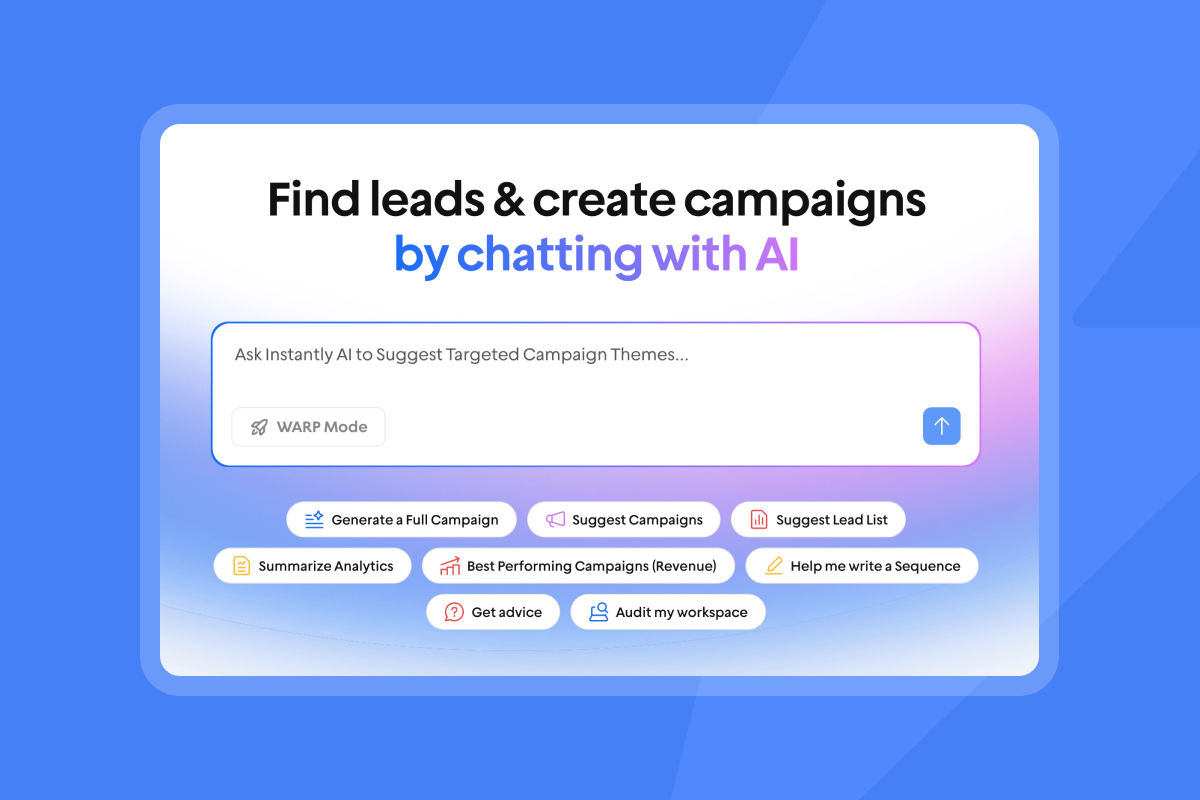
An AI SDR engine, or AI sales agent, follows a defined pipeline: source leads from a database, enrich contact records, generate personalized outreach using LLM variables, execute multi-step sequences, and classify replies. With Instantly.ai's SuperSearch, that pipeline starts from a database of 450M+ verified B2B leads with waterfall enrichment across five or more providers, feeding directly into automated outreach sequences.
Most AI-driven systems take time to reach steady-state output, and SaaStr's real-world experience puts peak performance closer to 60-90 days depending on integration complexity, prompt tuning, and list quality. Plan for the longer end if your stack requires custom CRM integration or heavy data cleanup before sequences go live. The AI Sales Agent handles lead sourcing and outbound execution autonomously, with each generated lead costing five Instantly Credits from a separate Instantly Credits subscription.
For a practical breakdown of how AI-driven outreach strategy is evolving, watch The Future of Cold Email from the Instantly channel.
Human SDR capabilities in 2026
Human SDRs bring capabilities no current AI model replicates at a commercial price point. Deep account research, live phone qualification, LinkedIn relationship building, and adaptive objection handling require contextual judgment that LLMs approximate but do not match.
Selling to known contacts, such as former customers or past champions who changed jobs, delivers a 37% win rate compared to 19% for cold outreach, nearly double the conversion from relationship leverage alone. Win rates for enterprise deals above $100K ACV typically fall well below the overall B2B average, and cycles typically run 90 to 180 + days, meaning relationship continuity directly affects close rates.
Human reps also provide a critical compliance layer. They catch hallucinated product claims, miscategorized objections, and tone mismatches before they damage an account relationship.
Evaluating AI SDR vs human SDR performance
The table below compares both models across the metrics that matter most to pipeline health.
Core capabilities comparison
Metric | AI SDR | Human SDR | Advantage |
|---|---|---|---|
Outreach volume | 500-2,000+ per day | AI (volume plays) | |
Response speed | Hours to days | AI (speed plays) | |
Availability | 24/7 | Business hours | AI (speed plays) |
Average reply rate | 5.8% (Belkins, 2024 avg) | Human (quality plays) | |
Meeting show rate | Lower (volume-driven) | Higher (relationship-driven) | Human (quality plays) |
Deal complexity (>$25K ACV) | Weak | Strong | Human (complex deals) |
Cost per meeting | Fraction of human SDR cost | High per-meeting cost at typical rep output | AI (volume plays) |
Advantage depends on deal type and pipeline stage. AI wins top-of-funnel volume plays. Human wins bottom-funnel relationship plays.
A note on human intuition vs. AI scale: The reply rate gap tells only part of the story. Human SDRs maintain higher average reply rates because they self-select high-intent accounts and adapt copy in real time. AI achieves scale advantages that build over time, while human quality advantages develop through relationship continuity. Both matter, which is why neither model wins outright.
According to Instantly's own benchmark data, the platform-wide average reply rate sits at 3.43%, with top-quartile campaigns clearing 5.5% and elite performers reaching 10.7%+. The gap between average and elite is almost entirely explained by targeting precision and personalization depth, not sending volume.
Cost per meeting compared: AI SDR vs. human SDR by the numbers
Cost per meeting is the number that cuts through most AI-versus-human debates. The gap between a fully loaded human SDR and an AI-driven stack is large, but the exact difference depends on your deal volume, meeting show rate, and tooling choices. The two subsections below break down the verified cost components for both models so you can run the math against your own numbers.
Budgeting for human SDR headcount
A fully loaded human SDR costs far more than their base salary. The true cost of hiring an in-house SDR has reached $116,500 to $210,000 annually when you include benefits, employer taxes, recruiting fees, ramp time, and management overhead.
The fully loaded cost per meeting for a human SDR is high given typical rep output against that annual cost. That math is difficult to justify for low-ACV pipeline.
Hidden fees in AI sales automation
AI is not free. Account for these actual cost components:
- Domain costs: Pre-warmed domains at $15/year per domain from Instantly, plus $10/month per email account or $5/month per DFY Google email account billed monthly
- Instantly Credits: A separate subscription starting at $9/month, with AI Sales Agent at 5 credits per generated lead and AI Reply Agent at 5 credits per reply
- Infrastructure at scale: Light Speed at $358/month for SISR (dedicated IP pools)
Even at full AI tooling, the annual cost of an AI-driven stack is a fraction of one human SDR's fully loaded cost.
Cost-per-meeting breakdown
Cost element | Human SDR | AI SDR (Instantly stack) |
|---|---|---|
Fully loaded annual cost | Fraction of one human SDR seat | |
Cost per meeting | High per-meeting cost at typical rep output | Fraction of human SDR cost |
Time to first output | 3-6 months (ramp) | 2-3 weeks for warming alone (dedicated IPs, domains, and email addresses). |
Domain/infra cost | Included in tech stack | $15/yr per domain + $5-$10/mo per account |
Tool churn/turnover risk | High annual rep turnover in the SDR role | AI tool adoption risk; validate accuracy before full deployment |
Actual CAC: AI vs human SDR models
High-volume AI outreach that generates low-quality meetings inflates Customer Acquisition Cost faster than a smaller team of well-targeted human reps. If meeting show rates drop because AI scheduled conversations with poor-fit prospects, the apparent cost advantage disappears. This is why the hybrid model wins: AI delivers volume at low CPL, while human qualification filters for show rate and conversion quality.
Output velocity and operational limits
Knowing how fast each model can run is only half the picture. You also need to know where the floor is, because hitting a hard limit mid-campaign costs more than a slower ramp. The two areas below cover send volume ceilings and follow-up cadence, the two variables that determine how much pipeline each model can realistically produce.
AI vs human SDR send volume
An AI system running 10 sending accounts can reach hundreds of prospects per day, a scale that dedicated AI sales prospecting tools make possible. That is a large volume multiplier over what a human SDR can sustain without quality degrading, but it comes with a firm constraint.
Send 20-50 emails per day per new inbox. After a 4-6 week warmup, a seasoned inbox can handle up to 100 emails per day without triggering spam filters. To scale volume beyond that ceiling, add more sending accounts and domains rather than pushing individual inboxes past their warmed limit. Secondary sending domains and IP rotation are the safe path to volume at scale.
Optimizing lead follow-up cadences
AI systems follow up in under five minutes. Human reps typically take hours to days between touchpoints. At scale, this speed difference compounds. Inbox placement rates for high-volume senders declined sharply in 2025 as inbox providers tightened filtering rules, which means fast follow-up only pays off when your SPF, DKIM, DMARC, and warmup infrastructure are solid before sequences go live.
How AI fits into a multi-channel outreach workflow
Email, LinkedIn, and phone work best as components of a single, orchestrated conversation rather than independent activities. AI handles the email layer consistently: sourcing leads, executing sequences, classifying replies, and surfacing warm contacts for follow-up. Phone and LinkedIn steps require human coordination because live calls and relationship-building on LinkedIn depend on contextual judgment that AI does not replicate at a commercial price point. Instantly does not support native LinkedIn messaging, so LinkedIn steps in a sequence require human action or API-based coordination via tools like Zapier or Make.

Lead engagement, SQL readiness, and the infrastructure behind both
Engagement metrics only tell you what happened after the email arrived. To trust those numbers, you first need to know your emails are reaching the primary inbox consistently. The three areas below cover the infrastructure that protects placement, the personalization depth that drives replies, and the handoff workflow that converts engaged leads into SQLs.
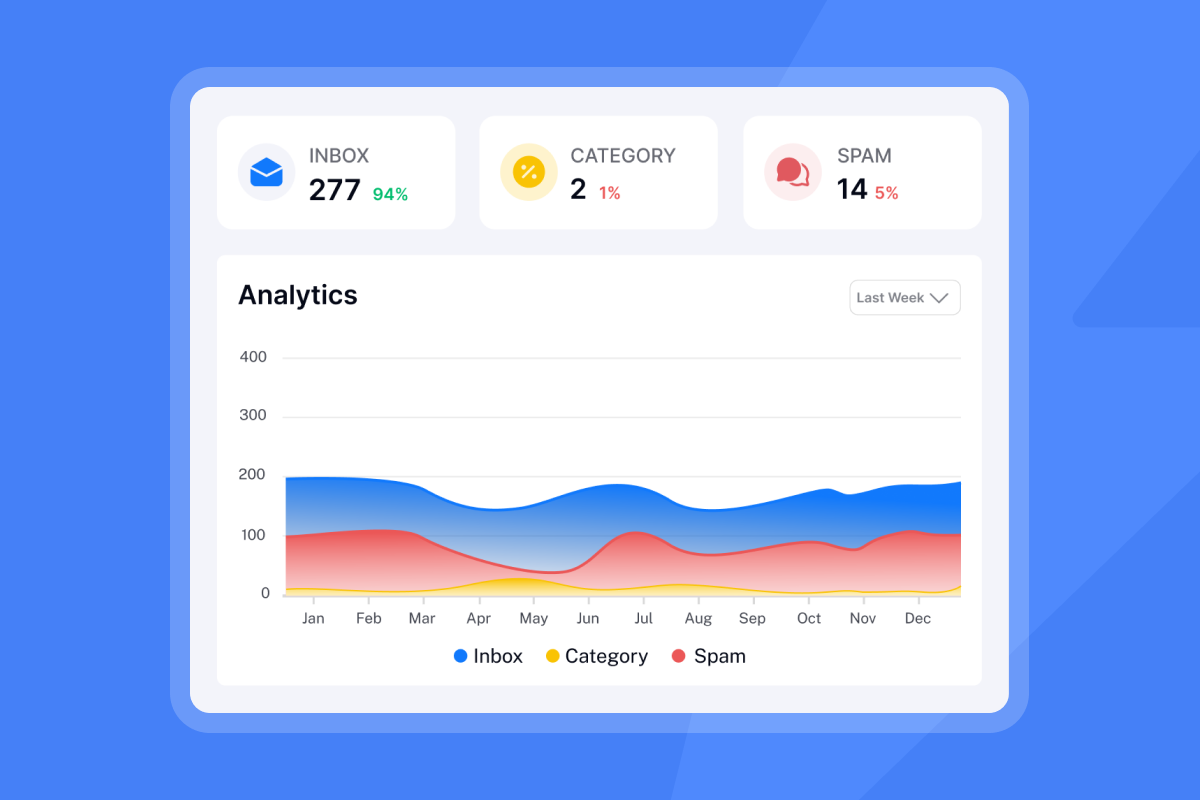
Primary inbox placement rates
Volume is worth nothing if your emails land in spam. Google and Yahoo require all bulk senders, defined as those sending 5,000 or more messages per day, to implement SPF, DKIM, and DMARC. If the percentage of emails flagged as spam by recipients exceeds 0.3% of your Gmail or Yahoo sends, your messages become more likely to be filtered into spam or rejected by the receiving server.
The infrastructure checklist for 2026:
- SPF: Authorize all sending domains and IPs. Watch for the 10 DNS lookup limit if you use multiple tools.
- DKIM: Add digital signatures to message headers. Yahoo requires a minimum 1024-bit key length.
- DMARC: Bind SPF and DKIM together. The From header domain must match the SPF or DKIM validated domain.
- One-click unsubscribe: Required for bulk senders under Google and Yahoo's rules per RFC 8058.
- Warmup: Run new inboxes through a structured warmup before cold outreach. Instantly's built-in warmup handles this automatically across its deliverability network of 4.2M+ accounts. For high-volume teams, Instantly's Light Speed plan adds SISR (Server & IP Sharding & Rotation), distributing sends across dedicated, private IP pools to protect sender reputation at scale.
"The deliverability tools actually work, and their customer support is responsive when we've had questions. We're able to scale our outreach without sacrificing personalization or risking our sender reputation." - Natalie on Trustpilot
Measuring personalization depth
Personalization quality, not volume, drives reply rate improvements. Personalization that goes beyond first name produces meaningfully higher reply rates. Timeline-based hooks achieve a 10.01% reply rate and 2.34% meeting booking rate, delivering 2.3x higher reply rates and 3.4x higher meeting rates than problem-based hooks.
AI personalization works when built on verified data. SuperSearch's LLM-assisted enrichment and AI templates feed dynamic variables into sequences at scale. When the data layer is clean, AI can approach the personalization quality typically associated with human-crafted outreach.
According to Salesforce, 54% of sellers have already used AI agents, and nearly 9 in 10 plan to by 2027. Once fully implemented, sellers expect agents to cut prospect research time by 34% and email drafting by 36%. How much of that time actually converts to pipeline depends on data and deliverability quality, not the AI model itself.
Automating meeting hand-offs
The handoff from AI-qualified lead to human AE is where most hybrid systems break down. The cleanest workflow:
- Lead sourced via SuperSearch with verified contact data
- AI outreach executed across multiple sending accounts
- AI Reply Agent classifies incoming replies by intent (interested, not interested, out of office, requesting more info)
- Human reviews flagged replies in Unibox before the AI sends a response (Human-in-the-Loop mode)
- Qualified lead routed to AE with CRM record updated automatically
- Calendar link triggered when lead signals readiness
How to divide work between AI and human SDRs
The right split is not guesswork. It comes down to where each model produces consistent, measurable output without introducing quality risk. The two areas below map the tasks AI handles reliably at scale and the deal conditions, deal size, stakeholder count, and cycle length, where human reps produce better outcomes.
Ideal tasks for AI SDR automation
The right AI SDR tools handle these tasks reliably at lower cost than human headcount:
- List building: Sourcing and enriching contacts from a 450M+ lead database
- Initial cold outreach: Multi-step sequences with A/Z testing across variants
- Follow-up sequences: Automated send timing based on reply behavior and time zones
- Basic reply classification: Tagging "not interested," "out of office," and "unsubscribe" responses without human involvement
- Activity logging: Updating CRM records when a reply is received or a status changes
Best use cases for human SDRs
Deal complexity matrix:
Deal type | ACV range | Recommended model |
|---|---|---|
High-volume, short cycle | Under $25K | AI-led or PLG with sales-assist once usage signals emerge |
Mid-market, moderate cycle | $25K-$100K | Inside sales team recommended (40-60 active opportunities), AI support for prospecting volume and follow-up cadence |
Enterprise, complex cycle | Over $100K | Human-led for buying committee coordination, live qualification, and relationship continuity. AI support for research aggregation, signal monitoring, and follow-up cadence. At $250K+ ACV, human reps are the standard given organizational politics and multi-threaded relationship demands. |
Multi-stakeholder, 6-12 month cycle | $50K-$250K | AI handles initial outreach and research aggregation. Human reps engage earlier in the cycle to build multi-threaded relationships across multiple decision-makers. For deals spanning 6-12 months, relationship continuity and adaptive engagement across stakeholders determine outcomes, not outreach volume. |
Human reps outperform AI in four specific situations:
- Strategic account pursuit: Higher-ACV deals where organizational politics, multi-threaded relationship building, and account continuity affect win rates. Selling to known contacts such as former customers or past champions delivers a 37% win rate versus 19% for cold outreach. At $250K+ ACV, working through buying committees and reading non-verbal cues in live meetings are not tasks AI replicates reliably.
- Live phone qualification: Discovery calls where tone, pacing, and unscripted objections determine whether the conversation progresses. AI can draft a follow-up. It cannot read silence, hesitation, or a shift in buyer energy mid-call.
- Complex objection handling: Non-standard pushback that requires creative problem-solving in real time. Template-based AI responses work for common objections. They fail when a buyer raises a concern that does not map to a known pattern.
- Multi-threaded enterprise deals: Enterprise SaaS buying committees typically involve multiple decision-makers, each with different priorities. Human reps build the stakeholder map, track individual concerns, and adapt messaging across the committee over a cycle that can span 6-12 months. AI supports with research and follow-up cadence but cannot own the relationship thread.
What a hybrid model looks like in practice
A typical mid-market SaaS team running this model assigns AI to top-of-funnel volume, lead sourcing, and initial sequences while human reps own qualification calls, objection handling, and AE handoffs. The pattern is consistent across teams that adopt it: outreach volume increases sharply without adding headcount, and meeting show rates hold because reps spend their time on qualification calls rather than prospecting. Following up with MQLs within the first hour delivers a 53% conversion rate, compared to 17% for follow-ups made after 24 hours. AI automation handles the timing trigger. Human reps handle the conversation that converts.
The recommended setup: as many Instantly sending accounts as your domain infrastructure supports (all Outreach plans include unlimited connected inboxes), SuperSearch for list building, and AI Reply Agent in Human-in-the-Loop mode for high-value accounts. AI handles volume, humans handle judgment.
How Unibox and AI Reply Agent support the hybrid workflow
Unibox and the AI Reply Agent are two of the tools inside Instantly that support the hybrid workflow. Unibox aggregates replies from all sending accounts into one dashboard. The AI Reply Agent classifies and drafts responses against those replies.
The AI Reply Agent processes incoming replies in under five minutes, classifying intent and drafting responses. In Human-in-the-Loop mode, your team reviews and approves AI-generated replies in Unibox or via Slack before they send. This prevents critical failure modes that damage brand trust: AI hallucinating facts (inventing meeting times, misquoting prior messages, or referencing documents that do not exist), confidential data leaks (thread context from one customer mixed into a reply to another), and wrong tone (casual replies to legal notices or blunt dismissals of frustrated customers).
For governance at the team level, configure these controls before deploying AI outreach at scale:
- Set per-inbox send limits at 20-50 emails per day for new accounts, up to 100 for seasoned inboxes after 4-6 week warmup
- Enable Human-in-the-Loop mode for all replies until classification accuracy is validated
- Review AI-drafted replies before switching to Autopilot
- Run inbox placement tests weekly to catch deliverability degradation early
Apply the cold email copywriting framework to all AI-generated templates before they go live
"Instantly makes cold outreach operationally simple at scale. The interface is straightforward, setting up campaigns with multiple inboxes is fast, and the warm-up system helps maintain deliverability when sending higher volumes." - Ivar S. on G2
Accelerating time to value for new hires
One of the most underappreciated costs in human SDR programs is ramp time. During those months, most reps are producing well below full capacity while consuming 100% of their cost.
Most teams can implement basic AI SDR automation within two to four weeks. Full implementation, including prep work, sequencing, and validation, takes longer for standalone solutions requiring complex integrations than for platforms with native CRM integration. That is still far faster than the three to six months a new human rep needs to reach full capacity.
That gap creates a practical hybrid strategy for teams with headcount constraints. AI infrastructure gives you a way to reduce ramp time by keeping pipeline moving during the ramp period, so a new hire's slow first weeks do not create a gap in top-of-funnel activity. Use Instantly's AI agents to handle lead sourcing and initial outreach. Route positive replies to reps once they are ready for live conversations, typically in their second week or later depending on your onboarding structure. AI handles the sourcing and sequencing in the meantime, keeping top-of-funnel activity running while the rep ramps to full qualification capacity.
For teams building this system, watch the Instantly cold outreach masterclass for the ramp strategy in detail, and follow this AI cold email walkthrough for the technical setup step by step.
The hybrid model: your 2026 standard
The "AI versus human" framing is the wrong question. Pure AI replacement without a hybrid model creates quality problems that erode the cost gains. Pure human outreach cannot compete on volume or cost at the top of funnel. The data points consistently toward one conclusion: AI handles the administrative and volume tasks, and human reps focus entirely on strategic conversion.
The practical implementation for a sales team of three to fifteen reps:
- Outreach stack: Start with Outreach Growth ($47/month) for unlimited sending accounts and warmup. Add SuperSearch via the Instantly Credits Growth plan ($47/month) for lead sourcing and enrichment.
- CRM and inbox management: The Outreach Growth plan includes Unibox in preview-only mode. You can see incoming replies in the centralized Unibox dashboard but must open your native mailbox (Gmail or Outlook) to respond directly. To reply to leads inside Instantly and manage pipeline, add Growth CRM ($47/month), which includes full Unibox reply management, pipeline and opportunity tracking, and basic reporting. Those three plans combined, Outreach Growth, Instantly Credits Growth, and Growth CRM, run approximately $141/month.
- AI reply handling: Start AI Reply Agent in Human-in-the-Loop mode for all accounts. Review and approve AI-drafted replies in Unibox before they send. Once classification accuracy is validated over the first few weeks of live operation, shift routine classifications (out of office, unsubscribe) to Autopilot. Keep HITL active for any reply requiring a judgment call.
- Scale infrastructure: Move to Hypergrowth ($97/month) as send volumes grow. Add Light Speed ($358/month) if you need SISR for dedicated IP pools at high volume.
Build your hybrid sales engine on infrastructure that scales without per-seat penalties. Start a free 14-day trial of Instantly Outreach to test unlimited sending accounts and built-in warmup, then add a free trial of Instantly Credits to test SuperSearch and the AI Reply Agent. No credit card required.
FAQs
Can AI completely replace human SDRs?
No. AI cannot replicate the human empathy, relationship building, and strategic negotiation required to close complex B2B deals. Win rates for enterprise deals above $100K ACV typically fall well below the overall B2B average, with cycles typically running 90 to 180+ days, where relationship continuity directly determines outcomes.
What is the average cost per meeting for AI vs. human SDRs?
AI-driven systems deliver meetings at a fraction of the cost of a fully loaded human SDR, given the gap between typical rep output and a high fully loaded annual cost. The fully loaded annual cost gap between an AI stack and a single human SDR seat is substantial enough to fund multiple sending accounts, credits, and CRM tooling.
How do you prevent AI SDRs from sending rogue emails?
Configure the AI Reply Agent in Human-in-the-Loop mode. This requires your team to review and approve AI-generated replies in Unibox or via Slack before they send. Switch to Autopilot only after validating classification accuracy over the first few weeks of live operation.
How many emails should a single inbox send per day?
Send 20-50 emails per day per new inbox. After a 4-6 week warmup period, a seasoned inbox can handle up to 100 emails per day without triggering spam filters. To increase total volume beyond a single inbox's limit, add more sending accounts and domains rather than pushing individual inboxes past their warmed capacity. See Instantly's guide on scaling with secondary sending domains for the recommended approach.
How does Instantly's AI Reply Agent handle misclassifications?
In Human-in-the-Loop mode, the AI Reply Agent routes AI-drafted replies to your team for review before they send. Your team can edit or reject any draft in Unibox. Misclassification is a separate accuracy issue from the primary failure modes that damage brand trust (hallucinated facts, wrong tone, and data leaks), but it still costs pipeline. Over time, editing and rejecting drafts refines classification accuracy and reduces the rate of warm replies being routed incorrectly.
Key terminology glossary
Primary-inbox placement: The rate at which outbound emails land in the recipient's main inbox rather than the spam or promotions folder. Determined by authentication setup, sender reputation, and list hygiene.
Sequence governance: The administrative rules, safety limits, and QA processes used to control automated outreach campaigns across a team. Includes send caps, reply classification review, and template approval workflows.
SISR (Server & IP Sharding & Rotation): A deliverability technology on Instantly's Light Speed plan that distributes email sending across dedicated, private IP pools to protect sender reputation at high sending volumes.
Unibox: Instantly's centralized inbox that aggregates replies from all sending accounts, allowing reps to manage, triage, and approve AI-classified leads in one place.
Human-in-the-Loop (HITL): An operating mode for the AI Reply Agent that requires human approval before the AI sends a response. Used to catch misclassifications and prevent brand-damaging AI errors during initial deployment.
Read next
- Email sequence benchmarks 2026: what's a good open rate, reply rate, and cost-per-meeting?: See how your open rates, reply rates, and cost-per-meeting stack up against 2026 platform benchmarks.
- Email warmup process: 4 stages to reach full sending capacity: Follow the four-stage ramp plan to bring new inboxes to full sending capacity without triggering spam filters.
- The 10 best cold email templates for improving your response rate: Copy ten tested templates built to improve reply rates across common cold outreach scenarios.



