.svg)
%20(1).svg)


Updated July 23, 2026
TL;DR: Apollo's data enrichment offers broad B2B coverage, but raw exports frequently carry bounce rates well above safe deliverability thresholds. Credit costs are predictable on paper, but unused credits expire at the end of each billing cycle (monthly or annually, depending on your plan) and overages are automatic. To build a reliable outbound system, treat Apollo exports as raw inputs and run every list through a dedicated verification layer. Pairing Apollo data with Instantly.ai's bulk verification tools and flat-fee unlimited sending accounts protects your sender reputation at scale. For a broader breakdown of how the two platforms compare across prospecting, outreach, pricing, and deliverability, read our full Instantly vs. Apollo comparison.
More data is not always better. For high-volume sales teams, importing unverified enriched lists directly into campaigns is the fastest way to trigger spam filters and push reply rates below the floor. Apollo's data enrichment covers a database of over 240 million contacts, but database size is not the metric that determines pipeline outcomes. Deliverability is.
This Apollo data enrichment review breaks down exactly how Apollo sources, verifies, and prices its data, and where that data creates risk for teams running at volume.
Why sales teams use Apollo data enrichment
Sales teams use Apollo to fill gaps in their CRM contact records, adding missing email addresses, direct dials, job titles, and firmographic attributes. The appeal is a large contact database combined with native sequencing inside a single platform.
Instantly's 2026 benchmark report sets the platform average cold email reply rate at 3.43%, with top-quartile senders reaching 5.5% or higher. Achieving those rates requires clean, verified data feeding into well-paced campaigns. The core question for any sales leader evaluating Apollo is whether its data quality meets that standard out of the box, or whether it requires supplementary verification before use.
Platform model comparison
Capability | Apollo (All-in-One) | Clay / Clearbit (API-First) | Instantly SuperSearch |
|---|---|---|---|
Database size | 240M+ contacts | Varies by provider | |
Pricing model | Per seat ($49-$119/user/month) | Usage-based | Flat-fee credits ($47/month+) |
Built-in sending | Yes | No | Yes (unlimited accounts) |
Verification layer | 7-step SMTP + network checks | Provider-dependent | Waterfall enrichment, 5+ providers |
Unlimited email accounts | No | No | Yes, all plans |
Instantly pricing current as of publication at Instantly's pricing page.
How enrichment improves contact quality
Data enrichment appends missing fields to existing records: email addresses, phone numbers, LinkedIn profiles, company revenue estimates, and technology stack data. For an SDR building a personalized cold email, a complete contact record is the difference between a generic opener and one that references a funding round, tech stack change, or recent job posting, the kind of specificity that drives the 15% to 20% higher reply rates that Instantly's 2026 benchmark report attributes to consistent, targeted outreach.
Apollo pulls these attributes from its contributor network, which includes inboxes, CRMs, and CSV uploads connected to Apollo by users, combined with its verification layer. The result is a richer contact profile that helps reps prioritize outreach and write more relevant messages.
How Apollo verifies contact accuracy
Apollo's seven-step verification process does not rely solely on SMTP tickling. It checks addresses against its contributor network, tracks delivery statistics, and monitors bounce signals to differentiate between valid and invalid emails, including addresses at catch-all domains. Apollo reports a 91% email accuracy rate. The remaining 9% reflects a mix of factors beyond invalid addresses: recipient-side blocks, full mailboxes, temporarily unresponsive servers, and sending domain reputation issues on the sender's side.
A structural limitation compounds this: many B2B domains are configured as catch-all servers, meaning SMTP-style checks cannot confirm whether an individual address is valid. Instantly's dedicated Catch-All Email Verification handles this class of addresses separately, flagging them for review or exclusion before campaign launch.
 Jessica ParkVP Sales at CloudScale
Scaling outreach with ecosystem sync
Apollo's native sequencing lets teams move contacts from the database directly into email campaigns without leaving the platform. For teams of 5 or more SDRs running at volume, per-seat pricing and sending infrastructure limitations become constraints.
How Apollo validates lead information
Apollo's validation runs checks before you export, not at the moment your campaign hits send. B2B contact data decays continuously. A contact verified eight months before your export may no longer be reachable at the address Apollo holds on file, and for SaaS roles with high employee turnover, annual decay runs meaningfully higher.
Managing email health and bounce rates
Unverified Apollo exports frequently exceed the safe hard bounce threshold of under 1%. When hard bounces exceed 1%, most email service providers begin suppressing your messages. At 15% or higher, domain recovery can take months.
Apollo does not provide system-level inbox health reporting or domain reputation monitoring. Instantly's Deliverability AI Agent runs continuous checks every 24 hours across DNS health, blocklist status, warmup scores, bounce rates, and sending provider balance. It flags what is affected and what to fix first, with direct in-platform actions available. The agent is included on Hypergrowth and above Outreach plans at no additional credit cost.
Real-world phone number connect rates
Apollo's phone data carries a wider accuracy variance than its email data. Phone accuracy can fall below email accuracy, particularly outside North America where mobile number formats vary.
Each mobile lookup costs 8 credits, which compounds quickly at scale. A 5-rep team running 100 mobile lookups per week burns 16,000 credits per month on phone data alone (5 reps × 100 lookups × 8 credits × 4 weeks) before a single email is sent.
Data breadth for ideal customer profiles
Apollo covers over 65 firmographic filters including industry, employee count, revenue range, technology stack, and seniority level. Coverage is densest in North American B2B markets, particularly technology, professional services, and financial services. The challenge is filter precision versus data freshness: filtering for a high-turnover role like "Director of Sales at a 50-200 employee SaaS company" produces a list where job title accuracy degrades fastest.
Real-time vs. batch: impact on ops
Apollo supports both real-time enrichment via API and bulk CSV export. Real-time API enrichment consumes credits at the point of each query and requires RevOps capacity to maintain the integration. Batch exports are operationally simpler but carry higher data decay risk because you are working with a static snapshot. Both paths require an external verification step before the data enters a sending tool.

Mapping Apollo data to your target markets
Apollo's data quality is not uniform across all market segments. Understanding where coverage is strong and where it requires supplementary verification helps you allocate credits more efficiently.
SaaS and mid-market data quality: what to expect
SaaS companies see average sales rep tenure of around 2.5 years, according to The Bridge Group, which pushes annual data decay for this segment higher than average. Run SaaS exports through verification at export time, not quarterly, and size your lists accordingly.
Mid-market companies (100 to 1,000 employees) often show stronger Apollo coverage because decision-maker profiles are more publicly visible. Email accuracy in this segment varies by role, with high-turnover positions such as SDRs and BDRs decaying fastest, while VP and C-suite contacts at stable companies tend to hold accuracy longer, making targeted list building and verification particularly important for this segment.
Global vs. North American lead quality
North American data is more complete and more frequently verified in Apollo's network. EMEA, APAC, and LATAM data carries higher rates of outdated records and missing direct contact information.
GDPR and local data privacy laws in the EU restrict the kind of contributor network data collection that feeds Apollo's accuracy, which means European contact data requires extra verification steps before use in any campaign. Teams prospecting outside North America should plan for higher invalid contact rates and allocate additional verification budget before importing international exports into campaigns.
Data reliability for SMB outreach
Owner and founder contact information at companies under 50 employees is harder to source reliably, as many SMB decision-makers have no LinkedIn presence, which reduces Apollo's coverage for this segment. Direct dial coverage for SMB owners is variable, as decision-maker connect rates depend on data freshness and how publicly visible the contact is across web sources. If your ICP includes small businesses, plan for higher bounce rates and supplement Apollo exports with additional enrichment passes before importing into campaigns.
Predictable billing for Apollo enrichment features
Apollo's credit system is straightforward in structure but requires active administrative management to avoid unexpected costs.
Evaluating Apollo free account caps
Apollo's free tier includes 900 credits per seat per year (approximately 75 general credits per month), with mobile credits capped at 5 per month. At 8 credits per mobile lookup, the 5 monthly mobile credits do not cover a single full mobile lookup.
The 75 general credits per month are better applied to email lookups at 1 credit each, covering up to 75 email lookups per month per user. For any active sales team running volume outreach, these caps make the free plan a trial environment, not a working tool.
Comparing starter and growth tiers
Apollo's paid plans bill per seat, with credits granted upfront for the full year on annual plans. Current pricing as of June 2026 varies by billing cadence. Billed monthly: Basic at $65 per user per month (30,000 credits per seat per year), Professional at $99 per user per month (48,000 credits per seat per year), and Organization at $149 per user per month (72,000 credits per seat per year). Billed annually: Basic at $49 per user per month, Professional at $79 per user per month, and Organization at $119 per user per month, with the same credit allocations. For a 5-rep team on the Professional plan, annual cost runs approximately $4,740 per year on annual billing (5 reps × $79/month × 12 months) or $5,940 per year on monthly billing (5 reps × $99/month × 12 months), before credit overages.
By contrast, Instantly's Outreach plans start at $47 per month, covering unlimited email accounts and unlimited users with no per-seat penalties.
Managing multi-user access and roles
Apollo's Organization plan includes credit-usage controls at the user level. Credit visibility in Apollo is permissions-based, so confirm your plan includes admin-level access to the Team member filter before relying on per-rep usage reporting. Setting monthly credit budgets per rep and reviewing usage weekly prevents a single aggressive SDR from exhausting the team's monthly allocation mid-cycle.
How Apollo handles unused credits
Paid plan credits are granted upfront at the start of the billing period and expire at the end of that billing cycle, whether monthly or annual. Free tier credits are granted monthly and expire at month end.
Apollo runs a single unified credit pool across all plan tiers. There are no separate mobile, export, or email credit buckets. A 5-rep team on the Professional plan receives 240,000 credits in total for the full year (48,000 per seat × 5 reps), which works out to approximately 4,000 credits per seat per month.
At 8 credits per mobile lookup, a rep running 20 mobile lookups per day consumes 160 credits per day, exhausting their monthly credit equivalent in roughly 25 working days. Any unused balance at renewal is lost. Plan exports and enrichment runs to use credits before the billing renewal date, and review consumption quarterly rather than monthly for paid plans.
Managing unexpected overage charges
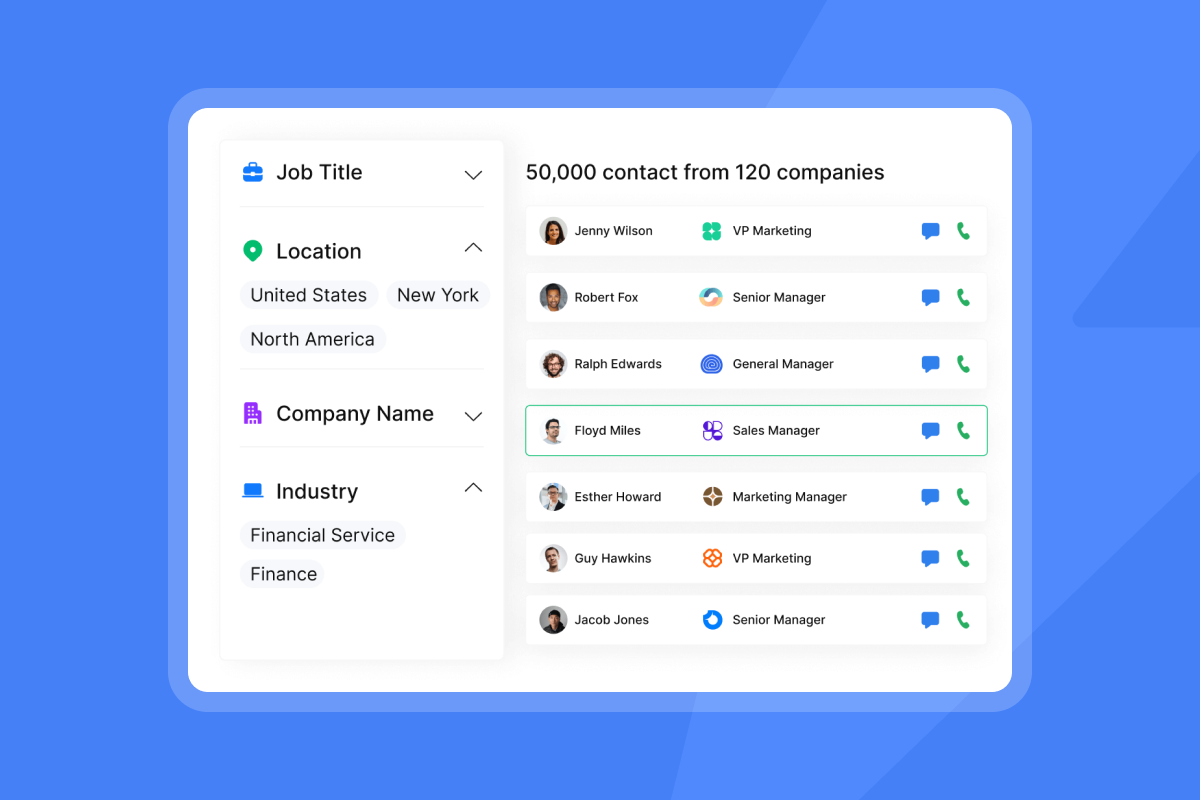
When a team exhausts its credit allocation, Apollo automatically bills overages at $0.20 per credit with a minimum purchase of 250 credits ($50 minimum charge). There is no user-controlled setting to block automatic overage billing once credits are exhausted. Teams at risk of overage should pause exports in the final week of each billing cycle rather than relying on a platform-side safeguard.
Connecting Apollo to your existing sales pipeline
Apollo offers native integrations with major CRMs and supports API access for custom workflows.
Direct Salesforce and HubSpot sync
Apollo offers native integrations for both Salesforce and HubSpot. The common failure point in HubSpot is dropdown fields: Apollo maps custom field values as free text, which conflicts with HubSpot's dropdown validation and causes sync errors on import. The fix is to use custom text fields in HubSpot for any Apollo-sourced attributes, then apply list-based segmentation to replicate dropdown filter behavior.
Sales Leader's Troubleshooting Runbook for HubSpot Sync:
- Audit field types before enabling sync. Map all Apollo custom properties to HubSpot text fields, not dropdowns.
- Use a staging contact list in HubSpot to receive Apollo imports. Review for field errors before moving contacts to active sequences.
- Set duplicate management rules in HubSpot before the first import to prevent double entries on existing contacts.
- Monitor sync logs weekly. Apollo's sync log surfaces field-level errors that do not trigger user notifications.
When native sync produces mapping errors, Zapier provides a reliable workaround. You can add a lead to HubSpot when a contact is marked Interested in Instantly, giving you a clean trigger-based workflow without continuous sync.
Managing list imports and CSV exports
The safest method for most teams is to export Apollo contacts as a CSV, run the file through external verification, and import the cleaned list into your sending tool. Apollo's export UI lets you filter by verification status, job title, company size, and date added. Remove role-based addresses (info@, admin@, support@) during the export filter step, not after, to keep the verification queue focused on individual contacts.

Evaluating Apollo for high-volume sales teams
High-volume sending amplifies every data quality problem. A 6% bounce rate that looks manageable at 500 sends per week becomes a domain-damaging event at 5,000 sends per week.
Managing bounce rates and inbox health
Cap sends at 30 emails per single inbox per day. This is the safe daily limit that prevents ESP rate-limiting and spam classification. At 30 emails per inbox per day across a 5-rep team, you need at least 8 to 10 sending inboxes to run 2,400 to 3,000 sends per week without exceeding safe per-inbox limits.
Instantly includes unlimited email accounts across all Outreach plans, so you can add inboxes to distribute volume without per-seat penalties. This is a direct structural advantage over Apollo's per-seat model for teams scaling past 5,000 sends per week.
Team governance and CRM hygiene at scale
At 5 or more reps, template governance and send-schedule controls become operational necessities. Without centralized template management, individual reps diverge from approved messaging, which makes test results unreliable and creates compliance exposure.
Apollo's Organization plan includes user permission controls. Pair these with Instantly's workspace-level campaign management to standardize templates, send windows, and reply-handling rules across the team. Instantly includes A/Z testing on Growth plans ($47/month), with full 26-variant capability available on Hypergrowth ($97/month) and above.
For CRM hygiene, set deduplication rules based on email address (not name) before any Apollo import, and run a deduplication pass after each large batch. Contacts that bounce or unsubscribe in Instantly can be automatically synced back to HubSpot via the native integration, keeping your CRM suppression list current without manual exports.
Support reliability during live campaigns
Apollo provides self-serve onboarding documentation and chat support across paid plans. User feedback across review platforms points to response time variability during live campaign issues, which is the highest-stakes moment for a sales leader managing active outreach. Build internal runbooks for common failure scenarios (sync errors, bounce spikes, credit exhaustion) to reduce dependency on vendor support during critical campaign windows.
Apollo warmup availability and daily sending caps
Apollo offers email warmup on select paid plans via a third-party integration, not as a native built-in feature. Apollo discontinued its original native warmup in 2024 over reliability concerns and relaunched in 2025 through a third-party provider.
One mailbox is included at no additional credit cost. Each additional mailbox costs 200 credits per month.
Apollo explicitly disclaims responsibility for the third-party service's performance, which is worth factoring in if warmup continuity matters to your team.
Apollo also has a separate "Inbox Ramp Up" feature that increases sending volume gradually, but this is not the same as reputation-building warmup. Inbox Ramp Up controls pacing. It does not signal trustworthiness to mailbox providers the way a dedicated warmup process does.
Apollo caps sending at 250 emails per user per day on Free and Basic plans, with unlimited sending on Professional and Organization plans. By contrast, Instantly includes unlimited warmup across all Outreach plans starting at $47/month, with no per-user sending caps when you distribute volume across unlimited email accounts.
Apollo enrichment workflows: common questions
These are the most common operational questions sales teams run into when using Apollo data for outbound, from checking data integrity to managing compliance.
How to assess Apollo lead data integrity
Before uploading any Apollo export to a sending tool, run a spot-check on three signals. First, check email format consistency: if more than 5% of addresses follow an unusual pattern, the export may contain mixed-source data with lower accuracy. Second, filter for titles containing "former," "ex-," or blank entries, and remove them. Third, cross-reference a sample of 20 to 30 contacts against LinkedIn to spot obvious mismatches before running the full verification pass.
Policy on canceling your Apollo plan
Apollo subscriptions auto-renew for a period equal to the expiring term unless either party gives written notice of non-renewal at least 30 days before the end of the current Subscription Term. Missing that window means you are billed for another full cycle. Set a calendar reminder 35 days before your renewal date to give yourself time to submit written notice and receive confirmation. You retain access to credits and contact lists until the billing period ends. Export your full contact database and any saved search filters as CSVs before canceling, since dashboard access closes at period end. Confirm the cancellation email and check for any usage-based outstanding charges before the billing date.
Does Apollo comply with GDPR and privacy laws?
Apollo holds SOC 2 and ISO 27001 certifications and is certified under the EU, UK, and Swiss Data Privacy Frameworks. A Data Processing Addendum is publicly available for download from Apollo's site.
Despite this, Apollo's public-facing compliance documentation does not address jurisdiction-specific cold outreach consent requirements, particularly the GDPR's legitimate interest basis for B2B prospecting, in enough operational detail for most compliance teams to use directly. Have your Data Protection Officer review the Apollo DPA before enabling European contact exports, and establish internal guardrails for consent documentation, opt-out handling, and data retention periods. Compliance posture is your organization's responsibility, not the vendor's.
Estimating required enrichment credits
Use the table below to forecast monthly credit consumption for a 5-rep team before committing to a plan tier.
Monthly credit burn forecast, 5-rep team
Activity | Credits per action | Volume per rep/month | Team total (5 reps/month) |
|---|---|---|---|
Email lookup | 1 | 500 | 2,500 |
Mobile lookup | 8 | 50 | 2,000 |
Total credits needed | - | - | 4,500/month |
Basic plan monthly equivalent* | - | - | ~12,500/month |
Professional plan monthly equivalent* | - | - | ~20,000/month |
Overage rate | $0.20/credit | - | $50 minimum charge |
*Paid plan credits are granted upfront annually (Basic: 30,000/seat/year; Professional: 48,000/seat/year) and expire at renewal. Monthly equivalent shown for comparison only. Check current plan limits before budgeting, as credit allocations change.
At the volumes in this table, a 5-rep team on the Professional plan has sufficient annual credits to cover the full year without overages. Credit risk rises when teams run high-volume mobile lookups or export beyond the monthly cadence shown here.
A single week of aggressive mobile prospecting (100+ lookups per rep) can consume a large portion of the annual allowance early in the cycle, leaving less headroom for later quarters. Map your enrichment cadence against your annual credit grant before committing to a plan tier, and factor in the $0.20 per credit overage rate when modeling peak-quarter usage.
Using Apollo data in Instantly campaigns
The safest workflow for pairing Apollo data with Instantly's sending engine is a four-step process.
- Export from Apollo. Filter by verification status, add the company domain column, and export as a CSV. Remove role-based addresses (info@, support@, no-reply@) before saving.
- Run bulk verification in Instantly. Upload the CSV to Instantly's SuperSearch verification workflow. Instantly's waterfall enrichment passes each contact through 5 or more data providers sequentially. If one provider cannot confirm an address, the system automatically queries the next provider in sequence. This flags invalid, risky, and catch-all addresses before they reach your sending queue, keeping bounce rates below the safe threshold.
- Import the clean list. After verification, import approved contacts into your Instantly campaign using the SuperSearch lead finder workflow. Set your campaign's bounce rate alert threshold to 1%. If it hits that mark, pause sends and run a hygiene check on the list before resuming.
- Apply the benchmark sequence structure. Instantly's 2026 benchmark report found that sequences with 4 to 7 steps produce the highest reply rates, with Monday as the best launch day and Wednesday as the highest reply day. Keep email copy under 80 words. Cap sends at 30 per inbox per day. Consistent sending patterns produce 15% to 20% higher reply rates versus irregular sending, per the same report.
One G2 reviewer describes this exact stack in their day-to-day workflow:
"It's google workspace and hubspot integration which fits well with my overall workflow of sourcing leads from apollo then using clay in enrichment while syncing with hubspot. It acts as a management layer. Performance wise instantly is considerably good and if used properly it helps manage warmups, sending limits and campaign performance well." - Harsh on G2
If you are ready to verify your next Apollo export and keep hard bounces below 1%, start Instantly's 14-day free trial and run your first list through our bulk verification workflow. No credit card required, and the trial includes 250 uploaded contacts to test the process end to end.
For sequence structure benchmarks to align your campaigns with top-performing standards, the Instantly 2026 Cold Email Benchmark Report covers reply rate data across billions of sends from January through December 2025.
 Jessica ParkVP Sales at CloudScale
FAQs
How many credits does Apollo charge for data enrichment?
Apollo charges 1 credit per email lookup and 8 credits per mobile phone number lookup. These credits are deducted from your monthly plan allowance and any excess is automatically billed at $0.20 per credit with a minimum purchase of 250 credits.
What is the average bounce rate of unverified Apollo email exports?
Unverified Apollo exports frequently exceed the safe hard bounce threshold of under 1%, which can damage your sender reputation across all active campaigns. Run every export through a dedicated verification layer before importing into any sending tool.
Does Apollo offer a free trial for its enrichment features?
Yes, Apollo offers a free tier that includes 900 credits per seat per year, including 5 mobile credits per month. At 1 credit per email lookup and 8 credits per mobile lookup, the free tier covers basic prospecting tests but not sustained outreach volume. For active sales teams, upgrading to a paid tier starting at $49 per user per month on the Basic annual plan (30,000 credits per seat per year) is necessary for any meaningful enrichment workflow.
How do unused Apollo credits work at the end of a billing cycle?
Unused Apollo credits expire at the end of each billing cycle and do not roll over into the next period. Teams should plan exports around their billing renewal date to avoid losing unused credit allocations.
How does Instantly verify Apollo exports before sending?
Instantly's waterfall enrichment passes each exported contact through 5 or more verification providers sequentially, flagging invalid and catch-all addresses before they reach your campaign. Running Apollo exports through this verification workflow keeps hard bounces below the 1% threshold and protects your sender reputation.
Key terms glossary
Primary inbox: The main folder where a recipient receives important personal or business emails. Landing here instead of the spam or promotions folder is critical for cold email reply rates.
Sender reputation: A score assigned by email service providers to your sending domain based on bounce rates, spam complaints, and sending patterns. A high score ensures your emails reach the primary inbox.
List hygiene: The process of regularly cleaning your lead list by removing invalid, inactive, or risky email addresses. This practice keeps hard bounces below the 1% threshold required to protect domain health.
SuperSearch: Instantly's built-in B2B contact database with over 450M+ B2B leads. It uses waterfall enrichment from multiple providers to deliver accurate contact data and integrates directly with Instantly's sending campaigns.
SISR (Server and IP Sharding and Rotation): An advanced deliverability feature on Instantly's Light Speed plan that distributes email sending across dedicated, private servers and IP pools. This protects your domain health during high-volume campaigns by separating your sending infrastructure from shared IP pools.
Catch-all domain: An email server configured to accept messages sent to any address at that domain, regardless of whether the individual mailbox exists. Catch-all domains cannot be verified through SMTP checks alone and require a dedicated verification step to assess deliverability risk.
Data decay: The rate at which B2B contact records become invalid due to job changes, company closures, or email address updates. At approximately 2.1% per month, a list exported from any database loses meaningful accuracy within 3 to 6 months. Re-verify lists older than 90 days before importing them into campaigns.
Read next
- Instantly vs. Apollo for agencies: what real users say (and why): A side-by-side look at how both platforms perform in real agency workflows, based on user reviews.
- B2B waterfall enrichment: the ultimate guide to maximizing data and sales: A step-by-step breakdown of how waterfall enrichment works and how to use it to reduce bounce rates before campaigns launch.
- Instantly features: complete platform guide (2026): A full walkthrough of Instantly's outreach, CRM, and lead-finding features with setup guidance for each.


