.svg)
%20(1).svg)


Updated July 15, 2026
TL;DR: The choice between an AI BDR (Business Development Representative) and a human SDR is not binary. AI BDRs handle high-volume prospecting, initial outreach, and reply classification at a fraction of the cost of a human rep. Human SDRs are irreplaceable for complex, multi-stakeholder deals that require judgment and relationship-building. Instantly.ai provides flat-fee infrastructure, unlimited sending accounts, built-in warmup, a deliverability network of 4.2M+ accounts, and AI agents to run this hybrid model without per-seat penalties or deliverability risk. Outreach plans start from $47/month versus typical fully loaded human SDR annual costs ranging from $102,000 to $210,000+ when including salary, OTE, benefits, recruiting, onboarding, management overhead, and attrition costs. According to Instantly's 2026 benchmark report, top-quartile senders using consistent systems achieve 5.5%+ reply rates, and elite performers exceed 10.7%.
Most sales leaders face a structural hiring trap. To scale outbound volume, the default assumption is often to add SDR (Sales Development Representative) headcount. The real question in the AI BDR vs human SDR debate is not whether one replaces the other. It is knowing which tasks each handles best, and how to build a system where an AI sales agent and a human rep both run at their highest value.
Comparing AI BDRs to traditional sales rep roles
Static email automation follows a fixed script, unlike AI agents that adapt to each reply. It sends message one, waits three days, sends message two, and repeats regardless of what the prospect did or said. An agentic sales agent works differently. It classifies replies using natural language processing (NLP), handles out-of-office detection, and triggers the next step in a sequence automatically based on how each prospect responds.
In practical terms, an AI BDR running on Instantly can source leads from a database of 450M+ B2B leads, draft a personalized outreach sequence, send follow-ups timed to engagement signals, detect out-of-office replies and automatically pause until the prospect returns, and classify the eventual response as "interested," "not interested," or "needs follow-up" before a human rep opens the inbox.
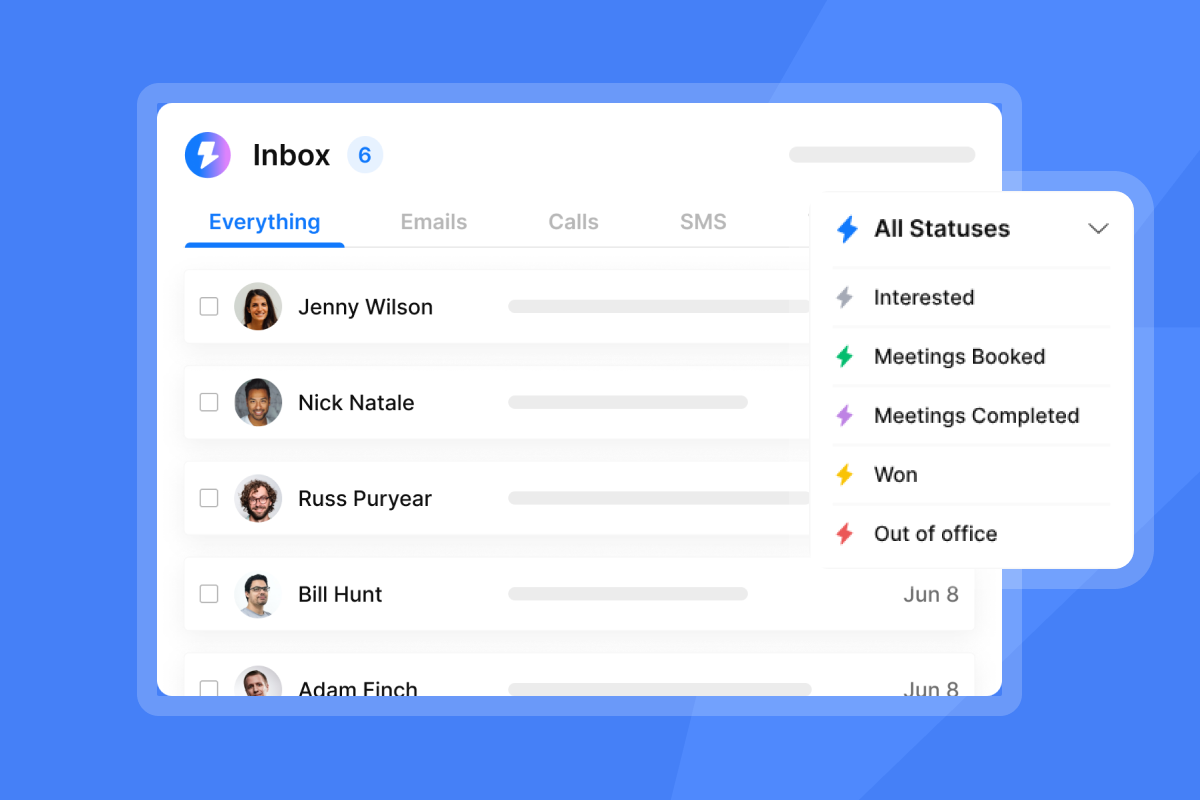
For example, when a prospect replies "send me your pricing," the AI Reply Agent classifies it as interested, drafts a pricing response using your approved template, and either holds it for your review (Human-in-the-Loop mode) or sends it automatically within five minutes (Autopilot mode). A static sequence may continue sending scheduled follow-ups regardless of that reply. Handling replies in context is part of what an AI BDR for outbound sales does.
The Human-in-the-Loop (HITL) configuration matters here. In HITL mode, nothing sends until a rep reviews and approves the draft inside Unibox or via Slack. Most teams deploying AI for the first time start in HITL mode to calibrate tone and accuracy before moving to full autopilot on lower-stakes segments. This gives you the speed advantage of AI without the risk of an unchecked message reaching a C-suite contact.
Where human SDRs outperform AI
AI handles volume and consistency well, which is the baseline to check in any AI BDR tools comparison. It does not handle ambiguity, creative problem-solving, or trust-building the way a skilled human can.
Consider a deal where the prospect responds: "We looked at a similar tool two years ago and it burned us. What makes you different?" Parsing that reply correctly, connecting it to the prospect's known history, and crafting a response that rebuilds credibility requires judgment. Your best rep also knows when a lukewarm reply signals budget constraints versus timing issues, and adjusts the next conversation accordingly. AI cannot make that inference reliably yet.
The same applies to navigating a buying committee of four to six people with different priorities, negotiating commercial terms, or running a discovery call that surfaces pain points the prospect has not articulated. For high-value accounts, human judgment and relationship capital typically prove more valuable.
When to combine AI and human SDRs
The hybrid model works as a funnel handoff. AI handles everything from cold outreach through initial AI BDR lead qualification, then routes warm leads to human reps for deeper discovery and closing.
Your AI BDR sources prospects from SuperSearch, sends a four-to-seven step sequence (the optimal length per Instantly's 2026 benchmark report), and classifies every reply. Warm replies can be reviewed and handed off to a human rep, who takes it from there. The rep's calendar fills with pre-qualified conversations rather than cold dials.
Cost comparison: AI BDR vs human SDR
A fully loaded human SDR typically costs $102,000–$210,000+ annually once salary, OTE, benefits, recruiting, onboarding, management overhead, and attrition costs are included. An AI infrastructure stack on Instantly starts from $47/month, with total costs varying by plan and send volume. The table below shows the fully loaded annual cost for each model using defensible ranges.
Total cost of ownership (TCO) comparison
Cost category | Human SDR (annual) | AI BDR platform (annual) |
|---|---|---|
Fully loaded annual cost (salary, OTE, benefits, taxes, tools, recruiting, onboarding, management overhead, office, attrition) | Varies by plan and send volume. See Instantly pricing | |
Domain infrastructure | Included in tools | Varies by domain count |
Total TCO (estimated) | Varies by plan and send volume. See Instantly pricing |
Human SDR TCO range sourced from Remote Growth Partners (200+ client engagements, Pavilion 2025 Sales Compensation Study, Bridge Group 2025 SDR Metrics Report). The $102,000 floor reflects entry-level reps in lower-cost-of-living markets. The $210,000+ ceiling reflects senior reps in Tier 1 cities with full benefits, management overhead, and attrition costs. See the source for a full line-item breakdown.
The TCO gap compounds when you calculate what AI BDRs actually cost per meeting booked. Volume and targeting quality determine the final economics:
Cost-per-meeting calculator
Metric | Human SDR model | Automated AI model (Instantly Growth stack) |
|---|---|---|
Monthly cost | $8,500–$17,500/month (derived from $102,000–$210,000+ annual TCO ÷ 12) | $141/month (Growth Outreach + Credits Growth + Growth CRM at monthly billing) or $112.80/month on annual billing ($37.60 + $37.60 + $37.60). Hypergrowth Outreach stack starts at $191/month. |
Monthly outbound volume | ~1,000–2,000 emails (estimated practical capacity for a researched, personalized send cadence across ~20 working days. This reflects human productivity constraints, not the 30 emails/inbox/day deliverability cap that applies to automated accounts.) | 5,000+ emails per month across multiple warmed inboxes, each capped at 30 emails/day per Instantly's safe sending limit. |
Estimated replies at 3.43% platform benchmark | ~34–69 replies (3.43% × 1,000–2,000 emails). Source: Instantly's 2026 benchmark report | ~172+ replies (3.43% × 5,000 emails). Source: Instantly's 2026 benchmark report |
Estimated meetings booked | Varies by rep, market, and ICP. Meeting targets should be set against your own team's historical baseline. | Varies by ICP, targeting, and copy |
Estimated cost per meeting | Varies by rep performance, ACV, and market. Calculate against your own monthly SDR cost and meetings booked. | Typically lower at scale |
Monthly cost for Human SDR derived from the annual TCO range sourced from Remote Growth Partners(200+ client engagements, Pavilion 2025 Sales Compensation Study). Reply estimates are calculated figures based on the 3.43% platform average from Instantly's 2026 benchmark report. Meeting volumes and cost-per-meeting figures represent benchmarks from independent industry sources, not guaranteed outcomes. AI model costs vary by plan, inbox count, and send volume. SeeInstantly pricingfor current plan details.
The 3.43% reply rate benchmark comes from Instantly's 2026 Cold Email Benchmark Report, which analyzed billions of cold email interactions from January 1 to December 18, 2025. Actual meeting rates depend on ICP quality, data hygiene, sequence copy, and deliverability infrastructure. These figures represent what teams achieve with reliable, repeatable systems, not guaranteed outcomes.
Because Instantly's Outreach plans use flat-fee pricing with unlimited email accounts and warmup, your send volume scales with the number of warmed inboxes you manage rather than with a per-seat fee. Each inbox stays within the 30-emails-per-day safety limit that protects sender reputation, and you add more accounts rather than paying more per user. The Growth plan starts at $47/month. Hypergrowth runs $97/month. Light Speed is $358/month and adds SISR (Server and IP Sharding and Rotation) with dedicated private IP pools for strong, consistent deliverability at high volume.

Scalability: when volume demands automation
Human output has a hard ceiling. A well-organized SDR sending personalized, researched emails has a practical daily ceiling. Thorough prospect research takes meaningful time per contact, and that time compounds quickly across a full list.
AI running across multiple warmed inboxes (each capped at 30 emails per day) processes the same research across hundreds of prospects in seconds and does not experience fatigue, distraction, or inconsistent follow-up timing, all backed by an AI sales agent deliverability system.
The volume gap is meaningful, but it only matters if deliverability holds. Each inbox staying at or below 30 emails per day with a proper 4 to 6 week warmup period is the non-negotiable input. Secondary sending domains are a core scaling strategy: you protect your primary domain, distribute volume across multiple inboxes, and keep each account well within safe sending limits.
One of the least discussed costs in SDR teams is performance variance. For example, a top rep might book 20 meetings a month while a bottom rep books four. The gap is often inconsistency in prospecting quality, follow-up timing, and message structure rather than effort alone. AI workflows eliminate that variance. Every prospect gets the same well-structured sequence and the same reply handling. Instantly's 2026 benchmark report found that consistent, stable sending patterns produce 15 to 20% higher reply rates than erratic volume, which is a direct benefit of system-level standardization.
Maintaining brand voice in automated outreach
The concern that AI will produce robotic, off-brand emails is legitimate but manageable with the right configuration. Instantly's AI Custom Reply Labels classify incoming replies across 50+ languages and adapt response handling based on sentiment, not just keywords. The system distinguishes "interested," "not interested," "out-of-office," "unsubscribe," and custom labels your team defines.
Track positive reply ratio (interested, wants more info, booked a call) as your primary quality signal. If positive replies trend downward over two or more campaigns, review copy, targeting, and list quality before attributing the drop to the AI. Instantly's 2026 benchmark report shows the best-performing campaigns keep emails under 80 words and regularly test new messaging. Top-quartile senders hit reply rates above 5.5%, and elite performers exceed 10.7%. Reaching that top tier is a systems discipline.
Validating AI lead intent recognition
Instantly's AI Smart Pause detects out-of-office replies via NLP, extracts the stated return date, pauses the lead, and resumes the sequence automatically on that date. The AI Blocklist Triggers (Hypergrowth and above) prevent future contact the moment an unsubscribe or hostile reply arrives, workspace-wide. These automations do not require manual rules setup after each campaign. The NLP refines accuracy as you provide feedback on misclassifications, making the system more reliable the longer you run it.
When to deploy AI in your sales stack
Before committing to AI automation or scoring AI BDR platforms, run a readiness check against these four criteria:
- Broad ICP (Ideal Customer Profile): Your target profile is defined by repeatable attributes such as industry, company size, or job title, and a well-structured message can be relevant to any company that matches those attributes without requiring individual account research.
- Short deal cycle: Your average contract value and sales cycle suggest volume-based outreach will drive results.
- High prospecting overhead: Your team spends more than 30% of SDR time on prospecting and first-touch sending.
- Message testing required: You need to test multiple messaging variants simultaneously to find what resonates across segments.
If three or more apply, the case for AI infrastructure is strong, and the AI sales agent pricing models make it affordable. If none apply, you are likely selling high-ACV enterprise deals where human coordination is the competitive advantage.
Use AI campaigns to pressure-test a new vertical before committing a human rep to it. Run a 500-contact sequence into the new segment using SuperSearch filtered by job title, company size, and technology stack. Measure reply rates against the 3.43% platform benchmark. If the segment responds and conversations are substantive, assign a human rep to follow up and open the market properly. If replies are weak, you have learned that for the cost of a few domains and credits rather than a quarter of a rep's salary.
When to prioritize human SDRs for high-touch deals
There are clear scenarios where AI plays a supporting role rather than the lead.
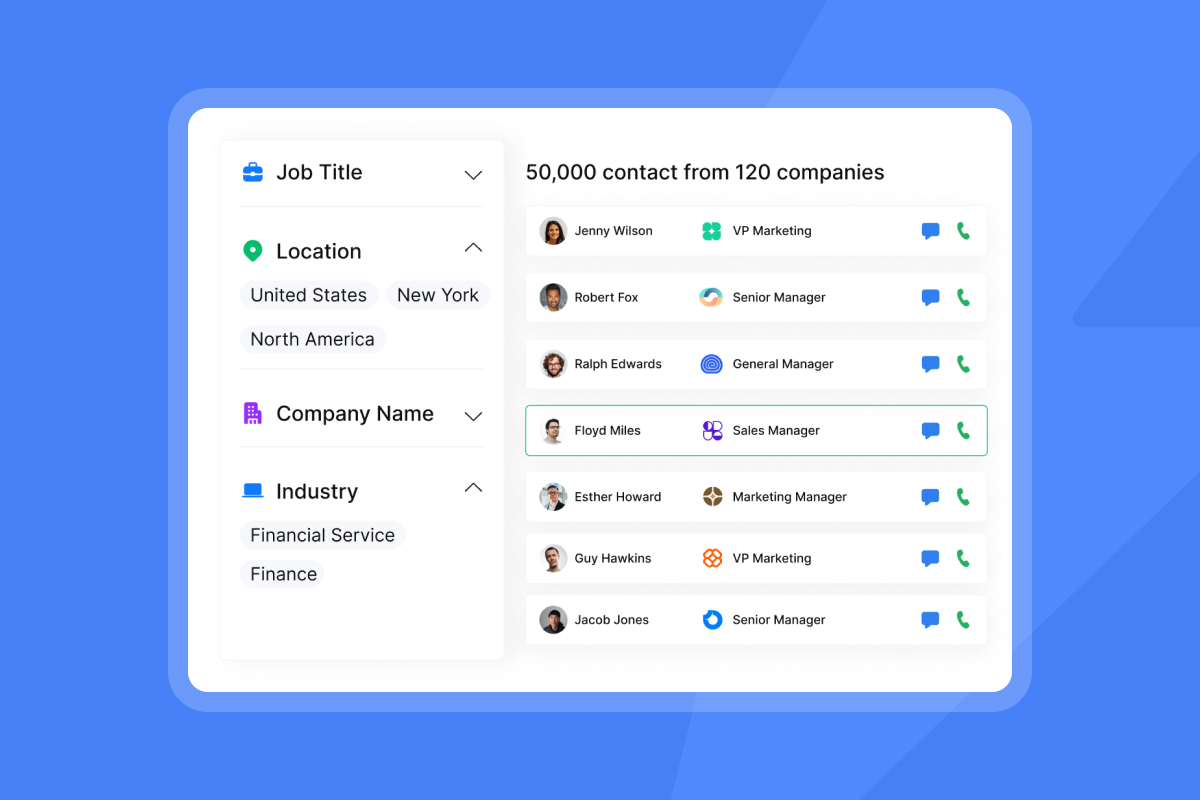
Multi-stakeholder buying committees: Deals above $100,000 frequently involve four to six stakeholders across the VP of Sales, RevOps, IT, and procurement. Mapping those relationships, understanding each stakeholder's priorities, and coordinating outreach across the buying committee requires human coordination. AI surfaces contact information for each stakeholder via SuperSearch, but the account strategy is a human job.
High-value account personalization: Custom video outreach, bespoke proposals, executive sponsor involvement, and in-person relationship development are tools no current AI BDR deploys reliably. For high-value accounts, those human touches justify the time and cost involved.
Reading between the lines: A skilled SDR reads "we're evaluating options for Q4" and understands what is not said: urgency exists, budget is likely allocated, a competitor is already in the conversation. That inference shapes which proof points to lead with. AI classifies the reply as interested; the nuanced follow-up strategy requires a human.
Compliance and brand risk management: High-volume campaigns carry brand risk if not managed carefully. Human oversight combined with Instantly's AI Blocklist Triggers provides a layered defense: AI catches unsubscribes and hostile replies automatically, and your team reviews edge cases before they become incidents.
"We're able to scale our outreach without sacrificing personalization or risking our sender reputation. For anyone serious about B2B cold email at scale, Instantly is worth every penny." - Natalie on Trustpilot
Evaluating ROI: AI BDR vs human sales reps
Use three dimensions to evaluate outbound performance: revenue impact (meetings set and pipeline coverage), productivity (cost per meeting and rep utilization), and buyer alignment (are your high-touch accounts getting human attention?).
Map your ICP to a sales motion:
- Broad ICP, short cycle, sub-$30K ACV: AI-led outreach with light human follow-up.
- Narrow ICP, 30-90 day cycle, $30K-$150K ACV: Hybrid model, AI for top-of-funnel, human for discovery and close.
- Named accounts, 90-day+ cycle, $150K+ ACV: Human-led with AI handling research, contact sourcing, and reply classification.
The SDR transition, a defining trend in the future of AI BDR, does not mean eliminating human roles. It means redefining them. SDRs become system managers: they monitor campaign health, review HITL reply drafts, refine AI Custom Reply Labels, and focus their conversation time on warm leads. One SDR overseeing an AI system can manage the output of what previously required multiple reps doing manual prospecting.
Run this 30-day proof of concept to compare models side by side:
- Week 1: Register two sending domains, configure SPF, DKIM, and DMARC, load 500 contacts from SuperSearch into a five-step sequence, and start warmup at 5 emails per day.
- Week 2: Launch the campaign, ramp to 30 sends per inbox per day, monitor inbox placement daily.
- Week 3: Review reply classifications, activate HITL for all positive replies, route qualified leads to a human rep.
- Week 4: Compare meetings booked, reply rates, and cost per meeting against your human-SDR baseline for the same period.
Target: 5%+ reply rate (top quartile per the benchmark report) and a cost-per-meeting 50% lower than your current model.
"I've been using Instantly.ai for about 4 months, and I have never had an issue with using their features or a challenge with customer support. It has everything needed for sending personalized cold outreach campaigns, with everything documented in clear SOPs and a customer support that is quick to respond and solve the issue/answer inquiry." - Yassine Raji on Trustpilot
A practical starter stack on Instantly covers all three layers of the hybrid model for $141/month:
- Outreach Growth: $47/month (unlimited accounts and warmup, A/Z testing, AI Sequence Writer)
- Instantly Credits Growth: $47/month at monthly billing, or $37.60/month on annual (credits for SuperSearch and AI agents)
- Growth CRM: $47/month (Unibox, pipeline, reporting)
Scaling to Hypergrowth Outreach at $97/month adds the Deliverability AI Agent for always-on DNS health, blocklist, warmup score, and bounce rate monitoring. It runs automatically every 24 hours and surfaces what to fix before your sender reputation takes damage. Light Speed at $358/month adds SISR for teams sending at very high volume across many accounts.
The sales leaders who hit plan with fewer surprises are the ones who stopped asking whether to choose AI or humans, and started building the infrastructure to run both at their highest value, with Instantly's AI agents doing the top-of-funnel work.
Try Instantly free with a 14-day trial (no credit card required) and use the benchmark report to set your team's targets before you go live.
FAQs
What is the average reply rate for automated cold email campaigns?
According to Instantly's 2026 benchmark report, the platform average reply rate is 3.43%, while top-quartile senders achieve over 5.5% and the top 10% exceed 10.7%. These figures reflect data from billions of cold emails sent January 1 to December 18, 2025.
How many emails should an automated inbox send per day?
To protect your sender reputation, cap each inbox at 30 emails per day on cold-outreach-dedicated accounts. New domains should start at 20 to 30 emails per day and ramp gradually over a 4 to 6 week warmup period before reaching that ceiling.
What does Instantly's AI Reply Agent cost?
The AI Reply Agent runs on Instantly Credits, starting at $9/month for the Nano plan (150 credits), with each reply consuming 5 credits. At a 3.43% reply rate on 800 emails, you get roughly 27 replies per month, which requires 135 credits and fits within the Nano plan. For campaigns closer to 1,000 emails or more, the Growth Credits plan ($47/month, 1,500–2,000 credits) gives you more room to scale.
When does an AI BDR outperform a human SDR?
AI BDRs outperform human SDRs on high-volume, repetitive tasks: initial cold outreach, multi-step follow-ups, out-of-office handling, and reply classification at scale. Human SDRs outperform AI on complex, multi-stakeholder deals above roughly $30,000 ACV where relationship depth and judgment are decisive, unlike narrower AI SDR platforms built for outbound execution alone.
Can an AI BDR protect domain reputation during high-volume campaigns?
Yes, with the right infrastructure. Instantly's Deliverability AI Agent monitors DNS health, blocklists, and bounce rates every 24 hours and triggers remediation automatically. Keeping each inbox under 30 sends per day and completing a 4 to 6 week warmup are the two non-negotiable inputs to sustained inbox placement.
Key terms glossary
Primary inbox: The main folder where a recipient receives important, personal, or expected emails, avoiding the spam or promotions folders. Landing here is the goal of every deliverability investment.
Sender reputation: A score assigned by email service providers based on your sending history, bounce rates, and spam complaints, which determines inbox placement. Protect it by keeping bounces below 1% and honoring unsubscribes immediately.
Domain warmup: The process of gradually increasing email volume on a new domain to build trust with email service providers before launching full campaigns. Warm for 4 to 6 weeks, starting at 5 emails per day and ramping to a maximum of 30 per inbox per day.
List hygiene: The practice of regularly cleaning your lead list to remove invalid, inactive, or risky email addresses. Keep bounce rates below 1% to avoid reputation damage that suppresses inbox placement across all campaigns.
Human-in-the-Loop (HITL): A mode where Instantly's AI Reply Agent drafts replies in under 5 minutes but holds them for human approval before sending. Use it for new deployments or high-value accounts.
SISR: Server and IP Sharding and Rotation, available on Instantly's Light Speed plan. Distributes sends across dedicated private server and IP pools to protect deliverability at high volume.
Read next:
- How to warm up a new email domain for cold email outreach: a step-by-step guide to building sender trust before your first campaign goes live.
- Cold email subject lines: what works in 2025: data-backed subject line patterns that improve open rates across B2B cold outreach.
- 15 best ways to find B2B sales leads in 2026: a practical breakdown of lead sourcing methods ranked by quality, cost, and time to pipeline.



