.svg)
%20(1).svg)


Updated June 2, 2026
TL;DR:
Finding decision-maker emails starts with mapping your ICP to exact titles, filtering by company size and industry, then verifying every contact before you send. The average B2B purchase now involves 13 stakeholders, and 89% of buying decisions cross multiple departments according to Forrester's 2024 State of Business Buying report. Reaching the wrong contact wastes rep time and triggers bounce rates that damage your sender reputation. This guide gives you a repeatable system to identify the right executive, track buying signals, and source verified contact data that lands in the primary inbox.
Bounced emails and stalled pipeline often trace back to a single sourcing error: targeting someone who influences a decision rather than someone who owns it. The hours spent researching that contact, and the domain reputation lost on the bounce, compound quickly across a full campaign.
Finding decision-maker emails is not about guessing but about building a system from ICP mapping, company size filters, industry-specific title research, and verified data. Get it right and your emails land in front of people who can say yes. Get it wrong and you burn sender reputation on contacts who will never move a deal forward.
Why targeting the right decision-maker protects pipeline health
An executive decision-maker is any individual with formal authority to approve a purchase, allocate budget, or block a deal. They are accountable for the outcome, not just the opinion. Reaching them early compresses your sales cycle by eliminating information delays through layers of management.
Forrester's 2024 research shows the average B2B buying group now spans 13 stakeholders across multiple departments. Every committee member you fail to engage is an active gap in your deal coverage, not a neutral omission.
Decision-maker vs. influencer vs. gatekeeper
These three roles require different outreach strategies.
- Decision-maker: Holds formal approval authority and is accountable for outcomes, not just recommendations. They sign the contract and own the results.
- Influencer: Shapes committee opinion through technical or domain expertise. They rarely sign the contract, but a negative opinion from them can kill a deal.
- Gatekeeper: Controls access to both groups, often an executive assistant, office manager, or procurement coordinator. You do not pitch them. You acknowledge their role and ask a direct routing question.
The most effective path is to build a relationship with the champion (an internal advocate who benefits from your solution) and work your way to the economic buyer from there.
Cost of targeting the wrong contact
One wrong contact wastes a few hours. A list built around wrong contacts is a deliverability problem. When bounce rates climb, mailbox providers start treating your domain as a risk. Above 5%, many ESPs apply penalties or suspend sending entirely.
The financial math is straightforward. If your reps spend two hours researching a contact who cannot approve a deal, multiply that by the number of reps and the number of weekly campaigns. The waste compounds fast. The B2B email list pricing guide covers how to calculate the real cost per meeting when data quality is factored in.
Map your buyer persona to executive titles
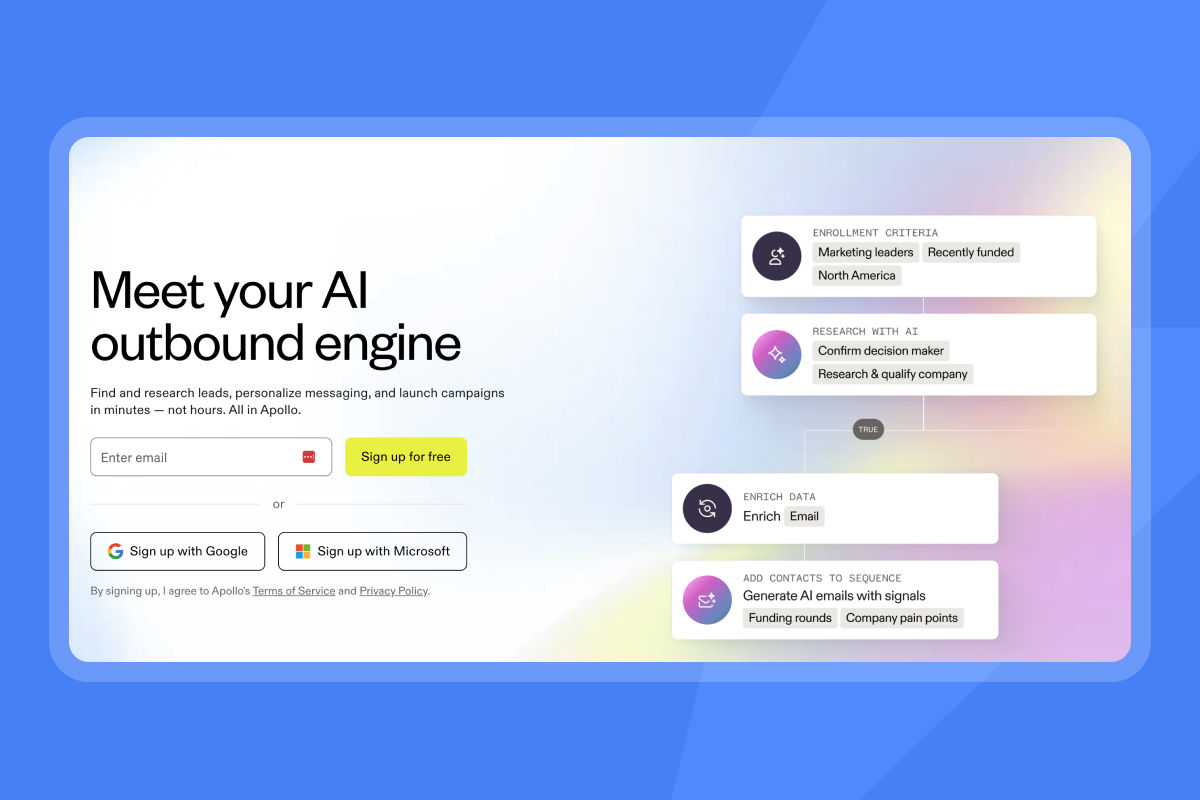
Your ICP defines the type of company you target. Your buyer persona defines the specific person inside that company who holds budget authority. Mapping one to the other means translating firmographic criteria (industry, headcount, revenue) into specific job titles you can search for in a database.
Start with your closed-won deals. Pull the titles of every contact who had a hand in the decision and look for patterns by company size and vertical. Use those patterns to build title filters for each ICP segment, then export only contacts matching two or more criteria.
Common B2B decision-maker titles by function
Use this as a starting reference, not a rigid rule. Actual titles vary by company size and internal structure.
Function | Common decision-maker titles |
|---|---|
Marketing | VP of Marketing, CMO, Director of Demand Generation |
IT / Engineering | CTO, CIO, VP of Engineering, Director of IT |
Operations | COO, VP of Operations, Director of Operations |
Sales / Revenue | VP of Sales, Head of Sales, Chief Revenue Officer |
Finance | CFO, VP of Finance, Director of Finance |
How company size changes reporting structures
A VP of Sales at a 30-person company typically handles pipeline strategy, recruits reps, and closes deals personally. At a 5,000-person enterprise, the same title manages regional directors, reports to a CRO, and rarely touches individual deals. Title alone is an unreliable indicator of scope because the same label covers very different authority levels depending on org size.
This is why headcount filters matter as much as title when building a search query. Always layer company size on top of job title.
Decision-makers by sales funnel stage
Most buying committees fall into three tiers: ultimate approvers, the core buying committee, and internal influencers such as end users. Each tier requires different content and a different ask.
- Early discovery: Target the champion or influencer. Educate, do not pitch.
- Middle evaluation: Engage the technical buyer and department head. Answer objections.
- Final approval: Reach the economic buyer. In IT or software, expect finance involvement in the final stage.
Use company size filters to refine your target
Headcount is the most reliable proxy for org structure. Your targeting strategy should reflect how authority is distributed at each size band.
Company size | Decision-maker profile | Targeting strategy |
|---|---|---|
1-50 employees | Founder, CEO, or co-founder holds final approval | Approach senior leadership directly. At this size, founders and CEOs are typically involved in most purchasing decisions. |
51-200 employees | VP-level directors in Sales, Marketing, and Operations | Target VP roles, and consider multi-threading when deals require broader buy-in. |
201-1,000 employees | Specialized Heads of RevOps, Enablement, and Customer Success | Multi-threading across committee roles is often necessary. The signal-based cold email guide covers sequencing for multi-contact campaigns. |
1,000+ employees | Procurement, specialized VPs, and buying groups that frequently reach 10 or more stakeholders | Plan sequences around the full committee, not a single contact. |
Industry-specific decision-maker profiles
Title conventions shift considerably by vertical. A "Head of Growth" in SaaS is a senior decision-maker. In manufacturing, that title may not exist at all. Knowing which titles carry budget authority in your target vertical saves hours of dead-end research.
Industry | Key decision-maker titles | Notes |
|---|---|---|
SaaS | VP of RevOps, Head of Growth, CTO, Chief Revenue Officer | Founders retain authority at early-stage companies. RevOps titles are common at Series B and beyond. |
Agency | Managing Director, Founder, Head of Client Services, VP of Client Success | Structure varies by size. Account Director roles are senior but typically lack vendor budget authority. |
Manufacturing | Plant Manager, VP of Supply Chain, Director of Operations, VP of Procurement | Approval chains are formal and multi-layered. |
Finance | CFO, Chief Compliance Officer, VP of Finance, VP of Operations | Approval chains are formal. Compliance and finance titles often hold co-approval authority on vendor decisions. |
Healthcare | Chief Medical Officer, Chief Medical Information Officer (CMIO), CFO, Chief Compliance Officer | The CMIO holds budget authority over technology investments. The CMO provides clinical input on purchasing decisions. |
Regulated industries: compliance notes
HIPAA-covered entities are exempt from CCPA. Outside HIPAA's scope, such as fitness apps or direct-to-consumer genetic testing companies, CCPA applies if the business meets the $25M+ revenue, 100,000+ California resident data, or 50% or more data-sale revenue threshold. GLBA-regulated financial institutions are also exempt from CCPA. The outreach compliance guide covers lawful contact in regulated industries.

Uncover high-intent executive signals
Reaching the right title is necessary but not sufficient. Reaching the right title at the right moment is what produces replies. Buying signals tell you which companies are in an active evaluation window, which means your email arrives when they are already looking for a solution.
Spotting decision-makers in job postings
A job posting often signals available budget. If a company posts for a VP of Sales, they are building out a function and likely evaluating sales tools. If they post for a Data Engineer, they may be investing in their analytics stack. Each of these behaviors points to a company actively investing in a function, which is a reliable indicator that budget is in motion. Filter your lead searches by companies posting roles in the functions adjacent to your solution.
Tracking tech stack shifts for new buyers
When a company switches CRMs or implements a new marketing automation platform, they often need complementary tools to fill gaps. Tech stack changes signal both budget availability and a leadership team that is actively improving their operations. Tools like BuiltWith and Bombora track these shifts. The research and data collection masterclass covers how to build this signal layer into your research process.
Funded companies: identify key decision-makers
A funding announcement means new budget, new headcount, and often new leadership hires in the VP and C-suite range. Filter for recently funded companies in your target vertical and identify the executives leading the functions your solution supports. Crunchbase and LinkedIn both offer funding filters to narrow your search by stage and recency.
Tracking engagement to identify buyers
Pricing page visits represent the highest-fidelity first-party intent data because the behavior is unambiguously purchase-related. Decision signals such as quote requests, trial signups, and specific implementation questions indicate even higher intent, as they show a prospect has moved past evaluation and is choosing between final options. A CFO who visits your pricing page twice is a warm contact, not a cold one. Instantly.ai's Website Visitors feature identifies US-based companies researching your site and pushes that data into your CRM with Slack notifications so your reps can prioritize outreach the same day.
Find and verify decision-maker email addresses
Finding a name is not enough. You need the verified email address behind it, and you need confidence that address is current before you send. Outdated or guessed addresses create hard bounces that damage your sender reputation with every campaign.
Identifying executive email formats
Common patterns include first.last@company.com, first@company.com, and f.last@company.com. Email formats vary by company, and guessing without verification is the fastest way to accumulate hard bounces. Our email deliverability for sequences guide explains how bounce clusters affect your broader domain reputation over time.
Where to find verified executive contacts
The table below compares the major tools for sourcing verified B2B decision-maker contacts. Pricing reflects publicly listed rates as of April 21, 2026.
Tool | Core feature | Starting price | Free tier |
|---|---|---|---|
Instantly SuperSearch (powered by Instantly Credits) | 450M+ verified B2B contacts, LLM enrichment, 5-provider waterfall verification, 4.2M+ account deliverability network | $9/month (Nano) | Yes (Free Trial: $0 with 100 credits) |
Apollo.io | 210M+ contacts, per-seat model | $49/user/month (annual) | Yes (limited) |
Hunter.io | Email finder, domain search | $34/month (annual) | Yes (50 credits/month) |
Snov.io | Email finding, sequences, unlimited seats | $29.25/month (annual) | Yes (Trial plan with 50 credits/month) |
Clay | Multi-source enrichment, workflow automation | Credit-based | Yes |
Cognism | EMEA data, phone-verified mobile numbers | Custom quote | No |
ZoomInfo | 600M+ professional profiles, enterprise integrations | $14,995/year (3-seat min) | No |
ZoomInfo's entry price requires a minimum $14,995 annual contract with no monthly billing option, and most teams report total costs of $30,000 to $60,000 once seats and credits are sized for real workloads. Cognism does not publish pricing and requires a custom quote, with annual contracts targeted at mid-market and enterprise buyers.
Instantly SuperSearch gives you access to 450M+ verified B2B contacts filtered by job title, industry, company size, and intent signals, with LLM-assisted enrichment and export to major CRMs. Because outreach runs on a flat-fee model with unlimited email accounts included, you do not pay per seat as your team grows.
Boost deliverability, cut bounces
Verified data protects your sender reputation, but you also need domain warmup. Instantly's built-in warmup network uses real accounts to build domain reputation before you send a single cold email. Follow this ramp schedule:
- Week one: 5 sends per day per inbox.
- Week two: 15 sends per day per inbox.
- Week four: Up to 30 sends per day per inbox.
Never exceed 30 emails per inbox per day. The Inbox Placement test runs automated checks confirming whether your emails land in the primary inbox, promotions, or spam across major providers before you launch a campaign. Fix placement issues before they compound.
GDPR's legitimate interest basis under Article 6(1)(f) allows B2B prospecting without prior consent if the message is relevant to the contact's role, you are transparent about your data source, and you provide a clear opt-out. The CCPA's B2B exemption expired in January 2023, meaning business contact information for California residents is now fully protected with penalties starting at $2,663 per violation. Verify your data sources comply with both frameworks before building a list.
"I appreciate Instantly for its intelligent handling of domain and mailbox rotation as well as provider matching, which is critical for ensuring that my emails land directly in the primary inbox instead of getting caught in spam filters." - Richard E. on G2
Blueprint for finding ideal contacts
Use this checklist as your operating procedure for every new campaign before a single email goes out.
- Map titles to decision-maker personas. Pull the job titles from your last 10 to 20 closed-won deals. Group by company size and identify which titles appear consistently at the approval stage versus evaluation. Build a short title map for each ICP segment and use that map as your primary search filter.
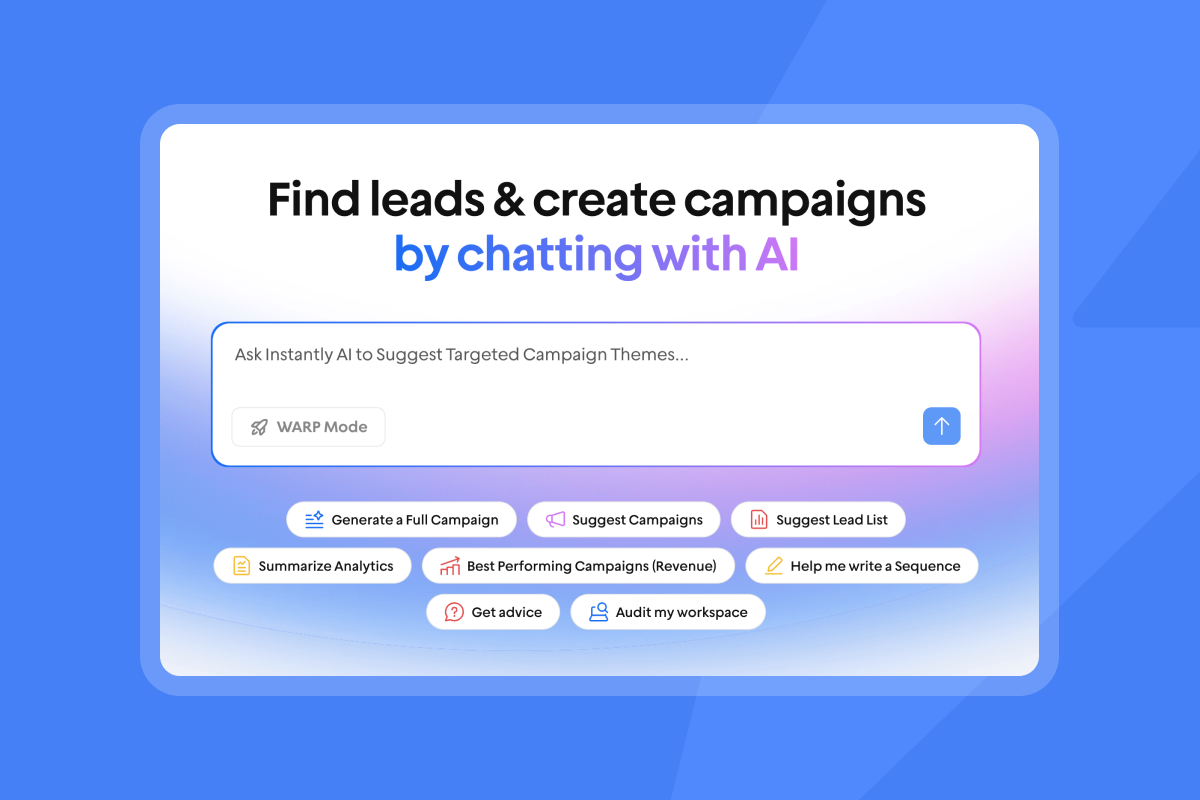
- Define precise executive ICP filters. Layer firmographic filters on top of your title map: industry vertical, headcount range, geography, and funding stage. A search for "VP of Sales" returns very different results at a 15-person startup versus a 300-person mid-market firm. In SuperSearch, combine title, industry, and headcount filters to focus a broad contact pool on your highest-match prospects. Enrich those records with direct email and phone before exporting.
- Track decision-maker engagement signals. Assign each ICP account a signal score based on recent funding, relevant job postings, tech stack changes, and website visits. Prioritize accounts with two or more active signals into separate sequences with more personalized first lines and shorter follow-up windows.
Best practices for decision-maker email sourcing
The most common mistakes in executive contact research are not strategic. They are operational: old data, format guessing, non-compliance, and lists that never get refreshed.
How to identify key decision-makers
Cross-reference LinkedIn job titles with verified database records before finalizing any contact. LinkedIn shows current roles and tenure, which helps you spot recent job changes that a database may not have caught yet. Pair LinkedIn verification with a database that uses waterfall enrichment across multiple providers to reduce stale data risk.
"Instantly makes cold outreach operationally simple at scale. The interface is straightforward, setting up campaigns with multiple inboxes is fast, and the warm-up system helps maintain deliverability when sending higher volumes." - Ivar S. on G2
How to email multiple executives without triggering spam filters
Multi-threading means building relationships with multiple buying committee members simultaneously, not blasting a department. Personalize each email to the specific role: a CFO email focuses on ROI and cost reduction, while a VP of Sales email focuses on pipeline coverage and rep productivity. Reference shared context between contacts only when it adds credibility. The cold email copywriting framework includes role-specific templates for multi-threading campaigns.
Decoding non-standard executive titles
Creative titles like "Chief Happiness Officer," "Growth Hacker," or "People Experience Lead" make database searches harder but are common at startups and agencies. Map them to standard functions first: does this role own budget, or does it influence culture? Use the job description on the company's careers page to determine reporting structure and scope. Titles alone rarely tell the whole story, so verify actual scope before assuming budget authority based on seniority signals alone.
When to refresh decision-maker lists
Executive turnover at the VP level and above is high enough that a six-month-old list can carry meaningful stale contact volume, each of which risks a hard bounce. Run a re-verification pass on any list older than 90 days before reactivating it. Set a calendar reminder tied to campaign launch dates so this step is built into your process, not bolted on after the first bounce spike. The guide on email deliverability sequences covers the full hygiene workflow, including how to handle contacts who have auto-bounced or gone inactive.
The teams that build a repeatable system (mapping titles, filtering by size and vertical, tracking signals, and verifying data before every send) run campaigns that compound instead of stall. The teams that skip these steps spend their quarter investigating deliverability drops instead of booking meetings.
Try Instantly free to access SuperSearch and build a verified list of decision-maker contacts across 450M+ B2B records, then run your outreach across unlimited sending accounts with built-in warmup and inbox placement testing included.
FAQs
How many decision-makers are typically involved in a B2B purchase?
Forrester's 2024 research puts the average at 13 stakeholders, with 89% of buying decisions crossing multiple departments. Buying groups at enterprise accounts can span IT, finance, legal, procurement, and the business unit simultaneously.
How do I verify an email address before sending?
Use a database with real-time verification like Instantly SuperSearch, which applies a waterfall enrichment process across five or more providers before returning a contact. Never guess email formats based on company-wide patterns alone. Verification removes the risk before it hits your sender reputation.
What is the difference between a decision-maker and an influencer?
A decision-maker holds formal approval authority and can allocate or block budget. An influencer shapes committee opinion through domain expertise but does not control final approval, though a negative recommendation from them is enough to stall a deal.
How often should I refresh my decision-maker contact list?
Run a re-verification pass on any list older than 90 days. Executive turnover at the VP level and above is high enough that older lists carry stale contacts, each of which risks a hard bounce and sender reputation damage.
Does CCPA apply to business contact information?
Yes. The CCPA's B2B exemption expired in January 2023, meaning work emails, direct phone numbers, and job titles for California residents are now fully protected. Penalties start at $2,663 per violation.
Key terms glossary
Decision-maker: An individual with formal authority to approve a purchase or allocate budget, accountable for outcomes rather than just recommendations.
Multi-threading: The practice of building relationships with multiple members of a buying committee simultaneously to reduce single-point-of-failure risk in a deal.
SuperSearch: Instantly's B2B lead database offering access to 450M+ verified contacts filterable by job title, industry, company size, and intent signals, with LLM-assisted enrichment.
Inbox Placement test: An automated check that confirms whether your emails are landing in the primary inbox, promotions folder, or spam across major providers before a campaign launches.
List hygiene: The process of regularly removing invalid, stale, or unengaged contacts from your database to maintain low bounce rates and protect sender reputation.
Read next
- ICP for B2B email: narrowing to high-value prospects: How to translate your ICP criteria into precise filters that surface the accounts most likely to convert.
- Cold Email Sequences: Structure, Timing, and Follow-Up Best Practices: A step-by-step guide to building sequences that maintain sender reputation and keep reply rates above benchmark.
- Complete Playbook: How to master B2B appointment setting: The full workflow for turning verified contact data into booked meetings, from first touch to confirmed calendar slot.



