.svg)
%20(1).svg)


Updated August 19, 2026
TL;DR: If you manage a B2B sales team and your pipeline depends on cold email, choose the platform that scales accounts and deliverability, not headcount. Instantly.ai gives you unlimited sending accounts on a flat fee, an account deliverability network of 4.2M+ accounts, and automated warmup so you scale outreach without compounding software costs. Apollo is a powerful sales intelligence suite with multichannel outreach and deep CRM integrations. Both platforms support HubSpot, while Instantly operates on flat-fee pricing and Apollo charges per user, so every rep you add on Apollo increases your software costs.
When deliverability issues and CRM data gaps go unresolved, sales leaders end up troubleshooting infrastructure instead of coaching reps, and that is a direct cost to pipeline performance. The root cause is usually the same: a legacy sales engagement tool that charges per seat, locks you into annual contracts, and treats deliverability as a setup checkbox rather than a continuous system.
To hit your pipeline targets in 2026, you need a sales execution system that prioritizes primary inbox placement and rep accountability. This guide compares the top sales execution platforms on the market, focusing on deliverability infrastructure, pricing transparency, and CRM integration so you can make a defensible decision before your next budget review.
How to audit sales execution performance
Evaluating sales execution software on marketing copy alone costs you a quarter. The criteria that actually matter are the ones your reps live with every day: sender reputation tools, admin controls, CRM sync accuracy, pricing structure, and support responsiveness when a live campaign breaks.
Tools for managing sender reputation
Sender reputation is the foundation of sales execution. Without it, every sequence you write goes straight to spam, and the technical system that protects it involves three interconnected parts: email warmup, domain health monitoring, and IP rotation.
Warmup is like pre-race stretching. Skip it and you risk a strain like a spam block on a fresh domain. Instantly's warmup mechanics use a private deliverability network of 4.2M+ accounts to warm both SMTP and IMAP simultaneously. A new domain needs 4-6 weeks of warmup before it's ready for full campaign volume, and the campaign-ready criteria require a health score above 90% (the percentage of warmup emails landing in the primary inbox over the trailing seven days). Watch Instantly's cold email deliverability guide for a walkthrough of why health score matters more than raw send volume.
Look for any platform to offer automated inbox placement testing, real-time bounce detection, and a public status page. Instantly's Instatus page shows component-level uptime so you can verify reliability before you sign.
Admin controls for rep accountability
Reps going rogue with unsafe automations is a real risk and a fast way to burn a domain. The controls you need are workspace-level: a Global Blocklist that prevents any rep from emailing competitors, former customers, or unsubscribes, and sequence governance that standardizes the copy variants your team can run.
Instantly's Unibox NLP auto-classifies incoming replies across 50+ languages, so every rep works from the same classification logic. The AI Blocklist Triggers feature automatically blocklists leads based on unsubscribe status or reply-content signals at the workspace level, working alongside your Global Blocklist so no single rep can circumvent either system. Unsubscribe-based triggers are available on all plans. Account-status and keyword-based triggers, which add leads based on reply content, are available on Hypergrowth and above.
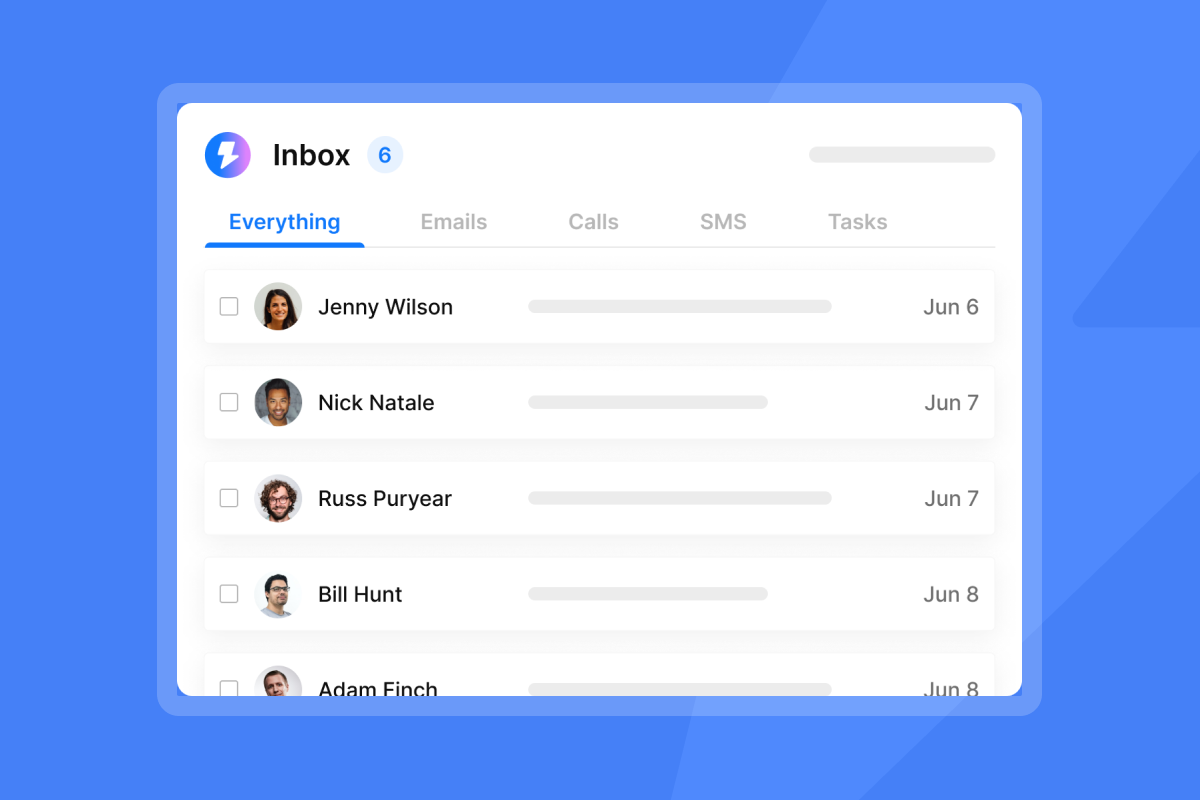
The Unibox v2 interface aggregates replies from dozens of sending accounts into a single dashboard. Unibox NLP applies sentiment labels and interest status automatically so reps spend time on conversations rather than inbox switching.
Automating your CRM pipeline handoffs
Fragmented pipeline visibility almost always traces back to manual CRM entry. When a rep marks a reply as "Interested" in their email client but forgets to log it in HubSpot, your forecast is wrong before the week starts. Automated handoffs fix this by syncing reply status, interest labels, and campaign data directly to your CRM without rep action.
Instantly's native HubSpot integration, configured through Automations, supports bidirectional sync. A reply marked "Interested" in Unibox can trigger a HubSpot contact update, a task creation, and a Slack alert in a single workflow, which is the kind of clean handoff that makes bottom-up forecasting defensible in a CFO review.
Standardized seat pricing and agreements
Adding new team members should increase your pipeline, not your software bill. Per-seat pricing penalizes growth in a direct and compounding way. A 10-rep team on Apollo Professional at approximately $79 per seat per month (annual billing) pays around $9,480 per year just for outreach access, and that figure climbs before any credits for contact exports.
Instantly's flat-fee Outreach Growth plan starts at $47 per month and covers your entire team with unlimited email accounts and unlimited warmup, regardless of rep count. That's $564 per year whether you run five reps or fifty, with pricing scaling by email volume and contact uploads rather than headcount.
Support responsiveness and what to verify before you commit
A deliverability incident during your highest-volume week is where support quality separates the good platforms from the expensive ones.
"Instantly has streamlined our cold email operations. The platform is intuitive, and managing outreach campaigns at scale is straightforward... Customer support has been responsive and helpful." - Krithika on Trustpilot

Top sales execution software for standardizing sales playbooks
The platforms below represent the clearest choices for B2B sales teams in 2026. The comparison table covers what each does best and where flat-fee execution changes the math.
Platform |
Pricing & fit |
Deliverability system |
CRM sync |
|---|---|---|---|
Instantly |
Flat fee, unlimited accounts. Teams scaling volume without per-seat costs. |
4.2M+ warmup network, SISR, Inbox Placement tests |
Native HubSpot |
Apollo |
Per seat ($49-$119/mo, annual billing). Data intelligence and multichannel sequencing. |
Sends via connected Gmail or Outlook mailboxes, no native warmup or deliverability network. |
Native HubSpot |
Outreach |
Per seat (enterprise pricing, contact Outreach for a quote). Enterprise forecasting and coaching workflows. |
Email sending via connected mailboxes. No native warmup, placement testing, or blocklist monitoring. Requires third-party add-ons. |
Native Salesforce (deep sync), HubSpot sync documented as unreliable across G2 reviews. |
Lemlist |
Per seat. Personalization-heavy sequences. |
Built-in warmup (Lemwarm) |
Zapier, HubSpot |
1. Apollo: CRM-ready workflow
Apollo's strength is data intelligence. Its contact database and built-in sequencing make it a natural choice for teams that want multichannel outreach alongside prospecting, and it integrates cleanly with HubSpot.
The per-seat model means your software cost scales directly with headcount from day one. A 15-rep team on Apollo Professional runs roughly $14,220 per year on annual billing before credits for contact exports. Both platforms support HubSpot integration. Instantly syncs to the same CRMs on a flat fee, with Instantly's Outreach Growth plan at $47 per month covering your entire team regardless of headcount, so you can use Apollo's database to source leads and execute campaigns through Instantly without per-seat pricing scaling against you as you hire. The Instantly vs Apollo comparison for agencies covers this workflow in detail with real user feedback.
2. Instantly: deliverability focus
Instantly is built around the premise that deliverability is a system, not a setup step. Instantly's Outreach Growth plan at $47 per month includes unlimited email accounts, unlimited warmup, and A/Z testing (full 26-variant capability is available on Hypergrowth at $97 per month and above) with no rep limits and no per-seat pricing. The deliverability network covers 4.2M+ accounts for warmup, and the private infrastructure isolates your reputation from other senders on shared pools.
What separates Instantly's deliverability approach from Apollo or Lemlist is that the protection runs in three connected stages rather than as isolated settings. BounceShield filters high-risk recipients before a campaign launches. High Bounce Auto-Pause halts the campaign entirely if bounce rate climbs past the threshold mid-run. AI Blocklist Triggers automatically blocklist leads based on unsubscribe signals or reply-content signals, working alongside the Global Blocklist as a behavioral layer that reacts to unsubscribes and reply content as they happen. On the reply side, Unibox v2 and Unibox NLP form the same pattern: aggregation first, then automated classification. Each stage feeds the next, so the system tightens over time without requiring manual intervention between campaigns.
3. Lemlist: personalization-first sequencing
Lemlist is built for teams that rely on visual personalization and multichannel touchpoints across email, LinkedIn, and phone. Its image and video personalization tools let you add contact-specific visuals to emails at scale, which is useful for outbound motions where pattern interruption drives replies. Warmup is handled through Lemwarm, Lemlist's built-in deliverability tool. CRM integration runs through native HubSpot and Zapier connectors. The per-seat pricing model means costs scale with headcount, and Lemwarm's mutual-engagement network covers 20,000+ accounts compared to Instantly's 4.2M+, which is a meaningful difference if you are scaling across multiple domains at high volume.
4. Outreach: audit-ready reporting
Outreach offers deep enterprise analytics including call coaching, deal intelligence, and forecasting that goes well beyond email, with reporting designed for enterprise requirements. The tradeoff is cost and complexity: per-seat pricing is enterprise-tier and requires a direct quote, so total cost scales with headcount and add-ons. Instantly's Unibox v2 paired with Unibox NLP provides the same pipeline visibility across open rates, reply rates, and interest status without the complex setup or high per-seat cost of Outreach.
Proven inbox placement tools
Instantly's automated Inbox Placement tests check delivery across 94 blacklists and send alerts when scores drop. On the Hypergrowth plan, these tests run continuously and fire alerts before you notice a deliverability problem in your reply rate data.
The Deliverability AI Agent, included on Hypergrowth and above, runs a full diagnostic every 24 hours covering DNS health, warmup scores, bounce rates, sending provider balance, and campaign copy quality. It surfaces what's affected and offers one-click fixes including pausing risky accounts and rebalancing providers. Watch this cold email deliverability video from Instantly's channel which explains how to interpret these health signals before they compound into a missed pipeline quarter.
Reliable email infrastructure
SISR (Server and IP Sharding and Rotation) is Instantly's infrastructure-level answer to sender reputation protection at scale. In standard cold email setups, your messages go through shared or static servers, and if another sender on the same IP gets flagged for spam, your deliverability degrades even when you've done nothing wrong.
SISR automatically distributes your sending across multiple dedicated IPs and servers, rotating and replacing them if performance drops, providing a hands-free approach to reputation protection at scale. SISR is available on the Light Speed plan at $358 per month.
One non-negotiable rule regardless of which platform you use: cap your volume at 30 campaign emails and 10 warmup emails per account per day. Scaling past this threshold increases your risk of spam blocks at the provider level, and no infrastructure feature compensates for volume abuse.
Essential criteria for your 2026 tech stack
The criteria below apply regardless of which platform you choose. Each one maps to a failure mode that shows up in pipeline data before it shows up in a vendor conversation.
Ensuring primary inbox placement
Primary inbox placement starts with email authentication. At minimum, all senders should configure SPF or DKIM, while bulk senders sending more than 5,000 messages per day must configure all three: SPF, DKIM, and DMARC. SPF specifies which servers can send on behalf of your domain, DKIM adds a cryptographic signature to each message, and DMARC tells receiving servers what to do when messages fail either check.
Instantly's DNS setup guide requires DKIM and SPF authentication at least 48 hours before DMARC activation, with propagation taking 24-48 hours. On top of authentication, a Custom Tracking Domain replaces shared tracking URLs with your own domain, isolating your tracking reputation from other senders on shared infrastructure.
Centralized admin and access controls
Team-level standardization requires workspace permissions that prevent reps from making unilateral decisions about sending volume, copy variants, or lead lists. Manage the Global Blocklist at the workspace level rather than the campaign level, so unsubscribes and competitor domains are protected automatically.
Instantly's High Bounce Auto-Pause feature pauses campaigns automatically when bounce rate exceeds 5% after a minimum of 200 sends, with a seven-day exemption from re-triggering after a resume. This acts as a governance layer that protects domain reputation even when reps run lists that haven't been properly verified.
Auditable metrics for CFO alignment
Open rates are a vanity metric for CFO conversations, because the numbers that matter are cost per meeting, pipeline coverage, and conversion from outreach to SQL. Your platform needs to sync reply data, interest status, and opportunity creation to your CRM without manual entry gaps to present these cleanly.
Instantly's Account Analytics tracks a "Combined Score" (a weighted open and reply rate) that's meaningful once you've hit 100+ contacts per account. For team-level CFO reporting, the key inputs are reply rate against the 2026 benchmark data and meetings set per active rep.
| Benchmark tier | Reply rate | What it means |
|---|---|---|
| All-sender average | 3.43% | Reference point across all senders. Check the 2026 benchmark report for current top-quartile targets |
| Top quartile | 5.5%+ | Above most B2B senders per the 2026 benchmark report |
| Top 10% | 10.7%+ | Top-performing campaigns per the 2026 benchmark report |
Consistent, stable sending patterns produce 15-20% higher reply rates than sporadic bursts, according to Instantly's 2026 benchmark report covering data from January 1 through December 18, 2025.
Maintaining clean contact databases
Data hygiene acts like a water filter. Dirty input poisons results over time, and no deliverability system compensates for sending to invalid or unverified addresses. Instantly's BounceShield skips known high-risk recipients based on historical bounce data, and the lead verification feature classifies addresses as valid, invalid, or risky before campaigns launch at 0.25 credits per lead.
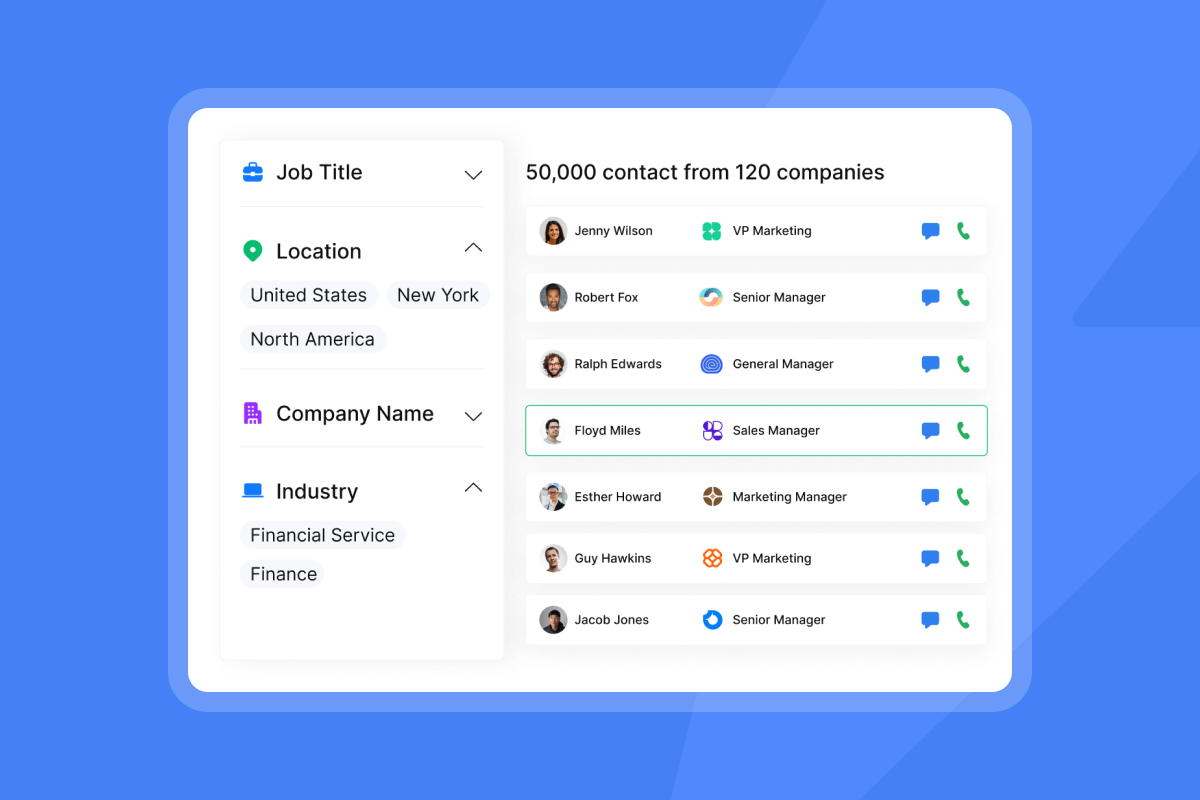
SuperSearch gives you access to 450M+ B2B contacts with waterfall enrichment that checks Instantly's own database first, then sequences through 7 partner data providers, stopping as soon as a verified result is found. The Signals filter adds buyer-intent data covering buying signals (Reddit-sourced pain points, competitor mentions, churn risk) and growth signals (funding rounds, technology adoption), with around 5.8M new signals entering the database each week. For a visual walkthrough of the filtering workflow, see the SuperSearch deep-dive from Instantly's AI agents series.
What to check before signing a sales software contract
Most vendors look polished in demos. The risks appear in the contract terms, data policies, and cancellation clauses, not the feature walkthroughs.
Auto-renewal clauses and cancellation restrictions
The first question to ask any vendor is: "What happens if we cancel mid-year?" Some enterprise contracts include auto-renewal clauses and restricted cancellation windows, so it is worth confirming the exact terms before you sign.
Instantly operates on monthly or annual billing with no stated lock-in beyond the billing period. Each Instantly subscription type (Outreach plan, Instantly Credits, CRM) cancels separately through Settings. If you have multiple active subscriptions and cancel one of them, that plan ends immediately. For the exact behavior in your account, confirm current cancellation terms in Instantly's Help Center before making changes.
Spotting fake domain health guarantees
No software can guarantee 100% primary inbox placement forever. If a vendor demo includes phrases like "guaranteed inboxing" or "never land in spam again," ask for the methodology behind it and request their public documentation on warmup mechanics, bounce thresholds, and IP rotation. Instantly's public documentation on warmup mechanics, BounceShield behavior, and the Deliverability AI Agent gives you an auditable paper trail of how deliverability protection works, which is more valuable than a marketing promise.
Compliance risks in lead acquisition
For GDPR and CCPA, B2B teams typically rely on legitimate interest rather than explicit consent, but that requires a documented Legitimate Interest Assessment and a clear opt-out mechanism for every contact you email. Data-source transparency from your vendor matters here: you need to know where the contacts in your database came from and whether they carry consent flags. Instantly's Data Processing Addendum covers GDPR, CCPA, and sub-processor disclosures under Foo Monk LLC. California residents and individuals in the EEA, UK, and Switzerland can submit an opt-out request via the Instantly Help Center.
Measuring platform ROI during your trial period
Instantly's 14-day free trial requires no credit card and includes 250 uploaded contacts and 1,000 emails. Run it as a structured POC against clear targets, not as a sandbox exploration.
Establish baseline KPIs for the POC
Set three targets before you send a single email. First, reply rate: a healthy campaign should approach 5.5% to put you in the top quartile per the benchmark data above. Second, bounce rate: keep it below 2% throughout the trial and pause immediately if it crosses that threshold. Third, meetings set: define how many booked meetings from trial volume would justify a full rollout.
Audit deliverability and sender setup
Start domain setup on day one of the trial: configure SPF, DKIM, and your Custom Tracking Domain first, then allow at least 48 hours for authentication to propagate before enabling DMARC. DNS updates can take up to 48 hours to take effect across the internet, so check consistency multiple times within that window before activating DMARC. Run an Inbox Placement test before launching your first campaign, because the Instantly Inbox Placement tool checks delivery across 94 blacklists and gives you a baseline health score. If you're below 90% before you send, fix the authentication issues first, since domain setup problems account for a large share of deliverability failures that get misattributed to platform quality.
Benchmarking rep meeting throughput
Measure how many high-quality outreach emails each rep can send per day when warmup, bounce detection, and reply classification are automated. The target ceiling is 30 campaign emails per inbox per day, and with multiple warmed inboxes per rep, throughput scales without degrading reputation. Use a 4-7 step sequence, keep each email under 80 words, and according to Instantly's 2026 benchmark report, first-touch emails generate 58% of replies versus 42% from follow-ups.
Audit CRM data integrity
Before the trial ends, export your Unibox reply data and cross-reference it against what synced to HubSpot through the Automations. Every "Interested" reply should produce a CRM contact update, a task, or a deal stage change without manual rep entry. A clean trial proves the integration works under real conditions, not demo conditions.
Test these deliverability systems against your team's pipeline targets with Instantly's 14-day free trial (no credit card required). You get immediate access to automated warmup, SuperSearch, and Unibox at the Growth stack starting at $47 per month, and you can benchmark your reply rate against the 2026 Cold Email Benchmark Report before your next CFO review.
FAQs
What is the best sales execution software for scaling volume?
Instantly.ai is the strongest option for scaling volume without per-seat cost growth because Instantly's flat-fee Outreach Growth plan at $47 per month covers unlimited email accounts, unlimited warmup, and unlimited team seats. Apollo and Outreach both charge per seat, which means your software cost scales directly against your headcount.
How much does Instantly cost for your whole team?
A starter stack of Outreach Growth, Instantly Credits Growth, and Growth CRM costs $141 per month for unlimited team members at a flat rate. That same coverage on Apollo Professional would run approximately $395 per month for five seats before any credits for contact exports.
What reply rates do top performers achieve in cold email?
Instantly's 2026 benchmark report shows a platform average of 3.43%, with top-quartile and top-10% thresholds published directly in the report. Consistent, stable sending patterns produce 15-20% higher reply rates than irregular bursts.
What is the recommended daily sending limit per email account?
Cap volume at 30 campaign emails and 10 warmup emails per account per day. Scaling past 30 campaign emails per inbox increases your risk of provider-level spam blocks, and no deliverability infrastructure feature compensates for volume that exceeds safe thresholds.
How long does full team adoption take on a new platform?
New domains need 4-6 weeks of warmup before reaching full sending volume, while pre-warmed accounts purchased through Instantly are campaign-ready from day one. For rep-level UI onboarding timelines, check with Instantly's team during your trial.
Key terms glossary
Sender reputation: A score email providers assign based on your sending history, bounce rates, spam complaints, and authentication setup. Inbox placement rate below 90% on a new account is a signal to review your authentication setup, sending volume, and list quality before scaling.
Warmup: The process of gradually increasing email volume on a new domain over 4-6 weeks to build trust with mailbox providers. Instantly's network uses 4.2M+ accounts for SMTP and IMAP warmup simultaneously.
SISR: Server and IP Sharding and Rotation. Instantly's infrastructure system that isolates sender reputation using dedicated IP pools that rotate automatically when performance drops, available on the Light Speed plan at $358 per month.
Unibox: Instantly's centralized inbox that aggregates replies from multiple sending accounts into one dashboard. Unibox NLP handles sentiment classification and interest-status labeling across 50+ languages to standardize reply triage across your team.
BounceShield: Real-time filtering system that skips known high-risk recipients based on historical bounce data before campaigns launch, helping keep your bounce rate below the 2% threshold.
Read next
- Outbound sales software: what it is, how it works, and how to choose: a breakdown of the key categories, how each layer of the stack contributes to pipeline, and what to prioritize before you buy.
- Outbound sales software pricing: understanding what you're actually paying for: how per-seat, flat-fee, and credit-based models compare across the tools B2B teams use most.
- AI BDR for agencies: evaluating platforms for multi-client outreach: what to look for in an AI BDR tool when you are managing outreach across multiple client accounts at once.


