.svg)
%20(1).svg)


Updated August 19, 2026
TL;DR: AI sales automation uses machine learning and NLP to handle lead sourcing, sequence generation, reply classification, and pipeline analysis at scale. Unlike rule-based triggers, it makes real-time decisions based on live intent signals. Instantly.ai's 2026 benchmark report found top performers achieve 10.7%+ reply rates, but only when deliverability and governance underpin every step. The biggest risk is treating it as set-and-forget. The opportunity is scaling consistent pipeline without adding headcount or compounding per-seat software costs.
Most sales leaders try to scale outbound by adding reps or buying more expensive seats, but deliverability and manual data work create the real bottleneck. AI sales automation changes that equation by handling the repeatable, high-volume tasks (finding leads, writing sequences, triaging replies) so your reps focus on conversations that require human judgment. Platforms like the Instantly's AI Agent combine several of these roles into one connected system.
Understanding what AI sales automation is, and what it is not, is the first step to building a system that produces consistent meetings without putting your domain reputation at risk. See this breakdown of the types of AI agents for how these roles typically divide across a stack.
What is AI sales automation?
AI sales automation is the use of machine learning, natural language processing, and agentic AI to plan, execute, and optimize outbound sales workflows without requiring a human to manage each step manually. AI-driven systems distinguish themselves through adaptability: they observe outcomes, reason about next steps, and adjust behavior based on live signals rather than fixed, predefined rules.
To understand what makes AI automation different from older rule-based tools, it helps to compare them directly across the dimensions that matter most for outbound teams.
You get a platform that sources leads matching your ICP, writes personalized email sequences, sends at the right time across multiple domains, classifies incoming replies by intent, and routes interested prospects to your CRM automatically. Trust-building and deal negotiation require human judgment that no automation replaces. AI handles the volume work while your team handles the relationship work.
Traditional automation vs. AI automation
| Dimension | Traditional automation | AI sales automation |
|---|---|---|
| Decision logic | Fixed rules, predefined triggers | Dynamic reasoning, real-time signals |
| Personalization | Static templates with merged fields | Generated copy adapted per lead |
| Response handling | Manual review required | NLP classification, auto-routing |
| Follow-up timing | Fixed schedule | Adaptive based on engagement data |
Traditional automation handles linear, deterministic tasks: send this email when a contact matches this field. It saves time but cannot interpret a reply, adjust copy, or re-prioritize a lead list when conditions shift. Agentic AI systems handle ambiguity, making decisions across multiple inputs and taking action without a human approving each step. For more, see our guide to how outbound sales automation works.
How AI changes sales workflows
AI shifts your workflow from manual list-building and individually scheduled follow-ups to a continuous, monitored pipeline generation loop. Instantly's Lead Finder Agent can automatically source fresh verified contacts on a recurring basis, proposing three audience strategies and falling back automatically if the primary audience is exhausted, pausing only when all three run dry.
Your SDRs stop spending their mornings on list imports and follow-up scheduling. They review flagged conversations, handle objections, and book meetings.
Core components of AI sales automation
Each component handles a distinct part of the outbound workflow. Together, they replace the manual steps that slow reps down and create inconsistency across campaigns.
AI-powered lead scoring
Lead scoring in an AI system works by evaluating ICP fit against live intent signals rather than waiting for a rep to sort a spreadsheet. Instantly's SuperSearch Signals filter scans buyer intent across social activity, buying signals, growth events, and company changes, generating approximately 5.8 million new signals per week matched against a 450M+ B2B contact database. For more, see our guide to automating your SDR workflow.
Those intent signals help prioritize leads alongside standard fit criteria like seniority and ICP match, producing a clear priority list for active campaigns. Leads above the threshold go into active campaigns. Leads below it go into nurture pools or are excluded entirely, which keeps bounce rates low and reply rates high because outreach only reaches contacts with a real reason to respond.
Automated sequence generation
Writing 4-7 step sequences manually for each campaign variation drains hours of rep and manager time. Instantly's AI Sequence Writer generates a full multi-step sequence from your offer details and target audience. The 100-generation monthly cap applies per workspace each month. For variation at scale, the AI Spintax Writer generates natural variants automatically using the {{RANDOM | option1 | option2}} syntax, helping avoid repetitive messaging patterns across dozens of accounts.
The benchmark data is specific on targets. Optimize toward:
- 4-7 sequence steps
- Under 80 words per email
- First-touch emails (which generate 58% of all replies, with 42% coming from follow-ups)
Reply classification and triage
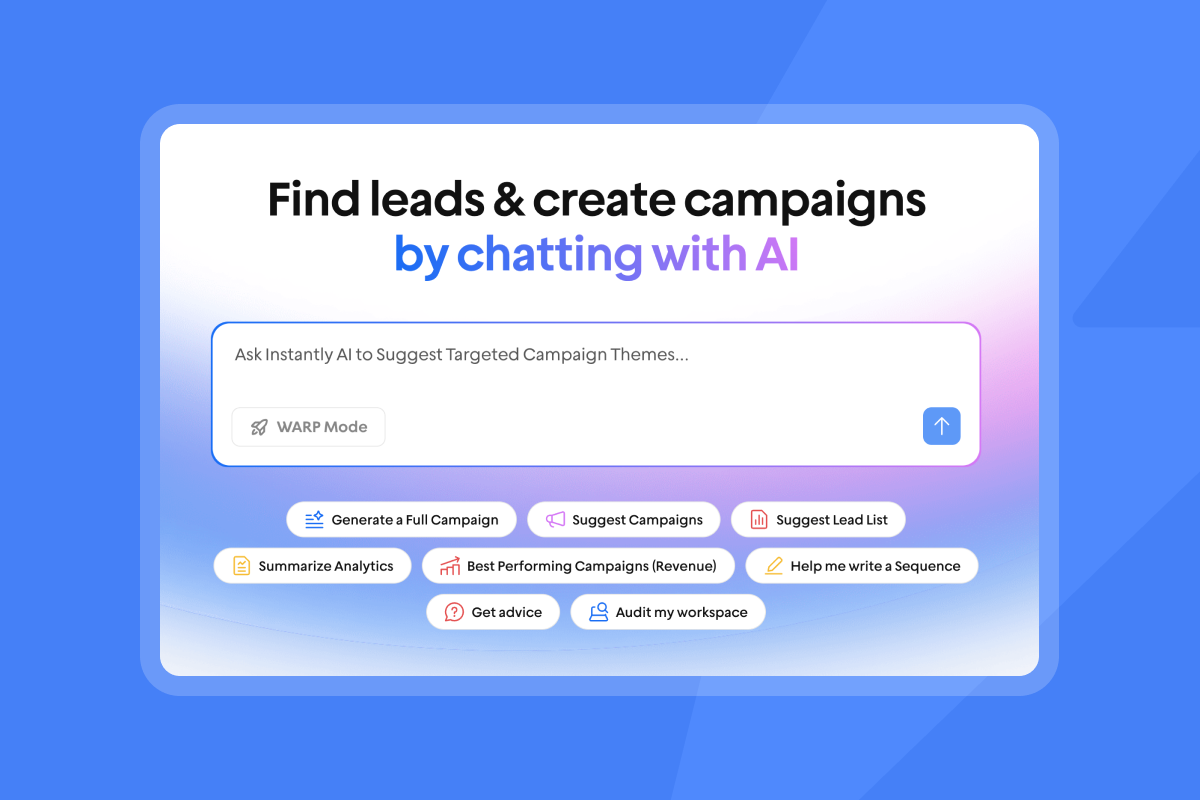
Manually reading and categorizing replies across multiple inboxes creates rep bottlenecks and slows response times. Instantly's AI Reply Agent reads each incoming message, classifies intent, drafts a reply in under five minutes, and routes the message to a human reviewer depending on your configuration. Intent classification across 50+ languages runs via Unibox NLP, which works alongside the AI Reply Agent to tag replies before routing.
You choose between Autopilot (the agent sends immediately when confident) or Human-in-the-Loop (you review and approve before it goes out). The agent integrates with Slack so your team can approve replies without opening the platform. Unibox v2 adds bulk actions and team notes, working alongside Unibox NLP to centralize reply management across all accounts.
"I really like that Instantly continues to evolve beyond just being another cold email platform... The inbox centralizes replies from multiple inboxes, making conversations much easier to manage. I rely heavily on AI-powered features like AI personalization, AI sequence generation, and the AI spam checker to improve campaign quality without spending hours manually optimizing every email." - Verified user on G2
Sales forecasting and pipeline analysis
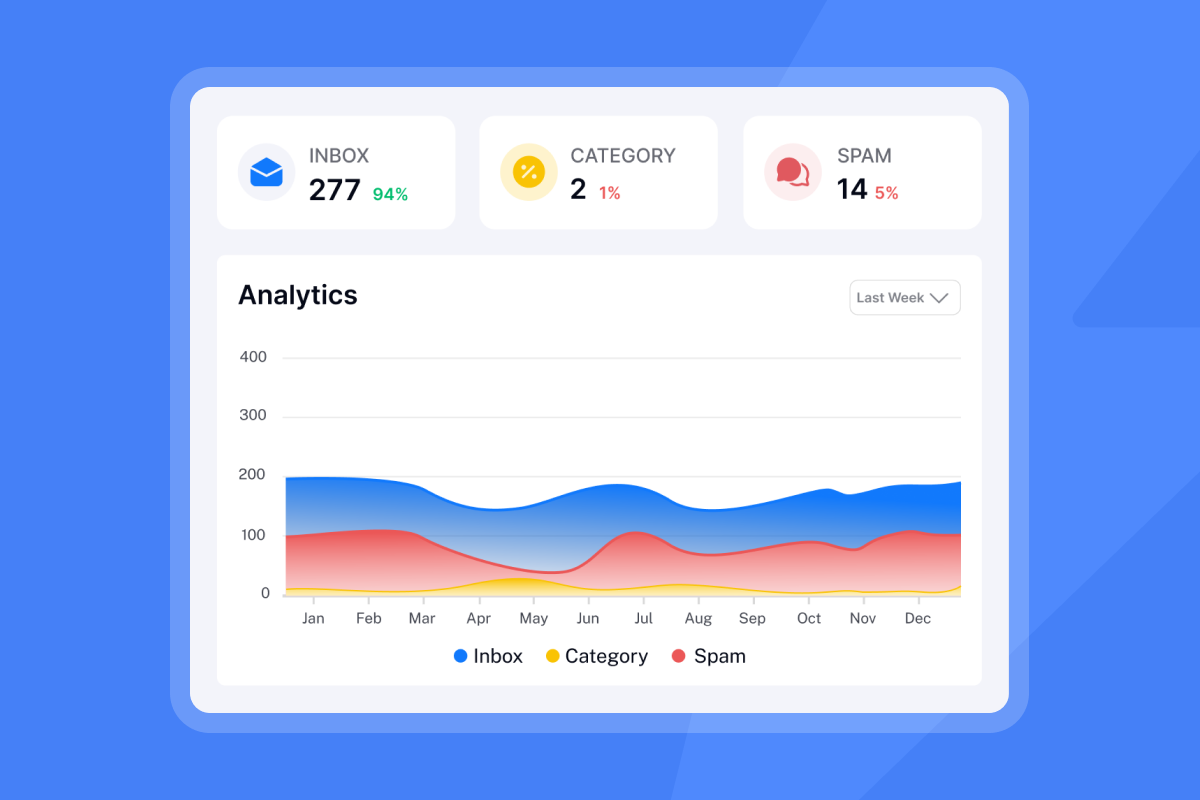
AI aggregates campaign data (bounce rate, reply rate, meetings booked, account health scores) into dashboards that surface trends individual reps would miss. Run weekly reviews covering bounce rate, spam complaints, reply rate, and meetings booked, combined with automated Inbox Placement tests, to catch deliverability issues before they affect pipeline.

Why GTM teams are adopting AI automation now
Three pressures are driving adoption: headcount costs, deliverability complexity, and the volume of manual data work that consumes rep time before a single email goes out.
Scaling outbound without adding headcount
Per-seat pricing forces teams to choose between headcount and software cost. Apollo's Organization tier charges $119 per seat per month on annual billing, with a 3-seat minimum. A 10-rep team pays $14,280 per year in licensing before adding data, warmup, or enrichment. Instantly's flat-fee Hypergrowth Outreach plan at $97 per month covers unlimited email accounts and warmup for the entire team, so every rep you add costs you sending capacity rather than another seat.
For lean teams, the AI Sales Agent adds another layer: it sources leads, writes and sends sequences, and optimizes based on replies autonomously.
Improving reply rates and inbox placement
Instantly's 2026 benchmark report analyzed billions of cold email interactions between January 1 and December 18, 2025. The findings give GTM leaders specific targets to plan against:
| Segment | Reply rate |
|---|---|
| Platform average | 3.43% |
| Top quartile | 5.5%+ |
| Top 10% | 10.7%+ |
Consistent, stable sending patterns produced 15-20% higher replies than erratic or burst-mode sending. Achieving these rates requires AI-driven sending schedules capped at 30 emails per account per day, verified contact lists with bounces kept below 2%, and a 4-6 week warmup period to reach full sending volume on new domains. Watch Instantly's video on why cold emails go to spam for the specific signals that damage deliverability at scale.
Reducing manual data work
Instantly's SuperSearch handles list-building through waterfall enrichment, checking Instantly's database first and then sequencing through seven partner providers (BetterContact, ContactOut, Findymail, IcyPeas, LeadMagic, Prospeo, Wiza) until it finds a verified email. SuperSearch-sourced leads arrive pre-verified, removing the separate verification step before sending.
The AI Inbox Manager handles another time sink: drafting initial replies to first responses. It auto-schedules and sends an AI-drafted reply five minutes after a lead's first response, activating only when the AI is confident in the context and excluding auto-responses.
Accelerating rep ramp time
New reps ramping on cold email without standardized playbooks risk burning good domains before they learn what works. AI automation addresses this by giving them pre-built sequence templates, AI-generated subject line variants tested and optimized across live campaigns, and workspace-level guardrails that enforce safe sending behavior. Watch the video on high-converting subject lines for the specific techniques that lift reply rates.
Standardizing these inputs across your team means a new SDR's first campaign follows the same ramp plan and hygiene rules as your top performer.
What AI sales automation can and can't do
AI works well in specific parts of the sales workflow and poorly in others. Knowing the boundary helps you configure your system without exposing deals to misclassification risk.
Where AI adds the most value
AI delivers the clearest return on high-volume, repetitive tasks where speed and consistency matter more than nuanced judgment:
- Lead sourcing: Filtering 450M+ B2B contacts by ICP, tech stack, intent signals, and funding status in seconds using the Signals filter.
- Sequence drafting: Generating 4-7 step campaigns from offer inputs without a copywriter.
- Reply triage: Classifying hundreds of incoming replies by sentiment and routing them to the right workflow automatically.
- Domain health and OOO handling: The Deliverability AI Agent monitors DNS health, blocklists, warmup scores, and bounce rates every 24 hours while AI Smart Pause detects OOO replies, extracts return dates, and auto-resumes sending.
"The UI UX is clean and easy to follow, setting up domain and emails were smooth, the copilot does help with writing cold emails may be because of the system prompt designed specifically to write cold emails" - Vivek on Trustpilot
Limitations and human oversight needs
Trust-building and deal negotiation in complex, multi-stakeholder deals depend on human judgment. No automation replaces that. AI can read sentiment signals, but it cannot build the political capital needed across a 6-month enterprise deal cycle.
You should not run AI in full Autopilot mode for conversations involving pricing discussions, security questionnaires, or executive-level relationships. Use Human-in-the-Loop mode for anything where a misclassified reply would cost you a deal. Use Autopilot for first-touch routing, OOO handling, and initial qualification steps where a mistake is recoverable. AI sales tools help your reps handle more conversations, but they cannot replace the relationships that close business.
How to evaluate AI sales automation tools
Most platforms compete on features, but the right evaluation focuses on four areas that directly affect whether your campaigns produce pipeline or burn your domains. For more, see our guide to AI sales automation tools for GTM teams.
Deliverability and domain health controls
Deliverability is a system with three interdependent components: warmup, domain health monitoring, and send pacing. When you evaluate any platform, check all three.
For warmup, new domains need 4-6 weeks to reach full sending volume, with a health score above 90% (the percentage of warmup emails landing in inbox rather than spam over the trailing seven days) before a domain is campaign-ready. Instantly's warmup network uses a pool of 4.2M+ accounts to exchange emails with your connected accounts. The warmup automatically opens warmup emails, and a high percentage receive replies with positive sentiment to send engagement signals to Gmail, Outlook, and other email providers.
For domain health monitoring, the Deliverability AI Agent (available on Hypergrowth and above) runs every 24 hours, checking DNS records, blocklist status, warmup momentum, reply momentum, and abuse complaints. It surfaces what is affected, why it matters, and provides one-click remediation. BounceShield runs by default in the background, automatically skipping known high-risk recipients, and campaigns auto-pause at a 5% bounce rate after 200 sends to protect your domains. Standalone Inbox Placement tests monitor across 94 blacklists so you verify where emails land before and during a live campaign.
For send pacing, cap at 30 campaign emails per account per day to protect sender reputation. Exceeding this puts your domain at risk regardless of list quality.
Team governance and reporting
Build your governance framework around four components:
- Workspace-level blocklists: A Global Blocklist that automatically checks leads at import and blocks sends to opt-outs and competitor domains across your entire workspace.
- AI Blocklist Triggers: Automatic blocklisting based on unsubscribe status is available on all plans. Status-based and reply-content keyword blocklisting require Hypergrowth or above. All three enforce rules workspace-wide without rep intervention.
- Human-in-the-Loop for high-value prospects: Requiring human approval before the AI Reply Agent sends to prospects in active deal stages prevents misclassification errors from reaching the wrong audience.
- Account-level analytics: The Combined Score in Instantly's account analytics (weighted open and reply rate) gives RevOps a single number to track per account, and a score above 30 after you reach 100+ contacts signals healthy performance.
Integration with your CRM and stack
The recommended approach is pairing a specialized outreach tool with your core CRM rather than relying on an all-in-one suite. Instantly's native HubSpot integration supports bidirectional sync: HubSpot contact and deal changes can trigger Instantly actions, and Instantly replies and campaign completions can trigger HubSpot contact creation, task logging, and note creation. Automations handles this as a visual node-based workflow so your RevOps team can build and audit the logic without engineering support.
Data hygiene works best when email is the unique deduplication key and all verified lead data pushes to HubSpot immediately on reply or interest-status change. This keeps your outreach tool and CRM in sync without manual exports or reconciliation.
Pricing models and lock-in terms
Evaluate pricing by total cost at your team size, not per-feature list price. Apollo's Organization tier charges $119 per seat per month on annual billing with a 3-seat minimum, so a 10-rep team pays $14,280 per year in licensing before any data, warmup, or enrichment add-ons. Instantly's workspace-level governance covers most growing team requirements on a flat fee, so you scale without per-seat pricing that compounds with every new hire.
Compare that to Instantly's flat-fee model. The Outreach plans comparison shows that Hypergrowth Outreach at $97 per month covers unlimited email accounts and warmup for the entire team. Instantly's AI agents (Copilot, AI Sales Agent, AI Reply Agent, Lead Finder Agent) run on a separate Instantly Credits subscription starting at $9 per month. The Deliverability AI Agent is included in the Outreach plan on Hypergrowth and above at no additional credits cost. A starter stack (Outreach + SuperSearch + CRM) runs approximately $141 per month.
Instantly's standard plans offer monthly billing with no annual lock-in required. The 14-day free trial requires no credit card and includes 250 uploaded contacts and 1,000 emails, giving you enough volume to validate deliverability and reply rate performance before committing.
Try Instantly free and run your first AI-driven sequence. Warmup runs automatically from day one so you protect deliverability while you learn the platform.
FAQs
Is AI sales automation the same as CRM automation?
No. CRM automation (like HubSpot Workflows) manages customer relationships, deal stages, and revenue forecasting inside an existing pipeline. AI sales automation handles the top-of-funnel work: sourcing leads, executing outreach sequences, and triaging replies before prospects become contacts in your CRM.
How does AI automation affect deliverability?
AI automation improves deliverability when it enforces pacing, warmup, and hygiene rules at scale, and damages it when used to blast large unverified lists without warmup. Keep daily sends under 30 per account, maintain bounces below 2%, and run new domains through a 4-6 week warmup period before campaign use.
What metrics should I track?
Track reply rate (benchmark: 3.43% platform average, 5.5%+ top quartile per Instantly's 2026 benchmark report), bounce rate (keep below 2%), and inbox placement rate across 94 blacklists. Reconcile these weekly against your CRM pipeline to catch reporting gaps early.
How long does implementation take?
Basic setup covers three steps: connecting your sending accounts, importing your lead list, and launching your first campaign. Domain warmup for new sending accounts requires 4-6 weeks to reach full sending volume, and AI Reply Agent initial configuration is quick, following the setup steps in the help center.
Key terms glossary
Deliverability: The percentage of sent emails that successfully land in the recipient's primary inbox rather than the spam folder.
Warmup: The process of gradually increasing email sending volume on a new domain to build a positive sender reputation with mailbox providers. Instantly's warmup network uses 4.2M+ real accounts to generate genuine engagement signals.
Unibox: A centralized inbox that aggregates replies from multiple sending accounts into a single dashboard for management and triage.
SuperSearch: Instantly's B2B lead database with 450M+ B2B contacts, advanced ICP filtering, Signals-based intent scoring, and waterfall enrichment across 7 partner providers.
AI Reply Agent: An autonomous agent that reads incoming replies, drafts responses within five minutes, and routes messages based on your configuration, available in Human-in-the-Loop or Autopilot modes. Intent classification across 50+ languages is handled by Unibox NLP, which works alongside the agent.
SISR: Server and IP Sharding and Rotation. Available on Instantly's Light Speed plan, SISR assigns dedicated IP groups to your account, isolating sender reputation and maintaining deliverability if one IP faces filtering or blocklisting.
BounceShield: Instantly's built-in protection that automatically skips known high-risk recipients based on real-time and historical bounce data, preventing avoidable bounces from damaging domain health.
Read next
- Best outbound sales software for B2B GTM teams: Instantly's 2026 guide: A tool-by-tool breakdown of the outbound stack GTM teams use to generate pipeline without compounding per-seat costs.
- Cold email sequence best practices: how top GTM teams structure outbound campaigns: Step counts, send timing, and copy length targets drawn from Instantly's 2026 benchmark data.
- AI BDR vs human SDR: when automation makes sense and when it doesn't: A clear breakdown of which outbound tasks AI handles reliably and which still require a human rep.


