.svg)
%20(1).svg)


Updated July 23, 2026.
TL;DR: Database size is a vanity metric. Stale contact data drives up bounce rates, damages sender reputation, and kills inbox placement. The fix is B2B data enrichment solutions that combine waterfall enrichment with 5+ providers and automated deliverability monitoring, managed as a single system. Instantly.ai combines a 450M+ B2B lead database (SuperSearch) with waterfall enrichment with 5+ providers and unlimited sending accounts on a flat fee, so your team scales outbound safely without per-seat penalties or disconnected tools.
Most sales leaders focus on how many records a vendor claims to have. The platform average cold email reply rate is 3.43%, yet top 10% performers reach 10.7%+, according to Instantly's Cold Email Benchmark Report (data: Jan 1–Dec 18, 2025).
The gap between average and elite is not about sending volume. It is about data quality, deliverability discipline, and treating both as a single system.
If you are a sales leader or RevOps manager running a 3 to 15 rep outbound team, this guide is for you.
Core benefits of B2B contact enrichment
This guide explains how modern B2B data enrichment solutions work, how to audit providers for accuracy and compliance, and how to connect verified data directly into your sending sequences to improve reply rates.
Manual list building burns hours that your SDRs should spend on live conversations. A rep who exports a CSV, cross-checks it against a data vendor, formats the fields, imports it into the CRM, and then runs a verification pass burns hours before a single email goes out, and that cost compounds weekly.
Automated contact enrichment flips that model. The right data enrichment tools let you define your ideal customer profile (ICP), query a database, and receive verified records with email addresses, direct dials, job titles, company size, and firmographic data already populated. The practical result is more pipeline coverage per rep hour and a lower cost-per-meeting when you track the full stack cost.
Operational steps for contact updates
Follow these four steps to build a clean enrichment workflow:
- Source: Pull a raw list from your CRM or a lead database filtered by ICP criteria (industry, company size, title, geography).
- Enrich: Run the list through your enrichment engine to fill missing fields, including verified email, direct dial, and company data.
- Verify: Pass enriched emails through a real-time validator that runs SMTP handshakes and catch-all detection before anything enters your sending sequence.
- Import: Push clean, verified records into your campaign with mapped fields for personalization variables like first name, company name, and industry.
Skip step three and you carry stale record risk straight into your campaign.
How verification protects sender reputation
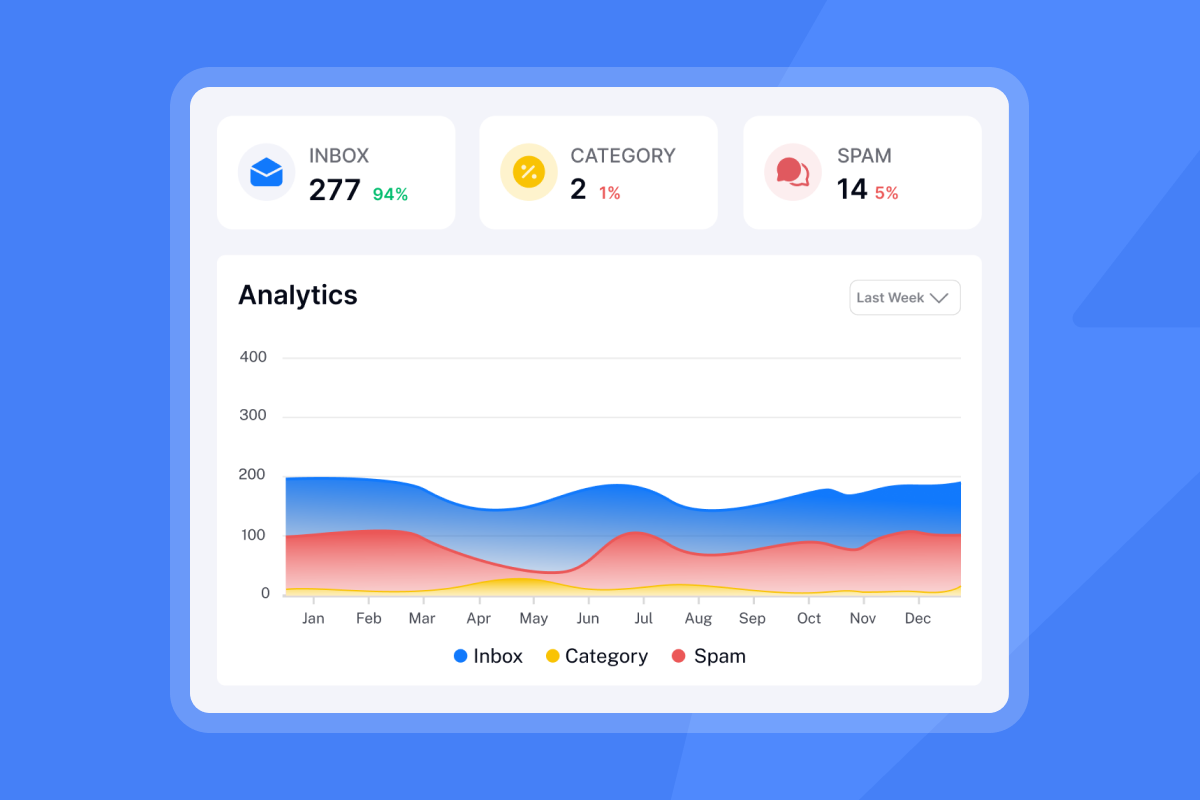
Hard bounces destroy domain health faster than any other deliverability mistake. Mailbox providers treat bounce spikes as a signal of poor list hygiene, which immediately lowers your sender score and triggers more aggressive spam filtering on subsequent sends. Keep bounce rates at or below 1%.
If rates climb above that, pause the campaign and run a list hygiene check before resuming. That threshold is why verification is non-negotiable before any new list enters a sequence.
How enrichment stabilizes inbox placement
Treat deliverability as a system, not a one-time DNS configuration. Three practices consistently influence whether your email lands in the primary inbox:
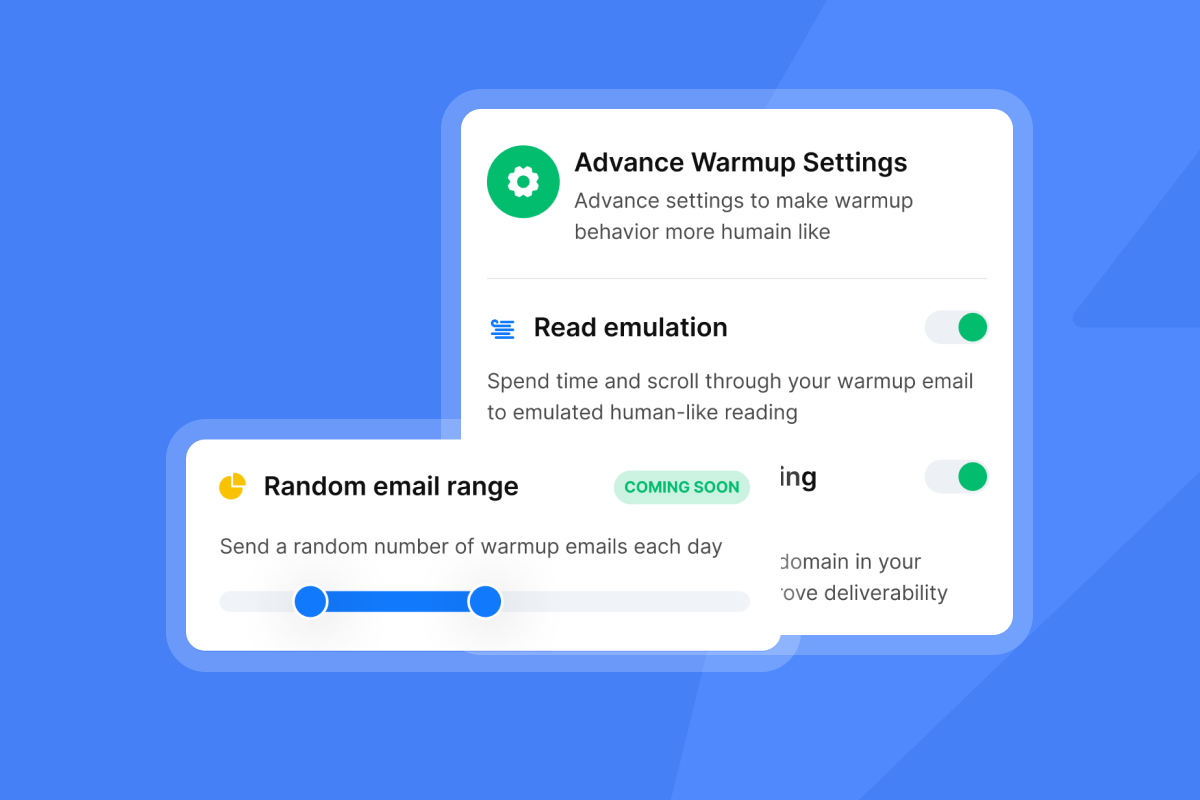
- Warmup: Building sender reputation gradually before ramping volume. Instantly's private deliverability network uses 4.2M+ accounts to warm new inboxes and maintain health scores in real time.
- Pacing: Capping sends at 30 emails per inbox per day and distributing volume across multiple sending accounts to avoid triggering provider rate limits.
- Verification: Confirming every contact is valid before it enters the sequence, which keeps bounces below 1% and protects domain reputation.
When verified data feeds into a warmed, properly paced sending setup, inbox placement stabilizes and reply rates climb.
How enrichment engines verify prospect data
The technical difference between database scraping and real-time API enrichment is the difference between checking a cached snapshot and querying live sources at the moment of request.
Database scraping pulls contact details from publicly indexed web pages and stores them in a static cache. The problem is decay.
B2B contact data degrades quickly due to job changes, org restructuring, and domain churn, so a record scraped in January can be wrong by summer.
When to use real-time enrichment
Real-time API enrichment queries live data sources at the moment you run a search or export, so you get a record that reflects the contact's current role, company, and email address rather than where they worked when the data was last indexed.
Use real-time enrichment when targeting fast-moving industries where tenure is short and org changes are frequent. Trigger enrichment at these points:
- A target account receives a funding announcement or goes through a leadership change.
- A prospect updates their LinkedIn title to a new role.
- A CRM contact has not been touched in 90+ days.
- You are building a list in a sector like SaaS or fintech where average job tenure runs under two years.
Enriching at the moment of outreach, rather than at the moment of list creation, closes the gap between database age and contact accuracy.
How providers validate contact data
Reputable providers run multiple validation checks before marking a record as verified:
- Syntax check: Confirms the email format is valid (no missing @ symbol, correct domain structure).
- Domain check: Confirms the domain exists and has active MX records.
- SMTP handshake: Connects to the mail server without sending an email to confirm the address exists on that server.
- Catch-all detection: Flags domains configured to accept all email addresses regardless of validity. These carry higher bounce risk and need separate handling at the campaign level.
The most accurate enrichment approach is waterfall enrichment. Rather than querying a single data source and accepting its result, waterfall enrichment routes each request through multiple data sources in a set order to increase the chance of finding a verified field. Teams targeting their ICP and region can expect at least a 20 to 40 percent improvement in verified email coverage compared to single-source queries, according to two Instantly guides: B2B Waterfall Enrichment and Choosing a Waterfall Enrichment Service. SuperSearch runs this process across 5+ providers sequentially, which is the mechanism behind its higher find rates on hard-to-reach ICP segments.

Optimizing your CRM data pipeline
Re-enrich contact records every 90 days, validate emails before every campaign send, and use automated field mapping to fill missing data points without manual entry. After enrichment, run a deduplication pass using common identifiers like domain and LinkedIn URL to merge redundant records before they enter your CRM or campaign.
Vetting vendors for B2B contact accuracy
Ask every B2B data provider this question first: what percentage of your records were verified in the last 90 days? That single question separates vendors with live, accurate data from those selling large but stale databases.
Use the checklist below as your standard framework before signing any data vendor contract.
Sales leader's audit checklist for B2B data providers:
- Compliance: Can the vendor produce a Data Processing Agreement covering GDPR Article 28 requirements? Do they publish a sub-processor list with at least a 30-day objection window for changes? Do they have documented CCPA opt-out mechanisms with a clear, stated processing timeline?
- Data lineage: Does the vendor disclose where their data originates and how consent is managed?
- Refresh frequency: How often does the vendor re-verify records? Top-tier providers refresh every 30 to 90 days.
- Post-cancellation rights: Can you export your data while the contract is active? Confirm you have a plan to export before any subscription ends, as access typically terminates with the plan.
- Pricing transparency: Are overage fees, add-on features (intent data, org charts, advanced filters), and auto-renewal terms clearly documented before you sign?
Verifying B2B contact data integrity
Before committing to a vendor contract, request a sample of 100 to 200 leads filtered by industry, company size, geography, and seniority. Run that sample through an independent email verification tool and check three metrics:
- Verified deliverable rate (target above 90%)
- Catch-all percentage (flag anything above 15%)
- Field completion rate for direct dials and LinkedIn URLs
If the vendor's sample performance does not match their claimed accuracy rates, their live database will not either. This test costs you nothing and protects you from committing budget to a source that will inflate your bounce rate.
Provider reach and market depth
Total database size is a vanity metric. A vendor claiming 850M records with a 30% annual decay rate and no real-time verification will deliver a list where 255M records are already outdated. A vendor with actively verified records gives your campaigns a stronger deliverability foundation than one relying on a large but stale index.
When evaluating any provider, ask for verification metrics alongside total database size. Valid record rate, catch-all percentage, and refresh frequency tell you more about what you will actually get in a working campaign than a headline record count.
Think about the last list your team imported. Do you know what percentage of those records were verified in the 90 days before you sent to them?
Real-time verification standards
A vendor that meets the standard for real-time verification will do all of the following:
- Run SMTP handshakes at the moment of export, not at the moment of indexing
- Flag catch-all domains separately from verified addresses so you can manage risk at the campaign level
- Return a clear verification status alongside each email address, such as valid, invalid, risky, catch-all, or unknown, so you can make informed decisions about which records enter your campaign
- Re-verify their underlying records on a regular cycle to account for ongoing B2B data decay from job changes, company restructuring, and mailbox churn
Ensuring GDPR and CCPA compliance
Compliance is a non-negotiable baseline, not something to validate after you have signed a contract. The baseline requirements for any vendor operating under GDPR and CCPA include:
- A publicly available or on-request Data Processing Agreement
- Documented opt-out mechanisms with GDPR processing within 30 days and CCPA processing within 15 business days
- A published sub-processor list showing where your data is stored and processed
- Data retention periods appropriate to your industry and processing purpose (GDPR does not prescribe a fixed limit, so confirm the vendor's documented approach) Instantly publishes a clear Data Processing Agreement under Foo Monk LLC with transparent sub-processor disclosure, including AWS as the primary infrastructure provider. This level of transparency gives you the documentation you need to satisfy internal compliance reviews before a contract is signed.
Ensuring tech stack adoption
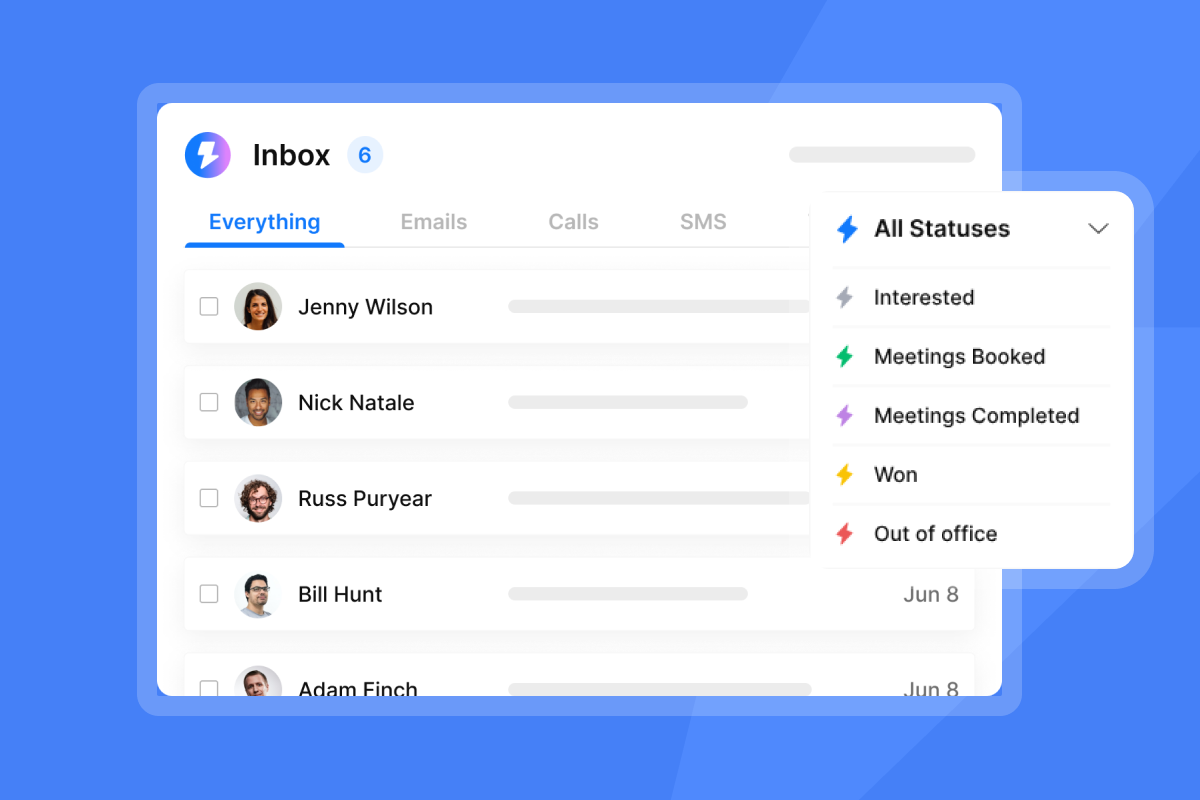
Enrichment data loses value if it sits in a separate tool that reps rarely use. Look for direct integrations between your data provider and your sending platform. Native connections eliminate the manual export-import cycle that introduces errors, delays, and data drift between systems.
Trusted partners for accurate lead data
The market for B2B data enrichment solutions spans from enterprise suites with annual contracts to flexible credit-based platforms. The table below compares the five most commonly evaluated options on the criteria that matter most for lean sales teams: native integration with your sending platform, self-serve trial availability, CRM sync, and pricing model.
Provider | Native sending integration | Self-serve trial | CRM sync | Pricing model | Entry cost |
|---|---|---|---|---|---|
Instantly | Yes (built-in) | Yes (14-day free) | Yes (HubSpot, Clay) | Credit-based (no seat tax) | $9/mo |
ZoomInfo | Yes (Waterfall via GTM Studio, 25+ vendors) | No (book demo) | Yes | Annual contract (seat-based) | Custom (contact sales) |
HubSpot Breeze Intelligence (formerly Clearbit) | No | No | Yes (HubSpot native) | Annual contract | Custom |
Lusha | No (browser extension + CRM integrations) | Yes (free tier) | Yes | Credit-based | Varies |
Cognism | No (proprietary data) | No | Yes | Annual contract (seat-based) | Custom (contact sales) |
No matter which provider you evaluate, apply the audit checklist from the previous section to verify compliance, refresh frequency, and data export rights before you sign.
ZoomInfo coverage and accuracy specs
ZoomInfo offers deep coverage and strong intent data, and it is the most recognized name in the category. The friction points are structural. ZoomInfo uses annual contracts with seat-based pricing that triggers a full re-quote when you add headcount. Pricing is not published publicly and requires a sales conversation to confirm. The "book a demo" sales process prevents self-serve evaluation before you commit budget. Add-on features like org charts and advanced filters often carry separate costs not visible in the initial quote. Auto-renewal terms typically require written opt-out notice well ahead of the renewal date, or the contract rolls for another year. By contrast, Instantly's Terms of Service (Section 8.1) allow either party to terminate with no less than 30 days written notice before the end of the then-current term, with the full policy publicly documented at instantly.ai/terms.
Optimizing data for sequence success
How you build your list directly determines where you land in the reply rate distribution. Instantly's Cold Email Benchmark Report found that the platform average reply rate is 3.43%, the top quartile reaches 5.5%+, and the top 10% of senders reach 10.7%+. Consistent senders with stable sending patterns produce 15 to 20% higher reply rates than irregular senders. The difference is not creative copywriting alone. It is verified data feeding into a properly warmed, consistently paced sending setup.
The cold email copywriting framework from Instantly's help center covers how to pair enriched ICP data with messaging that matches the prospect's role and context.
"I run outreach campaigns targeting HR leaders across the Gulf and Europe, and Instantly.ai is the backbone of my operation. Emails land in inboxes, not spam. Easy to scale across multiple campaigns and markets. Clean analytics, open rates, replies, bounces, all in one view." - Salam Karam on Trustpilot
HubSpot Breeze Intelligence (formerly Clearbit) for CRM data hygiene
HubSpot Breeze Intelligence (formerly Clearbit) excels at enriching inbound leads and maintaining CRM hygiene for marketing automation workflows. It is a strong fit for teams that need to score and route inbound leads by firmographic data. For outbound-focused teams that need to source net-new contacts at scale, Clearbit's coverage and pricing model add friction. It functions well as a CRM enrichment layer but was not designed as a primary outbound lead source.
Lusha for verified contact accuracy
Lusha's strength is direct dial and mobile number accuracy, which matters for teams running parallel phone outreach alongside email. The limitation is seat-based pricing, which makes it expensive to scale access across a full SDR team without triggering additional license costs. For teams running email-first outbound, the per-seat cost structure creates growth penalties that compound as you add headcount.
Cognism for verified contact data
Cognism is a strong choice for teams with large European pipeline targets, where GDPR compliance and data sourcing transparency are non-negotiable. Coverage in EMEA markets is strong and their compliance posture is well-documented. Cognism relies on proprietary, internally-verified data rather than third-party waterfall enrichment, which it positions as a differentiator for teams that prioritize data sourcing transparency and compliance. Like ZoomInfo, Cognism does not publish pricing publicly and requires a sales conversation to confirm. The same seat-based annual contract structure applies, which creates the same scaling penalty for teams that add SDR headcount mid-contract.
How to verify lead lists before sending campaigns
Every enriched list needs one final verification pass before it enters a sending sequence. Even the best providers return some percentage of undeliverable records, and those errors need to be filtered out before they affect your domain health.
Audit provider lists via sample exports
Export 100 leads from any new provider or new list segment and run them through an independent email validator. Track the verified deliverable rate, the catch-all percentage, and the number of records with missing critical fields (direct email, job title, company domain). This step prevents the kind of bounce spike that can set back your domain health for weeks and is worth doing before every new list source enters your stack.
Validate data against your CRM contacts
Before importing any new list, cross-reference it against your existing CRM contacts. Duplicate outreach to active opportunities or existing customers damages relationships and creates pipeline attribution confusion. A simple domain and email match against your CRM prevents this.
Benchmark expected contact error rates
Set realistic expectations with your team. Even top-tier providers will return some undeliverable records on any given export. The goal is not zero bounces. It is keeping actual campaign bounces at or below 1% through pre-send verification rather than relying on the database accuracy claim alone. When a campaign pushes above 1%, pause it, re-verify the affected segment, and resume at a lower daily cap per inbox.
Confirm GDPR and CCPA compliance
Before launching any campaign, confirm two things. First, the provider's opt-out list is reflected in your export so that contacts who have previously opted out do not appear as deliverable records. Second, your own suppression list is applied so that existing contacts, past customers, and flagged accounts are excluded. This step is both a compliance requirement and a deliverability protection.
Connecting enrichment APIs to CRM sequences
The highest-performing outbound setups connect enrichment and sending directly so that a verified record flows automatically into the right sequence without manual intervention.
Mapping enrichment to CRM fields
When you pull enriched data from SuperSearch or any other provider, map custom fields explicitly to your CRM structure before import. The fields that drive the most personalization value are:
- Company size: Used to filter, score, and segment contacts so you can route each record to the right sequence for that account type
- Industry vertical: Used to segment contacts by sector so you can match messaging and proof points to the prospect's industry context
- Job title and seniority: Used for lead scoring and personalization so messaging reflects the prospect's level of authority and relevant priorities
- Technology stack: Enables tech-specific personalization for relevant categories Mapping these fields at import standardizes personalization variables across every rep's sequences and reduces manual cleanup after import.
Ensuring email service provider sync
Instantly's HubSpot integration supports native data flow so that reply activity, sequence status, and lead classification from Unibox NLP surface in your CRM without manual export. Fuller bidirectional sync is available via an iPaaS connector for teams that need deeper workflow automation. Instantly also integrates with Clay, allowing teams to build enrichment workflows in Clay and push verified records directly into Instantly campaigns.
"It works, you don't have to worry about email spam quality... the system is well designed for it so if you want to run proper outbound campaigns without stressing about the emailing and tooling Instantly does it for you." - Verified user review of Instantly
Triggering data syncs at scale
Use webhooks or Instantly's API to trigger automatic enrichment when a new lead enters your CRM from an inbound form, a trade show import, or a manual rep entry. Automating this trigger means every lead is enriched and verified to the same standard regardless of the source, rather than depending on individual reps to run the verification step manually.
Instantly's Deliverability AI Agent runs automated monitoring across your domain health, sending infrastructure, and campaign setup to surface deliverability risks before they affect live sends. When it surfaces a risk, it flags the issue so your team can investigate and resolve it before it affects live sends. This feature is available on Hypergrowth and above Email Outreach plans.
Predictable pricing for verified contact data
Billing surprises are one of the most common reasons sales leaders switch data vendors. Annual contracts with seat-based pricing create a compounding cost problem: the per-seat fee climbs every time you add an SDR, so growth directly increases your contract cost.
Pay-per-lead vs. flat-rate models
Avoid billing surprises by choosing a credit-based model that separates enrichment cost from sending cost. Instantly Credits power SuperSearch searches, Copilot, AI Sales Agent, and AI Reply Agent. Credit plans start at the Nano tier and scale up as your sending volume grows. Outreach plans (unlimited email accounts and warmup) are available across multiple tiers, from Growth to Hypergrowth, covering additional features. The two subscriptions are independent, so you scale each based on actual usage rather than paying for bundled capacity you do not need.
The Email Outreach Plans Comparison details exactly what each plan tier includes, so you can verify limits before committing.
Avoiding overage fees on data usage
Before you sign any data contract, ask three questions. First, what is the cancellation notice period and how far in advance must you submit it? Second, can you export all contacts, campaign history, and reply data in a standard format? Third, are mid-term seat reductions permitted under the contract? Vendors who cannot answer these clearly before you sign leave room for billing disputes later.
Instantly's credit system shows your credit balance in real time and lets you monitor consumption across SuperSearch, Copilot, and AI agents without hidden multipliers. Teams that need higher email discovery coverage can add LeadMagic to their SuperSearch waterfall as a Custom Flow provider step, using their own LeadMagic API key. LeadMagic runs alongside other waterfall sources to find verified work emails, validate addresses before sending, and enrich contact profiles with phone numbers, company details, and job signals, all without leaving the Instantly platform.
Identifying vendor billing risks
The three billing traps that appear most often in the legacy data vendor category are:
- Auto-renewal lock-ins: Contracts that roll automatically for another year unless you submit written opt-out notice well in advance of the renewal date.
- Difficult cancellation: Requirements for a multi-step cancellation process, or loss of data access before the contract end date.
- Post-cancellation data loss: Enriched data becomes inaccessible when a plan expires, and Instantly may, at its sole discretion, delete any subscriber data associated with the terminated account after cancellation, and is under no obligation to retain, recover, or make it available. Export all contacts, campaign history, and reply data before your subscription ends. Do not rely on resubscribing to recover data after termination.
See Instantly's Terms of Service for the full data retention policy. Instantly offers a 14-day free trial with no credit card required. After the trial ends, unupgraded accounts are automatically deleted. Standard plans are available on monthly billing with no mandatory annual contract, though annual billing is offered at a discount for teams that want to commit.
Teams on annual seat-based contracts regularly report burning through their credit allocation in the first half of the year, then facing overage charges that were not visible in the original quote. For a 3 to 15 rep SDR operation, a typical starting stack combines Outreach, Instantly Credits, and CRM subscriptions. The exact cost depends on your usage patterns and which Instantly plan tier you choose. Scale to higher tiers when you consistently approach the plan limits and need the Deliverability AI Agent for always-on domain monitoring.
When you run that calculation across providers, seat-based annual contract models rarely win on cost efficiency against credit-based platforms, especially for teams scaling SDR headcount. Ready to build verified lead lists without seat fees or annual lock-ins? Start your 14-day free trial of Instantly and access SuperSearch for verified contacts, plus unlimited sending accounts from day one.
FAQs: B2B Data Enrichment
What is B2B data enrichment?
B2B data enrichment is the process of adding accurate, useful information to existing business and contact records. Data enrichment tools can fill gaps such as job titles, company details, contact information, and other firmographic data, helping sales teams improve targeting and build more complete prospect lists.
How do you verify B2B contact intelligence?
Instantly uses real-time SMTP handshakes and waterfall enrichment with 5+ providers to validate email addresses before sending. This approach filters out catch-all and invalid domains to help keep bounce rates low and protect sender reputation.
What is the benchmark bounce rate for cold outreach?
Keep bounce rates at or below 1% to protect domain health and sender reputation. If rates climb above that, pause the campaign and run a hygiene check before resuming.
How often do B2B data providers refresh their contact records?
Top-tier providers refresh their databases every 30 to 90 days to account for job changes and company updates. Real-time enrichment APIs verify contact details at the exact moment of export rather than relying on cached index data.
How can you assess data accuracy before signing a contract?
Request a sample of 500 to 1,000 leads matching your ICP and run them through an independent verification tool. Check verified deliverable rate (target above 90%), catch-all percentage, and direct dial accuracy before committing to a plan.
What is waterfall enrichment and why does it matter?
Waterfall enrichment is the sequential querying of multiple data providers until a verified match is found for a given contact record. Waterfall approaches using 5+ providers reach higher match rates than single-source queries, which directly reduces the stale records that cause bounce rate spikes.
Key terms glossary
Waterfall enrichment: Sequential querying of multiple data providers for a single contact record until a verified match is found. Waterfall approaches using 5+ providers consistently reach higher match rates than single-source queries.
SMTP handshake: A real-time connection to a mail server that confirms whether an email address exists without sending a message. Used during verification to detect invalid addresses before they enter a sending sequence.
Catch-all domain: A domain configured to accept all incoming email regardless of whether the specific address exists. Carry higher bounce risk and should be flagged separately at the campaign level.
Sender reputation: A score assigned to your sending domain and IP by mailbox providers based on bounce rates, spam complaints, and engagement. A damaged sender reputation lowers inbox placement across all campaigns on that domain.
Bounce rate: The percentage of sent emails returned undelivered. Keep bounce rates at or below 1% to protect sender reputation. If rates climb, pause, run a hygiene check, and resume at a lower daily cap per inbox.
List hygiene: The ongoing process of removing invalid, duplicate, or unverified contacts from your database. Poor list hygiene is the primary cause of bounce spikes and inbox placement loss.
Warmup: The gradual process of building sender reputation on a new inbox by increasing daily send volume over 30+ days before ramping to full campaign volume.
ICP (Ideal Customer Profile): A definition of the company type, role, industry, geography, and size that best fits your product. Used to filter lead databases and build targeted enrichment queries.
Data Processing Agreement (DPA): A legally binding contract documenting how personal data is handled, stored, and protected. Required under GDPR Article 28 for any vendor that processes personal data on your behalf.
Real-time enrichment: Querying live data sources at the moment of a search or export, rather than relying on a cached database snapshot. Reduces the impact of data decay compared to static list providers.
Credits: The unit of consumption used by Instantly to power SuperSearch lookups, Copilot, AI Sales Agent, and AI Reply Agent. A separate subscription from Outreach plans, billed based on usage.
Read next:
- How to choose the best AI Sales Agent for your team: a buyer's guide: A framework for evaluating AI reply and sales agent tools based on credit costs, sequence depth, and reply handling before you commit to a plan.
- Real-time vs. batch email verification: which method protects your domain better?: A comparison of when to use real-time SMTP checks versus scheduled batch verification to keep bounce rates at or below 1%.
- 15 best ways to find B2B sales leads in 2026: A practical breakdown of the top lead sourcing methods, from SuperSearch and waterfall enrichment to intent signals and inbound capture.


