.svg)
%20(1).svg)


Updated July 13, 2026
TL;DR: The most profitable prospecting model is hybrid: use AI to automate data sourcing, initial outreach, and reply triage, then deploy human reps on qualified conversations and closing. Fully loaded human BDRs cost approximately $76,500 to $170,000 annually, while an Instantly starter stack handles high-volume prospecting for $1,692 per year. Complex B2B deals still require human relationship-building, particularly with multi-stakeholder buying committees. Instantly.ai lets you build this hybrid model with unlimited sending accounts, built-in warmup, SuperSearch for 450M+ leads, and AI Reply Agent for 24/7 reply handling, all without per-seat software taxes.
The average fully loaded BDR costs between $57,000 and $108,000 per year, yet spends a fraction of that time actually speaking to prospects. The rest goes to list building, email verification, follow-up scheduling, and reply triage. AI BDR tools handle precisely those tasks, and they do them at a fraction of the cost. But if you are managing a team through multi-stakeholder enterprise cycles, AI alone will not close your pipeline gap.
This guide gives you a practical decision framework: where AI outperforms, where humans are non-negotiable, what the real costs look like, and how to build a hybrid model that pairs an AI sales development agent for outbound with human reps.
What AI BDRs do well and where they need human backup
An AI sales agent handles volume, consistency, and speed. Humans handle context, judgment, and relationships. Understanding where each belongs is the foundation of a profitable prospecting model.
How AI BDR tools perform on high-volume prospecting
AI BDRs perform best on high-volume, repeatable tasks where speed and consistency matter more than nuance. Instantly's 2026 Cold Email Benchmark Report (covering Jan 1 to Dec 18, 2025) puts the platform average reply rate at 3.43%, with top-quartile senders reaching 5.5%+ and the top 10% hitting 10.7%+. Consistent, stable sending patterns produce 15 to 20% higher replies than irregular cadences, which is exactly what AI systems are built to maintain. Optimal sequences run four to seven steps, and AI can execute that cadence without fatigue or schedule variance.
Where AI needs human oversight
AI misses context. It cannot read the subtext in a reply, detect sarcasm, or notice that a prospect just referenced a recent funding round that changes your entire pitch angle. Without human review, AI agents will sometimes fire off a follow-up to a prospect who replied saying they are the wrong contact, or draft a response that contradicts what a rep said on a discovery call the week before.
The risk is brand damage. A poorly timed or tone-deaf AI reply to a warm prospect can kill a deal faster than no reply at all. Human-in-the-loop review is not optional for high-value accounts. It is a process requirement.
What AI BDRs can and cannot do
The table below maps common prospecting tasks to AI, human, or hybrid execution.
Task | AI | Human |
|---|---|---|
Lead sourcing from a large database | Yes | No |
Email verification and bounce filtering | Yes | No |
Initial outreach sequence execution | Yes | No |
Out-of-office reply detection and pause | Yes | No |
Reply classification and triage | Yes (with review) | Yes |
Custom objection handling | No | Yes |
Multi-stakeholder relationship mapping | No | Yes |
Live demo delivery and pivot | No | Yes |
High average contract value (ACV) negotiation | No | Yes |
Ensuring meeting show-up rates | No | Yes |
Scenarios where AI drives higher pipeline yield
The highest-ROI use cases for AI in outbound are also the most time-consuming for reps. Here are the four areas where automation produces the clearest gains.
Automating repetitive outbound tasks
List building, email verification, and initial outreach are the three tasks that drain the most BDR time while delivering the least differentiated value, the repetitive work that AI sales prospecting tools automate. Instantly's SuperSearch gives your team access to 450M+ B2B leads with LLM-assisted enrichment, eliminating the need to manually source and clean prospect lists before every campaign. A rep who spends two hours per day on list building reclaims 40+ hours per month for active selling.
Scalable processes for sales leaders
Per-seat pricing is one of the most common budget traps in sales engagement software. Our AI sales agent pricing models guide compares the alternatives. As your team grows, your software cost scales in proportion, regardless of the value each seat generates. Instantly uses flat-fee unlimited accounts across all plans, meaning you can add sending accounts for new reps or campaigns without triggering a per-seat fee. For sales leaders who have watched software costs balloon as they hired reps, this pricing model removes the penalty for team growth. See the Outreach plans comparison in the help center for a side-by-side feature breakdown.
Automating real-time lead follow-up
Speed-to-lead is one of the most studied variables in outbound conversion. Instantly's AI Reply Agent handles replies in under five minutes, 24/7, whether that means answering a basic question, booking a call, or escalating to a human rep when the reply requires judgment. It runs on Instantly Credits (a separate subscription from Outreach, with a free trial available and plans starting at $9/month). The AI Sales Agent help article covers the full setup flow for autonomous lead sourcing and outbound execution if you want to go further than reply handling.
Ensuring data quality for AI outreach
Bad data is the fastest way to destroy sender reputation. Instantly's built-in bounce detection and secondary sending domain strategy keep your primary domains protected while you scale. Keep bounces at or below 1%. If health dips, pause the campaign and run the hygiene checklist before resuming.

Why complex deals demand human engagement
AI systems are built for consistency. Complex B2B deals are built on context. These are the situations where AI BDR limitations show up and removing the human from the process costs you pipeline.
Managing complex buying committees
Enterprise purchases rarely involve a single decision-maker. AI agents typically lack the contextual intelligence to understand what objections actually mean inside an organization, because objections reflect internal politics, budget timing, and competing department priorities that no external signal stream consistently captures. A human rep who has been on two calls with a prospect can sense shifts in tone when a CFO enters the conversation. AI cannot.
Custom outreach for strategic accounts
Tier-1 accounts require human-written copy. A senior buyer at a 500-person company will recognize AI-generated copy quickly, and in that recognition you lose credibility before the conversation starts. High-value accounts require deep research, genuine personalization, and a message that demonstrates you understand their specific operating context, including the initiatives they are running, the tools they already use, and the internal pressures shaping their buying timeline.
Why AI struggles with custom rebuttals
When a prospect raises a specific technical objection, like asking how your product handles a niche compliance requirement or integrates with an obscure internal tool, an agentic sales agent will either give a generic answer or misclassify the reply as "interested" and move forward incorrectly. AI cannot sense organizational context. It can only process what it has been given. Human reps pivot in real time, ask a clarifying question, reframe the value, and move the conversation forward. That pivot is where qualified deals are won or lost.
Driving retention beyond initial calls
A booked meeting is not a qualified meeting. Human connection drives show-up rates, pre-call preparation, and prospect engagement before the first touch. Reps who build brief rapport in the reply thread before a call report better-prepared prospects on the other end. That consistency cannot be automated.
Cost comparison: AI BDR vs. full-time BDR
Base salary is the starting point, not the total. Here is how the numbers break down across both models so you can make a defensible budget case. For platform-side detail, see what AI BDRs actually cost.
Calculating fully loaded human BDR expenses
The base salary is only part of the cost. According to ZipRecruiter (July 6, 2026), the average US BDR base salary is $59,559 per year, with the majority of BDR salaries ranging from $45,000 to $70,000 and top earners reaching $85,000. Applying a 1.7x to 2.0x fully loaded cost multiplier across payroll taxes, benefits, tools, management overhead, and annualized hiring costs (consistent with industry benchmarks cited by Remote Growth Partners and The Bridge Group) to the 25th-percentile base ($45,000) through the 90th-percentile base ($85,000) produces a fully loaded range of approximately $76,500 to $170,000 annually.
AI BDR platform pricing models
Platform costs vary widely across the range of AI BDR tools and platforms, depending on whether you are buying point tools or an all-in-one stack. The actual number depends heavily on what is included. The most common billing traps in this category are:
- Data costs excluded: Several platforms advertise contacts in their headline price, then charge separately for verified emails or enrichment at onboarding.
- Send volume overages: Usage-based plans include a monthly cap, and exceeding it triggers per-email rates that spike your bill during large campaigns.
- DIY stack assembly: Teams building point tools (lead database, email sending, enrichment, CRM sync) as separate subscriptions carry compounding monthly costs before any all-in-one platform fee.
Instantly avoids most of these traps by combining data, outreach, warmup, and CRM in a single platform at a flat monthly fee. A starter stack (Outreach Growth + Credits Growth + Growth CRM) runs approximately $141/month ($1,692/year), based on current pricing.
Pipeline ROI comparison
Using a conservative model: a human SDR generating $500,000 in qualified pipeline at $110,000 in fully loaded cost (midpoint of the $76,500 to $170,000 range) delivers roughly 4.5:1 ROI. Run your own numbers with our AI sales agent ROI calculator. An Instantly starter stack generating that same pipeline at $1,692 per year produces a ratio that is orders of magnitude higher, though the more meaningful comparison is directional: even a mid-tier stack costs a fraction of a fully loaded BDR, and the cost advantage holds across every realistic platform configuration.
The key variable is not the platform cost. It is whether your list quality, sequence structure, and handoff process are tight enough to generate qualified pipeline consistently. One SaaS company running this hybrid model reported booking 15 demos in 10 days after adding automated follow-ups and tighter list hygiene, demonstrating how AI amplifies human effort when properly segmented.
TCO comparison table
Model | Annual cost | Notes |
|---|---|---|
Full-time BDR (US, fully loaded) | ~$76,500 to $170,000 | Includes salary, benefits, tools, management overhead, hiring costs |
AI BDR platform (all-in-one) | Varies by stack | Point-tool stacks carry compounding subscription costs; all-in-one platforms consolidate these into a single monthly fee |
Instantly hybrid (starter stack) | $1,692 + rep time | Outreach Growth + Credits + Growth CRM; unlimited accounts included |
Cost per meeting varies based on rep experience, list quality, and deal complexity. New reps and unverified lists push costs toward the high end. Seasoned reps with clean, verified lists land at the low end.
Run this calculation against your own team size, average ACV, and current software stack before committing to either model. Our guide on when AI BDR pays for itself covers the payback math.
Decision matrix for automating prospecting
The right model depends on your deal complexity, average contract value, and current rep performance. Work through these three inputs before you change anything.
Assess your pipeline volume and complexity
The core variable is average contract value (ACV) paired with sales cycle length. Use this framework:
- Low ACV, high volume (ACV under $5,000, cycle under 30 days): AI-first model. The economics strongly favor automation, and deal complexity is manageable with templated follow-up.
- Mid ACV, mixed cycle ($5,000 to $50,000, 30 to 90 days): Hybrid model. AI handles top-of-funnel sourcing and initial sequences, humans take over after the first positive reply.
- High ACV, long cycle ($50,000+, cycles exceeding 90 days): Human-first model with AI assist for research, list building, and OOO management only.
Measure baseline rep performance data
Before you change anything, audit your current team's numbers:
- Pull sends, opens, replies, and meetings booked from your campaign analytics.
- Compare your reply rate to the platform average of 3.43% from Instantly's 2026 benchmark.
- If you are below average, the issue is likely data quality or copy, not headcount.
Adding a rep will not fix a broken sequence.
Task-to-model mapping matrix
Task | AI | Human | Hybrid |
|---|---|---|---|
Lead sourcing and list building | Yes | No | No |
Email verification and bounce filtering | Yes | No | No |
Initial outreach sequence | Yes | No | No |
OOO detection and pause | Yes | No | No |
Reply classification (triage) | No | No | Yes |
Personalized first-touch copy | No | No | Yes |
Objection handling and rebuttals | No | Yes | No |
Multi-stakeholder mapping | No | Yes | No |
Discovery call and demo delivery | No | Yes | No |
Follow-up sequence (post-reply) | No | No | Yes |
Hybrid models that combine AI and human BDRs
A hybrid model only works if the handoff points are defined in advance. These are the three ways sales teams are structuring that split today.
Segmenting prospecting tasks by skill
The cleanest hybrid split: AI handles everything before the first qualified reply, humans handle everything after. AI sources contacts via SuperSearch, runs the initial four to seven step sequence per the benchmark recommendation, and classifies replies. The moment a reply indicates genuine interest, it routes to a human rep for live follow-up.
Human-led prospecting with AI follow-ups
For strategic or named accounts, flip the model. A human rep writes the highly personalized first touch based on deep account research. Instantly then automates the follow-up sequence, keeping the cadence consistent while the rep focuses on accounts that have already responded. Consistent follow-up matters because, per Instantly's 2026 benchmark data, 58% of all replies come from step one, which means the remaining volume depends on your cadence running reliably through every subsequent step.
Assigning accounts by region and risk
Tier your account list before you assign execution:
- Tier 1 (strategic, high ACV): Human-led, AI assist for research and OOO management only.
- Tier 2 (mid-market, medium ACV): Hybrid, human writes the hook and AI runs follow-ups.
- Tier 3 (SMB, low ACV, high volume): AI-first, human reviews flagged replies only.
Operationalizing shared sales tasks
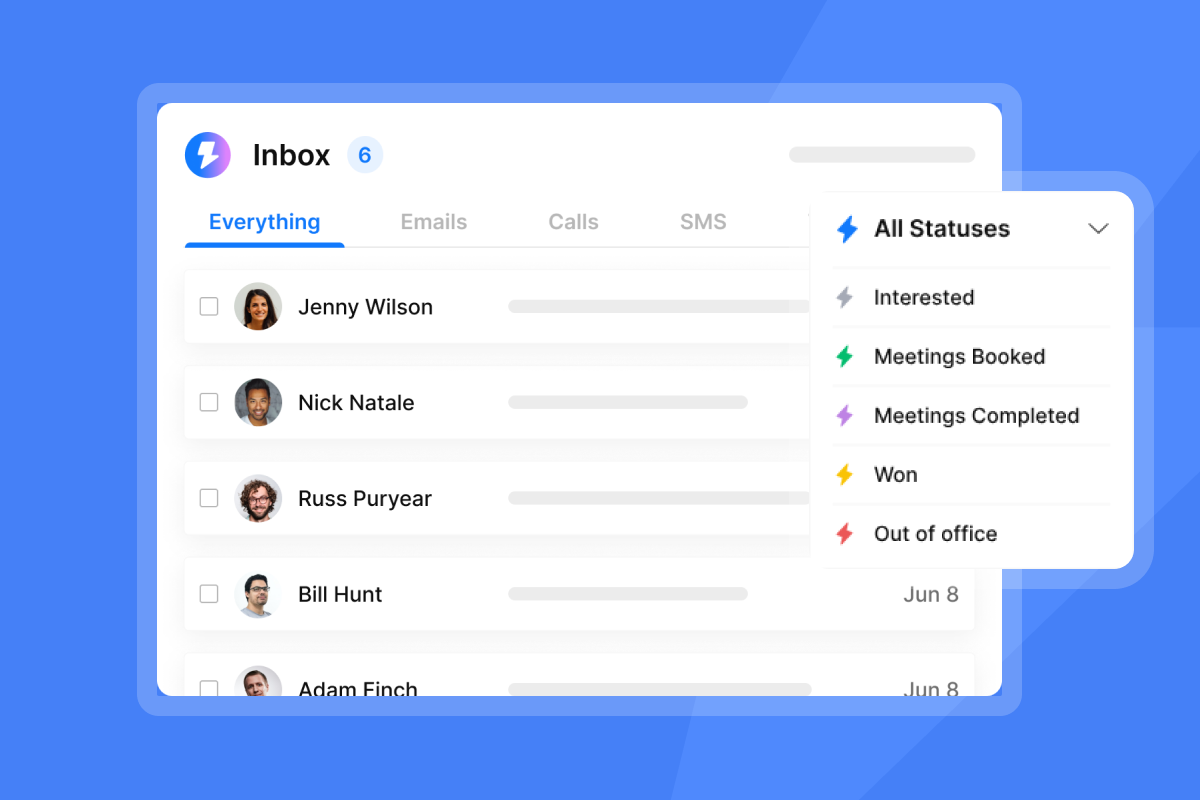
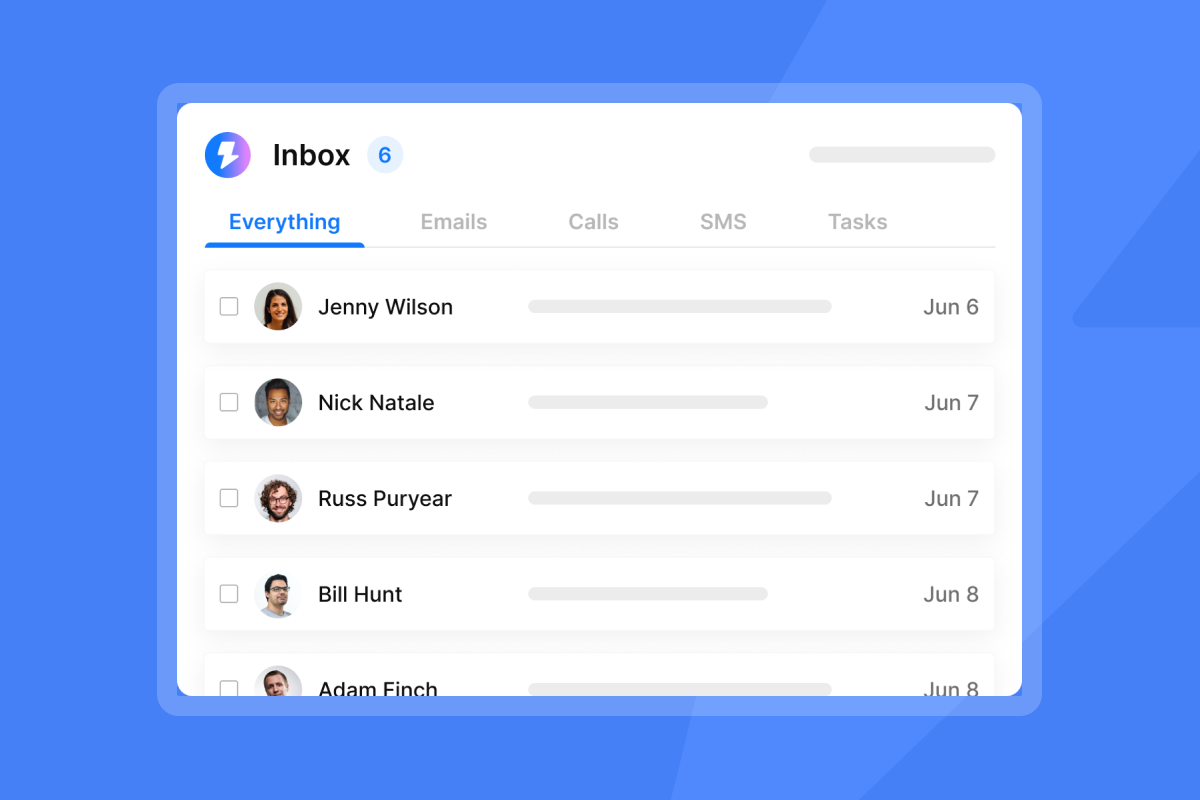
Instantly's Unibox centralizes all replies from across every sending account into a single inbox, so human reps can monitor and step in the moment a conversation needs judgment. This is the operational control layer that makes hybrid models work at scale. Without it, managing replies across dozens of sending accounts becomes its own full-time job.
How to secure your AI BDR integration
Scaling AI-driven outbound introduces four operational risks, covered alongside the upside in AI BDR automation benefits and challenges. Each has a clear fix. Work through them before your first campaign goes live.
Managing AI email deliverability risks
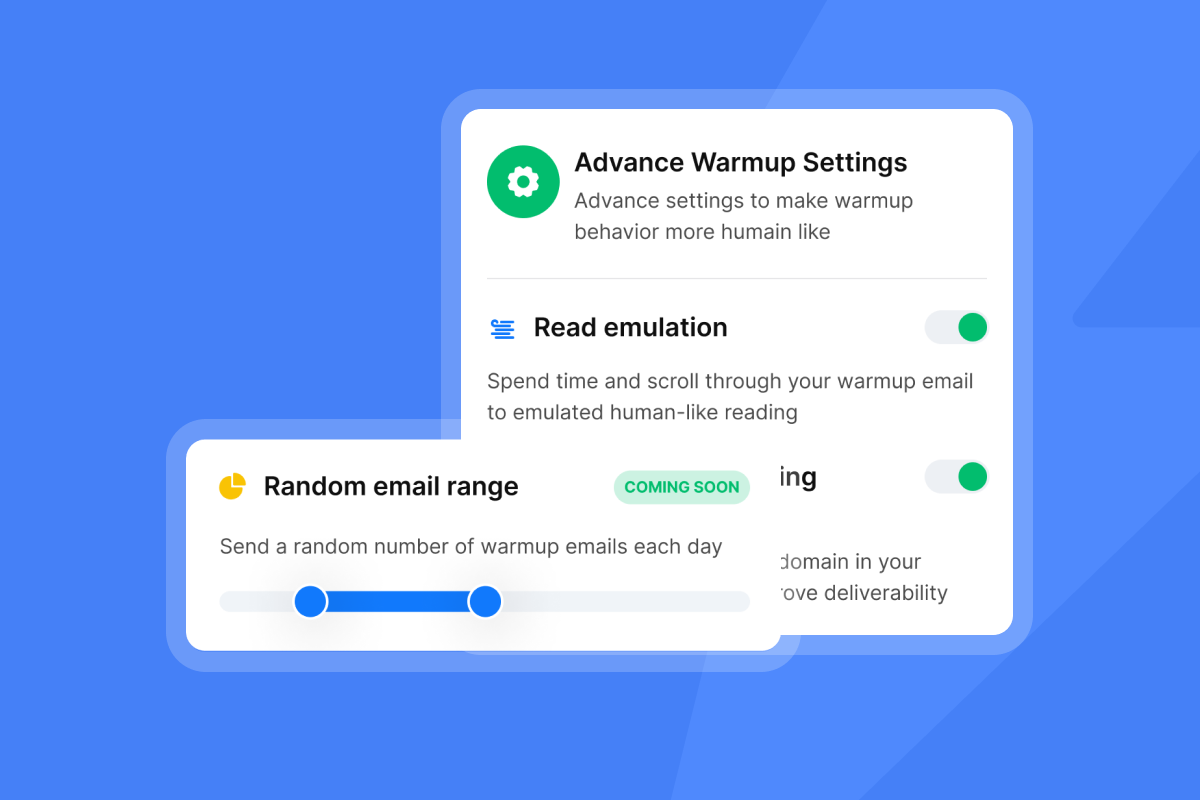
Deliverability is a system, not a setting. The three levers that matter most are warmup, send pacing, and list hygiene. Instantly's email warmup and scaling guide recommends warming new accounts for at least four to six weeks before launching any cold campaign, starting at 5 to 10 emails per inbox per day and increasing gradually. Cap sends at 30 emails per inbox per day to protect domain health.
The Deliverability AI Agent (available on Hypergrowth and above) monitors DNS health, blocklists, bounce rates, and campaign copy every 24 hours and surfaces fixes with direct in-platform actions. For teams scaling across multiple domains, the rotating IPs and sending algorithms guide explains how IP rotation protects deliverability during high-volume sending.
Improving AI lead routing precision
The Out-of-Office Resume feature uses natural language processing (NLP) to detect OOO auto-replies, extract the stated return date, pause the lead, and auto-resume on that date without manual intervention. This means your sequence does not burn a touchpoint on a prospect who is literally unavailable, and your rep does not have to manually manage pause/resume on dozens of leads. Hot replies go to Unibox with AI classification, and a rep steps in where judgment is needed.
Driving team adoption of AI tools
The adoption risk is real. Reps who view AI as a threat will work around it rather than with it. The framing that works: AI handles the manual work reps hate (list building, initial sends, OOO triage), which frees them to do the work that earns variable compensation (live calls, negotiation, closing). The warmup feature is often the first proof point that converts skeptical reps. Once they see the before/after on inbox placement rates, adoption tends to accelerate.
Preventing sales data reconciliation errors
CRM reporting that does not reconcile with campaign data is one of the fastest ways to lose trust with a CFO. Instantly's native HubSpot integration allows you to import HubSpot contact lists directly into Instantly campaigns without manual CSV exports. For bidirectional sync at the event level, the HubSpot integration guide recommends pairing the native connector with Zapier or an iPaaS layer for fully CRM-reconciled reporting. Keep your data lineage clean at every stage, because mixed sources in your CRM make pipeline reporting unreliable under any level of scrutiny.
AI wins on volume, speed, and cost. Human reps win on context, relationships, and complex deal navigation. The hybrid model wins because it puts each to work where it has the advantage: Instantly's AI agents source, sequence, and triage so reps spend their time on qualified conversations, not admin. For most B2B sales teams, that split produces better pipeline coverage, lower cost-per-meeting, and a process that scales without adding headcount at every growth stage.
Ready to build a hybrid model that hits pipeline targets without doubling headcount costs? Try Instantly free for 14 days, no credit card required. The Outreach Growth plan includes unlimited sending accounts, built-in warmup, and native HubSpot integration. Apply the decision frameworks in this guide to your own team and measure cost-per-meeting against your current stack.
FAQs
How does AI handle inbound vs. outbound lead flow?
AI can triage inbound replies instantly, classify them by sentiment and intent, and draft a response in under five minutes using the AI Reply Agent. Human reps must handle complex inbound questions, pricing discussions, or anything requiring contextual judgment beyond basic interest classification.
How long does it take to see results from an AI BDR setup?
Allow four to six weeks for new sending accounts to warm up before drawing conclusions, then an additional two to four weeks for sequence variants to generate enough data for optimization. Consistent senders who follow the ramp plan see 15 to 20% higher reply rates than those who push volume before warmup completes, per Instantly's 2026 benchmark data.
Will AI BDRs eliminate BDR jobs?
No. AI shifts BDR focus from manual data entry and follow-up management to active selling and live conversations, which increases quota attainment and earning potential. The risk is not replacement. It is that teams without AI infrastructure fall behind on cost-per-meeting and pipeline coverage compared to those with it.
Can AI BDRs work for enterprise sales workflows?
AI works as a research and initial outreach assistant in enterprise contexts, particularly for first-touch sequencing into mid-level contacts before a human rep engages at the executive level. Enterprise deals require human-to-human relationship management across multi-stakeholder buying committees, and AI cannot substitute for that dynamic.
What happens to deliverability when I scale AI-driven outbound?
Deliverability depends on warmup discipline and list hygiene, not volume alone. Keep bounce rates at or below 1%, warm new accounts for four to six weeks, and cap daily sends at 30 per inbox. Instantly's deliverability network of 4.2M+ accounts and built-in inbox placement testing protect domain health during scale by generating authentic engagement signals before your campaigns go live.
Key terms
Fully loaded cost: The total annual expense of an employee including base salary, benefits, payroll taxes, software, management overhead, and annualized hiring costs. For BDRs, this typically runs 1.7x to 2.0x base salary.
Force multiplier: A tool or system that increases output without proportional increases in cost or headcount. AI BDRs act as force multipliers by automating high-volume tasks that humans find repetitive and low-value.
Primary inbox placement: When an email lands in the main inbox tab (Gmail) or focused inbox (Outlook) rather than promotions, spam, or junk. This is the critical deliverability metric for cold email outreach.
Sender reputation: A score assigned to your sending domain and IP address by email providers based on bounce rates, spam complaints, engagement patterns, and authentication setup. Poor reputation routes emails to spam regardless of copy quality.
Hybrid model: A prospecting system where AI handles data sourcing, initial outreach, and reply triage while human reps handle qualified conversations, objection handling, and deal closing.
OOO (Out-of-Office): An automated email reply indicating a recipient is unavailable, typically including a return date. Detecting and pausing outreach during OOO periods prevents wasted touchpoints and improves sequence efficiency.
TCO (Total Cost of Ownership): The complete cost of acquiring and operating a system over time, including subscription fees, implementation costs, training, maintenance, and hidden charges like per-seat fees or usage overages.
Read next
- How to send cold emails + 5 templates that get replies: A step-by-step guide to writing cold emails that generate replies, including five copy templates you can use immediately.
- Best cold email sequence templates to win replies in 2026: How to structure a cold email sequence by number of steps, timing, and what to write at each stage.
- Find, qualify, sell: your guide to B2B sales prospecting: A practical framework for building a B2B prospecting process from lead identification through to qualified pipeline.



