.svg)
%20(1).svg)


Updated July 13, 2026
TL;DR: AI BDRs handle top-of-funnel prospecting at a fraction of the cost of human reps, but they require strict deliverability infrastructure to avoid domain damage. Human BDRs remain essential for complex objection handling and relationship-driven closing. The most efficient path to consistent pipeline is a hybrid model: AI runs the "0 to 1" prospecting phase across unlimited warmed inboxes, and humans take over at the "1 to 100" relationship and closing phase. Instantly.ai was built to make this hybrid structure operationally viable with flat-fee unlimited sending accounts and built-in deliverability tools.
Most sales leaders looking to scale outbound face a real choice: hire three more human BDRs at a ZipRecruiter-reported average of $59,559 per year, with most salaries ranging between $45,000 and $70,000, or deploy an AI agent that handles prospecting and initial outreach at a fraction of the cost. The debate over AI BDRs versus human BDRs keeps missing the actual point. This isn't a replacement decision. It's a systems question about who does what, and how the handoff between them is built. An AI BDR agent for your outbound pipeline covers the volume side of that split.
This guide breaks down the operational differences in speed, cost, deliverability, and consistency so you can build a hybrid sales team that scales pipeline without burning domain reputation or adding five-figure headcount. You'll see where AI excels at top-of-funnel volume, where humans remain irreplaceable for complex deals, and how to structure the handoff between them to protect your sending infrastructure. For vendor options, see our roundup of the best AI BDR tools for sales teams. Many teams begin this shift by deploying an AI sales agent to handle top-of-funnel prospecting.
Defining the AI BDR for modern sales teams
An AI BDR is an autonomous software agent that executes the core functions of a business development representative: sourcing leads, drafting personalized outreach, sending follow-up sequences, and handling replies without human input at every step. Modern AI BDRs are LLM-driven agents built on four layers: a data layer for ICP (Ideal Customer Profile) targeting and CRM (Customer Relationship Management) enrichment, a messaging layer for channel-specific outbound, a reply-handling layer for qualification responses, and a reporting layer for pipeline metrics. They use machine learning to read buying signals, adapt messaging based on prospect behavior, and improve their approach over time. For the full definition, see our AI BDR fundamentals guide.
For sales leaders, this means AI BDRs can cover the most time-intensive parts of outbound without adding headcount, but they only perform reliably when the underlying deliverability infrastructure is solid. The AI BDR vs AI SDR distinction comes down to which stage of the funnel each role owns.
Defining AI BDR reliability metrics
Three metrics tell you whether your AI BDR is performing or quietly damaging your pipeline.
- Bounce rate: Keep this at or below 1% at all times. If it climbs above that, pause sending and run a list hygiene check before resuming. Staying consistently below this threshold builds trust with inbox providers and improves placement speed.
- Inbox placement rate: Target 80% or higher. This measures the percentage of sent emails that land in the primary inbox rather than spam or promotions. Instantly's Inbox Placement tool runs automated tests on your domains so you catch problems before a full campaign launch.
- Reply classification accuracy: Instantly's AI Reply Agent reads, classifies, and responds to replies in under five minutes, 24/7. Audit a sample of classified replies weekly to confirm positive, negative, and out-of-office replies are routing correctly.
Scaling BDR workflows with AI agents
AI agents handle the repetitive top-of-funnel tasks that drain human BDR time: prospecting, list building, sequence enrollment, and initial reply management. Instantly's AI Sales Agent handles autonomous lead sourcing and outbound execution at 5 Instantly Credits per generated lead. The AI Reply Agent handles inbound reply management in under five minutes at 5 credits per reply.
Both agents run on Instantly Credits, which is a separate subscription from your Outreach plan and starts at $9/month with a free trial available. Your base Outreach plan covers unlimited sending accounts and warmup. The Credits subscription powers the AI agent layer on top.
Defining the role of a human BDR
A human BDR's core function is relationship initiation. They research individual accounts, craft context-specific messages, handle objections in real time, and book qualified meetings. Human BDRs take longer because manual research and multi-thread engagement are time-intensive processes, not because AI lacks the capability to replicate them. The problem comes when companies use that expensive human attention for tasks AI can handle in seconds.
Core BDR tasks and skill sets
Human BDRs bring a specific and irreplaceable skill set to the outbound process:
- Deep account research: Reading company news, funding announcements, and product changes to find relevant outreach angles.
- Multi-channel coordination: Managing email, phone, and LinkedIn touchpoints based on real-time prospect responses.
- Complex objection handling and meeting qualification: Responding to nuanced pushback and confirming fit before handoff to AEs.
Unique value of human BDRs
The human advantage in sales comes down to three things AI cannot replicate at scale:
- Empathy: Reading subtext in high-stakes or complex replies and applying judgment to build trust where a templated response would create friction.
- Strategic thinking: Knowing when to override the system, such as pausing a sequence, escalating to a senior AE (Account Executive), or changing the angle based on context that the AI wasn't trained to recognize.
- Creative improvisation: Crafting a message that uses humor, a genuinely unexpected angle, or a cultural reference that fits a specific moment, the kind of creative judgment that goes beyond pattern-matching.

Activation time: AI vs human response lag
Response speed is one of the clearest operational differences between AI and human BDRs, and it has a direct impact on conversion rates.
AI throughput and inbox deliverability
AI agents respond to inbound inquiries around the clock. A lead response study by InsideSales.com and MIT's Sloan School of Management, published by MarketingSherpa, found that the odds of qualifying a lead drop 21 times when you wait 30 minutes to call versus five minutes, and the odds of even connecting drop 100 times. The study measured phone response, but the principle applies to any first-touch channel: speed to response is a direct input to conversion rate. A human BDR on Pacific time simply cannot match that for a prospect who replied at 11pm Eastern.
Instantly's AI Reply Agent operates in two modes: Human-in-the-Loop, where a human reviews and approves responses via Slack before they send, and Autopilot, where the agent responds and routes independently. For sales leaders who want speed without removing human oversight on high-value replies, Human-in-the-Loop gives you both.
Realistic daily limits for human BDRs
Human BDRs face physical limits on throughput, and human BDRs hit a quality ceiling well below what AI can sustain, with the exact number depending on rep experience, how much account research each email requires, and how much of the sequence is already templated. That's not a criticism, it's the reality of doing careful work. The issue is that manual prospecting and sequence management take up the majority of a BDR's day, leaving limited time for the conversations that actually move pipeline. Human BDRs are shifting toward strategy and complex objection handling while AI takes over high-volume, lower-complexity work.
Quantifying campaign ramp-up times
AI BDR campaigns can launch once your domains are properly warmed and your lead list is built. SuperSearch, Instantly's built-in B2B lead database with 450M+ B2B leads, means you can move from ICP definition to active campaign without sourcing data from a separate tool.
Human BDR onboarding typically takes several months to reach full productivity, with most sales teams reporting a ramp period of several months before a new rep generates consistent output. That means you carry full salary cost before getting full pipeline contribution, and that lag matters when you need coverage this quarter. Compare that with how long AI BDRs take to ramp.
Throughput: maintaining deliverability at volume
Scaling volume without a deliverability system doesn't just underperform. It actively damages your sending reputation and can erase months of pipeline work.
Automating high-volume prospecting
AI BDRs scale by running sends across many warmed inboxes simultaneously. The rule that helps protect your domains: stay at or below 30 emails per single inbox per day. This is a conservative cap that applies to new and warming domains. More established, fully warmed domains may handle more, but 30 is the safe default until your bounce rate and placement metrics confirm your reputation is stable. This threshold keeps individual sending accounts below the volume triggers that flag behavior as spam.
Instantly's unlimited sending accounts model is built specifically for this. You connect as many inboxes as you need, and the platform distributes sends across all of them, keeping each account within safe daily limits.
Why human BDRs face throughput caps
A human rep managing multiple active inboxes manually would spend their entire day switching between accounts, checking replies, and avoiding overlap. Beyond the operational friction, manually managing dozens of sending accounts introduces inconsistency: different send times, different warmup states, and different follow-up intervals that break sequence integrity. Unevenly spiked send volume across accounts that aren't properly warmed drops inbox placement and climbs bounce rates, and a damaged domain reputation can take weeks to recover.
Maintaining deliverability during high volume
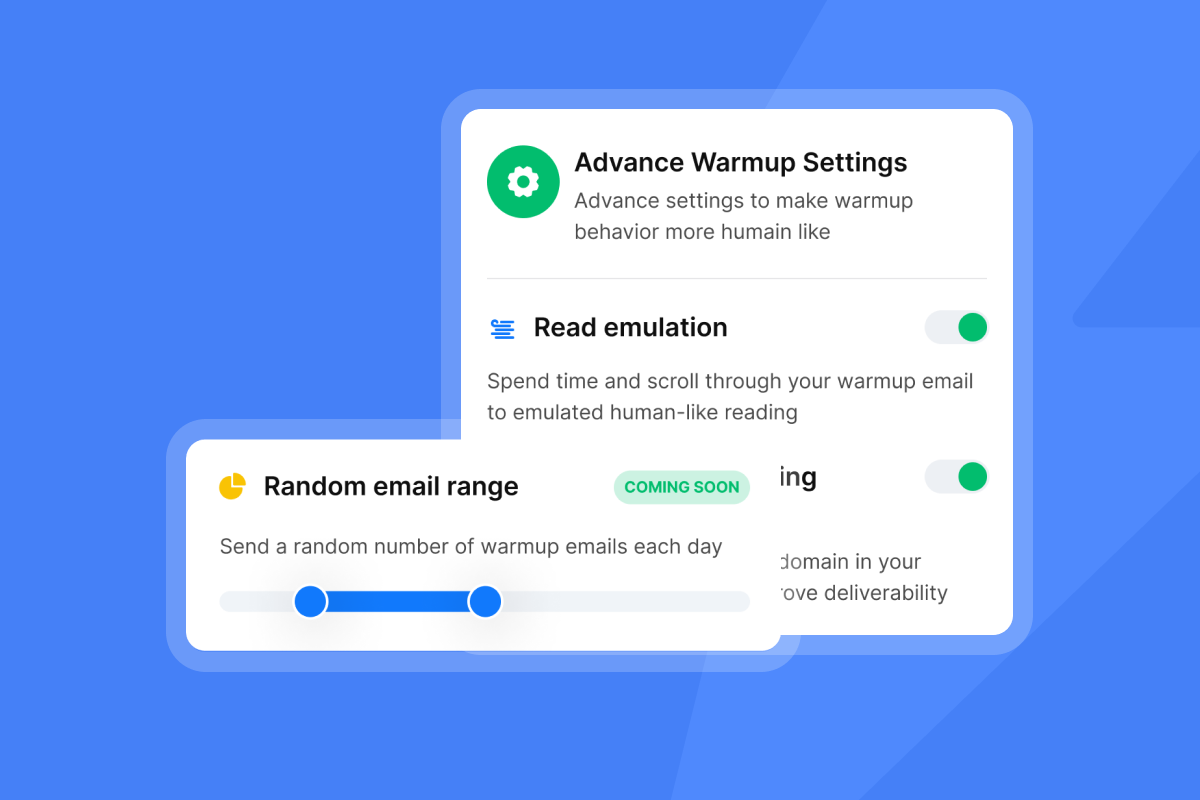
Running AI outreach at scale requires four components working together: domain warmup over 4 to 6 weeks via Instantly's deliverability network, automated Inbox Placement tests before and during campaigns, IP management via SISR on the Light Speed plan with dedicated IP pools and automatic swapping of flagged IPs, and ongoing monitoring through the Deliverability AI Agent, which checks DNS health, blocklists, and bounce rates every 24 hours and surfaces specific fixes with direct in-platform actions. The Deliverability AI Agent is available on Hypergrowth and above, included in your Outreach plan at no extra Credits cost.
Budgeting for growth: AI BDR vs human BDR ROI
The cost difference between AI and human BDRs is structural, and it compounds as you scale, as our AI BDR pricing guide breaks down.
Comparing AI and human BDR costs
Instantly uses flat-fee pricing tied to volume and features, not headcount, so a 5-person team and a 50-person team on the same plan pay the same monthly rate. The Growth Outreach plan starts at $47/month with unlimited email accounts and warmup included. The Hypergrowth plan at $97/month adds the Deliverability AI Agent and premium support.
Apollo's per-seat pricing runs $49/user/month on Basic, $79/user/month on Professional, and $119/user/month on Organization, putting a 5-person BDR team at $245 to $595/month before hitting credit limits. For teams of three or more, the flat-fee model is structurally cheaper as you grow.
A human BDR costs far more than their base salary. BDR base salaries vary widely by source. ZipRecruiter reports a current US average of $59,559, with most salaries between $45,000 and $70,000. Glassdoor reports a base pay range of $61,000 to $82,000, with median total pay reaching $121,000 when commissions and bonuses are included (data as of April 2025). Add employer-side benefits on that base (roughly 20 to 30%), software stack costs, and management overhead, and the fully loaded annual cost per rep runs meaningfully above the $121,000 total pay figure.
Analyzing pipeline ROI by source
The cost difference between AI and human reps for top-of-funnel outreach is structural. The table below shows the comparison directly: Instantly's platform starts at $47/month while a human BDR's median total pay is $121,000 before employer benefits, tooling, and overhead. The savings come from eliminated salary overhead, reduced software redundancy, and compressed time between lead identification and first contact.
Annual cost comparison: AI BDR vs human BDR (fully loaded)
Expense category | AI BDR (Instantly) | Human BDR |
|---|---|---|
Base salary | $0 | $45,000-$70,000 (25th-75th percentile); average $59,559 (ZipRecruiter, July 2026) |
Outreach platform | $47-$97/mo | Per-seat outreach tool (e.g. Apollo: $49-$119/user/mo, billed per rep) |
Lead database | $47/mo (Credits) | Varies by tool (typically $30-$100+/mo) |
Deliverability tools | Included | Varies by stack |
Total annual cost | Varies by plan | $121,000+ median total pay (Glassdoor, April 2025), before employer benefits, tooling, and overhead |
Annual cost savings vs. fully loaded human BDR | Up to ~99% less vs. fully loaded human BDR cost (based on ~$1,100/yr Growth plan vs. $121,000+ median total pay) | Baseline |
Feature comparison: AI BDR vs human BDR across key operational dimensions
Feature | AI BDR | Human BDR |
|---|---|---|
Daily send limit | Up to 30/inbox (unlimited inboxes) | 30-50 total emails |
Response time | Under 5 minutes | Hours to days |
Ramp-up time | Weeks of domain warmup | Several months to full productivity |
Annual cost | From ~$1,100/yr (Growth Outreach + Credits on monthly billing), scales with plan tier. | $121,000+ median total pay (Glassdoor, April 2025), before employer benefits, tooling, and overhead |
Personalization depth | Template-driven with dynamic fields | Deep, context-specific |
Consistency: maintaining quality across campaigns
One of the most underappreciated advantages of AI BDRs is consistency. They don't have bad weeks, they don't skip follow-ups, and they don't send typos on a Friday afternoon.
AI consistency vs human variability
AI agents apply identical sequence logic, follow-up timing, and message structure to every lead in every campaign. There's no drift between campaigns, no forgotten follow-up on day five, and no variation in send window adherence. This process consistency is what makes output predictable, which is exactly what a RevOps team needs to model pipeline.
Human reps vary. Burnout, turnover, and motivation create real variance in output quality that compounds over a quarter. When a strong BDR leaves, they take their playbook with them unless you've built sequence governance into the system. Quality degradation at scale is a documented problem when human review is removed entirely from AI output, so the fix isn't removing AI, it's adding the right oversight layer.
Managing rep and bot quality control
Sequence governance keeps both bots and reps on brand. For AI, this means:
- Defining approved templates and subject line variants tested via A/Z testing (up to 26 variants on Hypergrowth)
- Setting reply classification rules via Unibox NLP
- Enforcing send window limits per inbox
For human reps, it means mandatory use of approved sequences, required CRM logging, and regular copy reviews against a scoring rubric. Instantly's AI Spam Words Checker and AI Sequence Writer, available on the Growth plan and above, enforce copy standards before any message goes live. The AI Blocklist Triggers feature, available on Hypergrowth and above, automatically blocks leads based on unsubscribe status or keyword matches workspace-wide.
Handling edge cases in automated outreach
AI BDRs perform well in structured, repeatable scenarios. They degrade in proportion to how much context, judgment, or creativity a situation requires. Weighing the automation benefits and challenges up front helps set the right expectations.
Where AI BDRs require human oversight
AI BDR limitations show up in three specific scenarios that require a human in the loop:
- Highly specific industry contexts where the right message requires genuine subject matter expertise the AI hasn't been trained on.
- Complex multi-stakeholder deals where different personas in the same account need different messaging angles and timing.
- Creative objection handling where a prospect's pushback requires real empathy rather than a templated response.
Generic personalization, inserting a first name and company name into a template, doesn't work on high-value prospects who receive dozens of automated emails weekly. The fix isn't abandoning AI. It's using AI to handle volume at the top of the funnel while reserving human attention for accounts that justify the deeper investment.
Quantifying intent detection success
AI classifies reply intent accurately at scale when the classification categories are well-defined, which is the foundation of AI BDR lead qualification. Instantly's AI Custom Reply Labels use Unibox NLP (Natural Language Processing) to auto-classify incoming replies into custom labels across 50+ languages, with accuracy that improves as you provide misclassification feedback. Custom label selection is available on Hypergrowth and above.
The Out-of-Office Resume feature detects out-of-office auto-replies, extracts the stated return date, pauses the lead, and auto-resumes sending on that date. This is included on all plans at no extra cost.
Integrating AI into human prospecting workflows
The hybrid model works when AI and human roles are clearly defined and the handoff between them is clean and fast.
Defining AI vs human BDR roles
The clearest mental model is "0 to 1" versus "1 to 100."
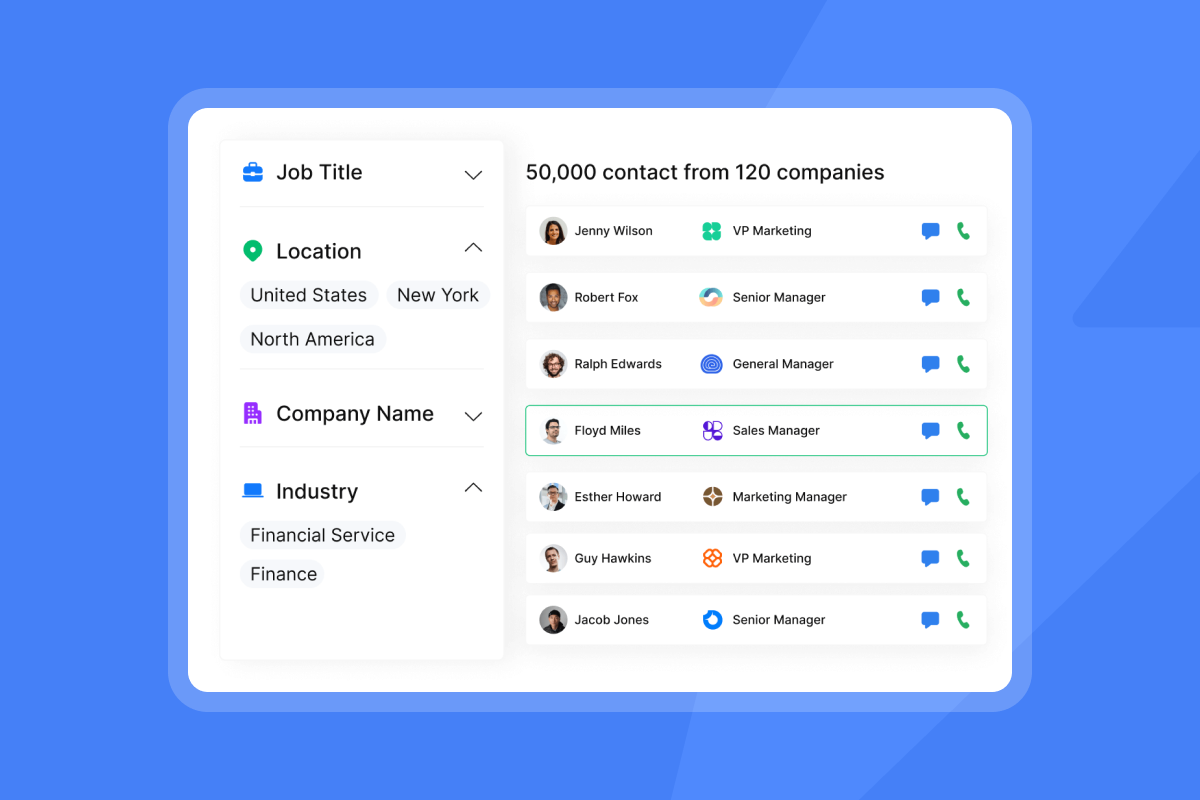
- AI (0 to 1): Lead sourcing from SuperSearch, sequence enrollment, initial outreach across unlimited warmed inboxes, reply classification, out-of-office management, and routing positive replies to the right human rep.
- Human (1 to 100): Taking a positive reply from a classified "interested" lead, qualifying the account, booking the meeting, running the demo, handling objections, and closing.
This division ensures your human BDRs spend their time on conversations that are already warm, which is where their skills produce the most return.
Handoff workflows between AI and human
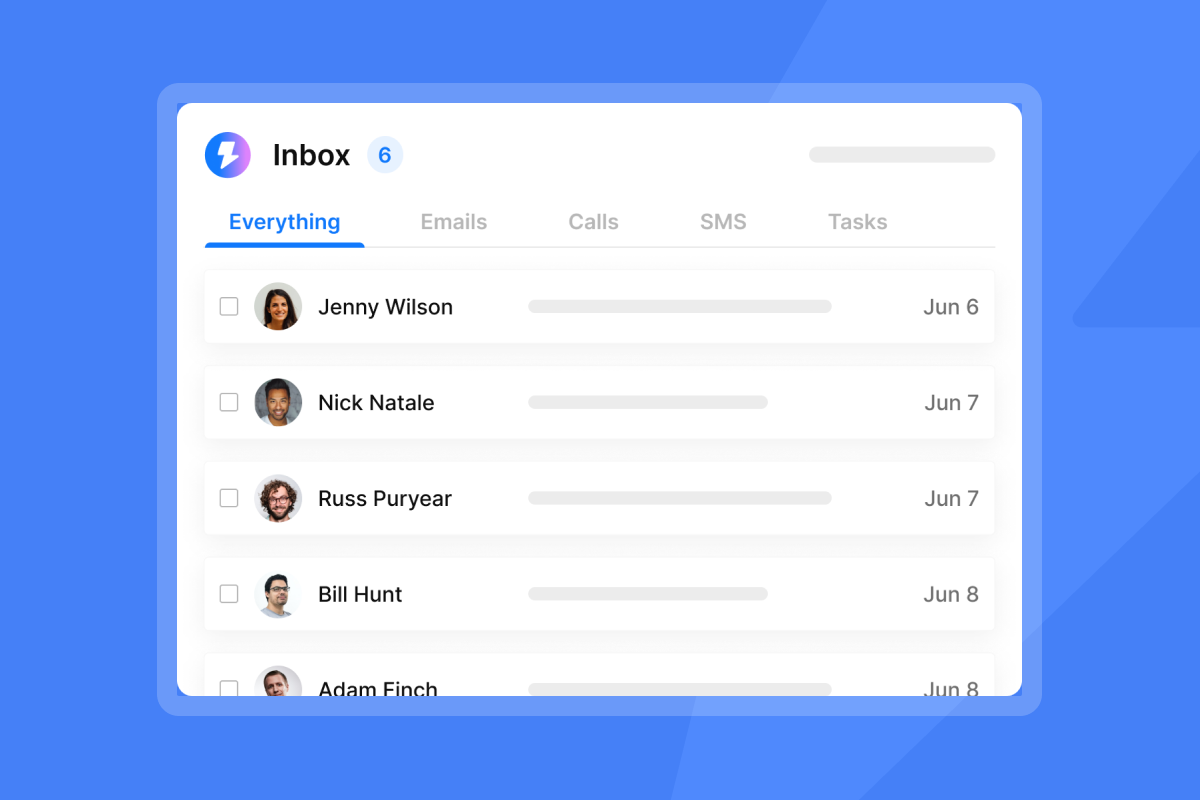
When the AI Reply Agent classifies a reply as "positive" or "interested," the lead moves into Unibox for human review. Your rep picks up the conversation in context, with the full thread visible, and works to qualify the account and book the meeting. The native HubSpot integration pushes the contact and conversation history directly into your CRM so there's no manual data entry and no information lost in the handoff. For teams using Slack, the AI Reply Agent sends notifications for replies that need human review before sending, giving you speed and oversight at the same time.
Optimizing team mix for pipeline growth
A practical starting blueprint for a modern hybrid outbound team:
- 1 RevOps manager: Owns sequence governance, domain health monitoring, CRM integration, and weekly performance reviews.
- 1 AI BDR system (Instantly): Handles lead sourcing, initial outreach, follow-up sequences, and reply classification across unlimited inboxes.
- 2 senior AEs or human BDRs: Take classified positive replies, run discovery calls, and own pipeline from first meeting to close.
This structure gives you the volume of a larger SDR team with the overhead of three people, and it delivers the structural cost reduction on top-of-funnel outreach that the annual cost comparison table in this guide shows directly.
Clarifying AI BDR vs human BDR operational myths
The two biggest myths in this space are that AI completely replaces human reps, and that scaling volume automatically increases pipeline. Both are wrong.
AI vs human BDR effectiveness
Use these performance benchmarks from Instantly's 2026 Cold Email Benchmark Report to set realistic targets. Instantly analyzed billions of cold email interactions across thousands of active workspaces from January 1 to December 18, 2025.
Metric | Platform average | Top quartile | Top 10% |
|---|---|---|---|
Reply rate | 3.43% | 5.5%+ | 10.7%+ |
Optimal sequence length | 4-7 steps | 4-7 steps | 4-7 steps |
Best email length | Under 80 words | Under 80 words | Under 80 words |
Best send day | Monday | Monday | Monday |
Highest reply day | Wednesday | Wednesday | Wednesday |
The benchmark also shows that consistent, stable sending patterns produce 15% to 20% higher replies than erratic volume spikes. That consistency is one of AI's natural advantages over human-managed outreach.
Defining your initial AI BDR rollout
A 30-day trial or POC plan for testing AI outreach safely:
- Days 1-7 (Domain setup): Set up at least two secondary sending domains as a starting point. Connect up to three to five email accounts per domain, which is the range Instantly's cold email strategy guide recommends to keep sending volume safe and manageable per domain. Start warmup on all accounts via Instantly's private deliverability network.
- Days 8-14 (Campaign build): Build your first lead list in SuperSearch. A starting range of 500 to 1,000 contacts gives you enough volume to generate statistically useful reply data without overextending your new sending infrastructure. Write your initial sequence using three to four steps, which aligns with Instantly's cold email strategy guide. Keep each email under 80 words, the length Instantly's 2026 Cold Email Benchmark Report identifies as optimal for reply rates across top-performing campaigns. Run an Inbox Placement test before launching.
- Days 15-21 (Controlled launch): Launch campaign at 15 to 20 emails per inbox per day for the first few days, then ramp toward 30 by the end of the week if bounce rate stays under 1% and placement tests stay green. Add inboxes to grow total volume rather than pushing a single inbox higher. Review reply classifications daily. Tune AI Custom Reply Labels based on any misclassifications you spot.
- Days 22-30 (Scale and baseline): Confirm you are sending at 30 emails per inbox per day, which is the target ceiling for each individual inbox at this stage. If your bounce rate is holding under 1% and placement tests are green, this is your stable operating baseline. To grow total daily volume beyond this point, add more warmed inboxes rather than pushing individual accounts higher. Document your reply rate and compare it against the 3.43% platform average from Instantly's 2026 Cold Email Benchmark Report.
KPIs for AI vs human BDR success
Run separate scorecards for each role so you're measuring against what each is actually responsible for.
Role | Key metrics |
|---|---|
AI BDR | Inbox placement rate (target: 80%+), bounce rate (target: under 1%), reply classification accuracy (audit weekly), cost per qualified reply |
Human BDR | Meeting show rate, SQL (Sales Qualified Lead) conversion rate, closed-won revenue per rep, average deal cycle from first meeting to close |
Assessing AI email deliverability risks
Before rolling out AI outreach, run this compliance checklist. CAN-SPAM violations can cost up to $53,088 per email under FTC enforcement guidelines, and GDPR (General Data Protection Regulation) fines reach up to 4% of annual global turnover or €20 million. Four steps to protect yourself before you launch:
- Review Instantly's DPA: Instantly operates under a Data Processing Agreement through Foo Monk LLC. Review the restricted data categories in section 11.4 before uploading any contact list.
- Apply universal opt-out infrastructure: Every email must include a physical address and a one-click unsubscribe. Instantly's Global Block List captures opt-outs workspace-wide.
- Audit your contact data sources: Verify that your lead list has documented consent or a legitimate interest basis for contact under GDPR.
- Do not upload restricted data: PHI, payment card data, and biometric data are explicitly prohibited under Instantly's DPA. Keep your uploads to standard B2B contact fields.
"I've been using Instantly.ai for about 4 months, and I have never had an issue with using their features or a challenge with customer support. It has everything needed for sending personalized cold outreach campaigns, with everything documented in clear SOPs and a customer support that is quick to respond and solve the issue/answer inquiry." - Yassine Raji on Trustpilot
The hybrid model works because AI handles the part of outbound that rewards scale and consistency while humans handle the part that rewards judgment and relationship. Start your free 14-day trial to run your first AI-powered campaign with unlimited email accounts, built-in warmup, and access to SuperSearch's 450M+ B2B leads. No credit card required. Download Instantly's 2026 Cold Email Benchmark Report to set realistic performance targets for your first 30 days.
FAQs
What is the daily sending limit for an AI BDR?
For new and warming domains, stay at or below 30 emails per single inbox per day. This is a conservative cap that protects your sender reputation while domains build trust with mailbox providers. Established, fully warmed domains may sustain higher volume, but 30 is the safe default until your bounce rate stays under 1% and placement tests confirm stable reputation. AI BDRs scale volume by distributing sends across hundreds of warmed inboxes rather than blasting from one account, so total daily volume can be substantial while each individual inbox stays within safe limits.
How much does an AI BDR cost compared to a human BDR?
An AI BDR platform like Instantly starts at $47/month for the Growth Outreach plan, while a human BDR's median total pay reaches $121,000 according to Glassdoor (April 2025), before adding employer-side benefits, software stack costs, and management overhead. The cost table in this guide breaks down both sides in full, covering platform fees, lead database costs, and total annual cost so you can compare on a like-for-like basis.
Can an AI BDR completely replace human reps?
No. AI BDRs excel at top-of-funnel prospecting, follow-up sequences, and initial reply classification, but human reps are essential for complex objection handling and closing. The most effective structure is a hybrid model where AI books meetings and humans close them.
What warmup period does an AI BDR email system need before launching campaigns?
Newly connected email accounts typically require 4 to 6 weeks of warmup before running production campaigns. Plan for the full window before launching, as cutting warmup short is one of the most common causes of early deliverability problems. Instantly's email warmup guide covers the process in detail. Instantly's deliverability network of 4.2M+ accounts automates this process, gradually building sender reputation with mailbox providers before your sequences go live.
How does the AI Reply Agent handle out-of-office replies?
Instantly's Out-of-Office Resume feature detects out-of-office auto-replies using NLP, extracts the stated return date, pauses the lead automatically, and resumes outreach on that date. This is included on all plans at no extra cost.
Key terms glossary
Primary inbox: The main folder where legitimate emails land, avoiding the spam or promotions folders. Inbox placement rate measures how consistently your sending accounts hit the primary inbox.
Warmup: The process of gradually increasing email volume on a new domain to build sender reputation with mailbox providers before running production campaigns.
Throughput: The total volume of emails sent and processed over a specific timeframe across all sending accounts. Sales leaders track throughput to balance pipeline coverage against deliverability risk.
Sequence governance: The rules and quality controls that standardize templates, send windows, and follow-up intervals across campaigns to keep both AI and human reps consistent and on brand.
Unified inbox: A centralized dashboard, like Unibox, that aggregates replies from all sending accounts in one place for triage, classification, and handoff to human reps.
Read next
- Cold email tips: how to write outreach that gets replies: practical techniques for improving subject lines, opening lines, and calls to action so more of your emails convert to replies.
- The ultimate AI lead generation playbook for SDRs: use cases, compliance, and deliverability: a step-by-step guide to building an AI-powered lead generation system that stays compliant and protects your sender reputation at scale.
- Instantly vs Apollo for agencies: what real users say and why: a head-to-head comparison of pricing, deliverability, and usability based on real user feedback from agency operators.



