.svg)
%20(1).svg)


Updated August 20, 2026
TL;DR: Sales engagement platforms act as workflow managers for reps handling multi-channel outbound activity across email, phone, and LinkedIn, and they charge per seat as your team grows. Deliverability-first email platforms treat deliverability as an automated system, rotating sends across unlimited accounts on a flat fee to protect primary inbox placement. If your team is scaling cold email, you need a deliverability-first layer, not just another workflow manager. Instantly.ai is built for that job: unlimited accounts, automated warmup, Inbox Rotation, and AI-driven deliverability monitoring, all without per-seat pricing that grows against your budget.
Most sales leaders focus on rep activity metrics while ignoring the technical deliverability issues that keep emails out of the primary inbox. According to Instantly's 2026 Cold Email Benchmark Report, drawing from billions of emails sent between January and December 2025, consistent sending infrastructure produces 15 to 20% higher reply rates than erratic, manually managed workflows. That gap between "email sent" and "email received" is where pipeline targets die quietly, and it is the exact divide between what a sales engagement platform does and what a deliverability-first email platform does.
This guide draws clear category boundaries so you can pick the right system before you end up paying for the wrong one.
What is a sales engagement platform?
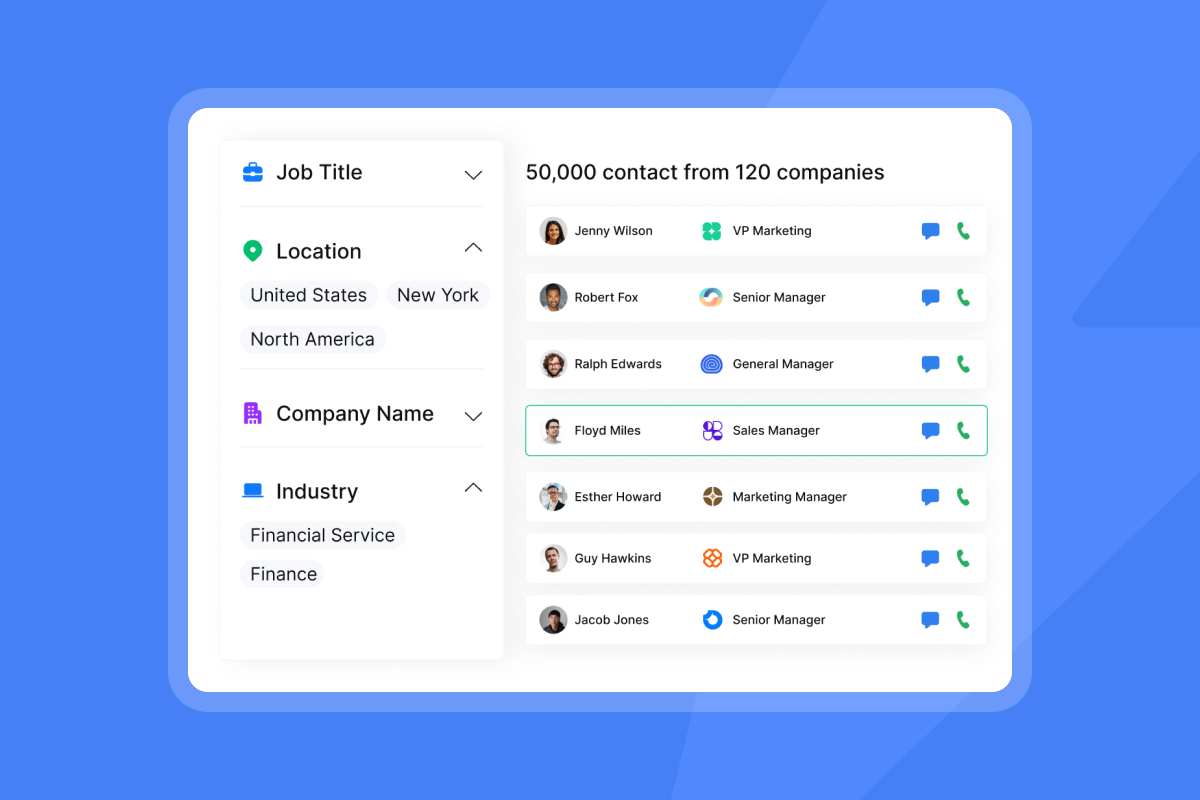
A sales engagement platform (SEP) is a workflow layer that sits between your CRM and your reps, helping them manage and track multi-channel outbound activity across email, phone calls, social media, and text messaging. In practice, SEPs are built around three core functions: running multi-step touch sequences, personalizing messages at scale, and logging activity back to the CRM.
The appeal is real. A rep using an SEP can process far more prospects per day than one managing tasks manually. Modern SEPs include automation and guided execution, though some workflows still require rep judgment on key touchpoints.
Core features of engagement suites
Most legacy SEPs include:
- Multi-channel cadences: Automated sequences combining email steps, call tasks, and LinkedIn touchpoints in one workflow.
- Manual task queues: Reps receive daily lists of calls, social touches, and email drafts to review before sending.
- A/B testing: Basic subject line and copy testing to identify higher-performing variants.
- Activity dashboards: Rep-facing reporting on outbound activity, including emails sent, calls made, and tasks completed, so managers can track productivity across the team.
- CRM sync: Bi-directional activity logging back to your CRM, with enterprise deployments typically targeting deep integration with the organization's system of record. The design emphasis is on coordinated rep workflows and guided touchpoints rather than infrastructure-level delivery automation at scale. That design works well for phone-heavy enterprise processes, though it can constrain throughput when email is the primary scaling channel.
Who engagement platforms are built for
Legacy SEPs are built for large enterprise teams where phone calls and LinkedIn touchpoints are central to the sales motion. Outreach and Salesloft both market primarily to enterprise revenue teams, with positioning and pricing that reflect organizations running 50 or more reps who need centralized workflow control and compliance oversight.
Enterprise SEPs like Outreach do not publish pricing publicly and require a vendor quote for accurate figures. Minimum seat commitments on enterprise contracts vary by contract and are best confirmed with a direct vendor quote, though both Outreach and Salesloft are structured for organizations committing multiple seats upfront. Smaller teams often find that structure compounds against growth.
There is also a specific risk in multi-channel SEPs: browser-based LinkedIn automation. LinkedIn's User Agreement prohibits non-compliant automation tools, and enforcement can disrupt active sequences with little warning. Tools that route actions through proxy IPs or headless browsers violate LinkedIn's User Agreement outright. That is the kind of operational risk that belongs on your radar before you build a sequence strategy around browser automation. Instantly does not support native LinkedIn messaging, which means your LinkedIn rep activity stays clean and your domain reputation stays separate from any third-party enforcement actions.
What is a deliverability-first email platform?
The term "sales execution platform" is used broadly in the market to describe AI-driven systems that manage the full sales motion end to end, from research and CRM updates to meeting booking. This article focuses on a narrower, distinct category: deliverability-first email platforms. A deliverability-first email platform automates the infrastructure required to move cold email at scale, including domain warmup, inbox rotation, and health monitoring, treating these as built-in systems rather than manual rep tasks.
Core features of deliverability-first email platforms
Where an SEP gives reps a to-do list, a deliverability-first email platform automates the technical infrastructure so reps never have to manage sending limits, domain health, or IP rotation themselves. The defining features are:
- Unlimited sending accounts: Instantly charges a flat monthly fee regardless of how many domains and inboxes you connect. No per-seat pricing, no growing software bill as volume scales.
- Automated domain warmup: New accounts ramp gradually through a shared warmup network before campaigns start.
- Inbox Rotation: Sends distribute automatically across all accounts assigned to a campaign so no single inbox exceeds the recommended 30 campaign emails per day threshold.
- AI-driven deliverability monitoring: Always-on systems check DNS health, blocklists, bounce rates, and warmup scores, then surface fixes before damage compounds.
- Unified reply management: All replies across all accounts flow into a single inbox with NLP-based classification to triage lead intent automatically.
Who deliverability-first email platforms are built for
Deliverability-first email platforms are built for lean sales teams, founders, and agencies who need to scale email volume across multiple domains without hiring more headcount or paying per-seat fees. Instantly's Growth plan starts at $47 per month with unlimited sending accounts and warmup, compared to the per-seat pricing model used by legacy enterprise SEPs. If your primary outbound channel is email and your goal is consistent primary inbox placement across dozens of sending accounts, a deliverability-first email platform is the right layer.

Where the two categories overlap
Both SEPs and deliverability-first email platforms help teams send emails to prospects through multi-step sequences. That surface-level similarity is what causes category confusion. In practice, several capabilities appear in both platform types, though the infrastructure and focus differ.
Cadences and sequences
Both platform types let you build multi-step email sequences with follow-up timing, conditional branches, and personalization variables. One key difference is in how sequences typically run day to day. Legacy SEPs were built around step-by-step rep confirmation, though modern platforms have moved toward autonomous execution where agents handle research, enrichment, and sequencing without rep input on each touchpoint. Deliverability-first email platforms are designed to run autonomously once you set the rules, handling timing, account rotation, and delivery without rep intervention.
Email personalization and templates
Both categories support merge tags, custom variables, and basic A/B testing. Deliverability-first email platforms add a layer on top through systems like Spintax, which vary copy at the word and phrase level across sends to avoid fingerprinting patterns that trigger spam filters. Instantly's AI Spintax Writer generates Spintax variants directly from existing copy inside the sequence editor. Instantly's AI Spam Words Checker flags spam-trigger language in your email copy before you send, so you can catch risky words before they affect inbox placement. The AI Spam Words Checker is included in the Growth plan at $47 per month.
CRM integration and activity logging
Both platform types sync activity back to your CRM. One domain hygiene point worth noting here: when high-volume cold email generates bounce rate spikes or spam placement signals, those signals damage that domain's reputation with ISPs, and the damage cascades to harm transactional and operational email delivery. A common deliverability precaution is to run high-volume cold email from dedicated subdomains or separate domains, keeping bounce signals and spam placement risk away from the root domain. Instantly's Automations connects directly to HubSpot for bidirectional sync and can be configured so that only positive replies and qualified interest travel back to your CRM.
Where deliverability-first email platforms diverge
This is where the structural gap opens up. The features below either do not exist in legacy SEPs or are handled automatically by the platform rather than configured manually by reps.
Deliverability systems and inbox placement
A key difference between categories is whether deliverability is managed manually by reps or automated by the platform. In many legacy SEPs, daily send limits are configured manually by reps, with enforcement and monitoring varying by platform and plan. Deliverability-first email platforms rotate sends automatically, monitor placement in real time, and adjust before reputation damage occurs.
Instantly's Inbox Rotation distributes sends across all connected accounts within a campaign automatically. No single inbox fires more than 30 campaign emails per day, which keeps individual account volume below the threshold that triggers ISP scrutiny. This approach reduces spam filter exposure by ensuring no single sending identity accumulates enough negative signals to trigger a block.
On the Light Speed plan, SISR (Server and IP Sharding and Rotation) assigns dedicated IP pools and rotates IPs proactively before any single IP accumulates reputation risk. This is automatically applied for eligible workspaces managing high volume, not a manual toggle.
The performance data backs the system approach. Instantly's 2026 benchmark report found that consistent, stable sending patterns produce 15 to 20% higher reply rates. Platform average reply rate is 3.43%, top-quartile senders reach 5.5%+, and the top 10% of senders clear 10.7%+. Those numbers belong to teams that maintain predictable daily volumes, not teams that blast and pause.
Reply classification and unified inbox
Scaling to hundreds of daily sends across multiple accounts creates a triage problem: knowing which replies need immediate action, which are out-of-office auto-responses, and which are unsubscribes becomes its own full-time job without automation.
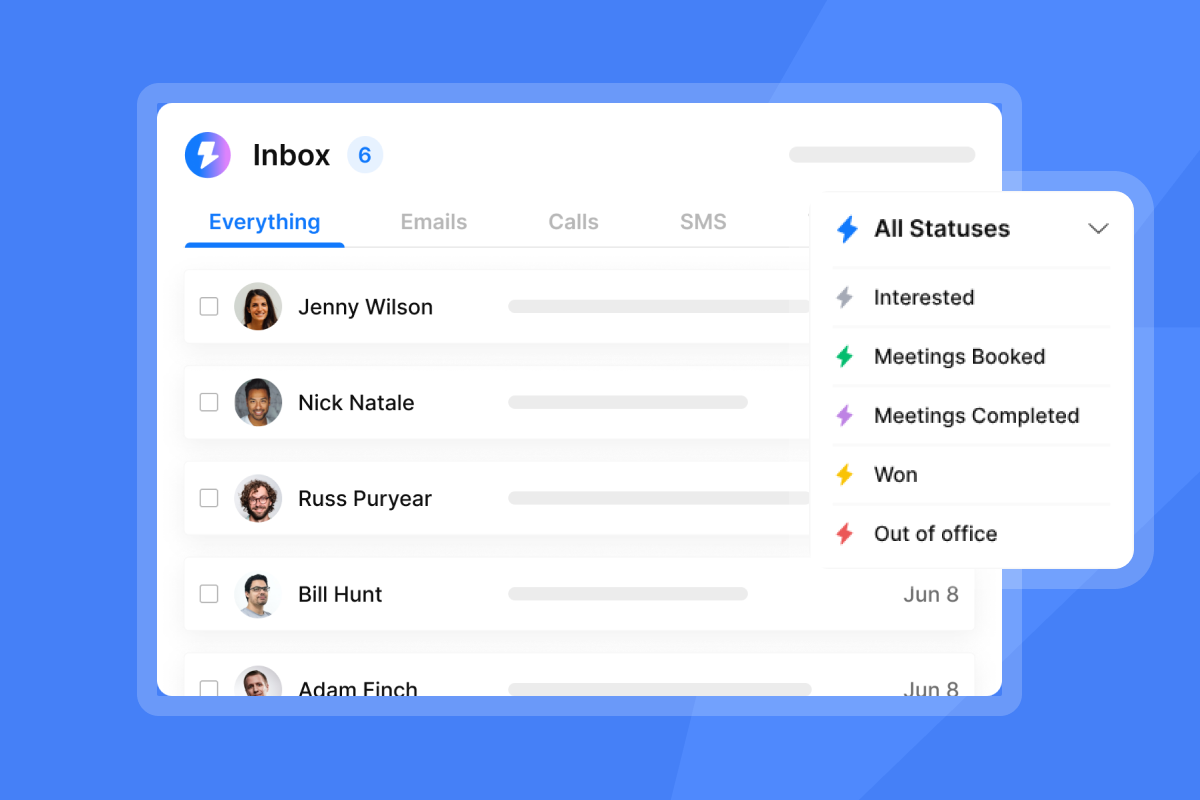
Instantly's Unibox v2 centralizes all replies across all accounts into a single inbox with AI-powered sentiment analysis, bulk action capabilities, auto-refresh, and persistent records after campaign deletion. The AI Reply Agent handles initial replies in under 5 minutes and integrates with Slack for real-time alerts with AI-drafted response previews, operating in Human-in-the-Loop or Autopilot mode.
Unibox NLP classifies replies across 50+ languages using sentiment and context detection. Out-of-office replies are handled by AI Smart Pause, which detects the stated return date, pauses the lead, and auto-resumes sending on the correct date without rep input. This feature is included on all plans.
Team standardization and governance
Instantly gives admins centralized controls that prevent reps from going rogue with unsafe sending behavior. These controls include:
- Global Blocklist: Blocks entire domains or email addresses workspace-wide, checked at import time via manual entry, CSV, or live Google Sheets sync.
- High bounce auto-pause: Campaigns pause automatically once bounce rate exceeds 5% after a minimum 200 sends, enabled by default on all plans. This works alongside BounceShield, which skips known high-risk recipients before they reach the sending queue using real-time and historical bounce data.
- AI Blocklist Triggers: Auto-blocklists leads across three trigger categories: unsubscribe status (all plans, workspace-level), account status, and reply-content keywords, which blocklist leads automatically when a reply contains a specified word or phrase (account status and reply-content keywords both require Hypergrowth and above).
- Company Send Limits: A per-domain daily cap that prevents over-sending to contacts at the same organization, available on Hypergrowth, Light Speed, and Enterprise.
These are admin-set, workspace-wide rules that apply to every rep and every campaign automatically.
Domain health monitoring and warmup
Getting a new domain to a healthy sending state takes time, and skipping the process is one of the fastest ways to burn a domain permanently. The industry standard calls for gradual volume increases week over week, starting at 5 to 10 emails per day and building toward a steady state over 2 to 4 weeks, tied to placement and bounce monitoring. Instantly's minimum warmup period before campaigns start is 2 weeks, with pre-warmed accounts available if you need to skip the wait entirely.
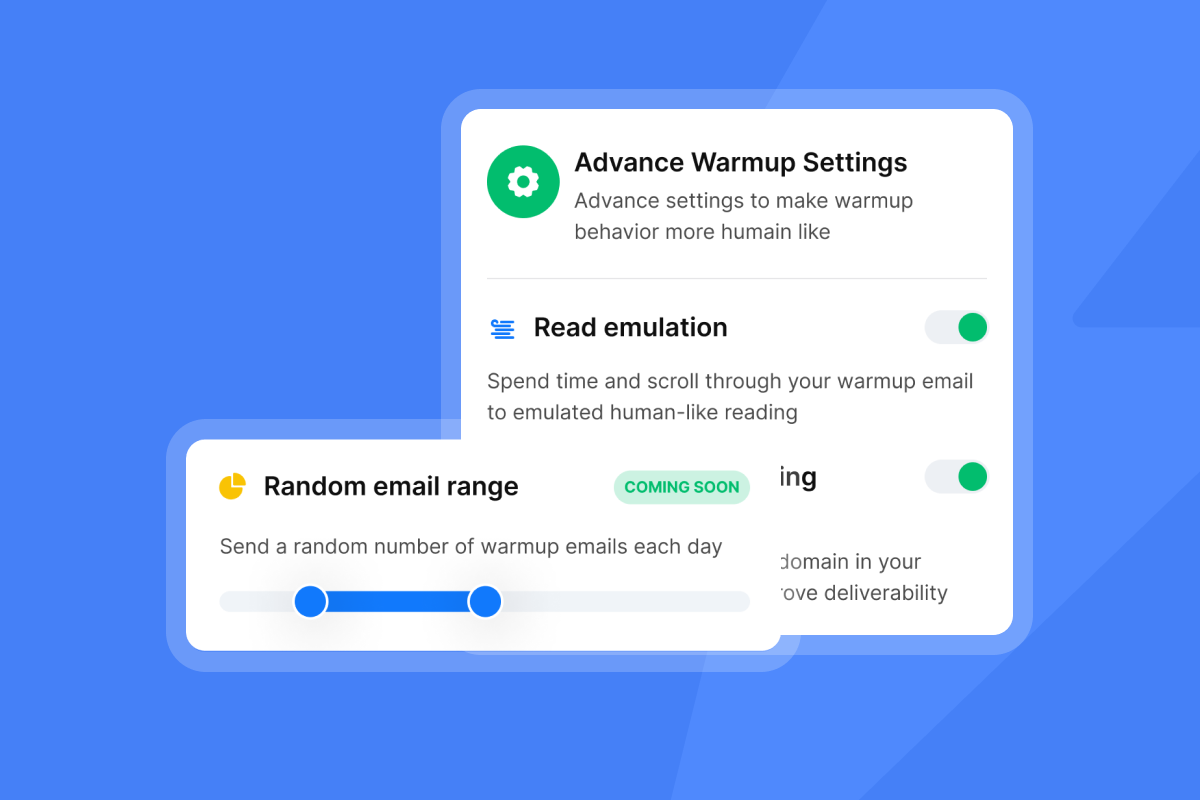
Instantly's Deliverability AI Agent (included on Hypergrowth and above) monitors DNS health, blocklists, warmup scores, bounce rates, provider balance, and abuse complaints, running automatically every 24 hours. It surfaces affected areas, explains the issue, and flags recommended next steps including pausing campaigns and adjusting account configurations. Slack alerts are supported.
How to decide which your team needs
The right fit depends on how your team runs outbound today and where the friction is. Use the matrix below to map your current setup.
| Feature | Engagement platform (SEP) | Deliverability-first email platform |
|---|---|---|
| Sending accounts | Per-seat limits | Unlimited accounts, flat monthly fee (Instantly) |
| Email warmup | Manual or third-party | Automated (4.2M+ account network) |
| Inbox rotation | Manual or varies | Automated across all accounts |
| Deliverability monitoring | Basic reporting | AI-driven (Instantly) |
| Pricing model | Per-seat, vendor quote required (enterprise SEPs) | From $47/month flat (Instantly) |
| Reply management | Rep task queue | Unified inbox with NLP (Instantly) |
| CRM integration | Enterprise CRM-focused | HubSpot, direct sync via Automations (Instantly) |
| Multi-channel | Email, phone, LinkedIn | Email-first, calling and SMS in CRM |
| Dedicated IP infrastructure | Varies by platform | SISR on Light Speed (Instantly) |
| Primary use case | Enterprise, phone-heavy teams | Lean email teams, agencies, founders |
The email outreach plans comparison details what each tier covers so you can match your team's volume and feature requirements to the right plan.
When engagement platforms make sense
An SEP makes sense when your sales motion is genuinely multi-channel and phone-heavy. Enterprise teams running coordinated email, call, and LinkedIn sequences from a single rep workspace value tight workflow integration, and the CRM sync depth that Outreach provides is purpose-built for that environment. The cost is real, though. Enterprise SEPs like Outreach require a vendor quote and minimum seat commitments, with professional implementation adding further to the total. Instantly covers the same sequence orchestration and CRM sync via its HubSpot native integration on a flat monthly fee, keeping software cost predictable whether you have 3 reps or 30.
When a deliverability-first email platform makes sense
If your primary channel is email and your goal is consistent primary inbox placement across multiple domains at scale, Instantly handles that job at a fraction of the per-seat cost. Pricing starts at $47 per month for the Outreach Growth plan with unlimited sending accounts and warmup. A typical starter stack covering outreach, leads via SuperSearch, and CRM runs around $141 per month total.
"Emails land in inboxes, not spam. Easy to scale across multiple campaigns and markets. Clean analytics, open rates, replies, bounces, all in one view." - Salam on Trustpilot
Running both platforms in parallel
Some teams run both. The practical model is to use a data platform like Apollo for lead sourcing and CRM workflows, then route all email execution through Instantly to protect deliverability and avoid seat-licensing on the sending layer. Instantly's Automations routes contact updates, deal stage changes, replies, and meetings booked back into your CRM automatically on a flat monthly fee, and can be configured so that only positive replies and qualified interest reach your CRM. That keeps your primary domain clean from the bounce signals cold outreach generates. For a deeper look at how the two platforms compare, see Instantly vs. Apollo for agencies and the Apollo data enrichment review.
If you are ready to separate the deliverability layer from the workflow layer, start your 14-day free trial with no credit card required and run the Inbox Rotation and warmup setup on your first domain this week. You can also review the 2026 Cold Email Benchmark Report to set realistic reply rate targets before your first campaign goes live.
FAQs
Is Instantly a sales engagement platform?
Instantly is a deliverability-first email platform built to manage deliverability, automated warmup, and high-volume email sending across unlimited accounts on a flat monthly fee. Instantly includes a built-in CRM (Unibox v2, deal management, calling and SMS on Hyper CRM) but its core design is an automated deliverability engine, not a rep workflow manager.
Do I need both tools?
Not necessarily. If your outreach is primarily email-based, Instantly handles data via SuperSearch (450M+ contacts), sending, and reply management in one place. If your team runs heavy manual phone and LinkedIn sequences as core sales motions, you can pair Instantly with a legacy engagement tool for those channels while keeping email execution on Instantly to protect deliverability.
Which is better for deliverability?
Deliverability-first email platforms are structurally better for deliverability because they include automated warmup networks, Inbox Rotation across unlimited accounts, and dedicated IP/server rotation via SISR on Light Speed to protect sender reputation as volume scales. Instantly handles these as automated systems, not manual rep settings.
What about pricing differences?
Legacy engagement platforms charge per-user seat fees that compound directly against your budget as your team grows. Enterprise SEPs like Outreach require a vendor quote for accurate pricing, and both pricing and minimum seat commitments vary by contract. Instantly uses flat-fee pricing starting at $47 per month with unlimited sending accounts, which keeps your total cost predictable whether you have 3 reps or 30. See the full pricing breakdown for current plan details and annual discount options.
Can I see how the tool performs before committing?
Yes. Instantly's 14-day free trial requires no credit card and includes 250 uploaded contacts and 1,000 emails. You can also attend an Instantly live show to see the platform running in real campaigns before you decide.
Key terms glossary
Sales engagement platform (SEP): A workflow management layer that helps reps orchestrate multi-channel outbound tasks (email, phone, LinkedIn) and log activity back to the CRM, typically priced per user seat.
Deliverability-first email platform: A platform that automates the deliverability infrastructure required to move cold email at scale, including domain warmup, inbox rotation, and health monitoring, typically priced on a flat monthly fee with unlimited sending accounts. Note: the term "sales execution platform" is used more broadly in the market to describe AI-driven tools that manage the full sales motion end to end, which is a separate and distinct category.
Inbox Rotation: An automated sending distribution system that spreads campaign emails across multiple connected accounts to keep individual account volume below ISP spam thresholds (recommended: 30 campaign emails per inbox per day).
Domain warmup: The gradual process of building sender reputation for a new email domain by starting with low send volumes (5 to 10 per day) and increasing over 2 to 4 weeks while maintaining low bounce rates and positive engagement signals.
SISR (Server and IP Sharding and Rotation): A dedicated infrastructure layer that assigns private IP pools and rotates sending IPs proactively to prevent any single IP from accumulating reputation risk during high-volume sending. Available on the Light Speed plan.
Primary inbox placement: The percentage of sent emails that reach the recipient's main inbox folder rather than spam, promotions, or other filtered tabs. Consistently stable sending patterns are the most reliable driver of high placement rates.
BounceShield: Instantly's automatic system that skips known high-risk recipients based on real-time and historical bounce data, enabled by default on all plans to protect sender reputation.
Read next
- Best AI Sales Agents for Conversion Rates: What Actually Drives Reply & Meeting Rates: A data-backed look at how AI sales agents affect reply and meeting rates, and what separates top-performing sequences from average ones.
- Instantly vs. Outreach.io: Pricing & Value for Sales Teams: A side-by-side breakdown of plan costs, features, and total cost of ownership for teams evaluating both platforms.
- Best Instantly Alternatives for Outbound Sales Teams in 2026: A reviewed list of outbound email platforms with honest trade-offs for teams that need a different feature set or pricing structure.


