.svg)
%20(1).svg)


Updated August 27, 2026
TL;DR: Traditional sales prospecting relies on manual list building and human intuition, which limits volume and increases per-seat software costs. AI prospecting uses signal-based intelligence and automated deliverability systems to scale outreach without compounding fees. While legacy platforms like Apollo charge per seat, Instantly.ai offers unlimited sending accounts on a flat fee, allowing your team to scale campaigns safely. Both require strict data hygiene and a shift in SDR habits from manual research to quality control.
The difference between AI prospecting and traditional sales prospecting comes down to scalability. AI prospecting uses signal-based intelligence and automated deliverability systems to scale outreach without compounding per-seat fees, while traditional prospecting relies on manual list building and human intuition, which limits volume and increases costs linearly with headcount. Most sales leaders try to solve pipeline deficits by hiring more reps, only to find that per-seat software fees eat their margins before a single meeting is booked. Platforms like the Instantly AI Agent combine several of these roles into one connected system.
This guide breaks down the operational differences between traditional manual prospecting and AI-assisted workflows, compares efficiency gains, outlines the transition roadmap, and covers how to protect sender reputation when scaling outbound volume. If you run a sales team of 3 to 15 reps and are evaluating whether AI prospecting can replace manual list building without blowing your software budget, this guide is for you. See this breakdown of the types of AI agents for how these roles typically divide across a stack.
Traditional prospecting centers on activity volume per rep, pulling from static lists and manual research, with personalization written individually and costs compounding per seat as headcount grows. AI prospecting targets signal-based pipeline quality using databases like Instantly's 450M+ B2B contacts with real-time intent filters, generates copy variants through Spintax and AI tools, and runs on flat subscriptions with unlimited sending accounts so scaling no longer multiplies your software bill.
Standardizing the legacy cold outreach process
Manual outbound was built around a simple formula: hire an SDR, give them a list, and measure activity. That playbook worked at 5 reps, but at 15 reps it fractures under the weight of inconsistency. The problem does not improve with headcount. It compounds the cost.
The legacy model forces sales leaders to standardize behavior across reps who each have their own list-building habits, personalization shortcuts, and CRM hygiene standards. The result is a process that looks structured on paper but behaves differently in every inbox.
Manual quality control and email personalization limits
Manual quality control is inherently inconsistent. One rep might flag a lead as "not interested" after a single no-reply. Another might mark the same account as "follow up next quarter." Without a shared classification system, pipeline data degrades the moment it enters the CRM.
Reps also miss buying signals they can't spot in a static database, such as a recent leadership change, a funding round, or a competitor mention on a public forum. Human intuition varies too much across a team to catch these signals reliably at scale.
Writing individual emails from scratch compounds the problem. A rep who spends 20 minutes per prospect on research and personalization can touch fewer than 20 contacts in a full workday, before accounting for CRM updates, meetings, and internal reviews.
The risks of manual tracking sheets
Spreadsheets decay. A list built three months ago can already carry enough invalid addresses to push bounce rates past safe thresholds before a single campaign launches. Missed follow-ups, duplicate outreach, and lost context between rep handoffs are operational costs that rarely appear in a QBR but erode pipeline quality consistently. Without CRM sync, data lives in files on individual reps' laptops, and when those reps leave, the context goes with them.
The anatomy of an AI prospecting system
AI prospecting replaces the four manual steps (find, verify, write, send) with a single integrated workflow where data, sending, and reply handling live in one place. The operational shift is not about removing reps. It is about changing what they spend their time on, moving them from list-builders to system editors who approve, refine, and act on what the system surfaces. For more, see our guide to AI lead generation vs. AI prospecting.
Automating prospect data verification
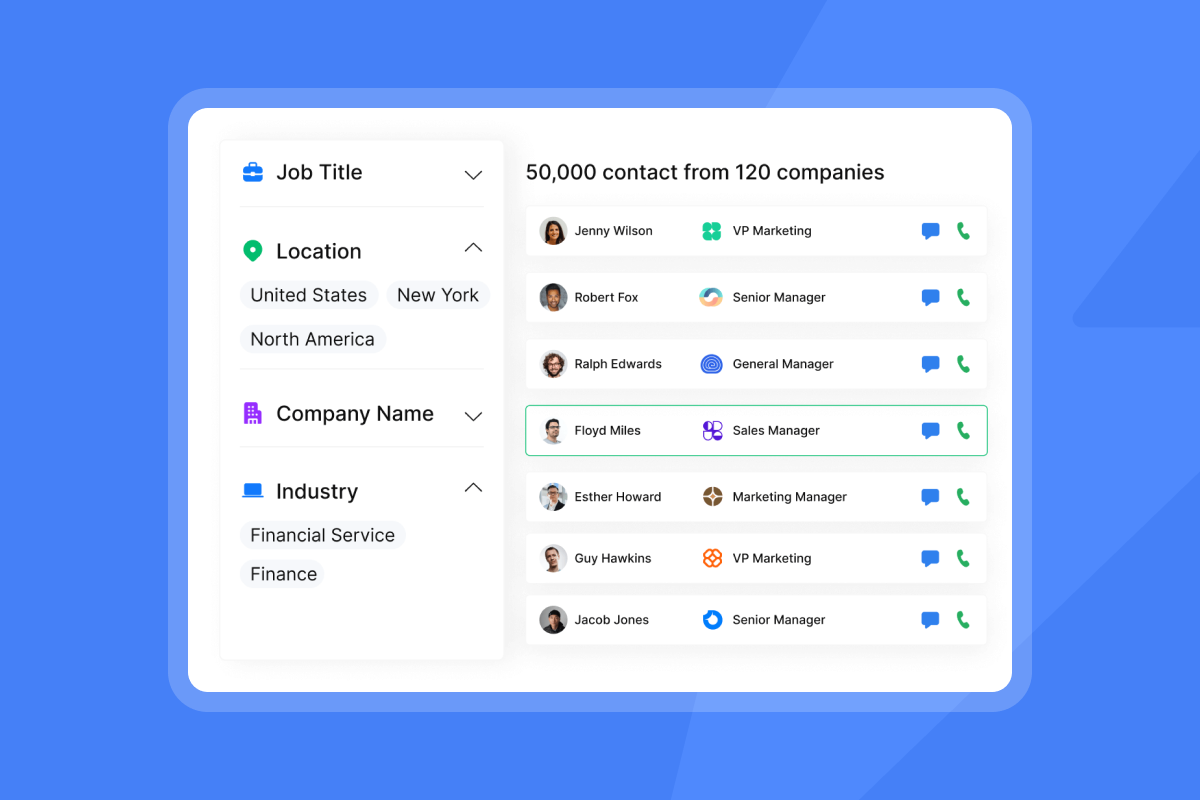
Instantly's SuperSearch searches a database of 450M+ verified B2B contacts and filters by job title, industry, location, revenue, tech stack, and keywords. The Signals filter surfaces intent data across four categories: social activity (LinkedIn posts, YouTube activity), buying intent (Reddit threads with competitor mentions or churn signals), growth signals (funding rounds, hiring surges, tech adoption), and company activity (executive changes, pricing updates).
In practice, you type a description like "founders of SaaS companies in New York with 50-100 employees," run the AI search, and export verified leads directly into a campaign without a separate CSV upload. Lead verification classifies addresses as valid, invalid, or risky before any email is sent, at 0.25 credits per lead.
Dynamic content for higher reply rates
Spam filters flag bulk patterns, not just keywords, so you need variation across your sends. Spintax creates multiple variations of sentences and words so each lead receives a slightly different version of your email. The syntax is straightforward: {{RANDOM | Hi | Hello | Hey}} randomly selects one option per recipient, ensuring no two emails are byte-for-byte identical. The AI Spintax Writer generates Spintax variants from existing copy automatically, accessible from the Sequence Editor under AI Tools.
Automating consistent follow-up
Instantly's AI Sequence Writer builds a full multi-step sequence from your offer and audience inputs. Once launched, follow-ups send automatically on the schedule you set. The Lead Finder Agent monitors active lead counts in a campaign and tops them up when the count drops below a threshold you define, so sequences never run dry without manual re-import. Reps check replies rather than chasing lists. That is the operational shift.

Quantifying efficiency gains in sales prospecting
The efficiency argument for AI prospecting shows up in concrete, measurable inputs: hours spent per lead, bounce rates, and reply rates at scale.
Reducing hours spent per lead
ROI comparison, manual vs. AI workflow
| Metric | Manual SDR Workflow | Instantly AI Workflow | Operational Impact |
|---|---|---|---|
| Contact research | 15-20 min per prospect (manual) | AI-sourced and pre-verified via SuperSearch | Reps review rather than research |
| Bounce rate risk | High (unverified lists decay as contacts change jobs and companies restructure) | Low (pre-verified contacts, BounceShield active) | Protects domain health |
| Reply triage | Hours of manual inbox review per rep | Under 5 min with AI Reply Agent | Frees reps for live conversations |
| Software cost (10 reps) | Compounds with headcount on per-seat plans | ~$931/year on Hypergrowth annual plan | Flat fee eliminates per-seat scaling |
Validated outreach vs manual research
Signal-based targeting finds prospects who are in an active buying moment rather than prospects who match a demographic profile. Take a contact who just posted about a failed vendor, or whose company just raised a Series A. That contact is a warmer target than one who matches your ICP but has shown no recent activity. Campaigns built on these signals target buyers who are already in an active evaluation moment rather than cold prospects who match a demographic profile.
Driving reply rates via custom messaging
Instantly's 2026 Cold Email Benchmark Report, covering data from January 1 to December 18, 2025, puts the platform-wide average reply rate at 3.43%. The top 25% of senders reach 5.5% or higher. The top 10% hit 10.7% or above. Consistent, stable sending patterns produce 15 to 20% higher replies compared to erratic volume spikes. The same report finds that the first email in a sequence generates 58% of all replies, making the opening message the highest-impact variable in your sequence.
"The best thing about instantly is that it helps me save a lot of time when doing outreach. I now dont have to search prospect in another platform and download and upload now i ca just search prospects and from the website only i can add it to the campaign and that was a game changer for us." - Ayush K. on G2
Outreach efficiency at scale
Per-seat pricing is the structural reason manual outbound fails to scale without ballooning costs. Apollo's Organization tier lists at $119 per user monthly on annual billing, meaning a 10-rep team pays roughly $14,280 per year in licensing alone, before adding data, verification, and infrastructure. Instantly's HubSpot integration in Automations covers the same CRM handoff workflows without per-seat pricing that scales against you.
Instantly's Hypergrowth plan covers the same 10-rep team at $97 per month, or $77.60 per month on annual billing, with unlimited email accounts and warmup included across all tiers. Adding a new rep adds no new line item to the invoice.
Strategies for stable email delivery
Deliverability is not a feature. It is a system, and it requires treating every component as a risk-mitigation layer rather than a one-time setup. Instantly's warmup network of 4.2M+ accounts builds trust with mailbox providers before your campaigns launch. The components are domain warmup, inbox placement monitoring, inbox rotation, and health scoring.
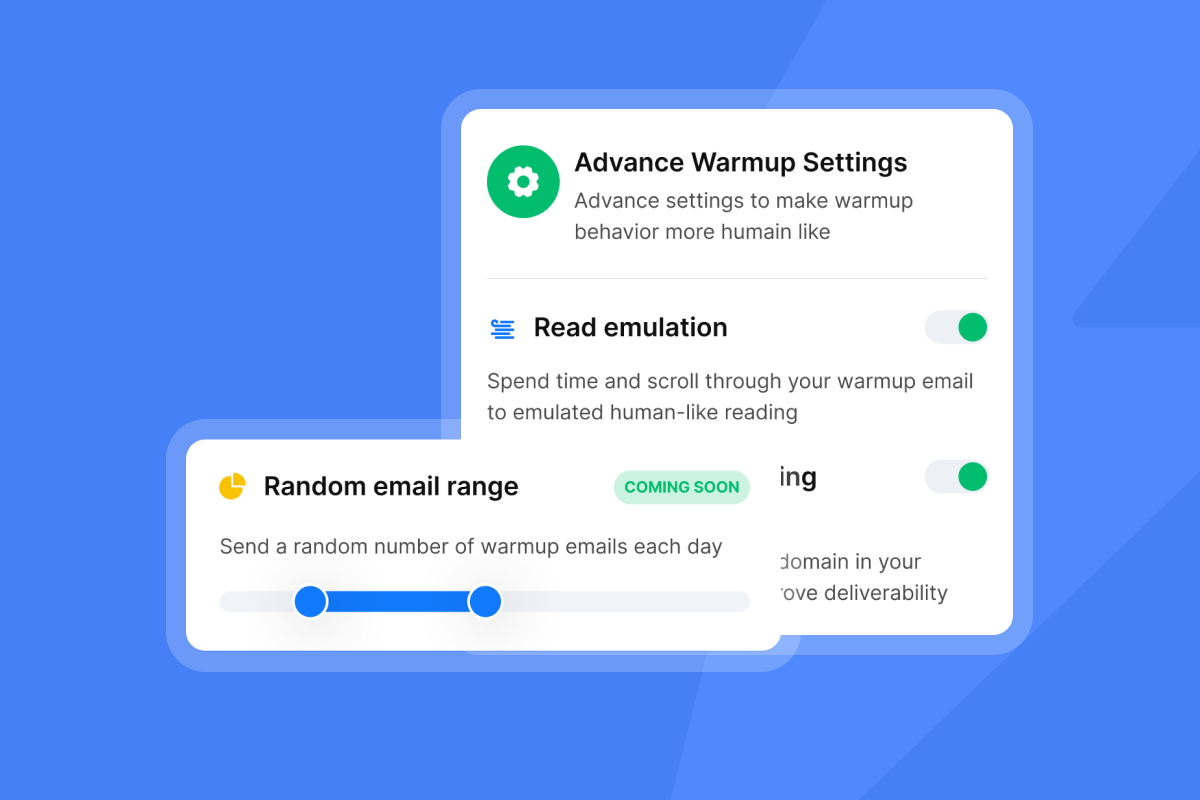
Warmup builds trust with mailbox providers by gradually increasing send volume on new accounts. The minimum period is 2 weeks before campaigns are eligible. For Done-For-You Airmail accounts, Instantly strongly recommends 3 weeks of warmup for best results and long-term stability. The safe daily limit is 30 campaign emails plus 10 warmup emails per account per day. Sudden volume spikes on a warmed account still trigger filter sensitivity. When you need more volume, the answer is more mailboxes, not more sends per mailbox.
Inbox Rotation distributes sends across all accounts assigned to a campaign automatically. Automated Inbox Placement tests monitor where your emails land across major blacklists on an ongoing basis, and the Inbox Placement product sends alerts before a deliverability issue becomes a campaign-killing event.
When manual prospecting beats automation
Automation is not a replacement for human judgment. It is a force multiplier for the right types of outreach. High-touch, relationship-driven selling still requires a human in the loop.
High-touch enterprise selling and human oversight
Multi-million dollar deals with enterprise procurement cycles, legal review, and multi-stakeholder committees require a fundamentally different motion than volume outbound. A single personalized email from a senior rep who has done genuine account research will outperform any automated sequence in this context. For teams managing enterprise procurement cycles, Instantly's HubSpot workflows cover the same CRM handoff requirements without per-seat pricing that scales against you as the team grows.
For high-value named accounts, reps use AI to surface the signal (a leadership change, a funding announcement, a public pain point) and then write the final message manually, incorporating that context in a way that feels personal rather than templated. AI handles volume outreach. Human effort concentrates on the accounts where nuance and relationship-building drive conversion.
The most important rule in an AI prospecting system is that humans set the strategy and the AI executes the tasks. The ICP definition, the messaging guidance rules, the sequence structure, and the quality control thresholds all require human input. The AI Sales Agent supports up to 10 Guidance Rules that shape how it sources leads and writes copy. You set those rules, not the model.
Measurable ROI from AI driven sales pipelines
The downstream metrics that matter, reply rate, meetings set, and SQL conversion, all trace back to two inputs: the quality of the contact data and the consistency of the sending system. For more, see our guide to best AI sales prospecting tools.
Running AI prospecting against an SMB segment
SMB segments suit automated outreach because cycles are shorter, buying committees are smaller, and decision timelines are faster. That means reps can run higher volume with less customization per account, which is where standardized sequences pay off fastest for a team. Signal-based targeting finds SMB buyers in active evaluation mode: companies hiring for roles that indicate a new initiative, or companies whose founders recently published content about a specific pain point. Combine that with a 4 to 7 step sequence capped at under 80 words per email, as Instantly's 2026 benchmark report recommends. Wednesday generates the highest reply rates platform-wide, so bias your send windows toward mid-week.
Automating quality assurance controls
Two tools run in the background on every campaign to protect sender reputation without requiring manual review. The AI Spam Words Checker flags spam-triggering language using a context-aware AI model, not a static keyword list, and updates continuously as filter patterns change. BounceShield automatically skips known high-risk recipients based on real-time and historical bounce data. If the bounce rate on a campaign exceeds 5% after a minimum of 200 sends, the high bounce auto-pause stops the campaign automatically. That protects your domain before the damage compounds.
Automating inbox reply triage
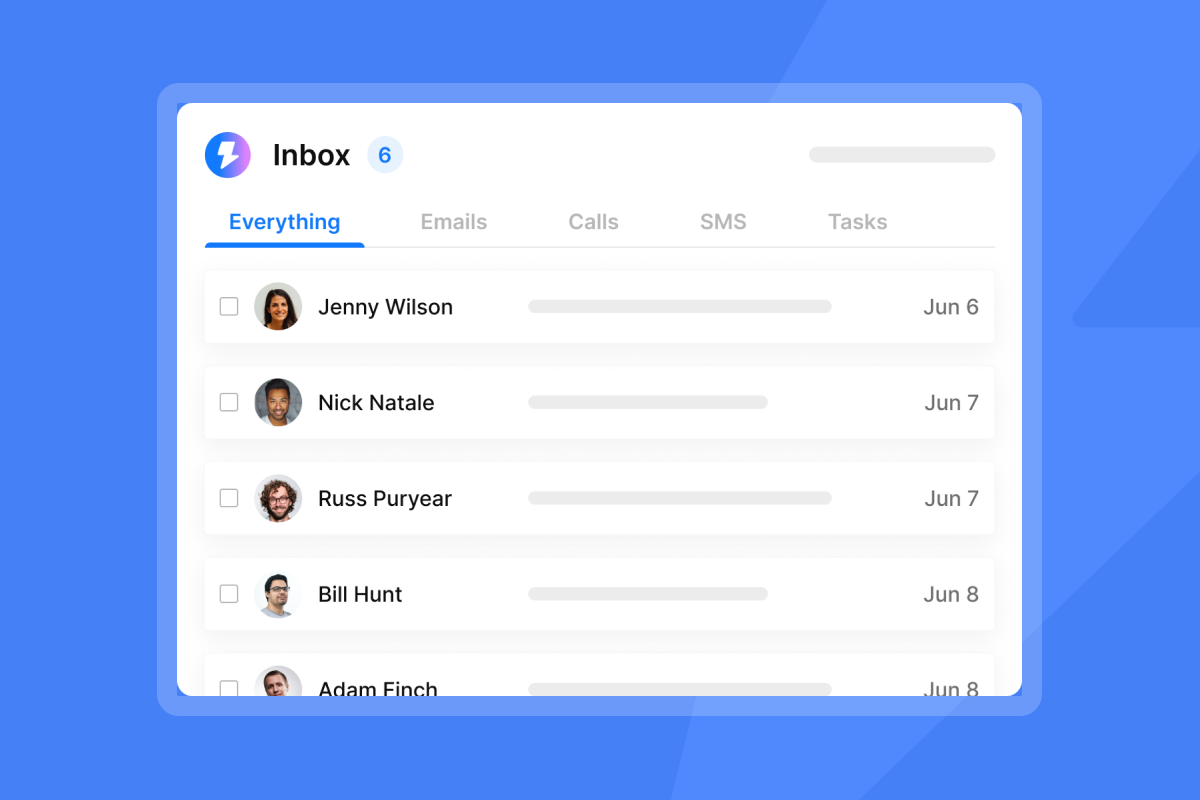
Unibox NLP auto-classifies incoming replies into custom labels using sentiment and context detection across 50+ languages, so every "not interested," "out of office," and "send me more info" is correctly routed without a rep reading each one. The AI Reply Agent goes further, drafting and sending a reply within 5 minutes of a lead's first response when the AI is confident, and flagging edge cases for human review in Human-in-the-Loop mode.
Managing the transition to AI-assisted prospecting
The biggest implementation risk is not the technology. It is change management. Reps who have built their identity around manual research resist tools that automate that work because it feels like a downgrade in status rather than an upgrade in output.
Shifting SDR roles and onboarding new reps
The rep's daily routine changes in a specific way when list building is automated. Instead of spending the first part of the day building a contact list, they spend that time reviewing AI-sourced leads the system surfaced, editing copy variants, and acting on warm replies. The skill that matters most shifts from "how quickly can you find 100 contacts" to "how well can you set ICP parameters and quality-check what the system produces." Frame it that way to reps during rollout and adoption accelerates.
A standardized workspace means a new SDR inherits the same ICP parameters, sequence templates, and quality control rules as every other rep on day one. On Instantly's platform, campaigns can be cloned, sequences reused, and global blocklists applied workspace-wide, so new reps operate inside the same guardrails from their first send. The cold email template library provides 600 starting points that can be adapted to your messaging framework.
Managing AI prospecting compliance
Data privacy requirements apply to AI prospecting the same way they apply to manual outreach. Instantly's self-service opt-out tool covers CCPA and GDPR objection-to-processing requests through a single click-through flow, and the DPA formalizes the service provider structure that both regulations require. The privacy and compliance guide covers the full operational framework, including how to document a Legitimate Interest basis for B2B outreach and maintain a functional opt-out mechanism.
Metrics for AI vs manual prospecting
Use Instantly's account analytics to track five metrics weekly at the team level: reply rate by rep (top-quartile benchmark: 5.5%+), positive reply rate by rep, bounce rate by domain (target below 2%), meeting booked rate, and cost per meeting. These numbers surface deliverability problems, copy problems, and list quality problems independently so you can isolate the fix rather than guessing. When bounce rate climbs, re-verify the list. When reply rate falls below the platform average of 3.43%, or well below your industry baseline, check ICP fit, send volume, and follow-up count before assuming copy is the problem. When meeting booked rate lags, check whether the ICP parameters are pulling the right signals.
Identifying the threshold for manual to AI migration
You'll see three operational signals when it is time to automate prospecting rather than add headcount.
Three signals it's time to automate
- Pipeline gaps during closing sprints: When reps are in meetings, they are not building lists. When deals close, the pipeline behind them is thin because outreach paused. Automated sequences and the Lead Finder Agent maintain consistent outreach volume regardless of where reps are in their sales cycle.
- Inconsistent rep-level performance: If your pipeline review consistently shows some reps generating SQLs and others not, check where each rep sources their contacts, how verified those contacts are, and how many follow-up steps they complete per sequence. Erratic activity levels are the signature of a manual process without standardization.
- Reps spending a large share of their day on non-selling tasks: Run a simple time audit across your team. If reps are spending a material portion of their day on manual research, list building, or CRM data entry instead of live conversations, that time converts directly into additional sequence capacity when automated.
Evaluating AI vs manual prospecting workflows
Before committing to any AI prospecting platform, run it against this checklist during a proof-of-concept period. For more, see our guide to choosing the right AI prospecting tool.
Sales Leader evaluation checklist:
- Deliverability infrastructure: Does the platform include warmup, inbox rotation, and real-time inbox placement monitoring?
- Data quality: Does the database include company-level activity signals (job listings, news mentions, and funding events), a multi-provider waterfall enrichment model, and pre-verification before export?
- Pricing model: Is the cost flat-fee or per-seat? What happens to the invoice when you add two reps mid-quarter?
- AI agent transparency: Can you see what the AI is doing, approve drafts before send, and set credit budget caps?
- CRM integration: Is the HubSpot sync bidirectional? Does it create contacts, deals, and tasks automatically on reply events?
- Compliance posture: Is a DPA available? Is there a self-service opt-out flow?
- Bounce protection: Does the platform auto-pause campaigns at a configurable bounce threshold?
- Team reporting: Can you track reply rate, bounce rate, and meetings booked at the rep level, not just the campaign level?
Impact of AI on SDR workflows
Instantly's AI Sales Agent Implementation Guide outlines a 30-day setup plan to complete the transition safely. Start with domain setup, connecting email accounts, and completing Instantly's minimum warmup period of 2 weeks (or 3 weeks for Done-For-You Airmail accounts) before sending any campaigns. Clean your existing CRM data first: remove invalid contacts, deduplicate records, and apply the global blocklist to domains and emails you never want to contact. Begin with low-volume testing at Instantly's recommended cap of no more than 30 sends per account per day. The Growth plan includes A/Z subject line testing. Run the full 26-variant version on Hypergrowth ($97/mo) and above. Ramp volume gradually and activate the Deliverability AI Agent on Hypergrowth plans to monitor DNS health, blocklists, and bounce rates automatically.
Expected reply rate benchmarks for 2026
Use the Instantly 2026 benchmark report to set grounded team targets. At 3.43%, you are performing at the platform average. At 5.5%, you are in the top quartile. At 10.7%, you are in the top 10%. Consistent, stable sending patterns produce the 15 to 20% higher reply rates that separate top performers from average performers. These are achievable benchmarks for teams running clean lists, warmed accounts, and tested copy. They are not guarantees.
Automated workflows for unique messaging
Spintax keeps messaging varied at scale, and custom variables let you pull lead-specific data into each email, such as company name, job title, or recent signal context, without writing individual emails. The combination of Spintax variation and lead-level variable substitution means every contact receives a message that reads as personal, even when the system is running thousands of sends per week.
Managing sender reputation with AI
The Deliverability AI Agent, available on Hypergrowth and above, monitors DNS health, blocklists, warmup scores, bounce rates, provider balance, and abuse complaints on a 24-hour automatic cycle. When it detects a problem, it surfaces what is affected, why it matters, and flags it for your review. For teams scaling to high volume, SISR on the Light Speed plan routes sends through dedicated private IP pools, isolating your reputation from shared infrastructure.
Start with the 14-day free trial, no credit card required, which includes 250 contacts and 1,000 emails. That is enough volume to run a real warmup test, verify your list quality, and produce reply rate data you can bring to your next pipeline review. Use the 2026 Cold Email Benchmark Report to set performance targets with your SDR team before rollout.
FAQs: AI prospecting vs traditional sales prospecting
What is the recommended daily sending limit per email account?
Instantly recommends sending no more than 30 campaign emails and 10 warmup emails per account per day. Exceeding that threshold triggers ISP sensitivity and can damage your sender reputation within days.
How long does the initial domain warmup period take?
The minimum warmup period is 2 weeks before campaigns are eligible, or 3 weeks for Done-For-You Airmail accounts. Pre-warmed accounts skip this step and are campaign-ready from day one.
What is the bounce rate threshold that triggers an automatic campaign pause?
Instantly automatically pauses campaigns once the bounce rate exceeds 5% after a minimum of 200 sends. This threshold is configurable, and the high bounce auto-pause feature is enabled by default on all plans.
How much does the Instantly Credits subscription cost?
Instantly Credits start at $9 per month on the Nano plan, which provides 150 credits. Credits power SuperSearch lookups, lead enrichment, lead verification, Copilot, AI Sales Agent (5 credits per generated lead), AI Reply Agent (5 credits per reply), and Lead Finder Agent. This is a separate subscription from the Outreach plan.
Is AI prospecting GDPR-compliant?
Yes, provided you document a Legitimate Interest basis and offer a functional opt-out. Instantly's self-service opt-out flow covers GDPR objection-to-processing and CCPA opt-out-of-sale requests, and the DPA formalizes the data processor relationship required under both frameworks.
Key terms glossary
Primary inbox: The main folder where authenticated, high-reputation emails land, avoiding the spam or promotions tabs.
Sender reputation: A score assigned by email providers based on your sending history, bounce rates, and spam complaint rate.
Warmup: The process of gradually increasing email volume on a new account to build trust with mailbox providers before running campaigns.
SuperSearch: Instantly's database of 450M+ B2B contacts with built-in waterfall enrichment, real-time Signals intent data, and pre-verification.
Unibox: A centralized inbox inside Instantly that aggregates replies from all active sending accounts in one dashboard, with NLP-based reply classification.
SISR: Server and IP Sharding and Rotation, a system on Instantly's Light Speed plan that routes emails through dedicated private IP pools to isolate sender reputation from shared infrastructure.
Spintax: A syntax-based variation system that generates unique email versions per recipient using bracketed alternatives, preventing spam filters from flagging bulk sends.
BounceShield: Instantly's automatic skip system that removes known high-risk recipients from sends based on real-time and historical bounce data, protecting domain health.
Read next
- What is AI prospecting? The complete guide for B2B sales teams: A full breakdown of how AI prospecting works, what tools power it, and how B2B sales teams use it to replace manual list building with signal-based targeting.
- AI BDR Explained: How Automated Prospecting Works: Covers what an AI BDR does across lead sourcing, sequence execution, and reply handling, and where human oversight still matters.
- How to map organizational charts: a step-by-step framework for enterprise prospecting: A step-by-step framework for identifying decision-makers, mapping buying committees, and structuring multi-threaded outreach for enterprise accounts.


