.svg)
%20(1).svg)


Updated May 21, 2026
TL;DR:
The future of the AI sales agent in 2026 belongs to composable, deliverability-first systems rather than rigid, monolithic suites. While legacy platforms lock teams into expensive per-seat contracts and the AI in sales market accelerates toward $145B by 2033, modern sales leaders are building modular stacks. By combining unlimited sending accounts, automated warmup networks, and precise AI reply triage, teams can scale outreach without risking domain health. Instantly.ai provides this exact engine: unlimited accounts, a 4.2M+ account warmup network, and dedicated IP rotation to keep your messages in the primary inbox.
Sales leaders who have scaled outreach with legacy suites already know the failure pattern: a deliverability crash in one quarter, a surprise renewal charge the next, and reps spending more time managing tools than booking meetings. The future of AI sales agents is being built around a different model, one where specialized agents handle sourcing, sending, and triage independently, connect via clean APIs, and give you full visibility into every step. This guide breaks down the four major shifts reshaping the category and explains how to build a stack that holds up under quota pressure, following the same framework laid out in our AI-powered outbound sales automation guide.
Why the future of AI sales agents goes beyond cold email
AI agents started as copy assistants: feed them a persona and a value proposition, they generate subject line variants. That generation of tooling is giving way to something operationally different, built around a true AI sales automation agent that runs the process end to end. In 2026, agents manage entire workflow layers, sourcing contacts from a 450M+ lead database, verifying contacts before a single email sends, handling reply triage in under five minutes, and pushing classified opportunities directly into CRM pipelines.
The global AI in sales market was valued at $24.64 billion in 2024 and is projected to reach $145.12 billion by 2033, growing at a CAGR of 22.2%. Sales teams still running manual sequences and single-inbox campaigns will find themselves priced out of competitive pipelines by firms that have automated the full outbound loop.
Instantly's three AI agents cover the three core workflow layers. Copilot handles research, targeting, campaign creation, and analytics. The AI Sales Agent sources leads and runs outbound autonomously. The AI Reply Agent handles inbound replies in under five minutes. All three run on Instantly Credits, a separate subscription starting at $9/month, with AI Sales Agent and AI Reply Agent each consuming five credits per action. Watch the official AI Sales Agent setup walkthrough to see the full workflow configured from scratch.
Orchestrating multi-step sales workflows
A multi-step AI workflow sources and enriches contacts, validates them before upload, sequences across warmed inboxes, and classifies replies automatically. New inboxes require two to four weeks of warmup, ramping from five emails per day to a maximum of 30, as detailed in the cold email best practice guide. Do not scale past 30 emails per single inbox per day. To increase total send volume, increase the number of inboxes, not the send rate per inbox. Staying at or below that threshold keeps your sending patterns consistent with a legitimate business account and protects domain reputation over time.
New standards for AI agent reliability
Reply classification accuracy is where AI agents either build or destroy rep trust. An agent that consistently misroutes "interested" replies as "not interested" quietly suppresses pipeline before anyone notices, one of the most common AI sales agent mistakes to avoid. The 2026 standard requires three criteria before you move agents off human review:
- Demonstrate consistent accuracy across all reply types (interested, not interested, out of office, referral) over a meaningful volume of processed replies before enabling any autonomous mode.
- Implement confidence thresholds so the agent escalates to a human when uncertain, rather than guessing. According to Zapier's HITL analysis, Human-in-the-Loop (HITL) stops automation and escalates when confidence drops below your threshold, preventing misrouted high-value conversations.
- Run HITL mode until classification accuracy is confirmed across your specific use cases and brand voice before enabling Autopilot. The AI Reply Agent supports both HITL and Autopilot modes, with Slack integration for fast rep review before a draft sends.
Trend 1: precision targeting with AI prospect data
The single biggest source of wasted AI output in sales is bad input data. An agent writing personalized copy against a contact record that hasn't been verified or enriched with intent signals generates noise at scale, the same problem our AI sales prospecting tools guide addresses head-on. The 2026 standard starts with real-time, signal-enriched data rather than a static export from a database last updated six months ago.
Real-time buyer behavior tracking
Intent signals, such as hiring activity, technology stack changes, and website visits, give your AI agents a reason to reach out that a static list cannot. That closes the gap between marketing engagement and SDR action. First-party website behavior, when captured with proper consent tooling and pushed directly into your CRM, gives your AI agent a trigger based on real intent rather than assumed fit. Tools that surface anonymous visitor data can automate this handoff, including Instantly's Website Visitors feature ($97/month). For a detailed walkthrough of how to use these signals at scale, watch the full 2026 platform guide covering real-time targeting configuration.
Eliminating bad data for AI SDRs
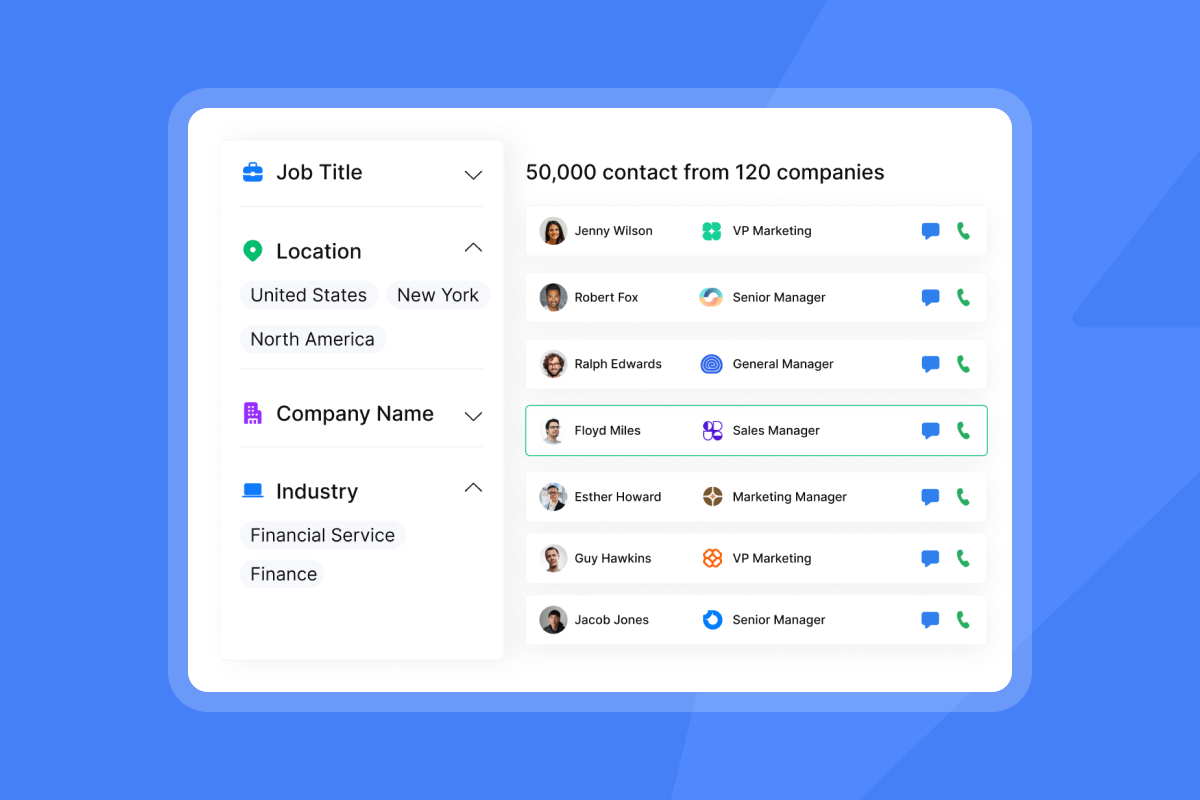
High bounce rates above 2-3% damage your email domain reputation and reduce deliverability across your entire outbound program. Industry research consistently shows that multi-provider contact verification produces materially fewer bounces and higher fill rates compared to single-source list building approaches. Waterfall enrichmentqueries multiple data providers sequentially until it finds a verified match for each contact. Instantly's SuperSearch applies this methodology across 450M+ B2B leads using waterfall enrichment from 5+ providers, removing invalid contacts before any email sends.
Privacy-first signal collection
Tracking intent does not require scraping or non-compliant data collection. Focus on publicly available signals: job postings on company career pages, technology stack changes visible in public vendor directories, and first-party website behavior captured via pixel tracking with proper cookie consent. Keep data sources auditable so your RevOps and legal teams can trace every contact back to a compliant source.
Instantly's SuperSearch pulls from verified data across 5+ providers, and the Instantly sub-processor page lists every provider involved. When implementing intent signals, confirm:
- Data providers hold proper commercial licenses for B2B contact data
- Website pixel tracking includes GDPR/CCPA-compliant consent banners
- CRM stores data source attribution for every contact
Trend 2: real-time reply classification and triage
Scaling AI outreach creates a volume problem on the inbound side. A team running 50 inboxes across multiple sequences generates hundreds of replies per day, far more than an SDR team can triage accurately in real time. Manual triage at that volume introduces delays that cost meetings.
Classifying replies by buyer intent
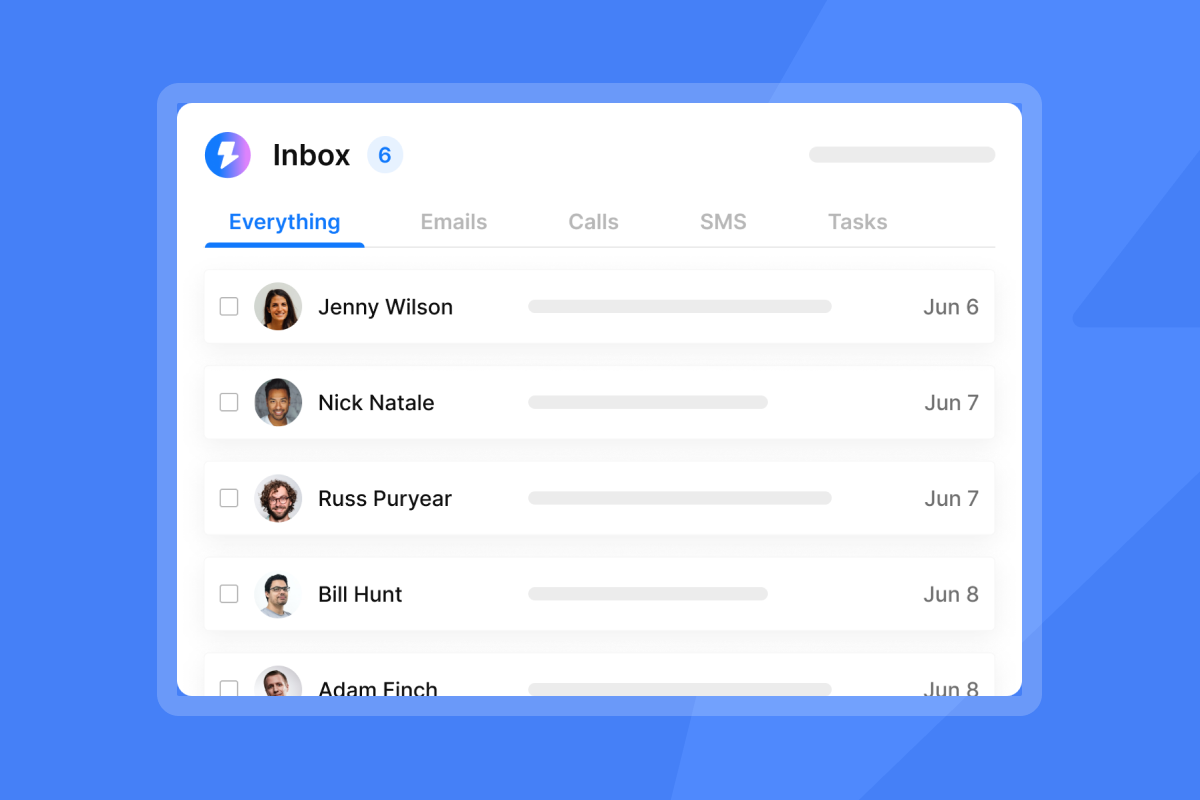
AI reply classification sorts inbound messages by intent: interested, not interested, out of office, referral, and custom labels your team defines. Instantly's AI Custom Reply Labels feature lets you configure classification logic that matches your specific sales vocabulary and qualification criteria. The AI Reply Agent handles responses to classified replies in under five minutes, covering the time window where prompt follow-up most directly affects reply-to-meeting conversion.
Instantly also handles out-of-office replies automatically via the Out-of-Office Resume feature, which pauses outreach and resumes at the right time without rep intervention.
How to streamline AE lead assignment
When an AI agent marks a reply as "interested" and that record sits in an SDR inbox for two days, the conversion window closes. Push classified opportunities directly into CRM pipelines with logged classification reasons and auto-created AE tasks. Instantly's Unibox centralizes all reply management and connects to HubSpot via OutboundSync integration, so classified replies update pipeline records automatically without manual CRM entry.
Preventing costly classification errors
The risk of autonomous reply handling is a poorly calibrated response reaching a high-value account. Gartner predicts that AI regulatory violations will drive a 30% increase in legal disputes for tech companies by 2028. Misclassified replies that trigger off-brand or non-compliant responses are exactly the kind of failure that lands in that category.
The HITL model structures oversight in three steps. A Human sets the rules, the AI drafts the response, and a human reviews before anything is sent. As Gartner warns, skipping this oversight leaves organizations exposed to "regulatory violations, brand damage, user harm and project shutdowns." The AI Reply Agent's Human-in-the-Loop mode puts draft approval inside the Unibox, so reps review and edit before any message goes out to a priority account.

Trend 3: multi-channel orchestration without the risk
Email delivers the highest return per send for most B2B outreach teams because it scales without per-touch costs. Adding phone and LinkedIn touches to a sequence increases reply rates, but execution risk scales with it. Monolithic tools that push unsafe browser automations for LinkedIn get accounts flagged, wiping out months of relationship-building overnight.
Ensuring primary inbox placement
Technical authentication is not optional in 2026. Google and Yahoo's sender requirements mandate SPF, DKIM, and DMARC for all bulk senders, with a hard spam rate limit: keep reported spam below 0.1% and never exceed 0.3%. Senders without an active DMARC policy risk messages being rejected at the SMTP level under current enforcement rules.
Beyond authentication, volume pacing is the other half of inbox placement. Do not scale past 30 emails per single inbox per day. To increase total send volume, increase the number of inboxes, not the send rate per inbox. Instantly's automated Inbox Placement tests monitor domain health continuously and alert you when something deteriorates before it affects campaign performance.
Optimizing LinkedIn and phone cadence
Phone calls and LinkedIn views timed two to three days after an email step reinforce your message without crowding the prospect. The goal is a single workspace where reps log call notes, send SMS follow-ups, and manage email replies without switching tools. Instantly's Hyper CRM ($97/month) is built for this, with Calling & SMS accessible inside the same interface as your email sequences.
Avoiding account bans and blacklists
LinkedIn bans accounts that show automation patterns: high-volume connection requests, message sends at non-human speeds, or activity from tools that inject directly into the browser DOM. The safe approach is manual execution for social steps or API-based tools with rate limits that match human behavior.
For email sending at scale, IP reputation carries the equivalent risk. IP sharding distributes campaigns across multiple dedicated IP addresses, so if one IP faces throttling or a blocklist entry, other IPs keep delivering while you address the issue. The SISR system on the Light Speed plan ($358/month) distributes sending across dedicated, private IP blocks with built-in rotation, so a single flagged IP does not take down your entire sending operation. The cold email infrastructure guide explains the full architecture behind this system.
Trend 4: ensuring data privacy via automated audits
Data privacy complaints cost more than fines. A public incident involving non-compliant outreach damages brand reputation with the exact buyers you're trying to reach. Sales leaders managing SDR teams at scale need automated controls, not manual checklists.
Built-in consent management
Process opt-out requests within regulatory deadlines: 10 business days under CAN-SPAM, 15 business days under CCPA, and 30 days under GDPR, across every channel, not only the channel where the request arrived. If a prospect unsubscribes via email but your LinkedIn or call cadence continues, you have created a compliance risk and damaged brand trust. When a contact opts out, remove them from all active sequences and add them to a suppression list. Check that list before every new import to prevent opted-out addresses from re-entering your outreach.
2026 standards for data provenance
Knowing where your prospect data comes from is a baseline expectation in 2026. Buyers, legal teams, and procurement reviewers ask for data lineage documentation before approving outbound tools. Avoid uploading sensitive personal data categories such as protected health information or payment card data into outbound tooling that is not purpose-built for that compliance scope. Instantly's publicly available Data Processing Agreement details processing terms under Foo Monk LLC, sub-processor responsibilities, and data handling guidelines.
AI guardrails for brand safety
Prompt discipline prevents hallucinations and off-brand responses. Set explicit system-level instructions covering:
- Tone requirements: Define acceptable formality, use of industry jargon, and greeting/sign-off patterns
- Forbidden topics: Legal commitments, pricing negotiations, product roadmap speculation
- Escalation triggers: Keywords like "refund," "cancel," or competitor names that should route to a human
- Hard rules: The agent cannot commit to timelines, discounts, or custom feature requests
Review AI-generated drafts regularly during initial deployment and use any deviations from brand voice to tighten your system instructions over time.
Composable tools vs. monolithic suites: the 2026 decision
The "all-in-one" argument for monolithic suites is that one UI reduces context switching. That's a real benefit. The cost is deliverability risk from shared sending infrastructure, per-seat pricing that grows faster than headcount, and data inflexibility that prevents you from connecting better sources as they emerge. Composable stacks solve each of those problems by letting you choose best-of-breed tools for each layer and connect them via API or native integration.
Feature / Aspect | Composable stack (best-of-breed tools) | Monolithic suite |
|---|---|---|
Pricing model | Flat-fee outreach + usage-based credits | Heavy per-seat tax with annual lock-ins |
Mailbox scaling | Unlimited accounts and warmup | Strict caps or extra charges per mailbox |
Data flexibility | Connect data providers via API and native integrations | Limited to the platform's built-in database |
Deliverability | Dedicated IP pools and SISR | Shared, high-volume sending servers |
For a direct comparison of composable versus monolithic architecture in practice, the Apollo vs Instantly 2026 video walks through the practical differences in deliverability controls and account scaling.
Avoiding the monolithic contract trap
Annual renewal cycles lock you in before you've validated whether a tool performs at your send volume. Use a buyer's guide for choosing an AI sales agent to evaluate tools on monthly plans first, set clear performance milestones tied to reply rate, meetings set, and cost per meeting, and only commit to annual pricing once you have proof of consistent results.
CRM and AI agent handoffs
Native integrations remove the data quality degradation that happens at every manual handoff. Instantly connects natively to HubSpot via OutboundSync, Clay for data enrichment workflows, and dozens of other tools via Zapier, Make, and Pabbly for workflows without native connectors yet.
Optimizing AI SDR cost per meeting
A starter stack running Outreach Growth ($47/month), SuperSearch Growth ($47/month), and Growth CRM ($47/month) comes to $141/month. Add Instantly Credits for AI agent usage starting at $9/month and the per-meeting cost stays far below what per-seat enterprise suites charge for equivalent output. The more meetings your team books within that flat-fee structure, the lower your cost per meeting becomes, because there are no per-seat fees that scale with headcount.
"It's very user-friendly and highly efficient, with great integrations. The ROI feels clear and predictable, and the pricing is transparent." - Lia-Maria V. on G2
Agencies running multiple client accounts can watch the sales scaling guide to see how unlimited accounts change the economics compared to per-seat alternatives.
The engine behind 2026 sales trends
The four trends above, precision targeting, real-time reply triage, multi-channel coordination, and privacy compliance, each require specific technical capabilities. The question for any sales leader is whether a single platform can support all four without creating new bottlenecks or hidden costs, a framework covered in full in our AI agent outbound sales guide. Instantly's agentic sales agent brings all four together in one deliverability-first stack.
Ensure primary inbox placement at scale
Instantly's deliverability infrastructure is built around three layers. The warmup network of 4.2M+ accounts exchanges real engagement signals to build inbox reputation for new sending accounts. Automated Inbox Placement tests monitor domain health continuously so you catch deliverability issues before they affect reply rates. SISR on the Light Speed plan distributes sending across private, dedicated IP blocks with built-in rotation.
"Great deliverability tools, great UX, and it just works." - Jesse on Trustpilot
Transparent pricing and no lock-ins
Instantly's Outreach plans are priced at $47/month (Growth), $97/month (Hypergrowth), and $358/month (Light Speed) with unlimited email accounts and warmup on every tier. Instantly Credits, the separate subscription that powers all three AI agents, starts at $9/month with a free trial available at 100 credits. No per-seat fees are tied to AI features, and all plan details are published on the pricing page without requiring a sales call to access. Review the AI Agents help collection for full configuration documentation on all three agents before committing to a plan.
Prevent rogue reps with admin controls
Permission levels and sequence governance controls keep campaigns standardized across your SDR team, a baseline requirement among the best AI sales agents for enterprise teams. Set admin-level rules on maximum daily send volume per inbox, approved domain rotation schedules, and mandatory warmup periods for new accounts. Reps work within these templates and rules, reducing the risk of individual reps bypassing list hygiene checks or adding unsafe automations. Combined with Unibox centralizing all reply management, you get full visibility into every active conversation without checking each rep's individual inbox.
Start with Instantly's free trial to test SuperSearch lead sourcing and the AI Reply Agent before scaling. If your team consistently hits send volumes that justify dedicated IP infrastructure, the Light Speed plan adds SISR for enterprise-grade sender reputation protection without the overhead of managing private servers.
FAQs
How do AI sales agents change SDR roles by 2026?
AI agents shift SDRs from manual writers and list builders to system managers. Reps oversee agent performance and handle warm replies directly. They focus on live conversations with classified "interested" leads. Agents handle data sourcing, initial outreach, and reply triage.
How do I avoid legacy AI tooling lock-in?
Avoid platforms that require annual contracts or charge per-seat fees for AI features. Choose composable tools with flat-fee sending and usage-based credit pools. Instantly's Outreach plans ($47-$358/month) pair with Instantly Credits ($9/month and up) for AI agent tasks.
What should the top AI sales agent priorities be in 2026?
Focus on three priorities. First, maintain primary inbox placement by keeping individual mailbox volume at or below 30 emails per day. Second, ensure data privacy compliance with a public DPA and sub-processor transparency. Third, implement Human-in-the-Loop guardrails on reply classification before enabling any Autopilot mode.
What is the difference between HITL mode and Autopilot in AI reply handling?
HITL mode drafts a response and holds it for rep approval inside Unibox before sending. Autopilot sends the classified reply automatically without human review. Run HITL across all reply types (interested, not interested, out of office, referral) until you have confirmed the agent's classification accuracy before enabling Autopilot. This lets you confirm the agent's accuracy against your specific use cases and brand voice. The AI Reply Agent supports both modes with Slack integration for fast rep review.
How do Instantly Credits work alongside an Outreach plan?
Instantly Credits are a separate subscription starting at $9/month. A free trial is available at 100 credits. Credits power Copilot, AI Sales Agent, and AI Reply Agent. Each AI Sales Agent and AI Reply Agent action consumes five credits. Credits are not bundled into Outreach plans, so you only pay for agent usage you actually run. All plan details are published on the Instantly pricing page without requiring a sales call.
Key terms glossary
Primary inbox: The main Gmail or Outlook inbox folder where legitimate business correspondence appears. Messages flagged as promotional or spam never reach this folder.
Sender reputation: A score that mailbox providers assign to your sending domain and IP address. Poor sender reputation pushes your emails into spam or blocks them entirely.
Warmup: The process of gradually increasing daily email volume from a new inbox over two to four weeks. New inboxes should ramp from five emails per day to a maximum of 30.
List hygiene: The practice of removing invalid, bounced, and unengaged contacts from your outreach lists. High bounce rates above 2-3% damage sender reputation.
Verified contacts: Email addresses and phone numbers validated against multiple data providers. Teams that use multi-provider validation consistently report higher deliverability and fewer bounces compared to single-source verification.
Send windows: The time ranges during which your emails are delivered. Typical windows are 8:30-10:30 a.m. in the recipient's local time zone.
Reply classification: AI-powered sorting of inbound email responses by intent category. Categories include interested, not interested, out of office, referral, or custom labels.
HITL (Human-in-the-Loop): A supervised AI mode in which the agent drafts a response and holds it for human approval before sending. HITL prevents misrouted replies and off-brand messages.
SISR: Server and IP Sharding and Rotation, a deliverability system on the Light Speed plan. SISR distributes sending across dedicated, private IP blocks with built-in rotation to protect sender reputation at scale.
Instantly Credits: A separate subscription starting at $9/month that powers Copilot, AI Sales Agent, and AI Reply Agent. Each AI Sales Agent and AI Reply Agent action consumes five credits.
Unibox: A centralized reply management workspace that consolidates all inbound responses. Reps can review, classify, and respond to leads without switching between individual inboxes.
SuperSearch: A lead sourcing engine that queries 450M+ B2B leads using waterfall enrichment across 5+ data providers. It applies LLM-assisted enrichment to verify contact accuracy and fill missing fields, resulting in higher fill rates than single-source approaches.
Read next
- Cold email subject lines guide: How to write subject lines that improve open rates and keep your messages out of the spam folder.
- Email warmup guide: A step-by-step walkthrough of how to ramp a new inbox from five to 30 emails per day without damaging sender reputation.
- Startup's Guide: Affordable B2B Lead Generation: How early-stage teams can source verified contacts and run outbound on a lean budget without per-seat pricing traps.



