.svg)
%20(1).svg)


Updated April 20, 2026
TL;DR: Most proposal email response rate benchmarks sit well above standard cold email averages, but only when your email clears spam filters and lands in the primary inbox.Average cold email reply rates have dropped to around 5% in 2025, while a well-executed proposal to a warm lead should hit 5-15% depending on your industry. That gap is almost always a deliverability or follow-up problem, not a pricing or copy problem. Fix sender reputation first, automate follow-ups second, and track reply-to-meeting conversion rather than open rates.
Many business proposals sit unread in spam folders. The reason has nothing to do with your pricing or your deck design. Understanding proposal email response rate benchmarks by industry helps you separate a delivery problem from a sales problem. Proposals contain links, attachments, and pricing tables, and those are exactly the signals spam filters flag. Most founders discover this only after weeks of silence, when the real issue was that the email never arrived.
This guide breaks down realistic benchmarks by industry and shows you how to build an automated system that beats them consistently.
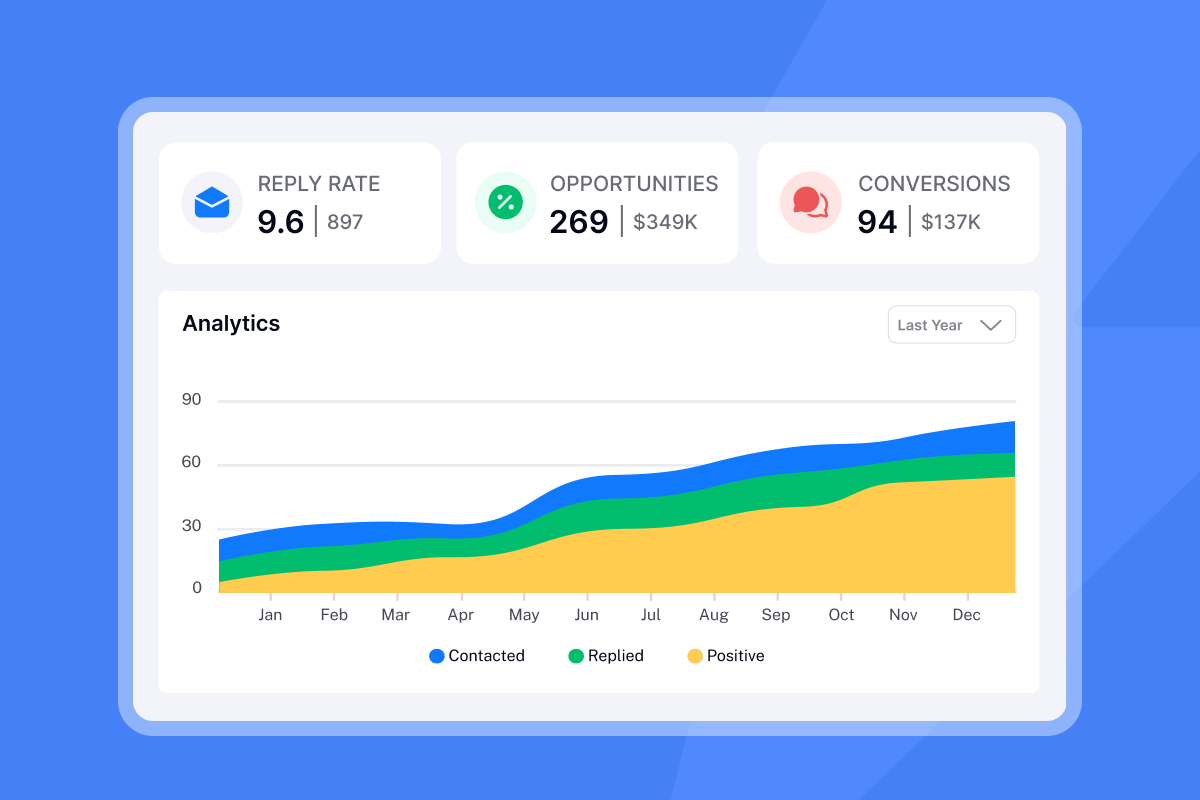
Proposal response rates: what the data shows
Most industry reports measure the category loosely. "Email response rates" typically refer to standard cold outreach, not proposals sent after a discovery call or scoping conversation. The distinction matters because proposal emails go to warmer contacts but carry heavier technical risk.
Average cold email reply rates have declined steadily, dropping from 8.5% in 2019 to roughly 5% by 2025 due to inbox saturation and progressively stricter spam filters. Industry benchmarks vary between 5-7% depending on methodology: some count all replies, others count only human replies, and industry mix differs across datasets.
Proposal emails sent to leads already in conversation with you typically outperform pure cold outreach. A 5-10% reply rate is solid for B2B proposals, 10-15% is strong, and anything above 15% on a focused, high-intent campaign is top-tier performance. Watch the "Instantly analysis of 1,000,000 cold emails" for a data-backed breakdown of what separates campaigns that get replies from those that don't.
Email proposal reply rates by sector
Public research offers sparse proposal-specific data, so the ranges below use warm-lead and late-stage outreach proxies as reasonable approximations derived from cold email benchmark data, sales cycle research, and B2B outreach reports.
| Industry | Average Reply Rate | Top-Tier Reply Rate | Avg. Sales Cycle |
|---|---|---|---|
| SaaS & Software | 8-12% | 15%+ | 83-84 days |
| B2B Services (agencies, consulting) | 5-15% | 15-25% | 30-90 days |
| Enterprise (multi-stakeholder) | 2-5% | 10-15% | 90-180+ days |
| B2C / Prosumer | 0.5-1.5% | 3-5% | 7-30 days |
These estimates assume clean list hygiene, proper domain authentication, and at least a 30-day warmup period. Without those foundations, actual performance will fall below these ranges regardless of copy quality.
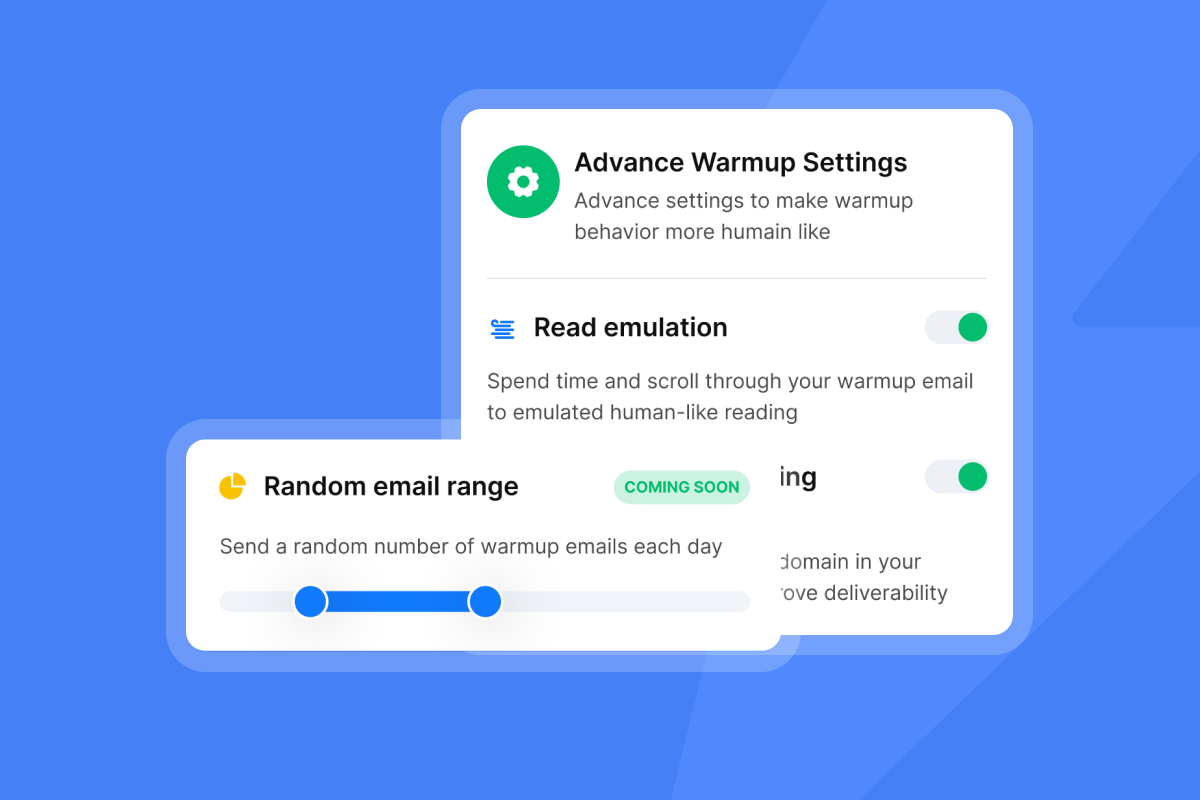
Set up proposal response tracking
The correct formula is: (unique human replies ÷ delivered emails) × 100. Exclude auto-replies, out-of-office messages, and bounces. Count only replies from different recipients.
Most founders track open rates as a proxy for interest, but open rate data is unreliable because Apple Mail Privacy Protection and security bots inflate those numbers.Reply rate is the cleanest signal of genuine engagement and the metric worth optimizing around.
What makes email response rates vary
Several factors move proposal reply rates beyond the baseline:
- List quality: Verified, recently enriched contacts outperform stale lists by a wide margin.
- Sales funnel stage: A proposal sent 24 hours after a demo call performs differently than one sent to a cold prospect who downloaded a whitepaper three months ago.
- Email weight:Emails in the 15-100 KB range pass spam filters cleanly.Those above 110 KB begin to experience deliverability issues.
- Sender reputation: A domain with a healthy warmup and consistent send volume earns inbox placement consistently.A new domain sending 200 emails on day one does not.
Proposal response rate benchmarks by industry
Every industry has its own buying culture, decision timeline, and inbox saturation level. The right benchmark for a SaaS proposal is not the right benchmark for an enterprise services contract.
SaaS proposal ratebenchmarks
Cold SaaS email campaigns typically show open rates around 38-42% and reply rates near 3-4%, based on industry campaign data.Warm proposals—where the lead has engaged with your product or attended a demo—perform better, with reply rates generally landing between 8-12%.Campaigns consistently above 15% signal strong message-to-market fitand often correlate with cleaner targeting and tighter value propositions.
The average SaaS B2B sales cycle runs 83 days, which means you should plan your follow-up sequence to cover at least 30 days after the initial proposal send. For founders managing deals manually, the key bottleneck is usually the second and third touch, not the first. One G2 reviewer described the analytics visibility Instantly gives across every step:
"The campaign analytics feature... feels like a three-dimensional tool that provides information on how many emails are sent and the replies received. It even tracks how many emails are opened, putting everything in one place." - Saral S. on G2
B2B service proposal reply benchmarks
Agencies, consultancies, and professional services firms tend to see higher proposal reply rates than SaaS companiesbecause they compete with fewer inboxes and proposals typically follow a verbal conversation rather than a cold introduction.
Warm proposals to scoped prospects tend to perform better than cold outreach, though exact benchmarks vary by industry and relationship depth. Service firms that personalize proposals based on discovery calls often see stronger response rates. Deliverability still limits this ceiling: heavy proposal documents attached as PDFs hurt inbox placement. Host the document externally and include a single clean link in a plain-text email instead.
Enterprise proposal response benchmarks
Enterprise proposals involve multiple stakeholders, legal review, procurement, and formal evaluation processes that stretch cycles to 90-180 days or more.Legal and negotiation stages often represent a substantial portion of this timeline, making them one of the primary causes of delayed closes.
The expected reply rate on initial enterprise send is 2-5%.That sounds low, but a single enterprise contract can represent months of revenue for an early-stage company. The metric that matters most in enterprise is not reply rate but reply-to-meeting conversion. A 3% reply rate converting 80% of replies into active evaluations is more valuable than a 12% SaaS reply rate converting at 20%.
Consumer proposal reply benchmarks
B2C and prosumer proposals occupy a different market.Meeting bookings from cold B2C campaigns typically range from 0.5% to 2%.For direct service proposals to individual buyers where the lead has already expressed intent, performance is closer to the B2B services range.Inbox providers filter B2C inboxes more aggressively than business inboxes, which means the deliverability hygiene requirements are higher, not lower, despite the perception that consumer emails are less formal.
Setting expectations for industry sales cycles
Response rate benchmarks only tell half the story. Understanding how long each segment takes to close helps you calibrate follow-up schedules and manage pipeline expectations.
Timing your proposal follow-ups
The data-backed schedule for most B2B proposal follow-ups is:
- Day 0: Send the initial proposal. Keep the email body short, plain text, and focused on one clear next step.
- Day 3: First follow-up. Reference the previous message and add one new angle, such as a relevant result or case study.
- Day 7: Secondfollow-up. Shift framing with a different value point or a question that invites a response either way.
- Day 14: Third follow-up. Use a break-up frame or anew hook that resets the conversation.
Cap your sequence at three follow-ups (four total emails).Research shows 70% of responses come from the second through fourth email in a sequence, butsending four or more follow-ups more than triples unsubscribe rates and spam complaint risk.The best cold email follow-up strategy guide covers this schedule in detail with copy examples.
For enterprise deals, use longer gaps between touches (7-14 days rather than 3-7 days) and add a new proof point at each step rather than simply asking "did you get my email?"

What drives above-average proposal response rates
Beating industry benchmarks comes down to three levers: deliverability, follow-up automation, and copy alignment. Most founders focus on copy. The data points toward deliverability as the bigger variable.
Improve primary inbox deliverability
Getting into the primary inbox is a prerequisite. Without it, every other optimization is irrelevant.
Authentication is the first step. SPF specifies which servers are authorized to send from your domain. DKIM applies a digital signature that confirms your message was not altered in transit. DMARC tells providers what to do with messages that fail either check.Since February 2024, Google and Yahoo have required all bulk senders to have SPF, DKIM, and DMARC in place.Microsoft added its own requirements in May 2025.An unauthenticated domain sending proposal emails to enterprise prospects will hit spam before any copy quality question becomes relevant.
Beyond authentication, warm new domains for 30 days before sending any proposal emails, keep email body size below 100 KB,use one link per email rather than three, and avoid PDF attachments entirely.Host your proposal document externally and include one clean URL. This keeps the email lightweight, eliminates the main deliverability risk, andgives you click data on whether the prospect opened the document.
The Instantly inbox placement test gives you a real-time view of whether your emails land in the primary inbox, promotions tab, or spam folder across major providers.Our deliverability network spans 4.2 million accounts used for warmup and positive engagement signals, which generates the consistent signal that new or recovering domains need to build trust quickly.
"I really like the unlimited email accounts feature because it allows me to scale outreach safely and efficientlywithout hitting the sending limits...Instantly also has an inbox placement feature that helps test if emails land in the inbox or spam." - Pradeep T. on G2
The cold email deliverability guide walks through authentication, warmup, and monitoring in a single session.
Winning subject lines and send windows
Subject lines that drive proposal email replies typically run six to seven wordsand avoid direct promotional language.The best ones elicit curiosity or mild concern rather than excitement.Keep subject lines under 50 characters and avoid all-caps words or excessive punctuation.
The data-backed baseline for timing is Tuesday through Thursday, 9-11 AM in the recipient's local timezone.Both Monday morning and Friday afternoon underperform consistently. Our subject line checklist covers the pre-send QA process that catches the most common spam triggers before your sequence goes live. The Instantly video on tested subject line variants includes 225 subject lines with performance data you can use directly.
Automate your proposal follow-up plan
Manual follow-ups are the first thing a busy founder abandons under pressure. Automating the sequence means your proposals get consistent follow-up even when you are focused on delivering for existing clients.
Instantly's AI Sequence Writer builds a complete multi-step follow-up sequence from a brief description of your offer and target audience.You set the timing, approve the copy, and the system handles delivery, spacing, and reply detection.When a prospect replies, the sequence stops automatically, and the reply appears in the Uniboxalongside every other active campaign response.
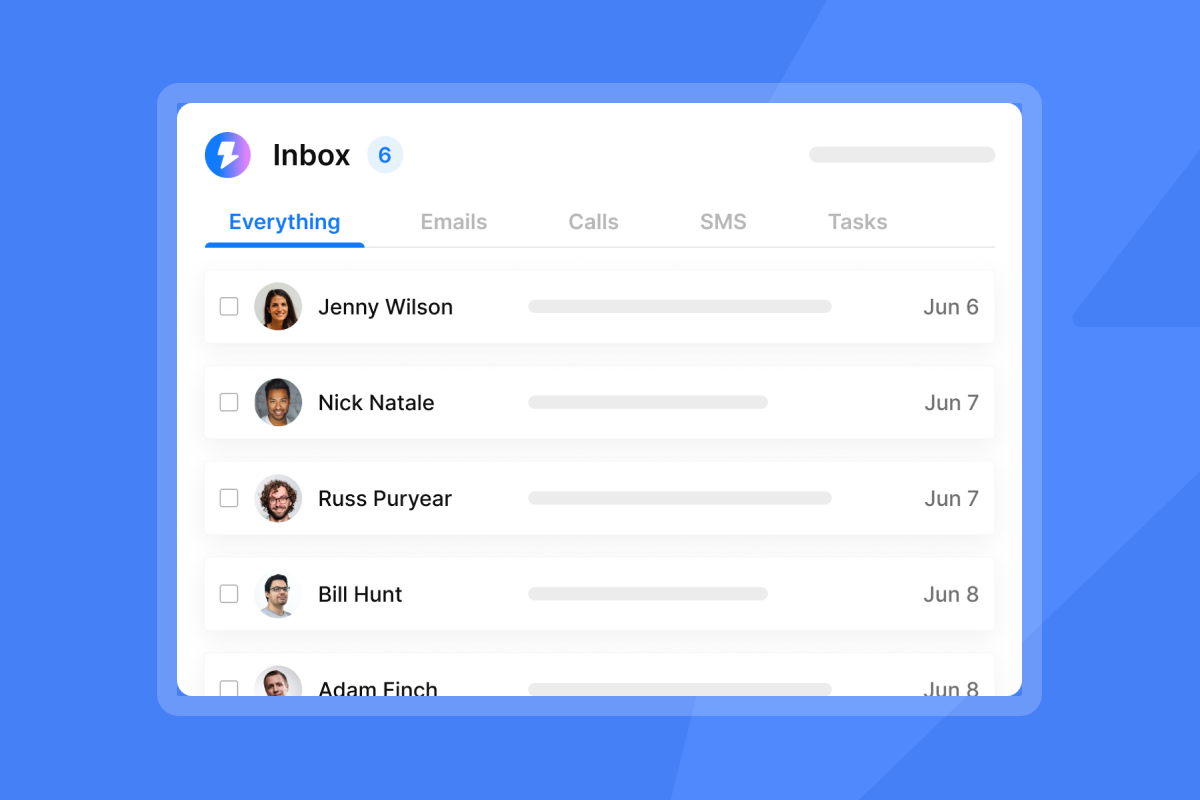
The most effective follow-up emails are short, plain text, and ask a single question. Here is a format that works:
Subject: Re: [original proposal subject]
Hi [Name], just checking in on the proposal I sent on [date]. Happy to jump on a quick call if you have questions, or adjust the scope based on what works for your budget.
Would Thursday or Friday this week work for 20 minutes?
Keep follow-upemails under 100 words. Data from Hunter.io's analysis of 34 million cold emails shows messages between 20-39 words produce the highest reply ratesat 4.5%,and every additional line reduces the chance of a response. The "3 Reasons Your Leads Aren't Responding" video breaks down why longer follow-ups actively reduce your response chances.
"The AI reply agent is a standout feature for me; it efficiently drafts responses based on client replies, saving me valuable time by simply requiring a review before sending." - Sachin J. on G2
Measure reply-to-meeting conversion
Raw reply rate is a useful leading indicator, but the metric that connects to revenue is reply-to-meeting conversion.If you send 100 proposals per month at a 10% reply rate, you get 10 replies.At 50% reply-to-meeting conversion, you book 5 meetings.Improve reply rate to 15% and you book 7-8 meetings from the same volume with no additional cost.
Apply youraverage deal size to that difference. At $15,000 average deal size and 30% close rate, two extra meetings per month adds $9,000 in expected closed revenue per month from the same 100 sends.
Instantly's Unibox centralizes every reply from every sending account into a single view, making it fast to see which sequences are converting replies into active conversations and which need a longer nurture path.
"I also appreciate the UniBox feature, which is like an inbox sorting all my campaign responses in one spot, so I don't have to log into each individual email." - Saral S. on G2
For pipeline attribution, the email tracking integrations guide covers how to sync Instantly reply data with HubSpot without creating data silos. The email click tracking guide shows how to measure intent signals beyond open rates.
Troubleshooting proposal email replies
If your proposal reply rate is below the benchmarks for your segment after addressing deliverability and follow-up, these diagnostics will locate the remaining bottleneck.
How long before a proposal is dead?
A proposal isn't ghosted after 7 days. B2B sales cycles often run several weeks to months, so declaring a deal dormant too early means leaving opportunities on the table.A reactivation email weeks later can revive conversations that went cold during abudget cycle or stakeholder change. Our follow-up re-engagement guide includes subject lines tested specifically for these scenarios.
How many follow-ups should you send?
Send four to seven follow-up emails after the initial proposal. Campaigns with 4-7 emails per sequence receive 3x more responses than campaigns with only 1-3 emails. Stopping at three or fewer leaves replies on the table. Beyond seven, unsubscribe rates and spam complaints increase, harming sender reputation and future deliverability. The "6 Steps to Better Responses" video covers the exact sequence logic used in top-performing campaigns.
Setting your reply rate goal
A good proposal email response rate for B2B outreach is 5-10%. A strong rate is 10-15%. Anything above 15% on a focused, high-intent segment is top-tier. If you are below 5% after three follow-ups with a warm contact list, review your inbox placement test results and compare your proposal email copy against your discovery call notes to identify potential gaps. The 10 years of cold email advice session covers how experienced practitioners diagnose below-average reply rates and the order in which to fix each variable.
When to use proposal attachments
Avoid attaching PDFs to proposal emails.Host your proposal on your website, a secure client portal, or a cloud storage link, then include one clean URL in the email body.This keeps your email below 100 KB, eliminates the main deliverability risk, and gives you click data on whether the prospect opened the document. If a client requests a PDF, host the file on cloud storage and send them a direct download link, the deliverability risk is the same regardless of who asks, so the hosting approach stays consistent in every situation.
Building a system that catches every reply, runs every follow-up on schedule, and shows you exactly which sequences convert into meetings is the difference between founder-led sales that scales and manual work that limits your pipeline to the hours you can personally manage.
Automate proposal follow-ups with Instantly across unlimited sending accounts, run inbox placement tests before every major send, and manage all replies in one place. Running proposal campaigns now? Share your current reply rate benchmarks in the comments below. Real-world data from your vertical helps everyone calibrate expectations.
Read next
- Email deliverability for sequences: warmup, health monitoring and compliance
- Cold email subject lines for follow-ups: how to re-engage without being pushy
- Email open tracking: how it works, accuracy rates, and why your open metrics may be wrong
FAQs
What is a good proposal email response rate?
5-10% is solid for most B2B proposals, 10-15% is strong, and above 15% on a warm, high-intent list is top-tier. Reply rate targets vary by segment: enterprise proposals typically see 2-5% on initial send while B2B service proposals can reach 10-15% with proper deliverability and follow-up in place.
How do proposal email response rates differ from cold email rates?
Cold email averages around 5% reply rate across all B2B outreach. Proposal emails sent to warm leads post-discovery should perform at 5-15% depending on the industry, with deliverability and follow-up timing driving performance more than subject line optimization.
How manyfollow-up emails should you send with a proposal?
Send between four and seven follow-up emails after the initial proposal. Research shows campaigns with 4-7 emails per sequence receive 3x more responses than shorter sequences, with the majority of replies coming from the second email onward. Space follow-ups two to four days apart, vary the messaging angle with each touchpoint, and keep each follow-up short and direct to maintain engagement without fatiguing the prospect.
Why do proposal emails land in spam?
Proposal emails trigger spam filters when they carry PDF attachments (which inflate email size above 110 KB), multiple links, HTML-heavy formatting, or when the sending domain lacks SPF, DKIM, and DMARC authentication. Host proposal documents externally, use one clean link, keep the email body plain text, and authenticate your domain before sending.
What is the average B2B sales cycle after a proposal email?
SaaS and software deals average 83-84 days from first contact to close.Enterprise deals run 90-180 days or more due to multi-stakeholder approvals and legal review.Plan your follow-up sequence length to match your segment's typical evaluation window.
Key terms glossary
Proposal email: A targeted email sent to a prospect after initial qualification, containing a specific offer, solution outline, or pricing overview. Distinct from cold outreach because the recipient has already expressed interest.
Reply rate: The percentage of delivered emails that receive a human response. Calculated as (unique human replies ÷ delivered emails) × 100. The most reliable engagement metric for proposal campaigns.
Primary inbox: The main inbox folder as opposed to promotions, social, or spam. Reaching it requires proper authentication, a warmed sending domain, and a clean list.
Sender reputation: A score assigned by inbox providers based on your domain's sending history, engagement rates, bounce rates, and spam complaint rates. A healthy sender reputation is the foundation of inbox placement.
Warmup: The process of gradually increasing sending volume from a new or recovering domain while generating positive engagement signals within a trusted network. Typically runs for 30 days before full campaign sends begin.
SPF, DKIM, DMARC: Three DNS-based email authentication standards that tell inbox providers your messages are legitimate. Required by Google, Yahoo, and Microsoft for bulk senders as of 2024-2025.
Unibox: Instantly's centralized reply management inbox that aggregates responses from all sending accounts into a single view, eliminating the need to log into individual inboxes to manage replies.
Inbox placement test: A diagnostic tool that sends a test email across a set of seed inboxes and reports what percentage land in primary inbox versus promotions versus spam. Available through Instantly's inbox placement feature.



