.svg)
%20(1).svg)


Updated July 13, 2026
TL;DR: Small sales teams can scale outbound volume without adding headcount by deploying AI BDR tools as a managed system, not a set-and-forget bot. The key is distributing send volume across multiple warmed domains, keeping each inbox under 30 emails per day, and treating deliverability as an operational discipline. Instantly.ai gives you unlimited sending accounts, built-in warmup, SuperSearch with 450M+ B2B leads, and AI agents that handle reply triage so your reps focus on qualified conversations. Human oversight stays critical: AI sources and classifies, your team closes.
Most sales leaders assume scaling outbound means hiring more BDRs. The real bottleneck is deliverability infrastructure, data quality, and process standardization, not headcount. A team of two with the right system can run outbound volumes that previously required a much larger SDR floor, provided they build the sending engine correctly from day one, the same infrastructure question behind cold outreach for freelancers. The playbook looks different once you're managing an enterprise sales team, but the deliverability fundamentals carry over.
This playbook covers how to deploy an AI BDR system for early-stage and small sales teams, what realistic benchmarks look like at each growth stage, and where teams consistently break down before they ever hit send. If you are still comparing vendors, start with our guide to the best AI BDR tools, or, for a one-person operation, the best cold email software for freelancers.
How AI BDR agents automate outbound sequences
An AI BDR agent handles the full prospecting workflow: finding accounts that fit your ideal customer profile (ICP), enriching contact data, deciding who to reach and when, generating draft copy, running multi-step sequences, and classifying replies so your reps only touch conversations worth their time. It is not a fancier mail merge tool.
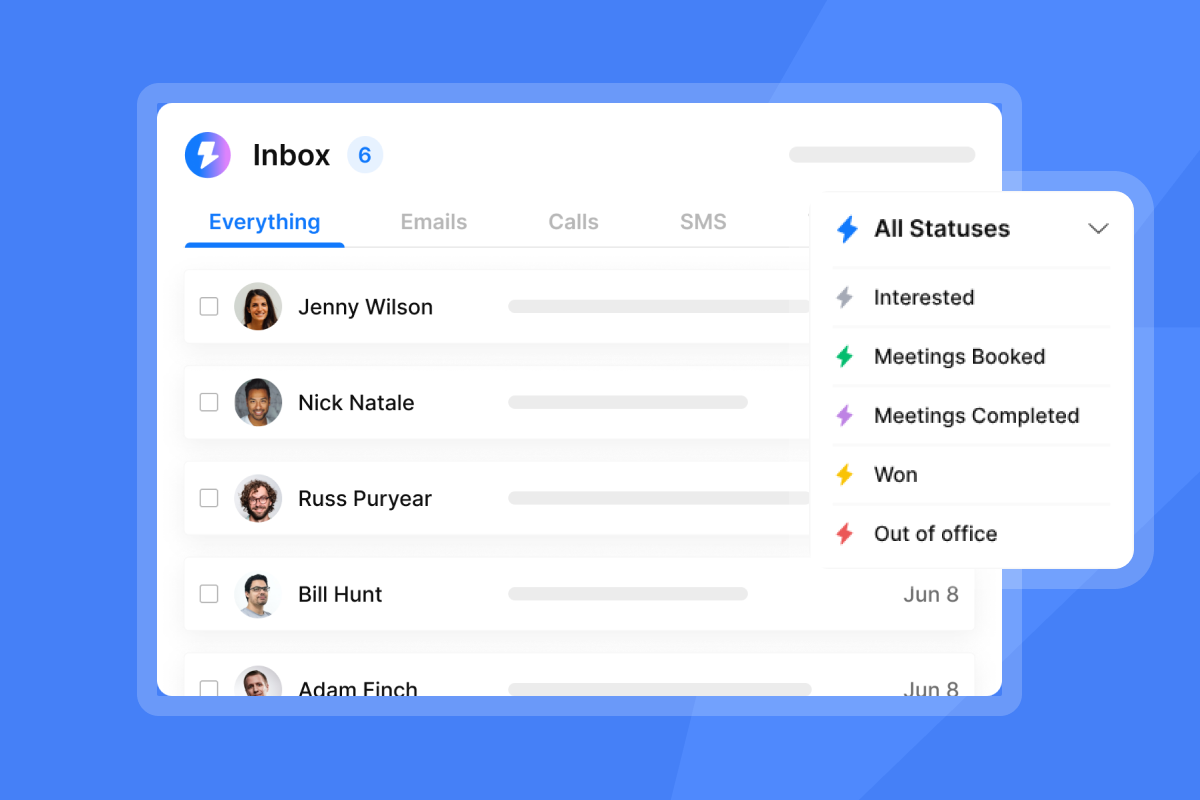
The distinction from legacy sequence automation comes down to three layers. First, the research layer: AI agents automate audience building and sequence drafting, as Instantly's Copilot and AI Sales Agent do, rather than waiting for a rep to manually build a list. Second, the decision logic: static automation fires pre-defined steps on a fixed schedule, while AI agents analyze engagement signals to prioritize leads showing the most intent. Third, the classification layer: the AI automatically sorts incoming replies across categories so positive responses surface immediately rather than getting buried in a shared inbox.
AI vs. human BDR: operational differences and real limits
The split between AI and human work is practical, not philosophical. AI handles high-volume, repetitive tasks at consistent volume without fatigue. The AI Reply Agent triages replies in under five minutes and keeps sends inside safe daily limits. Humans handle what AI cannot reliably do: complex objection handling, multi-stakeholder buying committees, live demos, and strategic account planning. BDRs (Business Development Representatives) and SDRs (Sales Development Representatives) focus on qualified conversations while AI handles top-of-funnel volume work. Account executives (AEs) take over once meetings are booked and prospects are sales-qualified leads (SQLs).
Two failure modes matter for small teams specifically. First, AI agents misclassify nuanced replies. "Not right now, but check back in Q4" can get treated as a disinterest signal by a poorly configured system. The AI Reply Agent's Human-in-the-Loop mode exists precisely for this: it drafts the response and flags it for human approval before anything goes out. Second, without a CRM suppression list in place, AI systems will contact existing customers as cold prospects. Run your CRM contact list through your suppression settings before any campaign goes live, right after confirming the technical setup behind cold email infrastructure is solid.
Why AI BDR is essential for small sales teams
The business case comes down to cost structure and throughput. Manual outbound does not scale for small teams, and full-time BDR headcount is expensive relative to the pipeline it generates at early stages. That cost gap is one of the key differences between AI and human BDRs. Before committing budget, it helps to know how to evaluate AI BDR platforms against your specific constraints.
Reducing cost per meeting set
According to Stealthagents, a fully loaded SDR hire, including base salary, OTE, benefits, payroll taxes, and overhead, runs approximately $85,000-$120,000 annually, rising higher once you add tools, management overhead, and ramp time. According to the Bridge Group's 2025 SDR Research Report, cited by Stealthagents, the average SDR books 9.4 qualified meetings per month. At a fully loaded monthly cost of $7,000-$10,000, that puts the true cost per meeting at $750-$1,000+ before factoring in ramp time and management overhead.
Running Instantly starts at $47 per month for Outreach and $9 per month for Instantly Credits to power lead sourcing and AI agents. Teams running a full Growth tier stack, Outreach at $47, Credits at $47, and CRM at $47, operate at approximately $141 per month. That cost structure does not scale with headcount.
Metric | Instantly | Full-time BDR |
|---|---|---|
Monthly software cost | $47-$400 | Built into salary |
Annual total cost | ~$1,200-$6,000 | ~$85,000-$120,000+ |
Governance | Founder or RevOps-led | Manager-supervised |
Scale ceiling | Unlimited inboxes, flat fee | One rep's capacity |
Faster pipeline generation for startups
Early-stage teams need to test ICP fit across multiple segments simultaneously. Manual outbound forces a sequential approach. An AI BDR system runs multiple segment tests in parallel, which compresses the time to get signal on which messaging and ICP cuts are working. Pre-product-market fit (pre-PMF) founders especially benefit from this parallel testing capability because it accelerates the discovery process.
Instantly's 2026 benchmark report captures the consistency effect that makes this work: teams maintaining stable sending patterns see 15-20% higher reply rates in the dataset. That improvement is nearly impossible to sustain manually across a team of three to five reps running individual inboxes without coordination.

Critical checks before deploying AI sales tools
This is where most teams fail. The setup decisions made in the first two weeks, mapped out in our AI BDR onboarding checklist, determine whether a campaign books meetings or burns domains.
Domain warmup and sender reputation
Never send cold emails from your primary company domain. A spam complaint or a blacklisting event on your primary domain affects every email your company sends, including to existing customers and investors, a cost worth weighing when budgeting for outbound as a small team.
Set up secondary domains specifically for outbound and warm them for four to six weeks before sending any cold traffic. The warmup process works by gradually increasing send volume on new domains, starting at five to fifteen emails per day and ramping carefully. Keep each inbox at a maximum of 30 emails per day as a safety ceiling.
Scale volume by adding more inboxes across more domains, not by pushing individual inbox limits higher. Instantly gives you unlimited email accounts and warmup access across all plans, so the only constraint on volume is how many domains and inboxes you provision, which is what drives the meeting-generation math for founders.
Selecting high-quality lead sources
B2B contact lists degrade steadily over time as people change roles, companies, and email addresses. A six-month-old contact list will contain a meaningful share of invalid addresses, as people change roles, companies, and email providers constantly. Feed that list to an AI agent and it confidently sends personalized emails to bad addresses at scale, the exact failure mode automating lead qualification with AI SDR tools is designed to prevent. Your bounce rate spikes, sender reputation degrades, and domains start landing in spam.
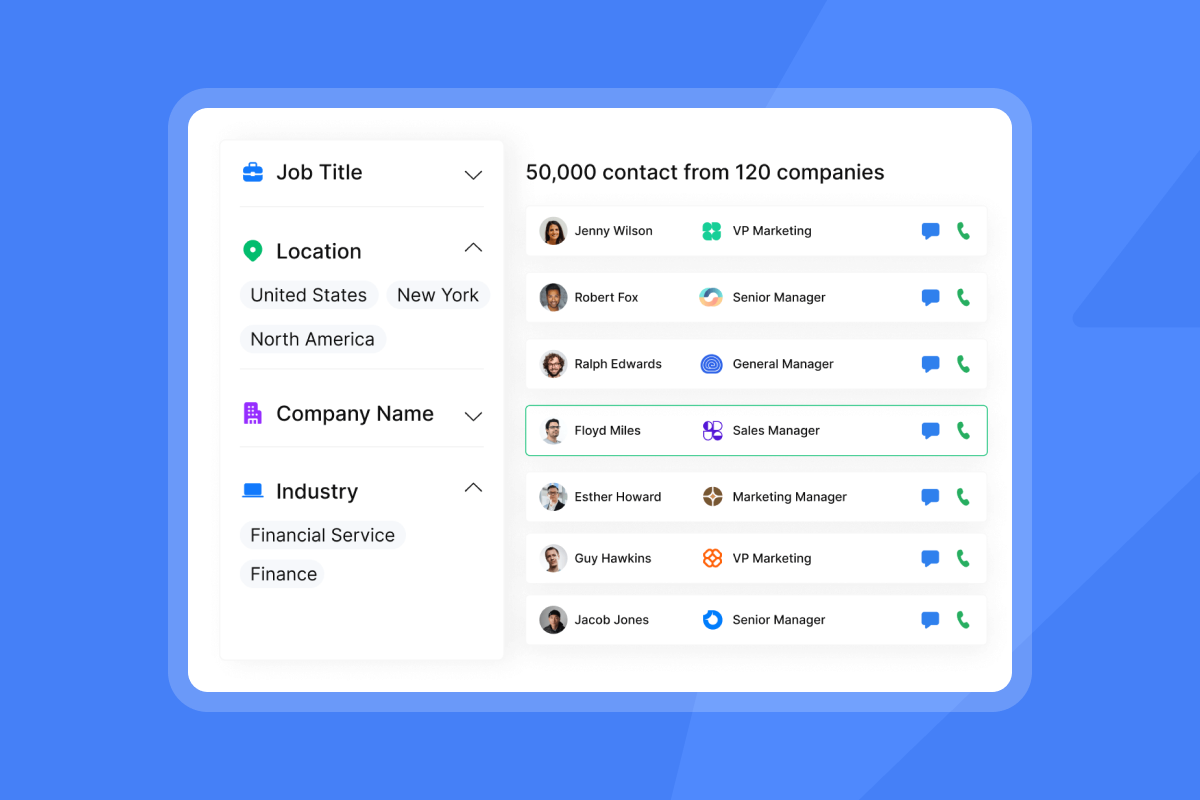
SuperSearch gives you access to 450M+ B2B leads with waterfall enrichment with 5+ providers, including syntax verification, domain validity checks, and mailbox existence confirmation. Keep hard bounces at or below 1%. If your rate climbs above that, pause sends and run a list hygiene check before resuming.
Crafting ICPs for AI outreach success
A vague ICP, "B2B SaaS companies with 50-500 employees," produces poorly targeted outreach because it captures hundreds of companies with wildly different buying motives. Tight ICPs define three layers: firmographics (industry, employee count, revenue range, geography), technographics (tools they currently use), and buying triggers (recent funding, new hire, product launch, competitor churn signal). When you define these clearly before loading your contact list, the AI's personalization lines land on relevant context rather than generic company facts.
Instantly's cold email copywriting framework covers how to structure message logic around ICP-specific value propositions.
Mapping AI outreach to CRM pipelines
Replies that cannot flow cleanly into your CRM create a dead-end in the pipeline. Instantly's native HubSpot integration supports bidirectional sync so that when the AI Reply Agent classifies an inbound message as high-intent, that lead status updates in HubSpot and the AE receives a Slack notification for review. The AI Reply Agent drafts a response in under five minutes, Human-in-the-Loop mode flags it for approval, and the AE approves or edits before it sends.
KPI benchmarks for early-stage sales
The right benchmark depends on your team size and stage. Using a Series A volume target as a baseline for a solo founder wastes budget and stalls pipeline before it starts.
Solo founders and teams of one to two reps should focus on ICP validation while building volume systematically. After warmup, scale to six to nine warmed inboxes across two to three domains, capped at 30 emails per inbox per day, which puts your daily send range at 180-270 emails and monthly volume around 3,500-6,000 on business days (roughly 20-22 sending days per month). Teams of three to ten reps add inboxes and domains as the team grows, and need system-level governance, which is where Instantly's Hypergrowth plan at $97 per month adds the Deliverability AI Agent for automated health monitoring every 24 hours. As team size grows, governance gaps become the main risk: reps using unapproved templates, ICP drift across sequences, and reply triage backlogs that let warm leads go cold.
Growth stage | Monthly sends | Inboxes needed | Primary focus |
|---|---|---|---|
Solo founder (pre-PMF) | 3,000-6,000 | 6-9 | ICP validation, message fit |
Series A team (3-10 reps) | 10,000+ | 20+ | Scaling safely, CRM sync |
Series A+ (10+ reps) | 20,000+ | 40+ | Sequence governance, audit reporting |
Deploying AI BDR for consistent pipeline growth
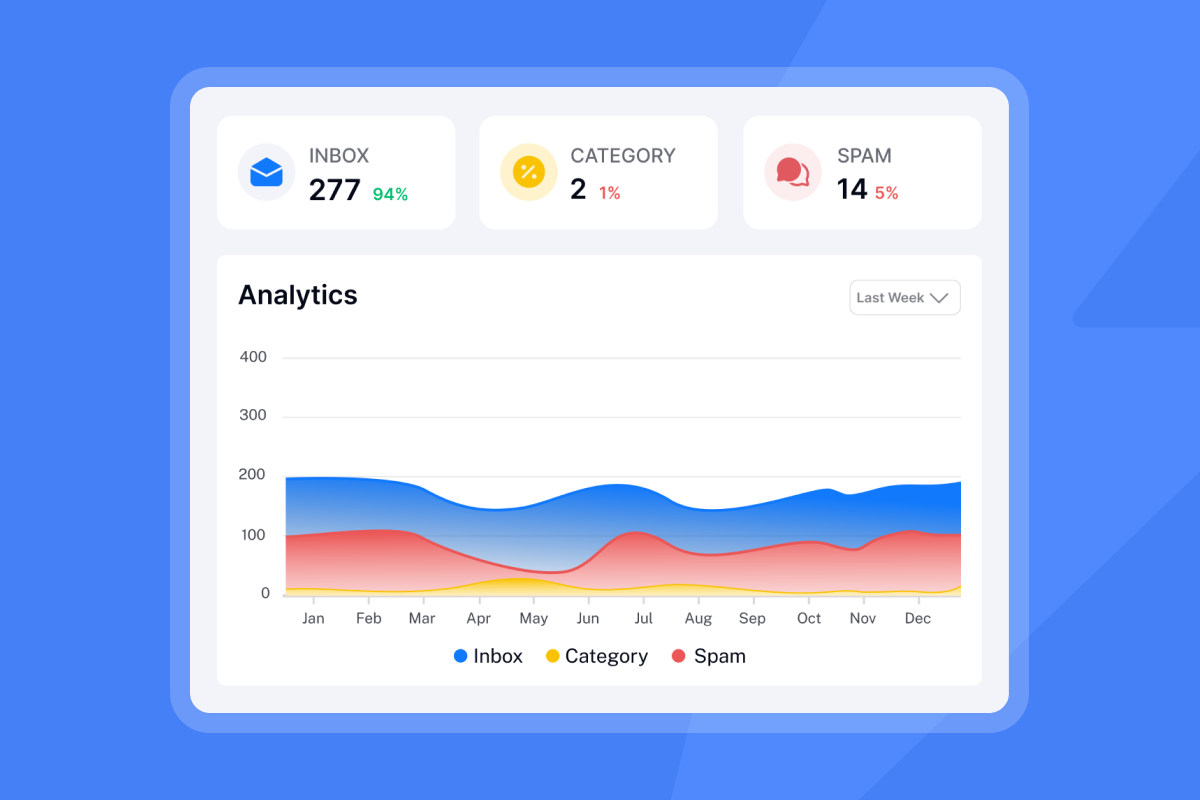
Consistent sends beat high-volume bursts. Instantly's 2026 benchmark report found that teams maintaining stable domain health and sending patterns see 15-20% higher reply rates. Mailbox providers learn your behavior, and consistency builds trust with their algorithms.
Establishing reliable sending windows
Set send windows to local prospect time, targeting morning hours when inbox activity is highest and your message competes with fewer other sends. Avoid Friday afternoon and weekend sends because reply rates drop and OOO auto-replies create noise in your Unibox.
According to the 2026 benchmark report, Monday is the best day to launch new sequences and Wednesday produces the highest engagement of the week. Build your send schedules around these patterns.
Automating inbox triage for teams
As you add sending accounts, reply management becomes the bottleneck. Reps switching between ten inboxes to check for responses eliminate the efficiency gain you built on the sending side.
Unibox aggregates replies from every sending account into a single dashboard. The AI Reply Agent classifies and drafts responses in under five minutes, and Human-in-the-Loop mode holds the draft for rep approval before it sends. High-intent replies trigger Slack alerts so your AE engages before the prospect goes cold.
"Instantly makes it genuinely easy to run outbound at scale without feeling overwhelmed by complexity. The inbox rotation, sending controls, and campaign setup are all intuitive, which means you can go from idea to live campaign quickly." - Curtis S. on G2
Audit-ready inbox placement standards
You cannot manage deliverability you do not measure. Instantly's Inbox Placement tests run automated checks before you scale sends, showing exactly which folder your messages land in across major providers. The automated Inbox Placement test feature triggers alerts so you catch placement drops before they affect a live campaign.
Run these checks daily:
- Bounce rate: Keep bounces at or below 1%. If your rate climbs above that, pause sends immediately and run a list hygiene check before resuming.
- Spam complaint rate: Above 0.1% demands list review, per Google's email sender guidelines. Above 0.3% causes active domain reputation damage.
- Domain authentication: Confirm SPF, DKIM, and DMARC records are passing on all sending domains.
- Blocklist status: The Deliverability AI Agent checks this automatically on Hypergrowth plans and above.
The rotating IPs and algorithms guide explains how the platform's sending infrastructure distributes volume to protect domain health at scale.
Building repeatable messaging playbooks
Copy quality sets the ceiling on reply rates. The 2026 benchmark report identifies two parameters that correlate most directly with top-quartile performance: email length under 80 words and sequences of four to seven steps. Long emails and short sequences both underperform.
A/Z testing is now included starting on the Growth plan at $47 per month, with the full up-to-26-variant capability available on Hypergrowth and above. Run at least two to three variants per step in your first four weeks to find the highest-performing angle before scaling send volume. Instantly's cold email copywriting framework provides the structural logic behind high-reply sequences, including a bank of 600 cold email templates to build from.
"We're able to scale our outreach without sacrificing personalization or risking our sender reputation." - Natalie on Trustpilot
Auditing AI BDR performance and pipeline quality
Metrics that do not reconcile with your CRM destroy trust with your leadership team. Build your reporting framework around outcomes your CFO can verify: meetings booked, SQL conversion rate, cost per meeting, and rep productivity. Those numbers also show when an AI BDR pays for itself.
Standardizing healthy reply rate targets
Instantly's 2026 benchmark report covers billions of interactions across thousands of workspaces from January 1 to December 18, 2025, and gives three clear tiers to benchmark against:
- Platform average reply rate: 3.43%
- Top-quartile senders: 5.5%+
- Top 10% senders: 10.7%+
Use 3.43% as your floor for a healthy campaign. If you are below this after four weeks of active sending with a verified list, the issue is copy, ICP targeting, or deliverability, and each has a different fix. Reaching 5.5% requires tight ICP targeting, clean data, and consistent sending.
Validating SQL conversion accuracy
Reply rate is not the whole picture. An AI system that books meetings with unqualified prospects wastes AE time and produces misleading pipeline coverage. Audit the AI's classification accuracy weekly for the first month: check what percentage of "positive reply" classifications actually convert to booked meetings, and what percentage of booked meetings convert to SQLs. Build the same check into any AI BDR trial or POC before you commit.
If SQL conversion from AI-classified leads drops below your team baseline, tighten the ICP criteria or switch to Human-in-the-Loop mode on the AI Reply Agent to add a human review step before the meeting gets booked.
Common AI BDR errors that stall pipeline growth
Most AI BDR failures are infrastructure and data failures that happen before the first email sends.
Domain reputation and sending volume limits
Sending from a cold domain with no warmup history produces immediate spam folder placement. Email providers have no positive engagement history to reference, so they default to promotional or spam routing. You will not see low reply rates. You will see zero replies because no one receives your messages.
Warm for a minimum of four to six weeks before any cold sends. The Instantly warmup infrastructure uses a network of 4.2M+ accounts to build genuine engagement signals on your new domains. Keep individual inbox volume at 30 emails per day as your safety ceiling. Scale total volume by adding inboxes across more domains, not by pushing individual limits higher. The unlimited email accounts model means you pay the same flat fee whether you run ten inboxes or one hundred.
Balancing AI speed with human review
The AI Reply Agent runs in full Autopilot mode or Human-in-the-Loop mode. When you want a review step before replies go out, Human-in-the-Loop mode is worth considering. You see the drafted reply, the classification label, and the reasoning before anything sends. Slack integration pushes these review requests directly to the rep's channel so approvals happen in under a minute. Switch to Autopilot only after you have reviewed enough AI-drafted replies to trust its classification accuracy on your specific ICP.
Fixing contact data for AI outreach
Personalization lines fail when the underlying data is wrong. "Google LLC" instead of "Google," a job title from two years ago, or a funding round that is already public history break the credibility of every message that follows. Run your lists through enrichment verification before loading them into any campaign. SuperSearch's waterfall enrichment checks contact data against 5+ providers before you ever send. Fix generic company name formatting and validate job titles against current data before building your first sequence.
Ready to build your AI BDR system?
The teams that get consistent pipeline from AI BDR treat deliverability as a system that requires setup, monitoring, and iteration, not a feature they turn on once. Clean data, gradual warmup, consistent sends, AI-driven classification, and human final approval make up the full stack. When all five are in place, you build an outbound engine that scales without the overhead of traditional BDR headcount.
Building this system requires a methodical approach. Start with proper domain infrastructure and warmup, which takes four to six weeks but protects your sender reputation from day one. Layer in verified contact data through multi-provider enrichment to keep bounces at or below 1%. Configure your send windows and volume caps to match mailbox provider expectations, keeping individual inboxes at 30 emails per day while scaling total volume through additional accounts. Set up your AI Reply Agent with Human-in-the-Loop review until classification accuracy matches your standards, then gradually shift qualified segments to Autopilot mode. Finally, connect everything to your CRM with bidirectional sync so high-intent replies trigger immediate AE engagement.
The difference between teams that succeed and teams that burn domains comes down to execution discipline in these five areas. Skip warmup and your emails land in spam. Use stale data and bounces kill your sender reputation. Push volume too fast and providers flag you as a spammer. Let AI run without oversight and you book unqualified meetings. Break the CRM connection and qualified leads fall through the cracks. Each failure mode is predictable and preventable with the right system architecture.
Start your free trial of Instantly. The 14-day free trial gives you hands-on access to the sending infrastructure, so you can validate the system with real data before committing.
FAQs
Can AI BDR replace a human BDR entirely?
No. AI agents handle lead sourcing, sequence execution, and initial reply triage, but human reps are required for complex objection handling, multi-stakeholder negotiations, and closing deals. AI is a force multiplier that lets your existing team focus on qualified conversations instead of top-of-funnel volume work. Our framework on whether AI can replace a full-time BDR covers where that line sits.
What are realistic reply rate benchmarks for AI outreach?
Instantly's 2026 benchmark report puts the platform average reply rate at 3.43%, with top-quartile senders reaching 5.5%+ and top 10% reaching 10.7%+. Consistent sending patterns and verified contact lists are the two variables most correlated with above-average performance.
How long does domain warmup take before I can start sending?
Plan for four to six weeks of domain warmup before launching cold sends, starting at five to fifteen emails per day and ramping gradually. This warmup period is mandatory for protecting sender reputation and ensuring primary inbox placement from launch.
What does an outreach stack cost compared to a full-time hire?
Instantly's Growth tier stack, covering Outreach, Credits, and CRM, runs approximately $141 per month, compared to $85,000-$120,000+ annually for a fully loaded BDR hire according to Stealthagents. Standalone AI BDR tools from enterprise vendors carry higher price points, making Instantly's flat-fee model the cost-effective option for lean and growing teams.
What happens if my domain gets flagged as spam?
Pause all sends immediately, re-verify your contact list to remove invalid addresses, and run an Inbox Placement test to confirm current placement status. The Deliverability AI Agent on Hypergrowth plans monitors this automatically and surfaces exact remediation steps.
Key terms glossary
Primary inbox: The main folder where legitimate, high-priority emails land, distinct from spam or promotions tabs. Landing here is the direct outcome of good sender reputation and clean list hygiene.
Sender reputation: A score assigned by mailbox providers based on your sending history, bounce rates, spam complaints, and engagement rates. It directly determines whether your messages reach the primary inbox or get routed to spam.
Warmup: The process of gradually increasing email volume on a new domain over four to six weeks to build trust with mailbox providers before launching outbound campaigns at full volume.
List hygiene: The practice of regularly verifying and cleaning your contact list to remove invalid, inactive, or duplicate addresses, keeping bounces at or below 1%.
Unified inbox: A single dashboard (Unibox in Instantly) that aggregates replies from all your sending accounts so reps manage every conversation without switching between email clients.
Waterfall enrichment: A multi-provider verification process where contact data is checked against several databases in sequence until a verified result is returned, reducing bad data and bounce rates.
SISR: Server and IP Sharding and Rotation, available on Instantly's Light Speed plan, which distributes sends across dedicated private IP pools to protect sender reputation at high volume.
Read next
- Cold email deliverability guide: how to land in the primary inbox: A step-by-step breakdown of domain setup, warmup, and sending practices that keep your emails out of spam.
- Agency playbook: how to use AI for cold email reply management: How agencies use the AI Reply Agent to triage, draft, and route replies across multiple client campaigns without dropping a lead.
- Email warmup guide: clean sending, stronger inbox placement: A practical walkthrough of how warmup builds sender reputation, what a four-to-six-week ramp looks like, and how to confirm inbox placement before your first cold send.



