.svg)
%20(1).svg)


Updated April 20, 2026
TL;DR: Proposal timing affects whether your email gets opened or buried in a crowded inbox. Research consistently points to Tuesday through Thursday, with send windows of 8-11 AM or 3-5 PM in your prospect's local timezone, as the strongest slots for B2B proposals. Generic advice only gets you so far. Send Time Optimization (STO) uses each recipient's actual engagement history to predict their personal best open time. Combine those windows with a 24-48 hour send rule after your discovery call, plus a structured follow-up cadence, and your proposals land when attention is high.
Timing your proposal email correctly is the difference between a booked meeting and a lost deal sitting unread in a crowded inbox. This guide breaks down the exact send windows, follow-up delays, behavioral signals, and automated systems that increase your pipeline per dollar without manual guesswork.
Prerequisites for proposal timing optimization
Before you configure send windows, make sure these three elements are in place. Timing optimization only works when your infrastructure can support consistent delivery and accurate measurement. Skip one of these, and your send window tests will produce unreliable data that leads to bad decisions downstream. These prerequisites create the baseline you need to isolate timing as the variable that moves reply rates.
- Lead location data: Your list must include city, country, or timezone fields so you can map local send times accurately. Without geographic data, you cannot align your send windows to the recipient's workday, which means your proposal may land at 3 a.m. or during their commute.
- Warmed sending domains: Domains need at least 30 days of warmup with gradual volume ramps before you scale proposal sequences. Cold domains trigger spam filters, which destroys deliverability no matter how perfect your timing. Our email deliverability guide for sequences covers the full ramp process.
- Reply rate as your primary metric: Track replies, not opens. Open tracking is unreliable because Apple Mail Privacy Protection inflates open counts, which misleads every timing decision you make downstream. Optimize for the action that matters, which is a response, not a phantom open signal.
Why proposal email timing matters for reply rates
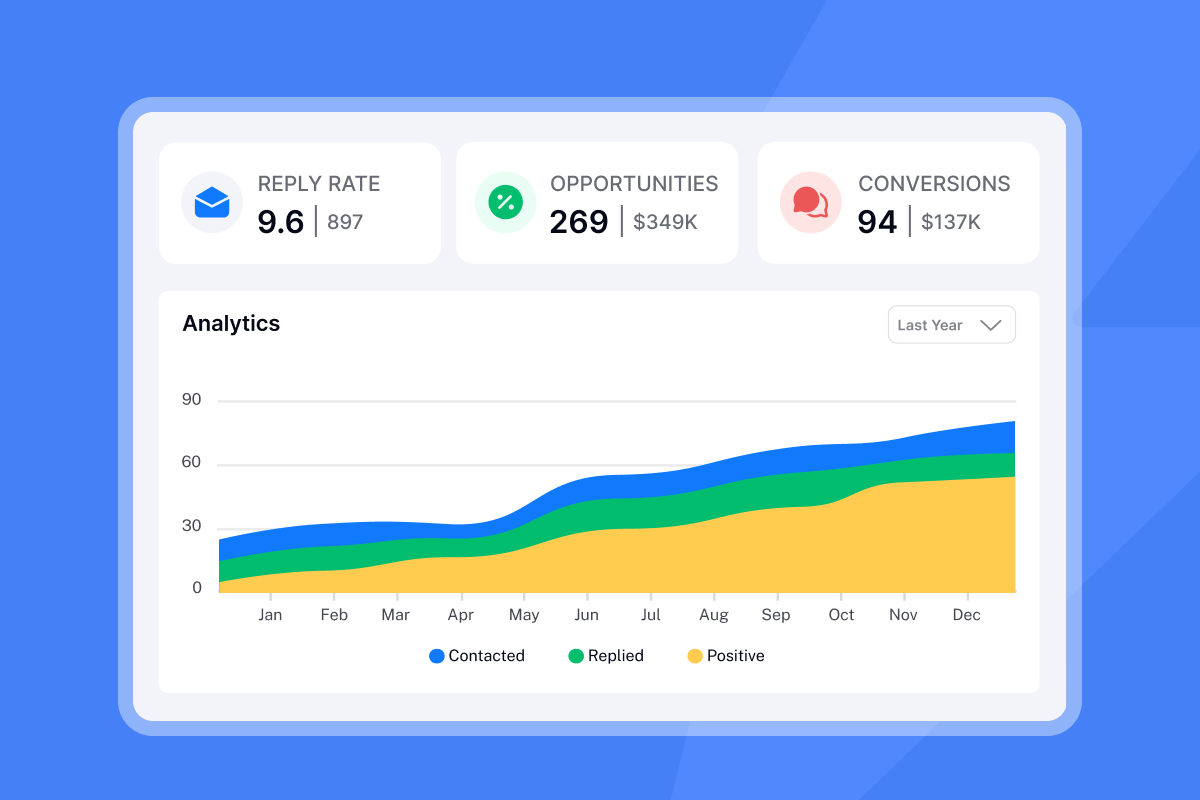
A proposal is a bottom-of-funnel asset. Unlike a cold email, it arrives after a real conversation, which means the prospect already knows who you are. That context raises the stakes: a poorly timed send can make a strong proposal feel like clutter, and once it slips to page two of their inbox, it rarely comes back.
The 24-48 hour delivery rule
Send your proposal within 24 to 48 hours of your discovery call. Waiting longer lets urgency fade, gives competitors a window to engage, and signals lower priority. Prompt delivery keeps the deal moving and makes it easier to address questions before doubt sets in.
Lost pipeline from mistimed proposals
Mistimed proposals hurt your close rate, which means you need more opportunities at the top of your funnel to hit the same revenue targets. If your proposal emails consistently land during low-attention windows, you'll see lower response rates and longer sales cycles, forcing you to generate more pipeline to compensate.
Best days of the week to send proposal emails
Day-of-week data from multiple B2B email studies gives a clear pattern, and it's worth understanding before you set any schedule.
Midweek outperforms the rest
Multiple research reviews consistently identify Tuesday, Wednesday, and Thursday as the highest-performing days for B2B email. Midweek works because professionals have cleared their Monday backlog and aren't yet mentally checking out for the weekend. Default your proposal sends to Tuesday through Thursday unless you have account-specific data pointing elsewhere.
Monday sends compete with a weekend's worth of accumulated messages, making your proposal easy to miss. Friday sends face the opposite issue: attention shifts toward wrapping up the week, not evaluating a new vendor. Both days aren't impossible, but they require a stronger subject line and a clearer reason to be there.
Weekend sends: narrow exceptions only
Weekend sends occasionally work for industries where operators review business materials during personal downtime, but industry data consistently shows that the large majority of opened and clicked business emails occur on weekdays. Unless you have strong account-level signals that your specific prospect works weekends, stick to the midweek default.
Best hourly send windows to boost replies
Three windows consistently outperform the rest for B2B proposals. Large-scale outreach analysis, including a study by Siege Media covering over 85,000 emails, found that 6-9 AM in the recipient's timezone produced the highest reply rates because prospects scan their inbox first thing before the day's priorities take over. The 11 AM-12 PM slot captures a second high-attention moment during the pre-lunch inbox check. The 3-5 PM window also shows strong afternoon engagement.
For overnight sends, messages accumulate alongside all other early-morning traffic and face heavy inbox competition. The strongest performers are the morning and late-afternoon windows on weekdays.
Window | Performance | Best for |
|---|---|---|
6-9 AM local | High reply rates | Proposals needing fast responses |
11 AM-12 PM local | Strong open rates | Mid-funnel reviews before lunch |
3-5 PM local | Strong afternoon engagement | End-of-day review items |
Overnight (post-10 PM) | Heavy competition at morning open | Avoid for proposals |

Pinpointing global timezones for engagement
Managing one timezone is straightforward. Managing five simultaneously, while keeping your team small, is where most founders lose precision and pipeline.
Configure auto timezone detection
Make sure your lead data includes location information before you configure send windows. Most enrichment tools and lead databases like SuperSearch include city and country fields that map directly to a timezone. If that data is missing, approximate based on company headquarters or phone number prefix.
How Instantly helps with send time optimization
Instantly's campaign scheduling lets you set send windows that respect each prospect's local timezone, so you don't need to manually calculate times for a list spread across London, New York, and Singapore. You configure the allowed window once (for example, 8 AM to 11 AM local time), and the system distributes sends accordingly.
The Hypergrowth plan at $97/month includes advanced warmup options and weekday-only sending, which removes the manual step of disabling weekend sends for a global async team. Stagger sends when managing multiple regions instead of batching all sends at once, which spikes volume from a single account and can trigger spam filters even on well-warmed domains. Keep individual inbox sends capped at 30 emails per day to protect domain health across all regions.
"The deliverability tools actually work, and their customer support is responsive when we've had questions. We're able to scale our outreach without sacrificing personalization or risking our sender reputation." - Natalie on Trustpilot
Gauge buyer intent for precise delivery
Generic time windows are a starting point. Account-level behavioral signals let you narrow the send to a moment when the prospect is already paying attention.
Recent engagement and company signals
For contacts who have opened, clicked, or replied to a previous email recently, prioritize sending your proposal sooner rather than waiting for a scheduled window. Engagement recency is a stronger predictor of reply likelihood than day-of-week data alone. For new contacts with no history, default to the Tuesday-Thursday, 8-11 AM window and let your first touchpoint build the behavioral data you need.
Common B2B triggers include funding announcements, leadership changes, hiring sprees, or product launches. Reaching out with context from these events provides a clear "why now," making your message feel specific and relevant. Job postings for roles that would directly benefit from your solution are a reliable proxy for buying intent. A company advertising for a Head of Demand Generation is signaling investment in outbound pipeline. Check job boards weekly for target accounts and time your proposal send to coincide with an active hiring push.
A/B testing framework for send-time optimization
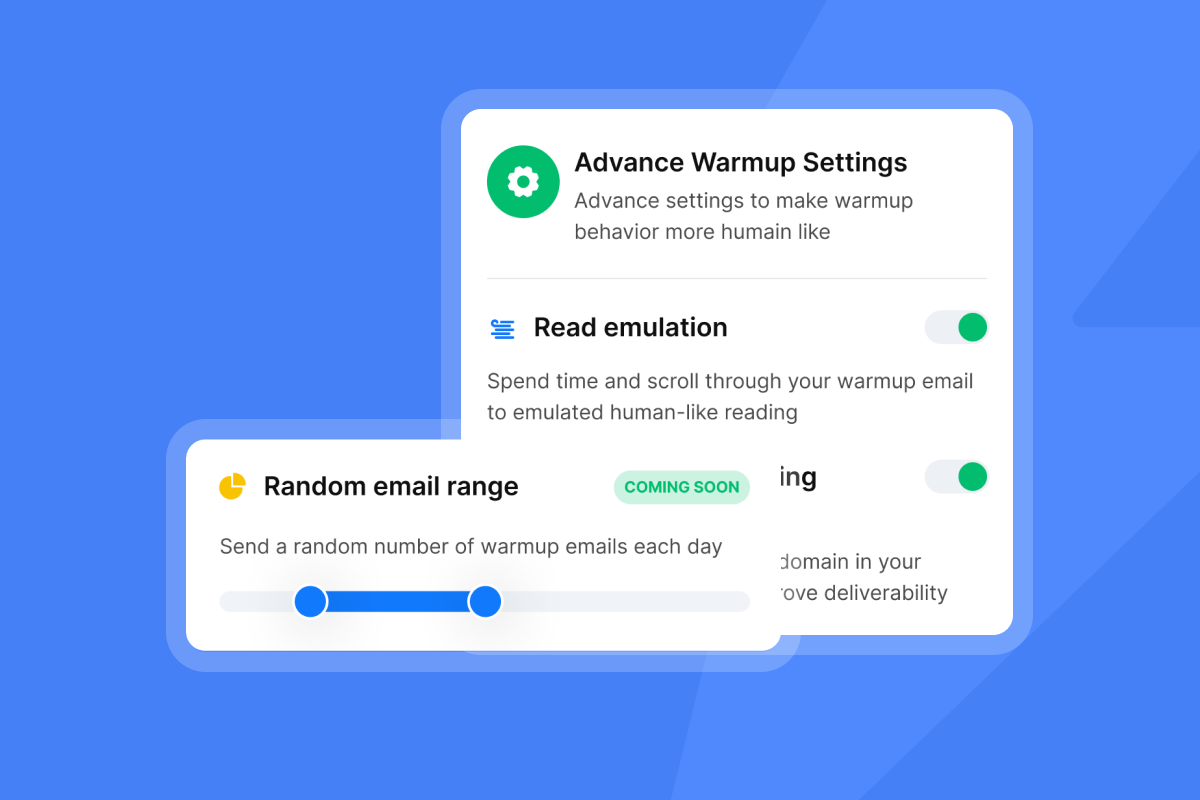
Send Time Optimization (STO) is an AI-driven approach that analyzes each recipient's engagement behavior to identify their personal best send window, rather than applying one aggregate rule to your entire list. Instead of sending all proposals at 9 AM Tuesday, STO replaces that single rule with individual predictions based on when each contact has historically opened, clicked, or replied.
Select your send time test variables
Test one variable at a time: day of week, hour of day, or delay length after the discovery call. Run Variation A at 8-10 AM and Variation B at 3-5 PM, keeping all other elements identical. Instantly's A/Z testing feature lets you set up multiple campaign variations within a single campaign and split leads automatically between them, and it's included on the Growth plan at $47/month as of the January 2026 update.
Sample size and statistical significance
For lean founder-led teams, run each variation over two to three weeks to accumulate enough volume before drawing conclusions. Wait 48-72 hours after your final send before calling a winner so inboxes have time to clear. Look for a meaningful, consistent difference in reply rate rather than a single-send anomaly.
Which metrics drive booked meetings?
Track reply rate and meetings booked, not open rate. As our email tracking myths breakdown shows, Apple Mail Privacy Protection inflates open counts, meaning a window with a high open rate but low reply rate may simply be triggering more automated prefetching. Reply rate is your conversion signal for proposals. Sales research consistently shows it takes an average of eight touches to get a first meeting, and 80% of sales require five or more follow-ups to close, so reply rate is the only metric that maps directly to pipeline.
Checks and validation for send-time tests
Before you call a winning variation, confirm three checks. First, verify that both variations sent to the same list quality. If one group had higher bounce rates or older contacts, the timing data is polluted. Second, check that external factors like company news or a major holiday didn't skew one period's results. Third, validate that your winning window holds when you scale from a small test group to your full send volume, because small sample wins don't always carry at scale.
"The warm-up system helps maintain deliverability when sending higher volumes. It is especially useful for testing messaging, running A/B experiments, and managing several email accounts from one dashboard." - ivar s. on G2
The 5 critical proposal timing errors
Knowing the right windows matters less if structural mistakes override your timing entirely.
- Ignoring local timezones: Your 9 AM send becomes a pre-dawn arrival for prospects on the other side of the world. Use timezone-aware scheduling to match your send to their active hours.
- Batch sending across all regions at once: Firing all sends simultaneously spikes your sending volume in a compressed window, which looks unusual to email providers and can hurt your sender reputation.
- Tracking opens instead of replies: Apple MPP inflates open rates and misleads your optimization. Use reply rate as your primary signal.
- Skipping follow-ups after no reply: Sales data shows 80% of deals require five or more follow-up touches, yet nearly half of all reps stop after just one attempt. A structured cadence keeps your proposal in play without feeling desperate.
3-step proposal follow-up cadence:
Step | Day | Action | Purpose |
|---|---|---|---|
1 | Day 0 | Send proposal | Initial delivery |
2 | Day 3-4 | First follow-up | Reference the proposal, address likely questions |
3 | Day 8-10 | Second follow-up | Add a new value angle, keep the ask light |
For a longer sequence, extend spacing to 7-14 days after the third touch to avoid fatigue. The best cold email follow-up strategy guide walks through exactly how to structure later-stage nudges without triggering unsubscribes.
Ready to automate this entire flow? Try Instantly free and let scheduling and follow-up automation handle timing while you focus on closing conversations.
FAQs
What is the best time to send a proposal email?
Tuesday through Thursday between 8-11 AM or 3-5 PM in your prospect's local timezone are the highest-performing windows for B2B proposals, based on multiple engagement studies. Match the prospect's timezone rather than your own, and use behavioral signals like recent engagement to narrow the window further.
How long should I wait before sending a proposal after a discovery call?
Send your proposal within 24 to 48 hours of the discovery call, and no later than four days after. Waiting longer allows urgency to fade and gives competitors time to engage, while sending too quickly can make the document feel templated rather than considered.
How long should I run a send-time test before changing my default?
Run each variation for at least two to three weeks before drawing conclusions, and wait 48-72 hours after your last send before calling a winner so inboxes have time to clear. Look for a consistent and meaningful difference in reply rate, not a single-send anomaly, before committing to a new default.
When should I send my first follow-up after a proposal?
Send your first follow-up two to three business days after the initial proposal, which respects the prospect's review time while staying close enough to answer early questions. Space subsequent follow-ups using a graduated pattern: three to five days for the second touch, then four to seven days for later follow-ups, and send all follow-ups within the same high-attention time windows you used for the original proposal.
Read next
- Meeting Scheduling Email Guide for Cold Outreach 2026
- Cold Email Follow-Up Subject Lines: How to Re-Engage Without Being Pushy
- Email Click Tracking: How to Measure Engagement Beyond Open Rates
Key terms
Send Time Optimization (STO): An AI-driven approach that analyzes each recipient's engagement behavior to identify their personal best send window, replacing a single aggregate rule with individual predictions. STO uses historical open, click, and reply data to deliver each message at the moment that specific contact is most likely to respond.
Deliverability: The ability of your email to reach the prospect's primary inbox rather than being filtered to spam or promotions. Deliverability depends on sender reputation, domain health, list hygiene, and sending patterns that respect timezone and volume limits.
Sender reputation: A score that email providers assign to your sending domain and IP address based on engagement rates, bounce rates, spam complaints, and sending consistency. A low sender reputation causes proposals to land in spam even when content and warmup are strong.
Timezone-aware scheduling: A sending method that automatically adjusts email delivery times based on each recipient's local timezone, ensuring your proposal arrives during their high-attention window rather than your own business hours. This prevents batch sends from reaching international contacts at off-hours or triggering spam filters through compressed volume spikes.



