.svg)
%20(1).svg)


Updated September 4, 2026
Who this guide is for
Reps and founders writing sign-offs that earn a reply. Not for you if your emails are not reaching the inbox, fix deliverability first.
TL;DR: To end an email, match the closing to the context, then pair a clear call to action with a sign-off. In Boomerang's study of 350,000 email threads, "thanks in advance" closings hit a 65.7% response rate, versus 51.2% for "Best," so the last line is a conversion lever, not a formality. This guide gives 50 professional email closing lines across five categories, cold outreach, professional, formal, casual, and gratitude, a decision table for picking the right sign-off by context, and a framework for A/B testing them to find what works for your audience.
Stop ending emails with "Best." It's the business equivalent of saying nothing at all. In cold email outreach, every element of the email works together as a system, a strong opener earns the read, but the closing line is what determines whether you get a reply or silence. You spent 20 minutes crafting the perfect subject line, personalizing the opener, and building a value proposition that actually resonates. Then you fumble at the one-yard line with a closing that does zero work. According to research analyzing over 350,000 email threads, emails with "thanks" variations achieved 62% response rates compared to just 46% for emails without gratitude-based closings. That's a 36% relative increase in replies from changing one line.
The closing line is not etiquette. It's a call to action that dictates whether you get a reply, a meeting, or silence. Whether you are sending a cold pitch or working out how to end an email professionally for a client or a colleague, the principle is the same: the last line has to do a job. This guide gives you 50 ready-to-use templates organized by context, plus the testing framework to validate what moves your specific metrics.
Why your email closing line dictates your reply rate
The recency effect explains why the last thing someone reads is the most memorable. Research on cognitive recency bias in communication shows that people remember the first and last items in a sequence far better than anything in the middle. When you close with a weak, generic line, that's what sticks.Instantly.ai, the cold email platform with unlimited sending accounts and A/Z testing built in (Growth gets it, the full 26-variant version needs Hypergrowth), lets you validate which closing lines actually move your reply rates, not just which ones feel right.
Your closing line usually contains the ask. If the CTA is buried, vague, or non-existent, you've given the reader no clear path to respond. Effective closings have five elements working together: personalization to the recipient's context, clarity on what happens next, relevance to the email's goal, appropriate tone for the relationship stage, and a gratitude marker that increases reciprocity. Miss any of these and your reply rate drops. The closing line works in tandem with your subject line, for the data-backed formats behind subject lines that get replies across different industries and ICP types, see the full cold email subject line research guide.
Common failure patterns and how to fix them
Before you copy the templates below, understand the mistakes that kill reply rates.
Pattern 1: The passive close
"Feel free to reach out if you have questions." This puts all the work on the prospect. Fix: Use a specific, actionable CTA like "Should we schedule 15 minutes next Tuesday?"
Pattern 2: The ask without value
"Can we hop on a call?" Fix: "Can I show you how we helped a similar company reduce churn by 30%?" Always tie the ask to a specific benefit.
Pattern 3: The mixed message
Professional body copy followed by an overly casual sign-off (or vice versa). Fix: Match tone consistently throughout the email. Review our cold email copywriting framework for tone consistency guidelines.
Pattern 4: The signature overload
Five logos, three phone numbers, four social media icons, and a banner image. Fix: Keep signatures minimal for cold outreach. Add only name, title, and one contact method.
Pattern 5: No clear next step
Email ends with sign-off but no CTA. Fix: Every email should have a clear, single next step. Make it specific and low-friction.
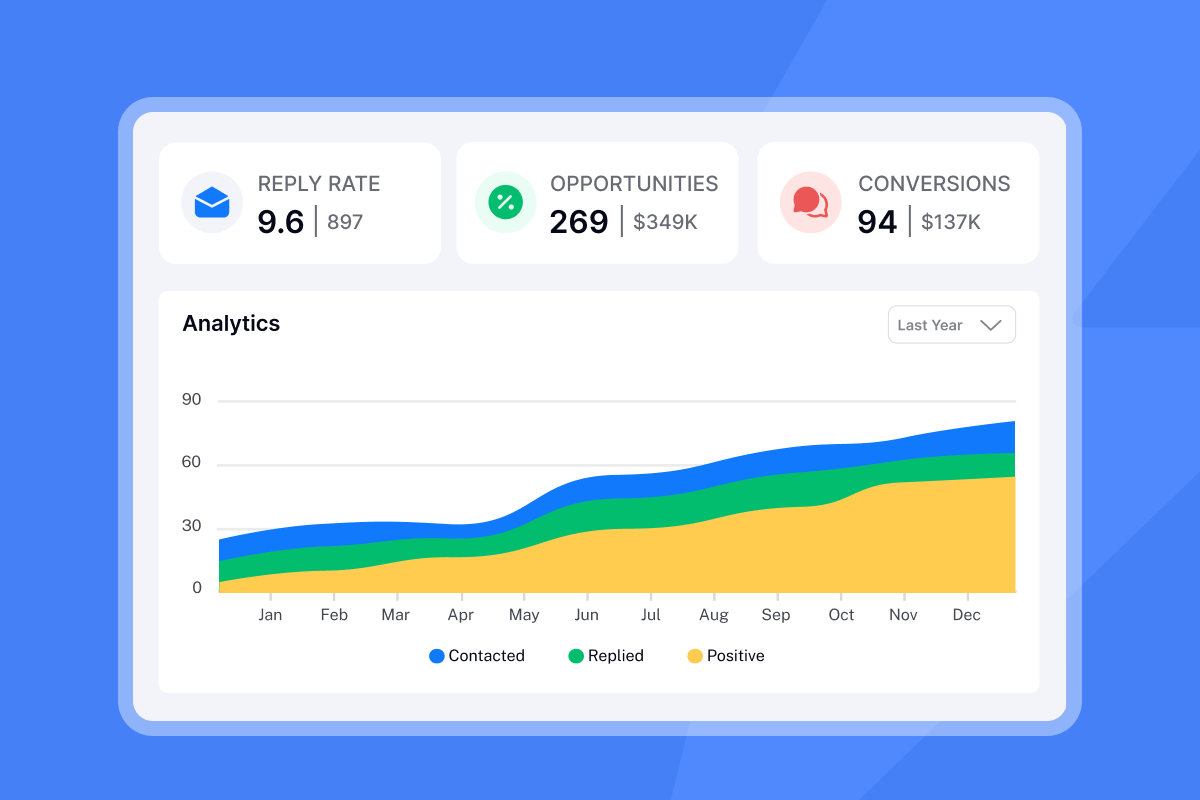
How to end an email professionally
To end an email professionally, close with one clear sentence that says what happens next, add a sign-off that matches the relationship, and keep your signature to a name, title, and one contact method. The closing is three parts working together: the final line (your call to action), the sign-off phrase, and the signature block.
The right closing changes with the context. A cold prospect needs a low-friction ask and a gratitude-based sign-off, which research ties to the highest reply rates. A colleague or warm lead needs a concrete next step under a neutral "Best regards." A C-suite or legal contact expects a formal "Sincerely" or "Respectfully." Getting the pairing right is most of what professional means here, and it pairs with a strong opener, so set the tone from the first line with these email greetings and the wider rules in this guide to email etiquette.
Use this table to pick the closing and sign-off by email type:
| Email type | Go-to closing line | Sign-off | Watch-out |
|---|---|---|---|
| Cold outreach | A specific, low-friction ask ("Worth a 15-minute chat next week?") | Thanks in advance | Skip generic "Best," research shows it underperforms in cold email |
| Professional or warm | "Looking forward to your feedback" | Best regards or Kind regards | Keep the ask concrete or it reads as filler |
| Formal (C-suite, legal) | "Appreciate your consideration" | Sincerely or Respectfully | Match British vs American convention (Yours faithfully vs Sincerely) |
| Casual or internal | "Talk soon" | Cheers or All the best | Too casual can undercut a real request |
| Following up | A one-line nudge tied to the next step | Thanks again | Do not restack the whole pitch |
50 email closing lines by category
Use the templates below as starting points. Copy them into your sequences, then test variations using Instantly's A/Z testing feature to identify which language drives the highest reply rates for your specific audience segments.
Cold email closings (direct & interest-based)
Cold outreach requires low-friction CTAs that feel like the start of a conversation, not a hard close. Interest-based CTAs have a 30% success rate, double that of aggressive closing lines.
| Closing Line | Best For |
|---|---|
| "Worth a 15-minute chat next week?" | Direct meeting request with specific time commitment |
| "Open to exploring this further?" | Interest-based CTA that feels low-pressure |
| "Curious to hear your thoughts on this?" | Invites dialogue without demanding commitment |
| "Interested in seeing how this could work for [Company]?" | Personalizes the ask to their specific situation |
| "Should we set up a brief call to discuss?" | Collaborative framing that positions you as partner |
| "Would love to show you how we helped [similar company]" | Social proof embedded in the CTA |
| "Can I share a quick case study that's relevant?" | Value-first ask that gives before requesting |
| "Is this something on your radar?" | Permission-based approach that respects their priorities |
| "Does this align with your current priorities?" | Acknowledges their constraints while inviting feedback |
| "Mind if I send over a few more details?" | Ultra-low friction next step |
| "If this resonates, let's schedule 10 minutes" | Conditional ask that respects their interest level |
| "Open to a conversation about this?" | Simple, direct, conversational |
Watch the video on cold email strategy for a deep dive on pairing these closings with high-performing openers and body copy.
Professional & business closings
Use these for colleagues, warm leads, or ongoing vendor relationships where you've moved past the cold stage but still need a professional tone. These work well when you need feedback, input, or collaboration rather than a hard conversion.
| Closing Line | Best For |
|---|---|
| "Looking forward to your feedback" | When you've shared a proposal and need input |
| "Let me know your thoughts when you get a chance" | Low-pressure request for opinion |
| "Please advise on next steps" | Collaborative decision-making |
| "I'd value your perspective on this" | Positioning recipient as expert |
| "Happy to discuss further if helpful" | Leaving door open without pressure |
| "Let's connect early next week" | Scheduling continuity with warm contact |
| "I'll follow up on Thursday with an update" | Setting expectation for next touchpoint |
| "Looking forward to our next steps" | Ongoing project momentum |
| "Feel free to reach out with questions" | Making yourself available |
| "Let me know if you need anything else" | Support/service provider context |
| "Looking forward to hearing from you" | General professional continuity |
| "Appreciate your input on this" | Combines gratitude with collaboration |
The cold email copywriting framework in our help center explains how to match closing tone to the relationship stage and email goal.
Formal email closings
When reaching out to C-suite executives in conservative industries, legal teams, or enterprise procurement, formality signals respect for hierarchy and protocol.
| Closing Line | Usage Context |
|---|---|
| "Sincerely" or "Sincerely yours" | American standard for all business letters |
| "Yours sincerely" | British usage when you know recipient's name (e.g., "Dear Mr. Smith") |
| "Yours faithfully" | British usage when addressing by title only (e.g., "Dear Sir/Madam") |
| "Respectfully" | Government, military, or senior executive communication |
| "Best regards" | Less formal but still professional |
| "Kind regards" | Slightly warmer while maintaining formality |
| "Cordially" | Traditional but increasingly rare |
| "With appreciation" | Combines formality with gratitude |
According to formal business writing conventions, the distinction between "Yours sincerely" and "Yours faithfully" follows traditional British conventions, while American usage has simplified to "Sincerely" for most contexts.
Casual & friendly closings
Startups, internal teams, and long-term clients often prefer conversational tone over formality. These closings work when the relationship is established and you want to maintain warmth without sacrificing professionalism.
| Closing Line | Best For |
|---|---|
| "Cheers" | Startup and tech culture communication |
| "Talk soon" | Implies ongoing relationship and momentum |
| "Best" | Generic but inoffensive, underperforms in Cold Email |
| "Warm regards" | Friendly middle ground between formal and casual |
| "All the best" | Slightly more personal than "Best" |
| "Take care" | Implies relationship beyond transactional |
| "Have a great day/weekend" | Time-sensitive and shows you care about them as a person |
Gratitude & appreciation closings
Expressions of thanks consistently outperform neutral closings. The Boomerang study analyzing 350,000 emails found that some variant of "thanks/thanks in advance" achieved the highest response rate at 65.7%.
| Closing Line | Response Rate / Context |
|---|---|
| "Thanks in advance" or Similar Variant | 65.7% response rate in Boomerang study |
| "Thank you for your time" | Acknowledges recipient's investment |
| "Appreciate your consideration" | Formal gratitude for decision-making contexts |
| "Thanks for reading" | Casual acknowledgment for longer emails |
| "Grateful for your response" | Slightly more formal than "thanks" |
| "Thank you" | Simple and direct |
| "Many thanks" | British English variation, slightly warmer |
Indirect closing lines (Permission-based)
These closings lower resistance by acknowledging the recipient's right to say no or redirect you. They work well in highly targeted outreach where you need to build trust before making a hard ask.
| Closing Line | Best For |
|---|---|
| "Let me know if this isn't a fit" | Removes pressure by acknowledging opt-out |
| "Feel free to share this with the right person" | Invites referral without demanding it |
| "If you're not the right contact, who should I speak with?" | Turns rejection into warm introduction |
| "Happy to circle back if timing improves" | Respects timing constraints |
| "Let me know if I should take you off my list" | Ultimate low-pressure close that often triggers response |
Research on cold email CTAs shows that negative or permission-based CTAs can actually increase response rates by removing pressure and building goodwill.

How to end a cold email: The CTA strategy
The closing is not a single phrase. It's a system with three components working together: the final sentence (your CTA), the sign-off phrase (e.g., "Best regards"), and your signature block. Most people focus only on the sign-off and ignore the CTA entirely.
The difference between a sign-off and a CTA
The sign-off is the polite phrase before your name. The CTA is the specific request that tells the recipient what to do next. According to research on cold email call-to-action effectiveness, the CTA is what drives action, while the sign-off affects tone and perceived professionalism.
Example of CTA + sign-off working together:
Weak version:
"Let me know if you have any questions.
Best regards,
[Name]"
Strong version:
"Should we schedule 15 minutes next Tuesday to walk through how we cut onboarding time by 40% for a similar company?
Thanks in advance,
[Name]"
The second version has a specific ask, includes social proof, and uses a high-performing gratitude-based sign-off.
9 strategies for ending cold emails to get replies
Based on research analyzing thousands of cold email campaigns, here are nine proven CTA strategies:
- The specific ask: "Take our free trial" or "Download the guide." Clear CTAs work when value is already established.
- The interest-based ask: "Are you interested to know more about this?" Interest CTAs have a 30% success rate, double that of aggressive CTAs, because they let the prospect choose.
- The negative/permission CTA: "Let me know if this isn't a fit" or "Should I take you off my list?" Removes pressure and triggers polite responses.
- The referral ask: "If you're not the right person, who would you recommend I speak with?" Even uninterested prospects often give warm introductions.
- The feedback ask: "Open to some feedback on this idea?" Positions you as seeking their expertise rather than selling.
- The value-offer ask: "Can I show you a two-minute video on how we helped a similar company cut churn by 45%?" Leads with proof and keeps commitment low.
- The low-friction ask: "Let's book a quick 10-minute chat" or "Claim your free demo." Makes saying yes feel easy and low-risk.
- The question-based ask: CTAs phrased as questions rather than statements get double reply rates in cold emails.
- The collaboration/partnership ask: "I'd love to exchange ideas on [topic]." Positions you as a peer seeking mutual value rather than a vendor.
Use our 600+ email templates as a starting point, then customize the closing lines based on your specific offer and audience.
! What usually goes wrong here
- Strong closing line, still no reply. If it is not reaching the inbox, no line will save it. Warm the domain. Email warmup ›
- Replies go cold before you answer. Have an agent reply in minutes, day or night. AI Reply Agent ›
- Follow-ups never get sent. Automate the sequence so no reply slips. AI Sales Agent ›
Common mistakes: Closing lines that trigger spam filters
Your closing line can hurt deliverability if it contains spam trigger phrases or formatting that raises red flags with email service providers. According to research on spam filter triggers, aggressive language in any part of the email increases the likelihood of landing in spam.
Phrases to avoid in closings:
- "Buy now!" or "Act now!" with excessive punctuation
- "100% free" or "Make money fast"
- "Guaranteed success" or similar absolute claims
- Using All Caps or multiple exclamation marks obsessively
Formatting issues that trigger filters:
Avoid image-heavy signatures with multiple logos, too many links in the footer, or mismatched HTML that raises red flags with filters. According to deliverability best practices, simpler emails that look like they came from a colleague consistently outperform heavily designed templates.
Instantly's Spam Word Checker analyzes your email content before sending to flag potential deliverability issues. The platform's automated Inbox Placement tests show exactly where your emails are landing across different providers. For the complete infrastructure checklist on authentication, warmup, and inbox placement monitoring that works alongside clean email formatting, see this email deliverability guide.
How to A/B test your sign-offs using Instantly
Stop guessing which closing line works. Test it. Here's the precise process for validating closing line performance using our A/Z testing feature:
Before you start, it helps to know which of the three ways to land on a closing line fits your situation:
| Approach | Best for | Effort | Honest limitation |
|---|---|---|---|
| Copy a proven template (this guide) | One-off and low-volume emails | Low | You are still guessing what works for your specific audience |
| A/B test variants with Instantly A/Z testing | High-volume outreach that needs real data | Medium | Needs about 500 sends per variant before results are reliable |
| Generate per-persona with the Instantly AI Sequence Writer | Multi-persona campaigns at scale | Low once set up | Output still needs a human review, and it is overkill for a single email |
Step 1: Create your campaign and add variants
Navigate to your campaign in Instantly and click "Add variant" in the sequence editor. Create at least two versions (Variant A and Variant B). Keep everything identical except the closing line you want to test.
Step 2: Configure your variants
Use the toggle to enable both variants (blue = enabled, grey = paused). For your first test, try a gratitude-based closing (e.g., "Thanks in advance") against your current default (e.g., "Best regards").
Step 3: Enable auto-optimization
Go to Campaign Options → Advanced Options → Auto optimize A/Z testing. Select reply rate as your winning metric. The algorithm will automatically identify the best-performing variant and deactivate underperformers, ensuring your emails have the highest likelihood of achieving campaign goals.
Step 4: Run to statistical significance
Send at least 500 emails per variant before drawing conclusions. Check the Analytics tab to view performance of each variant. Select a longer time range (Last 4 weeks) to see complete results. For a complete framework on interpreting reply rate trends, step-level performance, and conversion attribution across your campaigns, see this email metrics tracking guide.
Step 5: Scale the winner
Once you identify the winning closing line, apply it across all sequences targeting similar personas. Then test a new variant against the winner to continue optimizing.
"I like that instantly can handle large scale email campaigns without worrying about deliverability... The most helpful part is the detailed reporting. It shows clear data like open rates, replies, and bounce rates, which I can easily use for analysis." - Anjali T. on G2
Watch Instantly's tutorial on boosting reply rates for a full walkthrough of the testing interface.
Using AI to generate context-aware closing lines
Manual testing is powerful but time-consuming when you're running multiple campaigns across different personas and industries. Our AI Sequence Writer generates complete email sequences based on your offer details and target audience.
How to use the AI Sequence Writer for closings:
Navigate to the Sequences tab and click "AI Sequence Writer." Provide details about your company, offer, target audience, and 1-2 case studies showing impressive results. Specify how many steps you want in the sequence. The AI generates a complete campaign with context-aware email copy tailored to each step of the sequence.
AI Reply Agent for closing triage:
The AI Reply Agent handles incoming responses within 5 minutes, analyzing sentiment and suggesting or automatically sending contextually appropriate replies. The AI Reply Agent reads every response and takes action based on your rules, working alongside Unibox NLP to classify intent and Out-of-Office Resume to detect and handle out-of-office replies.
"I am impressed by Instantly's AI features and super search functionality, which significantly enhance our lead management efficiency. The user-friendly UX/UI makes it accessible for average users, and the AI-driven campaign setup and lead reply suggestions provide remarkable results." - Sanket A. on G2
The AI Reply Agent can be configured in Human-in-the-Loop mode (team approval via Slack before sending) or Autopilot mode (instant AI responses to common scenarios). For teams sending high volumes, this removes the bottleneck of manually triaging every response while maintaining quality and context.
Check out our video on AI agents that changed cold email to see these features in action.
Scale your testing with unlimited sending accounts
The real power of A/B testing closing lines comes from volume. You need sufficient data to reach statistical significance.
"I use Instantly for outreach via email, and it has saved me a lot of time by automating my lengthy email sending processes. My favorite part is that the interface is really simple and user-friendly, which makes it easy to handle the many variables in my emails and to create and follow a lot of campaigns." - Levent Y. on G2
Instantly includes unlimited email accounts and warmup on all Outreach plans, letting you scale sending volume without per-seat penalties. The platform's 4.2M+ account deliverability network and SISR (Server & IP Sharding & Rotation) on Light Speed plans ensure your tests actually reach the inbox.
For teams running multiple campaigns across different segments, watch our guide to setting up your cold email system for a complete walkthrough of campaign architecture and testing strategy.
The closing line that works is the one you test
The best closing line is not in this list. It's the variant you discover when you test these templates against your specific audience, offer, and relationship stage. Start with the gratitude-based closings that research shows achieve 62%+ response rates, then use A/B testing to validate what moves your metrics.
Ready to find out which closing line actually books meetings for your campaigns? Start your free trial with Instantly and use A/Z testing to validate these templates at scale. The difference between a 3% reply rate and a 6% reply rate is often a single line at the bottom of your email.
Frequently asked questions about email closing lines
Is "Best regards" rude or unprofessional?
No, "Best regards" is perfectly professional and safe for routine business communication. However, research shows it underperforms compared to gratitude-based closings in cold outreach. The main weakness is that it's generic and passive, it doesn't drive action compared to a goal-oriented closing line.
How do you politely close an email?
Thank the reader, state the next step in one line, then add a warm sign-off. For example: "Thanks for your time, I'll follow up Thursday with the figures. Best regards." The thank-you softens the ask, the next step gives the reader something concrete to act on, and the sign-off matches the relationship.
What is a good professional email sign-off?
"Best regards" and "Kind regards" are the safest professional sign-offs for most business email. Use "Sincerely" or "Respectfully" for formal or senior contacts, and "Thanks in advance" when you are making a request, since gratitude-based closings earn the highest reply rates in outreach.
What is a good ending sentence for an email?
A good ending sentence states one specific next step the reader can take, such as "Worth a 15-minute call next Tuesday to walk through the numbers?" Tie it to a clear benefit and keep it to a single, low-friction ask rather than a vague "let me know."
Should I include my phone number in the email signature for cold outreach?
For cold email campaigns, keep signatures minimal with just your name and title. The primary goal of cold email is usually to get an email reply or a booked meeting. For ongoing business relationships and professional correspondence, including a phone number is standard practice.
What is the best closing line for emailing a CEO?
Keep it concise, value-driven, and respectful of their time. "Worth a 10-minute conversation about [specific outcome]?" works better than lengthy explanations. Match formality to industry (more formal for finance/legal, less for tech/startups).
How many closing line variants should I test at once?
Start with two variants (A/B test) to reach statistical significance faster. Once you identify a winner, test a new variant against it. Testing too many variants simultaneously dilutes your sample size and delays insights.
Do emojis in closing lines hurt deliverability?
Used sparingly, emojis don't trigger spam filters. However, excessive punctuation marks definitely trigger filters. Use emojis strategically in place of all-caps or multiple exclamation points, not in addition to them.
Key terms glossary
CTA (Call to Action): The specific request made at the end of an email that tells the recipient what action to take next, such as scheduling a meeting or replying with feedback.
Sign-off: The polite closing phrase that precedes your name in an email (e.g., "Best regards," "Sincerely," "Thanks in advance").
A/Z testing: A method of comparing multiple email variants, up to 26 per step, by sending them to similar audience segments and measuring which performs best on metrics like reply rate or click rate. Growth includes A/Z testing, and the full 26-variant capacity requires Hypergrowth and above.
Reply rate: The percentage of sent emails that receive a response from the recipient, a key metric for measuring cold email campaign effectiveness.
Spin syntax: A technique for creating multiple variations of email copy by inserting alternative words or phrases that are randomly selected when the email is sent, helping to avoid spam filters and improve personalization.
Send windows: The specific time ranges during which emails are sent to increase open and reply rates, typically aligned with recipient time zones and business hours (e.g., 8:30-10:30 a.m. local time).
Interest CTA: A call-to-action phrased around the recipient's interest level rather than a hard request, such as "Interested in learning more?" instead of "Schedule a demo now."
Deliverability: The ability of your email to reach the recipient's primary inbox rather than landing in spam, promotions, or being blocked entirely by email service providers.

Further Reading
- How to Improve Your Cold Email Response Rate – Learn how to write and optimize cold emails that give prospects more reason to respond.
- How to Follow Up on Sales Leads – Learn how to write effective follow-ups and continue conversations after your initial email.
- How to Automate Prospect Research With AI – See how AI can research prospects and provide context for more personalized sales emails.
- AI Sales Agent Software – Explore how AI sales agents can research prospects, personalize messages and support outbound email campaigns.
- AI Reply Agent – See how an AI agent can analyze incoming email replies and help manage prospect conversations at scale.
Choose your next step


