.svg)
%20(1).svg)


Updated October 10, 2026
TL;DR: AI prompts for sales rep onboarding work best as a governed system, not a collection of one-off shortcuts. Build a prompt library organized by onboarding phase (product knowledge, discovery, objection handling, outreach), map each prompt to a 30-60-90 day milestone, and require manager approval before any AI-generated copy reaches a live prospect. Pair that library with a platform that enforces deliverability and brand standards at the sending layer so new reps reach quota faster without your domain reputation paying the price. Instantly.ai's 2026 Cold Email Benchmark Report puts the platform average reply rate at 3.43%, with top-quartile senders at 5.5% or above. Consistent, standardized execution is what moves a cohort from average to top quartile.
Your best rep's onboarding playbook lives in their head. Every discovery question, pricing objection response, and sequence structure they rely on took months to develop. AI prompts turn that tacit knowledge into a repeatable system every new hire can practice against before they touch a live prospect.
Most AI prompt content is a listicle for individual reps. This guide takes the manager's view: how to build, govern, and audit a prompt library that standardizes AI prompts for sales rep onboarding across cohorts without creating a deliverability liability or a brand risk.
Driving faster sales ramp with AI prompting
Ramp time is the metric every sales leader watches each quarter. Here is how structured AI prompts shorten it without sacrificing quality, deliverability, or brand control.
Reducing ramp time with AI prompts
The Bridge Group's 2024 SDR Metrics Report places the average SDR ramp at 3.2 months. For AEs, and enterprise reps in particular, reaching full quota takes considerably longer, and ramp times across SaaS have been trending upward in recent years rather than shrinking.
New reps hit their numbers faster when they practice more, not when they memorize more. AI prompts deliver unlimited low-stakes repetitions before the first live call. That is the mechanism behind faster sales rep ramp prompts that produce pipeline: not shortcuts, but compressing the time between "knows the ICP" and "can handle a real objection without coaching."
Prompt libraries vs. ad-hoc prompting
An ad-hoc prompt is what a rep types into ChatGPT when they are stuck. A prompt library is a curated, versioned set of prompts your team has tested, approved, and mapped to specific onboarding moments. Research on prompt engineering confirms that poorly structured prompts produce vague or irrelevant output, while structured prompts with a clear role, context, and output requirements produce usable, consistent results. The Palantir AIP best practices guide puts it directly: the quality of a prompt directly influences the relevance, accuracy, and coherence of the model's responses.
| Approach | Quality control | Brand safety | Governance |
|---|---|---|---|
| Ad-hoc prompting | Rep-dependent | Not enforced | No audit trail |
| Prompt library | Reviewed and approved by managers | Defined constraints | Version tracking |
This is exactly how to use AI prompts to onboard sales reps faster without sacrificing quality: better prompts carry your ICP, your offer, and your voice as explicit constraints, rather than leaving the model to guess.
Four essential prompt types for sales enablement
Each prompt type maps to a specific onboarding job, from generating outreach copy to drilling skills and scoring calls. All five prompts below are copy-pasteable and manager-reviewable.
AI-driven messaging frameworks
These prompts generate the raw material for email templates, subject line variants, and multi-step sequence structures. The AI Sequence Writer in Instantly generates a full multi-step sequence from your offer and audience inputs, capped at 100 sequence generations per workspace per month. The AI Spam Words Checker reviews copy before any campaign launches using contextual AI analysis rather than keyword lists.
Instantly's AI Prompts and Enrichment features cover email copywriting, research and analysis, data operations, and outreach templates, giving reps a structured starting point rather than a blank page.
Copy-pasteable prompt 1 (sequence generation):
You are a senior SDR writing a 4-step cold email sequence.
Buyer persona: [VP of Sales at a 50-150 person B2B SaaS company].
Their pain point: [new rep ramp time exceeds 4 months, costing pipeline].
Our offer: [state your product name and the single outcome it delivers for this buyer persona].
Constraints: Each email must be under 80 words. No jargon. Use plain business English.
Step 1: First touch, direct problem statement, one CTA (15-minute call).
Steps 2-4: Follow-ups that add new proof or a new angle, not repetitions of step 1.
Format: Email number, subject line, body.
Prompt sequences for skill mastery
Role-play and drill prompts give reps a safe place to practice objection handling and discovery before they face a real buyer. Research on what makes AI role-play effective is consistent: give the model a specific buyer personality, a concrete objection, and an instruction to resist unless the rep earns it. The most realistic simulations come from prompts that define five elements up front: persona, context, scenario, behavior, and structure. The value is in repetition. Practiced reps turn the objection they used to dread into one they handle on the first live call.
Copy-pasteable prompt 2 (objection handling drill):
You are a skeptical VP of Sales at a 100-person B2B SaaS company.
You are in a 15-minute discovery call with a new SDR.
When they pitch, respond with: "We already use [competitor]. Why would we switch?"
Push back hard on every response. Do not agree unless the rep demonstrates a specific, concrete advantage.
After 5 exchanges, score their performance on objection handling, tone, and specificity (each 1-5).
Quote their best line and their weakest line. Rewrite the weakest line the way a top performer would.
Automating onboarding task lists
Rather than building a 30-60-90 day plan manually for each cohort, a well-structured prompt generates a draft in minutes that your team reviews and approves. The first 30 days focus on foundational knowledge acquisition, days 31-60 shift to practical application through shadowing and prospect outreach, and days 61-90 prepare reps for independent selling with minimal oversight.
Copy-pasteable prompt 3 (30-60-90 checklist draft):
You are a sales enablement manager at a B2B SaaS company.
Our new SDRs have a 3.2-month average ramp time.
Generate a 30-60-90 day onboarding checklist for an SDR.
For each phase, list: the core competency milestone, the AI prompt or practice drill
they should complete, and the manager checkpoint.
Format as a table with columns: Phase | Milestone | AI practice task | Manager checkpoint.
Measuring rep growth with AI prompts
Coaching prompts generate quiz questions, call-scoring rubrics, and progress checks tied to specific milestones, closing the loop between practice and performance tracking.
Copy-pasteable prompt 4 (call scoring rubric):
You are a sales coach scoring a recorded discovery call.
Score the rep on: discovery depth (1-5), objection handling (1-5), next-step clarity (1-5).
Quote the single best moment in the call and the single weakest moment.
Rewrite the weakest moment the way a top performer would handle it.
Summarize one habit to fix before the next live call.
Copy-pasteable prompt 5 (quiz generation):
Generate 10 multiple-choice questions to test a new SDR's knowledge of our ICP.
ICP: [describe your ICP here].
Questions should cover: pain points, buying triggers, objections, and decision-making process.
Difficulty: Moderate. Include one answer key with brief explanations for each correct answer.

How to build your AI prompt library
Building the library takes three decisions: which milestones each prompt serves, what structure every prompt follows, and where the versioned record lives. Here is each step.
Aligning prompts with ramp milestones
Map each prompt to the onboarding phase where it delivers the most practice value. Structured 30-60-90 frameworks produce 30 to 40% faster productivity versus programs without them. Use the table below as the starting scaffold for your AI prompts for sales onboarding program, then adjust milestones to match your product complexity and average deal cycle.
| Phase | Milestone | AI prompt to use | Expected outcome |
|---|---|---|---|
| Day 1-7 | Onboarding plan and phase structure | Prompt 3 (checklist generator) | Manager has a reviewed 30-60-90 checklist with phase milestones, AI practice tasks, and checkpoints ready before the rep's first live activity |
| Day 15-30 | First outreach draft | Prompt 1 (sequence generation) | Manager-reviewed 4-step sequence ready |
| Day 15-30 | Discovery call practice | Prompt 2 (role-play drill) | Rep handles five common objections without coaching |
| Day 31-45 | ICP knowledge validation | Prompt 5 (ICP quiz) | Rep demonstrates ICP knowledge |
| Day 46-60 | First live calls | Prompt 4 (call scoring) | Manager reviews scored call recordings |
| Day 61-90 | Independent selling | Prompt 2 (advanced role-play) | Rep runs discovery independently |
Reusable logic for sales AI prompts
Every prompt in your library should follow the same four-element structure. Separating context from task makes prompts more reliable and easier for managers to review and version.
- Role: Tell the model who it is ("You are a skeptical VP of Sales...")
- Scenario: Define the specific situation ("You are in a 15-minute discovery call...")
- Constraints: Set the guardrails ("Under 80 words, no jargon...")
- Output format: Define exactly what you want back ("Format as a table with columns...")
The quality of a prompt directly influences the relevance, accuracy, and coherence of the model's responses. Managers who review and refine prompts before publishing them to the library see far fewer off-brand outputs from reps. The Palantir AIP prompt guidance confirms this as a consistent principle across LLM use cases: prompt engineering is a dynamic and iterative process that combines clarity, specificity, and contextual relevance.
Audit trails and hosting for prompt libraries
Every prompt should carry a version number, the date it was last approved, and the name of the approving manager. Track changes in a shared changelog: prompt name, version, change made, approver, date. This gives you a defensible record when a CFO or compliance review asks how AI-generated content was governed.
Host your library where reps already work: Notion, a shared Google Doc, your CRM's content library, or a dedicated sales enablement tool. The key requirement is edit-permission control. Reps read and use prompts. Only managers and RevOps edit or publish new ones. As the CheckFlow onboarding guide notes, RevOps or Sales Operations should own the tool-access checklist. Sales systems require sales-context knowledge to configure correctly, and a misconfigured CRM role on Day 1 contaminates pipeline data before the rep has logged a single call.
Deploying AI sales prompts during onboarding phases
Deployment follows the same 30-60-90 arc as the library itself. The first month is practice-heavy, and the final 60 days shift toward governed live sending.
Week 1 through Day 30
The first week focuses on ICP definition, product positioning, and initial outreach drafts. Use Prompt 3 to generate the 30-60-90 day checklist for the cohort, and Prompt 1 to produce a first-draft sequence the rep reviews and edits before the approval workflow. Instantly's library of 600 cold email templates gives reps ready-made starting points they can adapt while they build their own sequence from the prompt output.
A pricing objection in a first discovery call needs completely different handling than the same objection raised by a CFO three weeks into procurement. Build scenario-specific variants for each major objection type (pricing, timing, competitor, and authority), and run each through the same approval process before it enters the library.
Day 31 through Day 90
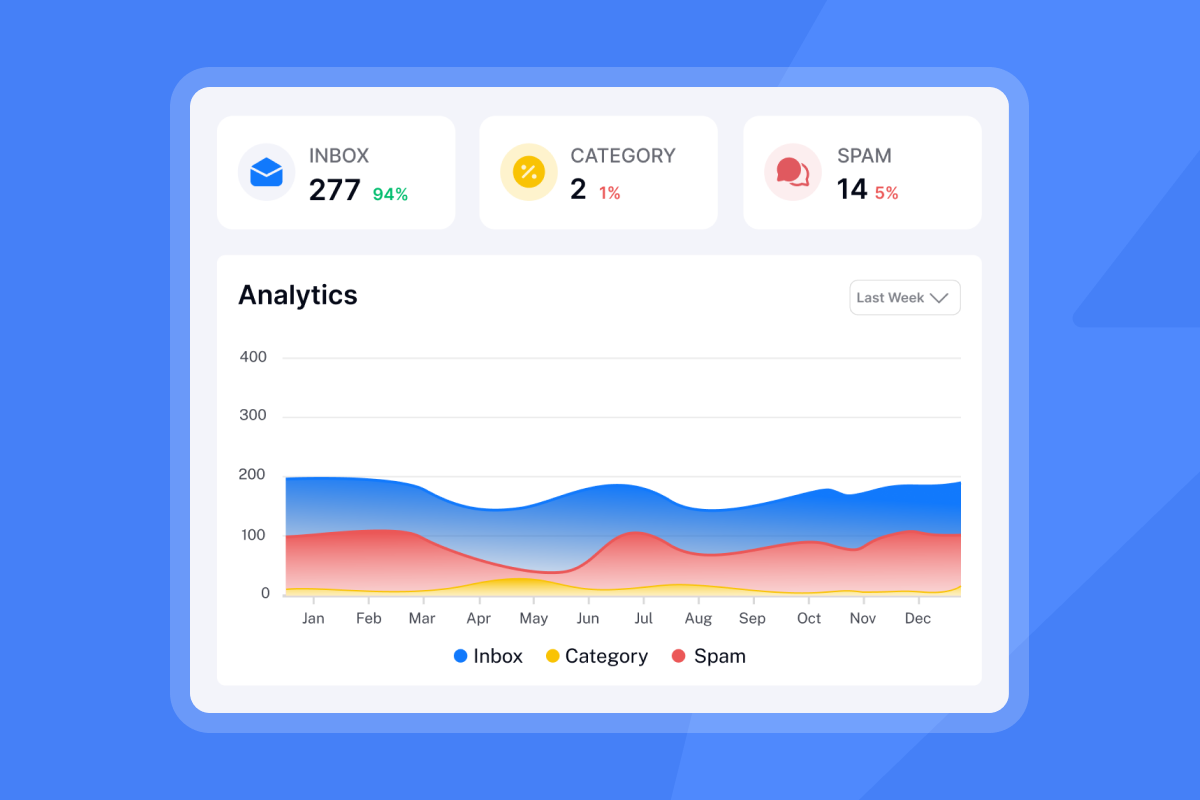
After the prompt library produces a reviewed and approved sequence, reps send it through Instantly with Inbox Rotation active across all assigned accounts. Instantly's pre-launch campaign checklist walks reps through every technical requirement before the first send, helping reps avoid common deliverability mistakes.
For reps using the AI Reply Agent, set the agent to Human-in-the-Loop mode so every AI-drafted reply requires manager review before it sends. Instantly's AI Reply Agent Slack integration sends real-time alerts with AI-generated response previews directly to Slack, so managers can approve or edit without leaving their existing workflow. Note that the AI Reply Agent runs on Instantly Credits, a separate subscription from your Outreach plan, at 5 credits per reply. A free trial with 100 credits is available, but factor the per-reply credit cost into your team's budget before rolling it out across a full cohort.
Mitigating risk in AI-generated outreach
No prompt enters the library without manager sign-off. No AI-generated sequence goes live without passing the AI Spam Words Checker and a manual review of the first email. These are the onboarding standards you enforce the same way you enforce CRM data entry requirements.
Spam filters are generally understood to evaluate AI-generated content not by its origin but by behavioral and linguistic patterns common in spam: over-optimized keywords, repetitive structure, and unnatural tone variation. Google requires senders to keep spam complaints below 0.3% (3 per 1,000 emails) or risk deliverability and sender-reputation damage. New reps running ungoverned AI output at volume can hit that threshold faster than a manager notices, and reputation damage at that point can take months to recover.
Flag these reply categories as manager-only in your governance policy, regardless of the rep's experience level:
- Legal or compliance questions from the prospect
- Pricing negotiations with a specific discount request
- Enterprise deals in active procurement with multiple stakeholders
- Any reply that mentions a competitor by name in a critical context
BounceShield runs automatically to skip known high-risk recipients, and the high-bounce auto-pause feature stops a campaign once bounce rate exceeds 5% (the default, configurable threshold) after a minimum 200 sends, preventing the reputation damage that sidelines a new rep's pipeline for weeks. The Deliverability AI Agent, available on Hypergrowth ($97/mo) and above, monitors DNS health, blocklists, warmup scores, bounce rates, and reputation complaints every 24 hours, surfacing what needs attention before it becomes a campaign crisis.
How to audit AI-accelerated onboarding
Track four metrics for every cohort:
- Days to first qualified call. Log the date a rep completes the core role-play and call-scoring prompts, and the date they book their first qualified call. Compare across cohorts to identify whether the prompt library is compressing that gap over successive hiring classes.
- Quota attainment at Day 60 and Day 90. Compare cohorts onboarded with the AI prompt library against those without. Quota attainment, time to first deal, and CRM adoption are the core KPIs that tell you whether onboarding investment is translating to pipeline.
- Reply rate on first sequences. Instantly's 2026 benchmark report puts the platform average at 3.43%, with top-quartile senders at 5.5% or higher. Consistent, stable sending patterns produce 15 to 20% higher replies than irregular ones. A cohort running governed, prompt-library sequences should trend toward the top quartile faster than one running ad-hoc copy.
- Manager review time per cohort. Track the hours your team spends building sequences, objection matrices, and 30-60-90 plans for each new hire class. Compare that against time spent reviewing and approving AI-generated drafts. The delta is your administrative return on investment.
"The UI is intuitive, the deliverability tools actually work, and their customer support is responsive when we've had questions. We're able to scale our outreach without sacrificing personalization or risking our sender reputation." - Natalie on Trustpilot
Ebsta's 2025 GTM Digest, cited by D2L in their structured sales onboarding research, found that top GTM teams close deals 3x faster. That gap is built in the practice and mentorship phase, where reps accumulate the repetitions and feedback that compress time-to-close. AI prompts are the mechanism that makes practice scalable across a cohort without requiring a manager to run every rep through the same scenario one at a time.
For a walkthrough of setting up an AI agent that handles outbound sequences while new reps build their skills, watch Instantly's AI Sales Agent setup webinar.
Try Instantly free and use the AI Reply Agent in Human-in-the-Loop mode to handle prospect responses while your new reps practice against the prompt library in this guide. Your 14-day free trial includes access to AI Sequence Writer, AI Spam Words Checker, and the core outreach platform. No credit card required.
FAQs: AI prompts for sales rep onboarding
How do you prevent reps from going off-script with AI prompts?
Publish a manager-approved prompt library in a read-only format for reps, require all AI-generated copy to pass the AI Spam Words Checker before use, and set the AI Reply Agent to Human-in-the-Loop mode so every prospect reply gets a manager review before it sends. Version-control the library so any unauthorized edits appear in the changelog.
Can AI prompts replace live coaching sessions?
No, but they reduce how many live sessions you need to deliver the same practice volume. Role-play and drill prompts handle repetition and scenario variety, while live coaching handles nuance, tone calibration, and the feedback loops that AI scoring cannot fully replicate. Manager coaching time shifts from delivering basic drills to reviewing scored AI sessions and addressing specific skill gaps.
What is the best way to roll out prompts across multiple cohorts?
Start with one cohort, approve a core set of five to ten prompts covering the phases in the 30-60-90 checklist above, measure time to first call and Day 60 quota attainment, then expand to the full onboarding program. Keep the prompt library centrally owned by RevOps and use a shared changelog to track what changes between cohorts.
How often should you update your prompt library?
Review the library at the end of every cohort cycle, or quarterly at minimum. Update any prompt that consistently produces off-brand output, reflects outdated ICP data, or fails the AI Spam Words Checker at a higher-than-expected rate, treating each update the same as a sequence template change: changelog entry, manager approval, version increment.
Do AI-generated materials work for enterprise sales cycles?
Yes, with stricter governance. Enterprise scenarios require context-specific prompts that reflect multi-stakeholder dynamics and procurement timelines, not generic role-play setups. Flag pricing negotiations, legal questions, and active procurement conversations as manager-only, and keep the AI Reply Agent in Human-in-the-Loop mode for all enterprise reply handling.
Key terms glossary
Ramp time: The period from a rep's start date to the point where they hit their expected productivity level consistently. The Bridge Group's 2024 SDR Metrics Report puts the average SDR ramp at 3.2 months. For AEs, and enterprise reps in particular, reaching full quota takes considerably longer.
Prompt library: A curated, versioned set of AI prompts that managers review and approve before publishing, mapped to specific onboarding phases and use cases. Distinct from ad-hoc prompting because it enforces consistency and is subject to governance controls.
Human-in-the-Loop: An AI Reply Agent mode where every AI-generated response requires human approval before it reaches a prospect. The recommended setting for new reps in the first 90 days.
AI Spam Words Checker: An Instantly feature that flags spam-triggering language in email copy using contextual AI analysis, not keyword lists. Part of the pre-send governance layer for all AI-generated outreach.
BounceShield: Instantly's automatic system that skips known high-risk recipients based on real-time and historical bounce data. Enabled by default on all plans to protect sender reputation.
Sequence governance: The set of approval workflows, brand standards, and deliverability checks that control how email sequences are created, reviewed, and launched. The operational layer that prevents rogue AI outreach from damaging domain health.
Unibox NLP: Instantly's reply-classification system that auto-tags incoming replies into interest categories across 50+ languages. Helps managers track how new reps' sequences are performing across the full reply set, not just booked meetings.
Read next
- AI Prompts for Sales Prospecting: 10 Best Prompts to Try: Ten copy-pasteable prompts for finding, qualifying, and engaging prospects at every stage of the pipeline.
- AI sales agent vs AI SDR: what's the difference? (2026 category guide for sales leaders): A clear breakdown of what each tool does, where they overlap, and how to decide which belongs in your stack.
- How to choose AI prospecting tools: a buyer's guide for sales leaders: A structured evaluation framework covering features, pricing, deliverability, and integration fit for B2B sales teams.


