.svg)
%20(1).svg)


Updated September 14, 2026
TL;DR: Scope of autonomy separates AI SDRs from AI sales agents. AI SDRs automate specific top-of-funnel tasks: lead research, email drafting, and sending. AI sales agents orchestrate broader workflows across sourcing, multi-step sequencing, reply handling, and CRM handoff. A hybrid stack can work well: AI SDRs for volume, AI sales agents for end-to-end orchestration, with human-in-the-loop controls on both. Your deliverability infrastructure, not AI sophistication, determines whether either category performs at scale. The label a vendor applies matters less than the governance controls, deliverability system, and pipeline tracking underneath it. Use this guide to apply the right evaluation frame before you shortlist.
The market uses "AI SDR" and "AI sales agent" interchangeably, and every vendor applies a different label: autonomous SDR, AI outbound agent, AI-powered prospecting. That confusion costs you evaluation time and can push you toward the wrong purchase. The AI sales agent vs AI SDR question is the right place to start, because the answer changes which products you shortlist, which infrastructure you need, and which governance controls you should require.
AI SDRs automate specific outbound tasks like lead research, email writing, and sending. AI sales agents orchestrate broader workflows across sourcing, outreach, reply handling, and optimization. This guide defines both categories, maps their capabilities, and gives you a decision framework grounded in deliverability, throughput, and pipeline coverage so you can evaluate tools under the correct label. That is the frame this guide uses throughout: infrastructure and governance over branding.
How AI SDRs automate outbound workflows
AI SDRs are autonomous agents that manage outbound sales processes and integrate with CRM software to prospect leads, respond to inquiries, and nurture contacts through the early funnel stages. Task-specific automation at the top of funnel defines the category. An AI SDR handles pipeline fill, not closing, and routes qualified leads to human reps at the handoff point.
Practical scope for sales teams
For a sales team of 5 to 15 reps, an AI SDR covers the highest-volume, lowest-judgment tasks:
- Lead research: Identifies contacts matching your ICP, scrapes intent signals, and scores fit.
- Email drafting: Generates personalized first-touch emails and follow-ups based on prospect data.
- Send execution: Sends within safe daily limits across the right inboxes and send windows.
- Qualification routing: Tags replies, flags interest, and pushes qualified leads to your CRM for AE pickup.
Instantly's AI Sales Agent can run within this scope in Non-Autopilot mode, where you approve leads and sends in the Live Feed before anything goes out, at 5 Instantly Credits per generated lead. In Autopilot, it covers the full loop described in the next section.
What your ops team needs in place before launch
Running AI SDR outreach at scale requires the same infrastructure discipline as manual outreach, applied across more accounts:
- Domain authentication: Confirm MX, SPF, DKIM, and DMARC records are configured and propagated on all sending domains. Allow up to 48 hours for DNS propagation before any campaign runs.
- Warmup completion: Require new sending accounts to warm for 4 to 6 weeks before campaigns reach full volume, per Instantly's 2026 Cold Email Benchmark Report.
- Send caps: Ensure each inbox is capped at 30 campaign emails per day. Scale volume by adding sending domains rather than pushing individual inboxes past safe limits.
- Bounce monitoring: Confirm bounce rates are kept below 2%. BounceShield automatically skips known high-risk recipients before each send.
Instantly requires a minimum 2-week warmup and a health score above 90% before an account is campaign-ready. Instantly's 2026 benchmark report recommends starting at 5 to 10 emails per day and increasing gradually over 4 to 6 weeks, up to the 30-per-inbox cap. Require this ramp log before any account goes live on a campaign. Instantly's deliverability network of 4.2M+ accounts provides the infrastructure baseline that produces consistent results.
Mapping AI SDRs to sales goals
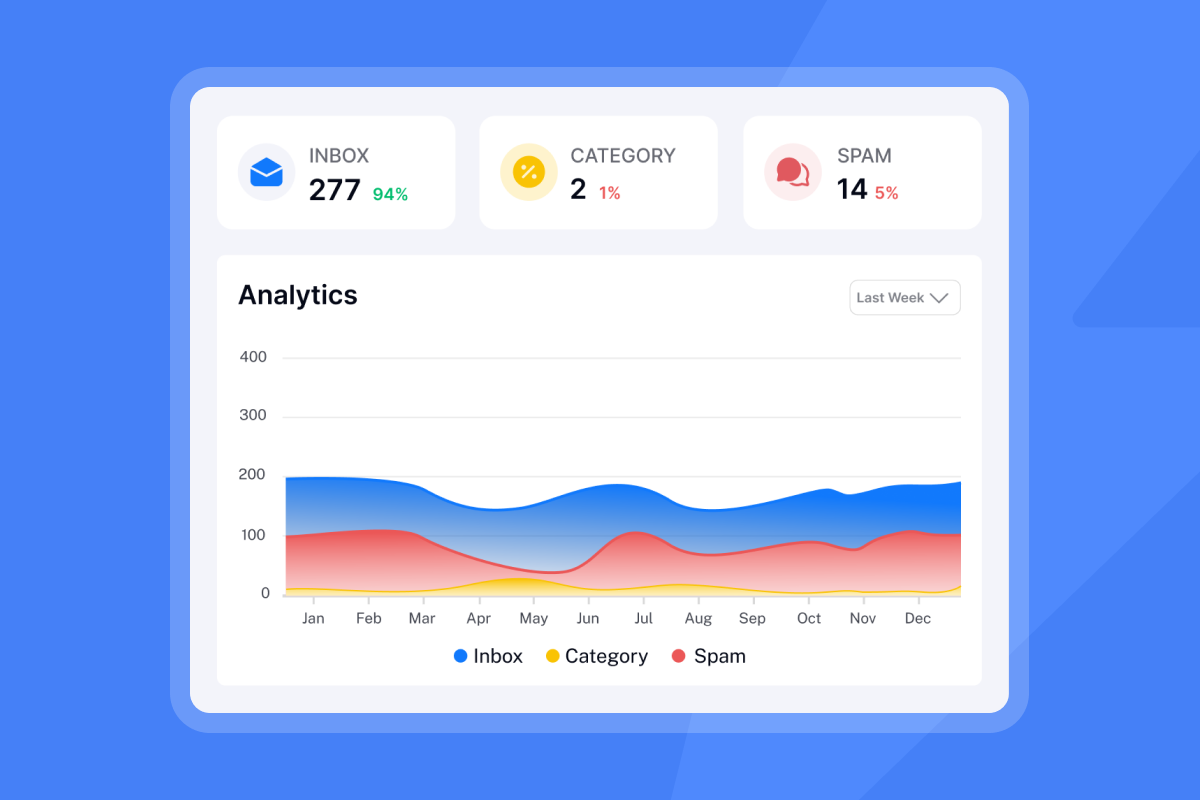
An AI SDR maps directly to two measurable outcomes: meetings set and pipeline coverage. Instantly's 2026 benchmark report shows consistent, stable sending patterns produce 15 to 20% higher replies than erratic schedules, so team-level standardization directly affects your meetings-set numbers.
How intelligent agents automate sales outreach
The difference between an AI SDR and an AI sales agent is not the AI but the scope of the workflow each one governs. An AI sales agent orchestrates a broader loop: it finds leads, writes and sends the sequence, monitors replies, and triggers follow-up actions or escalations without waiting for human input at each step.
Instantly's AI Sales Agent handles autonomous lead sourcing and outbound execution. The AI Reply Agent extends the loop further by handling replies in under 5 minutes, 24/7, at 5 Instantly Credits per reply generated, so leads stay warm while your team focuses on live conversations.
Defining agent tasks and boundaries
An AI sales agent's task boundary is wider than an AI SDR's. Where an AI SDR stops at sending and reply tagging, an AI sales agent can:
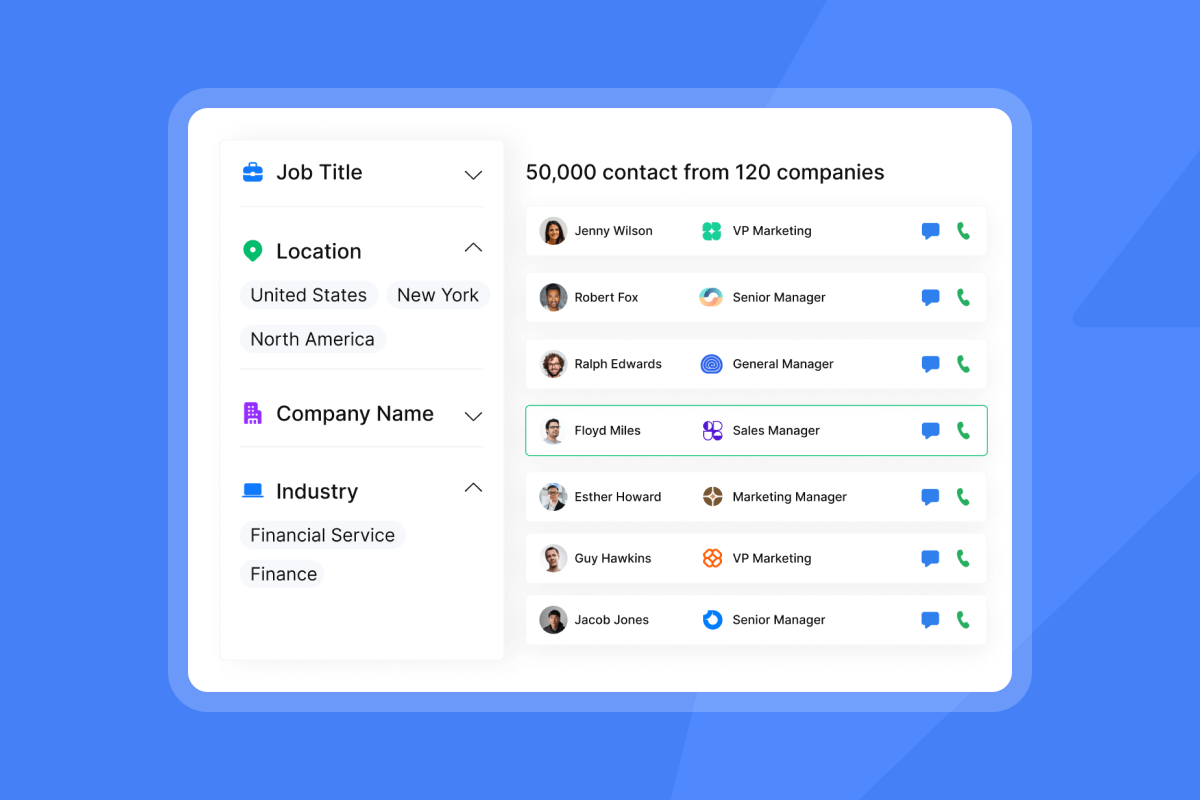
- Source leads matching an ICP from a live database (SuperSearch's 450M+ B2B leads).
- Write and run a full multi-step sequence without per-step human drafting.
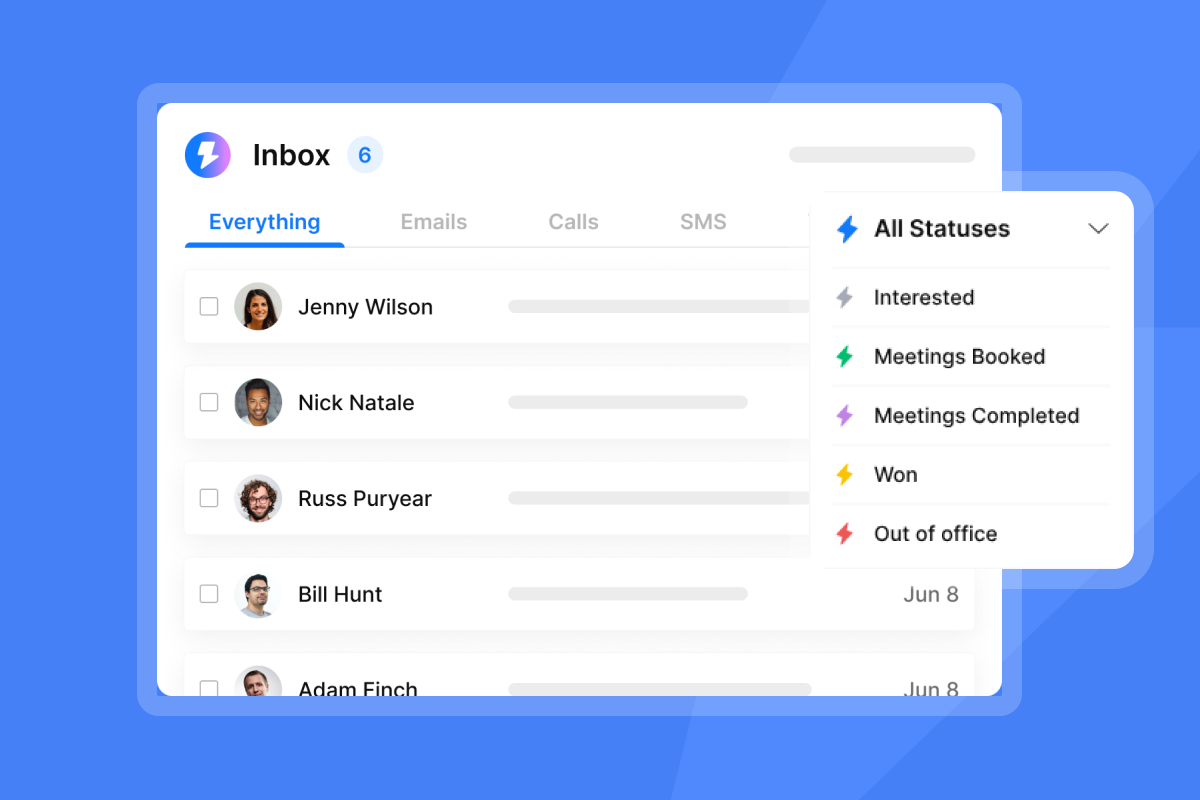
- Classify incoming replies by sentiment and intent using Unibox NLP across 50+ languages.
- Route positive replies to a human rep or trigger meeting booking directly (when Calendly is connected).
- Push activity data into connected tools like HubSpot when a lead status changes, via the Automations builder.
For most B2B sales teams, complex negotiation and closing remain human work. AI sales agents handle pipeline fill and early qualification. The right evaluation frame is simple: can the agent complete a task within a real workflow, using real data, under real governance? If it only works in a controlled demo, it does not belong in your stack.
Managing agent-led email cadences
Agent-led cadences require tighter guardrails because they operate without per-send human review. The high bounce auto-pause feature automatically pauses campaigns when the bounce rate exceeds 5% (default, configurable) after a minimum of 200 sends. AI Blocklist Triggers automatically blocklist leads based on unsubscribe status across all plans, with lead-status and reply-content keyword triggers available on Hypergrowth and above. The AI Reply Agent Slack integration sends real-time alerts with AI-drafted response previews so you can approve or edit before a reply goes out, keeping humans in the loop on sensitive conversations without requiring constant Unibox monitoring.
The Deliverability AI Agent runs every 24 hours on Hypergrowth and above, monitoring DNS health, blocklist status, warmup scores, and bounce rates. It surfaces what is affected, why it matters, and offers one-click fixes, giving you the audit trail that makes AI-driven outreach defensible to a CFO or board review.
Mapping Agents to Your Sales Stack
Before adding AI agents, map each one to a specific gap in your current workflow rather than enabling all four simultaneously. Overlapping agents on the same workflow segment creates duplicate activity logs, conflicting CRM entries, and attribution problems that are difficult to untangle after the fact.
Start with the gap that costs your team the most time. For most 5 to 15 rep sales teams, that gap is reply handling. Reps spend significant time reading, classifying, and drafting replies to cold email responses, most of which are out-of-office messages, unsubscribes, or low-intent replies that do not need a human. The AI Reply Agent handles those classifications using Unibox NLP across 50+ languages, drafts responses, and flags genuinely interested replies for human follow-up.
The second most common gap is lead sourcing. If reps are manually researching contacts in LinkedIn or exporting from third-party databases, the Lead Finder Agent and SuperSearch address that directly. Configure the ICP filters in SuperSearch, set the Lead Finder Agent threshold, and the refill loop runs without manual intervention.
The AI Sales Agent maps to teams that have already validated their outbound motion and want to run more of it without adding headcount. In Non-Autopilot mode it stages everything for Live Feed approval. In Autopilot it runs the full loop, available on the appropriate Outreach plan.
The Deliverability AI Agent runs in the background on Hypergrowth and above, monitoring DNS health, blocklist status, warmup scores, and bounce rates every 24 hours. Map it to your ops team's monitoring workflow rather than to any individual rep's activity. It surfaces issues with one-click fixes so your sending infrastructure stays healthy as agent-led volume increases.
Map each agent to an owner and a workflow step before enabling it. That mapping is what makes AI-driven outreach auditable when you need to explain pipeline attribution to a CFO or board review.

AI SDR vs AI sales agent: key differences
The AI SDR category comparison comes down to one axis: scope of autonomy. The table below maps both categories across the dimensions that matter when you are accountable for pipeline and domain reputation.
| Dimension | AI SDR | AI sales agent |
|---|---|---|
| Scope | Top-of-funnel tasks | Full outbound loop |
| Autonomy level | Task-specific | Workflow-wide |
| Key tasks | Research, email drafting, sending, reply tagging | Lead sourcing, sequencing, reply handling, booking |
| Human intervention | At qualification handoff | On-demand or by exception |
| Best for | Volume scaling with human QA | End-to-end orchestration with minimal manual input |
Understanding the AI SDR vs AI sales agent difference at this level lets you write a sharper vendor brief and run a faster proof of concept. The difference between AI sales agent and AI SDR tools shows up most clearly when you are 60 days into a deployment and need to explain pipeline attribution to your CFO.
Optimizing Lead Volume and Depth
Lead volume and lead depth are two different problems. Volume is the number of contacts entering your sequence. Depth is how well those contacts match your ICP and how much signal you have on each one before outreach begins.
Most teams optimize volume first and pay for it with high bounce rates and low reply rates. The better approach is to set depth criteria first, then let automation handle volume at scale.
SuperSearch covers 450M+ B2B leads with filters for job title, company size, industry, technology stack, and intent signals. Use these filters to define a tight ICP before running any sequence. A narrow ICP with 2,000 well-matched contacts will consistently outperform a broad list of 20,000 loose matches, because list hygiene and relevance drive reply rates more than raw volume.
The Lead Finder Agent removes the manual re-search loop by monitoring active lead counts and refilling automatically when the count drops below a threshold you set (10 to 10,000). When a defined audience is exhausted, the agent proposes three replacement audiences: Same Profile, Broader Search, or Peer Companies. You choose the fallback behavior before the campaign runs, not after leads run out.
Lead verification costs 0.25 Instantly Credits per contact and classifies addresses as valid, invalid, or risky. Run verification before any campaign launches. Bounces above 2% hurt sender reputation faster than any copy or timing improvement can fix.
The practical target is a list where at least 95% of contacts are valid and ICP-matched before the first send. That baseline gives your AI SDR or AI sales agent the cleanest possible input, which is where performance differences actually originate.
Scaling send rates safely
Scaling send rates with AI requires systematic discipline across more accounts. Instantly's Inbox Rotation distributes sends automatically across all accounts assigned to a campaign for more natural sending patterns. Keep each inbox capped at 30 campaign emails per day regardless. On the Light Speed plan, SISR adds dedicated private IP pools that isolate sender reputation from shared infrastructure.
The Lead Finder Agent removes the manual re-search loop by monitoring a campaign's active lead count and automatically refilling fresh leads when the count drops below a threshold you set (10 to 10,000). The agent analyzes existing campaign leads and proposes three audiences to choose from: Same Profile, Broader Search, or Peer Companies. When that audience runs out, you choose one of two fallback behaviors: switch automatically to a broader version of the audience, or pause and notify you when no new leads are available.
Ensuring accurate pipeline tracking
Pipeline tracking breaks down when AI agents create activity that does not reconcile with CRM records. The fix is bidirectional sync: Instantly events (replies, campaign completions, status changes) push into HubSpot as contacts, tasks, and notes via Automations. Unibox v2 adds persistent records even after campaign deletion, so historical reply data stays available for reporting and CFO-level review.
When to Enable Human Intervention
Human intervention points are not a failure mode. They are a governance layer that keeps AI-driven outreach defensible, compliant, and on-brand. The right question is not whether to include human review but where in the workflow it adds the most value without creating a bottleneck.
Three specific controls give you structured human oversight inside Instantly without requiring constant monitoring.
Non-Autopilot mode and the Live Feed. When the AI Sales Agent runs in Non-Autopilot mode, every lead sourced and every send staged appears in the Live Feed for your review before anything goes out. You approve or reject at the lead level. This is the right setting when you are running a new ICP, entering a sensitive vertical, or onboarding a rep who is still learning the sequence logic. It adds review time but removes the risk of an untested ICP hitting inboxes at scale before you have validated the targeting.
AI Reply Agent Human-in-the-Loop mode. The AI Reply Agent can operate in Human-in-the-Loop mode on any Outreach plan. In this mode, the agent drafts a reply and flags it for human review before sending. You read the draft, edit if needed, and approve. The agent handles classification and drafting. You handle judgment calls. Autopilot mode, which sends without human review, is available on Hypergrowth and above. Use Human-in-the-Loop mode for any verticals where a misclassified reply could damage a relationship or trigger a compliance concern.
Slack approve/edit. The AI Reply Agent Slack integration delivers real-time alerts with the AI-drafted response preview directly in Slack. You approve or edit from within the Slack thread without opening Unibox. For distributed teams or reps who work primarily in Slack, this is the most practical way to maintain oversight at scale without requiring continuous Unibox monitoring.
Set your intervention points before the campaign goes live. Requiring a Live Feed review on every new ICP and Human-in-the-Loop on any reply from a director-level contact or above is a defensible governance policy that most ops teams can maintain without slowing pipeline.
Selecting the best fit for your sales stack
Use the decision matrix below to evaluate tools against the criteria that affect your pipeline, not the vendor's feature list.
| Evaluation criterion | AI SDR | AI sales agent | What to verify |
|---|---|---|---|
| Cost per meeting | Lower setup cost, credits per lead | Higher credits per workflow cycle | Ask for benchmark cost per lead from customer data |
| CRM integration depth | List import and field mapping | Bidirectional sync and activity logging | Test with your actual HubSpot or Pipedrive instance |
| Auditability and governance | Reply tagging and export | Full activity log and persistent records | Check whether records survive campaign deletion |
| Deliverability controls | BounceShield, warmup | Deliverability AI Agent, SISR, auto-pause | Confirm inbox placement monitoring is included |
| Throughput limits | Per-inbox daily cap | Multi-account rotation at scale | Check plan-level email send limits before signing |
SDR tool readiness checklist
Before enabling an AI SDR, require your ops team to confirm these five conditions are met:
- DNS is configured: SPF, DKIM, and DMARC are authenticated and propagated on all sending domains.
- Warmup is complete: Accounts have warmed for at least 4 to 6 weeks and health scores exceed 90%.
- Lead list is verified: Contacts are validated before import. Lead verification in Instantly costs 0.25 credits per lead and classifies addresses as valid, invalid, or risky.
- Bounce threshold is configured: High bounce auto-pause is active and set below the 5% trigger point.
- CRM sync is tested: A test lead flows from Instantly into HubSpot or Pipedrive with correct field mapping before launch.
Signs your team needs AI sales agents
An AI sales agent makes sense when your team has already validated the outbound motion and needs to scale it end-to-end:
- Your pipeline requires consistent top-up from multiple ICPs, not a single target list.
- You need 24/7 reply coverage to keep leads warm across time zones.
- Reply handling and follow-up logging is creating a bottleneck between initial outreach and qualified conversations.
- Your ops team wants one audit trail, not separate logs from three disconnected tools.
Watch the AI Sales Agent setup webinar for a walkthrough on ICP configuration, guidance rules, and Autopilot vs. manual-approval modes in detail.
Hybrid stacks for scaled outreach
A hybrid stack combines the strengths of both categories: an AI SDR for top-of-funnel volume, an AI sales agent for reply handling and follow-up orchestration, and human reps focused on qualified conversations and closing.
Instantly covers both categories in one platform. The AI Sales Agent in Non-Autopilot mode handles the task-level piece: sourcing leads and staging sends for your approval before anything goes out. The AI Reply Agent handles reply classification and response drafting. The Deliverability AI Agent monitors infrastructure health continuously. All four Credits-billed agents (Copilot, AI Sales Agent, AI Reply Agent, Lead Finder Agent) draw from a single Instantly Credits subscription starting at $9/mo, separate from the Outreach plan which starts at $47/mo.
Apollo carries a deeper multichannel data platform, and Instantly's SuperSearch covers 450M+ B2B leads on a flat-fee Outreach plan so you scale contacts without compounding per-seat costs. Outreach and Salesloft carry deep sequencing built for structured, high-volume sales orgs, and Instantly's native HubSpot integration and Automations builder deliver bidirectional activity sync and workflow triggers on a transparent flat-fee model without per-seat taxes.
"I love that Instantly solves one of my biggest problems with outbound sales by integrating multiple tools into one. It simplifies managing multiple sending accounts and warming them up. I appreciate the AI features, like the AI sales agent for prospecting and the AI reply agent that handles replies automatically, greatly reducing my manual work." - Jonathan R. on G2
Assessing tool reliability and integration needs
No vendor demo shows you what happens when a campaign bounces past the 5% auto-pause threshold at 11pm, so the questions below cut through the demo layer and get to operational reality.
Audit your current lead generation flow
Before adding any AI agent to your stack, audit what your current lead generation flow actually produces. AI agents amplify existing inputs. A clean, well-targeted flow produces better results at scale. A broken flow produces more broken results, faster.
Run through four checks before you shortlist tools.
Where do your leads come from today? List every source: manual LinkedIn research, purchased lists, enrichment tools, inbound form fills, referrals. For each source, note the average bounce rate and reply rate you have seen from that list segment. This gives you a baseline to compare against once agents are running.
What is your current bounce rate by source? Bounce rates above 2% indicate a list quality problem that no AI agent will fix. Verify contacts before import using Instantly's lead verification (0.25 Instantly Credits per contact, classifying addresses as valid, invalid, or risky). A sourcing flow that consistently produces lists above 2% bounce needs hygiene work before automation.
How long does it take your reps to research and qualify a contact today? Time this manually for one week. The result is your baseline cost per qualified contact. Compare it against what the AI Sales Agent or Lead Finder Agent costs in Instantly Credits per lead to understand whether automation changes your unit economics.
Where does the handoff from outreach to AE currently break? Map the step where a replied lead stops moving forward. Common failure points are slow reply response time, missing CRM records, and unclear qualification criteria. The AI Reply Agent addresses slow response time. The Automations builder with HubSpot sync addresses missing CRM records. Neither fixes unclear qualification criteria. Define your SQL threshold before you configure any agent.
Document the outputs of this audit before evaluating tools. It turns a vendor demo into a targeted test against your actual workflow rather than a feature showcase.
Verify sender reputation and health
Before any AI tool can perform at scale, you need a clean sending infrastructure baseline. Check three things:
- Health score: Inbox placement rate over the trailing 7 days, targeting 90% or above before starting campaigns.
- Blacklist monitoring: Instantly's Inbox Placement monitors blacklists. A listing on a major blacklist collapses reply rates regardless of copy quality.
- Authentication: SPF, DKIM, and DMARC must authenticate before campaigns run. The Deliverability AI Agent flags DNS health issues automatically every 24 hours on Hypergrowth and above.
Benchmark reference (Instantly's2026 Cold Email Benchmark Report, data Jan 1 to Dec 18, 2025):
- Platform average reply rate: 3.43%
- Top quartile: 5.5% or higher
- Top 10%: 10.7% or higher
- Consistent vs. erratic senders: 15 to 20% higher replies for consistent patterns
- Optimal sequence length: 4 to 7 steps
- Best email length: under 80 words
- Bounce rate threshold: below 2%
These figures reflect what disciplined teams achieve with proper infrastructure. They are not guaranteed outcomes.
Predicting throughput for AI agents
Throughput determines whether an AI agent can meet your pipeline coverage targets. The math is straightforward: 10 inboxes at 30 campaign emails each yields 300 campaign sends per day, 50 inboxes yields 1,500, and 100 inboxes yields 3,000. The email outreach plans comparison shows how monthly send limits scale across tiers, and all paid Outreach plans include unlimited email accounts and warmup.
"Their refined SuperSearch feature along with AI Sales agent are the best. Purchased Instantly credits solely for this. Love the experience as of now." - Chinmay on Trustpilot
Audit vendor claims against real results
The AI SDR vs AI sales agent space has a credibility problem. Vendors claim their agents "close deals" and "replace your SDR team." G2's 2026 AI agent analysis confirms buyers are now asking whether AI can complete a task within a real workflow, using real data, and under real governance controls, and that is the right evaluation frame.
When auditing a vendor, ask:
- What is the inbox placement rate across Gmail and Microsoft?
- What happens when a campaign auto-pauses and how does the system alert you?
Instantly's automated campaign pause guide shows how to set rules that halt campaigns when bounce metrics cross safe thresholds, which is the kind of runbook you want in writing before signing.
Governance documentation matters as much as features. Instantly provides a publicly available Data Processing Addendum that covers audit rights, data processing terms, and the data categories you must not upload. For compliance-sensitive buyers, request the DPA countersigned before signing and confirm you will not upload restricted data categories per the DPA terms.
Emerging trends for sales tech in 2026
The boundary between AI SDR and AI sales agent is shifting fast, and the cold email deliverability network overview captures part of why: infrastructure quality, not agent sophistication, separates teams that scale from teams that stall.
The agent versus SDR gap, mapped
The market increasingly asks "agentic or task-specific?" rather than "automated or manual?" The practical answer for most 20 to 200-person B2B companies is both. AI SDRs handle volume at the top of funnel with predictable credit costs. AI sales agents handle the reply-to-booking loop that manual teams lose to slow response times and missed follow-ups. The Instantly show episode on AI replacing SDRs gives a practitioner's view of where that boundary sits in 2026.
Managing AI limits in sales workflows
Every AI agent has a ceiling. The Lead Finder Agent monitors active lead counts and tops up automatically, but it only finds and adds leads: it does not write or send anything. The AI Reply Agent handles replies under 5 minutes, but it runs on Instantly Credits and uses Human-in-the-Loop mode on any plan, or Autopilot on Hypergrowth and above. The AI agents help center collection documents what each agent does and does not handle so you can staff coverage gaps before they become delivery gaps.
The outbound sales software features that matter breakdown is a useful pre-evaluation checklist for identifying which AI capabilities map to your specific bottlenecks.
Inbox placement for AI campaigns
AI campaigns produce higher send volume, which amplifies any deliverability weakness. The cold email deliverability masterclass covers the full infrastructure stack: warmup mechanics, authentication, provider balance, and the send-window settings that improve primary inbox placement at scale. For teams running AI agents, these controls are not optional. They are the governance layer that keeps autonomous volume from damaging domain reputation.
The label matters less than the scope of autonomy and the controls underneath it. Use AI SDRs for top-of-funnel volume, AI sales agents for the reply-to-booking loop, and keep deliverability and human-in-the-loop review in place for both.
Scale AI-driven outreach without risking your domain health. Try Instantly free and use the built-in Deliverability AI Agent, warmup system, and inbox placement monitoring to protect sender reputation while your agents run.
FAQs: AI sales agent vs AI SDR
Can an AI SDR replace my human SDR team?
No. An AI SDR handles top-of-funnel volume tasks like research, email drafting, and sending, but qualification judgment, objection handling, and closing remain human work.
Do AI sales agents actually close deals?
AI sales agents orchestrate workflows from lead sourcing through reply handling and hand qualified leads to human reps for sales conversations. Complex B2B negotiations require human judgment that current AI agents are not designed to replace reliably.
Which category is better for meetings set?
It depends on your bottleneck: if outreach volume constrains you, an AI SDR addresses it directly, while an AI sales agent covers reply handling and follow-up cadences that drop qualified leads. A hybrid stack delivers the most consistent meetings set, with top-quartile senders reaching 5.5% reply rates per Instantly's 2026 benchmark data.
How do I compare tools across both categories?
Run each tool against five criteria: cost per meeting, CRM integration depth, auditability, deliverability controls, and throughput limits. Require a live demo with your actual HubSpot or Pipedrive instance and ask the vendor for bounce rate and inbox placement data from their customer base.
Will these tools hurt my domain reputation?
They can if you skip warmup, exceed daily send caps, or ignore bounce rate thresholds, but proper infrastructure including warmup, BounceShield, and inbox placement monitoring protects your domain health. The automate campaign pauses guide outlines how to set rules that halt campaigns when metrics cross safe thresholds.
Key terms glossary
AI SDR: An AI tool that automates specific top-of-funnel sales development tasks including lead research, email drafting, sending, and reply tagging. It requires human handoff at qualification and does not orchestrate multi-step workflows end-to-end.
AI sales agent: An AI system that orchestrates a broader outbound workflow across lead sourcing, multi-step sequencing, reply handling, and downstream CRM actions. It operates with higher autonomy than an AI SDR and typically includes both Autopilot and Human-in-the-Loop modes.
Pipeline coverage: The total qualified opportunity value in your pipeline relative to your revenue target, expressed as a ratio. A 3x pipeline coverage ratio means you have three times the target value in active opportunities to account for conversion losses.
Deliverability: The rate at which your emails land in the recipient's primary inbox rather than the spam folder or other non-primary folders. Sender reputation, domain authentication, warmup history, and list hygiene determine your deliverability.
Throughput: The number of emails your sending infrastructure can deliver in a given period while staying within safe daily limits per inbox. You scale throughput by adding sending accounts, not by pushing individual inboxes past 30 campaign emails per day.
Read next
- AI lead generation vs AI prospecting: what's the difference?: Learn how AI lead generation and AI prospecting differ in scope, tooling, and where each fits in your outbound workflow.
- Best AI SDR tools for agencies: the 2026 complete guide: A breakdown of the top AI SDR platforms for agencies, evaluated on deliverability controls, multi-client management, and pricing transparency.
- Artisan alternatives: 7 AI SDR platforms worth switching to: Compare seven Artisan alternatives across inbox placement, CRM integration, and cost per meeting so you can choose the right tool for your stack.


