


Updated November 5, 2026
TL;DR: AI sales agents beat manual research on speed and cost at scale, but human review still matters for high-stakes accounts. Manual research takes an estimated 30–60 minutes per account. According to Wing Assistant's virtual assistant pricing guide (published December 2025), offshore freelance virtual assistants cost $6–18 per hour and US-based virtual assistants cost $25–60 per hour. At those rates, manual research works out to roughly $3.00–18.00 per researched lead offshore, or $12.50–60.00 per lead US-based, in labor alone, before tools and rework. The 30–60 minute time per account is a planning estimate, not a sourced benchmark, so swap in your own figures. AI research takes under 5 minutes and costs under $0.10 per lead. The winning workflow is hybrid: automate data gathering for high-volume campaigns, and reserve expert judgment for enterprise targets.
At 30 to 60 minutes per account, a virtual assistant working an 8-hour day researches about 8 to 16 accounts. An AI sales agent can handle hundreds of accounts in the same window, depending on your filters and credit balance. For agency operators managing 10 to 150+ sending inboxes, the choice between AI and manual research is about cost per meeting, client retention, and the margin you protect when you scale campaigns without compounding labor costs. This article compares both approaches across time per account, cost per researched lead, and data accuracy, then gives you a hybrid playbook.
Comparing the mechanics of automated and manual sourcing
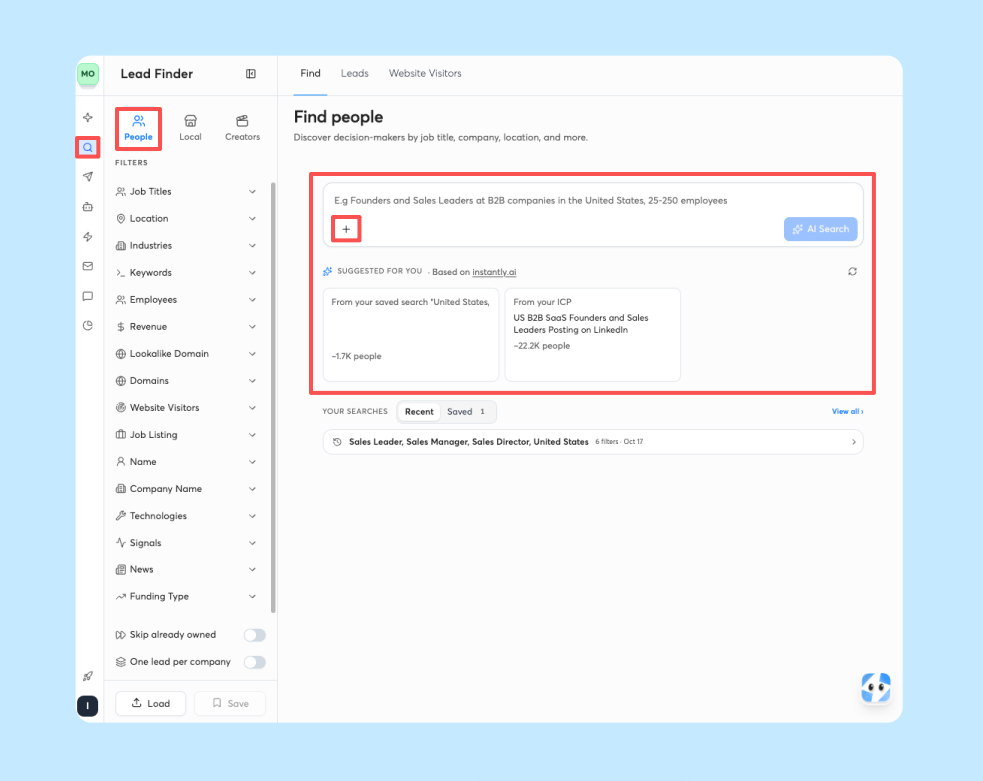
Manual research is a linear process: search LinkedIn and company sites, qualify the account, find or guess email patterns, verify the contact, and record the result. Each step depends on the one before it. AI research is parallel. You define your ICP and filters, run a query against a database or enrichment engine, and the tool enriches, verifies, and exports hundreds of leads at once.
The core difference is throughput. Manual research handles one account at a time, while AI research runs many accounts in parallel. For agencies running multiple client campaigns, that gap compounds fast.
Steps for manual lead verification
Manual lead verification follows a repeatable sequence:
- Search LinkedIn and company sites for the target account and relevant contacts.
- Identify the right role based on title, seniority, and department.
- Find or guess the email pattern using tools like Hunter or manual pattern matching.
- Verify the email with a standalone verifier or enrichment tool.
- Record the result in a Google Sheet or CRM with notes on fit and context.
Each step introduces friction. Context switching between tools, copy-paste errors, and the mental load of tracking progress all slow the process. The hidden cost is the rework when a bounced email or wrong title surfaces after the campaign launches.
Automated prospecting steps explained
Automated prospecting compresses the same workflow (for a wider look at the category, see Instantly.ai's guide to AI prospecting tools for lead research):
- Define your ICP and filters (industry, company size, job role, geography).
- Run a query in Lead Finder or AI Sales Agent against a pre-indexed database.
- Waterfall enrichment checks multiple data providers in sequence until it finds a match.
- Verification pass confirms the email is valid before it enters your campaign.
- Export to campaign or CRM with all enrichment fields attached.
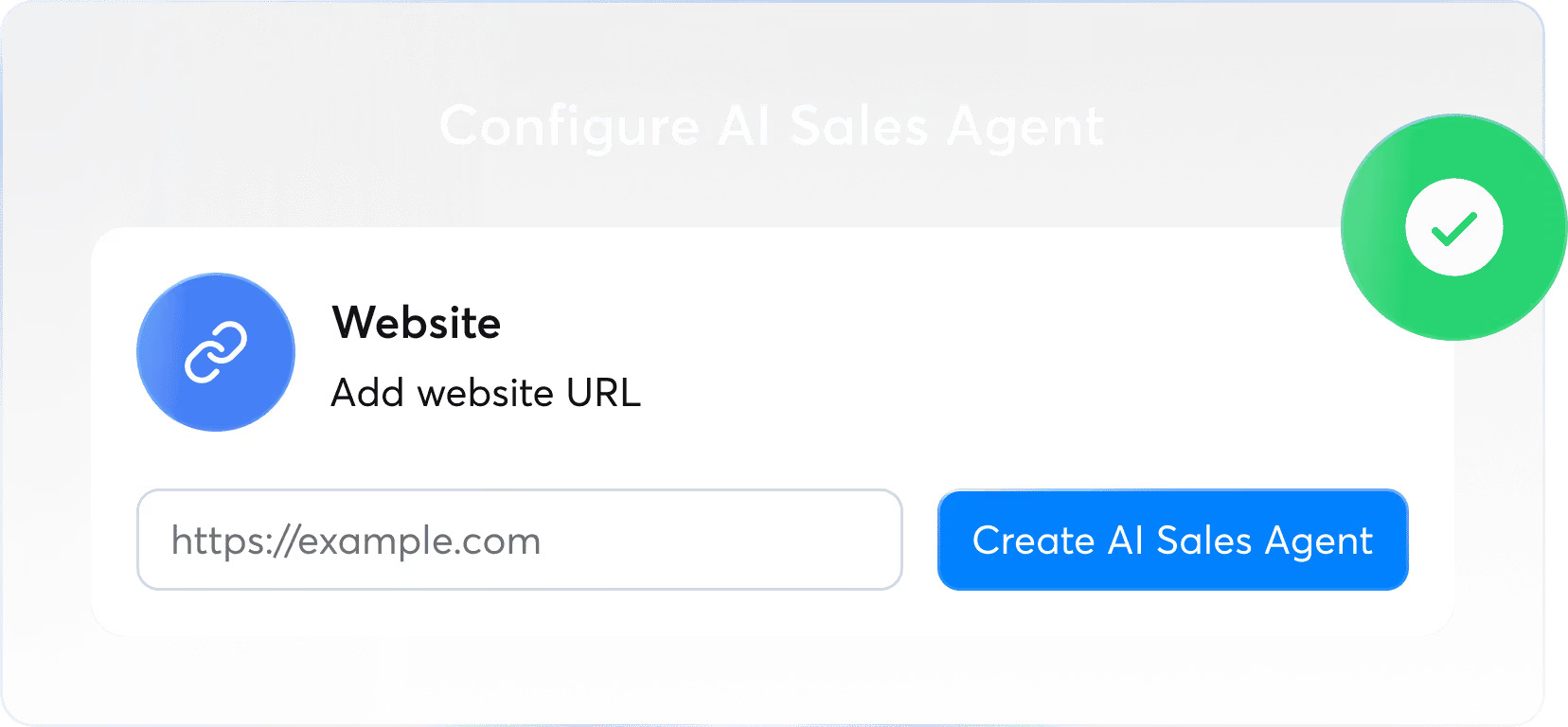
Steps 2 through 4 run in parallel across hundreds of leads. Instantly's Lead Finder checks its own database first, then sequences through external providers if the first source misses. The AI Sales Agent goes further: it sources leads, writes the sequence, and sends it, all at 5 credits per generated lead. To see where lead generation ends and prospecting begins, read Instantly's guide to AI lead generation vs AI prospecting.
Evaluating research speed and ROI
Manual research is estimated to take 30 to 60 minutes per account, which would mean a virtual assistant working an 8-hour day researches about 8 to 16 accounts. That time range is a planning estimate, not a sourced benchmark, so swap in your own figures. AI research is estimated to take 2 to 5 minutes per account and runs in parallel, so it can cover hundreds of accounts in the same window, depending on your filters and credit balance. This AI time range is also an estimate, so time a test run on your own filters before you plan around it.
| Metric | Manual Research | AI Research |
|---|---|---|
| Time per account | 30–60 minutes | 2–5 minutes |
| Leads per day | 10–20 | 200–500 |
| Cost per researched lead | $3.00–18.00 offshore, $12.50–60.00 US-based (labor only, before tools and rework) | $0.047–0.097 (credit cost only, based on Instantly Credits pricing) |
| Error rate | Variable (depends on researcher skill) | Lower with verification |
| Scalability for agencies | Linear (add virtual assistants to add capacity) | Flat (same system handles 100 or 10,000 leads) |
If you run three client campaigns and each needs 500 leads per week, manual research requires 75 to 150 hours of virtual assistant time. AI research requires one query and a verification pass. Speed compounds when you run multiple campaigns because the same AI system handles all of them without adding headcount.
Hours saved: automating prospect sourcing
A virtual assistant at 20 accounts per day produces 100 leads per week. An AI sales agent can handle several hundred or more in the same window, depending on your filters and credit balance. Volume alone does not book meetings, so verify the list against your ICP before you launch. For agencies, those hours saved translate directly into capacity for higher-value work: writing better sequences, handling replies faster, refining client strategy, or onboarding new accounts without hiring more researchers.
Hidden labor costs in lead research
The visible cost of manual research is the hourly wage. The hidden costs are larger:
- Context switching and tool sprawl: Moving between LinkedIn, email finders, verifiers, and CRMs burns focus and adds subscription costs. Tools such as Apollo ($65 to $99 per month), Hunter (€49 to €149 per month, priced in euros on Hunter's site), and Instantly Credits ($47 to $97 per month) stack up for each researcher.
- Rework from bad data: A bounced email or wrong title means the research step runs twice, and each bounce chips away at sender reputation.
- Training and management overhead: New virtual assistants need time to learn your ICP and quality standards (the Wing Assistant guide notes that even experienced freelancers need a ramp-up period before output reaches full speed), and someone has to assign accounts, check quality, and handle questions.
Measuring prospecting efficiency gains
The metric that matters is cost per researched lead, calculated as total research cost divided by verified leads produced:
| Leads per week | Manual cost (offshore virtual assistant at $12/hr, 45 min/lead) | AI cost (Instantly Credits, 1.5 credits/lead) | Weekly savings |
|---|---|---|---|
| 100 | $ 900 | $4.70 | $ 895.30 |
| 500 | $4,500 | $23.50 | $4,476.50 |
| 1,000 (calculated from the assumptions above) | $9,000 | $47.00 | $8,953 |
The manual cost assumes an offshore virtual assistant at $12 per hour (the midpoint of the $6 to $18 range in Wing Assistant's pricing guide) and 45 minutes per lead. The AI cost uses Instantly's Lead Finder pricing: 1 to 2 credits per verified email, with Growth plan at $47 per month for 1,500 to 2,000 credits. Even at the high end of AI costs (2 credits per lead), the savings are 95% or more at every volume level.
Reducing cost per meeting at scale
If your reply rate is 3.43% (the platform average in Instantly's 2026 benchmark report), you need about 29 leads to generate one reply. Assume about 15% of replies become booked meetings. That is the rate implied by a single Instantly case study, which reported a 9.7% reply rate and 42 meetings from 2,950 emails (about 286 replies). The case study's title cites a 20% booking rate, but its reported numbers work out to about 15%, and one case study is not an industry benchmark. At 15%, you need about 195 leads to book one meeting (29.15 ÷ 0.15 = 194.3, rounded up). At about $10.50 per lead (the midpoint of the $3.00 to $18.00 offshore labor range), that meeting costs about $2,048 in research labor alone. For AI research, assume about $0.047 per lead (1.5 credits per lead, with 1,500 credits at $47 on the Growth tier of Instantly Credits). At that rate, 195 leads cost about $9.17 in credits, before sending costs and human review.
Top-quartile senders in the same benchmark report achieve 5.5%+ reply rates. At that rate, you need about 18 leads per reply (1 ÷ 0.055). Using the same 15% booking assumption, that works out to about 122 leads per meeting (18.2 ÷ 0.15 = 121.3, rounded up). At 122 leads per meeting, research costs about $1,281 for manual (122 × $10.50, the offshore labor midpoint from above) or about $5.73 for AI (122 × $0.047, credits only, before sending costs and human review). AI removes research cost as a barrier to testing more campaigns and iterating faster.

Scaling outreach without inflating lead costs
Per-seat pricing models punish growth: every new inbox, every new client, every new researcher adds a line item to the monthly bill. Instantly includes unlimited email accounts and warmup on all Outreach plans, which means you can scale from 10 to 150+ inboxes without a per-seat tax. The same logic applies to research. Manual research scales linearly: double the leads, double the labor cost. AI research scales flat: the same system handles 100 or 10,000 leads with only credit costs increasing (under $0.10 per lead).
Your clients pay for meetings, not research hours. The faster and cheaper you produce verified leads, the more margin you keep and the more competitive your pricing becomes.
Calculating internal research wages
According to Wing Assistant's virtual assistant pricing guide, offshore freelance virtual assistants cost $6 to $18 per hour and US-based virtual assistants cost $25 to $60 per hour. At an estimated 30 to 60 minutes per account, labor alone runs about $3.00 to $18.00 per lead offshore, or $12.50 to $60.00 per lead US-based. Add tool costs, rework from bounces, and management overhead, and the true cost per lead rises further. Calculate it for your team by adding wages, tool subscriptions, and the share of leads that need rework. That does not include the opportunity cost of slower campaign launches or the margin you lose when a client asks for 1,000 leads next week and you have to say no.
AI tool pricing and credit models
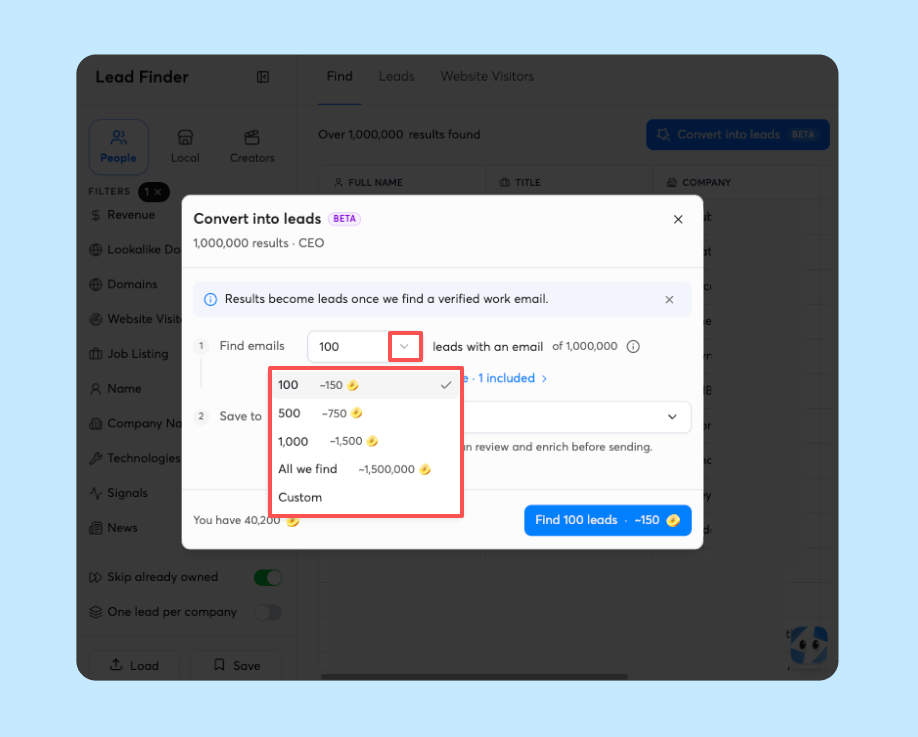
Instantly uses a credit-based model for Lead Finder and AI agents. Instantly Credits is a separate subscription from Outreach plans. The free trial costs $0 and includes 1,000 welcome credits. Growth costs $47 per month for 1,500 credits, or $77 per month for 2,000 credits. Supersonic costs $97 per month for 5,000 credits, or $147 per month for 7,500 credits. Hyper Credits start at $197 per month for 10,000 credits and scale up to $1,700 per month for 200,000 credits.
Lead Finder charges 1 credit if the lead is in Instantly's database, 2 credits for waterfall enrichment across external providers, and 0.25 credits per lead for verification. The AI Sales Agent costs 5 credits per generated lead. On the Supersonic plan, 1,000 leads at 5 credits each equals 5,000 credits for $97 per month. That is about $0.097 per lead in credits (5 credits per lead, 5,000 credits for $97). Manual research costs about $3.00 to $18.00 per lead in labor alone with an offshore virtual assistant ($6 to $18 per hour), or $12.50 to $60.00 with a US-based one ($25 to $60 per hour). Both assume an estimated 30 to 60 minutes per account, before tools and rework.
Calculating the scale where AI wins
AI wins when credit cost per lead is below manual labor cost per lead:
- Manual cost per lead: $3.00 to $18.00 offshore, or $12.50 to $60.00 US-based (labor only, before tools and rework)
- AI cost per lead: $0.047 to $0.097 (depending on credits used and plan tier)
The break-even point is immediate. Even if you only need 50 leads per week, AI research costs about $2.35 in credits (50 leads × 1.5 credits = 75 credits, at $47 for 1,500 credits on the Growth tier), before sending costs and human review. Manual research costs about $150 to $900 in labor alone offshore (50 leads × $3.00 to $18.00 per lead), or $625 to $3,000 US-based (50 leads × $12.50 to $60.00 per lead), before tools and rework. The only scenario where manual research makes economic sense is when you need deep, context-heavy research on a small number of high-value accounts (fewer than 10 per week) and the researcher brings domain expertise the AI cannot replicate.
Hidden impact on sender reputation
Bad data causes bounces. Bounces hurt sender reputation. Sender reputation determines whether your emails land in the primary inbox or spam. According to Instantly's 2026 benchmark report, keeping bounces below 2% is the threshold to aim for, and staying under it helps protect your deliverability. Once your sender reputation drops, recovery takes weeks and requires pausing campaigns, re-verifying lists, and rebuilding trust with mailbox providers.
Manual research introduces bounce risk when researchers guess email patterns or skip verification. AI research with built-in verification reduces that risk. Instantly's Lead Finder ships pre-verified leads, which means the email has already passed a validity check before it enters your campaign. This helps protect client domains, which reduces bounce risk before the campaign launches.
Why automated research beats manual data gathering
Manual research is limited by human attention. A researcher who is tired, distracted, or rushing to hit a quota will miss details, skip verification steps, or record incomplete data. AI research applies the same filters and enrichment logic to every lead, every time.
Coverage is the second advantage. Waterfall enrichment checks seven providers in sequence to increase the number of verified contacts found. That gap matters when your client needs 1,000 leads and a single manual source runs out of usable contacts before you reach the target.
Human vs AI research precision
Precision is the share of leads that match the ICP and have valid contact data. Manual research is precise but slow. A skilled researcher can read a LinkedIn profile, check recent company news, and confirm the contact is still in role. AI research is fast but can include false positives if the filters are too broad or the data is stale. The fix is waterfall enrichment plus verification, which closes the accuracy gap.
The trade-off is context. AI can tell you the person's title, company size, and industry. It cannot tell you they just got promoted last week and are still building their team, or that they posted about a pain point your product solves on LinkedIn yesterday. For high-volume campaigns, AI research plus a light human review pass (spot-checking 10% of leads) is enough. For high-stakes accounts, full human review is still required.
Benchmarks for automated data quality
Instantly's Lead Finder includes 450M+ B2B leads and uses waterfall enrichment across seven providers to increase coverage. The system checks Instantly's own database first (1 credit if it finds a verified match), then chains through partner providers until one returns a verified hit or all come up empty. If no provider finds a match, the charge is 0 credits. Verification costs 0.25 credits per lead and classifies addresses as valid, invalid, or risky before sending.
Lead Finder-sourced leads ship pre-verified. CSV imports do not. If you upload a list from another source, you must run verification before launching the campaign. If you source leads through Lead Finder, verification is already done.
Where human and AI research fails
Manual research fails on scale and consistency. A researcher can produce 20 high-quality leads per day, but not 200. AI research fails on niche accounts, enterprise org charts, and context-dependent judgment. A database might list someone as "VP of Sales," but it cannot tell you they are not the economic buyer in a specific org, or that they just announced a hiring freeze, or that their company was acquired last month.
A virtual assistant can spot a recent leadership change by reading LinkedIn posts or company news. AI can miss it if the data provider has not updated the record. This is why the hybrid workflow reserves human review for enterprise and high-value accounts: the cost of a wrong contact or missed context is higher than the cost of the research itself.
How data quality drives reply rates
Verified leads with accurate titles and company data get more replies. Instantly's 2026 benchmark report shows top-quartile senders achieve 5.5%+ reply rates, and top 10% achieve 10.7%+. The difference between average and top-quartile is not just copy, it is list quality. Clean data means your emails reach the right person, land in the primary inbox, and reference accurate details about their role and company.
The benchmark report also shows that consistent senders see 15 to 20% higher replies than inconsistent senders. Consistency requires clean data, because bounces and spam complaints interrupt sending patterns and hurt deliverability.
Why high-stakes outreach demands expert review
AI is not a replacement for judgment on high-stakes accounts. Enterprise deals, strategic partnerships, and high-ACV targets need human review because the cost of a mistake is higher than the cost of the research. A wrong contact, a missed org chart nuance, or a generic message to a C-level exec can kill a deal before it starts. AI can find the account and enrich the data, but a human needs to confirm the decision maker, map the buying committee, and add the context that turns a cold email into a relevant one.
For agencies, a common rule is: if the account is worth more than the high-value threshold you set (many teams start around $50,000 in annual contract value, but the right number depends on your margins and deal size), or if it is a strategic logo the client wants to win, manual research and review are required. Below that threshold, AI research with spot-checking is sufficient.
Identifying the right decision makers
AI can find titles, but human review confirms the actual decision maker. A "VP of Sales" title may not be the economic buyer in a specific org. In some companies, the VP of Sales reports to a CRO who controls budget. In others, the VP has full authority. In still others, the decision is made by a committee that includes finance, operations, and IT. AI cannot infer these structural relationships from a title alone.
Manual research adds this layer. A researcher checks LinkedIn connections, reads recent company announcements, and looks for signals like who attended a recent industry event or who is quoted in press releases.
When to manually map enterprise leads
Manual org chart mapping is required when:
- The account is above your ACV threshold (set it based on your margins and deal size) or involves multiple stakeholders across departments.
- The account is a strategic logo that the client wants to win for credibility, or the company has a complex structure with matrix reporting or recent M&A.
This process takes several hours per account and is necessary for deals where a wrong move costs tens of thousands in lost pipeline.
Refining data for higher conversions
Human review adds context that AI misses. A researcher can find recent news (funding rounds, product launches, leadership changes), check for trigger events (new hires, expansion announcements, technology adoptions), and read between the lines on LinkedIn posts to understand current priorities. That context is the difference between a generic sequence and a personalized one that references specific pain points and buying signals.
Manual verification for lead lists
Even with AI research, manual verification is a required step for high-stakes campaigns:
- Spot-check 10% of AI-generated leads by opening their LinkedIn profiles and confirming title, company, and tenure.
- Verify titles and company data against the company website or recent news.
- Check for recent changes like promotions, departures, or company announcements that affect fit.
- Flag and remove false positives (wrong person, wrong company, stale data).
Scaling outreach: AI agents vs manual workflows
Can AI replace the manual workflow entirely? For high-volume, low-ACV campaigns, yes. For high-stakes accounts, no. High-volume campaigns (hundreds or thousands of leads, low ACV, broad ICP) are a strong fit for AI research. Cost per lead stays low in credits, the data quality is high with verification, and the speed lets you launch and iterate fast. High-stakes campaigns (10 to 50 accounts, high ACV, narrow ICP) need manual research and review because the margin for error is small and the value per meeting is high.
The hybrid playbook combines both: use AI to handle the volume, use human review to handle the exceptions, and track cost per meeting to tune the split over time.
Increasing AI prospecting ROI
The playbook for increasing AI prospecting ROI:
- Define a tight ICP with specific filters for industry, company size, job role, and geography, then use Lead Finder filters to narrow the 450M+ lead database to accounts that match.
- Run AI Sales Agent on autopilot for high-volume campaigns, with daily sending limits and guidance rules to control tone and messaging.
- Reserve manual review for enterprise accounts above your ACV threshold or with strategic value, and track cost per meeting by campaign to see which research method delivers better economics.
Manual research for niche campaigns
Niche campaigns are defined by small TAM, specific industry, or high-ACV accounts. Manual research wins in these scenarios because human judgment on fit and context is more valuable than speed. A researcher can read industry publications, check for regulatory changes, and identify the informal influencers who do not show up in org charts but control buying decisions. AI research still struggles with multi-hop reasoning (connecting a leadership change to a budget shift to a buying window) and context that is not in structured databases.
Blending AI and manual research
The hybrid playbook:
- Use AI for data gathering and initial qualification on all campaigns. Run Lead Finder or AI Sales Agent to build the list, enrich the data, and verify emails.
- Use manual review for enterprise and high-value accounts above your ACV threshold. Spot-check AI-generated leads, map org charts, and add context from recent news or LinkedIn activity.
- Use verification on all AI-generated leads before launching the campaign. Lead Finder ships pre-verified leads. CSV imports require a verification pass.
- Track cost per meeting by campaign and research method. If AI-researched campaigns deliver meetings at $50 and manual campaigns deliver at $500, shift more volume to AI. If manual campaigns convert at 3x the rate, keep them for high-value accounts.
This is the defensible process agencies can show clients: AI keeps costs low and speed high, while human expertise protects quality on the accounts that matter most.
The only way to know which workflow delivers better economics for your agency is to test both and measure cost per meeting. Try Instantly free and run one AI-researched campaign with Lead Finder against your current manual workflow. Compare cost per meeting and reply rates in 14 days.
FAQs: AI sales agent vs manual research
How accurate is AI prospect research compared to manual?
Comparable or better at scale when paired with verification. AI applies consistent filters and waterfall enrichment across multiple providers, while manual research varies by researcher skill and fatigue.
What is the typical cost of manual company research per lead?
Labor costs about $3.00 to $18.00 per lead for an offshore virtual assistant ($6 to $18 per hour) or $12.50 to $60.00 per lead for a US-based one ($25 to $60 per hour), assuming an estimated 30 to 60 minutes per account. Rates come from Wing Assistant's pricing guide. Add tool costs and rework, and the true cost per verified lead is higher.
Can AI sales agents completely replace manual prospecting?
No. AI handles high-volume, low-ACV campaigns well, but enterprise and niche accounts still need human review for org chart mapping and context that databases do not capture.
How long does manual research take per account?
Manual research takes 30 to 60 minutes per account for a skilled virtual assistant, including search, qualification, verification, and recording. AI research takes 2 to 5 minutes per account at scale.
Does AI or manual research deliver better reply rates?
Neither guarantees reply rates. Clean, verified data drives reply rates. Instantly's 2026 benchmark report shows top-quartile senders reach 5.5%+ reply rates with disciplined list hygiene and consistent sending.
Key terms glossary
AI sales agent: Software that sources leads, writes sequences, and optimizes on replies. Instantly's AI Sales Agent costs 5 credits per generated lead and runs on the separate Instantly Credits subscription.
Waterfall enrichment: A process that checks multiple data providers in sequence until it finds a match. Instantly's Lead Finder checks its own database first, then sequences through seven external providers to increase coverage.
Cost per researched lead: Total research cost divided by verified leads produced. Manual research costs about $3.00 to $18.00 per lead in labor with an offshore virtual assistant, or $12.50 to $60.00 US-based, before tools and rework. AI research costs $0.047 to $0.097 per lead depending on credit usage and plan tier.
List hygiene: The practice of keeping lead lists clean, verified, and free of bounces. Bounce rates above 2% hurt sender reputation and deliverability, according to Instantly's 2026 benchmark report.
Read next
- AI prompts for sales prospecting: 10 best prompts to try: Copy ready-made prompts that help you find, qualify, and write to prospects faster.
- How to automate prospect research with AI sales assistants: Learn how AI assistants gather and organize prospect data so you spend less time on manual research.
- How to automate prospecting: a step-by-step guide: Follow a clear process for automating lead sourcing, enrichment, and outreach.


