


Updated November 9, 2026
TL;DR: AI sales agents act as a force multiplier for coaching by building a prioritized coaching queue from reply data, account analytics, and inbox patterns. Managers stop reviewing everything and start acting on signals. Human-in-the-loop validation prevents bad AI advice from reaching reps. According to Instantly.ai's 2026 benchmark report, the platform average reply rate is 3.43% while top-quartile senders reach 5.5% or higher, and coaching is how teams close that gap. The return on investment (ROI) shows up as manager hours saved on coaching prep (a hypothetical 4 hours a week, for illustration) and reply rates moving from the 3.43% average toward the 5.5% top-quartile mark. Instantly's Account Analytics and Unibox let managers review replies and account performance so coaching stays tied to real data.
If you lead sales enablement or manage an SDR team, this guide is for you. Your managers can't 1:1 coach every rep. The math doesn't work when you have 3-15 reps and quota accountability. AI sales agents for coaching at scale fix that by creating a prioritized coaching queue that tells managers exactly where to spend their time. Instead of reviewing every call, email, and reply, managers get a filtered list of coaching triggers based on reply rates, bounce rates, and the sentiment of incoming responses. The coach's judgment stays in control, but the AI handles the triage work, which would otherwise take hours of review time every week.
Why manager bandwidth is the real coaching bottleneck
Most sales leaders know their reps need more coaching, but manager time is the constraint. If a manager has 8 reps who each send 30 emails a day, that adds up to about 1,200 outbound touches to review each week (8 reps × 30 emails × 5 working days). Replies, meetings, and pipeline updates come on top of that.
According to Instantly's 2026 benchmark report, the platform average reply rate is 3.43%, while top-quartile senders reach 5.5% or higher. The gap between average and top performers often comes down to coaching, not tools. But when managers spend a meaningful share of their time on other work, coaching gets squeezed out.
Scaling rep feedback with AI
AI-assisted coaching doesn't mean replacing the coach. It means automating the identification of coaching moments so managers focus their limited time on high-impact conversations. An AI agent can review every campaign, flag underperforming sequences, and surface reps who need help with openers, follow-ups, or reply handling. For a practical example of this workflow, see this guide to an AI sales assistant for agencies.
Instantly's Account Analytics shows open rates, reply rates, and a Combined Score for each sending account in one view. Managers can see each account's open and reply rates and compare them against the 3.43% platform average from Instantly's 2026 benchmark report, without pulling data from multiple tools. When each rep sends from their own accounts, that points to who may need help. This is the foundation of a coaching queue: a filtered, prioritized list of who needs help and why.
"I love that Instantly solves one of my biggest problems with outbound sales by integrating multiple tools into one... Overall, for me, it saves time and allows me to manage more of the outbound process efficiently." - Jonathan R. on G2
Solving the manager capacity gap
The capacity gap is the difference between how much coaching your team needs and how much your managers can deliver. If each rep needs 30 minutes of personalized feedback per week and your manager has 8 reps, that's 4 hours of 1:1 time. Add prep work, and you're at 6-8 hours. Most managers don't have that.
AI manager coaching workflows close the gap by doing the prep work. Instead of manually reviewing sent emails, reply threads, and campaign stats, the AI flags patterns across your team. One rep shows a 1.8% reply rate on Step 2 emails, another has 12 "not interested" replies this week, a third has a bounce rate climbing toward 2.3%. The manager walks into the 1:1 with a pre-built agenda, not a blank page.
Instantly's Unibox NLP auto-classifies replies, tagging each by interest status so managers see only the interactions that need attention. Reps get feedback on real conversations, not hypotheticals.
Quantifying lost pipeline efficiency
When coaching doesn't scale, pipeline efficiency drops. Reps repeat the same mistakes for weeks because no one has time to correct them. Follow-up timing drifts, subject lines underperform, and reply handling becomes inconsistent.
| Task | Manual approach | AI-assisted approach | Time saved |
|---|---|---|---|
| Coaching prep | Reviewing every campaign, reply thread, and stat by hand | Scanning a prioritized list of AI-flagged coaching triggers | The bulk of prep work |
| Performance review | Pulling reports and writing each review from scratch | Editing and refining AI-drafted review inputs | Less time pulling data and drafting each review |
These are potential efficiency gains, not guarantees. But even partial reductions in prep time add up across a full team, and that reclaimed time translates directly into more 1:1 sessions or deeper strategic work.
Scaling sales coaching with AI agent workflows
The key to scaling coaching without adding headcount is turning AI into your triage layer. The AI reviews everything, flags what matters, and presents managers with a short list of coaching priorities. This flips the manager's role from "reviewer of everything" to "validator and coach." Instantly's Copilot is one way to bring that AI layer into your outbound workflow. Copilot runs on Instantly Credits, a separate subscription from Outreach plans, so factor that into your cost estimate.
Operationalizing AI for sales coaching
To operationalize AI coaching, you need three things: a data source, a prioritization logic, and a feedback loop. Your account analytics and reply management system supply the data. A set of rules determines what gets flagged. Coaching outcomes then feed back into the system, so each round of coaching improves the next. If you're still choosing a platform for this, see how Instantly compares with Salesloft.
- Data collection and AI analysis: Account Analytics pulls account-level metrics (open rate, reply rate, Combined Score). Unibox centralizes all replies with AI-powered classification. The system flags coaching triggers based on thresholds you define (e.g., reply rate below 3%, bounce rate above 2%).
- Coaching queue and manager review: Managers get a prioritized list of reps and issues to address. The manager validates the AI's recommendation, adjusts if needed, and delivers the coaching.
- Rep task execution: The rep receives a specific, actionable task (rewrite Step 2 opener, tighten follow-up timing).
- Feedback loop: The rep's next campaign performance feeds back into the analytics, closing the loop.
Instantly's Deliverability AI Agent runs automated checks every 24 hours across DNS health, blocklists, bounce rates, and warmup momentum. If a rep's domain health dips or their bounce rate spikes, the manager gets an alert before it becomes a deliverability crisis. The agent comes with Hypergrowth ($107/mo) and Light Speed ($358/mo) plans, but not Growth ($47/mo). See instantly.ai/pricing for current plan details.
Standardizing performance reviews
Coaching quality varies when every manager uses a different framework. AI-assisted coaching solves this by standardizing the inputs. Every rep gets reviewed against the same benchmarks: reply rate, bounce rate, sequence completion rate, positive reply sentiment. Instantly's 2026 benchmark report found that consistent, stable sending patterns produce 15-20% higher replies. Standardized coaching helps teams maintain those consistent patterns.
Managers can build a standard performance review template that pulls from Account Analytics and the Deliverability AI Agent: "Here's your reply rate vs. team average. Here's your bounce rate vs. the recommended 2% coaching threshold. Here's how your Step 1 openers are performing." The rep knows exactly what to expect, and the manager has a consistent coaching script.
Automating data-driven rep coaching
Data-driven coaching means every piece of feedback is tied to a number, not a gut feel. Instead of "your emails need to be better," the manager says, "your reply rate on Step 2 is 1.2%, and top performers in our workspace are at 4.8%. Let's rewrite your opener."
Instantly's Account Analytics includes a "Combined Score" metric that weights open rate and reply rate together. Once an account has reached 100+ contacts, a score above 30 is considered decent. A score below 30 with fewer than 100 contacts is too early to judge. Even at higher volume, a low score is best treated as a prompt for a closer look rather than a verdict.
The AI doesn't just flag problems, it suggests fixes. If a rep's bounce rate is above the 2% coaching threshold you set (a best-practice benchmark, not an Instantly automation trigger), the system can recommend re-verifying the lead list. If reply sentiment is trending negative, it flags the specific replies for manager review. This turns coaching from reactive to proactive.

Automating the identification of coaching needs
The biggest time sink in coaching is figuring out who needs help and what kind. Managers don't have time to review every campaign, so coaching becomes reactive or random. AI flips this by scanning everything and surfacing only what needs human attention.
How AI flags coaching triggers
A coaching trigger is a measurable signal that suggests a rep needs help. Examples a coaching queue can track include:
| Example trigger | Data source | Possible coaching action |
|---|---|---|
| Rep reply rate below the team average | Account Analytics | Review opener and CTA |
| Bounce rate above 2% (recommended coaching threshold you set) | Bounce-rate monitoring in the Deliverability AI Agent | Re-verify lead list, tighten targeting |
| Rep send volume dropping below their usual level | Manager review of rep activity | Check for blockers (paid time off (PTO), list gaps, deals in progress), then re-prioritize tasks |
| Replies classified as negative sentiment | Unibox NLP | Review reply handling and objection responses |
Instantly's Deliverability AI Agent, available on Hypergrowth and Light Speed plans only, monitors bounce rates, blocklists, DNS health, and reply-rate benchmarks across all campaigns. When it detects an issue, it surfaces what's affected, why it matters, and one-click fixes (pause campaigns, replace risky accounts, rebalance providers). Managers get an early warning signal before the problem tanks the rep's entire pipeline.
Unibox NLP auto-classifies replies by interest status, so managers can filter for "not interested" or "objection" replies (custom label filtering requires Hypergrowth or Light Speed) and coach reps on real conversations. Feedback tied to actual customer responses gives reps concrete examples to work from, something generic training cannot provide.
Focusing manager time on high-impact reps
Not every rep needs the same level of coaching. Some are consistently hitting benchmarks and just need occasional check-ins. Others are struggling and need weekly 1:1s. The AI helps managers prioritize by scoring reps on urgency and impact.
A rep with a 2.5% bounce rate is urgent because it threatens deliverability for the whole domain. A rep with a 2.8% reply rate is important but not urgent. A rep managing 500 active leads who suddenly drops in reply rate is higher impact than a rep with 50 leads.
Managers can build a simple matrix: high urgency + high impact = coach this week. High urgency + low impact = send a Slack message. Low urgency + high impact = schedule a deeper strategy session. Low urgency + low impact = monitor and check in next month.
Spotting coaching gaps across the team
AI also helps spot patterns across the team that individual managers might miss. If three reps are all underperforming on Step 3 follow-ups, that's a training gap, not a rep problem. If the entire team has a high "not interested" rate on a specific sequence, the messaging needs a rewrite, not individual coaching.
Instantly's 2026 benchmark report found that first-touch emails generate 58% of replies, while follow-ups contribute 42%. If your team's Step 1 reply rate is weak but follow-ups are strong, focus coaching on openers and subject lines. If Step 1 is strong but follow-ups are weak, coach on persistence and timing.
Turning raw insights into rep-specific tasks
The hardest part of coaching isn't identifying problems. It's translating insights into specific, actionable tasks reps can execute. "Improve your reply rate" isn't actionable. "Rewrite your Step 1 opener to include a specific reference to their company's recent product launch" is.
Reviewing rep calls at scale
For email-based sales motions, "reviewing calls" means reviewing sent emails and reply threads. Managers don't have time to read every email, so the AI pre-filters. It flags emails with low open rates, high spam scores, or negative reply sentiment, and presents those for review.
Instantly's AI Spam Words Checker flags spam-triggering language before emails go out. If a rep's emails consistently trigger spam warnings, that's a coaching moment.
Automated agendas for 1:1 coaching
A strong 1:1 agenda covers what's working, what's not, and the one thing to fix this week. The AI can auto-generate this agenda by pulling the rep's metrics and flagging the top priority.
Example agenda (hypothetical numbers for illustration, not real results):
- Wins: Reply rate up 0.8% this week. Three meetings booked.
- Issue: Step 2 follow-up reply rate is 1.4% (team average is 3.2%).
- Action: Rewrite Step 2 opener. A/B test two versions. Review results in next 1:1.
The manager walks in with this pre-built agenda, validates it, and spends the 30 minutes on strategy and skill-building, not data gathering. The rep leaves with a clear, measurable task.
Instantly's Account Analytics puts open rates, reply rates, and the Combined Score for every account on one screen. Managers can build these agendas from that single view instead of switching between tools.
Benchmarking rep progress metrics
Coaching works only if you can measure improvement. The AI tracks rep performance over time and shows whether coaching interventions are working. Say a rep's reply rate were 2.1% before coaching and 3.4% after (illustrative numbers only). That would be evidence the coaching worked.
Benchmarks give reps a clear target. Instantly's 2026 benchmark report found that top-quartile senders achieve 5.5%+ reply rates, and the top 10% reach 10.7%+. Treat these as reference points, not guarantees. A rep at 2% knows they have room to grow. A rep at 5.6% knows they're in the top quartile.
Progress metrics also help with performance reviews and comp conversations. Instead of subjective assessments, managers have data. A hypothetical example: "Rep A improved reply rate by 1.2 points over 8 weeks. Rep B stayed flat. Here's the coaching plan for next quarter." For a real example of a data-led outbound process, read this case study on scaling decision-maker prospecting.
Ensuring human validation for AI recommendations
The biggest risk with AI coaching is bad advice reaching reps. If the AI misclassifies a reply or flags the wrong coaching trigger, reps waste time on the wrong fix. Worse, they lose trust in the system. Human-in-the-loop validation prevents this.
Validating AI insights for final approval
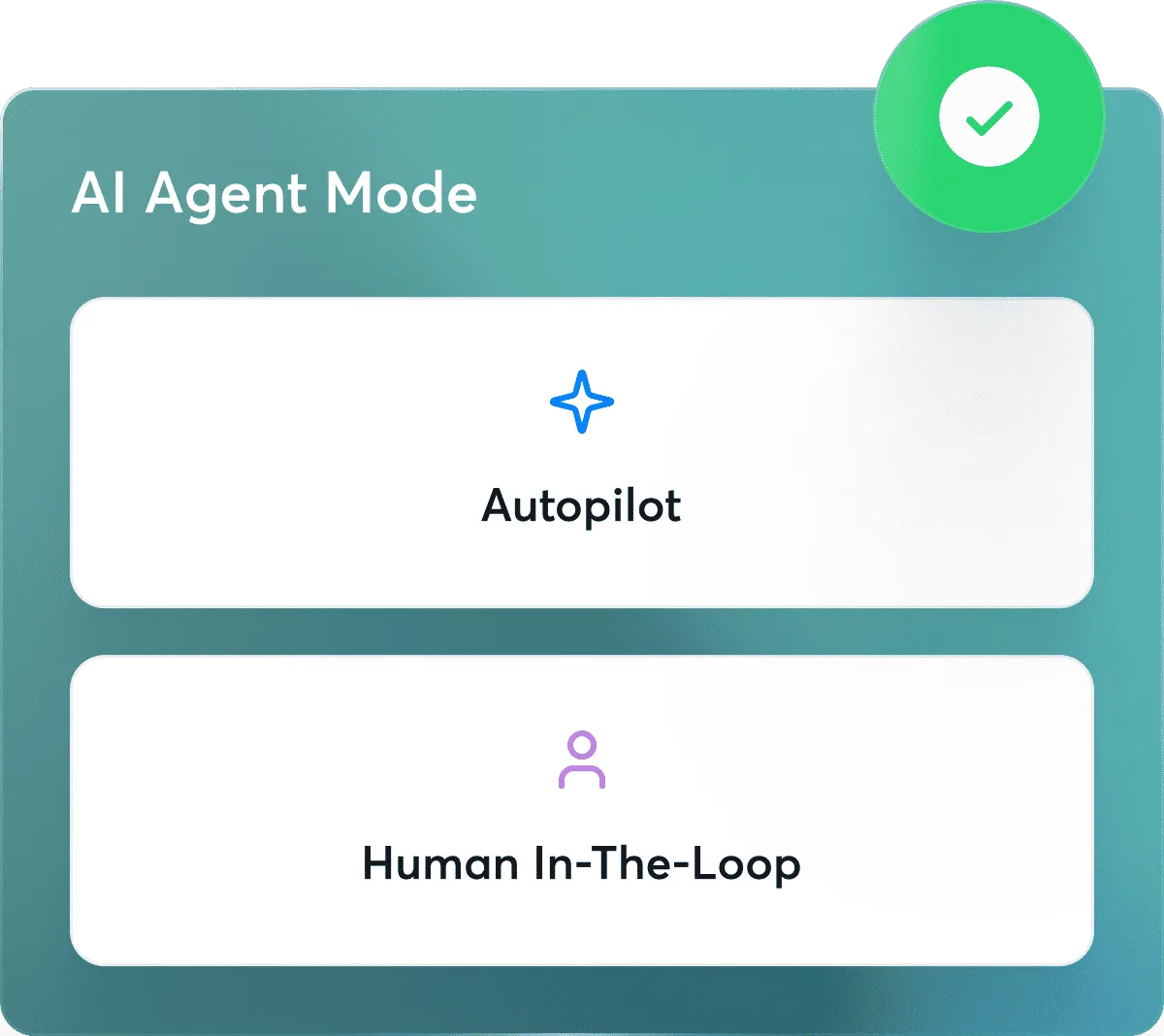
Human-in-the-loop means the AI generates a recommendation, but a human reviews and approves it before it goes to the rep. This keeps quality high and prevents automated errors.
The same principle applies to coaching recommendations. The AI might flag "Rep A's Step 2 reply rate is low," but the manager reviews the actual emails and decides whether the issue is the opener, the CTA, or the targeting. The AI surfaces the pattern, the manager decides the fix.
Defining manual overrides for AI agents
Manual overrides are the safety valve that prevents AI from making bad decisions. Every AI coaching workflow should have clear override rules: when can the manager reject the AI's recommendation, and what happens next?
Common override scenarios include reply classification (the AI tags a buying signal as "not interested"), coaching triggers (the AI flags low send volume during a rep's PTO week), and task prioritization (the AI suggests rewriting an opener that's part of an active A/B test). Managers can dismiss, edit, or defer any recommendation.
AI Inbox Manager only sends automated replies when the AI is confident about its suggestion. If confidence is low, it doesn't send. This is a built-in safety mechanism that prevents bad replies from going out.
Preventing automated coaching errors
Automated coaching errors happen when the AI misinterprets data or lacks context. Common errors include:
- Misclassified replies: The AI tags a reply as "objection" when it's actually a request for more information.
- False triggers: The AI flags a rep for low activity without knowing the rep was closing a deal, not prospecting.
- Context-free advice: The AI suggests "improve your CTA" without understanding the rep's ideal customer profile (ICP), offer, or sales motion.
The fix is a validation layer. Before any AI-generated coaching task reaches a rep, a manager reviews it. The manager asks: Is this the right priority? Is the recommendation specific enough? Does the rep have the context to execute it? If yes, approve. If no, edit or reject.
Instantly's AI Reply Agent Slack integration sends real-time alerts on new replies with AI-generated response previews, and managers can approve or edit the reply directly in Slack before it sends.
Deploying AI for consistent coaching at scale
The final step is rolling out AI coaching across the team in a way that's consistent, auditable, and measurable. This requires clear governance, admin controls, and a feedback loop that ties coaching to outcomes. For the wider stack around coaching, see these outbound sales automation tools for scaling.
Measuring AI impact on rep performance
To prove AI coaching works, you need to measure its impact. Key metrics include:
- Reply rate improvement: Track reply rate before and after coaching interventions.
- Ramp time: Measure how long new reps take to hit benchmark performance.
- Coaching ROI: Calculate time saved by managers and translate that into more coaching sessions or strategic work.
- Pipeline impact: Track meetings booked, sales-qualified leads (SQLs) created, and revenue influenced by coached reps vs. non-coached reps.
With Instantly's Account Analytics, managers can compare open rates, reply rates, and Combined Score by account before and after a coaching intervention. That gives them a view of coaching impact. Meetings booked and SQLs need to be tracked in your CRM or pipeline reports.
How AI handles rep feedback loops
A feedback loop is how coaching outcomes inform the next round of coaching. If a rep implements a coaching task and their reply rate improves, the manager can note that the fix worked and repeat it with similar reps. If performance doesn't improve, the manager can try a different approach.
- AI flags coaching trigger (low Step 2 reply rate).
- Manager validates and delivers coaching (rewrite opener).
- Rep implements the fix.
- Account Analytics shows the open and reply rates for the rep's next campaign.
- If reply rate improves, the manager records the intervention as successful. If not, the manager chooses a different approach for the next 1:1.
This loop gives managers a record of which coaching interventions work for which types of problems. Over time, that record helps them choose better fixes and set sharper triggers.
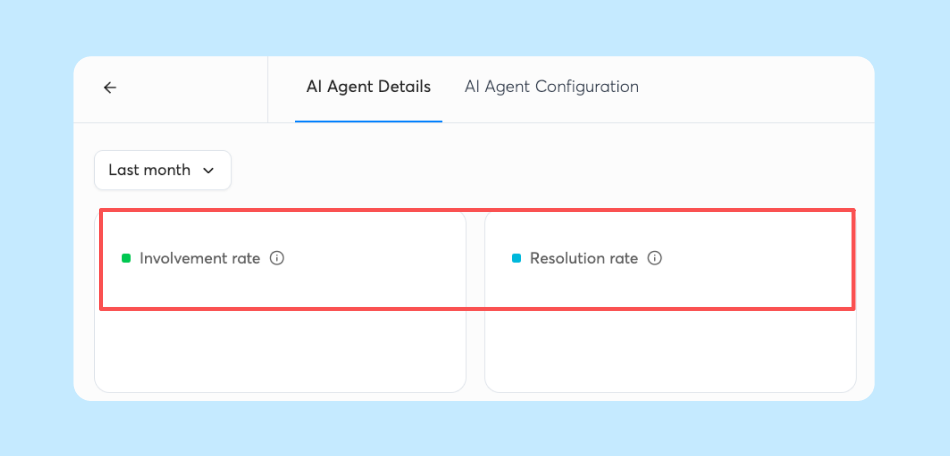
Instantly's AI Reply Agent tracks how often the AI handles replies vs. escalating to a human and how often those replies resolve the conversation. These signals help managers understand where the AI is effective and where human coaching is still needed.
ROI of AI-assisted coaching
The ROI of AI-assisted coaching shows up in three areas: time saved, performance improved, and pipeline protected. Time saved is the easiest to measure. Consider a team where managers save 4 hours a week on coaching prep (an illustrative figure). That time converts to more 1:1 sessions or strategic work. Performance improvement is harder to attribute but more valuable. Coaching that lifts a rep's reply rate from 2.5% to 4% yields more replies, more meetings, and more pipeline per rep per month. Pipeline protection is about preventing deliverability disasters. If the Deliverability AI Agent catches a bounce rate spike before it tanks a rep's domain, that's potentially weeks of lost pipeline avoided.
What to do next: turn AI coaching triage into a repeatable routine
You can't add coaching hours by adding more reviews to a manager's week. AI sales agents for coaching fix the bottleneck by triaging campaign data, reply patterns, and inbox signals into a short coaching queue. Managers validate each recommendation, reps get one specific task, and Account Analytics shows whether the fix worked.
The result is more coaching on the conversations that matter, with consistent feedback across the team and no added headcount.
Which rep and trigger should you start with?
Start small this week. Pick one rep and one trigger, such as a reply rate below the team average. Review it in Account Analytics, turn it into a 1:1 agenda, and track the rep's next campaign.
Try Instantly free for 14 days, no credit card required, and let Account Analytics and Unibox surface your first coaching priorities while you focus on live coaching conversations.
FAQs: AI sales agents for scaling coaching
Will AI replace human sales coaches?
No. AI augments human coaches, it doesn't replace them. The AI handles data gathering, pattern recognition, and task generation, but humans provide context, judgment, and relationship-building. AI makes coaches more effective by giving them better data and more time, but the human element remains essential.
What happens if the AI gives bad coaching advice?
Human-in-the-loop validation prevents bad AI advice from reaching reps. Every AI-generated coaching recommendation goes through manager review, and managers can approve, edit, or reject recommendations based on their knowledge of the rep, market, and sales motion.
How long does it take to see coaching results?
How quickly you see results depends on how often reps send campaigns and how fast they implement coaching tasks. Fast-moving metrics like reply rate can shift within a few weeks of consistent coaching, while slower-moving metrics like ramp time and pipeline velocity need a longer window to show change.
Key terms glossary
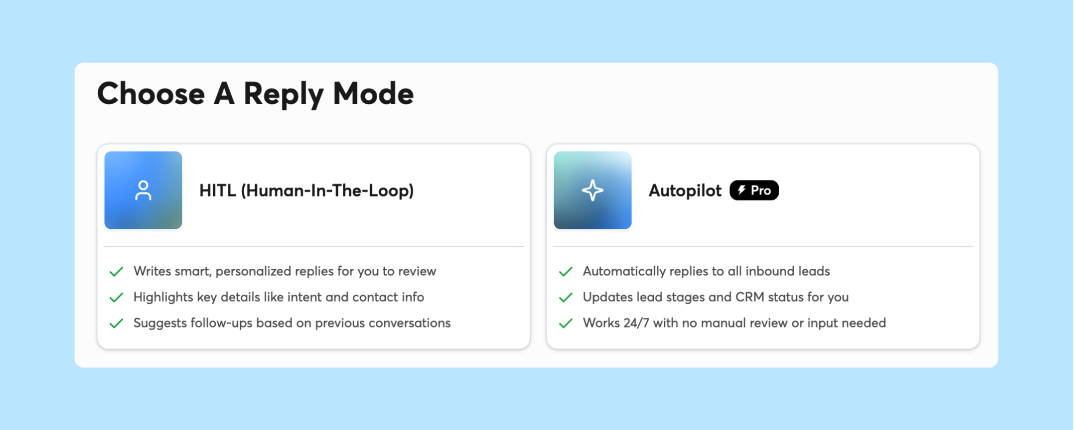
AI sales agents: AI sales agents are autonomous software systems that handle prospecting, outreach, follow-up, and reply management with minimal human input. In coaching workflows, they analyze rep performance data and generate coaching recommendations. Instantly's AI Sales Agent sources leads, writes sequences, and optimizes based on replies, while the AI Reply Agent handles incoming responses with Human-in-the-Loop or Autopilot modes.
Coaching queue: A coaching queue is a prioritized list of reps and issues that need manager attention, ranked by urgency and impact. Instead of manually reviewing all rep activity, the AI scans campaign data and surfaces the top coaching priorities, turning coaching from reactive to proactive.
Force multiplier: A force multiplier is anything that lets a team get more output from the same people and time. In coaching, AI sales agents act as a force multiplier by triaging campaign data, reply patterns, and inbox signals, so managers spend their limited time on the highest-impact coaching conversations without adding headcount.
Human-in-the-loop: Human-in-the-loop is a workflow design where AI generates recommendations but humans review and approve them before they're executed. In coaching, human-in-the-loop means the AI flags coaching triggers and suggests tasks, but managers validate the recommendation, adjust for context, and deliver the coaching themselves.
Read next
- Replacing VAs with AI sales agents: See how AI sales agents compare with virtual assistants for outbound tasks.
- AI sales agent A/B testing benchmarks: Review benchmark data on how AI sales agents handle A/B testing.
- How AI sales agents work: Get a clear explanation of what AI sales agents do and how they run outreach.


