.svg)
%20(1).svg)


Updated June 10, 2026
TL;DR:
If you manage a sales team and your pipeline depends on cold email, choose the platform that scales accounts and deliverability, not software costs. Instantly.ai offers unlimited sending accounts on a flat fee, a private deliverability network of 4.2M+ accounts, and dedicated IP rotation (SISR) so you scale outreach without risking domain health. While legacy tools like HubSpot and Apollo offer broad CRM features, their per-seat pricing and mailbox caps add friction as your team grows. The Growth plan starts at $47/month with no per-seat penalty and no annual lock-in required.
Most sales leaders focus on writing the perfect pitch. The real bottleneck is whether that pitch ever reaches the primary inbox. Cross-industry data shows the global inbox placement rate sits at approximately 83.5%, meaning close to one in every six cold emails is filtered into spam, promotions, or never delivered at all. This guide compares Instantly against Lemlist, HubSpot, Apollo, and other 2026 platforms on the metrics that drive booked meetings: inbox placement rates, domain health monitoring, team standardization, pricing transparency, and support responsiveness.
Selecting tech that ensures inbox placement
Building an effective outbound stack means choosing focused tools that each do one job well: a reliable data source, a high-deliverability sending engine, and a CRM that accepts clean handoffs. That is the opposite of buying one bloated suite and accepting its weakest link.
For a sales team managing 3 to 15 reps, that weakest link is almost always deliverability. Per-seat suites bundle contact databases, email sending, CRM, and dialers into one bill. That sounds convenient until you realize none of those modules is built for primary inbox placement at scale. This is where AI agents either compound your reps' effort or quietly waste it.
An AI sales agent in 2026 is not a simple drip sequence. It is an autonomous system that handles lead sourcing, personalization, and reply triage without a rep touching each step. The distinction matters because an agentic sales agent built on shaky deliverability infrastructure produces automated replies that nobody reads. The infrastructure must come first.
Watch the co-founder demo walkthrough for a practical step-by-step of campaign setup from domain configuration through first send.
Systematizing your email reputation
Domain reputation is a technical asset built on four inputs:
- SPF record: Tells receiving servers which IPs can send on behalf of your domain.
- DKIM signature: Cryptographic proof that the message was not altered in transit.
- DMARC policy: Instructions for what to do when SPF or DKIM fail.
- Custom tracking domain: Decouples your click and open tracking from your sending domain so one does not contaminate the other.
Without all four in place, even well-written emails land in spam before a filter reads the copy. Instantly's help center guide on email delivery walks through exact DNS record setup for each of these. The secondary sending domains strategy guide then explains how to spread volume across multiple domains to protect your primary brand.
Standardizing outreach workflows
Reps going rogue with personal Gmail accounts or unapproved templates are the fastest way to blacklist your primary domain. Standardization means setting global block lists, capping daily sends per inbox, and controlling which sequence templates are live. Instantly enforces global block lists platform-wide so no rep can accidentally contact a prospect marked off-limits. The inbox rotation feature distributes sends across multiple accounts in a campaign automatically, keeping any single inbox below the recommended 30-email daily cap.
Eliminating surprise platform fees
Per-seat pricing punishes growth. A 10-rep SDR team on Lemlist's Multichannel plan pays $109 per seat per month, or $1,090/month for sending access before factoring in mailbox costs and credit add-ons. Apollo's Organization tier starts at $149 per seat monthly, meaning a 10-rep team pays $1,490/month on month-to-month billing. Instantly charges one flat fee for unlimited sending accounts. A 10-rep team on Hypergrowth Outreach plus the Credits Growth tier pays $144/month combined, and that cost does not change when you hire rep 11.
Proven deliverability metrics vs legacy tools
HubSpot is an excellent all-in-one CRM. It is not a dedicated cold outreach engine, and that distinction shows up in primary inbox placement rates. HubSpot's sales email tools are designed around warm contacts and CRM-managed pipelines. Cold outreach to unverified B2B lists through HubSpot carries real domain risk because its sending infrastructure lacks automated warmup, dedicated IP rotation, or a private warmup network.
Instantly's inbox placement monitoring runs automated tests before and during campaigns to confirm where your emails are landing. That is a control HubSpot does not offer for cold outreach at this level. HubSpot's Sales Hub Enterprise starts at $150 per user per month on an annual contract, with contact-tier pricing that increases as your database grows. Instantly operates on monthly billing by default with no annual lock-in required. The outreach plans comparison lists exactly what each plan includes before you commit.
Improving primary inbox delivery rates
Instantly holds a 4.8/5 rating on G2 from nearly 4,000 verified reviews, and users consistently highlight deliverability performance and warmup quality as differentiating features.
"I like that their email deliverability is on point, and they have an email warm-up tool with a strong reputation... I would recommend it 10 out of 10 to any colleagues due to its easy setup and strong features." - Daniel L. on G2
Watch Digibase Media's Instantly AI review for a feature-by-feature breakdown of deliverability and warmup performance.
Real-time domain reputation tracking
Instantly monitors sending accounts continuously and auto-pauses campaigns when bounce rates hit the threshold. The feature activates after a campaign reaches a minimum of 100 sent emails with a high bounce rate on recent sends. Instantly recommends keeping hard bounces at or below 2% and spam complaints ideally below 0.1%.
Instantly's automated inbox placement tests run before campaigns launch so you catch delivery problems before they affect live sends. You get alerts, not surprises.
Centralized control for email ops
Instantly's Unibox gives every rep and admin a single, unified view of all campaign replies across every sending account. No lead falls through because it replied to inbox number seven of twelve. Admins see the full reply stream, flag conversations for follow-up, and route qualified leads to the CRM without switching tools, a workflow covered in more depth in our AI sales agent CRM integration guide.
The AI Reply Agent adds a second layer of control. When a prospect replies, the agent drafts a response within five minutes. In Human-in-the-Loop mode, you review and approve before it sends. In Autopilot mode, it fires automatically. Each reply costs 5 Instantly Credits, keeping the cost transparent and predictable.
Fast support for sales continuity
A deliverability crisis during a live campaign that runs 72 hours before support responds can cost a full quarter of meetings. Instantly's support team responds within business hours and provides root-cause answers rather than canned replies.
Comparing Instantly and Lemlist for inbox placement
Lemlist is built around creative personalization. It pioneered video thumbnails, custom images, and LinkedIn steps inside email sequences. Those features are genuinely useful when your email reaches the primary inbox. Where the two platforms differ most is warmup network scale. Instantly's network covers 4.2M+ accounts against Lemlist's ~20,000 real accounts via lemwarm, which means Instantly generates a broader, more diverse reputation signal with inbox providers before a campaign goes live.
Table 1: Feature-by-feature comparison (Instantly vs Lemlist)
Feature | Instantly | Lemlist | Winner |
|---|---|---|---|
Warmup network size | 4.2M+ accounts | 20,000+ real accounts (via lemwarm) | Instantly |
Pricing model | Flat-fee, unlimited sending accounts, no per-seat pricing | Email: $39/month (unlimited users) and Multichannel: $109/month per user (billed monthly) | Instantly |
Dedicated IP rotation (SISR) | Yes (Light Speed plan) | Shared IPs by default. Dedicated IPs available via external inbox connection (OAuth/SMTP only) | Instantly |
AI agent integration | 3 agents (Copilot, AI Sales Agent, AI Reply Agent) | AI Variables, Sequence Generator, Context Center | Instantly |
Lead database | 450M+ B2B leads (SuperSearch) | Available via integrations | Depends on quality needs |
G2 rating | 4.8/5 (4,000+ reviews) | 4.6/5 (1,400+ reviews) | Instantly |
Infrastructure for inbox placement
Instantly's warmup network has 4.2M+ accounts engaging with your campaigns to build and sustain sender reputation.
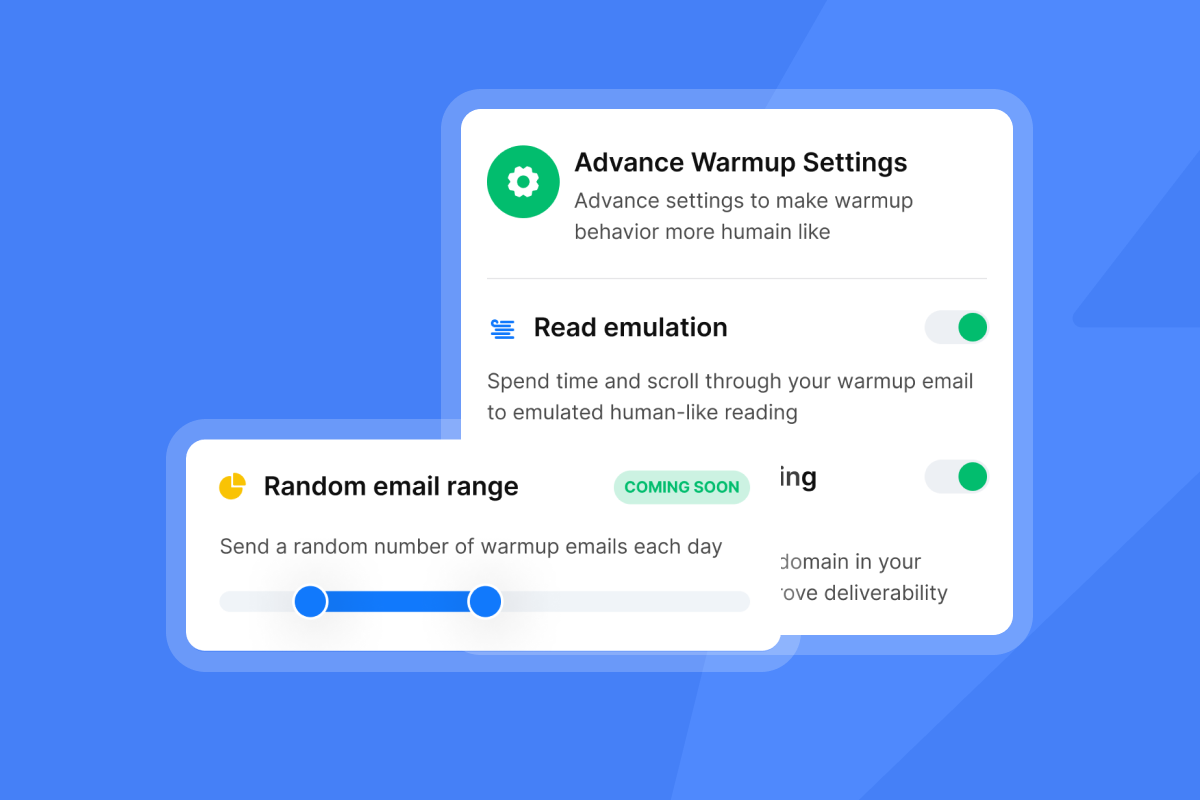
Warmup works by simulating organic email engagement: sending, opening, and replying to messages on a ramp schedule before your cold campaigns go live. A larger, more diverse network produces a more credible reputation signal to Gmail and Outlook. Instantly also uses rotating IP sending algorithms that distribute volume across IP pools to prevent any single IP from accumulating a negative pattern.
"The unlimited email accounts and warm-up features... makes scaling outreach effortless without hitting deliverability issues." - Siddharth S. on G2
Streamlining multi-rep operations
Lemlist's creative personalization features (video thumbnails, custom images, LinkedIn steps) are genuinely strong for one-rep boutique agencies. For a sales team standardizing workflows across 8 reps with different technical skill levels, those features introduce complexity and inconsistency. Instantly's template library and sequence governance tools let you lock down approved copy and structures so every rep runs the same playbook. If video personalization is a priority, Zapier integrations with tools like Vidyard allow you to add video thumbnails to sequences without routing sends through Lemlist's infrastructure.
Avoiding Lemlist billing surprises
A 10-rep team on Lemlist's Multichannel Expert plan pays $109/seat/month, or $1,090/month for sending access on monthly billing. Add extra mailboxes or credit top-ups for LinkedIn steps and that base cost climbs further. Instantly's Hypergrowth plan ($97/month flat) plus the Instantly Credits Growth tier ($47) costs a combined $144/month. That is a $946/month saving on sending costs alone ($1,090 minus $144), a gap that widens further once you compare AI sales agent pricing models across providers.
Table 2: Pricing and total cost of ownership comparison (10-rep team)
Platform | Monthly cost (10 reps) | Annual cost (billed annually) | Pricing model |
|---|---|---|---|
Instantly (Hypergrowth Outreach + Credits Growth) | $144/month | $1,382.40/year | Flat-fee, unlimited sending accounts, no per-seat pricing |
Lemlist (Multichannel, monthly) | $1,090/month | $10,440/year | Per-seat |
Apollo (Organization) | $1,490/month | $14,280/year | Per-seat |
HubSpot Sales Hub Enterprise | $1,500/month | Contact for pricing | Per-seat |

Choosing the best cold email platform 2026
The cold email market in 2026 has consolidated around two categories: specialized sending engines and broad sales intelligence platforms. Here is how the main options compare on deliverability, data quality, ease of setup, and cost. For a fuller framework on evaluating these options, see our guide to choosing an AI sales agent.
- Smartlead: Offers deep deliverability controls and is strong for technically sophisticated teams that want granular IP and sender configuration. The trade-off is setup complexity. Instantly is faster to set up for a growing SDR team, with domain configuration and warmup starting from day one of the free trial.
- Amplemarket: AI-powered prospecting with multichannel engagement and a dedicated Domain Health Center. Strong for enterprise teams with budget for a premium, all-in-one platform. Entry pricing is higher than Instantly's flat-fee model.
- Salesforge: AI-driven personalization with an "Agent Frank" AI SDR for autonomous outbound. A newer entrant with AI-driven personalization and an autonomous AI SDR (Agent Frank), but a smaller warmup network and fewer verified reviews to validate real-world performance.
- Plusvibe: Offers unlimited accounts for agencies, similar to Instantly's model. Less established, with a smaller feature set and fewer integrations.
- Hunter Sequences: Strong free plan suitable for solo operators or very small teams sending fewer than 500 emails per month. Not designed for multi-rep standardization or volume.
For teams evaluating Apollo and Instantly side by side, this 2026 Apollo vs Instantly comparison covers the key trade-offs. Watch Savvy Search Solutions evaluate both as complete sales tools.
How Instantly protects domain reputation
Instantly's warmup system ramps new inboxes from 5 to 30 emails per day over 30 days, with automated engagement from the 4.2M+ account network building a clean sender signal. During this period, Instantly tracks warmup score, spam placement rate, and reply engagement so you can confirm an inbox is ready before adding it to a live campaign. The cold email strategy guide outlines the exact ramp schedule and warmup score thresholds.
Streamlined deployment workflows
The 14-day free trial includes 250 uploaded contacts and 1,000 emails so you can test the full workflow before committing, no credit card required. Compare that to HubSpot's Sales Hub Enterprise, which typically requires a lengthy implementation process with onboarding billed separately.
Escaping rigid enterprise contracts
Instantly's monthly billing means you can scale credit usage up during peak pipeline quarters and reduce it during slower periods. If you add 5 reps for a Q3 push, your Outreach plan cost does not change. If you need more SuperSearch lead lookups for that push, you upgrade your Instantly Credits subscription for one month and drop back when the campaign ends. That flexibility is structurally impossible with annual per-seat contracts.
Apollo vs Instantly: Deliverability benchmarks
Apollo is primarily a sales intelligence database with outreach features added on. Its 230M+ contact database is strong for prospecting, but its sending infrastructure is not built for high-volume cold outreach. Apollo's deliverability features rely on shared IP pools without the dedicated IP rotation that Instantly's SISR provides on the Light Speed plan.
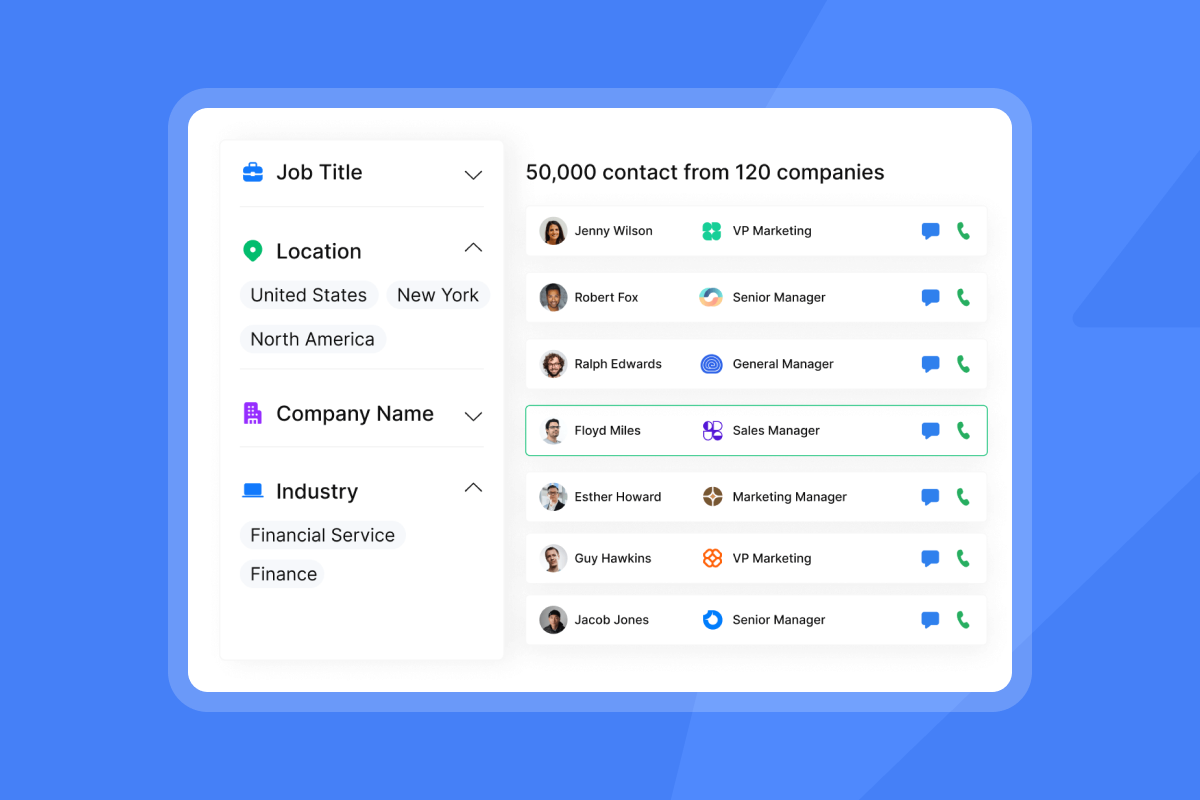
Instantly's SuperSearch provides 450M+ B2B leads with waterfall enrichment across 5+ providers, meaning each lead is cross-checked for accuracy before you spend a send. Apollo wins on data breadth. Instantly wins on sending infrastructure and cost predictability. Watch Speak About Digital's Apollo vs Instantly comparison for a detailed breakdown of how these tools serve different parts of the outbound motion before making a buying decision.
Automated list scrubbing standards
Instantly's bounce detection runs on every campaign and auto-pauses campaigns when bounce rates hit the safety threshold. This protects your domain from reputation damage caused by stale or unverified contact lists. Apollo does not include automated campaign pausing tied to bounce rate monitoring at this level. Before uploading any list, run it through Instantly's built-in email verification to filter invalid addresses. Keep hard bounces at or below 2% and spam complaint rates below 0.1% for sustainable sending. The auto-pause threshold activates before that ceiling is reached.
Proactive inbox health tracking
Instantly's automated inbox placement tests run seed-list checks before and during campaigns to confirm your emails are landing in the primary inbox rather than spam or promotions. You get alerts before a deliverability drop affects your reply rate metrics. Apollo does not offer an equivalent proactive inbox placement testing tool. The Instantly status page provides component-level uptime visibility so you can confirm platform health before a critical campaign launches.
Ensuring reliable campaign attribution
Instantly's analytics dashboard tracks opens, clicks, replies, and opt-outs at the campaign, sequence, and rep level. The reply rate discrepancy documentation explains exactly how each metric is counted, which means you can reconcile Instantly's data against your CRM without unexplained gaps. That auditability is what allows you to present pipeline data to a CFO with confidence.
Prioritizing predictable inbox placement at scale
Scaling outbound from 3 reps to 15 reps is not a matter of adding seats and increasing daily send caps. It requires a system that maintains the same primary inbox placement rate per inbox regardless of total volume. The inputs that determine whether that system holds are warmup network size, IP rotation quality, bounce monitoring, and list hygiene. Instantly addresses all four in a single AI sales agent software platform.
Simplified execution for SDR teams
Clean user interfaces reduce training time and eliminate the operational mistakes that come from reps clicking through complex menus during live campaigns. Instantly's dashboard separates accounts, campaigns, leads, and analytics into clearly labeled sections. A new SDR can run their first campaign without a walkthrough beyond the in-product setup guide.
"I like that Instantly is easy to get started with and has a clean interface. I appreciate that you don't need prior experience to use it, which makes it easy for my team members to adopt." - Meet D. on G2
Stop paying for unused sales seats
Rep turnover is a real operational cost. When a rep leaves a per-seat platform, you continue paying for that seat until the next billing cycle or contract renewal. With Instantly's flat-fee model, a departing rep's accounts simply transfer to their replacement at no additional cost. You pause the warmup on their inboxes, re-assign the accounts, and ramp the new rep without touching your billing plan.
Solving deliverability bottlenecks
When deliverability drops, work through this runbook:
- Pause the affected campaigns immediately to stop accumulating negative signals.
- Check bounce rate and spam complaint data in the analytics dashboard to identify the source, then re-verify your contact list using Instantly's built-in verification to remove invalid addresses.
- Review warmup scores for the sending accounts involved and confirm they are above the minimum threshold.
- Restart at a lower daily cap (drop back to 15 emails per inbox per day for three days), then run an inbox placement test to confirm primary inbox delivery before re-scaling.
Systematic inbox placement for scaling teams
Deliverability is an engineering problem. The teams that maintain consistent primary inbox placement at scale are the ones that treat it as infrastructure, not a setting to toggle. Instantly's architecture builds that infrastructure directly into the platform so sales leaders do not have to assemble it from five separate tools.
Engineered for primary inbox reach
Instantly's Light Speed plan ($358/month, or $286.30/month on annual billing) adds SISR: Server and IP Sharding and Rotation. SISR splits your sending volume across multiple dedicated private servers and IP pools. When an IP shows degrading performance signals, the system rotates it out and replaces it automatically. Campaigns continue without interruption, and the flagged IP is quarantined before it damages the broader pool. For teams sending at high volume to enterprise accounts with strict filtering, SISR is the only scalable path to consistent primary inbox delivery. The IP sharding guide explains the full technical implementation.
All plans include unlimited email accounts and unlimited warmup. Instantly Credits (AI agents, SuperSearch) are a separate subscription starting at $9/month, keeping AI costs visible and controllable. Instantly's strongest advantage over legacy suites and per-seat alternatives is not any single feature. It is the compounding effect of unlimited accounts, a 4.2M+ account warmup network, automated health monitoring, and flat-fee pricing working together as a single system. That system is what lets a 10-rep team operate with the deliverability infrastructure of a 100-rep enterprise, at a fraction of the cost.
Ready to test it with your own domains? Start the 14-day free trial with 250 contacts and 1,000 emails included, no credit card required, and run the inbox placement test before your first live campaign.
FAQs
How does Instantly maintain high primary inbox placement rates?
Instantly uses an automated warmup network of 4.2M+ accounts to build and maintain sender reputation before and during campaigns. For high-volume teams, the Light Speed plan adds SISR technology to rotate dedicated IPs and isolate sending reputation across separate server pools.
Are there annual contracts or hidden fees when scaling my team?
No. Instantly offers flexible monthly plans with flat-fee pricing for unlimited sending accounts and no per-seat charge as your team grows. Instantly's AI agents and lead lookups are powered by a separate, transparent Instantly Credits subscription starting at $9/month.
How does Instantly monitor domain health?
Instantly monitors sending accounts continuously and pauses campaigns automatically when bounce rates exceed the safety threshold after a minimum of 100 sent emails. Automated inbox placement tests also confirm primary inbox delivery status before large campaigns launch.
How long does it take to migrate our existing campaigns and leads?
Most teams migrate quickly using native CSV import and direct integrations with HubSpot and Salesforce. Instantly's automated warmup system begins building reputation on existing sending accounts from day one without requiring a full restart.
Key terms glossary
Primary inbox: The main tab in Gmail or the focused inbox in Outlook where important messages appear. Emails filtered into spam or promotions see dramatically lower open and reply rates.
Sender reputation: A score assigned by email providers based on your domain's sending history, bounce rates, and recipient engagement. Poor reputation automatically routes emails to spam regardless of copy quality.
SISR (Server IP Sharding Rotation): Technology that distributes outbound email across multiple dedicated IP addresses and automatically rotates degraded IPs out of the sending pool to protect overall deliverability.
Warmup network: A pool of real email accounts that exchange messages with new sending addresses to build positive reputation signals before cold campaigns launch.
Bounce rate: The percentage of emails that fail to deliver. Hard bounces from invalid addresses above 2% damage sender reputation and can trigger spam filters across future sends.
Total cost of ownership (TCO): The complete cost of using a platform including base subscription fees, per-seat charges, add-on features, implementation costs, and ongoing support expenses over a defined period.
Read next
- Instantly vs Lemlist: Head-to-Head Comparison for Cold Email Teams: A direct feature and pricing breakdown for sales teams deciding between the two platforms on deliverability, warmup, and cost.
- From 1% to 5%: Improve your cold email reply rates: A step-by-step guide to lifting reply rates through sequence structure, subject line testing, and send window optimization.
- Cold Email Deliverability Guide: DNS Setup, Warmup, and Bounce Control: Everything you need to configure SPF, DKIM, and DMARC correctly and keep your domain off spam filters at scale.



