.svg)
%20(1).svg)


Updated October 11, 2026
TL;DR: The platform average cold email reply rate is 3.43%, not 20%. A human SDR costs $102,000 to $145,000 fully loaded per year, and often more when turnover is factored in. An AI Sales Agent stack on Instantly.ai starts around $141 per month, but only works if you warm domains for 4 to 6 weeks and keep bounces below 2%. The best AI sales agent for a startup is not the most autonomous one. It is the most integrated one, with a human handling discovery, pricing, and closing while AI handles the high-volume, repetitive prospecting work. This guide gives you the cost breakdown, vendor scorecard, and a 30-day launch sequence to book your first meeting without burning your domain.
The average cold email reply rate is 3.43%, which means 96 out of every 100 prospects never respond. The gap between top-quartile senders and everyone else isn't better AI but better deliverability and data hygiene, according to Instantly's 2026 Cold Email Benchmark Report, which analyzed billions of interactions from January 1 to December 18, 2025.
Most founders buying an AI sales agent for startups expect it to replace an SDR. The ones who succeed use it to handle the high-volume, repetitive prospecting work and keep a human on the conversations that require judgment, discovery, and trust. This guide breaks down what AI sales agents do, how they compare to human SDRs on cost and output, where they fail, and what a grounded 30-day rollout looks like for a lean team watching runway.
Beyond the hype: anatomy of an AI sales agent
An AI BDR for startups is software that automates prospecting, email writing, follow-up sequencing, and reply handling without a human executing each step. It sources leads matching your ideal customer profile, drafts and sends personalized emails, follows up on no-replies, and routes interested prospects to your calendar.
How AI sales agents generate ROI
AI sales agents generate ROI through time compression and consistent execution. A human SDR spends a large portion of each day on tasks AI can handle: researching prospects, drafting first emails, scheduling follow-ups, and triaging replies. Instantly's AI Sales Agent sources leads from a 450M+ lead database, writes the sequence, and optimizes on replies automatically. The Lead Finder Agent monitors your campaign's active lead count and tops it up when it drops below your set threshold, so pipelines don't run dry between manual refreshes.
AI sales agent vs. hiring SDR: a cost breakdown
Here is how AI sales agent vs hiring SDR maps out at seed or early growth stage.
| Factor | Human SDR | AI Sales Agent stack (Instantly) |
|---|---|---|
| Annual cost (fully loaded) | $102,000–$145,000+ | $1,692/year (Outreach Growth + Credits Growth + CRM Growth at $47/mo each) |
| Ramp to first meeting | 3–6 months | 4–6 weeks (warmup period) |
| Works off-hours | No | Yes, 24/7 |
| Complex discovery | Yes | No, human AE required |
The fully loaded SDR figure combines base salary, payroll taxes, benefits, recruiting, ramp time, tools, and management overhead, per the Hidden Costs of In-House SDRs vs Offshore (2026) breakdown by Jason Lalk. Employer payroll taxes alone add $7,800 to $14,200 on top of base salary, and benefits packages add a further $15,000 to $25,000. SDR turnover averages 39% annually, meaning roughly 2 out of every 5 hires leave within 12 months, adding $40,000 to $90,000 per departure in wasted recruiting and ramp costs. When turnover is factored in, the source puts the real annual cost at $116,500 on the conservative end and up to $210,000 in high-cost markets, well past the base salary figure most founders budget for.
What AI can't replace (yet)
AI handles volume and consistency. It doesn't handle nuance. Once a prospect asks a real question or pushes back on pricing, a human needs to take the conversation. Discovery conversations, objection handling, and relationship building all require judgment that current AI agents can't reliably replicate.
Calculating the true ROI of AI vs. human SDRs
The $141/month starter stack combines Outreach Growth ($47), Instantly Credits Growth ($47), and CRM Growth ($47) from Instantly's pricing page. That's roughly $1,692 per year versus $102,000 or more for a human SDR. Both numbers carry hidden costs worth examining before committing.
Hidden expenses in AI sales tools
Per-seat platforms scale cost with headcount. Apollo's per-seat price starts at $49 per user per month on annual billing, but data access requires additional credits on top of that base fee, which is a cost that compounds as your team grows. Instantly's SuperSearch delivers the same data access through a flat volume-based Credits subscription rather than a per-seat rate.
On Instantly, the cost variable to monitor is Instantly Credits consumption. Copilot, AI Sales Agent (5 credits per generated lead), AI Reply Agent (5 credits per reply), and Lead Finder Agent all draw from the same Credits subscription, which is separate from your Outreach plan and starts at $9/month. Monitor credit burn weekly until you establish a predictable baseline.
Converting spend into sales meetings
The platform average reply rate is 3.43%, according to Instantly's 2026 benchmark report. Top-quartile senders reach 5.5%+ and the top 10% clear 10.7%+. Consistent sending patterns produce 15 to 20% higher replies than erratic volume. At 3.43%, a campaign to 1,000 verified contacts produces roughly 34 replies. The ratio of those replies that convert to booked calls depends heavily on your offer, ICP specificity, and how quickly you follow up, making that final step one where human speed and judgment still matter.
Ramp time: AI vs. human SDRs
A human SDR typically takes 3 to 6 months to ramp to full productivity. An AI stack typically reaches full send volume after 6 to 10 weeks, which includes the 4 to 6 week domain warmup period before hitting volume safely. Instantly's 2026 Cold Email Benchmark Report found that consistent senders produce 15 to 20% higher reply rates than erratic senders, and domain warmup is the foundation of that consistency. Senders who skip or abbreviate warmup are the most common cause of deliverability crashes in new outbound deployments.
When a human SDR outperforms AI
If your average contract value is above $50,000, your sales cycle involves multiple stakeholders, or your product requires deep technical discovery, a human SDR outperforms any AI agent today. Automate when your ACV is low enough that volume beats white-glove outreach, and when your ICP is specific enough to maintain list quality. Whether a startup should use an AI sales agent comes down to those two variables: ACV and ICP specificity.

Why domain warmup matters for your pipeline
Sending cold email from a fresh domain without warmup almost guarantees spam placement. No subject line or AI copy overcomes a bad sender reputation. The deliverability physics are not negotiable, and this is where most startup outbound efforts fail in the first month.
Targeting the 3.43% reply average
Reaching even the platform average requires landing in the primary inbox. Instantly's 2026 benchmark report identifies the key inputs: emails under 80 words, sequences of 4 to 7 steps, and Monday as the best launch day, with Wednesday producing the highest reply rates across the week. First-touch emails generate 58% of all replies, so your opening line carries most of the weight. The Instantly video on Why Most Cold Emails Now go to Spam covers the technical triggers most founders miss on their first campaign.
"Instantly has completely streamlined our cold email operations. The platform is intuitive, reliable, and makes managing outreach campaigns at scale incredibly easy. Deliverability tools, inbox management, and campaign automation have helped us save significant time while generating consistent results." - Krithika on Trustpilot
The 6-week domain ramp-up period
Start warmup at 5 to 10 emails per day per inbox and increase gradually, keeping campaign sends capped at 30 emails per inbox per day. Treat 30 days as the 2026 floor for brand-new domains, as Google now flags domains younger than 30 days with a warning banner that tanks reply rates before a prospect reads your first line. Instantly's warmup mechanics documentation explains how the warmup system works for OAuth-connected accounts. The Inbox Placement automated tests let you verify inbox placement across 94 blacklists before launching volume.
Why emails land in spam folders
The biggest spam triggers are a high bounce rate, spam complaints, and sending identical copy across many accounts without variation. Google required SPF, DKIM, and DMARC for bulk senders starting February 1, 2024. Microsoft followed with its own enforcement for high-volume senders in May 2025, according to Instantly's deliverability guide. Keep bounces below 2% per the benchmark report. Use Spintax to vary copy across inboxes. Enable BounceShield to automatically skip known high-risk recipients. The AI Spam Words Checker evaluates copy in context rather than by keyword list alone, and Instantly's DNS setup guide walks through each authentication record with propagation timing.
6-point scorecard to compare AI sales platforms
Use this when evaluating any vendor, including whether Instantly is the right fit for your situation.
| Criteria | What to look for | Red flag |
|---|---|---|
| Pricing model | Flat-fee, volume-based | Per-seat per user |
| Credit cost visibility | Published cost per action | Opaque or bundled credits |
| Data included | Native database, waterfall enrichment | Separate data contract required |
| AI agent billing | Clearly separated from base plan | Mixed into platform fee |
| Trial terms | No credit card, 14-day access | Paid trial or auto-renew day 1 |
| Cancellation | Per-module, cancels immediately | Annual lock-in, no clear exit |
Predicting your true monthly spend
Model credit burn before scaling. The AI Sales Agent charges 5 credits per generated lead and the AI Reply Agent charges 5 credits per reply handled. At those rates, keep a weekly eye on your Instantly Credits dashboard until you establish a stable usage baseline. The Deliverability AI Agent is included in Hypergrowth ($97/month) and above Outreach plans at no additional Credits cost, which is worth factoring into your plan choice from day one.
Assessing lead data reliability and CRM integration
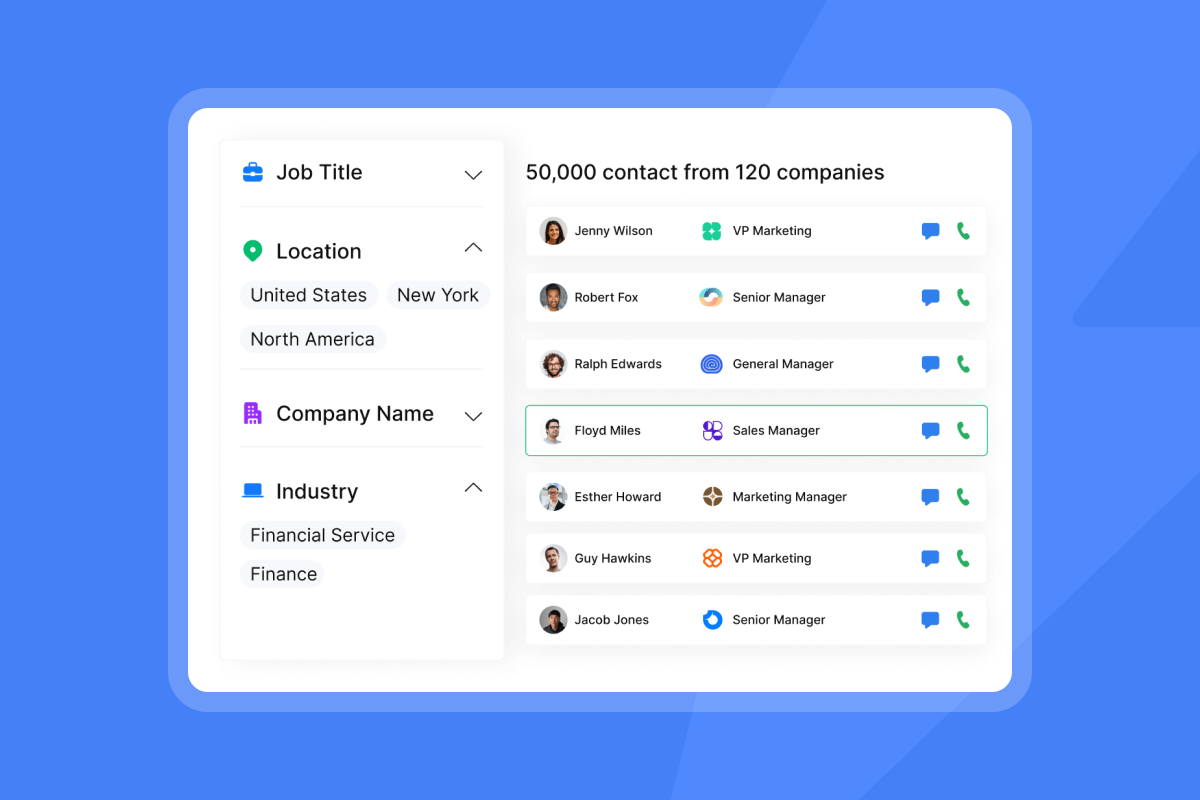
Instantly's SuperSearch covers 450M+ B2B leads with waterfall enrichment across BetterContact, ContactOut, Findymail, and others. SuperSearch-sourced leads ship pre-verified. CSV or HubSpot imports do not, so run lead verification at 0.25 credits per lead on any imported list before sending. For CRM connectivity, native integrations include HubSpot via bidirectional Automations, Pipedrive, Slack, Clay, and Zapier. Apollo's native CRM sync covers Salesforce and HubSpot only and does not extend to Pipedrive or Zoho. Instantly covers broader native integration coverage at a flat per-volume rate, so the cost stays predictable as your headcount grows.
Your 30-day plan to launch an AI outreach engine
This plan assumes you are starting from a fresh domain with no warmup history. Each week builds on the one before it. Week one covers sending infrastructure. Week two builds your verified lead list. Week three launches your first AI-generated sequence. Week four turns replies into booked meetings. Follow the weeks in order, because skipping the infrastructure and hygiene steps is the fastest way to burn a new domain before your first campaign reaches the primary inbox.
Week 1: securing your sending identity
Register two to three secondary domains. Never send cold email from your primary business domain. Configure SPF, DKIM, and DMARC on each domain using Instantly's DNS setup documentation. Connect email accounts via Google Workspace or Microsoft 365, then enable warmup immediately. Warmup activates at the next 12:00 AM UTC after you enable it, so getting accounts connected on day one gives you the maximum ramp window.
Week 2: mastering data hygiene for AI BDRs
Build your first lead list in SuperSearch using industry, headcount, job title, and location filters. Run any CSV-imported contacts through lead verification before adding them to a campaign. Add your main domain to the Global Blocklist. Use the Signals filter to identify prospects with buyer-intent signals such as funding news, leadership changes, or competitor mentions. The pipeline generation guide helps sharpen your ICP before your list is finalized.
Week 3: launching your first AI sequence
Use the AI Sequence Writer to generate a 4 to 7-step sequence from your offer and ICP inputs. Keep each email under 80 words. Run every draft through the AI Spam Words Checker before activating. Enable Spintax to vary copy across sending accounts. Keep sends under 30 per inbox per day throughout week three, staying conservative until deliverability health is confirmed. Launch on a Monday, which the 2026 benchmark report identifies as the best launch day for reply rates.
Week 4: turning inbox replies into demos
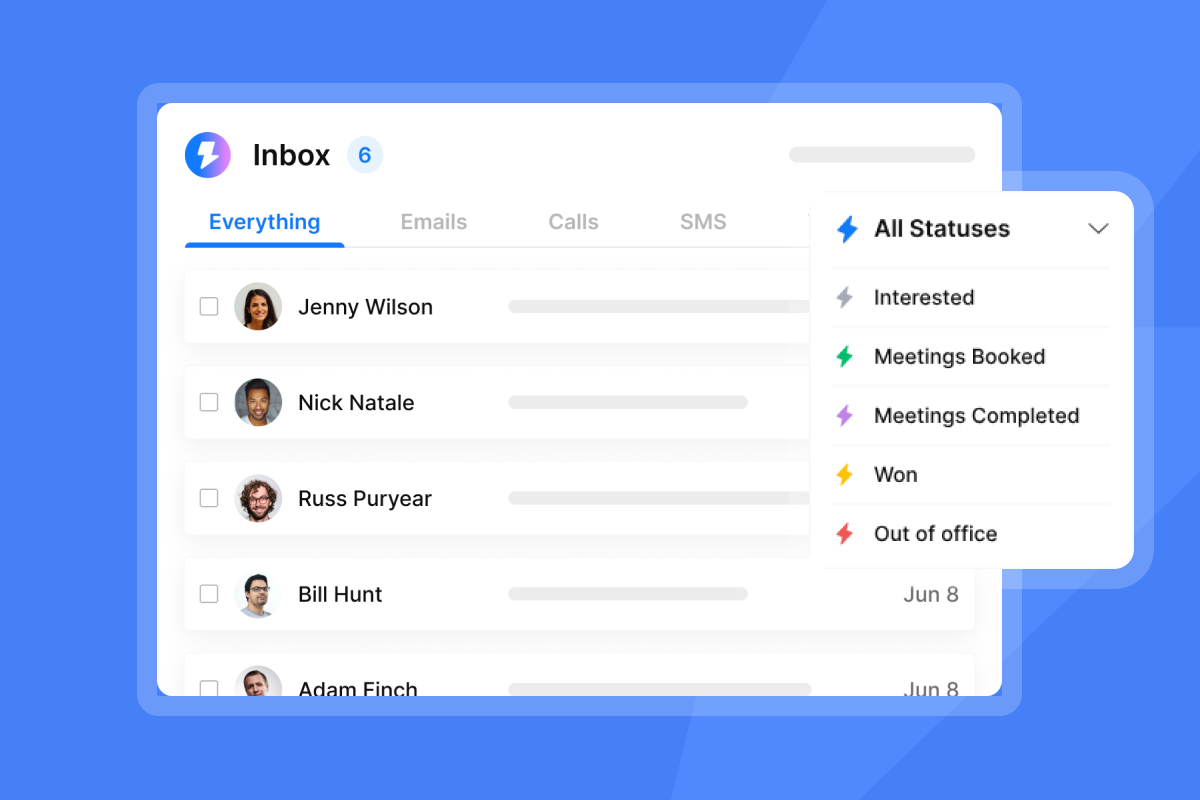
Set up Unibox v2 to manage all replies from one dashboard. Configure the AI Reply Agent in Human-in-the-Loop mode: it drafts a reply within 5 minutes of a prospect's first response and routes it to your Slack for approval before sending. Enable Out-of-Office Resume to automatically pause and resume contacts who are traveling.
Instantly: a blueprint for scaling outreach
Instantly is built specifically for this use case: going from lead discovery to booked meeting without hiring an SDR team or stitching five tools together.
Eliminating per-seat sales taxes
Every Outreach plan includes unlimited email accounts and unlimited warmup. A 10-person team pays the same as a solo founder at the same volume tier. This is the core economic difference from per-seat platforms where base-tier costs scale with every hire you make. Apollo is a strong option for teams that need a combined data-plus-outreach seat. Instantly covers that same use case at a flat per-volume rate, so the cost stays predictable as your headcount grows.
"I appreciate how Instantly allows me to manage the entire cold email process from one place. I can find leads, run campaigns, manage multiple email accounts, and track replies without needing to switch between different tools." - Martin on G2
Drafting high-conversion sequences and managing replies
The AI Sequence Writer generates a full multi-step sequence from your offer and audience inputs. The AI Spam Words Checker evaluates copy using context-aware AI rather than a static keyword list, compressing the first-draft writing cycle from hours to minutes. The AI Reply Agent responds to prospects in under 5 minutes, 24/7. In Autopilot mode, it sends pre-approved responses to common scenarios. In Human-in-the-Loop mode, it drafts and routes the reply to your Slack with an AI-generated response preview for your approval before sending, covering the off-hours gap a lean team can't staff without hiring.
Precision prospecting and deliverability monitoring
SuperSearch's Signals filter adds roughly 5.8 million new buyer-intent signals per week from social activity, Reddit pain points, competitor mentions, funding events, and leadership changes. Filtering by signal type before exporting means your opening email reaches prospects when they are most likely to respond. The Deliverability AI Agent monitors DNS health, blacklists, warmup scores, bounce rates, and provider balance every 24 hours on Hypergrowth and above plans, surfacing one-click fixes and Slack alerts before problems affect campaign performance.
Start your 14-day free trial on Instantly with no credit card required. The trial includes 250 uploaded contacts and 1,000 emails so you can validate your setup and get your first reply before committing to a paid plan. Use the 30-day sequence above as your launch checklist.
FAQs: AI sales agents for startups
What reply rate can a startup expect?
The platform average across Instantly's 2026 benchmark dataset is 3.43%. Top-quartile senders reach 5.5%+ through disciplined list hygiene, sequences of 4 to 7 steps, and emails under 80 words.
How long before the first booked meeting?
Allow 4 to 6 weeks for domain warmup before hitting full send volume, then expect replies to start arriving within the first week of active sending at scale. The speed from first reply to booked meeting depends on how quickly your AI Reply Agent or you personally follow up on interested responses.
Is it possible to cancel without penalty if it doesn't work?
Each Instantly subscription (Outreach, Credits, CRM) cancels separately via Settings > Billing. Cancellation takes effect immediately, not at the end of your billing cycle. Canceling one plan while others stay active ends that plan right away. Monthly plans carry no annual lock-in, and the 14-day free trial requires no credit card.
Can AI agents damage a domain's sender reputation?
They can if you skip warmup, send to unverified lists, or ramp volume too fast. BounceShield automatically skips known high-risk recipients, and the Deliverability AI Agent (Hypergrowth and above) monitors blacklists and warmup scores every 24 hours. Keep bounces below 2% and stay within 30 campaign emails per inbox per day.
Does managing this tool require a dedicated SDR?
No. The AI Sales Agent runs in Autopilot mode with a configurable daily send limit. At typical early-stage send volumes, one person can check Unibox daily and handle live reply conversations without needing a dedicated SDR role.
Key terms glossary
AI BDR: An AI-powered system that performs the prospecting and outreach tasks traditionally handled by a Business Development Representative. This includes lead sourcing, email writing, sequencing, and initial reply handling without a human executing each step manually.
Warmup: The process of gradually increasing daily email send volume from a new inbox or domain to build sender reputation with email providers. Start at 5 to 10 sends per day and ramp to a maximum of 30 campaign emails per inbox per day over 4 to 6 weeks.
Reply rate: The percentage of contacted prospects who respond to at least one email in a sequence. The platform average is 3.43%, with top-quartile senders reaching 5.5%+ and the top 10% clearing 10.7%+, per Instantly's 2026 benchmark report.
Primary inbox: The main inbox tab in Gmail or Outlook where email providers place messages from trusted senders. Landing here rather than in promotions or spam is the single biggest factor in whether a cold email gets read.
Waterfall enrichment: A multi-provider email lookup process where a system checks one data source, then falls back to the next if no match is found, continuing through the provider list until an address is located or all sources are exhausted.
Send windows: Scheduled time blocks during which your campaigns send emails. Limiting sends to business hours in your target prospect's time zone, typically 8:00 to 11:00 AM local, improves open and reply rates by matching when buyers check their inboxes.
Read next
- AI agents for sales calls: what actually works in 2026: A capability map covering which AI tools hold up on live calls and where human reps still need to lead the conversation.
- Artisan vs other AI SDR tools: an honest comparison: A side-by-side breakdown of Artisan against competing AI SDR platforms on pricing, data quality, and deliverability controls.
- How to fix email deliverability issues in your outbound sales platform: A step-by-step diagnostic for founders and sales teams dealing with spam placement, high bounce rates, or sudden reply rate drops.


