.svg)
%20(1).svg)


Updated August 3, 2026
TL;DR: The Artisan vs. other AI SDR tools debate comes down to one real question: do you want an autonomous black box or a controllable sending system? Artisan operates as a credit/volume-based autonomous agent with no publicly available pricing and limited published deliverability controls. 11x starts at $3,750/month billed annually ($45,000/year) on the Growth plan. Salesloft does not publish pricing publicly. Instantly.ai offers a high-deliverability alternative with unlimited sending accounts, built-in warmup, and advanced deliverability tools on a flat fee starting at $47/month. The pricing, deliverability, and governance data in this comparison consistently favors human-led hybrid models over fully autonomous AI-only systems.
Handing 100% of your outbound execution to an autonomous agent without human oversight is a direct threat to your domain reputation. Sales leaders adopt AI SDR tools for outbound B2B sales to save time, but platforms without deliverability guardrails can cause measurable inbox placement drops that take longer to recover from than they do to trigger. This guide compares Artisan to the broader AI SDR market, analyzing deliverability systems, pricing structures, and operational controls so you can build a predictable pipeline with the right AI sales agent for your workflow.
Defining success metrics for AI SDR platforms
When you compare AI SDR tools in 2026, the most important distinction is between two fundamentally different product philosophies: Autonomous Agents and Augmentation Tools.
Autonomous Agents, including Artisan (Ava) and 11x (Alice), promise to run prospecting, personalization, and outreach end-to-end with minimal human input. Augmentation Tools, including Instantly's AI SDR platform and Regie.ai, give your reps AI-assisted efficiency while keeping human judgment in the loop for final review and send approval.
The pricing, deliverability, and governance data in this comparison supports the augmentation approach: human-led hybrid models give you more operational control at lower cost than fully autonomous AI-only systems. AI excels at the repetitive portion of sales research and sequencing, but human review earns its place on timing decisions, tone adjustments, and objection handling before an email reaches a prospect.
The hybrid model works like this: AI handles lead research, sequence drafts, subject line variation, and initial reply classification. Human reps review edge cases, approve high-value sequences, and own the relationship once a reply comes in. The sending infrastructure, deliverability monitoring, and domain health protection run as an engineered system underneath all of it.
Securing primary inbox placement
Deliverability is a system, not a checkbox. Look for an outbound platform that manages domain health monitoring, warmup pacing, bounce thresholds, and IP reputation as interconnected components, not isolated features.
Autonomous agents typically rely on shared, commodity IP pools to send at scale. When another sender on that shared pool hits spam traps or racks up complaints, your sender reputation suffers even though your copy and targeting are clean. You have zero visibility into who shares your pool or what they are sending. This is the structural risk that sales leaders often discover only after a deliverability crash.
A properly engineered system distributes volume across multiple warmed inboxes, keeps daily sends below 30 emails per account, monitors DNS health continuously, and isolates a troubled account before it contaminates the rest of your sending infrastructure.
Comparing AI SDR billing structures
Pricing transparency is a signal about how a vendor thinks about your interests. Here is what the research shows across the key platforms in this comparison:
Platform | Pricing model | Est. monthly cost | Annual commitment |
|---|---|---|---|
Artisan (Ava) | Volume/credit-based | Not published | Not publicly confirmed |
11x (Alice) | Per agent instance | $3,750+ | Required, $45,000/year (Growth plan) |
Regie.ai | Per seat | $180/user/mo (AI SEP, 10-seat min) or $499/user/mo (Force Multiplier, 5-seat min) | Required, $21.6k+ floor |
Salesloft | Per seat | Not published | Required, negotiated |
Instantly | Flat fee | $47 to $358/mo | Optional, 20% discount |
Artisan does not publish pricing publicly. 11x's Alice starts at $3,750/month billed annually on the Growth plan, putting the entry-level annual commitment at $45,000/year. Regie.ai publishes two plans: AI SEP at $180/user/month (annual contract, 10-seat minimum, putting the annual floor at $21,600) and Force Multiplier Rep at $499/user/month (annual contract, 5-seat minimum, putting the annual floor at $29,940). Both require annual contracts.
Salesloft does not publish pricing publicly. Negotiated contracts, dialer add-ons, and enrichment tools all contribute to total cost of ownership that is not visible from the headline license.
A full stack combining the Growth Outreach plan ($47/month), Growth Credits plan ($47/month), and Growth CRM plan ($47/month) runs $141/month.
Admin controls and sequence governance
Governance controls prevent reps from modifying global domain settings, sending unapproved templates, or triggering deliverability events that burn shared sending capacity, regardless of how many reps are on the team.
Fully autonomous agents operate as black boxes. You configure the ICP and offer, and the agent runs. That efficiency comes at the cost of auditability. When you hand full autonomy to an AI agent, you create a governance gap: if a sequence goes out with messaging that violates brand guidelines or compliance requirements, you will struggle to trace the root cause and prove what happened to your CFO or legal team.
Instantly's workspace model lets admins set sequence templates, global blocklists, and send-window rules that apply across all rep accounts. AI Blocklist Triggers automatically remove leads who unsubscribe on all plans. On Hypergrowth and above, you can also trigger removal based on reply content keywords and account status, without requiring rep action. Separately, Unibox NLP custom label selection and reply-classification controls are available on Hypergrowth and Light Speed plans, giving RevOps a standardized view of pipeline signal across the team.
System accuracy in lead qualification
Reply classification accuracy directly affects pipeline predictability. If your AI misclassifies an "Interested" reply as "Not Interested," a qualified lead goes cold. If it misclassifies an auto-reply as a positive response, a rep wastes time on a meeting that was never booked.
Instantly's 2026 Cold Email Benchmark Report (data: Jan 1 to Dec 18, 2025) sets clear performance targets for sales teams. The platform average reply rate is 3.43%, the top quartile reaches 5.5%+, and the top 10% of senders achieve 10.7%+. Teams with consistent, stable sending patterns see 15 to 20% higher reply rates than irregular senders, which speaks directly to the value of standardizing your team's sending behavior.
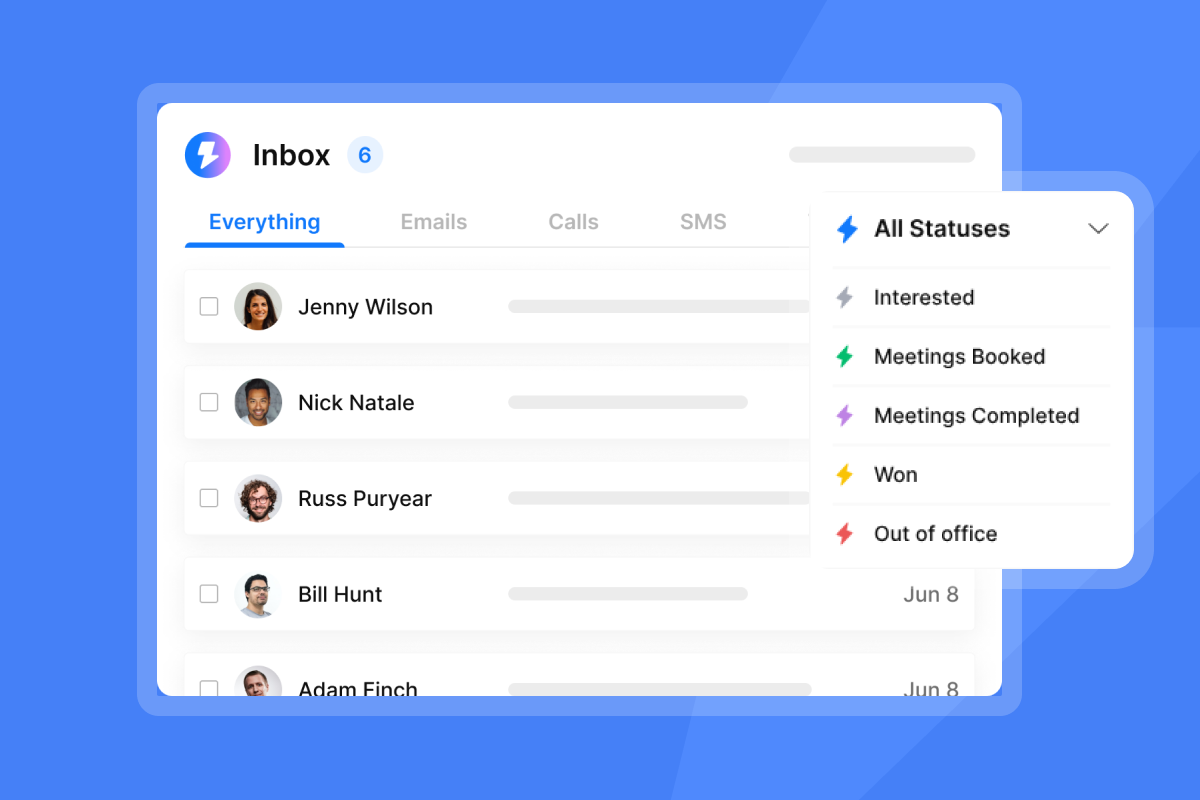
Instantly's Unibox NLP auto-classifies incoming replies across 50+ languages with three built-in labels: Interested, Not Interested, and Out of Office. On Hypergrowth and Light Speed plans, you can create custom labels that let your RevOps team build classification logic mapped to your specific pipeline stages.
Key performance benchmarks for Artisan users
Artisan's core value proposition is time savings at the top of the funnel. The agent handles prospect research, personalization, and sequence creation without rep involvement. For lean teams where the bottleneck is rep time rather than sending infrastructure, this saves meaningful hours per week. For a technical look at how AI SDRs work under the hood, see Instantly's breakdown.
The operational reality for sales teams with quota accountability is more complicated.
Reliability and deliverability specs
Artisan's public documentation does not detail its sending infrastructure, warmup methodology, or IP pool architecture. Without visibility into these components, you cannot predict how primary inbox placement will hold up under volume. Shared IP pool contamination is one of the most common causes of sudden deliverability drops in cold outreach, and it is a risk that has nothing to do with your copy or targeting.
Platforms with dedicated sending infrastructure let you configure custom tracking domains, isolate sender reputation per client or campaign, and monitor DNS health in real time. These are foundational deliverability controls for any team sending more than a few hundred emails per day.
Operational guardrails and constraints
When you hand full autonomy to an AI agent, you lose the checkpoint that catches messaging that is off-brand, legally questionable, or poorly timed.
The AI Reply Agent on Instantly illustrates the difference. It supports both Human-in-the-Loop mode (where a rep sees the AI draft and approves before send) and Autopilot mode (where replies go out automatically). For most sales leaders, Human-in-the-Loop mode on high-value accounts and Autopilot on routine objection handling is the right balance. This is the hybrid model working as intended.

Engineered reliability vs commodity sending
The most reliable outbound systems are built on one core principle: distribute volume so no single inbox ever carries too much weight. Keeping daily sends at or below 30 emails per inbox means a deliverability problem with one account stays isolated rather than contaminating your entire sending pool.
Commodity systems optimize for throughput from a single infrastructure layer. Engineered systems optimize for sustainable reputation across a distributed account network. Instantly's approach is to treat each email account as a distinct reputation asset, so as you add accounts, your total sending capacity grows while each individual account's daily send count stays within safe thresholds.
Email deliverability and inbox health
Instantly's deliverability system operates across several interconnected layers. The private deliverability network includes 4.2M+ accounts used for warmup and engagement, which means new inboxes build sender reputation faster than manual warmup methods allow.
The Deliverability AI Agent runs automatically every 24 hours and monitors DNS health, blocklist status, warmup scores, bounce rates, provider balance, and reply-rate benchmarks. When it detects a risk, it surfaces the affected component, explains why it matters, and offers one-click remediation actions (pause campaigns, replace risky accounts, rebalance provider distribution) so you can fix deliverability issues before they crater your monthly meetings target. This agent is available on Hypergrowth and above Outreach plans.
Automated Inbox Placement tests run against 94 blacklists and check placement across major email providers. For sales leaders who need to prove deliverability to stakeholders, these tests produce auditable results.
Scaling rep operations securely
The Light Speed plan's SISR (Server and IP Sharding and Rotation) addresses the highest-stakes deliverability risk at scale: IP-level contamination from other senders. SISR automatically assigns dedicated, private IP pools to eligible workspaces and rotates servers and IPs to maintain predictable inbox placement for Light Speed users managing larger sending volumes.
For sales teams running high-volume outbound, SISR is a critical architectural feature that isolates your sending reputation from every other sender on the platform. It automatically assigns dedicated, private IP pools to eligible workspaces and rotates servers and IPs to maintain predictable inbox placement.
Matching platform features to workflow
Before signing any AI SDR contract, run your evaluation against these criteria, or take Instantly's AI SDR fit quiz for a faster read:
- CRM integration depth: Does the platform support native, bidirectional sync with HubSpot? Instantly's native HubSpot integration supports two-way sync via Automations, including contact, deal, and task creation triggered by lead replies or campaign completions.
- Implementation timeline: A 90-day cycle is a reasonable target for full team rollout. Autonomous agents requiring custom AI training can extend this to several months.
- Audit-friendly reporting: Can you pull a report on domain health, bounce rates by rep, and reply classification accuracy that will hold up to CFO scrutiny?
- Workspace isolation: Can you separate clients or business units into isolated workspaces to prevent cross-contamination of sending data and domain reputation?
How 11x compares to Artisan for SDR teams
Artisan and 11x both promise to replace your BDR/SDR function with an agentic sales agent that prospects, personalizes, and sequences without human involvement. The execution differences matter for your decision, especially when weighing an AI SDR vs human SDR approach.
Autonomous workflows and data quality
11x requires an annual commitment starting at $45,000/year on the Growth plan, making it a major budget decision for most teams. Artisan does not publish pricing or contract terms for self-serve evaluation. Both platforms use proprietary databases that are not independently auditable. You cannot inspect the data lineage, verify consent status, or confirm the freshness of the contacts the agent selects.
Standard sales engagement platforms like Instantly give your team direct control over every sequence step, send window, and A/Z test variant. The AI Sequence Writer drafts full multi-step sequences from your offer and audience inputs, and your reps review and approve before any email goes out.
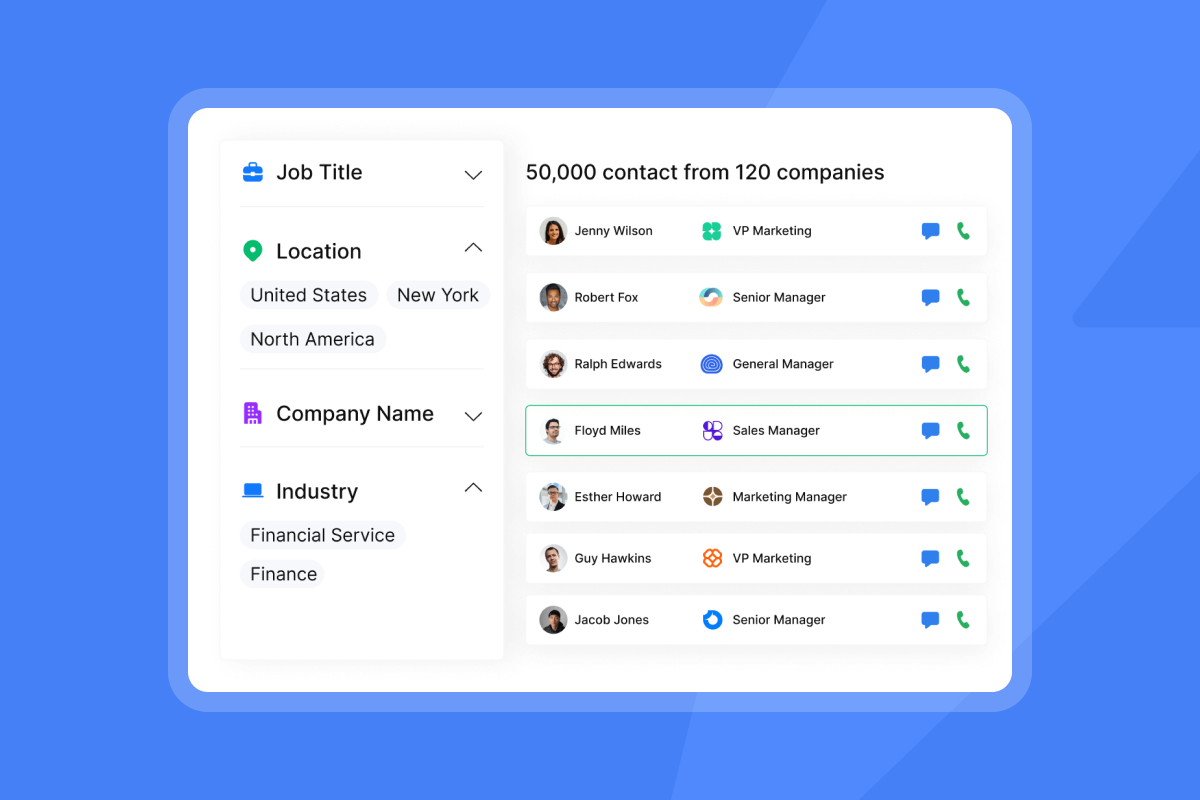
Instantly's SuperSearch provides access to 450M+ B2B contacts with waterfall enrichment that checks Instantly's own database first, then sequences through 5+ data partners (BetterContact, ContactOut, Findymail, IcyPeas, LeadMagic, Prospeo, Wiza) until a verified result is found. SuperSearch-sourced leads ship pre-verified, and a separate verification step is available for imported lists. This transparency matters when your legal team asks about data provenance.
How Artisan compares to Regie for SDR workflows
Regie.ai and Artisan occupy adjacent but different positions in the AI SDR market. Regie is fundamentally a content generation and sequencing tool. Artisan is a fully autonomous agent. Neither one owns its sending infrastructure in a way that gives you direct deliverability control.
Sequencing capabilities and team access
Regie excels at generating on-brand sequence copy quickly. Its AI SEP plan at $180/user/month gives your reps AI-drafted sequences they can edit before sending through an external sending platform. The quality depends heavily on the prompt templates and ICP inputs your team configures.
Artisan's Ava is more autonomous on the execution side, handling the full cycle from prospect selection through sequence sending. However, both tools share the same gap: neither provides the domain health monitoring, warmup network, or IP-level controls that protect your sender reputation at volume.
Regie's per-seat model means your access costs scale directly with headcount. A 10-rep team on the AI SEP plan pays $1,800/month just for access, before factoring in sending infrastructure. The Force Multiplier Rep plan at $499/user/month includes 10 mailboxes with warming, but still requires an external sending platform for teams that need dedicated IP controls. Instantly's flat-fee model covers unlimited seats within a workspace. Your RevOps lead can configure global settings (blocklists, send windows, sequence templates) that apply to every rep without managing per-seat licenses. Automations supports conditional branching and integrates with HubSpot, Pipedrive, Slack, and 15+ other platforms at no additional per-seat cost.
Salesloft capabilities compared to Artisan
Salesloft is a legacy sales engagement platform built for enterprise revenue organizations with deep workflow automation, built-in dialer and coaching tools, and multi-year enterprise contracts. Comparing it to Artisan is useful because many sales leaders are deciding whether to stay with a legacy suite, move to autonomous AI, or build a leaner hybrid stack.
CRM syncing, hidden costs, and renewal terms
Salesloft's CRM integrations are built for enterprise teams of 50+ reps, with complex field mappings and deep activity logging. Implementation and onboarding fees run $5,000 to $25,000 on top of a base quote of $62,000 to $68,000, and once the power-dialer add-on and other extras are included, total Year 1 cost reaches $131,000 to $176,000, none of which appears in the per-seat headline price.
Instantly's native HubSpot integration supports bidirectional sync via Automations. Triggers include lead replies, campaign completions, and interest status changes. Actions include creating contacts, deals, tasks, and notes in HubSpot, covering the full SDR-to-AE handoff workflow without a six-month implementation cycle. The HubSpot integration documentation covers the full configuration.
Salesloft does not publish pricing publicly, and negotiated contracts combined with dialer add-ons, enrichment tools, and implementation costs mean the true cost of ownership is not visible until late in the sales cycle. Annual contracts lock you in before you have validated pipeline outcomes from the platform. Salesloft requires contacting your account manager or Customer Success team to cancel, with no self-serve exit path. Instantly lets you cancel any subscription module independently via Settings > Billing. The 20% annual discount is available if you prefer to commit, but there is no lock-in if you start on monthly. The outreach plans comparison covers the full feature breakdown by tier.
Where Artisan delivers value
To give Artisan a fair evaluation, here is where the platform genuinely helps, not just where it falls short.
Artisan's strongest use case is automating the research and initial outreach steps that consume a large portion of a typical SDR's daily workload. For teams where the bottleneck is rep time rather than sending infrastructure, replacing manual prospecting work with an autonomous agent frees real capacity for discovery calls and deal management. The relevant question is whether the platform's deliverability constraints and platform costs produce a better cost-per-meeting than the hybrid alternative.
Target profiles for higher ROI
The cost and control data below show why hybrid models offer more predictable economics than fully autonomous systems.
Model | Monthly cost | Platform controls | Est. reply rate |
|---|---|---|---|
Human SDR team only (3 reps) | Salary + benefits (market variable) | Full | 3.43% avg |
Autonomous AI only (11x Growth plan) | $3,750+ | Limited | Variable, limited visibility |
Hybrid (AI + Instantly + human QC) | $141 to $358 | Full | 3.43% to 5.5%+ |
Reply rate benchmarks from Instantly's 2026 benchmark report show that teams hitting the top quartile at 5.5%+ do so through consistent, stable sending patterns, not higher send volumes. This directly supports the hybrid model thesis: control and predictability drive outcomes, not automation for its own sake.
Where alternatives win
For sales leaders who need primary-inbox placement, auditable reporting, and predictable costs, the hybrid model built on Instantly provides a stronger operational foundation than any fully autonomous agent at its current price point and deliverability architecture.
Improving deliverability with Instantly
The best AI SDR setups in 2026 pair AI-generated research and draft copy with a sending system engineered for long-term domain health.
Instantly's warmup network of 4.2M+ accounts means new inboxes build sender reputation within a monitored pool rather than against the open internet. Per Instantly's domain warmup guide, new domains should start warmup at 5 to 10 emails per day and ramp gradually over 4 to 6 weeks before campaign sending begins. Keep campaign sends at or below 30 emails per inbox per day once active. The Deliverability AI Agent monitors this continuously and flags drift before it becomes a bounce-rate event.
Why consolidated platforms win
Running separate tools for lead data, sending, and reply management creates synchronization gaps that cost pipeline. When a lead replies in one tool but that signal doesn't reach your CRM or AE's calendar workflow for hours, you lose the reply-to-meeting conversion rate that justifies your outbound investment.
Instantly consolidates SuperSearch (450M+ B2B contacts with waterfall enrichment across 5+ providers), Outreach (unlimited accounts, warmup, and A/Z testing on Growth and above, with full 26-variant capability on Hypergrowth at $97/mo and above), and Unibox (reply management with NLP classification) in a single platform. The AI Reply Agent handles replies in under 5 minutes in Human-in-the-Loop or Autopilot mode, and the AI Sales Agent can source leads and execute sequences autonomously when your team wants more automation. Instantly's AI agents run on Instantly Credits (separate subscription starting at $9/month, free trial available), so you add AI capacity on demand rather than upgrading your entire plan.
Optimizing for specific email workflows
Here is a practical starting configuration for a hybrid outbound setup on Instantly:
- Account setup: Connect 2 to 3 sending domains per rep, 2 to 3 inboxes per domain. Warm for 4 to 6 weeks before campaign activation, ramping gradually to build sender reputation.
- Lead sourcing: Use SuperSearch with the Signals filter to identify leads showing buying intent (competitor mentions, funding events, leadership changes) matched against your ICP.
- Sequence design: Use the AI Sequence Writer to draft a 4 to 7 step sequence. Cap each email at under 80 words. Set the launch day to Monday for highest engagement rates, per Instantly's 2026 benchmark data.
- Send limits: Keep campaign sends at or below 30 emails per inbox per day across all connected accounts.
- Reply handling: Enable Unibox NLP with custom labels for Interested, Follow-Up Needed, and Out of Office. Use the AI Reply Agent in Human-in-the-Loop mode for Interested replies and Autopilot for routine objections. Start your 14-day free trial (no credit card required) to build this workflow without risk. The trial includes 250 uploaded contacts so you can validate primary inbox placement before committing.
For additional data on what top-performing teams are sending in 2026, the Instantly 2026 Cold Email Benchmark Report is the most specific publicly available dataset on cold email performance across a large volume of active workspaces.
FAQs
How do AI SDR tools affect deliverability?
Fully autonomous tools can damage deliverability if they send high volumes from single accounts or shared commodity IP pools. Safe systems distribute volume across multiple accounts (under 30 emails per inbox per day) and use dedicated IP infrastructure like Instantly's SISR to isolate sender reputation.
How should sales leaders manage rep access and permissions?
Look for platforms that offer workspace isolation, global blocklist controls, and role-based settings that prevent reps from modifying domain configuration or send-window rules. On Instantly, admins can configure AI Blocklist Triggers and sequence templates that apply workspace-wide without rep override.
How do you evaluate annual contract ROI for AI SDR tools?
Avoid annual lock-ins on platforms you have not piloted for 30 to 60 days with real domains and real contacts, and work through an AI sales agent buyer's guide before you commit. Artisan does not publish pricing or confirm contract terms publicly. 11x requires annual commitments starting at $45,000/year on the Growth plan, while Instantly offers monthly billing starting at $47/month with a 14-day free trial and no credit card required.
How often should you audit AI SDR reply classification?
Audit your AI's reply classification weekly during the first 60 days to catch systematic mislabeling before it costs you qualified pipeline. Instantly's Unibox NLP classifies replies across 50+ languages and lets admins add custom labels and submit misclassification feedback to refine accuracy over time.
Key terms glossary
Autonomous Agent: An AI platform that runs prospecting, personalization, and outreach end-to-end with minimal human input. Examples include Artisan (Ava) and 11x (Alice).
Hybrid model: An outbound setup where AI handles research, draft copy, and reply classification while human reps provide final review and relationship ownership.
SISR: Server and IP Sharding and Rotation. Instantly's Light Speed feature that assigns dedicated, private IP pools to your workspace to isolate sender reputation from all other senders.
Sender reputation: A score assigned by email providers to your sending domain and IP, based on bounce rates, spam complaints, and engagement signals. Poor reputation causes emails to miss the primary inbox.
Warmup: The process of gradually increasing send volume from a new email account to build sender reputation before entering full campaigns. Instantly's warmup network includes 4.2M+ accounts.
Primary inbox: The main inbox tab in Gmail, Outlook, and other providers. Landing here rather than in Promotions or Spam is the core deliverability goal for cold outreach.
Unibox NLP: Instantly's reply classification system that auto-tags incoming replies across 50+ languages using sentiment and context detection, with custom label support on Hypergrowth and Light Speed plans.
Read next
- Best AI SDR tools & platforms for scaling B2B sales teams in 2026: A full breakdown of the top AI SDR platforms in 2026, covering deliverability, pricing models, and which tools suit autonomous versus hybrid outbound workflows.
- How to automate your entire SDR workflow with AI: step-by-step: A practical walkthrough of automating lead research, sequence creation, reply handling, and CRM handoff without removing human oversight from the process.
- How to implement an AI BDR: step-by-step deployment guide for sales teams: A deployment guide covering domain setup, warmup timelines, sequence governance, and how to ramp an AI BDR without risking your primary sending domains.


