.svg)
%20(1).svg)


Updated September 15, 2026
TL;DR: AI agents for sales calls split into two categories: autonomous agents that attempt full-cycle outreach, and agent-assist tools that coach reps in real time. The three production-proven use cases are pre-call prospect intelligence, live objection guidance, and post-call CRM hygiene. Fully autonomous call replacement remains experimental for most B2B motions. Evaluate vendors on meetings-set, ramp time, and CRM data integrity, not demo polish. Cold email remains the primary outbound channel, and the teams winning in 2026 treat AI call agents as support for that engine, not a substitute for it.
If you're evaluating AI agents for sales calls, you face a wall of vendor claims and almost no neutral guidance on what actually works. This guide fixes that by mapping each capability against production reality, giving you an evaluation framework tied to meetings-set and ramp, and showing where a clean cold-email engine fits alongside your call stack.
AI agents for sales calls split into two categories: autonomous agents that attempt full-cycle outreach and agent-assist tools that coach live reps. The production-proven use cases today are pre-call intelligence, real-time objection guidance, and post-call CRM hygiene. This map covers each capability, gives you an evaluation framework tied to meetings-set and ramp, and shows where a clean cold-email engine like Instantly.ai fits.
The reality check: AI agents as call support, not replacement
McKinsey data shows 62% of organizations experimenting with AI agents in 2026. Experimenting is not the same as scaling, and that distinction tells you where the category actually sits: AI call agents are support tools today, not SDR replacements. The clearest way to understand the current state is to map the spectrum from copilot to fully autonomous agent.
A copilot assists a rep who remains in control and acts only when prompted. An autonomous agent pursues an outcome across multiple steps and completes the task itself, within defined limits and an audit record. Rezolve.ai puts it directly: a copilot waits to be asked, while an agent is given an outcome and works out the steps itself, within defined limits and with an audit record.
One distinction matters before you evaluate any vendor: LLM-powered voice agents are categorically different from scripted robocalls. AI voice agents built on large language models understand free-form speech, hold multi-turn dialogue, execute tasks across integrated systems, and escalate with full context. The mechanism is straightforward: automatic speech recognition (ASR) transcribes spoken input in real time and feeds an LLM that interprets intent, including multi-intent requests. That is fundamentally different from a scripted menu tree that routes callers based on keyword matches. Where LLM voice agents still struggle: complex negotiations, emotional nuance, and conversations requiring genuine empathy or creative problem-solving.
Why cold email still drives pipeline
Before committing budget to AI for live sales calls, calibrate expectations against where pipeline actually originates. Instantly's 2026 benchmark report (data: Jan 1-Dec 18, 2025, across billions of interactions) shows the platform average reply rate at 3.43%, top-quartile senders reaching 5.5%, and the top 10% clearing 10.7%. Consistent, stable sending patterns produce 15-20% higher replies than erratic ones. First-touch emails generate 58% of all replies, with follow-ups accounting for the remaining 42%. The optimal sequence runs 4-7 steps, and best-performing emails stay under 80 words.
Every AI call agent conversation needs a warm lead, and a cold-email engine with strong deliverability is the most reliable way to generate those leads at scale. Instantly's flat-fee unlimited accounts and built-in warmup give your team the sending infrastructure to fill call queues consistently, without per-seat costs that compound as you add reps. Watch the future of cold email for how the email-to-call handoff works in practice.
Three production-ready use cases
These are the capabilities delivering consistent, measurable results for B2B sales teams right now:
- Pre-call prospect intelligence: AI pulls firmographics, intent signals, and recent company news into a one-page brief, cutting the manual research time reps spend before each call.
- Live objection guidance: Agent-assist tools surface relevant responses, case study references, and comparison data during a call to help reps respond with evidence rather than improvising.
- Post-call CRM hygiene: AI generates call summaries, action items, and next steps, then maps them to CRM fields, reducing data decay and improving pipeline visibility.
| Category | Use case | Deployment status | Instantly equivalent |
|---|---|---|---|
| Pre-call intel | Firmographic and intent brief | Available in market (vendor-dependent) | SuperSearch + Signals filter |
| Pre-call intel | Script personalization from CRM | Production-ready | AI Sequence Writer + Copilot |
| In-call assist | Objection surfacing (agent-assist) | Production-ready | AI Reply Agent (email equivalent) |
| In-call autonomous | Fully autonomous call handling | Experimental / vendor-dependent | AI Sales Agent (email channel only) |
| Post-call | CRM auto-logging and summaries | Production-ready | Unibox NLP + AI Inbox Manager |
| Post-call | Follow-up email drafting | Production-ready | AI Reply Agent |
A good production readiness test: ask the vendor to show you a named customer who runs the feature in a production environment at your send volume. Rasa's enterprise AI agent analysis identifies the common failure modes: hallucinated answers in regulated conversations, brittle handoffs across CRM and telephony, and per-conversation pricing that compounds unpredictably as containment improves. If a vendor cannot produce a live customer reference, treat the capability as experimental. Equally important: AI sales agent myths and reality is a useful read for separating vendor copy from documented outcomes.
How AI agents automate your prospect intelligence
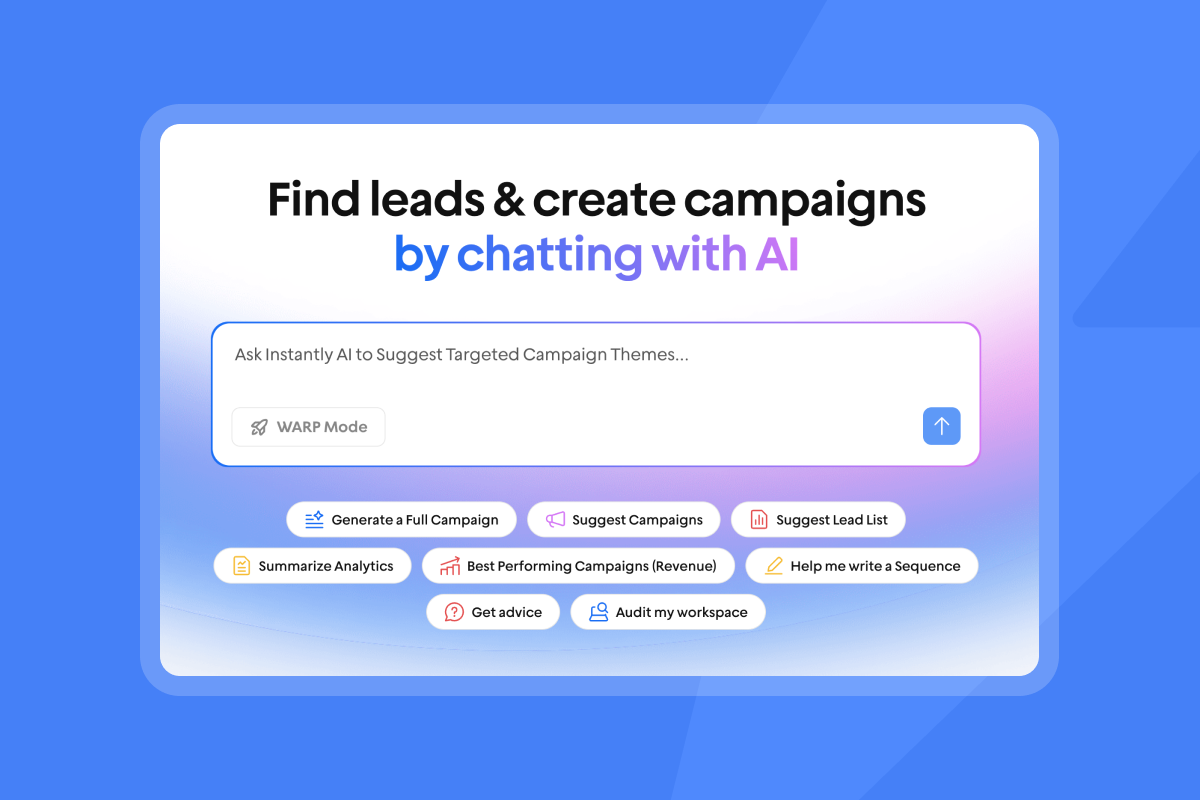
AI agents cut pre-call research time by pulling verified data from multiple sources into a single brief. Clean, current, verified data in means clean output out, and the same logic applies to call prep as it does to email personalization.
Automated prospect intelligence gathering
Instantly's SuperSearch covers 450M+ B2B leads with a seven-provider waterfall enrichment model that checks its own database first, then sequences through BetterContact, ContactOut, Findymail, IcyPeas, LeadMagic, Prospeo, and Wiza. A verified internal match costs 1 credit. Partner waterfall matches run 2-4 credits. No match across all providers costs zero. The Signals filter surfaces buyer-intent data across multiple categories, including Reddit-sourced pain points, competitor mentions, funding events, and leadership changes, with approximately 5.8 million new signals per week matched against the full database.
For pre-call prep, this means a rep can pull a complete prospect profile, including recent company activity, hiring signals, and known pain points, directly from SuperSearch before picking up the phone. The profile feeds both the call script and the follow-up email sequence, so context flows cleanly across channels without manual copy-paste between tools.
Customizing scripts with CRM insights
AI uses CRM data, including past interactions, deal stage, and noted pain points, to customize call scripts before the rep dials. Instantly's AI Sequence Writer generates full multi-step sequences from offer and audience inputs. Spintax creates per-lead variation at scale using the {{RANDOM | option1 | option2}} syntax, feeding both the call script and post-call follow-up from the same CRM data.
The principle is the same whether you're personalizing an email or a call opener: the richer your CRM data, the more specific your opening, and the more specific your opening, the higher your reply or connection rate. Instantly's AI Spam Words Checker flags spam-triggering language in email copy using context-aware AI, not just keyword lists, and the same discipline around message quality applies to call scripts.
AI briefs and consistent handoffs
A structured pre-call brief standardizes the SDR-to-AE handoff and reduces the information asymmetry that kills deals in transition. A solid brief structure includes:
- Prospect summary: Company, headcount, revenue range, tech stack
- Key pain points: Sourced from intent signals and past email replies
- Suggested questions: Based on deal stage and ICP
- Objection responses: Pre-loaded from your team's playbook
Instantly's team workspaces are separate Instantly environments, each with its own campaigns, contacts, and analytics, designed primarily for agencies managing multiple end-customers under a single login. Each workspace supports distinct permission levels (see Manage Workspaces and Team Members for the current breakdown):
- Admin: Manage team, billing, and settings (cannot delete the workspace)
- Editor: Manage everything except team, billing, and integrations
- View/VA Access: Reply to Unibox messages and update email account settings
This standardizes how campaigns and sequences are built and shared across the team, reducing rep-to-rep variation in outreach quality. The Copilot can build automation workflows from natural-language requests, converting a brief like "when a lead replies, create a contact in HubSpot" into a working trigger-action sequence that the team can then refine.
Deployable tech vs. experimental hype
Not all AI call agent features are equal. Here is a practical split for 2026:
Production-ready capabilities:
- Call transcription and sentiment analysis
- CRM auto-logging from call summaries
- Post-call follow-up email drafting
- Lead qualification scoring from call data
- Agent-assist objection surfacing during live calls
Still experimental for most B2B motions:
- Fully autonomous negotiation on live calls
- Real-time emotional manipulation or persuasion modeling
- End-to-end pipeline management without human review
- Autonomous scheduling without rep confirmation
The test is not whether the vendor demos the feature smoothly. The test is whether they can show you a named customer running it in production at your deal size and call volume. Paul Okhrem's 2026 enterprise AI agent statistics report, compiling data from Gartner, S&P Global, and McKinsey, finds only 31% of enterprises are running an AI agent in production. Embedding is easy. Operating reliably is where most projects stall, and Gartner forecasts more than 40% of agentic AI projects will be canceled by 2027 due to governance gaps and unclear ROI. Treat any capability without a live production reference as a roadmap item, not a current deliverable. The best AI sales agents comparison for 2026 gives a vendor-level breakdown of what is shipping versus what is aspirational.

Live guidance: AI agents for sales calls
Live AI guidance helps reps handle objections and track competitor moves in real time. The practical requirement is clear approval workflows and a human-in-the-loop check before any AI-generated response reaches a prospect.
On the email side, Instantly's AI Reply Agent handles incoming replies in under 5 minutes in either human-in-the-loop mode or autopilot. In human-in-the-loop mode, the rep reviews and approves each AI-drafted reply before it sends. In autopilot mode, the agent acts without per-reply approval, which is appropriate once you have validated the agent's accuracy on your ICP and objection set. Watch the AI Sales Agent setup webinar to see how approval workflows connect in a live outreach motion.
AI-driven guidance for tough objections
Agent-assist tools surface relevant responses and reference material during live calls, helping reps respond with evidence rather than relying on memory. When a prospect raises a pricing objection or mentions a competitor, a well-configured agent-assist tool can pull a relevant comparison or case study reference into the rep's sidebar without the rep leaving the conversation.
The quality of the guidance depends entirely on the quality of the underlying data. If your CRM is incomplete or your playbook is outdated, the agent surfaces stale responses. Clean CRM fields and a maintained objection playbook are prerequisites, not outcomes. This is why the cold-email motion matters: every email reply, intent signal, and CRM note generated through Instantly feeds the same data layer that powers call prep and objection handling. See how to generate more sales pipeline for how the email and call motion connect.
Tracking competitor moves in real time
AI can monitor competitor mentions, pricing changes, and product launches and surface relevant context during calls. Instantly's Signals filter tracks competitor mentions sourced from Reddit, company activity, and growth signals, giving your team current competitive context before and during outreach. For call prep, the same signals that trigger a targeted email can brief a rep on what the prospect has been researching before they dial. Future AI sales agent trends for 2026 covers how signal-based outreach is evolving across channels.
Competitive data surfaced during a call must be verified and current. An agent that pulls outdated pricing or misidentifies a competitor's product can do more damage than no guidance at all. Build a verification step into your approval workflow before AI-generated competitive references reach a prospect.
Defining AI agent approval workflows
A documented approval workflow reduces compliance risk and protects your brand in AI-assisted outreach. A practical structure for most B2B teams includes three stages:
- Draft: The agent generates a response or surfaces a recommendation based on CRM context and playbook data.
- Review: The rep approves, edits, or dismisses the recommendation before it executes.
- Audit: A sample of AI-generated responses is reviewed periodically for accuracy and tone, with findings used to refine agent configuration.
Instantly's AI Reply Agent Slack integration delivers real-time reply alerts with AI-generated response previews directly in Slack, so reps can approve or edit without switching tools. The AI agents help center collection covers configuration for each mode.
Regulatory compliance runs parallel to this. The FCC confirmed in February 2024 that AI-generated and cloned voices qualify as "artificial or prerecorded voice" under the TCPA, meaning outbound AI voice calls must follow the same consent, disclosure, and opt-out rules as any robocall. TCPA compliance guidance for AI voice recommends explicit consent disclosures and in-call identification of AI-generated content. Your legal team should review current FCC guidelines before any AI voice deployment. Carrier-level spam flagging presents a parallel risk: calling patterns that resemble robocall campaigns can trigger blocks that are difficult to reverse, analogous to domain blacklisting in email.
Closing the loop: AI for CRM data hygiene
AI's highest-ROI post-call use case is CRM data hygiene. When call outcomes flow automatically into the right CRM fields, pipeline reporting becomes trustworthy, follow-up timing becomes precise, and the next rep in the sequence starts with current information. AI Agent Camp's 2026 sales automation analysis puts a specific number on it: this workflow typically recovers 15-20 minutes per call. For a rep averaging five sales calls per day, that is 75-100 minutes of selling time reclaimed daily, equivalent to one to two additional discovery calls per rep per week.
Automated meeting summaries and next steps
AI-generated call summaries capture the prospect's key pain points, stated objections, agreed next steps, and follow-up date in structured form, then push that data to the CRM without manual entry. A solid summary structure covers: prospect's stated problem, questions asked, objections raised and handled, agreed next action, and follow-up date.
Instantly's AI Inbox Manager auto-schedules and sends an AI-drafted email reply within five minutes of a lead's first response, so the follow-up that most reps delay happens automatically. The AI Reply Agent also handles the No-Show Recovery workflow via Calendly, automatically reaching out when a booked meeting is missed. Watch the AI Sales Agent walkthrough to observe how lead sourcing, email follow-up, and CRM logging connect in a single automated motion.
Ensuring CRM data integrity with AI
Data integrity depends on two things: verified contacts entering the CRM and accurate field mapping on the way out. Instantly's SuperSearch lead verification classifies addresses as valid, invalid, or risky at 0.25 credits per lead before any email sends. SuperSearch-sourced leads arrive pre-verified. CSV and CRM imports do not, so teams importing from HubSpot or Pipedrive should run verification as a separate step.
Instantly's bounced-lead management auto-stops follow-ups on bounced contacts and makes them filterable by hard, soft, or unknown bounce type. Unibox NLP auto-classifies incoming replies into custom labels using sentiment and context detection across 50+ languages, refining CRM status automatically so pipeline reporting reflects real intent, not just activity volume.
Ensuring deliverability in AI outreach
Protecting domain reputation matters as much in AI-assisted outreach as in standard cold email. Instantly's Deliverability AI Agent (available on Hypergrowth and above) runs an automated audit every 24 hours, monitoring DNS health, blocklist status, warmup scores, bounce rates, provider balance, and campaign copy. When it finds an issue, it surfaces the affected component and offers one-click fixes such as pausing risky campaigns or rebalancing sending providers. BounceShield automatically skips known high-risk recipients, and the high bounce auto-pause activates when bounce rate exceeds 5% after a minimum 200 sends, protecting domain reputation without manual intervention.
On the voice side, high-volume outbound calling patterns can trigger carrier-level spam flags in the same way high-frequency, unwarmed email sending triggers inbox filters. Protect both channels by capping daily call volume, rotating numbers, and maintaining clean lists, and keep bounce rates below 2% on email to prevent domain reputation damage that spills across your entire outbound motion.
Cutting ramp time with AI agents
AI shortens new rep ramp time by providing pre-call briefs, objection playbooks, and post-call coaching data rather than leaving new hires to develop these resources from scratch. Instantly's 2026 benchmark report shows consistent senders produce 15-20% higher reply rates than erratic ones, which is a direct measure of process discipline that AI-assisted onboarding helps instill faster. The Instantly AI Sales Agent setup guide walks through how to configure lead sourcing, sequence creation, and reply handling in a standardized workflow new reps can follow from day one.
A practical 30-60-90 day ramp for getting Instantly's AI agents and outreach infrastructure into production:
| Phase | Actions | Success markers |
|---|---|---|
| Days 1–30 (Foundation) | Configure email accounts, activate warmup (target 4-6 weeks per inbox), verify your lead list, and connect your CRM via Automations | Warmup health score trending up, bounce rate below 2%, first campaign live |
| Days 31–60 (Activation) | Enable AI Reply Agent in human-in-the-loop mode so reps review and approve each AI-drafted reply before it sends, audit reply classifications in Unibox NLP, and confirm CRM field mapping is populating correctly | Reply rate at or approaching platform average of 3.43%, CRM fields consistently populated |
| Days 61–90 (Expansion) | Expand sending volume gradually on sequences with a proven reply rate, activate the Lead Finder Agent for additional lead sourcing, run a controlled review of AI Reply Agent accuracy before widening autopilot use, and calculate cost per meeting against your pipeline targets | Reply rate trending toward top-quartile 5.5%, ramp time for next hire measurably shorter |
"I love that Instantly solves one of my biggest problems with outbound sales by integrating multiple tools into one... I appreciate the AI features, like the AI sales agent for prospecting and the AI reply agent that handles replies automatically, greatly reducing my manual work." - Jonathan R. on G2
Vetting AI sales agents: 5 critical vendor questions
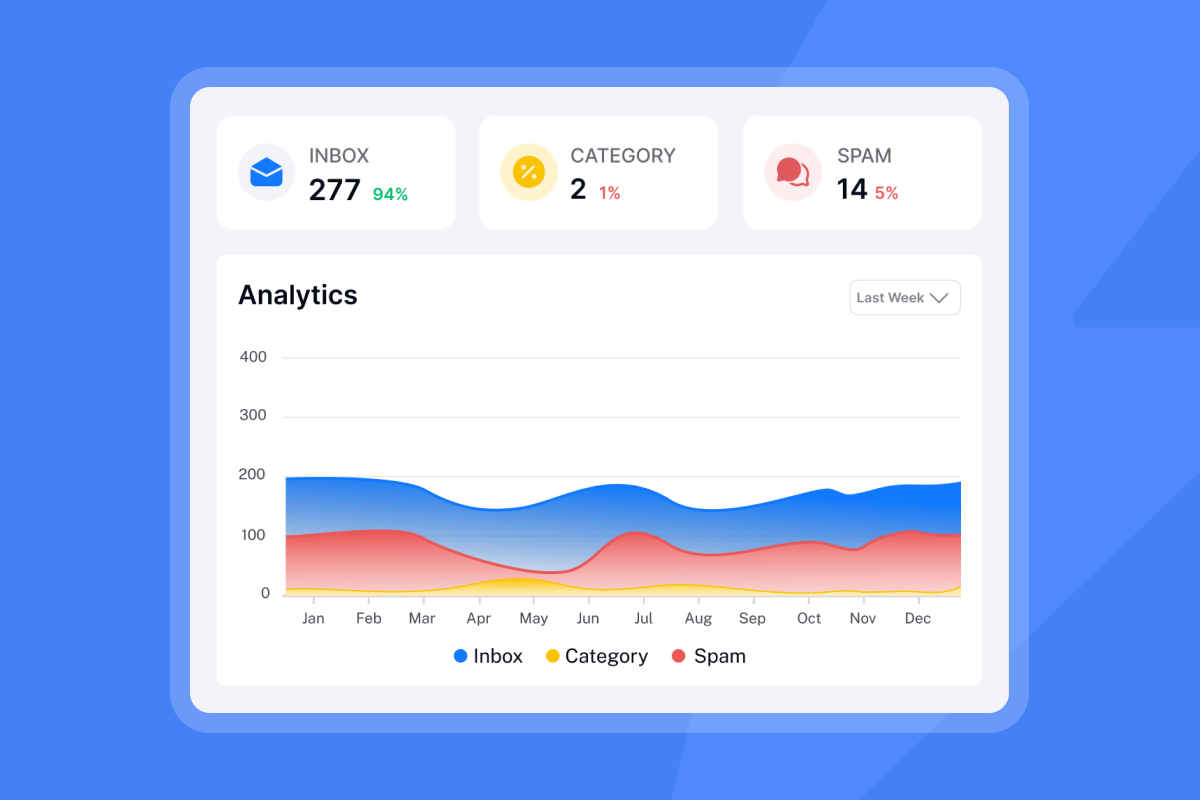
Ask all five before finalizing any POC. The answers reveal whether a vendor is production-ready or still in demo mode. The AI sales agent ROI calculator gives you the financial framework to pressure-test vendor claims against your own cost-per-meeting targets.
Case studies with measurable outcomes
Ask for named customers, specific metrics, and proof of production use at your scale. "We have 500 customers" is not a case study. Meetings-set, ramp time reduction, and CRM data integrity rates are the metrics that matter. The AI sales agent metrics guide outlines the KPI framework: reply rate, meetings set, cost per meeting, and CRM data integrity. Any vendor claiming production results should show those numbers for a named customer in a comparable B2B motion.
The Instantly AI Sales Agent product page shows how autonomous lead sourcing, sequence writing, and reply handling connect in a single workflow. That transparency around how the agent operates is the standard to apply when evaluating any vendor's claims.
CRM field mapping verified in the demo
Verify that every AI output, including call summaries, lead data, and next steps, maps cleanly to a CRM field before you sign. Ask the vendor to walk through the exact field mapping in your CRM during the demo, not in a slide deck. Instantly's HubSpot integration via Automations supports bidirectional sync: HubSpot contact, deal, and task changes trigger Instantly actions, and Instantly replies and campaign completions trigger HubSpot contact, task, and note creation. That level of field-level specificity is the standard to apply.
How AI agents handle sensitive data
Before signing any vendor contract, request the Data Processing Agreement in full. The DPA should specify which data categories the platform cannot process, who the named sub-processors are, what audit rights you hold, and how data handling obligations are enforced. A vendor that cannot produce a current DPA on request is not ready for a production deployment.
Instantly's DPA (Foo Monk LLC) is publicly available and covers processing terms, audit rights, and data handling obligations. For the full sub-processor roster, request it directly from the vendor before your legal team signs off.
The AI sales agent security compliance guide covers the full evaluation framework including data lineage and consent posture.
Standardizing AI agent price models
Four pricing models exist in this category:
| Model | Example | Cost range |
|---|---|---|
| Per-seat subscription | Apollo | Starts at per-user monthly pricing |
| Per-seat enterprise SEP | Salesloft | Enterprise per-user monthly pricing |
| Flat-fee per workspace | Instantly | Flat-fee monthly, unlimited accounts |
| Usage-based/per-credit | Various AI SDR tools | Variable, based on usage volume |
Apollo pairs a smaller contact database with a built-in dialer for teams that want data, email, and calling in one tool. Instantly's flat-fee unlimited accounts cover the same email scale without per-seat pricing that compounds as you add reps, and SuperSearch's 450M+ B2B leads database is larger than Apollo's 240M+. Outreach and Salesloft carry major per-seat overhead plus implementation costs, and Instantly's Automations builder handles trigger-action workflows with documented native CRM connectors including HubSpot and Pipedrive, plus additional tools accessible via Zapier and Make, without the implementation overhead of an enterprise SEP. Instantly Credits power the AI agents separately: AI Sales Agent at 5 credits per generated lead, AI Reply Agent at 5 credits per reply, on a subscription starting at $9 per month (Nano plan, 150 credits per month).
The AI SDR pricing cost analysis puts a fully loaded human SDR at $116,500 to $154,800 annually when you account for salary, benefits, tools, and management overhead, versus an AI-assisted outbound stack running considerably less. The gap depends on deal complexity and the volume of human judgment calls required, not just platform subscription costs.
Vendor support and escalation paths
Ask for specific response time commitments for campaign-down incidents and a documented root-cause analysis process. Vague "we'll get back to you" commitments do not hold up when a live campaign is paused mid-quarter. Instantly's public status page shows component-level uptime in real time so you can see the platform health without waiting for a support ticket response. The AI agents help center covers configuration in detail, and the AI Sales Agent help article documents the agent's behavior, ICP support, and autopilot versus manual-approval modes.
AI agents for sales calls deliver the most consistent ROI when they support a proven outbound engine, not when they replace it. The three production-ready use cases, pre-call intelligence, live objection guidance, and post-call CRM hygiene, each depend on clean data flowing in and a documented approval workflow controlling what flows out. Cold email remains the most reliable way to fill call queues, and the teams hitting their pipeline targets in 2026 treat deliverability, list hygiene, and reply-rate consistency as the foundation everything else builds on. Get those inputs right, layer in AI agents where the production evidence supports it, and you have a repeatable system your reps can run and your CFO can audit.
Instantly AI Sales Agent starts with a 14-day free trial, no credit card required, plus 100 Instantly Credits for AI agents. Run the AI Reply Agent, AI Sales Agent, and SuperSearch alongside your existing call stack before committing budget. Try Instantly free, no credit card required, and run your first AI-assisted outreach sequence today.
FAQs: AI agents for sales calls
What is the difference between an autonomous AI sales agent and an agent-assist tool?
An autonomous AI sales agent completes a defined goal across multiple steps, including sourcing leads, writing sequences, and following up, without requiring human approval at each stage. An agent-assist tool (also called a copilot) surfaces a recommendation and waits for a rep to approve or edit before anything executes. In 2026, agent-assist is the production-proven model for live calls. Autonomous agents are delivering consistent results primarily on email sequencing and lead sourcing, where approval workflows are easier to configure and audit.
Are AI agents for sales calls compliant with FCC TCPA rules?
The FCC confirmed in February 2024 that AI-generated voices qualify as "artificial or prerecorded voice" under the TCPA, placing them under the same consent and disclosure requirements as scripted robocalls. Compliance guidance strongly recommends in-call disclosure that the voice is AI-generated. Note that a February 2026 Fifth Circuit ruling in Bradford v. Sovereign Pest Control concluded that the TCPA requires only "prior express consent" (which may be oral or written) rather than "prior express written consent" for telemarketing calls, though federal courts in other circuits continue to apply the FCC's written-consent rule. Review current FCC guidelines and applicable circuit law with your legal team before deploying any AI voice outreach.
What reply rates should I expect from AI-assisted cold email outreach?
Instantly's 2026 benchmark report (data: Jan 1-Dec 18, 2025) shows the platform average reply rate at 3.43%, with top-quartile senders reaching 5.5% and the top 10% clearing 10.7%. Consistent sending patterns produce 15-20% higher replies than erratic ones, and first-touch emails generate 58% of all replies. These are platform benchmarks, not guarantees: your actual rate depends on list quality, ICP fit, and message relevance.
How do I calculate cost per meeting for an AI sales agent stack?
Divide your total monthly AI platform cost by the number of held meetings booked through that stack. AI SDR cost analysis puts a fully loaded human SDR at $116,500-$154,800 annually versus a mid-tier AI-assisted outbound stack at a fraction of that. Your actual cost per meeting depends on show rates, conversion rates, and ICP fit, so track held meetings, not just booked ones.
What security certifications should I require from an AI sales agent vendor?
Request the SOC 2 Type II attestation report and ISO 27001 certificate under NDA, along with the vendor's DPA, sub-processor list, and data category restrictions. Public security badges on a vendor website are not equivalent to independent attestation, and that distinction matters for compliance reviews with your security or legal team.
Key terms glossary
Agent-assist: A tool that surfaces AI-generated recommendations during a live call or email reply, with a human approving the action before it executes. Distinct from fully autonomous agents.
Autonomous AI agent: An AI system that pursues a defined goal across multiple steps, including sourcing leads, writing sequences, and following up, without requiring human approval at each step. Production-ready for email outreach. Experimental for live call negotiation at most B2B deal sizes.
TCPA (Telephone Consumer Protection Act): US federal law governing outbound calling and texting. Since February 2024, the FCC treats AI-generated voices as "artificial or prerecorded voice," requiring compliance with the same rules as scripted robocalls. In the Fifth Circuit, a February 2026 ruling in Bradford v. Sovereign Pest Control held that the TCPA requires only prior express consent (oral or written) for telemarketing calls, not prior express written consent. Federal courts in the remaining circuits continue to apply the FCC's written-consent rule. Confirm applicable circuit law with your legal team before deploying AI voice outreach.
Waterfall enrichment: A data enrichment method that checks a primary database first, then sequences through named partner providers until it finds a verified result. Instantly's SuperSearch uses a seven-provider waterfall with zero credit cost for no-match outcomes.
Deliverability AI Agent: Instantly's always-on monitoring agent (available on Hypergrowth and above) that audits DNS health, blocklist status, warmup scores, bounce rates, and campaign copy every 24 hours, surfacing one-click fixes when issues are detected.
Human-in-the-loop (HITL): An approval workflow where an AI drafts a response or action and a human reviews and confirms before it executes. Contrasted with autopilot mode, where the agent acts without per-action approval within the parameters set during configuration.
BounceShield: Instantly's feature that automatically skips known high-risk recipients based on real-time and historical bounce data. Enabled by default across all plans. The in-app settings toggle is labeled "BounceProtect."
Read next
- What is sales execution? The complete guide to sales execution software & process: A breakdown of what sales execution means in practice, which tools support it, and how to build a repeatable process your reps can run without constant oversight.
- 7 outbound sales mistakes that kill reply rates (and how to avoid them): The most common errors that tank cold email performance, from poor list hygiene to over-long sequences, with specific fixes for each.
- Best AI SDR tools for agencies: the 2026 complete guide: A vendor-level comparison of the AI SDR tools agencies are using in 2026, covering pricing models, deliverability track records, and what is shipping versus what is still aspirational.


