


Updated November 11, 2026
TL;DR: AI sales call coaching turns anecdote-driven 1:1s into evidence-based coaching by automating scorecards, talk ratio analysis, and rep trend reports. The system tends to work when managers calibrate scorecards against their own win criteria, run weekly QA cycles (about 2 calls per rep is a reasonable starting point), and compare call outcomes with pre-call data quality. Teams coached weekly hit 76% quota attainment compared to 47% for quarterly or less, according to MySalesCoach's 2026 research. Start with a calibrated scorecard, not the tool.
Ride-alongs do not scale. Spot-checks miss the pattern. If your coaching depends on the calls you happen to hear, you are coaching anecdotes, not evidence. Sales leaders face a math problem. Say a manager oversees eight reps, and each rep runs ten 45-minute calls a week. That is 80 calls and 60 hours of recorded conversations every week, which is more than any manager has time to review. AI sales call coaching solves the coverage problem by reading every transcript against your scorecard and surfacing the calls that need human attention.
The tool is the easy part. The calibration is the work. This guide covers how AI coaching differs from real-time assist, how to calibrate scorecards against your win criteria, how to use talk ratio analysis in 1:1s, and how to build a QA cadence that scales.
Core components of AI sales call coaching
Effective AI sales call coaching has three core parts: a calibrated scorecard that defines what good looks like, a repeatable QA cadence that sets when you review, and a feedback loop that compares call metrics with lead quality, since lead fit can affect how a call goes.
Coaching and real-time assist solve different problems. Coaching is manager-led and post-call. Real-time assist is rep-led and in-call. Both use AI.
Direct feedback vs. real-time prompts
In AI-assisted coaching, the platform hands call analysis to the manager after the call ends, and the manager coaches using the AI's read as a starting point. AI-led coaching pushes prompts straight to the rep during the call, like a live battlecard or a monologue alert. Manager-led post-call coaching maps to consultative deals where a human owns the coaching conversation. Real-time assist suits high-volume phone teams where immediate correction prevents lost deals.
| Dimension | AI coaching (post-call) | Real-time assist (in-call) |
|---|---|---|
| Who leads | Sales manager | Sales rep |
| Timing | After call ends | During the call |
| Primary goal | Skill development over time | Fix this call now |
| Best for | Consultative deals, complex sales | High-volume teams, SDR qualification |
| Setup complexity | Scorecard calibration, win criteria definition | Prompt engineering, trigger thresholds |
| CRM integration | Feeds rep scorecards and trend reports | Updates call records in real time |
| Real-time guidance | No | Yes, in-call prompts and alerts |
| Tool category | Post-call coaching platforms | Real-time assist tools |
Post-call platforms like Chorus offer deep call analytics, but their analysis happens after the call ends and they don't coach reps live during the conversation. Better coaching often starts with better calls, which is where pre-call data quality can matter. Lead Finder can supply verified, high-intent leads, so the calls your coaching platform scores are more likely to be worth coaching.
Coaching drives durable skill change because it forces reps to reflect on patterns across multiple calls. Real-time assist prevents individual bad calls but does not build internal judgment.
Standardizing sales call scoring
AI call coaching platforms read every transcript against your custom scorecard and return a scored breakdown by category in seconds, according to CloudTalk's documentation.
Standardization removes the "that's just your opinion" objection. When a rep sees the same scorecard applied to every call across the team, feedback becomes data instead of anecdote. The scorecard should track structural metrics like talk ratios and monologue lengths, alongside content metrics like discovery framework adherence, objection handling patterns, and next-step confirmations.
How AI sales coaching software generates scorecards
AI sales coaching software reads the call transcript, matches the conversation against your scoring criteria, and returns a structured breakdown showing which criteria the rep hit, which they missed, and where the call went off track. The process has three steps: transcription with speaker separation, analysis against your rubric, and scoring for each criterion. Advanced platforms use natural language processing and machine learning to detect patterns like question types, objection handling sequences, and talk ratio trends across multiple calls.
What AI tracks during sales calls
A practical starting set for any coaching program is four call-level metrics: talk ratio, objection handling score, discovery question rate, and appointment ask rate. Other signals worth tracking include monologue length, question count, pace, discovery framework adherence, value propositions tied to pain, objection handling sequences, next-step agreement, sentiment shifts, and interruption patterns.
The AI flags specific patterns against your playbook. If objection handling requires acknowledging the concern before responding, it flags deflections. If every call should end with a clear next step, it flags calls that end with "I'll send you some information." Track metrics that correlate with your win outcomes, not every metric the platform offers.
Defining custom sales QA criteria
Build custom QA criteria by analyzing your wins. Review your last 20 closed-won deals and your last 20 closed-lost deals. The behaviors that show up in wins and the patterns that show up in losses become your scorecard criteria. Common criteria include discovery question count, pain quantification, budget discussion timing, decision-maker identification, and next-step commitment.
Criteria should be observable and binary where possible. "Rep asked about budget" is better than "rep handled budget well." Weight criteria based on what actually predicts wins: if talk ratio has minimal correlation with closed deals but qualification depth is the primary differentiator, weight accordingly.
How to calibrate scorecard accuracy
Calibration means testing the AI's scores against human judgment. Pick a sample of 20 to 30 calls you have already reviewed manually, run them through the AI scorecard, and compare the scores to see where the AI flags the same calls a human reviewer would. Where the AI disagrees, refine the criteria or scoring logic.
You still apply human judgment to calibration, scorecard design, and edge cases. The manual effort shifts from listening to calls to reviewing automated scores. Expect the first month to be calibration. After that, the scorecard runs on its own. You review scores in weekly 1:1s and recalibrate the criteria quarterly.
Close the loop on outcomes. Track coaching interventions against pipeline outcomes to validate that the scorecard predicts what matters.

Identifying rep skill gaps with talk ratio analysis
Talk ratio analysis is the fastest way to spot rep skill gaps because it is objective, easy to measure, and correlates with outcomes. Reps who talk 80% of the call are not discovering. Reps who talk 20% are not presenting. When the ratio is off, look for missing discovery questions, weak objection handling, or lack of pausing.
Talk ratio benchmarks vary by dataset, call stage, and team, so treat any published figure as a reference point, not a fixed target. The more the rep talks, the closer the call gets to pitching instead of discovery.
Establishing optimal talk ratios
Call stage affects the optimal ratio. Discovery calls usually call for more listening than demo calls, since the rep's job is to uncover pain before presenting. Set a separate talk ratio target for each call type from your own call data, such as the ratios your top performers hold at each stage.
Diagnosing excessive rep monologuing
Monologuing is a symptom, not the disease. The rep talks too much because they are not asking good questions, not listening to the answers, or not comfortable with silence. The coaching action depends on the root cause.
| Talk ratio range | Likely issue | Coaching action |
|---|---|---|
| 80%+ rep talk | Discovery questions missing or weak | Coach on question frameworks and active listening |
| 70–80% rep talk | Pitching instead of discovering | Coach on pain quantification and budget timing |
| 60–70% rep talk | Rep may be presenting before the buyer has shared much | Review calls for where discovery ended early, then practice follow-up questions |
| 50–60% rep talk | Close to a balanced conversation, but next steps may be left vague | Review how calls end, then practice proposing a specific next step and confirming it before hanging up |
| 40–50% rep talk | Often a healthy balance, depending on call stage | Confirm next-step clarity and watch for consistency across calls |
| Below 40% rep talk | May be under-qualifying, and the call can feel like an interrogation | Review calls for question stacking, then practice summarizing what the buyer said and sharing relevant context between questions |
Monologue length matters as much as total talk time. A rep who talks 60% of the call in long, uninterrupted stretches is not checking for understanding. Short bursts signal a conversation.
Evaluating coaching impact on talk ratios
Track talk ratio before and after coaching interventions. If you coach a rep on discovery questions and their talk ratio drops from 70% to 55% over the next 10 calls, the coaching worked. If the ratio does not move, the coaching did not land or the rep does not have the skill yet.
Turning call metrics into actionable coaching plans
The scorecard shows what happened. The coaching plan shows what to do differently. The plan should include the metric, the gap, the behavior to practice, and the deadline: "Talk ratio is 72% on discovery calls. Target is 50%. Practice asking open-ended questions and waiting 3 seconds before responding. Review progress in next week's 1:1."
Tracking rep metrics with AI dashboards
Use the dashboard to surface outliers: a talk ratio that sits above your team's own average, or a next-step commitment rate that trails it. Trend reports matter more than individual calls. A rep who runs 70% talk time on one call might have had a bad day. A rep who runs 70% across 10 calls has a coaching opportunity.
Validating coaching with objective scoring
Use objective scoring to remove the "that's just your opinion" objection. When the scorecard shows the rep asked 2 discovery questions and the playbook requires 5, the rep cannot argue. When a top performer consistently scores well above a struggling rep, the gap is clear, and when that struggling rep's score climbs week over week, the progress is clear.
Identifying key rep coaching gaps
Identify coaching gaps across three categories. Knowledge gaps mean the rep does not know what to do. Skill gaps mean the rep knows what to do but cannot do it consistently. Will gaps mean the rep knows and can do it, but does not under pressure.
Low discovery scores across all calls signal a knowledge or skill gap. High scores in low-pressure calls but low scores in high-pressure calls signal a will gap. Knowledge gaps need training. Skill gaps need practice. Will gaps need accountability and confidence-building.
Building a scalable QA cadence with automated call scoring
Build a scalable QA cadence by reviewing every call with AI but coaching selectively. The AI reads 100% of calls. The manager reviews the flagged calls. The 1:1 focuses on the patterns. This structure scales from 3 reps to 15 without adding manager headcount.
Teams coached weekly hit 76% quota attainment, compared to 56% for monthly coaching and 47% for quarterly or less, according to MySalesCoach's 2026 research across 3,700 sales professionals. Weekly coaching is the baseline.
Weekly vs. monthly audit cycles
The getchief.com call review best practices guide recommends choosing calls based on criteria like opportunity stage, deal size, or the behavior you're coaching, and reviewing both successful and difficult conversations. It doesn't set a weekly call count, so pick a number that fits your team's call volume, such as 1 to 2 calls per rep per week. A workable weekly audit cycle can include one manager-selected call from a rotating call type and one rep-selected call where the rep wants help. A weekly 30 to 45 minute 1:1 adds up to about 2 to 3 hours of coaching per rep per month. A standing weekly block is easier to sustain than an occasional deep-dive.
| Cadence type | Frequency | Sample size (suggested starting point) | Review focus |
|---|---|---|---|
| Weekly review | Every week | About 2 calls per rep | Talk ratio and next-step agreement |
| Monthly skill review | Once per month | About 5 calls per rep | Skill gaps the scorecard surfaces, such as discovery and objection handling |
| Quarterly scorecard review | Once per quarter | About 10 calls per rep | Scorecard accuracy and win correlation |
| Triggered alerts | When a threshold is crossed | Flagged calls only | Example triggers you can set, such as high talk ratio, missed next steps, and scorecard outliers |
The weekly review keeps the feedback loop tight. The monthly skill review addresses skill gaps. The quarterly scorecard review checks the scorecard against your win criteria. The triggered alerts catch urgent issues before they become patterns.
Selecting representative call samples
Representative call samples include one call from each call type (discovery, demo, negotiation), one from each outcome type (advanced, stalled, lost), and one from each week of the month. Rotate the manager-selected call across call types so the rep gets coaching on discovery, demo, and negotiation skills over time. The rep-selected call gives the rep ownership of the coaching agenda.
Proactive alerts for rep performance gaps
Configure proactive alerts to flag calls where the rep's talk ratio crosses a threshold you set from your own call data, the next-step commitment is missing, or the discovery question count falls below a minimum you set from your own baseline. For example, if a rep's talk ratio creeps from 55% to 65% to 72% over three weeks, an alert at 65% gives the manager a chance to coach before the ratio hits 80%. These numbers are illustrative, not a published benchmark, so set the talk ratio threshold from your own call data, such as the ratio your top performers hold on discovery calls, then adjust it over time. To set the discovery question minimum, check how many discovery questions your top performers ask, then set the alert just under that level.
Turning AI into a repeatable system for consistent rep growth
Turning AI into a repeatable system means setting up the scorecard so it runs without the manager rebuilding it every week. The system has three parts: standardize onboarding so new reps ramp faster, scale feedback so the team grows without adding managers, and quantify ROI so the CFO sees the value.
Standardizing new rep onboarding
New rep onboarding should include the scorecard from day one. Show the new rep what good looks like before their first call. Use the AI to score the new rep's early calls, then review the scores and coach the gaps. Start with the first handful of calls, then adjust based on how quickly the rep's scores stabilize.
A new rep who knows the scorecard can ramp with less guesswork. Instead of learning by trial and error alone, the rep gets scorecard feedback on every call from the first week. Structured onboarding commonly runs in 30-60-90 day stages, so treat scorecard feedback as a way to support that process, not shortcut it. A standing weekly 1:1 keeps the feedback loop tight while habits are still forming.
Quantifying coaching ROI for leaders
Teams coached weekly hit 76% quota attainment versus 47% for quarterly or less, a 29-point gap, according to MySalesCoach's 2026 research.
Calculate ROI by comparing coaching cost to pipeline impact. If a manager spends 2 to 3 hours per rep per month coaching a 10-rep team, that is 20 to 30 hours a month, or 60 to 90 hours a quarter. At a loaded manager cost of $75 per hour (swap in your own figure), that is $4,500 to $6,750 per quarter.
If quota attainment moves from 56% to 76% and each rep carries a $100,000 quarterly quota, the team books an additional $200,000 per quarter. That is roughly $30 to $44 in added bookings for every $1 of manager coaching time, depending on whether you coach at the 3-hour or 2-hour end of the range. Bookings are not profit, so subtract your cost of sale before you present that range to your CFO.
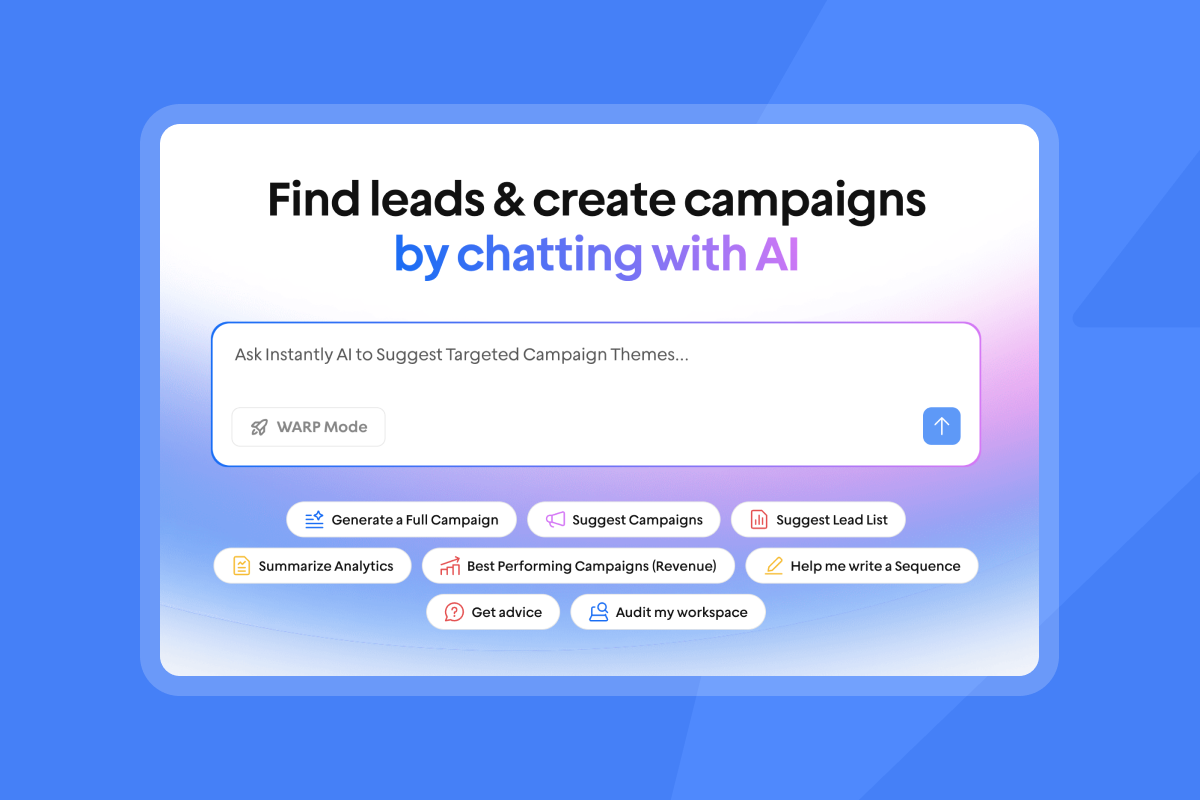
Instantly.ai can help connect coaching outcomes to pre-call data quality. Reps who book meetings from clean, high-intent lead lists are more likely to have better calls to coach in the first place. Instantly's Lead Finder includes 450M+ B2B leads with buyer-intent signals across social activity, buying intent, growth signals, and company activity.
Instantly's Analytics & Report dashboard shows sequence started, open rate, reply rate, positive reply rate, opportunities, and conversions for each campaign. The Accounts tab shows performance for each sending account (contacted, opened, replied, and combined score), and Workspace Analytics shows results by workspace owner. If a rep's campaign reply rate is 2.1% while the team average is 4.3%, the issue is list quality or messaging, not call coaching.
"I appreciate the amount of control I have over the warm-ups and the customization of emails with Instantly. It's useful to have a single source of truth to find all the data I need regarding campaigns, which I find particularly valuable." - Yacine H. on G2
Instantly's flat-fee unlimited email accounts mean no per-seat tax as the team scales. Growth costs $47 per month, Hypergrowth costs $107 per month, and Light Speed costs $358 per month, all with unlimited email accounts and warmup, per Instantly's pricing. CRM is bundled free into Hypergrowth and Light Speed plans.
"I really like Instantly's campaign automation, which lets me create different sequences based on the type of client I'm targeting and schedule follow-ups automatically. I'm also a fan of their AI Reply Agent, which helps manage a high volume of responses by categorizing replies, understanding the conversation context, and preparing responses based on my instructions." - Riley T. on G2
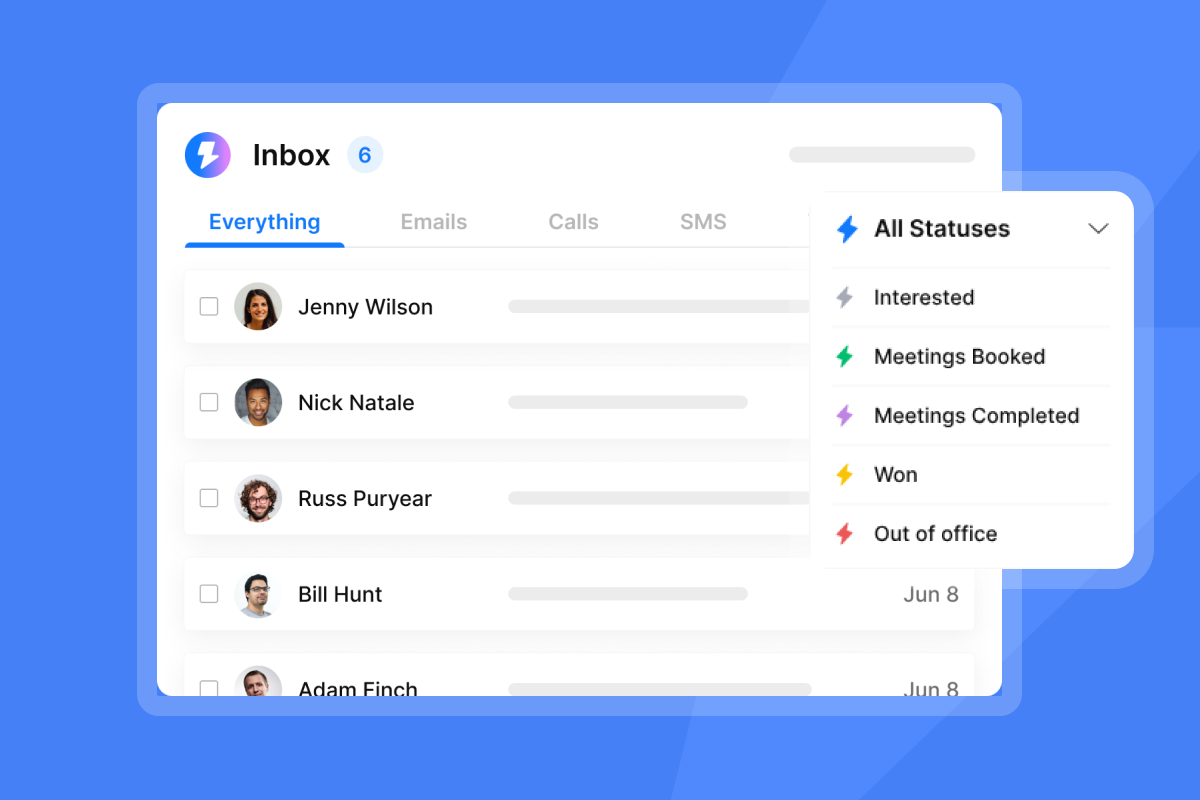
Close the coaching loop by connecting call metrics to pre-call data quality. Lead Finder feeds high-intent leads into outreach campaigns, and cold calls and cold emails tend to work best when teams combine them. Campaign Analytics tracks opportunities from those leads, meaning leads marked Interested, Booked meeting, or another positive status. Call coaching improves how reps run those meetings. Over time, the loop can compound.
Try Instantly free and use Lead Finder to build the high-intent lead lists that give your reps better calls to coach.
FAQs: AI sales call coaching
What is the difference between AI sales call coaching and real-time call assist?
AI sales call coaching is manager-led and post-call. Real-time call assist is rep-led and in-call. Coaching drives durable skill change through 1:1s and scorecard trends. Real-time assist fixes individual calls with live prompts but does not build the rep's internal judgment.
How many calls should a manager review per rep per week?
A good starting point is about 2 calls per rep per week: one manager-selected call from a rotating call type and one rep-selected call where the rep wants help. Adjust the number based on your team's size and call volume. The AI scores 100% of calls. You review the flagged calls.
What is a healthy talk ratio for B2B sales calls?
A healthy ratio depends on call stage. Discovery calls usually call for more listening than demo calls. Set a separate talk ratio target for each call type from your own call data, such as the ratios your top performers hold at each stage.
How do you prevent reps from gaming AI call scoring?
Weight outcome metrics like next-step commitment and stage progression more heavily than keyword presence. If the rep says "budget" but does not quantify it, configure the scorecard to flag that gap. Calibrate the scorecard against win outcomes, not just keyword detection.
What is the ROI of AI sales coaching software?
Teams coached weekly hit 76% quota attainment versus 47% for quarterly or less, a 29-point gap, according to MySalesCoach's 2026 research. Track quota attainment, ramp time, and cost per meeting to calculate ROI.
How does AI call scoring work for sales coaching?
AI call scoring works by transcribing the call with speaker separation, matching the conversation against your scorecard criteria, and returning a structured breakdown of what the rep hit, missed, and where the call went off track. Advanced platforms add natural language processing to detect patterns like question types, objection handling sequences, and talk ratio trends across multiple calls. The scorecard defines what counts as a good call, not the AI model, so calibration against your own win criteria matters more than the underlying technology.
What's the best AI tool for sales call coaching?
The best tool depends on your sales motion rather than a single winner. Post-call platforms such as Chorus suit consultative, complex deals where a manager-led coaching conversation and trend reporting over time matter most. Real-time assist tools fit high-volume phone teams that need live prompts during the call itself. Match the tool to whether you need post-call coaching or in-call correction, then check that it supports scorecard calibration against your own wins and losses before you commit.
Key terms glossary
AI sales call coaching: Manager-led, post-call analysis where AI scores calls against a custom scorecard and surfaces patterns for 1:1 coaching.
Talk ratio: The percentage of call time the rep speaks versus listens. Benchmarks vary by call stage and team, so set targets from your own call data.
Scorecard calibration: The process of testing AI-generated scores against human judgment on a sample of calls, then refining criteria or scoring logic where the two disagree. Expect to spend the first month on calibration.
QA cadence: The schedule for reviewing calls and coaching reps. A common starting cadence includes weekly 1:1s (about 2 calls per rep), monthly skill reviews (about 5 calls per rep), and quarterly scorecard reviews.
Real-time assist: Rep-led, in-call AI that pushes prompts, battlecards, or alerts during the conversation. Real-time assist fixes individual calls but does not replace post-call coaching for durable skill change.
Monologue length: The duration of uninterrupted rep talking during a call. Long, uninterrupted stretches signal the rep may not be checking for understanding, and the right cutoff varies by team and call type. Short bursts signal a conversation.
Buyer-intent signals: Behavioral data that indicates a company is actively researching a solution. Instantly's Lead Finder tracks signals across social activity, buying intent (Reddit pain points, competitor mentions), growth signals (funding, expansion), and company activity (leadership changes, pricing changes).
Campaign Analytics: Instantly's reporting for outreach campaigns. It shows reply rate, positive reply rate, opportunities, and conversions by campaign. Opportunities are leads marked Interested, Booked meeting, Completed meeting, Closed, or a positive custom status. Managers use this to connect pre-call data quality to call outcomes.
Read next
- Replacing VAs with AI sales agents: what changes for agencies: A look at what changes for agency teams when AI sales agents take over work that virtual assistants used to do.
- AI sales agent vs manual prospect research: time, cost, and accuracy compared: A comparison of the time, cost, and accuracy of AI sales agents and manual prospect research.
- Why your AI voice agent has low connect rates (and how to fix it): A guide to why AI voice agents get low connect rates and what you can do to fix it.


