.svg)
%20(1).svg)


Updated June 26, 2026
TL;DR: AI SDRs can scale your outbound volume, but they require a solid foundation of clean data, warmed domains, and clear human handoff triggers. This guide provides a self-assessment framework to determine if your team is ready for AI automation. The most effective deployment is a hybrid model where AI handles top-of-funnel qualification and human reps focus on closing deals. Instantly.ai offers the complete infrastructure (SuperSearch, AI Sales Agent, and AI Reply Agent) to run this model safely without per-seat pricing penalties.
If you are a sales leader or founder running outbound without a full SDR team, this guide is for you.
Most AI SDR implementations fail before the first email is sent, not because the AI is weak, but because the underlying deliverability infrastructure is broken. If your domains are cold, your CRM data is dirty, and your team has no defined handoff triggers, even the best AI tooling produces noise instead of pipeline.
This guide gives you a rigorous qualification framework to assess whether your team is technically, operationally, and financially ready for AI SDR automation before you commit to any platform.
Core mechanics of AI SDR prospecting tools
AI SDRs are automated systems that combine lead discovery, personalized messaging, and reply handling to cover the top of your funnel at scale. Understanding how AI SDRs work under the hood helps you decide if they fit your current operation.
Automated prospecting and data hygiene
AI SDRs source, enrich, and verify contacts before any message is sent. The quality of that data pipeline determines whether you land in primary inboxes or spam folders.
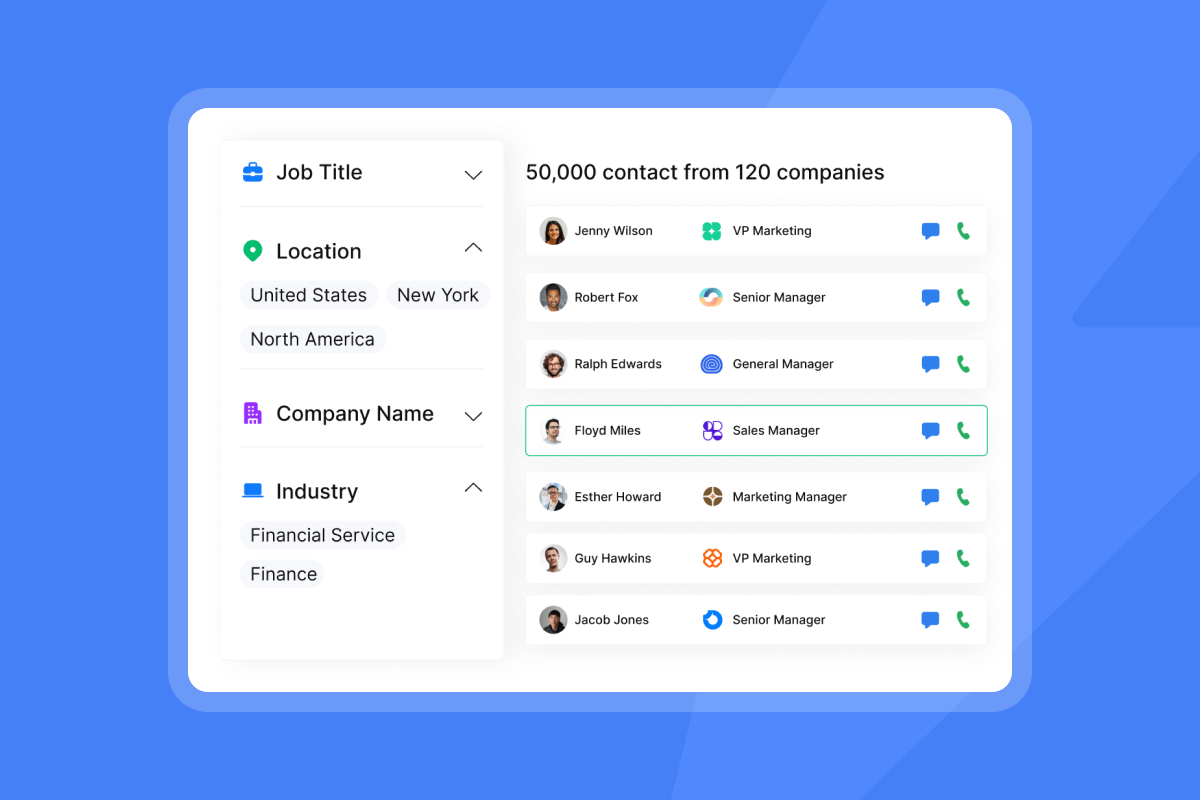
Instantly's SuperSearch gives teams direct access to 450M+ B2B leads without a separate data tool or data analyst. The waterfall enrichment model runs 5+ providers sequentially until a verified result is found, producing higher match rates than single-provider lookups that stop at the first result regardless of confidence. LLM-assisted enrichment adds intent signals on top of contact data, so AI agents can prioritize outreach to accounts showing real buying behavior.
Watch this walkthrough of signal-based cold email at scale from Instantly's channel to see how this plays out in a live campaign.
Where AI SDRs fit in your sales motion
The most effective deployment is a hybrid model: AI handles volume and qualification at the top of funnel, and human reps take over once a lead shows genuine buying intent.
Two use cases define where AI fits best. Agentic Nurture covers post-capture lifecycle management for inbound leads, including scoring, sequencing personalized follow-ups, and escalating high-intent signals to sales. Agentic PLG focuses on trial-to-paid conversion for product-led businesses, guiding free users autonomously through onboarding until they convert. For most B2B sales teams running outbound, Agentic Nurture is the primary motion.
Does your team size justify an AI SDR?
Team size shapes how much value AI automation delivers, and the calculus differs meaningfully across small, mid-size, and larger rep functions.
AI SDRs for small teams
Small teams get the largest proportional lift from AI SDRs because they cannot generate outbound volume manually while also handling full-cycle sales responsibilities. A human SDR can only send so many personalized emails in a day while also managing calls, follow-ups, and pipeline. An AI SDR runs sequences at a volume no individual rep can match, which changes what is operationally possible for a team that previously could not sustain top-of-funnel outreach alongside closing responsibilities.
The Instantly AI Sales Agent is built for exactly this scenario: autonomous lead sourcing, outreach execution, and reply triage so your reps spend time on calls, not list building.
Standardizing output for mid-size teams
When multiple reps run independent sequences without shared governance, consistency becomes the primary problem. Brand voice drifts, data hygiene varies, and reply rates diverge across individuals.
AI SDRs solve this by enforcing a single messaging framework, shared A/Z test variants, and a global block list across every active campaign. The result is standardized output the whole team runs from, which makes quality auditing straightforward and rep performance more comparable.
"Instantly is for me the Apple of Cold Outreach tools. Easy to use, intuitive, minimal clicks/steps to get stuff done, and things just work." - Thomas D. on G2
Scaling for larger outbound teams
When send volume grows to the point where multiple campaigns are running across many inboxes simultaneously, volume management and sender reputation become full-time operational concerns. Running that volume on shared infrastructure creates risk: if one sender's domain gets flagged, the damage can spread. This is the point at which dedicated IP infrastructure becomes a practical requirement rather than an optional upgrade.
Instantly's Light Speed plan addresses this with SISR (Server & IP Sharding & Rotation), which distributes sending across dedicated private IP pools and isolates your sender reputation from other users on shared infrastructure.
How to audit your sales stack for AI integration
Before activating any AI agent, run a structured audit of your current sending setup across three areas: volume capacity, message quality controls, and inbound response handling.
Managing high-volume email campaigns
High-volume sending creates deliverability risk when it is not properly paced. Start at 10 to 15 emails per inbox per day. Increase by 10 to 20 percent each week. Keep bounces at or below 1 percent. Cap at 30 per inbox per day. If bounces rise above 1 percent, pause and run the hygiene checklist before resuming. Scaling total volume means connecting more inboxes, not increasing throughput on existing ones.
Instantly's secondary domains guide details the exact setup for building a multi-domain infrastructure safely. All Instantly Outreach plans include unlimited email accounts and warmup, so you can add inboxes without a per-seat cost as you scale.
Training AI SDRs to match your top reps
AI agents inherit the quality of the inputs you give them. Before launch, document the tone, personalization patterns, and objection-handling style of your two or three highest-performing reps. Feed those patterns into your AI sequences as base templates.
Instantly's cold email copywriting framework gives teams a structured starting point for building message frameworks that reflect top-rep performance. Pairing that with A/Z testing (up to 26 variants per campaign step on Hypergrowth) lets you run real experiments to find what converts for your specific Ideal Customer Profile (ICP).
AI SDR readiness for inbound flows
Inbound leads decay fast. If someone replies to a campaign and waits 24 hours for a response, your conversion rate drops sharply. Instantly's AI Reply Agent handles this by responding to leads in under 5 minutes, configurable in either Human-in-the-Loop mode (your team approves each reply before it sends) or Autopilot mode for fully autonomous handling. This is one of the highest-value AI deployments for lean teams: inbound response speed that matches enterprise SDR capacity without the headcount.

Is your CRM data ready for AI SDR automation?
Bad data does not just produce low reply rates. It actively damages your sender reputation through high bounces and spam traps. AI amplifies whatever data quality you start with, for better or worse.
Filtering out bad prospect data
A bounce rate above 1% is an early warning sign that list quality is hurting deliverability. Standard enrichment with a single provider stops at the first result regardless of confidence, leaving significant gaps that AI cannot recover from at the message layer.
SuperSearch's waterfall enrichment runs 5+ data providers in sequence until a verified result is confirmed, delivering higher match rates than single-provider lookups. For a small team without a dedicated data operations function, this removes the most common blocker to running clean AI-driven campaigns. You do not need a data analyst to maintain a high-quality prospect list when enrichment is built directly into the prospecting workflow.
Preparing your CRM for AI automation
AI agents need clear handoff triggers to know when to stop and when to escalate to a human rep. Without defined triggers, leads sit in limbo or get over-nurtured past the point of conversion.
Set specific status changes as handoff signals. "Meeting Scheduled" or "Qualified Lead" are the two most common triggers that should automatically route a contact to an Account Executive (AE) and pause further AI outreach. Instantly integrates natively with HubSpot for contact pushes and outcome fields. For full activity-level logging in real time, connect the webhook layer or use API v2.
Instantly CRM is available at $47/month for Growth CRM (Unibox, pipeline, reporting) and $97/month for Hyper CRM, which adds Calling & SMS and advanced team reporting.
Email deliverability readiness checklist
Run through these checks before activating any AI agent:
- Domain authentication: SPF, DKIM, and DMARC records published and verified on all sending domains.
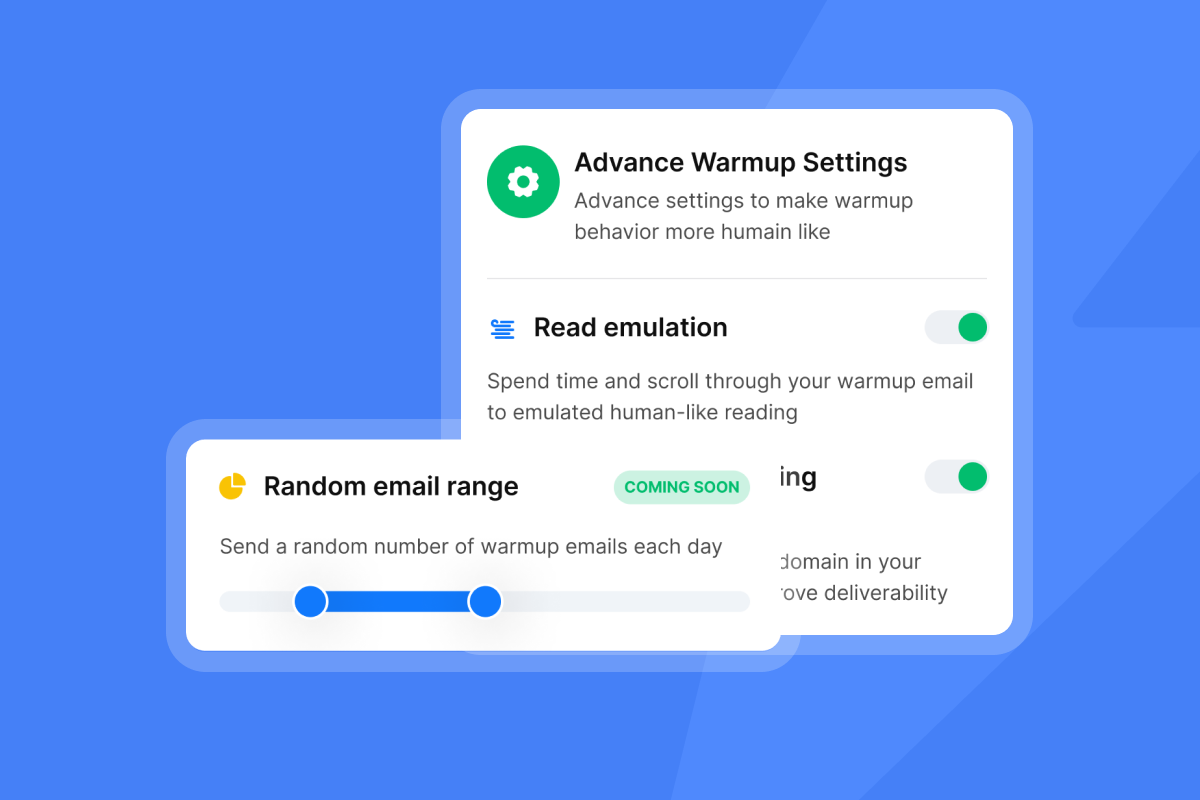
- Warmup status: All inboxes actively warming with a gradual send ramp (start at 10 to 15 per day, increase by 10 to 20 percent each week, pause if bounces exceed 1 percent) for a minimum of 30 days before live sends, reaching a maximum of 30 per day per inbox.
- Bounce rate baseline: Current bounce rate at or below 1% across existing campaigns.
- Blacklist check: No active sending domains on major blacklists.
- GDPR/CCPA posture: Signed Data Processing Agreement (DPA), documented legitimate interest, and a functional opt-out in every email sequence.
- Global block list: All unsubscribe and do-not-contact records loaded before launch. Instantly publishes its Data Processing Agreement and maintains a public sub-processor list. The Inbox Placement automated testing feature lets you run pre-flight checks on new sequences before they go live, so you catch deliverability issues before they affect active campaigns.
What goals should AI SDRs help you achieve?
Define the specific outcomes you are measuring against before you run any pilot. Vague goals produce vague results. The four goals below represent the most common success metrics for mid-market outbound teams.
Increasing meetings booked per rep
The primary metric to track is meetings booked per rep per week, not raw send volume. Set a cost-per-meeting ceiling based on your average deal size. If that ceiling is breached after the first 30 days, adjust targeting before you scale.
Maintaining brand voice and compliance
AI agents send at a volume that makes manual review impractical. Brand and compliance guardrails must be configured at the system level, not enforced by rep judgment. Set explicit rules for tone, personalization depth, and prohibited content inside your sequence templates. Use Human-in-the-Loop mode on the AI Reply Agent during the first 30 days to audit every response before it sends. The Instantly AI Sales Agent help article covers the configuration options that control how autonomously the agent operates.
Achieving capacity goals without new hires
Human SDR costs run high when you account for base salary, benefits, recruiting, onboarding, and a per-rep software stack. AI SDRs cover top-of-funnel volume at a fraction of that per-rep cost. This does not mean AI replaces human reps across all functions, but it does mean you can sustain consistent outbound without proportional headcount growth. See our comparison of AI SDR and BDR tools for platform-by-platform pricing.
The table below shows where costs sit for each model. Instantly platform costs are taken from the current pricing page. Human SDR cost estimates are directional and vary by market, experience level, and benefits structure.
Cost comparison (Human SDR vs. AI SDR monthly spend)
Expense category | Human SDR model | Instantly hybrid model |
|---|---|---|
Base salary | $0 | |
Benefits and taxes | $0 | |
Recruiting and onboarding (amortized) | ~$417-$833/month (based on $5,000-$10,000 per hire, amortized over 12 months) | $0 |
Software stack | Varies by tools and rep count | $47-$97/month (Outreach) |
Data and leads | Varies by usage | |
CRM | Varies by platform | $47-$97/month (CRM) |
Total monthly (estimated) | ~$6,267-$7,833/month (fixed costs only; software, data, and CRM costs vary and are excluded) | From $56/month |
Optimizing reply quality and intent
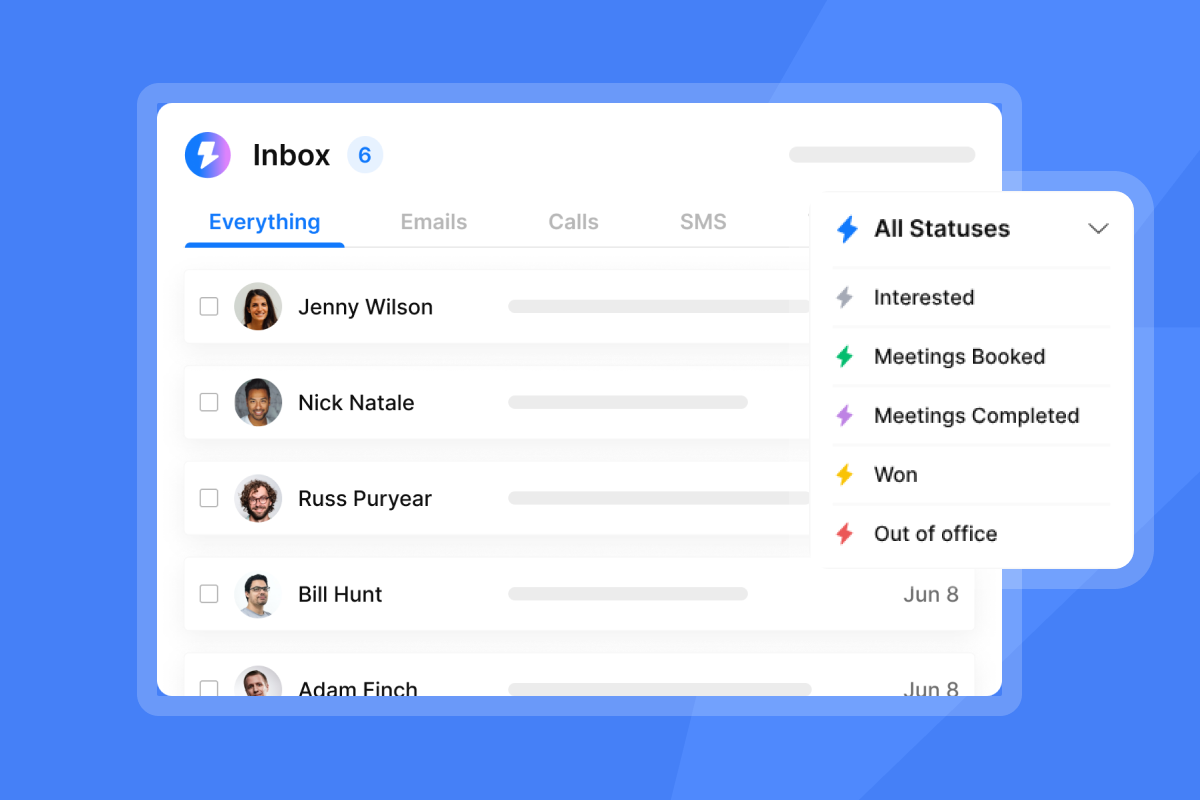
Volume without reply triage creates a different problem: a flooded inbox that reps cannot action fast enough. Instantly's Unibox aggregates all replies from every connected account into a single dashboard. The AI Reply Agent, configured with Human-in-the-Loop mode, classifies intent and drafts responses for rep approval via Slack, so review is fast and no reply goes cold. Running the AI Reply Agent costs 5 credits per reply.
Red flags that disqualify AI SDR adoption
AI SDRs are a strong fit for mid-market outbound at scale. They are a poor fit for several common scenarios - our readiness guide walks through how to tell which camp you're in.
Handling long B2B sales cycles
If your average deal requires 6+ months, 10+ stakeholders, and deep technical discovery, AI automation covers only the very top of that process. The relationship-building and multi-stakeholder coordination required through the middle and bottom of a complex enterprise funnel cannot be systematized through email sequences alone. Use AI for initial contact and qualification, then hand off to a senior Account Executive at the first positive signal.
Scaling issues with vague targeting
Broad, untargeted outreach combined with AI volume produces high bounce rates, spam complaints, and blacklistings. AI amplifies your targeting precision and your targeting errors equally. Before launching, define your Ideal Customer Profile at the account level (industry, headcount, revenue range, tech stack) and at the contact level (title, seniority, buying committee role). Vague targeting kills deliverability at scale faster than almost anything else.
Hidden costs of AI implementation
The cost-per-meeting calculation is simple: total tool cost divided by meetings set. Run that calculation before you commit to any platform. Factor in Instantly Credits consumption (5 credits per AI Sales Agent lead, 5 credits per AI Reply Agent reply) alongside your Outreach and CRM plan costs so your total cost-per-meeting figure is accurate from day one.
Checklist for assessing AI SDR implementation fit
Use this checklist to score your current readiness before starting a pilot, and pair it with our roundup of the best AI SDR tools and platforms.
Budgeting for AI SDR implementation
A starter stack for an outbound-focused team covers three modules, all documented on the Instantly pricing page:
- Outreach Growth: Includes unlimited accounts and warmup, A/Z testing.
- Instantly Credits (Growth): Supports SuperSearch and AI agents.
- Growth CRM: Includes Unibox, pipeline, and reporting.
Human vs AI SDR: defining roles
Responsibility matrix (AI SDR vs. Human SDR)
Task | AI SDR role | Human SDR role |
|---|---|---|
Prospecting | Sources and enriches leads via SuperSearch | Defines ICP and reviews list quality |
Qualification | Sends sequences, scores replies via AI Reply Agent | Reviews flagged replies, confirms fit in Unibox |
Scheduling | Books meetings through automated follow-up | Confirms calendar details and prep |
Relationship building | Sends personalized nurture at scale | Builds rapport on calls and in follow-up |
Complex negotiation | Not applicable | Leads multi-stakeholder discussions |
Typical payback period for AI SDRs
How quickly a pilot produces results depends on the setup going in. Teams that launch with warmed domains and verified contact data can start generating replies and booked meetings as soon as their ramp reaches safe sending volume. Teams that launch with cold domains or unverified lists typically need more time because early deliverability issues require resolution before volume can ramp. Instantly's 14-day free trial gives you enough runway to test warmup progress and first-send deliverability before any spend commitment, as outlined in the Outreach plan comparison.
Technical requirements for team onboarding
Work through these setup steps before your pilot goes live:
- Domains: Purchase secondary sending domains separate from your primary company domain. Pre-warmed domains are available through Instantly at $15/year per domain.
- Warmup: Connect all sending accounts to Instantly's warmup network and run for a minimum of 30 days. Instantly's network operates across 4.2M+ accounts to build sender reputation organically.
- Authentication: Publish SPF, DKIM, and DMARC records for all sending domains.
- Data import: Load your verified contact list from SuperSearch into your campaign with bounce detection active.
- CRM connection: Configure HubSpot sync and define your handoff triggers.
- Pre-flight check: Run an Inbox Placement test on your sending configuration before the pilot goes live.
If your team checks all six boxes, you are operationally ready to start. If two or more are incomplete, resolve them before launch. Skipping setup steps to start faster is the most common reason AI SDR pilots underperform, so follow an AI sales agent implementation guide to sequence the rollout.
Start your 14-day free trial to build your deliverability-first outbound engine without a credit card, and explore the Instantly Credits free trial to test SuperSearch and all AI agents on 100 credits before committing to a paid tier.
FAQs
How many emails can an AI SDR safely send per day?
Start at 10 to 15 emails per inbox per day. Increase by 10 to 20 percent each week. Keep bounces at or below 1 percent. Cap at 30 per inbox per day. If health dips, pause and run the hygiene checklist. To scale total volume, connect more email accounts in Instantly rather than increasing throughput on a single domain.
What is the typical payback period for an AI SDR implementation?
The timeline depends on your setup at launch. Teams that start with warmed domains and verified lead data begin generating replies and booked meetings as soon as their ramp reaches safe sending volume. Teams that skip warmup or launch with unverified lists typically need more time while they resolve deliverability issues.
Does Instantly support native LinkedIn automation for AI SDRs?
No. Instantly focuses entirely on email deliverability and CRM workflows. Multichannel orchestration across LinkedIn requires third-party integrations via Zapier or Make.
How much do Instantly Credits cost to power AI agents?
Instantly Credits start at $9/month for the Nano plan (150 credits) and scale to $197/month for Hyper Credits (10,000-200,000 credits). The AI Sales Agent costs 5 credits per generated lead and the AI Reply Agent costs 5 credits per reply.
Is Instantly compliant with GDPR and CCPA for automated outbound?
Instantly publishes a Data Processing Agreement and a sub-processor list. Compliance for your specific campaigns depends on your data sourcing practices, opt-out mechanisms, and legitimate interest documentation, all of which you control at the campaign level.
Key terms glossary
SISR (Server & IP Sharding & Rotation): A deliverability technology on Instantly's Light Speed plan that uses dedicated, private IP pools to protect sender reputation from shared infrastructure risk.
Unibox: Instantly's centralized inbox that aggregates replies from all connected email accounts into a single dashboard for easy management and triage.
SuperSearch: Instantly's built-in database of over 450 million B2B leads, featuring waterfall enrichment across 5+ providers to ensure high data accuracy.
Agentic Nurture: The process of using AI agents to autonomously follow up with and qualify top-of-funnel leads based on behavioral signals and reply intent.
Agentic PLG: The use of AI agents to guide trial users through product onboarding and convert them into paid customers with minimal sales intervention.
Read next
- What is slow ramp warmup?: A walkthrough of how Instantly's slow ramp warmup feature gradually builds sender reputation before you scale to full send volume.
- Scaling email warmup: How to increase daily send volume across multiple inboxes while keeping bounce rates and spam signals under control.
- AI Sales Agent pricing models: A framework for calculating cost-per-meeting when running Instantly's AI Sales Agent alongside a human SDR team.



