.svg)
%20(1).svg)


Updated June 2, 2026
TL;DR:
Finding a CEO's verified email is the first step, but it only creates pipeline if that email reaches the primary inbox. Apollo offers multichannel data but charges per seat, which penalizes growing teams. Prospeo returns high-accuracy verified emails from a large professional profile database but has no sending infrastructure, so you carry all the deliverability risk. Instantly.ai combines a 450M+ lead database, built-in warmup across unlimited accounts, and automated inbox placement monitoring in a flat-fee model, making it the strongest all-in-one option for sales teams targeting executive buyers. For a closer look at how the two platforms compare across lead data, prospecting, outreach, and deliverability, read our Instantly vs. Apollo comparison.
The three tools below cover the main approaches sales teams take to CEO email sourcing: a full multichannel suite, a dedicated data enrichment tool, and an all-in-one outreach platform. Each solves a different slice of the problem. The table summarizes where they sit on data coverage, verification, sending infrastructure, and pricing before the detailed breakdown.
Quick comparison table
Apollo | Prospeo | Instantly | |
|---|---|---|---|
Database size | 230M+ contacts | large professional profile database | 450M+ B2B leads |
Claimed accuracy | 91% verified | 98% verified | Waterfall enrichment, 5+ providers |
Starting price | $49/user/month (annual), free tier also available | $39/month, free tier also available | $37.6/month (annual) |
Unlimited sending accounts | Unlimited Google/Microsoft per user, all providers on Professional+ | Not a sending platform | Yes, all plans |
Built-in email warmup | Limited | No | Yes, all plans |
Native deliverability tooling | Not fully disclosed | None | Full (warmup, SISR, Inbox Placement) |
Primary use case | Multichannel data + outreach | Email data sourcing only | Data + outreach + deliverability |
Most sales teams obsess over database size while ignoring the deliverability systems required to actually reach a CEO. This guide compares Apollo, Prospeo, and Instantly on data accuracy, verification depth, pricing structure, and the deliverability infrastructure that determines whether your message lands in the primary inbox or disappears.
Selecting a reliable CEO email solution
Every tool in this comparison pulls data through some combination of proprietary databases, web crawling, and third-party data partnerships. Apollo processes over 230 million records monthly from vetted third-party providers while also running its own public-data crawl and tracking email activity across its contributor network. Prospeo builds its database from professional profiles across 30M+ companies. Instantly's Supersearch runs waterfall enrichment across 5+ data providers sequentially, querying sources in sequence until it finds a verified match, which reduces gaps in C-suite coverage.
The key caveat with any of these tools is that email data decays fast. People change jobs, companies rebrand, and domains expire. A database snapshot from months ago can contain a meaningful share of stale records for senior executive roles, where turnover runs high. Any tool you evaluate should show you not just database size but how frequently records refresh and whether verification runs at point of export or at point of send.
For the comparison below, three factors matter most:
- Verification depth: Does the tool run SMTP handshake tests, or just syntax and MX checks?
- Deliverability infrastructure: Does the tool protect your sending domain, or does it hand you a list and walk away?
- Pricing structure: Does the model penalize growth through per-seat fees, or does it scale on flat-fee volume?
Verified contacts vs. list size and verification quality
Raw database size is a marketing number. What protects your pipeline is the percentage of contacts that are deliverable when your SDR hits send. A bounce rate above 2% signals quality problems to Gmail and Outlook, which then route subsequent messages to spam. A detailed look at email deliverability for sequences shows how list quality upstream directly affects inbox placement downstream.
The verification stack that matters for executive outreach has four layers. First, syntax checks confirm the email format is valid. Second, MX record validation confirms the domain can receive email. Third, SMTP handshake tests simulate a connection to the mail server without actually sending, to confirm the mailbox exists. Fourth, catch-all detection flags domains that accept everything regardless of whether the address is real.
Tools that stop at layer two return higher false-positive rates on catch-all domains. For C-suite contacts at companies using Google Workspace or Microsoft 365, SMTP handshake tests provide the most reliable signal. When evaluating accuracy claims, always ask whether the quoted percentage is pre-send (based on verification tests) or post-send (based on actual bounce tracking).
Ensuring primary inbox placement
Verification protects your bounce rate. Warmup and send pacing protect your sender reputation. These are separate problems that require separate solutions, and most data-only tools address neither. Inbox placement for executive outreach depends on the health score of the sending domain, the age of the inbox, the consistency of send volume, and whether the IP address carries a clean reputation. A tool that provides verified emails but no warmup infrastructure transfers all of that risk to your team.
Apollo: data quality and deliverability
Apollo is a full sales intelligence suite combining a large contact database, multichannel sequencing, a dialer, and CRM integration. It's built for teams that want data, email, calls, and LinkedIn touchpoints from a single vendor. The Apollo vs. Instantly comparison for agencies covers pricing structure, warmup capabilities, and what real users report after switching.
Pros:
- 230M+ verified contacts with a real-time contributor network
- Multichannel sequences covering email, calls, and LinkedIn
- Native CRM integration with HubSpot
- Free plan with limited export credits
Cons:
- Per-seat pricing scales poorly for growing teams
- Email warmup limited to one mailbox at no extra cost on paid plans, additional mailboxes require credits, adding to overall cost
- Annual contracts with 30-day cancellation notice requirements
- Calls and advanced integrations locked to higher tiers
Apollo's verified executive contacts and accuracy
Apollo finds C-suite contacts through its contributor network, public-data crawling, and third-party provider integrations. Its verification process tracks email replies and bounces to build a feedback loop that improves match quality over time. The platform reports a 91% email accuracy rate across its verified database.
For executive roles specifically, quality depends heavily on how recently the contact's profile was updated. C-suite contacts at mid-market companies change positions regularly, and without frequent record-level refresh, accuracy at that tier can lag behind the headline figure. Testing a sample of 50 to 100 CEO contacts and running them through a separate SMTP verification pass is the fastest way to benchmark actual deliverability before launching a campaign.
For GDPR compliance, Apollo operates under a legitimate interest basis for B2B data processing, which is the same legal basis most European business contact databases use.
 Jessica ParkVP Sales at CloudScale
Apollo pricing model and billing traps
Apollo runs on per-seat, per-month pricing. The Basic plan is $49 per user per month on an annual contract. The Professional plan is $79 per user per month. The Organization plan is $119 per user per month. Monthly billing adds 20-25% to each tier.
The contract structure creates two specific risks for sales teams. First, renewals are automatic and cancellations take effect at the end of your current billing cycle, so missing that window locks you in for another full term. Second, per-seat costs compound as you add SDRs. A five-person team on the Basic plan runs $245 per month before add-ons, and that's without warmup, inbox placement monitoring, or reply management.
The pricing model breakdown covers the total cost of ownership across seat-based versus flat-fee models and is worth reviewing before committing to an annual contract.
Apollo's email sequence workflow
Apollo's native warmup capabilities have been reduced over time, with users reporting the removal or degradation of its previous warmup engine. Teams using Apollo for cold email outreach typically need to manage email warmup separately through a third-party tool, which adds cost and workflow friction.

Prospeo email finder: strengths and limitations
Prospeo is a specialized data tool focused on email discovery and verification. It is not a sending platform. Its strength is in the accuracy of the emails it returns. Its limitation is that it hands you a list and leaves the sending infrastructure entirely to you. For teams that already run a reliable sending platform with built-in warmup, Prospeo's 98% claimed accuracy and credit-based pricing make it a viable enrichment layer.
Pros:
- 98% claimed email accuracy from a 5-step proprietary verification process
- 143M+ verified emails across 30M+ companies
- Credit-based pricing with predictable monthly costs
- Chrome extension and API access for workflow integration
Cons:
- No native sending infrastructure or warmup
- Credits do not roll over between billing cycles
- Mobile numbers cost 10 credits each, which drives up spend on mixed outreach lists
Verified C-suite contacts and data quality
Prospeo sources executive contacts from its large professional profile database. The verification pipeline runs catch-all handling, spam-trap removal, and honeypot filtering in addition to SMTP checks. The 98% accuracy claim refers to the percentage of returned emails that are deliverable, not the percentage of all records in the database. Prospeo may return smaller lists than tools that count catch-all addresses as verified, but the contacts it does return carry lower deliverability risk.
The platform integrates with Clay and other data tools through API access, making it composable for teams that already run enrichment workflows. The Chrome extension lets reps find and verify emails directly from LinkedIn profiles, which is useful for targeted executive research but doesn't scale across large lists without API automation.
Prospeo pricing: predictable costs
Prospeo's pricing runs from $39 per month (annual) on the Starter plan to $369 per month on the Business plan, with credits scaling at each tier. Emails cost 1 credit each, while mobile numbers cost 10 credits each. The asymmetry matters if your executive outreach strategy includes phone touchpoints: a list of 100 CEO mobile numbers consumes 1,000 credits.
Credits do not roll over, so unused capacity at the end of a billing cycle is forfeited. Teams with fluctuating outreach volumes pay a real cost for that inflexibility. The Growth plan at $99 per month includes team management features for shared credit pools, but governance controls beyond credit allocation are limited compared to a full outreach platform.
For a team that needs 1,000 CEO emails per month, Prospeo's Starter plan at $39 per month (annual) costs less than a single Apollo seat, but you still need a separate cold email platform with warmup, which adds $47 to $358 per month for Instantly's Outreach plans.
Connecting to your email stack
Prospeo connects to external tools via API and Chrome extension, integrating with Clay, Apollo, and CRM platforms for enrichment workflows. It has no native sending infrastructure, which means your team needs a separate cold email platform to send campaigns. That creates a two-vendor workflow: source and verify in Prospeo, export to your sending tool, then monitor deliverability in a third system if your sender doesn't provide that. The operational friction of disconnected systems shows up during active campaigns when you need to troubleshoot a deliverability drop and your data, sending, and monitoring are in separate dashboards.

Instantly: data, sending, and deliverability in one platform
Instantly combines lead discovery through SuperSearch, multi-account email sending, built-in warmup, inbox placement monitoring, and a centralized reply inbox in one platform. Watch the co-founder demo walkthrough to see the full workflow from lead sourcing through to campaign management.
Pros:
- 450M+ B2B leads with waterfall enrichment across 5+ providers
- Unlimited email accounts and warmup on all plans
- Automated Inbox Placement tests with alerts
- Flat-fee pricing with no per-seat charges
- AI Reply Agent handles responses in under 5 minutes
Cons:
- AI agents (Copilot, AI Sales Agent, AI Reply Agent) require a separate Instantly Credits subscription starting at $9/month (with a free trial also available)
- SISR (dedicated IP pools) is only available on the Light Speed plan at $358/month
Watch the Smartlead vs. Instantly vs. Lemlist vs. Apollo breakdown to see how all four platforms handle sending infrastructure, warmup, and pricing in a direct side-by-side test.
Instantly's executive email availability
SuperSearch gives you access to a lead database of 450M+ B2B contacts, with waterfall enrichment running across 5+ data providers to close verification gaps that single-source databases miss. Waterfall enrichment means Instantly queries multiple sources in sequence, falling back to the next provider if the first doesn't return a verified match. For C-suite contacts, where single-provider coverage gaps are common, this approach increases fill rate compared to databases that rely on one primary source. The database also includes LLM-assisted enrichment for precision targeting, letting you filter by title, company size, and industry before exporting.
Instantly's deliverability infrastructure operates across a network of 4.2M+ accounts, providing real-world inbox placement signals and warmup data at scale.
Instantly's executive email validation
Instantly runs syntax checks, MX record validation, and SMTP handshake tests as part of its verification workflow. Bounce detection monitors sends in real time and flags accounts that exceed threshold bounce rates. The inbox placement automated tests run across Gmail, Outlook, and other major providers, giving you a measurable placement score before you scale a campaign. This is a feature that neither Apollo nor Prospeo offers natively.
Instantly's credit-based billing
Instantly separates billing into modules: Outreach, SuperSearch, CRM, and Instantly Credits for AI agents. The Outreach Growth plan is $47 per month and includes unlimited email accounts, unlimited warmup. The Instantly Credits (which powers SuperSearch) Growth plan is $47 per month for 1,500 to 2,000 credits.
A starter stack covering outreach plus data plus CRM runs approximately $141 per month flat, regardless of how many email accounts or team members you add. Contrast this with Apollo's model, where adding a fifth SDR seat costs another $49 to $119 per month every month. The B2B email list pricing guide breaks down cost-per-verified-contact calculations in detail.
Managing Instantly's email sequences
The campaign builder supports A/Z testing on all paid Outreach plans. The Growth plan includes AI Sequence Writer, AI Rephrase, AI Spam Words Checker, advanced warmup options, and send deliverability tests from the preview window. Inbox rotation distributes sends across multiple accounts in a campaign, spreading volume and protecting individual inbox health. Watch the Instantly beginner guide to follow domain configuration, warmup setup, and sequence launch from start to finish.
How Instantly handles data, deliverability, and reply management
Pulling a verified CEO email is step one. Getting that email into the primary inbox, pacing sends to protect domain health, and routing replies to the right rep before the thread goes cold is the rest of the job. This section breaks down how Instantly handles each layer: verification at point of use, domain health monitoring, automated inbox placement testing, and centralized reply triage across all connected accounts.
High-accuracy email validation
Instantly's verification runs at point of use, meaning contacts are checked as they enter your campaign rather than relying solely on the verification timestamp from the data provider. Domain reputation protection and bounce detection work continuously during active sends.
Ensuring domain health and inbox placement
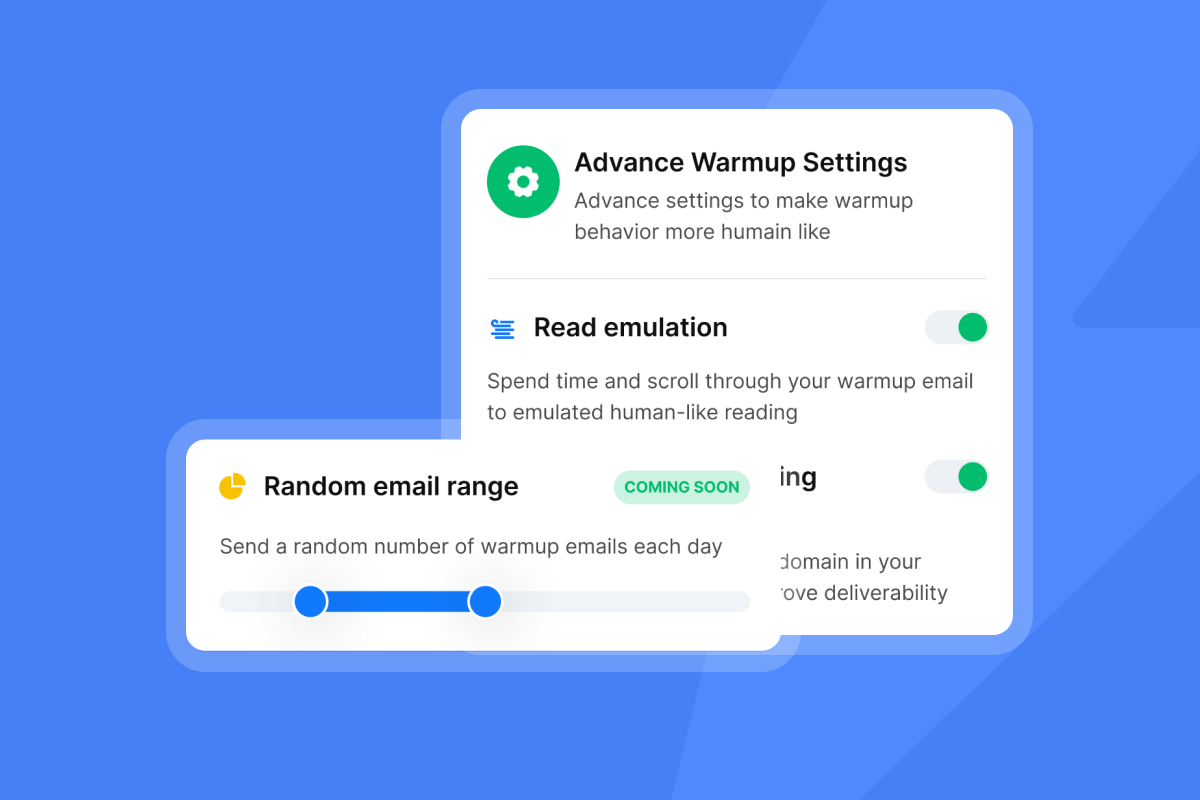
Instantly's deliverability network spans 4.2M+ active accounts, providing real-world inbox placement signals and warmup data at scale. All paid plans include warmup across unlimited sending accounts, drawing on that network to build sender reputation before your campaign goes live. The automated Inbox Placement test system sends test messages through the deliverability network and reports where they land across Gmail, Outlook, and other providers before your campaign goes live.
The Light Speed plan adds SISR (Server and IP Sharding and Rotation), which assigns dedicated private IP pools to your sending domains. Flagged IPs rotate out automatically, keeping placement rates stable during active campaigns. The rotating IPs and sending algorithms guide covers how the rotation logic works in detail. This infrastructure layer separates Instantly's deliverability offering from both Apollo and Prospeo, which have no equivalent feature.
Triage replies for faster follow-up
Instantly's Unibox consolidates replies across all connected accounts into a single view, so a five-rep team doesn't need to check individual inboxes manually. The AI Reply Agent handles incoming replies in under 5 minutes in either human-in-the-loop mode (where a rep approves before send) or autopilot mode (where the agent responds and updates CRM status automatically). Pricing for AI Reply Agent is 5 Instantly Credits per reply, billed through the separate Instantly Credits subscription starting at $9 per month.
Admin controls for sales teams
Instantly integrates natively with HubSpot (via OutboundSync), along with Slack, Clay, Zapier, and Make. The email outreach plans comparison details which reporting and admin features are available at each tier. For rep standardization, secondary sending domains and inbox rotation allow team leads to set system-wide send rules that individual reps can't override, which reduces the risk of unsafe send volumes derailing a campaign.
Head-to-head comparison: accuracy and pricing
Feature | Apollo | Prospeo | Instantly |
|---|---|---|---|
Database | 230M+ contacts | 143M+ verified emails | 450M+ B2B leads |
Claimed accuracy | 91% | 98% | Waterfall, 5+ providers |
Catch-all detection | Yes | Yes (5-step process) | Yes |
SMTP handshake tests | Yes | Yes | Yes |
Built-in warmup | Limited | No | Yes, unlimited accounts |
Inbox placement tests | No | Not a sending platform | Yes, automated |
Dedicated IP pools (SISR) | No | Not a sending platform | Yes (Light Speed, $358/mo) |
AI features | Email writing assistance | Not a sending platform | Reply agent (Instantly Credits) |
Team management & reporting | Yes (higher tiers, restrictions apply) | Limited (Growth plan) | Yes, all Outreach plans |
Per-seat pricing | Yes ($49-$119/user/mo) | No | No |
Annual lock-in | Yes | No | No |
Verified executive email data
Apollo and Prospeo both report high accuracy figures, but the methodologies differ. Apollo's 91% figure reflects its contributor network and real-time bounce tracking, which improves with scale but may vary on niche executive segments. Prospeo's 98% figure reflects its 5-step verification process with explicit catch-all flagging, which tends to return smaller but cleaner lists.
Instantly's SuperSearch runs waterfall enrichment across 5+ providers, so a contact that one provider can't verify gets queried through the next. For C-suite contacts at mid-market companies, that multi-provider approach increases coverage without sacrificing verification standards.
Cost per verified contact
Running the math on cost per contact at the entry tier:
- Apollo Basic: $49 per seat per month on an annual contract. A five-rep SDR team runs $245 per month before warmup, inbox placement monitoring, or reply management.
- Prospeo Starter: $37 per month for approximately 1,000 email lookups at 1 credit each. No sending infrastructure included.
- Instantly Growth: $47 per month flat for outreach (unlimited accounts) plus $47 per month for SuperSearch Growth (1,500-2,000 credits). Total $94 per month for a team of any size.
Ensuring inbox placement and low bounces
Apollo's warmup capabilities have been reduced over time, and the platform has no dedicated IP infrastructure or automated inbox placement testing. Prospeo has none of either. Instantly provides all three across all paid plans, with SISR available on the Light Speed plan for teams running high-volume executive outreach that needs dedicated private servers and IP rotation per the rotating IPs and sending algorithms system.
How to put the right tool to work for your team
The comparison above covers what each tool does. This section covers how to apply that to your actual workflow. The three steps below map to the three jobs that matter most for executive outreach: sourcing and verifying contacts, protecting your sending domains, and keeping your team coordinated across active campaigns. Pick the section that matches where your process breaks down first.
For clean, verified email data
- Pull a target list of CEO contacts from SuperSearch filtered by title, industry, and company size.
- Set a credit budget per campaign based on your SuperSearch plan tier.
- Run the exported list through Instantly's built-in bounce detection before activating the sequence.
- Keep bounce rate at or below 1% by removing unverified and catch-all flagged contacts before send.
Protecting your domain reputation
- Warm each new inbox for at least 30 days, ramping from 5 to 15 to 30 emails per day maximum.
- Run an automated Inbox Placement test before launching any new campaign or sequence.
- Set alert thresholds in the Inbox Placement dashboard to pause sends automatically if placement drops, and review domain health scores weekly during active campaigns.
Team workflows for executive outreach
- Connect Instantly to HubSpot via the native integration or OutboundSync to sync campaign events and reply statuses automatically.
- Use Unibox to route all replies through a single view so the SDR handling the account doesn't miss a response from a secondary inbox.
- Configure the AI Reply Agent in human-in-the-loop mode for CEO outreach, where a rep approves each response before it sends.
- Export meetings-booked and SQL conversion data into your pipeline coverage report.
Ready to test executive email accuracy and inbox placement without per-seat fees or annual lock-ins? Start your free Instantly trial, run your first Inbox Placement test, and see where your CEO emails actually land before you send a single message.
FAQs
How do email finders calculate accuracy scores?
Email finder accuracy is the percentage of returned emails that pass syntax checks, MX record validation, and SMTP handshake tests. Apollo reports 91% per its official verification documentation and Prospeo reports 98%, but both figures reflect verification at data capture, so run a secondary verification pass before sending to protect your bounce rate.
Do email finders hurt deliverability?
Email finders themselves don't hurt deliverability, but sending to unverified or stale contacts does. Use a finder with SMTP handshake verification, keep send volume below 30 emails per inbox per day, and warm each new inbox for at least 30 days before running executive sequences.
What is an SMTP handshake test?
An SMTP handshake test simulates a connection to the recipient's mail server without actually sending a message, confirming the mailbox exists and is active. It is the most reliable pre-send verification step because it checks the actual mailbox rather than just the domain or email format.
What email tool works best for teams with 5+ SDRs?
Flat-fee platforms like Instantly scale without per-seat penalties, so a five-rep team pays the same $47 per month as a single user, while Apollo's Basic plan at $49 per seat runs $245 per month for five reps. Flat-fee pricing produces lower total cost of ownership as headcount grows.
Can Instantly replace both a data tool and a cold email platform?
Yes for most sales team use cases. SuperSearch covers lead sourcing and verification, Outreach handles sending across unlimited accounts with built-in warmup, and Unibox centralizes reply management so the full data-to-send-to-reply loop runs within Instantly.
Key terms glossary
B2B (Business-to-Business): Sales activity directed at companies rather than consumers. Executive outreach targets decision-makers like CEOs and CFOs at target accounts.
RevOps (Revenue Operations): A function that aligns sales, marketing, and customer success around shared data and processes to improve predictable pipeline generation.
API (Application Programming Interface): A connection method that allows two software systems to exchange data automatically. Prospeo and Instantly both offer APIs for custom enrichment and workflow automation.
Deliverability: The percentage of sent emails that land in the recipient's primary inbox rather than spam or other folders. Deliverability depends on domain authentication, sender reputation, list hygiene, and send volume pacing.
GDPR (General Data Protection Regulation): European data privacy law that governs how personal data, including B2B contact information, is collected, stored, and used. B2B email data tools typically operate under a legitimate interest basis for processing publicly available professional contact data.
SMTP (Simple Mail Transfer Protocol): The protocol that mail servers use to send and receive email. An SMTP handshake test uses this protocol to verify that a specific email address exists on a mail server without actually delivering a message.
Read next
- Cold email templates for B2B executive outreach: Copy-ready templates for reaching C-suite buyers, with subject lines, opening lines, and follow-up steps built around executive messaging patterns.
- 9 Proven B2B List Building Strategies for Sustainable Growth: A practical breakdown of nine list-building methods, covering data sources, verification checkpoints, and how to keep contact quality high as your outreach volume scales.
- From Zero to Hero: The Entire Cold Email Setup Process Simplified: A step-by-step walkthrough of domain configuration, inbox warmup, and sequence launch for teams setting up cold email infrastructure from scratch.



