


Updated October 22, 2026
TL;DR: AI sales agents don't replace sales training, they operationalize it. Traditional LMS platforms certify completion (course finished, quiz passed, certificate issued), while AI agents certify execution (reply handled, objection addressed, meeting booked). The practical path is an 80/20 hybrid: AI handles volume reinforcement and live reply triage, humans handle nuance and complex deals. Instantly.ai's AI agents work inside the workflow your reps already use, and cost shifts from per-seat licenses to flat-fee infrastructure.
Reps forget 70% of what they learn in sales training within a week, and 87% within a month, according to Play2Sell. This pattern is predictable. Hermann Ebbinghaus documented the forgetting curve in 1880 and 1885 by measuring how much of a learned list he retained over intervals from 20 minutes to 31 days. A 2015 replication study confirmed that his forgetting curve holds up.
The content isn't the problem. The gap between learning and doing is. When you compare AI sales agents with traditional sales training, you're choosing between two models: one certifies that reps finished a course, the other certifies that reps applied the skill in a live conversation.
If you're a Head of Sales or RevOps leader evaluating whether to replace your LMS with AI agents, run both, or stick with what you have, this guide gives you the program-level framework to decide.
Core features of standard sales training suites
Traditional LMS platforms distribute content and track whether learners completed it. They do this well for compliance and certification use cases, but the architecture is built around a content repository with a completion tracker on top.
What LMS platforms deliver
An LMS delivers course hosting, completion tracking, and basic reporting. A rep can log in, complete an objection handling course, pass the quiz, and get a certificate. The limitation is structural: these platforms track completion, not behavior change.
A learner can click through screens until the progress bar hits 100% without engaging with the content. Without reinforcement, most learners forget much of it within days or weeks.
What AI agents deliver
AI agents deliver real-time reinforcement in the live workflow. When a prospect replies with an objection, Instantly's AI Reply Agent classifies the reply, suggests a response based on your playbook, and logs the outcome for review. The coaching happens during actual conversations, not in a separate training environment.
The handoff model
LMS platforms centralize playbooks and battle cards, which is useful for onboarding and reference. AI agents surface that same content in context during live conversations. Your existing training content becomes an input to the AI's response suggestions, which means you don't lose the investment you've already made.
Why human coaching remains essential
Human coaching matters for nuance, culture, and relationship building. A good sales manager can hear hesitation in a rep's voice and coach them through it in real time. The constraint is scale: live coaching happens on a schedule, not in the moment. AI agents handle volume reinforcement so managers can focus on high-stakes judgment calls. The 80/20 hybrid model captures both.
Operationalizing AI agents for sales teams
AI sales agents move reinforcement into the live workflow, which operationalizes training instead of just certifying completion. Instead of a separate training environment, coaching happens inside the tools reps already use.
Always-on reinforcement vs one-off courses
AI agents reinforce skills during actual conversations, not in a simulated environment. When a prospect replies with an objection, the AI Reply Agent classifies the reply, suggests a response based on your playbook, and logs the outcome for review. Instantly's approach to AI-powered reply handling removes the manual work of triaging every incoming message.
This closes the gap between learning and application. A meta-analysis of 839 assessments across 317 experiments (Cepeda et al., 2006) found that the best spacing between study sessions increases as the time you need to remember the material increases. In short, reviewing material at spaced intervals supports long-term retention better than learning it once. Instantly's AI Reply Agent supports reinforcement by classifying each reply and suggesting a response based on your playbook, which means reps apply skills while the context is fresh.
The 80/20 hybrid model is the practical path. AI handles high-volume, repeatable reinforcement (reply triage, objection classification, follow-up logic). Humans handle high-judgment work (complex negotiations, multi-stakeholder deals, relationship repair).
Contextual prompting for live calls
AI agents surface relevant playbook content during actual conversations. Instead of expecting reps to remember what they learned in a course, the system pulls the right guidance based on the prospect's reply.
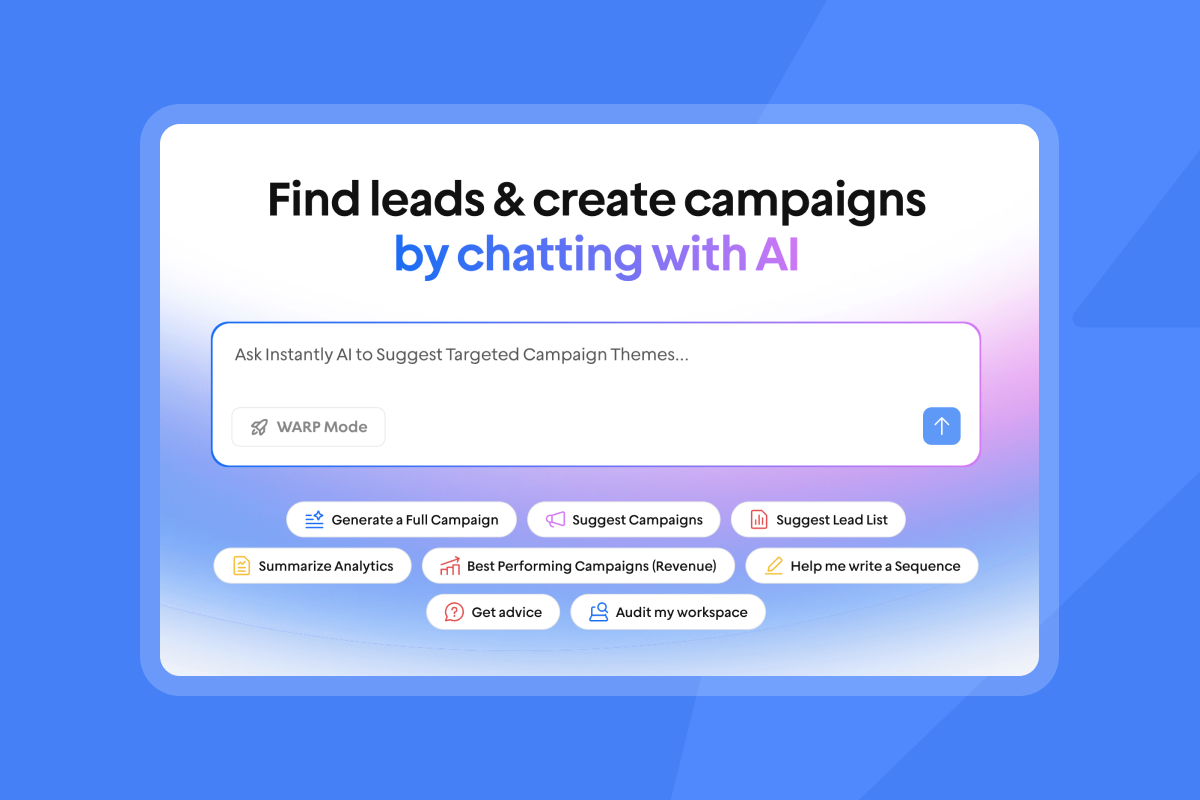
Copilot, Instantly's in-app assistant, researches targets, builds campaigns, and summarizes analytics with memory for your ICP and messaging rules. See how sales analytics workflows bring campaign performance data into a unified view across Unibox and CRM reporting.
The shift is from "remember to check the playbook" to "the system surfaces the playbook in context," which changes rep behavior because the guidance arrives when they need it.
Dynamic objection handling drills
AI agents simulate objection scenarios based on real prospect data, not scripted roleplays, because scripted roleplays teach reps to respond to predictable objections in a low-stakes environment while real prospects don't follow scripts.
Second Nature, a vendor in this space, reports on its own site that its customers reduce ramp time by 34%, scale practice 6x without pulling managers off the floor, and see 46% more deals closed on average. The company doesn't publish its sample size, population, or baseline, so treat these figures as unaudited vendor claims. The practice happens in the flow of work, which means reps build confidence faster.
Instantly's Unibox NLP classifies replies by sentiment and intent, and the AI Reply Agent uses that classification to suggest or send a response. When a prospect replies with an objection, such as "We're already working with a competitor," Unibox NLP classifies the reply and the AI Reply Agent suggests a response based on your playbook. Your team can then review the outcome.

AI vs LMS for sales: program-level differences
AI agents and LMS platforms differ most in how they prove training works. The first difference is validation, meaning the evidence each model gives you that reps learned.
Validation methods for sales training
LMS platforms validate training through completion certificates, quiz scores, and manager sign-off. These metrics tell you whether a rep finished the course. They don't tell you whether the rep applied the skill in a live conversation.
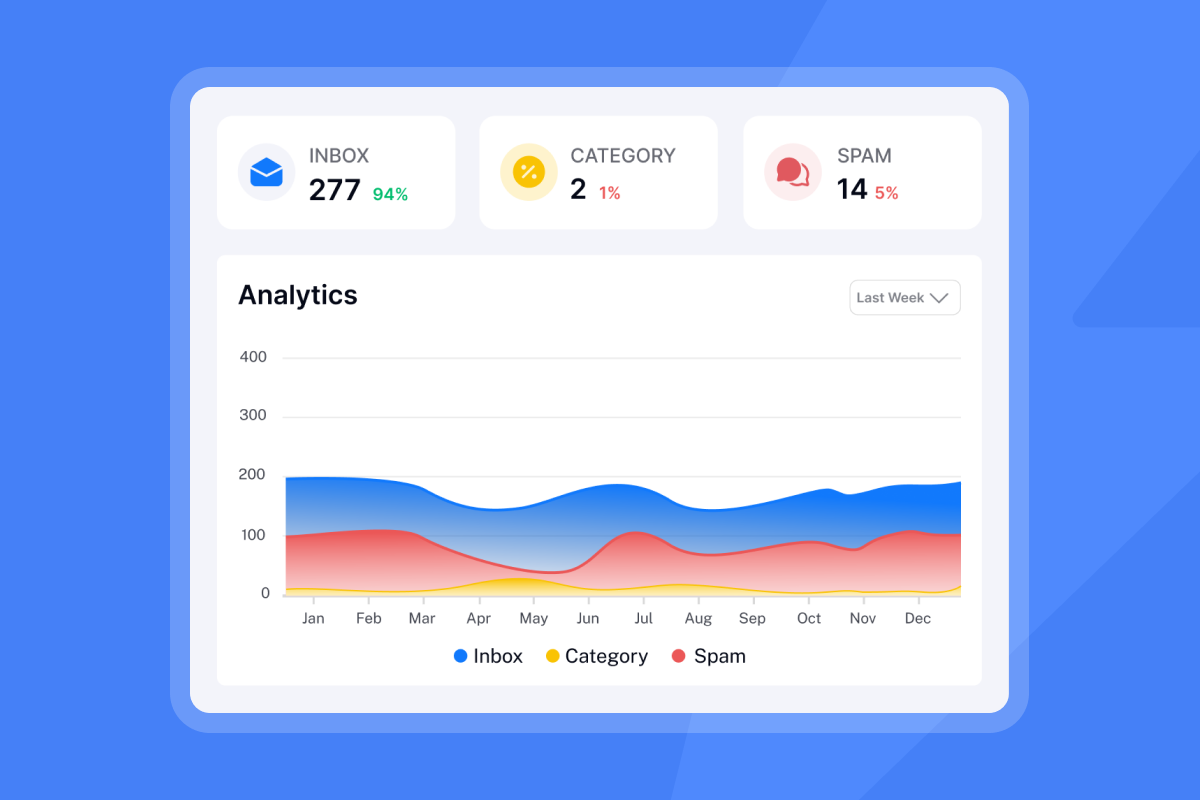
AI agents validate training through reply rates, meeting conversion, and actual behavior in live conversations. The audit trail shifts from "did they finish" to "did they apply." Instantly's analytics show rep-level performance data including reply rates and sequence outcomes, which gives you a direct line of sight into whether training is working.
This matters for CFO conversations. Completion certificates don't predict quota attainment. Reply rates and meetings booked do.
Fixed intervals vs real-time coaching
LMS platforms deliver training on a schedule. Onboarding courses and periodic refreshers usually run at set intervals, and the timing varies by organization and industry. The problem is that reps face objections every day, not on a training calendar.
AI agents deliver coaching in the moment, every conversation. When a rep sends a sequence and a prospect replies with a question about pricing, the AI Reply Agent drafts a response in under five minutes. The rep reviews, edits if needed, and sends. Real-time coaching solves the retention problem by reinforcing skills when reps actually use them, which closes the gap that causes most training content to be forgotten within days.
Fixed templates vs real-time logic
LMS platforms teach static templates and scripts that reps memorize, but prospects don't follow scripts. A rep who memorized five objection responses will freeze when a prospect asks a sixth question that wasn't in the course, because the training focused on answers rather than adaptive thinking.
AI agents use dynamic logic that adapts to prospect responses. Unibox NLP classifies replies by sentiment and intent, and the AI Reply Agent uses that classification to suggest responses based on your playbook and past outcomes. When a prospect replies with "Not interested right now, but check back in Q2," the AI Reply Agent can recognize it as a "not now" reply and suggest a response, so your team can decide when to follow up.
This is the difference between teaching reps what to say and teaching them how to think. The AI handles the volume. The rep handles the judgment.
Scaling sales outcomes with autonomous agents
AI agents scale sales outcomes by handling the volume work that doesn't require human judgment. This frees reps to focus on conversations that matter.
Group onboarding vs individual ramp
LMS platforms run standardized onboarding for all new reps. Everyone watches the same courses, takes the same quizzes, and gets certified on the same timeline. This works for compliance training where the content is standardized.
AI agents can support individualized ramp based on actual performance data. Reps who are booking meetings and reps who aren't can receive different coaching focus, based on how their replies and sequences perform. The system adapts to the rep's pace, not the other way around.
New reps spend less time in training environments and more time in live conversations with AI support. The result is faster time-to-proficiency because reps learn by doing, with the AI handling the repetitive work while they build judgment.
Accelerating new rep onboarding
AI agents compress the time from hire to first meeting. The AI Sales Agent sources leads, writes sequences, and sends outreach while the rep learns the product and the market.
The "shadow mode" approach works well here. New reps learn by reviewing AI-generated sequences and replies before they write their own. They see what good looks like in real conversations, not in a training video.
One G2 reviewer noted that the AI Sales Agent for prospecting and the AI Reply Agent greatly reduced manual work, which directly supports the shadow mode approach by giving new reps working examples:
"I love that Instantly solves one of my biggest problems with outbound sales by integrating multiple tools into one. It simplifies managing multiple sending accounts and warming them up. I appreciate the AI features, like the AI sales agent for prospecting and the AI reply agent that handles replies automatically, greatly reducing my manual work." - Jonathan R. on G2
Tracking rep adoption and proficiency
LMS platforms track login frequency, course completion, and quiz scores. These metrics tell you whether reps showed up. They don't tell you whether reps can do the job.
AI agents track reply rates, meeting conversion, and sequence performance. Instantly's analytics show rep-level data including which sequences each rep sent, what reply rates they achieved, and how many meetings they booked.
This gives you a direct measure of proficiency. A rep with a 2% reply rate needs different coaching than a rep with a 6% reply rate. The AI surfaces the data. The manager delivers the coaching.
Standardizing rep execution flows
AI agents enforce sequence governance and pacing rules across the team. Instantly's Inbox Rotation and send windows standardize execution so every rep follows the same deliverability best practices.
Sequence governance standardizes templates, send windows, and caps. The Deliverability AI Agent monitors sender reputation and alerts managers when health scores drop, which allows quick intervention before domain reputation suffers. The shift is from "hope reps follow the playbook" to "the system enforces the playbook."
This matters for risk-averse leaders. You can't afford to have one rep tank your domain reputation by sending 200 emails a day from a new inbox. The AI enforces the rules so you don't have to.
Reliability drivers in standard training platforms
LMS platforms have mature governance for training content because they've been around long enough to solve the compliance, audit, and access control problems. AI agents are newer, which means teams need to define governance for live conversation data and CRM integration hygiene.
Governance for sensitive sales data
LMS platforms govern training content, which typically includes course videos, quiz questions, and other learning materials. AI agents govern live conversation data, which includes prospect replies, buying signals, and pricing discussions. Both require governance, but the data types differ.
Instantly offers a Data Processing Agreement that establishes Instantly as a data processor operating solely on your behalf. The DPA includes audit rights, sub-processor transparency, and data category restrictions.
For compliance-sensitive buyers, request a countersigned DPA, the sub-processor roster, and a data-flow diagram before signing. Confirm that you won't upload restricted data categories per the DPA.
Predictable onboarding workflows
LMS platforms have established implementation patterns because the category is mature. AI agents require integration with your existing CRM and email infrastructure, which adds complexity.
The transition checklist matters here. Moving from LMS to AI-readiness without stalling the quarter requires a phased approach:
- Governance setup: Configure workspace isolation and approval workflows before launch. Timing depends on team size.
- Baseline testing: A/Z test sequence variants on a small pilot send to validate reply rates before you scale. Growth includes A/Z testing, but the full 26-variant capability requires Hypergrowth ($97/mo) and above. Timing depends on list quality.
- Automation runbooks: Schedule recurring AI tasks for lead sourcing, analytics, and compliance audits. Timing depends on how many runbooks you set up.
- Rep onboarding: Enable team access to Unibox and AI Reply Agent, then train on approval workflows. Timing depends on team size.
- Live deployment: Launch campaigns with human-in-the-loop reply approval, then expand sequentially based on results (ongoing).
This framework reduces the risk of a brittle implementation that stalls the quarter by keeping each phase small and reversible.
Enforcing repeatable sales cadences
LMS platforms can teach cadence, but they can't enforce it. A rep can complete a course on follow-up best practices and still forget to follow up with a hot lead.
AI agents enforce cadence through sequence automation and follow-up logic. Instantly's AI Reply Agent handles follow-ups in under five minutes, which means no qualified lead waits for a rep to remember to check their inbox.
The cadence enforcement happens automatically. The system sends the follow-up, logs the outcome, and alerts the rep if a human response is needed.
Evaluating ROI: AI agents vs conventional training
The ROI calculation for AI agents vs conventional training comes down to cost-per-rep and cost-per-meeting. The math changes when you stop paying per-seat for training software and start paying for infrastructure that scales with accounts, not headcount.
Replacing LMS systems with AI agents
The decision to replace or augment depends on what your LMS is doing today. If your LMS is a content repository with low adoption, replacing it with AI agents makes sense. If your LMS handles compliance training or complex certification in a regulated industry, keep it and add AI agents for live reinforcement.
Here's the decision matrix:
| Criteria | Legacy LMS | AI Sales Agents | Instantly's Approach |
|---|---|---|---|
| Scalability | Per-seat pricing grows with headcount | Flat-fee infrastructure scales with accounts | Unlimited email accounts on flat-fee plans (Growth: $47/mo, Hypergrowth: $97/mo) |
| Feedback loop | Fixed interval (quarterly courses) | Real-time (every conversation) | AI Reply Agent responds in under 5 minutes |
| Objective scoring | Completion certificates | Reply rates and meeting conversion | Analytics track reply rates and sequence outcomes |
| Adoption | Reps log into a separate platform | AI works inside existing tools | Unibox consolidates replies from all campaigns |
Use this matrix to evaluate your current stack. If your LMS scores well on compliance but poorly on adoption and feedback loop speed, the 80/20 hybrid model is the right move.
Compare current Instantly pricing tiers to see which plan fits your team size and sending volume.
Scaling sales skills via AI augmentation
Instantly's Growth plan starts at $47 per month with unlimited email accounts and warmup, or $37.60 per month on annual billing. The Hypergrowth plan at $97 per month (or $77.60 on annual) adds the Deliverability AI Agent and higher send limits. For a 10-person sales team:
- LMS cost: Varies by vendor and seat count. Request a quote for your team size to compare.
- AI infrastructure cost: $451 to $931 per year for Instantly on annual billing (Growth or Hypergrowth plan).
Instantly's flat-fee plans stay the same price as your headcount grows, which matters most when your team needs outreach infrastructure rather than compliance training.
According to Instantly's AI Reply Agent pricing guide for agencies, traditional per-seat models charge $50 to $150 per user monthly. That figure describes outreach tools, not LMS platforms. LMS per-seat costs vary separately, so get quotes from your actual vendor.
A 10-person sales team on a per-seat outreach tool pays $500 to $1,500 monthly just for seat access. Instantly's flat-fee model eliminates the per-seat tax, which means you can scale accounts without scaling software bills. Learn how flat-fee pricing scales without compounding per-seat costs.
Data privacy and stability risks
AI agents introduce data privacy considerations that LMS platforms don't have. Live conversation data requires different governance than course completion records. You need to know where the data goes, who can access it, and how long it's retained.
Instantly's DPA formalizes the data processor relationship and includes audit rights, sub-processor transparency, and data category restrictions.
CRM integration hygiene matters here. Clean handoffs between your AI agent and your CRM prevent data silos. Instantly integrates natively with HubSpot, with bidirectional sync available via Automations.
Ready to see how AI agents handle live reply triage? Try Instantly free and let the AI Reply Agent manage follow-ups while your reps focus on conversations that close deals. Instantly's 14-day free trial gets you started with core outbound sending. A separate, free Instantly Credits trial gives you 100 credits to test the AI Sales Agent (5 credits per lead) and AI Reply Agent (5 credits per reply) with your own campaigns.
FAQs: AI sales agents vs traditional sales training
Can AI sales agents integrate with an existing LMS?
Instantly doesn't document a direct LMS integration, so treat the two as separate systems. One option is to keep your LMS for compliance and certification and add AI agents for live reinforcement and reply triage. The 80/20 hybrid model is the practical path for most teams.
How do you measure ROI on AI vs traditional training?
Track cost-per-rep (software + infrastructure) and cost-per-meeting (total cost divided by meetings booked). Compare per-seat LMS fees against flat-fee AI infrastructure, then measure reply rates and meeting conversion. Instantly's 2026 benchmark report puts the platform average reply rate at 3.43%, with top-quartile senders reaching 5.5%+ and consistent senders seeing 15-20% higher replies.
What happens to existing training content?
Keep it. AI agents reference your playbooks and scripts as context for live conversations. The content becomes an input, not an endpoint. Your battle cards and objection handling guides feed the AI's response suggestions.
Do reps actually adopt AI coaching tools?
Adoption is higher when coaching happens in the live workflow. Reps don't have to log into a separate platform. The AI works inside the tools they already use, which reduces friction.
Is AI better than traditional sales training?
AI is better for volume reinforcement, real-time coaching, and reply triage. Traditional training is better for compliance, certification, and complex skill development. The 80/20 hybrid model combines both: AI handles 80% of reinforcement, humans handle 20% of nuance.
Key terms glossary
LMS (Learning Management System): Software for hosting, delivering, and tracking training content and completion. Seismic Learning (formerly Lessonly) is an example of a true LMS. Highspot and Mindtickle are sales enablement and readiness platforms that overlap with LMS features but aren't traditional LMS tools.
AI Sales Agent: Autonomous software that sources leads, writes sequences, and optimizes outreach based on replies. Instantly's AI Sales Agent costs 5 credits per generated lead.
AI Reply Agent: Autonomous software that classifies incoming replies by sentiment and intent, then suggests or sends responses based on your playbook and past outcomes. Instantly's AI Reply Agent costs 5 credits per automated reply.
Reinforcement: The process of applying a learned skill in a live context, which improves retention and behavior change. Research shows that information reviewed at spaced intervals is retained far better than information learned once.
Sequence governance: Rules that standardize how and when reps send outreach emails across a team. Instantly enforces sequence governance through Inbox Rotation, send windows, and automatic campaign pauses when sender reputation is at risk.
Reply classification: AI-powered sorting of incoming replies by sentiment, intent, or custom labels. Instantly's Unibox NLP classifies replies using custom labels, such as "Interested," "Meeting booked," "Not interested," and "Objection."
Read next
- The essential AI and LLM prompt library for sales teams (60 templates, 2026): Copy-ready prompts that help your reps draft outreach, handle replies, and research prospects faster.
- AI sales agent workflow: the complete template library for cold outreach: Step-by-step workflow templates that show how to set up an AI Sales Agent for cold outreach.
- AI SDRs for meeting booking: the agency operator's reliability & rate playbook: A practical playbook for agencies on keeping AI-driven meeting booking reliable and cost-effective.


