.svg)
%20(1).svg)


Updated June 22, 2026
TL;DR:
For most sales leaders, the choice between AI SDRs and sales engagement platforms (SEPs) depends on the problem each system solves: AI SDRs handle intent-based, dynamic tasks like research, qualification, and reply handling. Traditional SEPs run predictable, rules-based sequences that standardize process across reps. AI personalization improves reply rates, but deliverability depends on infrastructure. You need distributed sending infrastructure, pre-warmed domains, and strict pacing controls under both systems. Pairing AI qualification with a flat-fee sending engine like Instantly.ai avoids per-seat pricing traps while protecting sender reputation at scale.
When comparing AI SDR vs. sales engagement platforms, most sales leaders frame it as a replacement decision. Replace the SEP with an AI SDR, or vice versa, and that framing costs teams real money and real inbox placement because the structural difference between the two systems is not about which is smarter. It is about which problem each one actually solves. This outbound sales automation guide breaks down both systems, shows where each wins, and gives you a practical hybrid stack to run at scale without billing surprises or deliverability crashes. For a wider view of how an AI sales agent fits into the stack, see our full breakdown.
For teams evaluating outreach tools, understanding how AI sales agents improve cold email campaigns and comparing deliverability across platforms helps clarify which capabilities matter most.
How AI SDRs power autonomous outreach
An AI SDR is a software system that uses machine learning and natural language processing to perform top-of-funnel sales work autonomously. It identifies prospects, engages leads, and qualifies opportunities before passing them to human reps. For a full breakdown of what an AI SDR is and how it operates, see this guide. Unlike basic automation, an AI SDR plans and executes outreach, responds to leads in real time, and continuously learns from interactions.
Sales Engagement Platforms take a different approach. They sit between your CRM and your sellers, orchestrating multi-step touch sequences across email, phone, and SMS while tracking outcomes and logging activity back to the CRM. The logic is rules-based: if a prospect opens but does not reply, the platform triggers step two in three days.
The core difference comes down to the unit of work.
- AI SDRs operate on tasks: interpret this reply, decide the next action, enrich this lead record, qualify this conversation.
- SEPs operate on sequences: send this email, wait three days, send a follow-up, log the call.
Key AI SDR functional requirements
Before deploying any AI SDR, there are operational requirements that protect your brand and your data. Instantly's AI Sales Agent runs on Instantly Credits (a separate subscription starting at $9/month) and covers autonomous lead sourcing and outbound execution. Technical capability is only part of the requirement.
Compliance checklist for AI sales tools:
- GDPR compliance: Required for any platform processing EU resident data (penalties up to €20M or 4% global revenue). Confirm the vendor provides a signed DPA and documents the lawful basis for processing.
- CCPA compliance: Required for California residents (penalties $2,500 to $7,500 per violation). Confirm the vendor restricts upload of sensitive data categories.
- Sub-processor transparency: Confirm the vendor publishes a current sub-processor list so you can assess third-party data handling risk.
- Security certification posture: Ask vendors directly which certifications they hold (such as SOC 2 Type II or ISO 27001) and request documentation before committing.
Admin control checklist:
- Role-based workspace access (Owner, Admin, Editor, and View/VA) to control what each team member can see and action within the platform
- Centralized template governance so AI does not send unapproved messaging
- Audit-friendly reporting that logs every AI action with timestamps and outcomes
- Human-in-the-loop approval queues for high-stakes reply categories
Instantly's data processing agreement (operated by Foo Monk LLC) outlines the data categories restricted from upload and includes a public sub-processor listing, giving compliance-sensitive teams the documentation they need.
Comparing agentic and linear outreach
A traditional SEP follows if-this-then-that logic. If a prospect opens email one and does not reply within three days, send email two. If they reply with a negative signal, remove them from the sequence. These rules are configured by humans upfront and the platform executes each step in the defined order.
In contrast, when an AI SDR reads an unstructured reply like "not interested right now, check back in Q3," it decides whether to set a task reminder for Q3, send a lightweight acknowledgment, or remove the contact from active outreach entirely, without a human triaging the response. This decision-making process is explained in detail in how AI SDRs work under the hood.
Here is how AI SDRs compare to human SDRs on operational execution:
Metric | AI SDR | Human SDR |
|---|---|---|
Response time | Seconds to 5 minutes | Minutes to hours (or next business day) |
Daily outreach scale | Thousands of personalized touches | 50 to 100 manual touches |
Objection handling | Data-driven, scripted responses | Nuanced, context-aware adaptation |
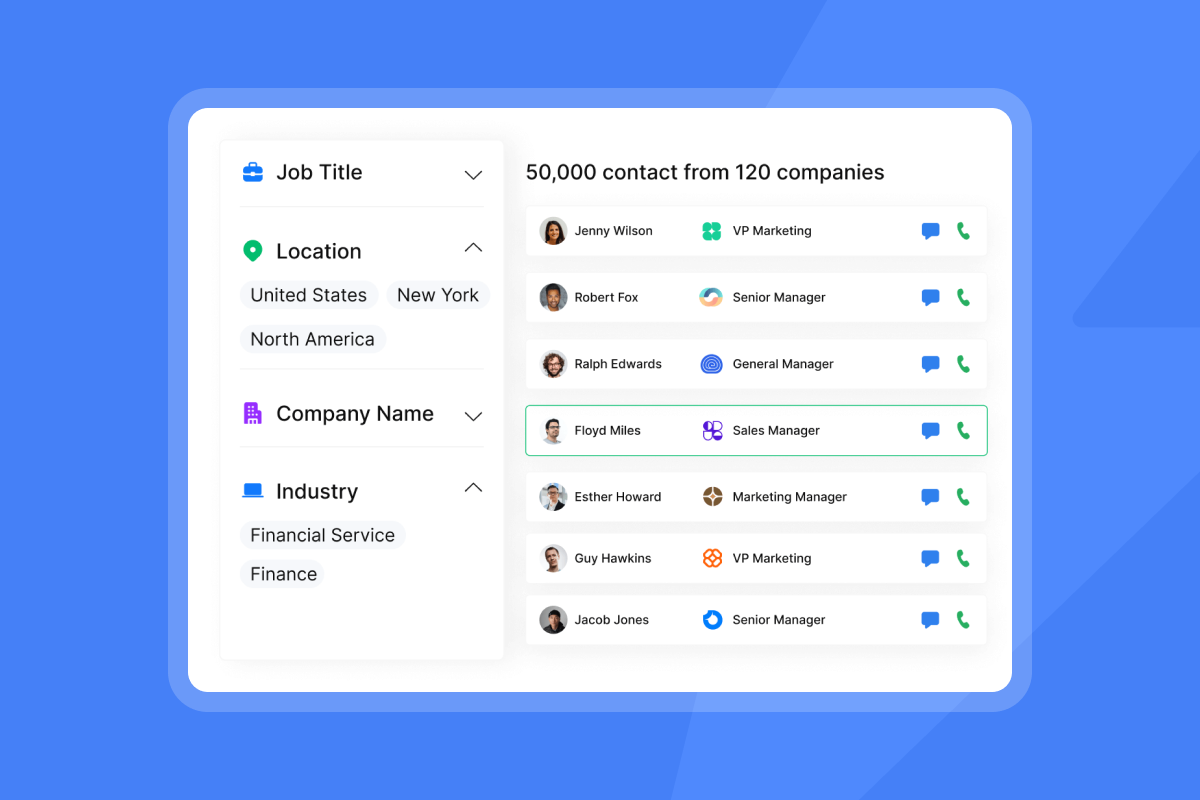
Research capacity | Instant access to 450M+ leads | Manual LinkedIn and news lookups |
Cost structure | Credit-based (5 credits per lead) | Average annual pay $55,018/year, with fully-loaded cost (salary + benefits + tools + overhead) considerably higher |
Oversight requirement | Guardrails, approval queues | Coaching, QA spot-checks |
Oversight works differently across each system. With an SEP, humans configure the sequence logic upfront and monitor aggregate performance metrics on an ongoing basis. With an AI SDR, oversight shifts to configuring approval queues that catch edge-case replies before the AI responds at scale. The AI Reply Agent in Instantly handles replies in under five minutes and offers both autopilot mode and a human-in-the-loop mode with Slack-based review and approval, giving teams control without slowing response time.
Core mechanics of traditional email sequences
Traditional email sequences are predictable by design. A rep enrolls a prospect into a cadence, the platform executes each touch at the configured interval, and every outcome is logged back to the CRM. For RevOps leaders who need standardized processes across teams, this predictability is valuable. Every prospect receives the same approved messaging, no rep goes off-script, and performance data is clean and comparable across the team, a standardization that reduces ramp time for new reps.
The cold email strategy framework that works in practice follows this structure:
- Identify your target prospect and ICP before building any sequence
- Write multiple copy variants and use spintax to introduce controlled variation across opening lines
- Configure send windows between 8:30 and 10:30 a.m. local time
- Cap sends at no more than 30 emails per inbox per day
For teams building standardized sequences, Instantly's cold email campaigns collection and 600 template library provide a starting point that reduces ramp time for new reps.
Manual outreach and workflow controls
Traditional SEPs schedule manual steps alongside automated ones: a human rep completes a phone call task on day four, a LinkedIn connection on day six, and an email on day nine. The platform tracks completion and logs it to the CRM.
The bottleneck is real. Reps spend only about 28% of their work week on active selling, with the rest lost to admin and tooling overhead. A typical manual workflow in a legacy SEP runs like this:
- Data pull: Export a contact list from a data provider, import to the SEP.
- Research: Manually check LinkedIn and company news for personalization hooks.
- Sequence enrollment: Enroll the contact and the platform sends the first email.
- Reply triage: Review each reply manually, decide the next step, log the outcome.
- CRM sync: Update the CRM record with meeting status or next touch.
Each step happens in a different tool. Organizations running multi-tool outreach stacks accumulate significant per-rep costs before factoring in heavier outbound requirements. Each context switch costs roughly 23 minutes of refocused attention per UC Irvine research on task switching, and that cost compounds as headcount grows.
AI SDR vs. traditional automation comparison
The structural gap between traditional automation and AI SDRs comes down to six operational dimensions:
Dimension | Traditional SEP | AI SDR |
|---|---|---|
Logic type | Rules-based (if-then) | Adaptive (intent-based) |
Data handling | Structured inputs only | Structured and unstructured |
Reply handling | Removes or pauses based on keywords | Interprets sentiment, decides next action |
Primary value | Cost reduction through repeatability | Revenue growth through qualification |
Human oversight | Sequence logic configured upfront, ongoing performance monitoring | Guardrails, approval queues, real-time audits |
Personalization | Merge tags (first name, company) | Dynamic copy built from behavioral context |
Traditional automation breaks when a prospect replies with "we tried something similar last year and it did not work." A rules-based system either pauses the sequence or triggers the next step. It cannot acknowledge the objection, ask what went wrong, or reframe the value proposition. An AI SDR can handle that unstructured input and respond with a relevant next message, one capability that sets modern AI agents apart.
Comparing options in this category? Watch the Apollo vs Instantly 2026 comparison and the Lemlist vs Instantly breakdown to see the feature differences in practical detail.

Quantifying the AI SDR performance edge
Average cold email reply rates now sit at 3.43% in 2026, according to Instantly's 2026 cold email benchmark report. The gap between average and top-quartile senders is not copy quality. It is infrastructure plus list quality.
AI-driven outreach can outperform email-only sends at the same volume, particularly when email is coordinated with LinkedIn touches via a third-party integration such as Zapier. High-performing campaigns can reach strong double-digit reply rates by combining tight targeting, strong hooks, and disciplined follow-up sequences, the core levers behind AI SDR reply rate improvement.
The time savings compound quickly. Reps using AI for pre-call research and lead enrichment reclaim hours per week that would otherwise go to manual lookups. A team of five SDRs saving two hours per day per rep recovers 50 hours per week of selling capacity without adding headcount.
Personalizing outreach to individual leads
Traditional merge tags personalize at the surface level: first name, company name, job title. Prospects recognize this pattern and it reduces response rates. AI SDRs pull from unstructured data sources, including LinkedIn activity, recent company news, and funding announcements, to build context-specific opening lines that feel researched rather than automated.
The AI Prompt Library in Instantly gives teams pre-built prompts for generating personalized intros at scale, reducing copy creation time while maintaining consistency across the team. The copywriting framework combines AI-assisted personalization with proven structural principles.
"I use Instantly to automate campaigns and utilize AI for personalization. It saves me a lot of time and helps me generate personalized introductory lines and dynamic content variations efficiently at scale." - Jethu Ram P. on G2
Refining campaigns and automating decisions via AI logic
AI SDRs build learning loops that traditional SEPs cannot replicate. The AI Reply Agent, one of Instantly's AI agents, analyzes inbound reply sentiment and classifies each response to determine the appropriate next action for each contact, including setting follow-up tasks, routing positive replies to Unibox for AE review, or pausing outreach on negative signals.
For teams already running A/Z testing, Instantly's plans (starting at $47/month on Growth) support testing subject lines, opening lines, and CTAs simultaneously rather than running sequential tests over multiple weeks. The plans comparison details what is included at each tier.
When a prospect replies with timing objections or future interest, AI SDRs can automate follow-up scheduling. The AI Sales Agent in Instantly handles this kind of decision-tree logic, priced at 5 Instantly Credits per generated lead, drawing from the same credit pool as Copilot and the AI Reply Agent.
Where standardized platforms outperform AI SDRs
AI personalization improves reply rates when messages land in the primary inbox. When they land in spam, no amount of personalization matters. Deliverability is an infrastructure problem, not a copywriting problem. This is where standardized platforms built around sending architecture (like Instantly) protect the inbox placement that makes every other feature relevant.
Reliable workflows for sales teams
Standardized platforms ensure that every prospect receives exactly the approved message at the approved time. For compliance-sensitive environments and for teams managing reps with quota accountability, this predictability is non-negotiable. If one rep edits a live sequence or uses an unapproved template, it creates audit liability and inconsistent reporting data.
Instantly's role-based workspace access (Owner, Admin, Editor, and View/VA) gives the head of sales or RevOps control over what each team member can see and action, with team-level performance data accessible without relying on individual reps to self-report.
Centralized template governance in Instantly lets the head of sales or RevOps lock approved sequences, restrict editing permissions by role, and pull performance data at the team level without relying on individual reps to self-report. Watch the SalesTarget AI vs Instantly comparison to see CRM and outreach workflows covered side by side.
"I like how easy Instantly makes scaling outbound reach without sacrificing deliverability or personalization... Its inbox warm-up, sending limits, and reputation management features ensure my emails land in the primary inbox rather than spam." - Steven M. on G2
Full visibility into inbox health
Deliverability works as a system where each component depends on the others. Here is the playbook:
- Authenticate every domain: SPF, DKIM, and DMARC are required by Google and Yahoo since February 2024, and Microsoft followed in May 2025. These are not optional.
- Warm new inboxes for 30 days: Ramp gradually from 5 sends per day toward a maximum of 30 over approximately 30 days. Increasing volume before a positive sending history is established risks deliverability failures at the inbox provider level.
- Cap at 30 emails per inbox per day: Pushing past this threshold triggers reputation flags. Scale reach by adding inboxes, not by pushing individual inbox volume higher.
- Monitor bounce rates: Keep bounces at or below 1% and spam complaint rates below 0.1%.
- Use secondary sending domains: Route campaign sends through separate domains from your main brand domain. If a sending domain develops reputation issues, your primary domain stays clean and unaffected while you diagnose and recover.
- Quick health check: If bounce rate exceeds 1%, pause all sends immediately. Re-verify your list through SuperSearch, remove invalid contacts, then restart at a lower volume and gradually ramp back up over several days.
Instantly's rotating IP and sending algorithm guide explains the infrastructure mechanics behind this. The secondary sending domains strategy gives you the implementation steps.
For teams that need dedicated IP pools, the Light Speed plan ($358/month) includes SISR (Server and IP Sharding and Rotation), which automatically assigns private server and IP blocks to your campaigns, swaps out flagged IPs immediately, and keeps deliverability stable across high-volume sends. The inbox placement testing tool runs automated placement tests before and during campaigns to catch issues early.
Streamlined team oversight and QA
AI tools that hide their decision logic create audit problems. When a prospect complains about an email they received, the sales leader needs to pull up the exact message, the sequence step, the send timestamp, and the AI's decision rationale. If that data is not accessible in a clean format, the team cannot diagnose the problem or demonstrate compliance.
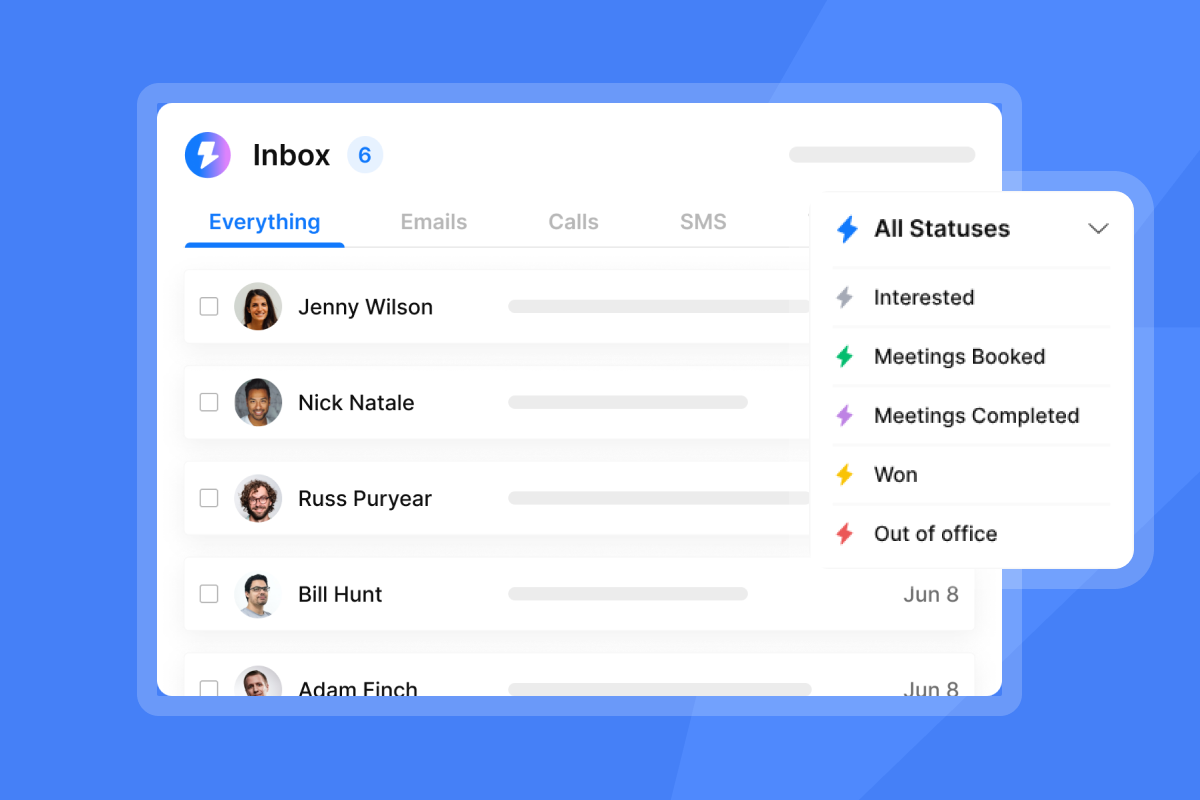
Instantly's Unibox centralizes every reply across all sending accounts into a single view, with full conversation history and AI Reply Agent-powered sentiment classification surfaced on each inbound reply. Sales leaders can review the full thread for any sending account and use that context to inform QA decisions and next-step actions.
How to select the right outreach solution
Team size, average contract value, and pipeline volume targets all shape which stack configuration makes sense for your situation. A closer look at the leading AI SDR tools can help narrow the shortlist further.
Team size | Recommended stack | Monthly cost | Key features |
|---|---|---|---|
Solo/early-stage (1-3 reps) | Growth Outreach + Credits Nano | $56/mo | Unlimited sending accounts, inbox warmup, AI Reply Agent and Copilot (via Credits Nano) |
Mid-market (5-15 reps) | Hypergrowth Outreach + Hyper Credits + Growth CRM | $341/mo | A/Z testing, Unibox, AI agents, advanced reporting |
High-ACV enterprise | Light Speed + Hyper Credits + Hyper CRM | $652/mo | SISR dedicated IPs, human-in-loop controls |
How AI SDRs affect meeting-to-SQL conversion rates
AI-qualified outreach can improve the quality of meetings booked, not just the count. When AI filters for intent signals before enrolling a contact in a sequence, the meeting-to-SQL conversion rate can improve because reps spend time on contacts who have already shown buying signals rather than contacts who simply match a firmographic profile.
Risk management in outreach tools
Sending from unwarmed domains at high volume and deploying AI agents without approval queues are two preventable risks that consistently surface in outreach operations. Both are preventable.
For domain risk, keep your main brand domain off campaign sends entirely. Use pre-warmed sending domains and rotate across multiple inboxes so no single domain carries all the risk. If one domain develops reputation issues, the others continue running while you diagnose and recover.
For AI risk, configure human-in-the-loop mode on the AI Reply Agent before switching to autopilot. Review a sample of AI-generated replies (10 to 20 is a reasonable starting point) before removing the approval step. Check Instantly's Copilot documentation for the guardrail configuration options.
Optimizing your hybrid outreach stack
The "stacked, not swapped" approach uses AI agents for research and qualification, then feeds qualified leads into a flat-fee distributed sending engine. Here is how the stack connects:
- AI Sales Agent sources and qualifies leads from SuperSearch's 450M+ B2B leads at 5 credits per lead.
- SuperSearch enriches each lead record with LLM-assisted context, pulling in company news and intent signals. Copilot acts as the in-app research and targeting assistant, helping you refine segments and build campaign logic.
- Outreach sequences send approved, pre-warmed campaigns from unlimited sending accounts, capped at 30 emails per inbox per day.
- AI Reply Agent handles inbound replies in under 5 minutes, routes positive replies to Unibox for AE review, and sets follow-up tasks for out-of-office or future-interest replies.
- CRM sync via HubSpot pushes qualified leads to AE pipeline with full conversation history attached.
CRM handoff recipe (copy this workflow):
- AI qualifies lead: AI Sales Agent or Copilot marks contact as qualified based on reply sentiment and intent signals.
- Unibox review: AE or SDR reviews the full conversation thread in Unibox, confirms qualification, and adds meeting context notes.
- CRM update: Conversation data syncs to HubSpot via OutboundSync. Contact moves to "SQL" stage with conversation history attached.
- Calendar booking: AE receives the handoff with full context: company background, conversation thread, qualification notes, and suggested meeting time.
- Closed-loop reporting: OutboundSync logs every email sent, reply received, and meeting booked into your CRM activity timeline, giving you a complete record of each contact's activity from first touch to conversion.
Pricing: AI SDR and infrastructure stacks vs. legacy per-seat platforms
Use this formula to calculate your current cost per meeting and compare it against a hybrid stack:
Cost per meeting = (Annual platform costs + Data costs + Rep time on tooling) / Total meetings booked per year
Typical mid-market spend on a dedicated engagement platform adds up quickly on a per-seat basis, before data subscription costs or time on manual enrichment are factored in.
Against Instantly's Hypergrowth stack for the same five-rep team (all reps on one flat plan, monthly billing):
- Outreach Hypergrowth: $97/month
- Hyper Credits: $197/month
- Growth CRM: $47/month
- Total: approximately $341/month ($4,092/year)
A five-rep team on Instantly's Hypergrowth stack (Outreach + Credits + CRM) pays approximately $341/month flat (monthly billing), with no per-seat costs added as the team grows, unlike legacy per-seat platforms that charge per rep plus separate data subscriptions.
The Instantly structure scales without adding per-seat costs as the team grows. All plans include a 14-day free trial with no credit card required.
FAQs
What is the core difference between an AI SDR and a sales engagement platform?
An AI SDR uses adaptive, intent-based logic to autonomously research, qualify, and engage prospects, handling unstructured replies and making next-action decisions without human input. A sales engagement platform runs rules-based, linear sequences where humans define the logic upfront and the platform executes each step in order, a distinction our AI sales agent buyer's guide explores further.
Does AI personalization improve email deliverability?
No, deliverability is determined by domain authentication, warmup history, sending volume, and list quality, not by copy quality. AI-generated personalized emails land in spam if the sending infrastructure is weak, just as template emails do.
What sending volume should I cap per inbox per day?
Cap each individual inbox at 30 emails per day because pushing higher than this triggers spam filters at Google and Microsoft. Scale your overall volume by adding more inboxes, not by increasing the per-inbox send rate. See the cold email strategy guide for ramp schedules.
How do I audit AI-generated conversations for compliance?
Instantly's Unibox logs every AI-generated reply and human override in a centralized, timestamped view accessible to any admin. For data processing compliance, Instantly's DPA with Foo Monk LLC documents the lawful basis for processing, the restricted data categories, and the public sub-processor list covers the full third-party chain.
Key terms glossary
AI SDR: A software system that uses machine learning and natural language processing to autonomously perform top-of-funnel sales tasks, including prospect research, lead qualification, and reply handling, without requiring human triage on each interaction.
Sales engagement platform (SEP): A tool that sits between your CRM and your reps, orchestrating multi-step, rules-based outreach sequences across email, phone, and LinkedIn while logging activity back to the CRM.
Deliverability: The ability of an email to reach the primary inbox rather than spam or promotions folders. Determined by domain authentication, warmup history, sending volume, and list hygiene, not copy quality.
Domain warmup: The process of gradually increasing sending volume on a new inbox from 5 emails per day to 15 to 30 over approximately 30 days, building a positive sending reputation before launching full campaigns.
Sender reputation: A score assigned to your sending domain and IP address by inbox providers based on engagement rates, bounce rates, spam complaints, and authentication status. A degraded sender reputation is the primary cause of inbox placement failures.
SPF / DKIM / DMARC: Three DNS-based authentication standards required by Google, Yahoo, and Microsoft. SPF authorizes sending servers, DKIM cryptographically signs outgoing messages, and DMARC instructs inbox providers on how to handle messages that fail either check.
Bounce rate: The percentage of sent emails that are undeliverable. Hard bounces (invalid addresses) above 1% signal poor list quality and trigger spam filters. Keep bounce rate at or below 1%.
SQL (sales qualified lead): A prospect that has been evaluated, either by a human rep or an AI SDR, and determined to meet the threshold criteria for direct sales engagement, typically based on fit, intent, and timing signals.
Human-in-the-loop: A configuration mode in which AI-generated replies or decisions are held in an approval queue for a human to review and confirm before the message is sent. Protects against off-brand or non-compliant AI output at scale.
Unibox: Instantly's centralized reply inbox that aggregates inbound responses across all sending accounts into a single view, with full conversation history and AI-generated reply threads accessible to any admin.
Secondary sending domains: Separate domains from your primary brand domain, used exclusively for campaign sends. If a sending domain develops reputation issues, your primary domain remains clean and unaffected.
SISR (Server and IP Sharding and Rotation): Instantly's dedicated infrastructure feature (Light Speed plan) that automatically assigns private server and IP blocks to your campaigns and swaps out flagged IPs immediately to maintain deliverability stability at high volume.
Instantly Credits: A separate credit-based subscription (starting at $9/month) that powers Instantly's AI features, including the AI Sales Agent (5 credits per lead), the AI Reply Agent, and Copilot for lead enrichment.
A/Z testing: A multi-variant testing method that allows simultaneous testing of multiple subject lines, opening lines, or CTAs within the same campaign window, rather than running sequential A/B tests over multiple weeks. A/Z testing is available on the Growth plan and above, with the full 26-variant capability available on Hypergrowth and above.
Cost per meeting: A metric calculated as (annual platform costs + data costs + rep time on tooling) divided by total meetings booked per year. Used to compare outreach stack efficiency across platforms.
Read next
- AI reply agent vs Smartlead, Lemlist, and Reply.io: feature comparison: A side-by-side breakdown of how Instantly's AI Reply Agent compares to the reply handling capabilities of Smartlead, Lemlist, and Reply.io across speed, classification, and approval controls.
- Actionable cold email tips for winning outreach campaigns: Practical guidance on subject lines, opening hooks, CTAs, and send timing to improve reply rates across cold email campaigns.
- Your inbound and outbound lead generation guide: A full walkthrough of inbound and outbound lead generation strategies, covering ICP definition, channel selection, and pipeline handoff workflows.



