


Updated October 28, 2026
TL;DR: A single value proposition can serve every buyer persona if you build a prompt chain that extracts the core story, adapts it to each role's decision criteria, and runs a consistency check before any rep hits send. Instantly.ai's 2026 benchmark report found that consistent, stable sending patterns produce +15–20% higher replies. You will get five copy-pasteable prompts, a governance checklist, and the deliverability safeguards to make persona-specific messaging repeatable without tanking sender reputation.
Most ChatGPT prompts for value proposition messaging give you a list of 50 disconnected prompts and call it done. The real problem is consistency, not creativity. Your reps are already using AI to write outreach, and the question is whether every message still sounds like your company. This guide is for Heads of Sales and RevOps leaders managing SDR and AE teams who need persona-specific messaging that stays consistent with one core story.
Preventing brand drift in rep outreach
Brand drift happens when each AI-generated email sounds slightly different. One rep's email promises "cost savings." Another promises "efficiency gains." A third invents a claim you never approved. Multiply that across a team of SDRs sending hundreds of emails per week, and your positioning fragments before a single prospect replies.
For Sales Leaders, this is an operational risk, not a creative problem. You need standardization that holds up under quota pressure and CFO scrutiny. The fix starts with a master positioning: one source of truth that defines your core value proposition, the proof points that back it, and the boundaries reps cannot cross.
Solving brand drift in sales content
The solution is structural: write one master value proposition and store it in a shared prompt library so reps start from your approved prompt chain instead of a blank ChatGPT window.
This approach treats your value proposition as a structured set of claims, not a tagline. The set covers the problem you solve, the proof you offer, and the outcome each buyer persona cares about most. When every rep works from the same set of claims, drift becomes a process failure you can catch and correct.
The risks of unscripted rep messaging
Unscripted AI output carries three specific risks:
- Inconsistent claims: Reps generate conflicting value statements that confuse prospects and erode trust.
- Off-brand tone: ChatGPT defaults to generic enthusiasm. Without constraints, your outreach reads like every other AI-generated email.
- Compliance exposure: Unreviewed AI copy can include claims you have not validated, creating liability in regulated industries.
Instantly's 2026 benchmark report found that consistent, stable sending patterns produce +15–20% higher replies compared to erratic send behavior. Consistency is a measurable performance variable, not just a brand preference.
Mapping value props to target roles
Most B2B deals involve three to five core personas, and the three that consistently influence pipeline are the economic buyer, the technical buyer, and the end user. Each one evaluates your value proposition through a different lens:
| Persona | Language Focus | Proof Points | Outcome Framing |
|---|---|---|---|
| Economic buyer | Cost, ROI, risk | Cost per meeting, payback period | "Reduces cost per SQL" |
| Technical buyer | Deliverability, data integrity | Bounce rates, warmup timelines | "Keeps bounce rate below 2%" |
| End user | Time savings, workflow fit | Hours saved, reply handling | "Cuts manual follow-up time" |
The prompts in this article translate one master positioning into messaging for each role without rewriting the core story.
The one-story framework for value propositions
Most ChatGPT guides hand you a list of 50 prompts and call it done. The problem is that 50 disconnected prompts produce 50 disconnected messages. A prompt chain is different: each prompt builds on the last one, and the final step checks every variant against the master positioning so they all ladder up to the same core story.
Locking in your core value prop
A core value proposition has four components:
- Problem: The specific pain your product solves, stated in the buyer's language.
- Solution: What your product does, described in one sentence without jargon.
- Proof: The data point, case study, or metric that makes the claim credible.
- Differentiation: Why your approach beats the alternatives on the dimension the buyer cares about most.
Fill-in-the-blank template (the opening follows the common "We help X do Y by Z" value proposition format, extended here with differentiation and proof):
"We help [persona] solve [problem] by [solution]. Unlike [alternative], we [differentiation], so [outcome]. Proof: [metric or case study]."
Treat this as a starting structure rather than a fixed formula, and adjust the wording to fit how your buyers actually talk.
Write this once. Store it where every rep can access it.
Adapting messaging for every persona
Persona adaptation adjusts three elements while keeping the core claim intact:
- Language: The economic buyer hears "cost per meeting." The technical buyer hears "bounce rate." The end user hears "time saved."
- Proof points: The CFO wants ROI math. The technical buyer wants deliverability metrics. The end user wants a workflow demo.
- Outcome framing: The CFO cares about pipeline coverage. The technical buyer cares about sender reputation. The end user cares about booked meetings without extra manual work.
You are not rewriting the value proposition for each persona. You are adjusting the emphasis so each buyer hears the part of the story that matters most to them.
Ensuring persona consistency via AI
ChatGPT can act as a consistency checker, not just a copy generator. After you produce persona-specific variants, feed them back into a final prompt that compares each one against the master positioning. The output is a scorecard showing alignment on claims, tone, and proof points.
This step catches drift before the email leaves your workspace. Without it, you are trusting each rep to self-edit against a standard they may not have memorized.
ChatGPT prompts for value proposition messaging
The five prompts below are designed to work as a chain, with the output of each one feeding the next. Run them in order, and store the final approved variants in a shared prompt library. For additional AI prompt strategies across the sales cycle, see the ChatGPT prompts for sales enablement guide.
Prompt 1: extract your core value proposition
This prompt distills your master positioning from existing materials such as your website, pitch deck, and top-performing emails.
Copy and paste into ChatGPT:
"You are a B2B sales messaging strategist. I will paste our current marketing copy, pitch deck text, and three top-performing sales emails. Your task is to extract one core value proposition. Identify the problem we solve, our solution in one sentence, our strongest proof point, and our key differentiation, but only where the source material supports each element. Format the output as: Problem / Solution / Proof / Differentiation. Do not add claims that are not in the source material."
[Paste your materials below this prompt.]
The output becomes your master positioning document. Every subsequent prompt references it. For the underlying research step, Instantly's AI Prompts & Enrichment tools can pull prospect and account data to ground your positioning in real buyer language.
Prompt 2: framing value for CFO approval
This prompt adapts the core value proposition for an economic buyer who evaluates purchases on cost, ROI, and risk reduction.
Copy and paste into ChatGPT:
"Using the core value proposition below, write a value statement for a CFO or VP of Sales evaluating this purchase. Focus on: cost per meeting, pipeline coverage, and risk reduction. Use concrete numbers where the source material provides them. Do not make up statistics. Keep the statement brief. Tone: direct, numbers-first, no hype."
[Paste your core value proposition from Prompt 1.]
The output gives you CFO-facing language for decks, proposals, and executive outreach.
Prompt 3: bridge features to outcomes
This prompt translates product features into role-specific outcomes so reps stop listing features and start selling results.
Copy and paste into ChatGPT:
"Using the core value proposition below, build a feature-to-outcome bridge for three core personas (for example, an economic buyer, a technical buyer, and an end user). For each persona, list: (1) the most important feature for that role, (2) the outcome that feature produces, (3) a one-sentence proof statement. Format as a table with one row per persona. Do not add features or outcomes not present in the source material."
[Paste your core value proposition from Prompt 1.]
This output feeds directly into email copy, talk tracks, and deck slides.
Prompt 4: crafting rep-ready outreach
This prompt generates cold email copy that follows deliverability best practices: under 80 words, 4–7 sequence steps, and persona-specific variables.
Copy and paste into ChatGPT:
"Using the persona-specific outcome statement below, write a cold email under 80 words for [insert persona]. Rules: (1) open with one sentence that shows you understand their role, (2) state the outcome in one sentence, (3) include one proof point, (4) end with a low-friction question. Use {{firstName}} and {{companyName}} as variables. Add Spintax variations for the opening line using {{RANDOM | option1 | option2 | option3}} syntax. Do not use exclamation points or hype language."
[Paste the persona-specific outcome from Prompt 3.]
Instantly's 2026 benchmark report found that emails under 80 words outperform longer messages, and optimal sequences run 4–7 steps. Instantly's AI Spintax Writer can auto-generate Spintax variants from your existing text, and you can preview each variation before sending. Spin at the section level, not the word level, so every variant keeps the same claim and tone. For examples and strategies, see this guide on how to use Spintax in cold emails. The campaign editor lets you insert predefined variables (such as first name and company name) and custom variables mapped from your lead columns, so you can personalize persona-specific fields.
Prompt 5: harmonize across all personas
This final prompt runs a consistency audit across every variant you have generated.
Copy and paste into ChatGPT:
"You are a brand consistency auditor. I will paste our master value proposition and three persona-specific messaging variants (economic buyer, technical buyer, end user). For each variant, score alignment on: (1) core claim consistency, (2) tone match, (3) proof point accuracy, (4) differentiation language. Flag any variant that conflicts with or weakens the master positioning. Output as a scorecard table."
[Paste master value proposition and all three persona variants.]
Run this prompt every time you update messaging or onboard a new rep.
Integrate persona messaging into your sales stack
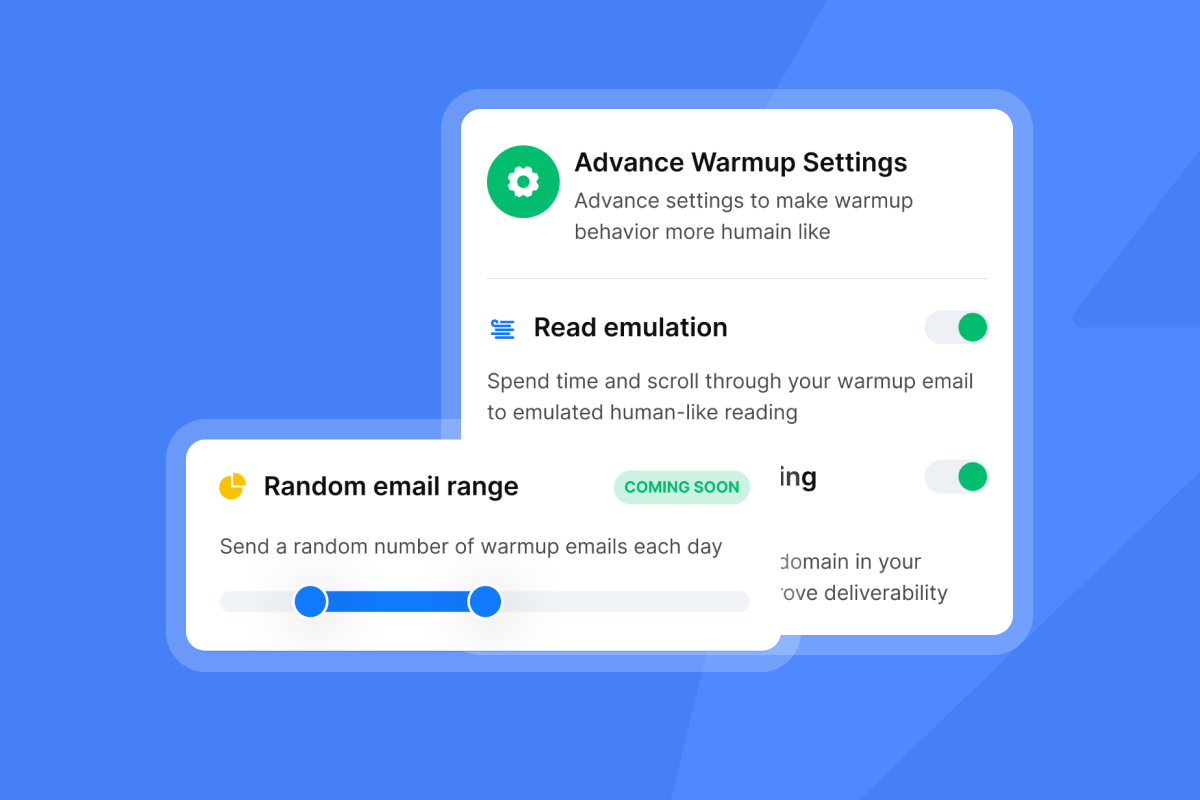
ChatGPT output is only useful if it reaches prospects through a system that protects deliverability and measures results. Instantly serves as that execution layer. It sends persona-specific sequences across unlimited email accounts on flat-fee pricing, runs built-in warmup to protect sender reputation, and consolidates replies into a unified inbox for rep QA. ChatGPT writes the story. Instantly sends it safely and measures whether it lands.
AI prompts for deck and talk track content
The same prompt chain works for slide decks, one-pagers, and live conversations. For decks, take the persona-specific outcome statements from Prompt 3 and feed them into this prompt:
"Using the outcome statement for [persona], write three bullet points for a sales deck slide. Each bullet should fit on one line, so keep it to about six to eight words. Lead with the outcome and add one proof point where the source material provides it. Avoid filler phrases."
For talk tracks, adapt Prompt 2 and Prompt 3 for discovery calls:
"Using the persona-specific outcome for [persona], write three open-ended discovery questions a rep can ask on a first call. Each question should surface the pain point our value proposition addresses. Keep each question brief and conversational, and avoid yes/no questions."
Keep deck messaging and talk tracks consistent with email messaging so prospects hear the same story in their inbox, on slides, and on the phone. Instantly's 10 cold email templates cover situations such as referrals, social proof, and follow-ups, and provide a starting structure you can adapt to each persona. Personalize the opening and the call to action for every prospect, and avoid sending the same template to everyone.
Persona-specific outreach templates for teams
Store each approved persona variant as a template in your outreach tool. Instantly's campaign editor lets you build persona-specific email steps with predefined variables (such as first name, company name, and job title) and custom variables mapped from your lead columns, such as a pain point field. Reps select the right template, the variables populate automatically, and the core message stays locked.
The AI Sequence Writer can also generate a full multi-step sequence from your persona inputs. Review every generated step against your master positioning before you launch.
Optimizing assets for quick review
Use this checklist before approving any persona-specific messaging for deployment:
- Core claim match: Verify the variant states the same value proposition as the master positioning.
- Persona fit: Confirm the language, proof point, and outcome framing match the target persona's priorities.
- Word count: Check the email is under 80 words.
- Spam risk: Run the copy through an AI Spam Words Checker.
- Variables: Confirm all personalization fields use correct syntax ({{firstName}}, {{companyName}}).
- Spintax: Ensure the opening line includes at least three Spintax variants.
- Deliverability check: Test the sequence with an Inbox Placement test.
Run every asset through this checklist before deployment.
Standardizing your brand voice at scale
Governance is the moat. Without it, prompt libraries decay, reps improvise, and drift returns. The goal is a repeatable system that maintains consistency as your team grows.
Audit prompts for brand consistency
Run a monthly audit using Prompt 5 against actual sent emails. Pull a small sample of recently sent emails from each rep, and increase the sample size if the scorecard shows drift. Paste them into the consistency check prompt, and compare the scorecard against your master positioning.
Instantly's Unibox centralizes replies from every connected account, making it possible to review actual prospect responses alongside the emails that generated them. Unibox NLP reads incoming replies and tags leads by buying intent across 50+ languages. Labels include Interested, Not Interested, Out of Office, Referral, and Objection, plus custom labels, which helps you sort and review prospect responses at scale.
Watch for these drift signals: reply rate drops by more than 20% on a specific persona sequence, prospects referencing claims your master positioning does not include, Unibox NLP flagging a spike in negative sentiment on a specific template, or bounce rates climbing above 2%. Instantly's benchmark data puts the platform average reply rate at 3.43%, with top-quartile senders reaching 5.5%+ and the top 10% clearing 10.7%+.
When to pivot your sales scripts
Treat the master positioning as a living document and consider re-running the prompt chain when conditions change. Common triggers include a new product launch, A/Z test results that produce a consistent winner contradicting current messaging, pipeline data showing one persona converting well below the others, or a shift in your competitive set. Instantly includes A/Z testing on Growth, and the full 26-variant capability per step is gated to Hypergrowth ($97/mo) and above, so you can validate new persona messaging against real reply data before rolling it out.
Deliverability for three buyer personas
Persona-specific messaging only works if it reaches the primary inbox. AI-generated volume without deliverability safeguards is how teams tank their sender reputation in a single quarter.
Building defensible send processes
Every persona-specific sequence needs a ramp plan, a send window, and a bounce threshold:
- Ramp plans: Start new inboxes at 5–10 emails per day during warmup. Build gradually over 4–6 weeks. Do not exceed 30 campaign emails per inbox per day once live.
- Send windows: Set a consistent send window in the prospect's local time and stick to it. Consistent send patterns correlate with higher reply rates per Instantly's benchmark data.
- Bounce threshold: Keep bounce rate below 2%. If it climbs higher, pause the sequence, re-verify the list, and restart at a lower send cap. BounceShield automatically skips known high-risk recipients based on real-time and historical bounce data and is enabled by default on all plans.
Economic buyer: cost-per-meeting ROI
When targeting CFOs and VPs of Sales, the metric that matters is cost per meeting. Track it at the sequence level, not the account level.
Instantly's Account Analytics show a "Combined Score" for each sending account in the Accounts tab, alongside contacted, opened, and replied counts. Compare scores across accounts to spot weaker senders before they affect a persona sequence. Pair this with your CRM data to calculate actual cost per meeting: total tool and data costs divided by meetings set from that persona sequence.
Instantly provides CRM sync capabilities on flat-fee pricing with unlimited email accounts, so your cost per meeting stays flat as you scale senders. It also includes built-in deliverability infrastructure with automated Inbox Placement tests that monitor blacklists.
| Capability | Instantly | Apollo | Lemlist |
|---|---|---|---|
| Data and channels | Same CRM sync on flat-fee pricing | Broader data and multichannel sequencing | Multichannel sequences across email, LinkedIn, phone calling, SMS, and WhatsApp, with branching logic based on opens and replies |
| Scaling economics | Unlimited email accounts, cost stays flat as senders scale | Per-seat pricing | Per-seat pricing |
| Deliverability depth | Automated Inbox Placement tests monitoring blacklists | Email warmup is available on select paid plans, per Apollo's help documentation | Lists deliverability infrastructure as a named platform feature |
Systematizing sender health and warmup
Warmup is an ongoing system, not a one-time setup task. Instantly's private deliverability network includes 4.2M+ accounts that participate in automated warmup, generating engagement signals that build trust with mail providers.
The Deliverability AI Agent (available on Hypergrowth and above) monitors DNS health, blocklists, warmup scores, bounce rates, and reply-rate benchmarks every 24 hours. It surfaces one-click fixes: pause a risky campaign, replace a flagged account, rebalance providers.
Ensuring predictable inbox delivery
AI-generated copy carries a specific deliverability risk: spam trigger words. ChatGPT does not know which phrases mailbox providers flag. The AI Spam Words Checker evaluates context, not just keyword matching, and suggests replacements for risky language before you send.
Combine this with Instantly's Delivery Optimization tool, which strips HTML and sends as plain text to improve inbox placement, and you have a system where persona-specific messaging reaches the primary inbox instead of the spam folder.
Try Instantly free
You have the prompts. You have the governance checklist. Now put the messaging to work. Try Instantly free and run your persona-specific sequences through a platform with built-in deliverability checks, unlimited email accounts, and flat-fee pricing that does not punish you for scaling.
FAQs: ChatGPT prompts for value proposition messaging
How do ChatGPT prompts for value proposition messaging differ from generic sales prompts?
Generic prompts produce one-off copy. Value proposition messaging prompts work together as a chain that starts with your master positioning, adapts it to each buyer persona, and runs a final consistency check so every rep sends the same core story across every channel.
Can AI-generated cold email copy hurt deliverability?
Yes, but copy is only one signal. Spam trigger words can hurt deliverability, though sender reputation, authentication, complaint rate, list quality, and engagement matter more. Instantly's AI Spam Words Checker flags risky language. Keep live campaigns at or below 30 emails per inbox per day, and use a 4–6 week warmup to build trust and keep bounce rates below 2%.
How many buyer personas should a value proposition prompt chain cover?
Start with three: economic buyer, technical buyer, and end user. Each one evaluates your product through a different lens, and the prompt chain adapts language, proof points, and outcome framing for each without rewriting the core value proposition.
What metrics should sales leaders track for persona-specific messaging?
Track reply rate by persona sequence, cost per meeting by persona, and bounce rate by campaign. Instantly's 2026 benchmark report sets the platform average reply rate at 3.43%, with top performers reaching 5.5%+ at the quartile level and 10.7%+ at the decile level.
Key terms glossary
Master positioning: A single document that defines your core value proposition: problem, solution, proof, and differentiation.
Brand drift: The gradual inconsistency that occurs when reps generate AI copy independently without a shared source of truth.
Sender reputation: A score mailbox providers assign to your sending domain and IP based on engagement, bounces, and spam complaints.
Warmup: The process of gradually increasing send volume on a new inbox over 4–6 weeks to build trust with mailbox providers.
Spintax: A syntax that creates randomized text variations within an email template to reduce repetitive phrasing across high-volume sends.
Read next:
- AI sales agents vs traditional sales training software: what's actually different?: Compare how AI sales agents and traditional training software differ for coaching and enabling your sales team.
- ChatGPT sales prompts: the complete founder's guide: Find prompts that help founders handle outreach and sales conversations without a large team.
- AI prompts for sales rep onboarding: the complete guide to faster ramp times: Use prompts to help new reps learn your messaging and start selling sooner.


