.svg)
%20(1).svg)


Updated April 13, 2026
TL;DR: A polite rejection email is not a courtesy, it is a strategic asset. Declining promptly and clearly protects your brand, keeps relationships intact, and frees pipeline capacity for future opportunities. Use the three-part framework (thanks, reason, future) as your base, pick the template that fits your scenario (budget, timing, or strategy), and use Instantly's AI Reply Agent and Unibox to turn manual drafting into a one-click workflow. Respond within 24 to 48 hours, keep your reason honest but brief, and always leave the door open.
Ignoring a business proposal damages your brand, but writing a custom rejection for every pitch drains your time. Office workers spend up to 8.8 hours weekly on email, and only about 30% of received emails require immediate action, which means a large share of your inbox is proposals and pitches that deserve a clean "no" rather than radio silence.
Warren Buffett put it directly: "The difference between successful people and really successful people is that really successful people say 'no' to almost everything." For founders managing a lean team, a fast, polished rejection is not just polite, it is a time and reputation asset.
This guide gives you the exact language frameworks, copy-and-paste templates, and AI workflows to decline offers gracefully, protect relationships, and keep your inbox clean.
Why declining gracefully matters for future pipeline
Every rejection email you send is a brand touchpoint. How you write it determines whether the recipient sees you as professional and trustworthy, or dismissive and sloppy.
Lost pipeline from poor rejections
When you send a vague, abrupt, or unprofessional rejection, you damage your reputation and create misunderstandings. The person you decline today might share their experience with peers or in industry groups. That word-of-mouth can quietly shrink your future deal flow.
A clear, kind "no" does the opposite. It signals that your team runs a tight, respectful operation, which is exactly the impression you want to set with anyone who might become a client, partner, or investor later.
Future partners from declined vendors
The vendor you decline today might become your referral source, strategic partner, or buyer tomorrow. Before sending any rejection, check internally whether anyone on your team has an existing relationship with the proposer. A misaligned cold pitch handled badly can close a door your sales team is already trying to open from another angle. Align internally first, then reply promptly.
3-Part email structure for graceful no's
Almost every decline email that works well follows the same three-beat structure. Use this as your base for every scenario:
- Acknowledge the effort: Genuine thanks that shows you read the pitch.
- State the decision: A clear, unambiguous "no" in the first or second sentence.
- Open a path forward: A warm, honest closing that leaves the relationship intact.
Let's break down each beat.
1. Open with genuine thanks
Start by acknowledging the work behind the proposal. One or two specific sentences showing you read the pitch go a long way. Use a subject line that is clear and respectful rather than evasive.
Subject line formulas that work:
- "Update on your proposal: [Project or Service Name]"
Avoid subject lines like "Re: Re: Re: Your email" or anything that buries the response so it looks like a non-reply.
2. Craft your polite refusal
State the decision clearly in the first or second sentence of the body. Ambiguity is not kind, it wastes both parties' time and occasionally leads the proposer to follow up thinking there is still a chance.
Phrases that work well:
- "After careful consideration, we have decided not to move forward with your proposal at this time."
- "I will not be able to accept your proposal at this stage."
Use one of these early, then add your brief reason in one to two sentences.
3. Secure future partnerships
Close with a forward-looking statement that is genuine. If you can see a realistic future scenario where you would work together, say so. If not, wish them well and keep the tone warm.
Example closings:
- "We would like to stay open to exploring collaboration with [Company Name] in the future."
- "We hope to cross paths again when our circumstances align."
- "We wish you every success with this initiative."
How much detail for a polite decline?
The instinct to over-explain is natural, but it usually backfires. More detail invites more back-and-forth.
When to provide your rationale
Give one honest, objective sentence. Budget constraints, timing, resource focus, or strategic direction are all acceptable reasons to share. You don't owe a detailed breakdown, but giving one honest sentence prevents them from assuming the worst.
Acceptable reasons | Unacceptable reasons |
|---|---|
"Our Q2 budget is committed through June 30" | Personal criticism of their work quality |
Doesn't align with current product roadmap | Vague non-answers designed to mislead |
Already using a competing solution | False promises of future consideration |
Timing mismatch, revisit in Q3 | Derogatory or dismissive comments |
Don't overstate your case
Once you have made the decision, don't soften it with qualifiers like "maybe someday" or "we'll keep this in mind" unless you genuinely mean it. Vague promises invite repeated follow-up and waste both parties' time. Say what you mean. Stand by it. For cold or semi-warm proposals, a brief email typically works best: a thank-you, a clear no, a brief reason, and a closing line.

Ready-to-use scripts for common proposal declines
Use these as starting points and adjust the bracketed placeholders to fit your context.
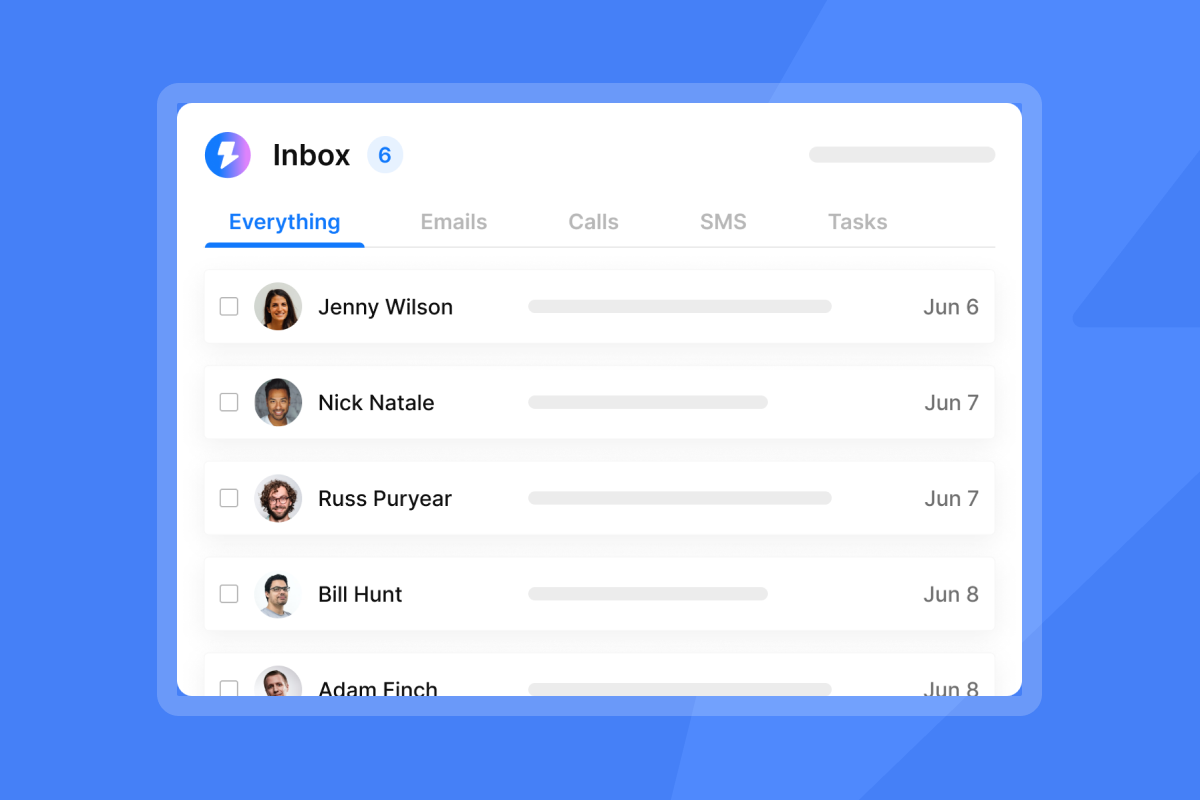
The Unibox in Instantly lets you save these as quick replies and filter inbound proposals by label, so you can process a batch of rejections in minutes rather than hours. It uses AI custom reply labels to auto-categorize responses like "Not interested," "Objection," or "Referral," cutting sorting time significantly.
Template for budget mismatches
Subject: Following up on your [date] proposal
Hi [Name],
Thank you for your proposal. We were genuinely impressed with what you've outlined. Our current budget allocation doesn't allow us to proceed right now, but we'd like to keep your proposal on file and revisit it during our next budget cycle in [specific timeframe]. Please stay in touch.
Best, [Your Name]
Template for unfavorable current timing
Hi [Name],
Thank you for thinking of us. Your proposal shows real value, but the timing isn't right at the moment. We're currently focused on [current priority] and I'd like to revisit this in [specific quarter], when our circumstances may have changed. Could you follow up with us then?
Best, [Your Name]
Template for strategic direction mismatch
Hi [Name],
Thank you for sharing your vision with us. After a thorough review with our team, this isn't a strategic fit for our company's current direction. We recognize the quality of your idea and wish you every success as you move forward.
Best, [Your Name]
Template for existing solutions
Hi [Name],
Thank you for bringing this to our attention. We currently have a solution in place that meets our needs effectively. We'll keep your information on file should our requirements change in the future.
Best, [Your Name]
Deliver the 'no' without damaging trust
When and how to offer feedback
Only offer feedback if the proposer asks for it. Volunteering criticism without a prompt can turn a clean rejection into a debate. If they do ask, keep it brief and focused on fit rather than flaw: context ("It overlaps with our existing contract"), a constructive next step ("If you offer a pilot at X, reach out"), and a warm close.
For personal connections or long-standing partners, some professionals prefer a brief call before the email. For a cold pitch you've never discussed in person, an email-only response is perfectly professional. Avoid these specifically:
- Pricing pushback: "Your pricing is too high" without context can sound like a negotiation opener.
- False hope: "We might reconsider later" when you know you won't.
- Quality judgment: Any language that frames the rejection as a criticism of their work.
Decline without burning bridges: keep the door ajar
Expressing future collaboration interest
If the proposal is strategically interesting but not a fit right now, say exactly that. "This isn't the right time for us, but the direction is interesting and we'd like to reconnect in Q3" gives the proposer a clear signal and a clear timeline. It is more valuable to both parties than a vague "let's stay in touch."
How to schedule future touchpoints
Give a specific timeframe if you want one, and ask them to initiate rather than promising to follow up yourself. This puts the action on them and removes a reminder you'd have to track.
Example phrasing:
- "Could you follow up with us in [month or quarter]? Our roadmap may look different by then."
- "Reach out again after [specific event or milestone], and we'll take another look."
Referrals to build rapport
A referral is one of the most effective goodwill signals you can offer in a rejection. Use it when you genuinely believe there is a strong match elsewhere and you have a relationship with the company you're referring to.
Example phrasing: "While this isn't a fit for us, I think [Company Name] might be a great match for what you offer. Their work is closely aligned with yours. Would you like me to make an introduction?"
Consider asking permission before making a direct introduction. This helps protect your credibility with both parties.
Crafting full decline emails for each case
These three full email examples bring the framework together in complete, send-ready format.
The Instantly AI Reply Agent reads each inbound pitch, interprets intent using NLP trained on 50+ languages, and drafts a contextually appropriate response in under five minutes, operating in Human-in-the-Loop mode (replies queued for your approval) or Autopilot mode (fully automated). For founders receiving multiple cold pitches weekly, this can turn a multi-hour task into a quick review queue.
Budget decline with future interest
Subject: Thank you for your proposal, [Your Company] response
Hi [Name],
Thank you for taking the time to put together such a detailed proposal on [topic]. We genuinely appreciate the effort. After reviewing it against our current budget allocation, we're unable to move forward at this stage. This isn't a reflection of the quality of your offer. If your pricing structure changes or our budget cycle opens up in [timeframe], we'd be glad to revisit this. Please feel free to reach out then.
Best, [Your Name]
Delaying a 'no' with a future check-in
Subject: Update on your [date] proposal
Hi [Name],
Thank you for your proposal. We've reviewed it carefully, and while the direction is genuinely interesting to us, our current priorities and resource focus mean we can't move forward right now. We'd like to pick this back up in [specific quarter]. Could you send a follow-up then?
Best, [Your Name]
Declining mismatch: offer a referral
Subject: Following up on your proposal
Hi [Name],
Thank you for reaching out and sharing your approach. After reviewing, we don't think this is the right fit for where we're focused right now. That said, I think [Company Name] could be a strong match for what you're offering. Their work is closely aligned with yours. Would you like me to make an introduction?
Best, [Your Name]
For founders who want to see how reply workflows fit into broader outreach strategy, the cold email copywriting masterclass and 10 years of cold email advice from Instantly cover the communication patterns that apply across both outbound and inbound reply management.
"I like that Instantly is intuitive and everything is done in one place, from lead sourcing to writing campaigns to reaching out to them." - Nouredinne K. on G2
"I like that Instantly helps me handle multiple emails at a time, which saves me a lot of time and makes me more productive. I also find it easy to set up with a clean interface and straightforward processes." - Mahak f. on G2
Answering your toughest decline questions
Response timing and channel
Reply within 24 to 48 hours for most business proposals. Longer than that, and the proposer is left in limbo, which creates exactly the kind of friction a polite rejection is designed to avoid. Use email for cold pitches and proposals where you've had little or no prior contact. If you have an established relationship or multiple in-depth discussions behind you, a brief call before the email shows greater respect for the relationship, then confirm the outcome in writing.
Handling post-decline inquiries
If someone follows up after a rejection asking for more detail or pushing back, repeat your position without adding new information: "We've made our decision based on our current priorities, and that hasn't changed. I appreciate your persistence and wish you the best." Don't negotiate terms you're not open to, and keep replies short.
Building a repeatable rejection system can save you time and protects the relationships that matter. The Instantly AI Reply Agent handles drafting, categorization, and follow-up queueing inside a unified Unibox so you stay focused on deals you want to close. Try Instantly free and let the AI Reply Agent handle your inbox triage while you focus on closing deals.
FAQs
How long should a proposal rejection email be?
Keep it between 100 and 200 words for a cold or semi-warm proposal. You need four elements: a thank-you, a clear no, a one-sentence reason, and a closing line.
What is the ideal response time for declining a business proposal?
Reply within 24 to 48 hours for most proposals. Waiting longer leaves the proposer in limbo and creates unnecessary friction.
Should I give a reason when I decline a proposal?
Yes. One objective sentence covering budget, timing, or strategic fit typically helps prevent misunderstandings and can keep the door open for future contact.
Is it better to decline by email or by phone?
Use email for cold pitches or proposals with little prior contact. Use a brief call for established relationships or proposals that followed multiple in-depth discussions, then confirm the outcome in writing.
Can AI tools draft rejection emails reliably?
Yes. The Instantly AI Reply Agent reads inbound proposals, interprets intent in 50+ languages, and drafts a context-aware response in under five minutes, in either Human-in-the-Loop or Autopilot mode.
Read Next
- How to Write Cold Emails That Get Replies
- Optimize Outreach with A/B Testing
- Email Deliverability Best Practices
Key terms glossary
Unibox: A centralized inbox inside Instantly that consolidates replies from all connected email accounts, filtered by campaign, label, or lead status, so you manage all responses in one place rather than logging into individual accounts.
AI Reply Agent: An automated assistant in Instantly that reads incoming emails, interprets intent, and drafts a relevant reply in under five minutes, operating in Human-in-the-Loop (review before send) or Autopilot (fully automated) mode.
Three-part framework: A structured approach to rejection emails using three beats: acknowledge the effort (thanks), state the decision clearly (the no), and close with a forward-looking line (future path).
Reply label: A custom or AI-generated category in Instantly Unibox that tags inbound replies by type, such as "Not interested," "Objection," or "Referral," to speed up inbox triage and prioritization.
Human-in-the-Loop: A setting in the Instantly AI Reply Agent where drafted responses are queued for your approval before sending, giving you control without the manual drafting time.

Further Reading
- AI Reply Agent – See how AI can interpret incoming emails and draft appropriate responses while keeping important conversations moving.
- How to Respond to Sales Leads Faster – Learn how to reduce delays when prospects reply and make sure interested leads receive timely responses.
- Email Closing Lines – Find closing lines for different email situations and learn how to finish messages naturally and professionally.
- How to Follow Up on Sales Leads – Explore practical ways to continue a conversation when a prospect hasn’t responded or needs more time.
- AI Sales Agent Software – Discover how AI sales agents can support personalized communication and handle repetitive outreach tasks throughout the sales process.


