.svg)
%20(1).svg)


Updated July 15, 2026
TL;DR: Most sales teams evaluating an AI BDR look at the monthly subscription price, but the real budget killer is the hidden infrastructure tax added on top. Legacy per-seat platforms charge per user and cap your mailboxes, creating a compounding cost every time you add a rep or inbox. Instantly.ai offers unlimited sending accounts on a flat fee, built-in warmup across a 4.2M+ account network for deliverability, and predictable credit-based data starting at $9/month for the Nano Credits tier (150 credits), scaling up to $197/month for 10,000+ credits. This guide breaks down the actual, fully loaded cost of deploying an AI BDR and gives you a clear framework for calculating your true cost per meeting.
Analysis of hundreds of outbound budgets reveals a consistent pattern: legacy per-seat pricing models tax your growth the moment you try to scale. A platform marketed at $250/month routinely costs $400 to $500/month once you add data enrichment, domain registration, and warmup infrastructure. This guide compares the pricing models honestly, exposes five silent expense drivers that double your software budget, and shows what you should actually pay at each stage of team growth. For how features compare beyond price, see our comparison of the top AI BDR tools.
What actually powers an AI BDR platform
An AI BDR combines four cost centers: a sending engine, a data enrichment layer, an AI agent layer, and deliverability infrastructure. Legacy suites charge separately for each. Flat-fee platforms bundle them into one subscription with usage-based add-ons for data and the AI sales agent layer.
Essential AI BDR pricing drivers
Four variables drive the cost of deploying an outbound AI BDR agent:
- Sending volume: Scale past 30,000 emails monthly and you need at least 50 inboxes to stay under the 30-per-inbox daily safe limit.
- Active inboxes: Platforms that charge per inbox punish high-volume senders with compounding costs.
- Data lookups: Every verified contact consumes a credit or costs a fixed fee, so high-volume prospecting teams can burn budgets fast.
- AI processing: Each AI agent action, whether a reply handled by the AI Reply Agent or a lead sourced by the AI Sales Agent, consumes resources that platforms price differently.
Understanding these four drivers before you sign a contract is the only way to forecast your monthly total cost of ownership (TCO) accurately. Our AI sales agent ROI calculator turns those drivers into a specific number for your team.
AI BDR cost drivers vs. legacy suites
Legacy sales engagement suites were architected around per-seat licensing before multi-inbox sending became standard, a pattern we also cover in AI sales agent pricing models. Apollo runs four plans: Free, Basic ($49/user/month), Professional ($79/user/month), and Organization ($119/user/month), all billed per seat. A 10-person team on the Organization tier pays $1,190/month before a single data credit is purchased, a warmup tool is activated, or a domain is registered. That figure grows linearly with every new rep you add.
Based on third-party pricing estimates, ZoomInfo's Professional plan has been reported at approximately $14,995/year for three seats with 5,000 credits, with additional Professional-tier seats running approximately $1,500 per year. ZoomInfo does not publish specific pricing on its website, and figures vary based on features, license count, and credit usage. Higher tiers carry higher per-seat costs. Annual auto-renewal clauses lock you in unless you cancel 60 to 90 days before your term ends, and renewal price escalation clauses are common in enterprise contracts.
Modern flat-fee platforms separate core sending from data and AI agents, keeping infrastructure cost predictable as you scale.
Selecting your AI BDR payment plan
The AI BDR market runs four distinct pricing models. Each has a legitimate use case, but each also carries specific risks you need to budget for before committing. Our how to choose an AI BDR tool guide covers the rest of the evaluation checklist.
Pricing model | Typical monthly cost | Best for | Key drawback |
|---|---|---|---|
Per-seat licensing | $49 to $150+ per user | Small teams with 1 to 2 inboxes | You pay more for every new rep or inbox |
Pay-as-you-go / credits | $9 to $197+ based on usage | Teams with fluctuating lead needs | You face unpredictable spend without active monitoring |
Platform / flat-fee | $47 to $358 flat rate | High-volume senders, agencies | You manage your own domain infrastructure |
Enterprise AI suites | Custom pricing, often high annual commitments | Large enterprises | You commit to high upfront spend with rigid contracts |
User-based seat licensing
When you choose per-seat licensing, you pay the full plan price for every user, and that multiplier compounds with every new rep you onboard. A 10-person team on Apollo's Organization tier pays $1,190/month on annual billing before data credits, warmup, or domain infrastructure. The deeper problem hits when you run a multi-inbox strategy. If a rep needs five sending inboxes to hit targets safely, a per-seat platform either blocks that approach, charges per inbox, or forces you into a higher tier. Every expansion triggers a cost increase that does not exist on a flat-fee model.
As Instantly's agency pricing breakdown notes, flat-fee Outreach is often cheaper at agency scale than per-seat sales engagement suites because you do not pay for every user added.
Pay-as-you-go AI BDR expenses
Credit-based models give you variable cost control but require active management. Without monitoring, high-volume teams underestimate their monthly credit burn and face surprise overages.
Instantly Credits power four functions through a single pool: SuperSearch lead lookups, Copilot, the AI Sales Agent at 5 credits per generated lead, and the AI Reply Agent at 5 credits per reply. Pricing runs from Nano at $9/month for 150 credits through Hyper Credits at $197/month for 10,000 to 200,000 credits, with a free trial of 100 credits available. Your core sending infrastructure stays at a flat fee regardless of how many credits you consume. Credits are additive, not multiplicative.
Fixed-rate AI BDR platform pricing
With flat-fee platform pricing, your sending infrastructure cost stays predictable as your team and volume grow. Instantly Outreach plans start at $47/month (or $37.60/month billed annually) on the Growth tier, which includes unlimited email accounts, unlimited warmup, A/Z testing across up to 26 email variants, AI Sequence Writer, AI Spam Words Checker, advanced warmup options (including weekday-only sending, read emulation, and open and reply rate controls), and a Send deliverability test from the preview window. These features were previously Hypergrowth-only and moved to Growth as part of the January 2026 pricing update. Hypergrowth at $97/month adds the Deliverability AI Agent for always-on monitoring across DNS health, blocklists, warmup scores, bounce rates, and campaign copy. Light Speed at $358/month adds SISR (Server and IP Sharding and Rotation) for dedicated, private IP pools.
The Outreach plans comparison guide covers exactly what each tier includes, and the 14-day free trial requires no credit card.
"In my experience, Instantly is easily the most user-friendly and effective for scaling outreach. Being able to connect as many inboxes as you need without a per-user fee is a game-changer. And the Unibox makes managing all those accounts effortless." - Alla L. on G2

AI BDR pricing tiers by performance level
What you should budget depends on your team size and sending volume targets.
Core AI BDR costs for small teams
If you run a small outbound team of up to five reps, you can deploy a full sending, data, and CRM stack for approximately $141/month on Instantly. The starter stack is Outreach Growth at $47 + SuperSearch Growth at $47 + Growth CRM at $47, covering unlimited email accounts, warmup, 450M+ B2B leads via SuperSearch, and centralized reply management via Unibox.
Budgeting for 5-15 seat deployments
This is where per-seat pricing becomes genuinely painful. A 15-person team on a legacy per-seat platform at $119/user/month on annual billing pays $1,785/month before data credits, warmup infrastructure, and email workspace costs. On a flat-fee model, your platform cost stays identical whether you have five or fifteen reps sending. You scale volume by adding inboxes and domains, not by paying higher tiers per person.
Mid-market teams with higher sending volume should evaluate Hypergrowth at $97/month, which adds the Deliverability AI Agent for automated DNS health checks, blocklist monitoring, and campaign-level remediation.
Enterprise AI BDR pricing models
Enterprise AI BDR suites like ZoomInfo use custom annual pricing, with additional seats and intent data add-ons layered on top of a base contract. Custom enterprise pricing makes sense when you need formal SLAs, dedicated account management, and deeply integrated compliance controls. For most 20 to 200 employee B2B companies, that adds cost without adding proportional value.
Beware these 5 silent AI BDR expense drivers
These five costs consistently catch buyers by surprise and are the primary reason the real monthly invoice exceeds the marketing price.
Evaluating upfront AI BDR pricing models
The headline subscription price is rarely the full story. You'll typically see additional costs for data enrichment, email infrastructure, and deliverability tooling on top of your platform fee. Enterprise suites marketed at entry-level pricing routinely run well above their headline price once you add extra seats, intent data, and credit overages.
Pricing for verified lead lists
Unverified contact data costs you twice: once when you buy it and again when high bounce rates damage your domain reputation. Keep bounces at or below 1% to protect primary inbox placement. SuperSearch applies waterfall enrichment across 5+ data providers, reducing incomplete records at the sourcing stage rather than after bounce events accumulate.
Predictable billing for AI BDR credits
AI agent actions running without credit caps produce unpredictable bills. The AI Reply Agent and AI Sales Agent both consume Instantly Credits at 5 credits per action. Without monitoring, a heavy month of activity can exhaust a Nano ($9/month, 150 credits) or Growth ($47/month, 1,500 to 2,000 credits) plan quickly. Monitor consumption weekly via the Billing and Usage overview and set usage expectations across your team before activating agents at scale. The add-on pricing help article covers what each credit tier unlocks.
Budgeting for domain warmup infrastructure
Every sending domain needs a 4 to 6 week warmup period before it can handle real volume safely, per Instantly's 2026 benchmark report. Standalone warmup tools are a common line item for teams not on a platform that bundles it. At 50 inboxes, that cost adds up before a single email is sent. Instantly includes unlimited warmup on every plan, from Growth at $47/month to Light Speed at $358/month, removing warmup as a separate budget item entirely. The secondary sending domains guide explains how to structure your domain architecture to scale volume safely.
Exit clauses and termination fees
Annual contracts without clear opt-out terms are the most common billing trap in this category, which is why AI BDR contract terms deserve close review. Before signing any annual agreement, ask specifically for the exact cancellation window, whether seat reductions are permitted mid-contract, and what the renewal price escalation clause states. Platforms that lock you in for 12 months with no performance-based opt-out transfer all the risk to your budget if deliverability degrades.
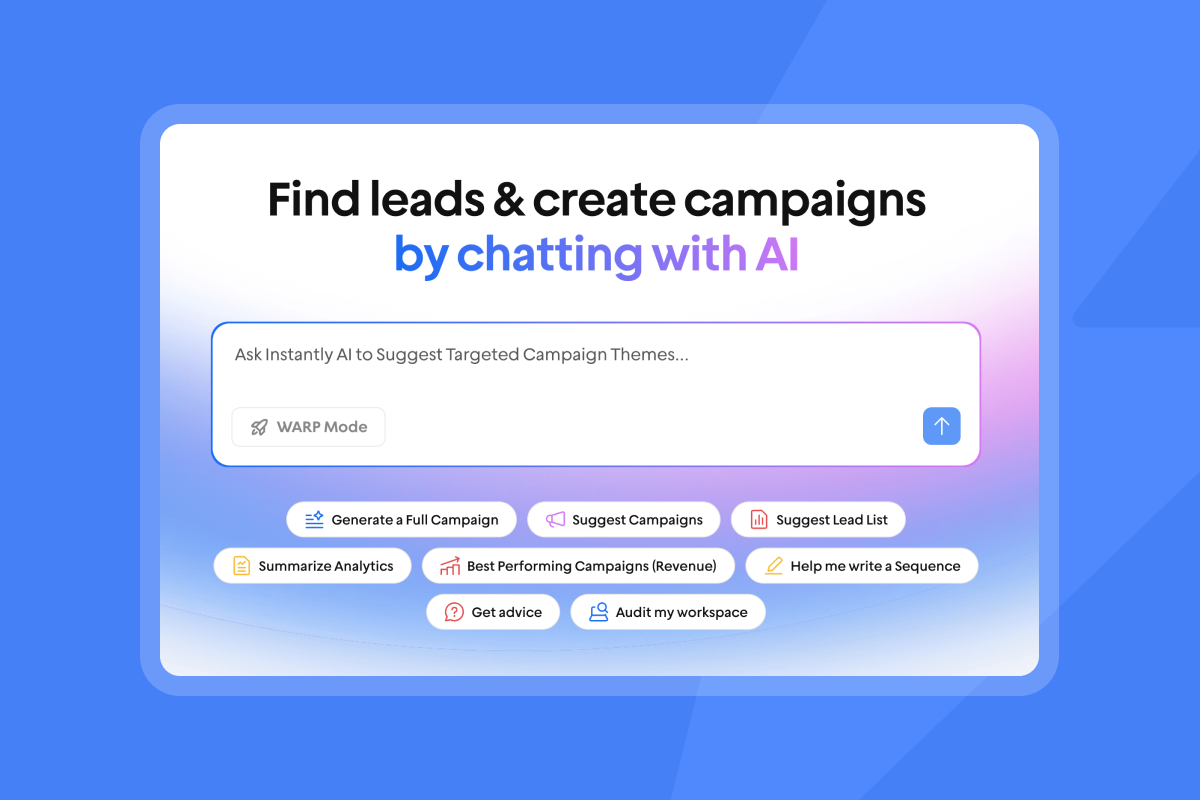
Comparing AI BDR pricing tiers
Not all features are equal across tiers, and the difference between a standard and premium plan often determines whether your campaigns survive at scale.
Standard vs. premium platform features
The clearest feature differentiation in Instantly's tier structure sits between Hypergrowth and Light Speed. Both include unlimited accounts and warmup. Hypergrowth at $97/month adds the Deliverability AI Agent, which runs automated checks every 24 hours across DNS (Domain Name System) health, blocklists, warmup scores, bounce rates, and campaign copy. Light Speed at $358/month adds SISR, dedicated server and IP rotation that places your sending traffic on private IP pools rather than shared infrastructure. Without SISR, a neighboring sender with poor practices on a shared IP pool can affect your deliverability. The rotating IPs and sending algorithms article explains how IP rotation protects sender reputation at scale.
What support costs actually include
Standard support covers email ticketing, while premium tiers add dedicated account management and priority queue access.
"As a non-technical person, it is so easy to setup cold email campaign, the people at instantly the do a full done-for-you email box setup so u dont have to worry about SPF, DKIM, DMARC all that jazz." - Haris on Trustpilot
Monitoring tools for inbox placement
Running high-volume cold email without inbox placement testing is running blind. Instantly's automated Inbox Placement tests alert you when a sending account starts landing in spam rather than the primary inbox. The Deliverability AI Agent on Hypergrowth and above takes this further by surfacing remediation steps directly in the platform, including pausing risky campaigns, replacing compromised accounts, and rebalancing sending across providers, and it is one of Instantly's AI agents.
Hidden fees for API access
Several legacy platforms charge extra for API and webhook access, gating automation behind their highest tiers. Instantly's native integrations with HubSpot, Slack, Clay, Zapier, Make, and Pabbly connect your outbound stack to your CRM and trigger campaign actions via external workflows. Check the integrations help center to confirm which are available on your plan before building workflows.
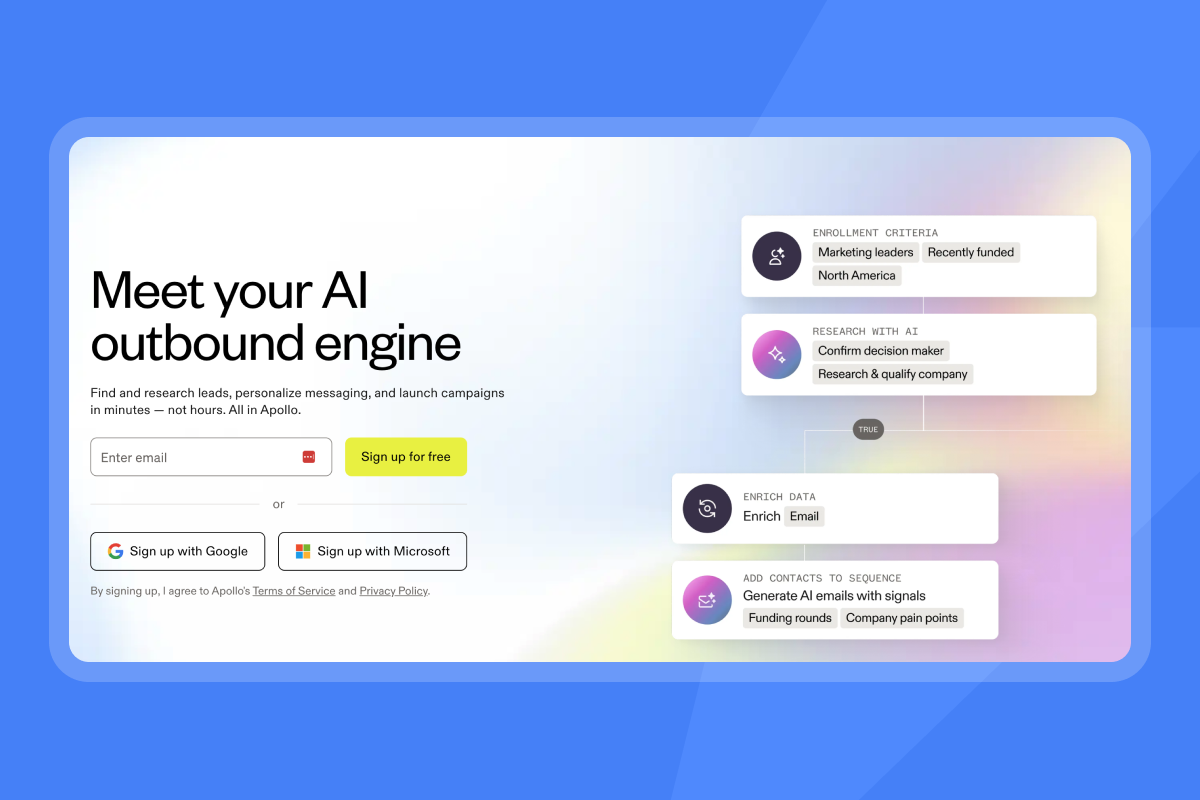
Beyond subscription fees: Total meeting costs
Subscription cost is the wrong frame for evaluating an AI BDR. The correct frame is cost per meeting booked. An agentic sales agent that sources, sequences, and follows up autonomously is what actually drives that number.
Cost category | Human BDR | AI BDR stack |
|---|---|---|
Annual salary + benefits | $59,559 average base salary, with most roles ranging $45,000 to $70,000 and 90th percentile earners at $85,000, per ZipRecruiter (July 2026). Add benefits, variable comp, software, and management overhead to estimate fully loaded cost. | $0 |
Software stack | $3,000 to $6,000/year | $564 to $4,296/year |
Domain and inbox infrastructure | Included in software | $150 to $600/year |
Meetings booked annually | Approximately 113/year (9.4/month), per the Bridge Group 2025 SDR Research Report | Scales with send volume and list quality |
Estimated cost per meeting | Varies by comp structure and market. Calculate against your actual fully loaded rep cost. | Varies by send volume and reply rate |
According to ZipRecruiter (July 2026), the average BDR base salary in the United States is $59,559 per year, with top earners at the 90th percentile reaching $85,000. Add variable comp, benefits (typically 20 to 30% of base), software, and management overhead to arrive at your fully loaded annual cost. According to the Bridge Group 2025 SDR Research Report, the average SDR books approximately 9.4 meetings per month, or roughly 113 per year. Your cost per meeting depends on your specific comp structure and market, making it worth running the calculation against your actual rep costs before comparing to an AI BDR stack.
The hidden price of data hygiene
Bad data destroys sender reputation faster than any other variable. A bounce rate above 1% is a red flag for data quality. When bounce rates spike, rest the affected accounts for at least 48 hours, verify your list, and resume at a lower send cap before returning to full volume. SuperSearch's waterfall enrichment across 5+ providers reduces this risk at the sourcing stage, before contacts enter your sequences.
Aligning AI BDR spend with pipeline goals
Before setting a platform budget, anchor it to the performance benchmarks you need to hit. According to Instantly's 2026 Cold Email Benchmark Report, the platform average reply rate is 3.43%, with the top quartile reaching 5.5%+ and the top 10% exceeding 10.7%. Consistent, stable sending patterns produce 15 to 20% higher reply rates compared to irregular sending. Use these benchmarks to estimate the sending volume required to hit your pipeline goals before setting your platform budget.
Evaluating AI BDR contracts for hidden risks
Contracts introduce financial risk that pricing pages do not show. These four risk categories deserve a specific review before you sign.
Hidden AI BDR pricing calculations
Some vendors calculate pricing based on "active contacts" or "emails sent" rather than a fixed monthly rate. Active contact billing is especially dangerous at scale because every contact you upload to an ongoing sequence counts toward your monthly tally whether you send to them or not. Ask any vendor to define precisely how they count billable units before you commit. "Active contacts," "emails sent," "messages delivered," and "unique prospects touched" all produce different invoices from the same campaign activity.
Restrictive annual lock-in clauses
Annual contracts without performance-based opt-outs are a structural risk. If deliverability degrades in month three of a 12-month contract and the vendor cannot resolve it, you are still paying for months four through twelve. The most aggressive lock-in structures require cancellation notice 60 to 90 days before term end. Request a monthly billing option or a performance-based opt-out clause before committing to any annual contract.
Unpredictable account activity limits
Platform-imposed daily sending limits and account suspension policies can halt campaigns without warning. Instantly recommends not scaling past 30 emails per single inbox per day to protect domain health. Scale total send volume by adding more inboxes and domains, not by pushing individual inboxes past safe limits.
Lack of verified sending standards
SPF, DKIM, and DMARC configuration is the baseline for email authentication. Sending without all three in place is a fast path to the spam folder across all major providers. Some platforms charge extra for compliance setup assistance and leave DNS (Domain Name System) configuration entirely to the buyer. Instantly's done-for-you setup handles SPF, DKIM, and DMARC as part of the email account setup process, and the AI Deliverability Agent help doc details the ongoing monitoring that runs after setup.
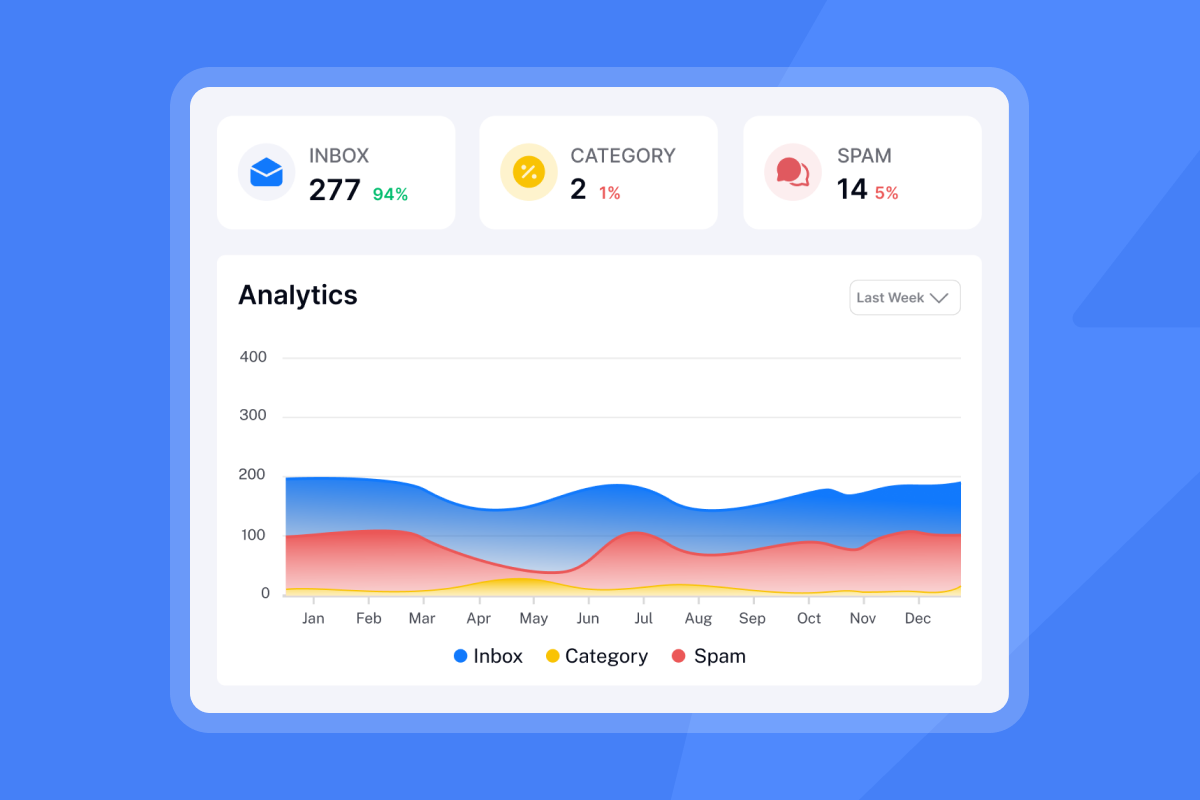
Assessing total AI BDR costs and contract risks
Before you sign a contract, verify these requirements:
- GDPR and CAN-SPAM operational compliance supported in platform settings
- Native CRM integration available (Instantly supports HubSpot natively, with additional workflow automation available via Zapier or Make)
- Multi-domain management with automated warmup included in the base plan
- Credit consumption monitoring and hard-cap controls for AI agents
- Monthly billing available without annual commitment penalty
- Data processing agreement (DPA) available for compliance review
- Deliverability monitoring included at the tier you plan to deploy
- Service-level agreement (SLA) terms clearly documented for enterprise deployments
Optimizing AI BDR pricing for small teams
Start with the minimum stack that covers your active use case, then add modules when you hit a specific operational limit. For a team of three to five reps focused on email outreach, that means Outreach Growth at $47/month plus SuperSearch Growth at $47/month. Add Growth CRM at $47/month only when reply volume justifies centralized inbox management across multiple reps.
How to calculate total AI BDR costs
Use this formula before committing to any platform:
Total monthly cost = Platform fee + Data credits + Domain and inbox infrastructure costs
For a practical example using Instantly across five reps:
- Outreach Growth: $47/month
- SuperSearch Growth (Credits): $47/month
- Growth CRM: $47/month
- 10 domains at $15/year each: $12.50/month amortized
- Email workspace (Google Workspace Business Starter): approximately $6 to $7.20/user/month, per CIOtech's 2026 workspace comparison. Check current provider pricing before budgeting Platform total (five reps): $141/month before workspace costs. Compare that to a five-seat legacy per-seat deployment at $119/user/month on annual billing, which runs $595/month before any data credits, warmup, or workspace costs.
Evaluating AI BDRs via paid pilots
Analysis of failed 90-day AI pilots points to three variables driving most failures: unverified contact lists, insufficient domain warmup before launch, and missing CRM integration that breaks data flow. The AI itself is rarely the primary failure point.
To run a successful 30-day proof of concept (POC): use SuperSearch to pull 500 to 2,000 verified leads that match a single, well-defined ICP segment, complete a full 4 to 6 week warmup cycle on all sending domains before day one of active sending, and connect your CRM from day one so every reply and meeting data point flows to your reporting. Use the AI Reply Agent help doc to configure Human-in-the-Loop mode during the pilot so your team reviews AI-drafted replies before they send.
Avoiding lock-in and exit fees
Choose platforms that offer monthly billing with no cancellation penalty at the outset of your evaluation, whether you run a free trial or a POC. Instantly's 14-day free trial requires no credit card, which means you can validate deliverability, test the Unibox interface, and run your first sequence before any financial commitment. After the trial, monthly billing is available on all plans. Moving to annual billing applies a 20% discount, which you can do after confirming the platform performs against your pipeline goals.
Preventing overage charges on AI plans
Set a monthly credit budget for each AI agent before you activate them at scale. At the Nano tier ($9/month, 150 credits), you process 30 AI actions before exhausting your pool. At the Growth Credits tier ($47/month, 1,500 to 2,000 credits), you handle 300 to 400 actions monthly. Monitor credit consumption weekly via the Billing and Usage overview and upgrade your Credits tier before you hit the ceiling rather than after.
Ready to see what predictable, flat-fee pricing looks like for your team? Start your free trial of Instantly Outreach with no credit card required. Validate deliverability, test unlimited accounts, and benchmark your reply rates against the 2026 Cold Email Benchmark Report before your first campaign launches. No annual lock-in. No per-seat penalties. No surprises.
FAQs
How much does an AI BDR platform cost on average?
Entry-level flat-fee platforms start at $47 to $100/month for core sending infrastructure, while legacy per-seat tools range from $49 to $119/user/month on annual billing. Enterprise AI BDR suites like ZoomInfo use custom annual pricing with seat-based add-ons and intent data layers that compound total cost well beyond the base contract.
What are the hidden costs of running an AI BDR?
You need to budget for domain registration ($15/year per domain) and email workspace accounts on top of your platform subscription. These infrastructure costs typically add to your headline software price.
Does Instantly charge per user seat?
No. Instantly Outreach plans use flat-fee pricing with unlimited email accounts and warmup on all tiers, so you can add team members and inboxes without paying per-seat penalties.
How many emails should I send per inbox daily?
To protect sender reputation and primary inbox placement, do not scale past 30 emails per single inbox per day. Scale total volume by adding more sending domains and accounts rather than increasing the send rate on individual inboxes.
Key terms glossary
SISR (Server and IP Sharding and Rotation): Dedicated, private IP pools available on Instantly's Light Speed plan that isolate your sender reputation from shared infrastructure, preventing neighboring senders from affecting your deliverability.
SuperSearch: Instantly's B2B lead database containing 450M+ verified contacts with waterfall enrichment across 5+ data providers, accessible via the Instantly Credits subscription.
Unibox: The centralized inbox inside Instantly CRM that aggregates replies from all connected sending accounts into a single view for team-level reply management.
Deliverability AI Agent: An always-on monitoring tool included on Hypergrowth and above that automatically checks DNS health, blocklists, warmup scores, and bounce rates every 24 hours and surfaces specific remediation steps inside the platform.
Instantly Credits: A separate subscription starting at $9/month that powers SuperSearch lead lookups, Copilot, AI Sales Agent (5 credits per generated lead), and AI Reply Agent (5 credits per reply handled).
TCO (Total Cost of Ownership): The fully loaded monthly cost of an AI BDR deployment, including platform subscription, data credits, domain registration, email workspace licenses, and any setup fees. Use the cost formula in this guide to calculate your actual TCO before committing to any platform.
Read next
- How to warm up a new email domain for cold email outreach: Ramp new sending accounts safely before your first campaign goes live.
- Cold email subject lines that get replies: Tested subject line formats and what the data says about open rates.
- How to write a cold email sequence: Structure your 4 to 7 step sequence for consistent reply rates at scale.



