.svg)
%20(1).svg)


Updated: July 13, 2026
TL;DR AI BDR automation delivers real scale and speed gains for B2B sales teams, but its success depends entirely on strict deliverability systems, clean data, and human-in-the-loop governance. Instantly.ai's 2026 benchmark report puts the platform-average reply rate at 3.43%, with top-quartile senders reaching 5.5%+, but only when they enforce sending caps, verified contacts, and automated warmup. We combine unlimited sending accounts, a 4.2M+ account warmup network (figure per Instantly blog, warmup product page cites 1M+), and integrated SuperSearch so sales teams run one auditable outbound engine rather than five disconnected tools.
Most sales leaders look at AI BDR tools to scale pipeline. What catches them off guard is the deliverability collapse and brand damage that follow when they treat AI automation as a set-and-forget system. The operational benefits are real: faster campaign launches, consistent brand voice, and lower cost-per-meeting, the kind of number our AI sales agent ROI calculator can help you quantify. The risks are equally real: dirty data producing embarrassing personalization failures, AI misclassifying replies, and high-volume sending destroying domain reputation within days.
This guide breaks down both sides with the specifics you need to evaluate AI BDR software for outbound clearly, including sending limits, warmup timelines, and compliance requirements that define whether your outbound program succeeds or stalls.
The mechanics of automated prospecting
Modern AI BDR automation works across four stages: lead identification through buying signal detection, outreach execution via LLM-generated email sequences, real-time reply classification, and routing qualified responses to human reps. The technical architecture of an AI BDR combines natural language processing, lead data layers, sending infrastructure, and feedback loops into one coordinated system, the same architecture behind most AI agents on the market today.
Essential AI BDR tech stack features
You need three core components in any functional AI BDR stack: sending infrastructure that handles unlimited accounts with warmup and volume controls, a verified lead database with real-time enrichment, and an intelligent reply handler that classifies intent and routes responses correctly.
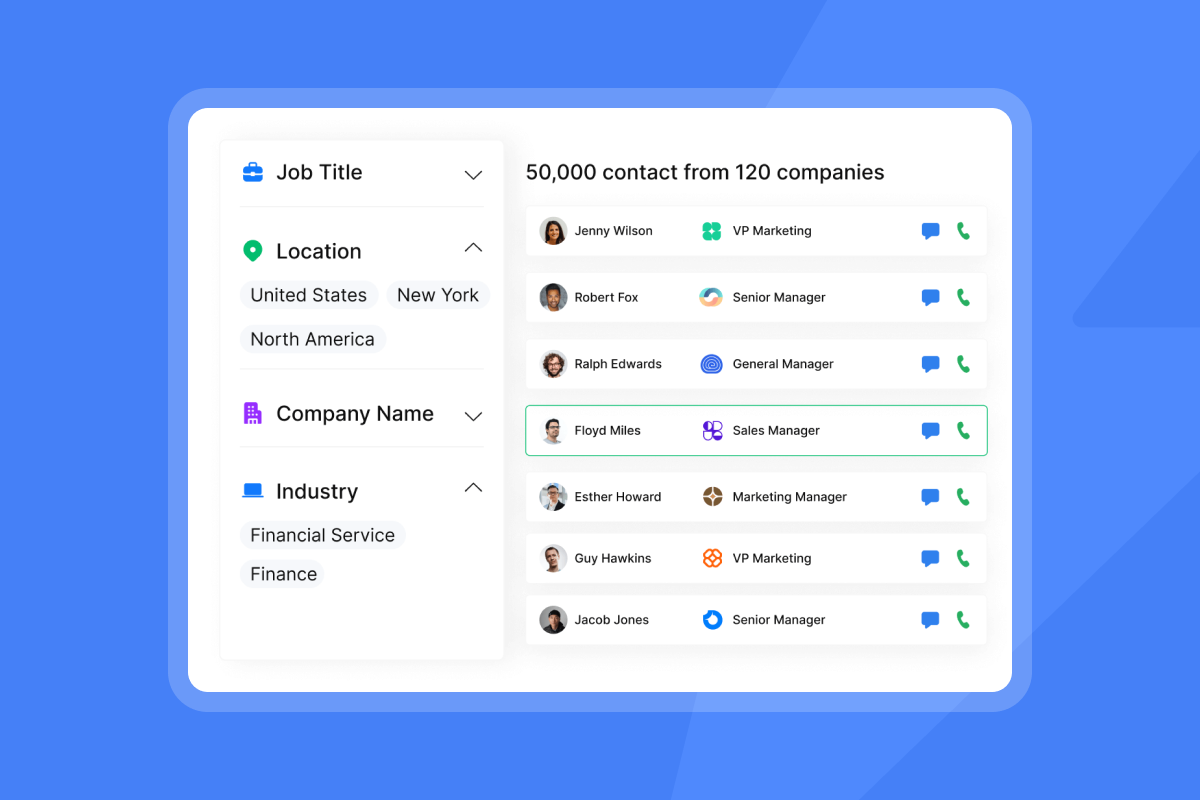
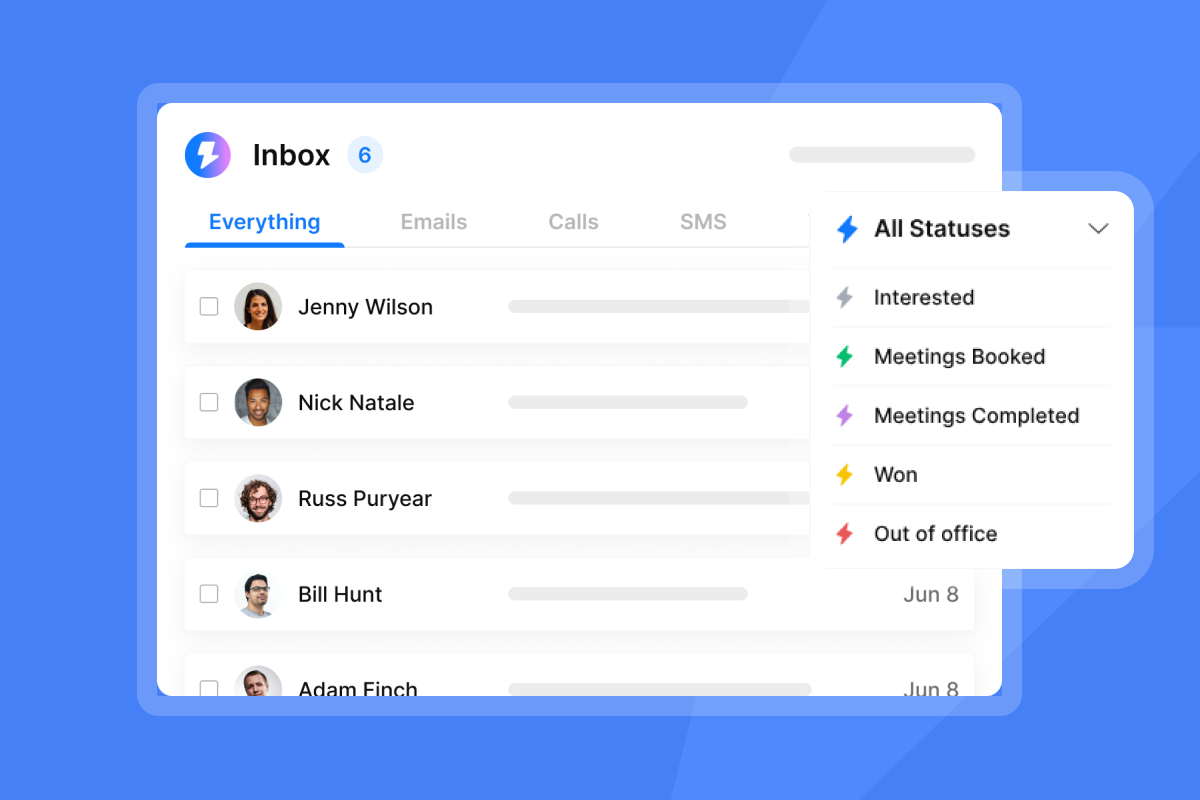
Instantly.ai's integrated stack covers all three. The Outreach module provides unlimited email accounts with built-in warmup on every plan starting at $47/mo. SuperSearch provides 450M+ B2B leads with waterfall enrichment across 5+ data providers. The AI Reply Agent auto-handles replies in under 5 minutes with a configurable Human-in-the-Loop mode for high-stakes accounts. This integrated approach removes the context-switching and data silos that sales ops teams flag as top pain points when managing multi-tool stacks, the same unified foundation that powers Instantly's AI agents.
How AI BDR shifts sales workflows
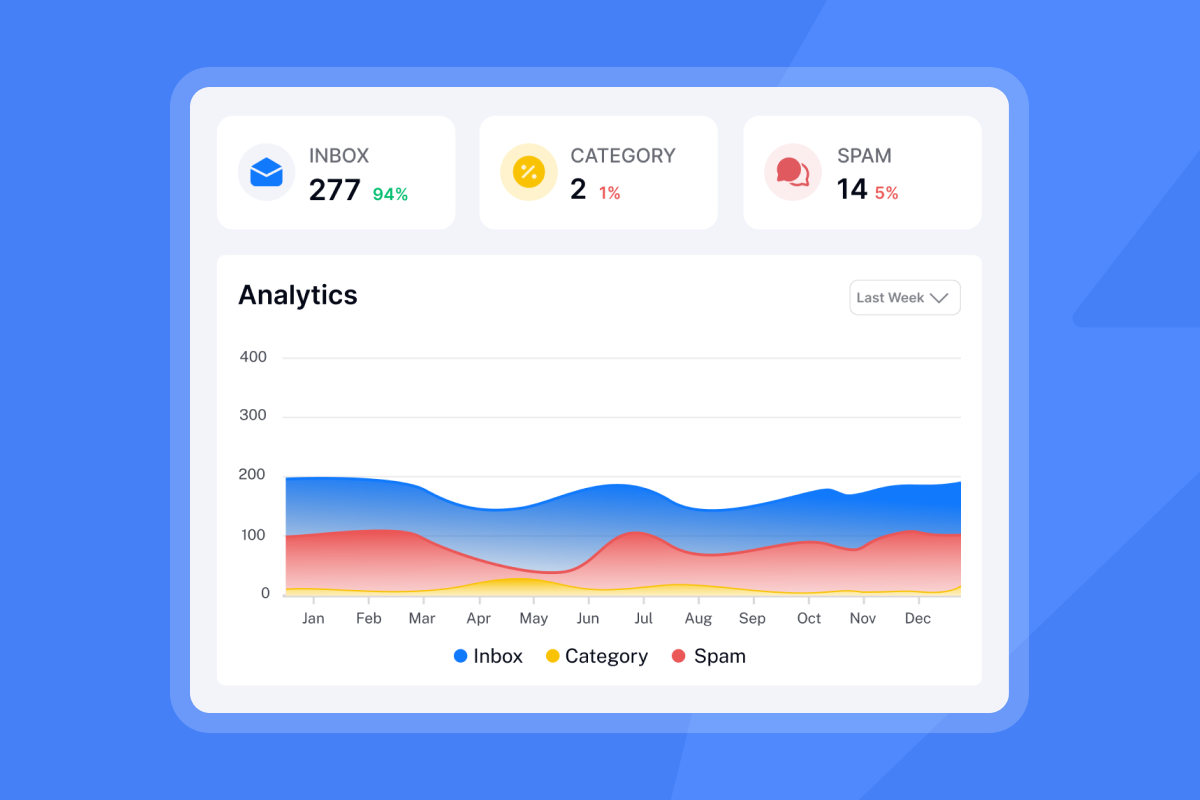
An AI sales agent takes on the high-volume, repeatable parts of top-of-funnel work: sourcing leads, running sequences, and triaging initial replies. Human reps stay focused on positioning, messaging strategy, and high-value conversations. Our AI BDR lead qualification guide covers how that triage actually works. Human BDRs move toward complex objection handling, multi-threading into accounts, and quality-controlling AI output. This workflow shift plays out in practice during campaign setup and management.
Why sales teams adopt AI BDR workflows
Four operational drivers explain AI BDR adoption across B2B sales teams. For a full plan-by-plan cost comparison, see Instantly's AI BDR pricing guide.
Scale outreach without adding headcount
Per-seat pricing from legacy suites adds up quickly in software costs alone, before salary. Adding sending capacity for a new market segment means adding another seat. With Instantly's Growth plan, you add unlimited email accounts and sending capacity without any per-seat penalty. For a 10-rep team, that difference returns thousands monthly to pipeline investment rather than software overhead. Instantly also maintains 600 email templates as starting points for any campaign type, reducing ramp time for new reps.
Launch sequences in minutes
The AI Sequence Writer, included on Instantly's Growth plan, reduces campaign creation from hours of manual copywriting and scheduling to a guided, AI-assisted process. Feed it your ICP, product description, and desired tone, and it returns a full multi-step sequence with subject line variants ready to test. This matters most when you need a new segment live before the end of the week, not the end of the month.
Standardize brand voice and messaging
When reps write their own cold emails independently, you get inconsistent tones and value propositions with no reliable baseline for measuring what works. AI templates with Spintax for unique email variations and Liquid Syntax for conditional logic enforce brand consistency while producing unique sends at the inbox provider level. Every rep sends from the same approved framework, making A/Z testing meaningful: you measure copy variants against a controlled baseline rather than comparing ad hoc approaches. Instantly's Growth plan includes A/Z testing, with the full 26-variant capability available on the Hypergrowth plan.
Optimize budget per booked meeting
The cost-per-meeting math favors AI-augmented outbound over fully autonomous agent alternatives, which carry considerably higher monthly costs. Instantly's starter stack of the Outreach Growth plan, Credits Growth plan, and CRM Growth plan comes to roughly $141/mo at $47/mo each, covering unlimited accounts, 450M+ B2B leads, and a centralized Unibox for reply management. Instantly Credits is a separate subscription that powers SuperSearch lookups, Copilot, and the AI agents. For a team booking 10 meetings per month, that cost-per-meeting difference is decisive. To improve further, add the AI Reply Agent through an Instantly Credits plan. The Nano Credits plan starts at $9/mo (150 credits). The Credits Growth plan at $47/mo includes 1,500 to 2,000 credits. The AI Reply Agent consumes 5 credits per reply.
Capability | Human BDR | AI BDR (Instantly) |
|---|---|---|
Emails sent per day | No platform cap. Volume depends on rep time and manual process | 30 per inbox, unlimited inboxes |
Sequence setup | No built-in sequence builder. Relies on rep-written copy and manual scheduling | AI Sequence Writer on Growth plan |
Lead sourcing | No built-in lead database. Relies on rep research and third-party tools | 450M+ B2B leads via SuperSearch |
Reply handling | No built-in reply handler. Response time and triage depend on rep availability and workload | AI Reply Agent under 5 min, HITL mode available |
Software cost | Per-seat pricing from legacy suites adds up across tools and headcount | Flat fee from $47/mo, unlimited accounts |
Data enrichment | No built-in enrichment. Depends on rep process and any third-party tools in the existing stack | Waterfall enrichment, 5+ providers |
Complex objections | Full capability | Requires human handoff |
CRM data sync | No built-in sync. Depends on rep process and existing CRM setup | Native HubSpot sync, webhooks |
Compliance tracking | No built-in controls. Relies on manual tracking and individual rep behavior | Built-in DPA, global block list, OOO detection |

Mitigating risks in AI prospecting tools
Every AI BDR benefit comes with a corresponding operational risk. Understanding them upfront, and the common AI BDR mistakes behind them, determines whether your team hits plan or burns its sending domains in the first month.
Impact of dirty data on AI output
Bad data destroys AI personalization at scale. If your contact list has stale job titles, generic company names, or unverified emails, the AI confidently generates personalized emails addressed to the wrong person or a defunct role. As outlined in Instantly's waterfall enrichment research, the gap between top and bottom performers is not copywriting quality: it is data hygiene, targeting, and sending infrastructure.
Industry sources cited in Instantly's enrichment guide place single-provider match rates at 50 to 60%, with waterfall approaches reaching 80% or higher, directly reducing bounces and protecting inbox placement.
"Instantly.ai is easy to set up and use. It is designed to scale... It also has a very good database and built-in tools like email validation." - Frank on Trustpilot
Brand damage from low effort messaging
High-volume automated outreach built on generic templates creates a brand problem that no warmup protocol can fix. If your sequences read like batch-and-blast campaigns, reply rates drop, spam complaint rates climb, and domain health degrades regardless of your technical setup. Sequence governance means locking down approved templates, enforcing copy quality reviews before any campaign launches, and using A/Z testing to measure what resonates. Instantly's Growth plan includes A/Z testing, with the full 26-variant capability available on the Hypergrowth plan at $97/mo, giving teams data to improve copy through measurement rather than guessing.
Managing AI response triage errors
AI reply classification handles recognizable patterns well: interested, not interested, OOO, unsubscribe, or referral. The error that trips teams most often is an out-of-office reply misclassified as interested, triggering follow-up emails to a prospect who has explicitly paused. Instantly's Out-of-Office Resume feature uses regex pattern matching and NLP classification to detect OOO replies and pause sequences automatically, stopping this category of error at the source.
For higher-stakes accounts, the AI Reply Agent offers Human-in-the-Loop mode, routing flagged replies to a human reviewer via Slack before any automated response goes out. This is the correct model for enterprise-level outreach where a misclassified reply on a large deal carries real cost.
Managing email consent standards
Cold B2B email operates under three primary legal frameworks, each requiring specific operational controls. CAN-SPAM permits opt-out emails but requires sender identification, accurate subject lines, and a functional unsubscribe link in every send, with non-compliance costing up to $53,088 per email. GDPR requires explicit consent or a documented legitimate interest for contacting EU residents, with fines up to 4% of global annual revenue. CCPA gives California residents the right to access, delete, and opt out of data sharing.
Instantly's GDPR and CCPA compliance guide and Data Processing Agreement define what data categories are permitted on the platform and how processing obligations are structured. Every campaign needs a global block list, opt-out tracking, and audit-ready send logs in place before going live.
How AI sending patterns affect inbox placement
Deliverability is an ongoing technical system that requires active monitoring, volume discipline, and infrastructure investment to maintain at scale.
Automated domain reputation tracking
Domain reputation is the primary determinant of whether your emails land in the primary inbox or spam. Instantly's warmup network of 4.2M+ accounts (figure per Instantly blog; warmup product page cites 1M+) builds sender reputation through genuine engagement signals: opens, replies, stars, and inbox rescues. Every inbox in the warmup network interacts like a real person, which is exactly the behavior Gmail and Outlook use to assess trust. These engagement signals are the mechanism inbox providers use to build sender trust before active outreach begins.
"The warm-up feature works well, the interface is easy to use, and it helps protect inbox deliverability across multiple domains. Support has been responsive when needed, and overall it saves a lot of time compared to manual setups." - Bobur Dada on Trustpilot
The Inbox Placement tool runs automated pre-send tests showing whether your emails will land in the primary inbox, promotions tab, or spam before any live campaign goes out.
Managing daily email volume and cadence
The hard limit for cold email from a single inbox is 30 emails per day. Sending 100 cold emails per day from a single inbox carries a high risk of reputation damage within 7 to 14 days. Cold email generates neutral-to-negative engagement signals compared to opted-in email, and inbox providers weight that signal heavily. The solution is to distribute volume across multiple domains and inboxes, which Instantly's unlimited account model makes operationally practical. Instantly's automated inbox placement tests monitor whether volume increases are affecting inbox placement before they become a deliverability incident.
Core drivers of inbox placement
The technical foundation for inbox placement includes four DNS records: SPF (Sender Policy Framework), DKIM (DomainKeys Identified Mail), DMARC (Domain-based Message Authentication), and a custom tracking domain that replaces default Instantly links with your own branded domain. These records tell inbox providers that your sending domain is properly configured and legitimate. Without them, even a well-warmed domain underperforms consistently.
For teams sending at high volume, Instantly's Light Speed plan at $358/mo adds SISR (Server and IP Sharding and Rotation), which distributes sends across dedicated private IP pools and automatically rotates when one gets flagged. The rotating IP and sending algorithms guide explains how this architecture protects sender reputation at scale without requiring a dedicated deliverability engineer.
Must-have features for reliable outreach
Before committing to any AI Sales Agent Software, verify these four capabilities are present and working at your team's volume.
Reconciling AI output with CRM data
If AI outreach doesn't sync bidirectionally with your CRM, you create data silos that destroy pipeline visibility. When a prospect replies and books a meeting but that activity never reaches your CRM, your pipeline reporting is wrong and your reps operate on incomplete information. Instantly's native HubSpot integration, combined with connections to Clay, Zapier, Make, and Pabbly, handles this sync across the most common ops stacks.
Managing team access and compliance
Admin controls are the difference between a scalable outbound program and a compliance incident. Sequence governance requires workspace permissions controlling who can create and send campaigns, template locking to prevent unauthorized copy changes, and audit logs tracking every send. Instantly's TCPA compliance checklist covers the specific workflows sales ops teams need to build around AI outreach programs, including controls that prevent reps from bypassing approved sequences.
Syncing AI actions with CRM workflows
When AI Reply Agent classifies a reply as interested, that classification should automatically update lead status in your CRM, create a task for the assigned AE, and trigger a Slack notification. This is the reply-to-pipeline logic described in Instantly's AI SDR technical guide, and setting it up through the Zapier integration or native HubSpot connection takes hours, not weeks.
Vendor support and issue escalation
Deliverability incidents happen: a domain gets blocked, a sending account gets suspended, or reply rates suddenly drop without explanation. What matters is how fast your vendor responds and how specific the root-cause analysis is. Instantly maintains a public status page with component-level uptime visibility so teams can check infrastructure health during live campaigns rather than waiting on support ticket queues.
Realistic expectations for AI BDR performance
Setting the right benchmarks before launch prevents the wrong conclusions when early results come in.
Realistic reply rate benchmarks
According to Instantly's 2026 Cold Email Benchmark Report, which analyzed billions of cold email interactions across thousands of active workspaces from January 1 to December 18, 2025, the platform-average reply rate is 3.43%. Top-quartile senders reach 5.5%+. The top 10% reach 10.7%+. Consistent senders with stable sending patterns see 15 to 20% higher reply rates than teams that send sporadically. The optimal sequence length is 4 to 7 steps, and the best-performing emails stay under 80 words.
How long to reach full campaign ROI
Before you see consistent meetings from AI BDR outreach, you need to complete a warmup cycle. Full deliverability typically takes 4 to 6 weeks depending on target volume and engagement quality, which is why any AI BDR implementation timeline should budget for it. Suddenly launching at high volume from a new domain triggers spam classification at major inbox providers, and recovering from that classification takes longer than the warmup would have. The realistic ramp: weeks 1 to 2 are warmup only with no cold sends, weeks 3 to 4 introduce cold campaigns at 5 to 10 emails per inbox per day, and weeks 5 to 6 scale to target volume.
Handling complex prospect responses
AI reply classification handles most responses that fit recognizable patterns: interested, pricing questions, meeting requests, unsubscribes, and referrals. Where it breaks is off-script objections, multi-stakeholder situations, complex pricing negotiations, and relationship-sensitive executive conversations, the core AI BDR limitations to plan around. The practical split is clear: AI absorbs repetitive volume, while humans handle the qualification work where AI breaks down. Build your handoff trigger criteria before launch so reps know exactly when to step in and what context the AI has already captured.
Buyer guide to AI BDR implementation
Use this framework to move from evaluation to deployment without avoidable delays, and see Instantly's implementation and ROI timeline guide for a week-by-week breakdown.
Defining the AI BDR and SDR split
The correct division of labor: AI handles lead sourcing through SuperSearch, first-touch email sending, follow-up sequencing, OOO detection, and initial reply triage. Human SDRs handle live conversations, objection handling, and multi-threading. AEs step in when a prospect asks deal-specific questions. Instantly's AI Sales Agent handles the autonomous sourcing and outbound execution side of this split, running on Instantly Credits at 5 credits per generated lead.
Risks to your sender reputation
Three steps protect domain health before and during active campaigns:
- Use dedicated sending domains. Your primary business domain should never be used for cold outreach. Cold email generates spam complaints even at low rates, and a complaint against yourcompany.com affects every email your business sends. Set up brand-variant secondary domains for all outreach activity, following Instantly's secondary domain strategy guide.
- Complete a full warmup cycle. Start at 5 to 10 emails per day per inbox and increase gradually over 4 to 6 weeks. Properly warmed domains maintain better inbox placement rates throughout the campaign lifecycle than domains launched at full volume.
- Cap volume at 30 emails per inbox per day. The 30-per-inbox daily cap protects your sender reputation across major inbox providers. Divide your target daily send volume by 30 to calculate the minimum number of inboxes you need. Scale inboxes, not per-inbox volume.
Where does AI BDR source contact data?
Data lineage matters for both quality and compliance. Instantly's SuperSearch draws from 450M+ B2B leads and runs waterfall enrichment across 5+ providers to verify each record before it enters your campaign. The waterfall process queries each provider in sequence until it finds a verified deliverable result, producing match rates of 80% or higher versus the 50 to 60% typical of single-provider lookups according to Instantly's enrichment research. Review the AI Deliverability Agent for ongoing monitoring once your list is active.
"Emails land in inboxes, not spam. Easy to scale across multiple campaigns and markets. Clean analytics, open rates, replies, bounces, all in one view." - Salam Karam on Trustpilot
Expected time to first SQL
Before you see consistent meetings from AI BDR outreach, you need to complete a warmup cycle and ramp your sending volume. List quality, sequence length, and ICP tightness all affect your timeline to first SQL. Campaigns with verified contacts and a 4 to 7 step sequence consistently outperform shorter or longer alternatives according to Instantly's 2026 benchmark data. Build your ramp plan around realistic timelines before setting internal expectations.
If you want to validate this system before committing, Instantly's 14-day free trial requires no credit card and includes 250 uploaded contacts and 1,000 emails to test your setup, measure inbox placement, and validate reply rates against your ICP. Use the trial to validate inbox placement, confirm your list quality, and measure early engagement signals rather than expecting meetings within 14 days. For the benchmarks to align your team's targets, Instantly's 2026 Cold Email Benchmark Report is the most comprehensive public dataset available for this category.
FAQs
How many emails can an AI BDR send per day?
Do not scale past 30 emails per single inbox per day to protect domain reputation. Divide your target daily volume by 30 to calculate the minimum number of inboxes required, and distribute them across dedicated secondary sending domains.
What is the average reply rate for AI BDR campaigns?
Instantly's 2026 benchmark report shows a platform-average reply rate of 3.43%, with top-quartile senders achieving 5.5%+ and the top 10% reaching 10.7%+.
How long does it take to warm up a new sending domain?
A standard warmup protocol requires 4 to 6 weeks of gradual volume ramp-up, starting at 5 to 10 emails per inbox per day, before launching active outbound campaigns at full scale.
Can AI BDRs replace human SDRs entirely?
No. As covered in Instantly's AI SDR technical guide, AI handles lead sourcing, outreach execution, and initial reply classification, then routes positive responses to human reps. Human oversight remains non-negotiable for high-value accounts, nuanced objections, and conversations where a misclassified reply can cost a deal.
Key terms
Deliverability: The technical measure of whether an email successfully lands in the recipient's primary inbox rather than the spam folder.
Warmup: The process of gradually increasing email volume on a new domain to build trust with mailbox providers, typically over 4 to 6 weeks, using engagement signals like opens, replies, and inbox rescues.
SISR: Server and IP Sharding and Rotation, a technology on Instantly's Light Speed plan that uses dedicated private IP pools and automatic rotation to protect sender reputation at high sending volumes.
SuperSearch: Instantly's integrated B2B lead database containing over 450 million B2B leads, with waterfall enrichment across 5+ data providers to improve match rates and reduce bounces.
Unibox: A centralized inbox within Instantly CRM that aggregates replies from all sending accounts into one interface for organized reply management and AI triage.
Read next
Cold email subject lines that get replies: Research-backed subject line formulas, A/Z test frameworks, and spam-filter triggers to avoid across every stage of your sequence.
Email warmup: the complete technical guide to inbox reputation: Step-by-step warmup protocols, engagement signal mechanics, and volume ramp schedules that protect domain health from day one.
How to book 10+ B2B sales meetings in 2 weeks using cold email + cold calling: Build repeatable prospecting systems that combine tight targeting, verified data, and multi-channel sequences for consistent pipeline.



