.svg)
%20(1).svg)


Updated June 19, 2026
TL;DR: To scale outbound sales predictably without deliverability crashes or runaway per-seat costs, evaluate AI SDR platforms based on domain protection, data verification, and transparent pricing rather than over-promised automation. Prioritize platforms that offer native warmup with a verified network, automated Inbox Placement testing, and a flat-rate sending model before evaluating AI reply features. Instantly.ai provides unlimited sending accounts, a deliverability network of 4.2M+ accounts, and three distinct AI agents to help your team scale safely without per-seat penalties.
Flashy AI features are useless if your emails never reach the primary inbox. When evaluating an AI sales agent platform, you are not buying an automated writer. You are buying a deliverability engine, a data layer, and a reporting system your team will rely on every quarter.
This guide also explains the difference between "true AI" (adaptive, LLM-driven systems) and "fake AI" (rigid if-then scripts) so you can verify what you are actually buying during a demo, and where those systems still fall short, as this honest assessment of AI SDR limitations lays out.
Scaling outbound safely means distributing volume across multiple sending accounts, maintaining clean data, and keeping bounce rates at or below 1 percent, the same fundamentals covered in our AI SDR email deliverability guide. The seven features below map directly to the three outcomes sales leaders care about most: consistent primary inbox placement, team-level standardization, and reporting that reconciles with your CRM.
1. Scalable tools to protect sender domains
Domain protection is the foundation of every outbound campaign. A poorly warmed domain or a missed blacklist alert can wipe out months of pipeline in days. Without a solid AI sales agent deliverability system in place, every other AI SDR platform feature becomes irrelevant.
Native email warmup and monitoring
Skip warmup on a new domain and email providers flag you fast. Your messages can land overwhelmingly in spam, triggering sender reputation damage that takes months to recover, and getting your domain flagged by blocklists that are extremely hard to reverse. New domains need a minimum of 30 days of warmup to reach safe production volumes.
Choose a platform with native, automated warmup built in. Instantly's private deliverability network uses 4.2M+ real accounts to generate genuine engagement during warmup, so new inboxes build sender trust through authentic account interactions. Warmup is included on every paid Outreach plan at no additional charge.
"The platform is straightforward to set up, easy to run multiple campaigns, and keeps deliverability strong. Whether I'm testing a small list or scaling a larger outreach, it stays consistent and reliable." - Taylor G. on G2
Managing volume to protect deliverability
The golden rule: do not scale past 30 emails per single inbox per day. Google and Yahoo's 2024 sender requirements set the spam complaint threshold at 0.3 percent, with a strong recommendation to stay below 0.1 percent. Even at that best-practice threshold, just one complaint per thousand emails puts your domain at risk. The safest way to scale volume is to distribute sends across multiple sending domains and accounts.
Real-time domain health monitoring and visibility
Any platform you evaluate must monitor SPF, DKIM, DMARC records, and blacklist status automatically. Instantly's automated Inbox Placement tests tell you whether your emails are landing in the primary inbox, promotions tab, or spam folder before and during campaigns, and the AI Blocklist Triggers feature flags sending issues before they escalate. If a platform does not surface this data in real time, you are flying blind during live campaigns.
For teams with high volume requirements, the Light Speed plan at $358/month adds SISR (Server & IP Sharding & Rotation), which uses dedicated and private IP pools to isolate and protect domain health. Instantly's guide to rotating IPs and sending algorithms explains how this infrastructure layer prevents one inbox's issues from affecting your entire sending operation.
2. Accurate reply detection and classification
What happens after a lead replies is where most AI SDR platforms fall short, the moment that separates capable AI agents from rigid scripts. The AI must accurately read the reply, classify the intent, and trigger the right next action without sending a follow-up sequence to someone who already said yes.
Automated reply tagging for clean data
Automated reply tagging classifies inbound responses into four categories: interested, not interested, out of office, and requesting more info. This keeps your CRM clean and ensures follow-up workflows trigger on the correct leads. Without accurate tagging, reps waste time manually sorting replies instead of automating lead qualification and booking calls.
Unified inbox for team triage
Instantly's Unibox aggregates replies from all connected sending accounts into a single dashboard. Reps can view, triage, and respond to every reply without switching between email clients, which removes a major source of missed follow-ups. Watch how this fits into a full outreach workflow in Instantly's AI Sales Agent setup webinar.
Red flag: over-promised AI accuracy
Avoid vendors claiming 100 percent AI accuracy in reply classification. No AI system achieves it. Instantly's AI Reply Agent handles lead replies in under five minutes and offers two configuration modes: Human-in-the-Loop (HITL), where a human reviews AI-drafted responses before they send, and Autopilot, where the agent responds directly. Start with HITL during your pilot to prevent AI-generated errors from reaching prospects while you calibrate the system.
3. Verified contact data with quality controls
Bad data is the most common cause of high bounce rates, and high bounce rates destroy sender reputation. Every contact that bounces is a signal to mailbox providers that your sending domain cannot be trusted.
Pre-send contact verification checks
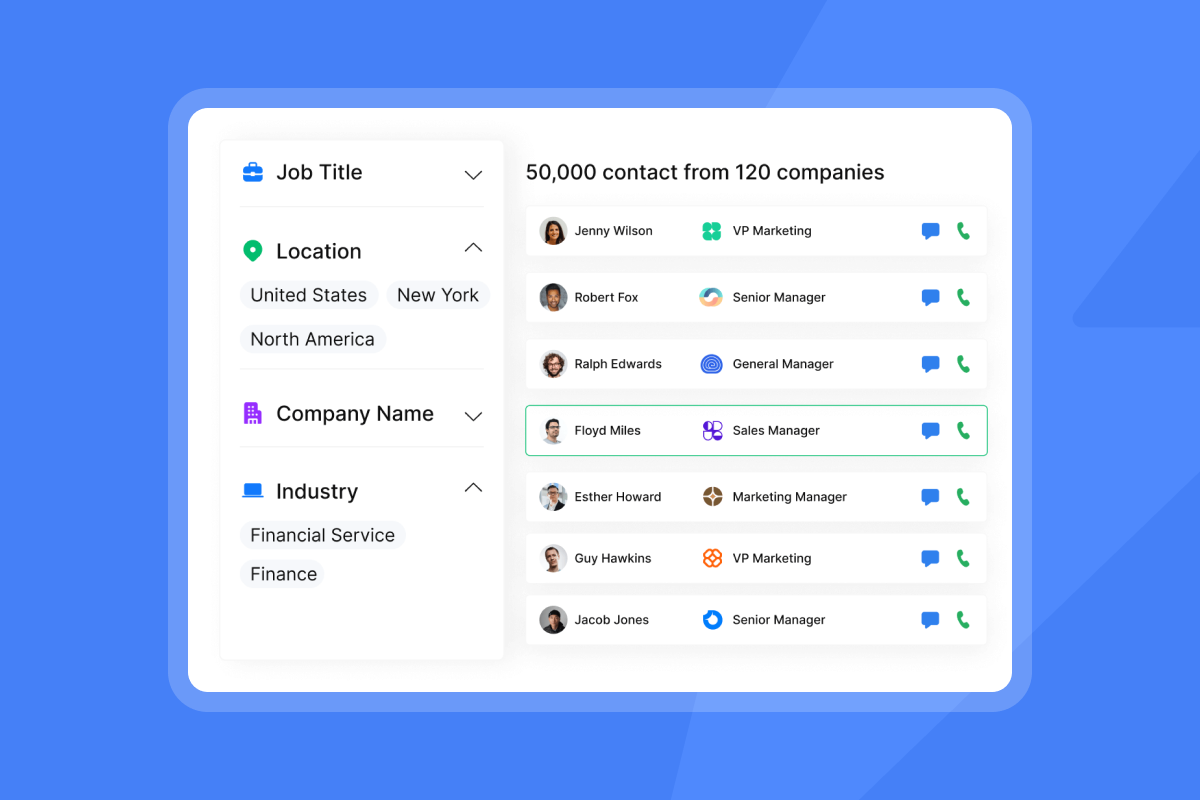
Verify that any platform you evaluate checks emails before they enter a sequence. Instantly's SuperSearch uses waterfall enrichment across five or more data providers. If the first provider cannot find a verified email, the system automatically queries the next one, continuing until it returns a confirmed contact or exhausts all sources. This reduces the number of unverified emails entering your campaigns and gives you access to 450M+ verified B2B leads with LLM-assisted enrichment.
Proactive deliverability health alerts
Your platform should alert you automatically when bounce rates spike. Keep bounce rates at or below 1 percent during active campaigns. Instantly automatically pauses campaigns when bounce rates spike past the platform's built-in threshold. Catching a spike early lets you pause, re-verify the affected segment, and restart at a lower send cap before the damage reaches your domain's long-term reputation score. For a practical look at how the AI Sales Agent uses the SuperSearch database to source leads autonomously, watch the full product walkthrough.
Data transparency and compliance
GDPR permits B2B cold email under the legitimate interest basis (Article 6(1)(f)), provided the message is relevant to the recipient's professional role, you disclose where you obtained their data, and you include a clear opt-out. The CCPA's B2B exemption expired in January 2023, meaning business contact information for California residents is now fully protected. Your platform must support compliant data handling. Instantly's Data Processing Agreement and public sub-processor list give you the documentation needed for compliance reviews.
4. Maintain control with team-wide policies
Reps going rogue with unsanctioned automations are a real risk. Admin controls are how you protect your domain reputation and your brand from a single rep's bad send.
Oversight controls before sequences go live
Managers need visibility into what sequences are active and who launched them, particularly for new reps or campaigns targeting cold lists. Role-based permissions let admins control who can create, edit, and run campaigns, which prevents poorly written copy or overly aggressive send cadences from reaching prospects without oversight. Pair this with shared blocklists to ensure opted-out contacts are never re-contacted across any rep's sequence.
Centralized library for brand templates
A shared template library standardizes messaging across the team and prevents every rep from writing their own version of the same email. Instantly's AI Sequence Writer is included on the Growth plan ($47/month) and gives your team a consistent starting point for every campaign, with AI assistance built directly into the sequence builder. The AI Prompts Library extends this with ready-to-use frameworks for cold outreach.
Audit logs and mandatory oversight features
You need a clear record of who created, edited, or paused a campaign and when. Audit trails matter when deliverability drops and you need to identify the root cause. At a minimum, your AI SDR platform must offer multi-user access with role-based permissions, shared blocklists to prevent re-contacting opted-out prospects, and global campaign-level reporting. Without these, sequence governance is impossible at scale.

5. Validating AI SDR performance before you buy
Before you commit to a full rollout, run a structured evaluation against defined benchmarks, the process our AI sales agent buyer's guide lays out. Most platforms look credible in a demo. The gap between a polished sales presentation and real-world deliverability performance shows up in the first 30 days, and by then a poor choice is already costly.
Key inquiries for AI SDR platform vetting
Ask these three questions during every vendor demo:
- "How does your warmup work, and what happens if domain health drops?" Can they explain the warmup network size, ramp schedule, and recovery protocols?
- "Where does your lead data come from, and how is it verified?" Can they explain data sourcing, verification methodology, and consent documentation?
- "How does your reporting reconcile with HubSpot?" Can they show you live data reconciliation from a customer account?
Verifying AI SDR performance metrics
Use these benchmarks to pressure-test vendor claims during your evaluation:
Metric | Industry standard |
|---|---|
Cold email reply rate | |
Meeting booking improvement with AI | |
AI-powered lead nurturing conversion lift | ~43% (industry research) |
Meetings booked per month (outbound SDR) |
Validate vendor compliance standards
Ask for a countersigned DPA, a current sub-processor list, and a data-flow diagram. Confirm that the platform restricts upload of regulated data categories such as PHI or payment card data.
6. Verifiable data for accurate ROI tracking
Reporting that does not reconcile with your CRM is one of the most consistent complaints sales leaders raise about AI SDR platforms. Dashboards that over-count opens or attribute meetings incorrectly undermine trust in the tool and create friction with leadership.
CRM reconciliation and data accuracy
Ghost opens are a real measurement problem. Apple Mail Privacy Protection, Gmail image caching, and corporate security scanners all generate fake open signals, meaning open rate alone is not a reliable metric. Reply rate is the metric you can trust. An open rate of 60 percent paired with a reply rate of 2 percent should prompt an immediate audit.
Tracking meeting conversion to SQL
Your reporting chain should run from initial reply to booked meeting to SQL to Closed-Won. If your platform cannot show conversion at each stage, you cannot calculate true ROI or identify where the funnel breaks down.
Verify your AI SDR acquisition costs
The cost comparison between a human SDR and an AI SDR is more significant than most teams initially estimate. Research puts the fully-loaded SDR annual cost at up to $145,000 when you include base salary, benefits, tools, management overhead, and annualized hiring and training costs.
Metric | Human SDR | AI SDR |
|---|---|---|
Annual fully loaded cost | ~$145,000 | Variable, plan-dependent |
Meetings booked/month | ~15 (industry average) | Variable, scale-dependent |
Cost per meeting (est.) | ~$806 | Lower at scale with volume |
Working hours | Constrained by rep availability and time zone | 24/7 availability |
Red flag: metrics that don't match CRM
If your email platform reports 50 replies this week but your CRM shows 10, you have a data integrity problem. This gap often comes from misconfigured tracking, reply classification errors, or the platform counting auto-replies and out-of-office messages as positive signals. Any platform that cannot explain this discrepancy during a demo should not make your shortlist.
7. Eliminating manual entry with smart sync
The AI SDR should reduce manual work for reps, not create new forms to fill out. If reps are copying contact details from the email platform into the CRM after every reply, the tool is creating more busywork than it eliminates.
Bi-directional sync with HubSpot
Instantly supports native HubSpot integration that maintains bi-directional sync. Contact status updates, reply classifications, and meeting bookings flow between your email platform and CRM without manual intervention. Zapier, Make, and Pabbly extend workflow automation to your broader tech stack.
Instant calendar booking and attribution accuracy
When a lead responds with genuine interest, the AI should initiate a calendar booking workflow immediately before the lead goes cold. This is where the AI Reply Agent's sub-five-minute response capability becomes a practical revenue driver. Before your pilot ends, trace three to five booked meetings from email through to CRM opportunity to verify that each one is attributed to the correct campaign and rep.
Automate to replace manual data entry
Native Clay integration and Pipedrive import support mean Instantly fits into most modern outbound stacks. Watch how teams run signal-based campaigns at scale using these integration workflows to eliminate manual data movement between tools.
Flexible contracts and transparent AI costs
Billing traps are the most common complaint in the sales engagement category. Annual lock-ins with no opt-out, usage-based fees that spike unexpectedly, and post-cancellation charges all create financial uncertainty that makes clean budgeting impossible.
Standardized flat-rate credit plans
Instantly operates on a flat-rate credit model that keeps costs predictable. Instantly Credits power a single credit pool across all three AI agents: Copilot, AI Sales Agent (5 credits per generated lead), and AI Reply Agent (5 credits per reply). Credits are a separate subscription from Outreach plans, starting at $9/month for the Nano plan (150 credits) and scaling to $197+/month for Hyper Credits (10,000 to 200,000 credits). A free trial with 100 credits is available before you commit.
Monthly cancellation and cost cap options
Month-to-month plans give you the ability to run a 30 to 60 day pilot without committing to an annual contract. Instantly offers monthly billing on all Outreach tiers, with a 20 percent discount available if you switch to annual after your pilot validates the ROI. Set a firm credit budget before the pilot begins and monitor consumption weekly across all three agents. The AI Sales Agent and AI Reply Agent both consume Instantly Credits independently of your Outreach subscription, and a team running Copilot Tasks, automated reply handling, and lead sourcing simultaneously can consume credits faster than expected without a defined cap, a risk this AI SDR pricing analysis breaks down in detail.
During an initial pilot, avoid any vendor that requires an annual commitment as a condition of access to core features. A credible platform lets you verify deliverability outcomes, reply rate performance, and CRM reconciliation before asking for a longer commitment.
Evaluating essential AI SDR platform capabilities
The seven features above give you a framework for what to look for. The tables below turn that framework into a practical scorecard. Use them during vendor demos to compare platforms against a consistent set of criteria and avoid being swayed by features that look impressive but do not map to your team's core needs.
Top criteria for evaluating AI SDR tools
Feature category | Must-have capability | Nice-to-have capability | Why it matters |
|---|---|---|---|
Email deliverability | Native warmup, domain health monitoring | SISR dedicated IP pools | Protects domain reputation from day one |
Data quality | Waterfall email verification | LLM-assisted enrichment | Reduces bounce rates below 2% |
Reply management | Accurate classification, HITL option | Sub-5-minute AI reply | Prevents misclassified replies from harming CRM data |
Team governance | Role-based access, shared blocklists | Campaign activity audit logs | Prevents rogue sends from damaging brand |
Reporting | CRM reconciliation, reply-rate tracking | Ghost open detection | Gives CFO-grade reporting accuracy |
Integrations | HubSpot sync | Calendar booking automation | Removes manual data entry |
Pricing | Month-to-month, flat-rate accounts | Credit consumption caps | Eliminates billing traps and enables predictable budgeting |
Choosing your AI SDR architecture
Before you finalize your platform choice, clarify which outbound model your team actually runs. Some teams focus on converting inbound trials and self-serve users. Others handle cold outbound prospecting and top-of-funnel lead generation.
Operational model | Primary focus | Best for | Instantly alignment |
|---|---|---|---|
Inbound conversion | Product trials, self-serve users | SaaS with a self-serve motion | Website Visitors pixel + AI Reply Agent |
Cold outbound | Sourcing and contacting net-new prospects who have never engaged with the brand | B2B sales teams with defined ICPs | AI Sales Agent + SuperSearch + Outreach |
"True AI" in an SDR context means the system reads actual reply content, adapts its next action based on what the prospect wrote, handles objections, and can book calls without a human scripting each step. "Fake AI" executes a fixed if-then sequence regardless of what the prospect actually said. Verify the difference by asking the vendor to show you how the system handles a reply that contains both an objection and a question at the same time.
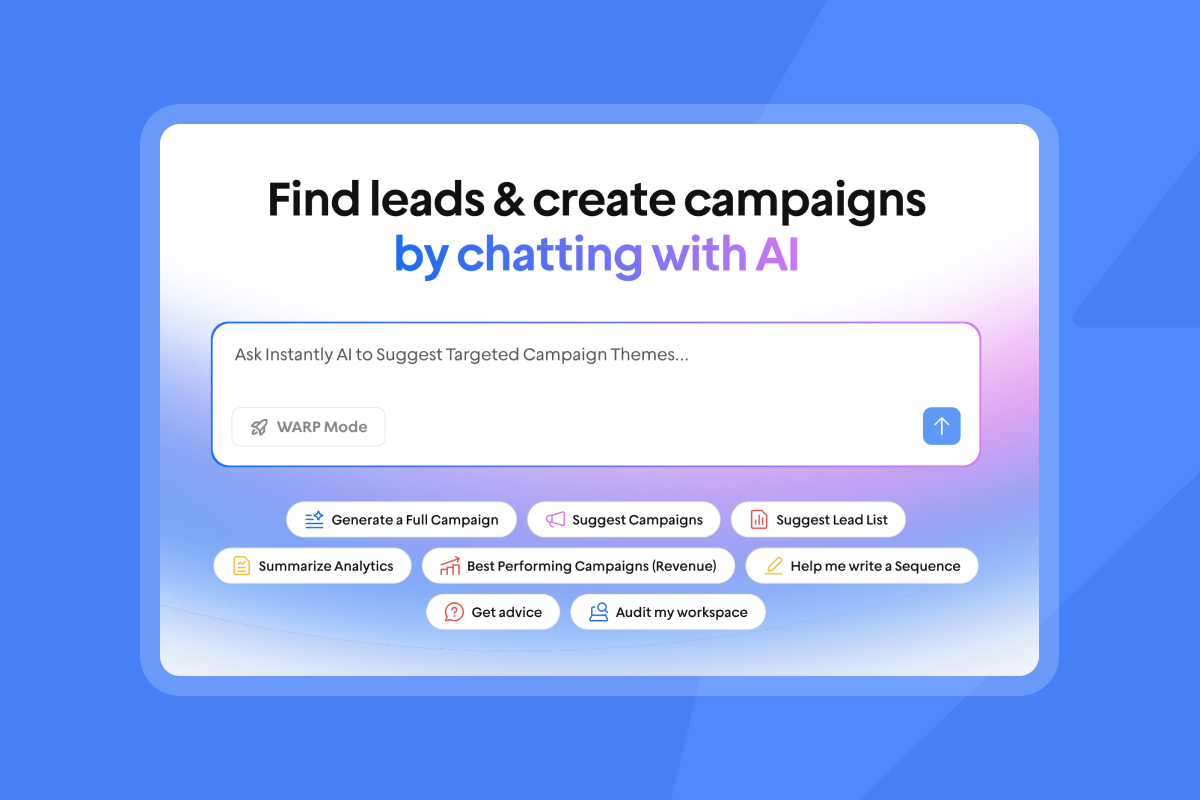
The AI Sales Agent handles autonomous lead sourcing and outbound execution while Copilot supports campaign creation, analytics, and recurring research tasks.
What onboarding and training is included?
Even a well-designed platform requires proper setup to deliver results. Verify what onboarding support comes with your plan. The guide on how to create an AI Sales Agent and the cold email copywriting framework give your team a repeatable process for writing sequences that generate replies.
The seven features in this guide give you a concrete evaluation framework: domain protection through native warmup and health monitoring, accurate reply classification, verified contact data with waterfall enrichment, team-wide governance controls, structured performance validation, CRM-reconciled reporting, and bi-directional sync that removes manual data entry. Pair those with a flat-rate credit model and month-to-month contracts, and you have the full picture of what a reliable AI SDR platform should deliver. Any vendor that cannot demonstrate all seven during a live demo with real data is asking you to take a risk your pipeline cannot afford.
Run your evaluation with a 14-day free trial on Instantly. Connect your sending domains, run an Inbox Placement test, and use SuperSearch to pull a verified list of 100 target contacts. Measure primary inbox rate, reply rate, and CRM reconciliation accuracy before you touch your production domains. Try Instantly free and let the AI Reply Agent handle follow-ups while your team focuses on live conversations.
FAQs
How many emails can I send per day per inbox?
Keep throughput at or below 30 emails per single inbox per day to protect your sender reputation. Distribute higher volumes across multiple sending accounts rather than pushing a single inbox past this threshold.
Does Instantly charge per user seat?
No. Instantly offers flat-rate pricing with unlimited email accounts and warmup included across all Outreach tiers, so you can add accounts and scale volume without per-seat penalties.
How much do Instantly Credits cost?
Instantly Credits start at $9/month for the Nano plan (150 credits) and scale to $197+/month for Hyper Credits (10,000 to 200,000 credits), with a free trial of 100 credits available. Credits power SuperSearch lookups, Copilot, AI Sales Agent (5 credits per lead), and AI Reply Agent (5 credits per reply) from a single pool.
Does Instantly support native LinkedIn automation?
No. Instantly focuses on email deliverability and CRM workflows. External integrations via Zapier or the Instantly API are required for LinkedIn automation.
What is the difference between true AI and fake AI in an SDR platform?
True AI reads actual reply content and adapts its response based on what the prospect wrote, handling objections and progressing toward a booked meeting autonomously. Fake AI executes a predetermined if-then sequence regardless of what the prospect actually said.
Key terms glossary
Primary inbox: The main folder where users receive important, non-spam emails, which is the target destination for all outbound campaigns.
Sender reputation: A score assigned by mailbox providers to your sending domain based on bounce rates, spam complaints, and engagement metrics. Maintaining a strong sender reputation requires keeping bounce rates at or below 1 percent, spam complaint rates below 0.1 percent, and demonstrating consistent engagement patterns.
Email warmup: The process of gradually increasing email volume on a new domain to build trust with mailbox providers before launching campaigns. Proper warmup takes a minimum of 30 days and involves ramping daily sends from 5 to 15 to 30 per inbox.
SISR: Server & IP Sharding & Rotation, an advanced deliverability architecture on Instantly's Light Speed plan that uses dedicated IP pools to protect domain health across high-volume sending.
Unibox: Instantly's centralized inbox that aggregates replies from all connected sending accounts into a single dashboard for team triage.
HITL: Human-in-the-Loop, a configuration mode in the AI Reply Agent where a human reviews AI-drafted responses before the system sends them to prospects.
Read next
- How to send cold emails + 5 templates that get replies: A practical walkthrough of cold email fundamentals with five ready-to-use templates you can drop into your next campaign.
- Cold email deliverability: a practical guide to primary inbox placement: Covers the domain setup, warmup, and hygiene steps that keep your emails out of spam and in the primary inbox.
- How to write cold email sequences that generate replies: A step-by-step guide to structuring multi-touch sequences with subject lines, body copy, and follow-up timing that drive replies.



