.svg)

.svg)
.avif)
This certificate would look great on you.
Complete a short quiz and it’s all yours.
Building Evergreen Campaigns That Convert at Scale
The traditional model of cold email campaigns involves building lists, loading them into sequences, and sending until the contacts are exhausted. Then you build new lists and repeat the process. This approach works, but it requires constant manual effort and produces inconsistent results.
Evergreen campaigns offer a fundamentally different model. Once properly configured, these campaigns run continuously, automatically reaching out to new prospects as they emerge from signal detection systems. The result is a system that keeps producing meetings without requiring constant list building and campaign setup.
What Makes a Campaign Evergreen
An evergreen campaign triggers outreach based on events rather than static lists. Instead of loading a thousand contacts and sending to all of them, you configure the system to reach out whenever someone matches your criteria and triggers a relevant signal.
Some days this might mean adding a hundred new contacts to your campaign. Other days it might mean adding just a handful. The volume fluctuates based on market activity, but the quality remains consistently high because every contact entered the campaign for a specific reason.
This signal-driven approach explains why evergreen campaigns convert at higher rates than traditional batch campaigns. You are not reaching out based on static demographic criteria alone. You are reaching out because something happened that suggests the prospect might care about what you offer right now.
Two Types of Social Data
Effective evergreen campaigns typically leverage two categories of social data. The first category involves people posting about specific topics relevant to your solution. When someone publishes content about challenges you solve or strategies you enable, they are actively thinking about those subjects.
The second category involves people engaging with specific individuals or brands. This includes engagement with your own brand, engagement with competitors, and engagement with thought leaders in your space. Each type of engagement indicates different things about the prospect.
Monitoring Your Own Brand
Tracking engagement with your own brand provides the warmest possible leads. These are people who have already discovered your company and voluntarily interacted with your content. They have demonstrated awareness and at least mild interest.
If you are investing in content marketing and building a social presence, capturing this engagement data and routing it into outreach campaigns makes obvious sense. These people came to your virtual storefront and showed interest. Reaching out to them should be a priority.
Monitoring Competitors
People engaging with competitor content represent a different but equally valuable segment. They have demonstrated interest in your solution category, even if they may not know your specific offering exists yet.
The messaging approach for competitor engagers requires thoughtfulness. Being too direct about knowing they engaged with a competitor can feel intrusive or creepy. Instead, focus on the topic the competitor discusses rather than the competitor themselves.
If a prospect engaged with a Common Room post about signal-based selling, you might reach out about signal-based selling as a topic rather than referencing Common Room specifically. This creates relevance without revealing surveillance.
Monitoring Thought Leaders
Thought leaders and influencers provide access to audiences actively interested in relevant topics. When someone engages with a prominent voice discussing cold email strategies, they have signaled interest in cold email. When they comment on content about sales automation, they are thinking about sales automation.
Identifying relevant thought leaders involves looking at who creates content your ideal customers engage with. These are often founders or executives at complementary tools, respected practitioners sharing insights, or industry analysts covering your space.
The key is finding people with substantial followings who discuss topics adjacent to your value proposition. Their audience becomes your prospecting ground.
Crafting Copy That Converts
Evergreen campaign messaging typically focuses on topics rather than surveillance. Instead of saying you noticed they engaged with a specific post, lead with industry insights or trends.
Reference metrics and outcomes that demonstrate credibility. Leading companies in their space are achieving specific results through approaches related to what you offer. This frames your outreach around value rather than monitoring.
The personalization comes from knowing they care about the topic based on their engagement, not from exposing that you tracked their behavior. This creates relevance without discomfort.
For thought leader campaigns specifically, a effective tactic involves mentioning the thought leader in a postscript. Recommending their content as worth checking out creates mutual alignment without being intrusive. The prospect knows they engage with that person, so the recommendation feels natural rather than stalkerish.
Setting Up Continuous Flows
The technical implementation involves connecting social intelligence platforms to email infrastructure through integrations or webhooks. When relevant engagement is detected, the prospect automatically enters appropriate campaigns.
Adding qualification steps before campaign entry improves results. Using AI to verify that the engagement truly indicates relevant interest filters out false positives and ensures higher quality.
Once running, these systems require minimal maintenance while consistently producing meetings. The evergreen nature means the campaigns never exhaust their lists because new prospects continuously enter based on real-time signals.
This represents the evolution of cold outreach from periodic campaigns to always-on systems that find and engage ideal prospects automatically. The initial setup investment pays dividends indefinitely through reduced manual effort and sustained results.
Video transcript
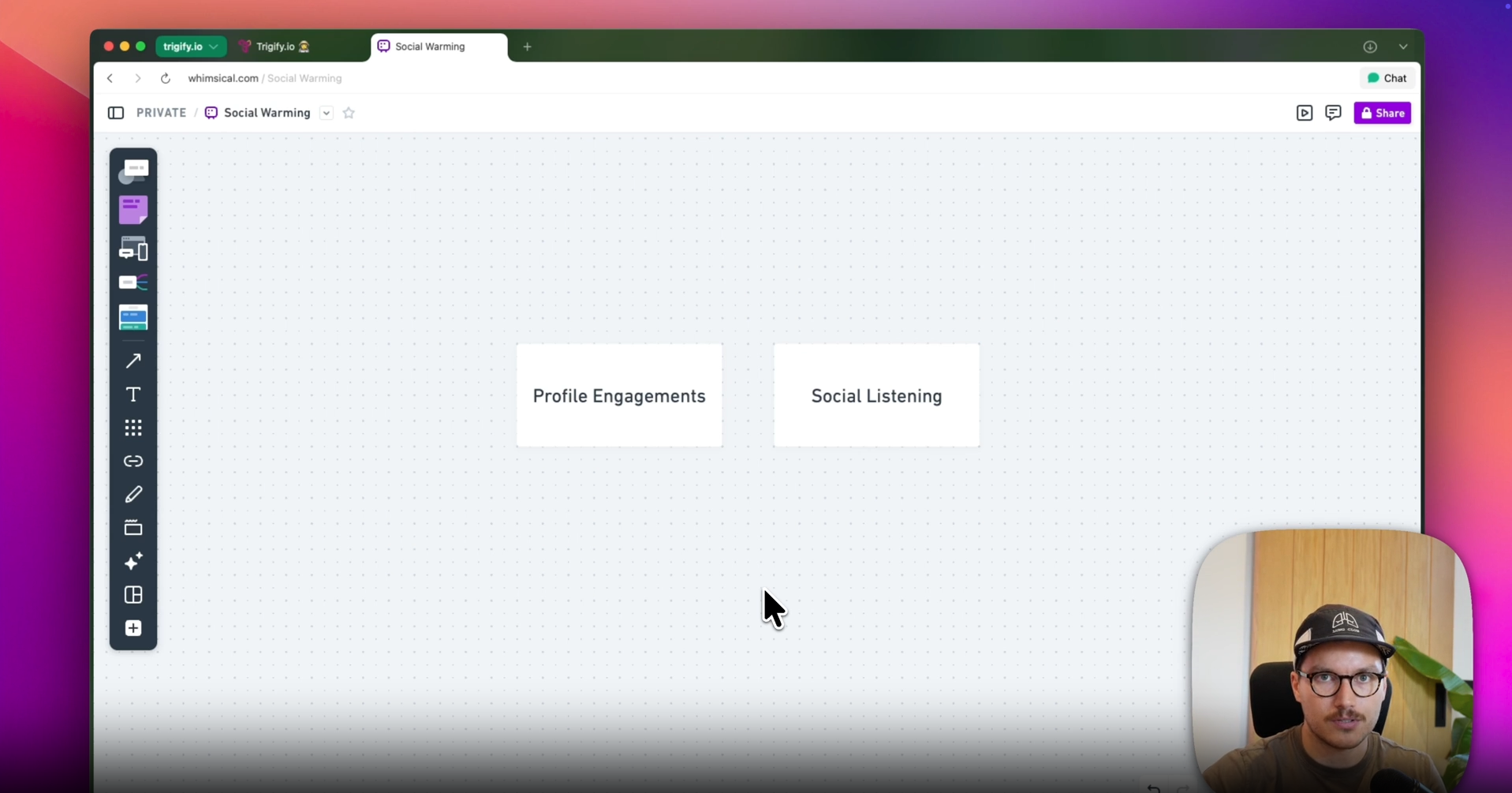
In this episode, we're gonna be going through exactly how to build evergreen campaigns that are gonna crush your email campaigns. We're gonna be looking at emails that actually convert, and so we're gonna be diving into the type of copy that I've been using and and I've been instructing all of our clients to use, which is getting anywhere between a twenty to twenty five percent, sometimes even more, by the way, positive reply rates. So firstly, just a quick, recap. What is an evergreen campaign? Well, an evergreen campaign is something once we set it up, it's gonna continue to flow. Typically, when people think about using campaigns, or or or email campaigns inside of instantly, we're thinking about going out, building highly targeted, great AI generated kind of copy and then uploading those a thousand, however many leads into a, particular sequence and then away that you go. That's not the way that I view it. I'd rather set something up and it'd be the gift that keeps giving over and over again and it only reaches out to people as and when something happens related to that individual. So that means some days we might add a thousand leads to a campaign, other days it might mean we add one. It's very fluctuating depend on what's going out there in the market, which is typically why this converts at such a high rate. Let's dive into how we're using Triggerfy and Instantly together. So before we dive into everything here, there are two different ways to set up evergreen campaigns. We can either do it via profile engagement or via social listening. Now when it comes to social media, there are two points of data that are of interest. There are people that are posting about specific things, so anyone going out typing something in and then hitting post, that's people that are posting. And then there are people that are engaging and that engagement fragments into two different kind of, key areas. There are people that are engaging with certain individuals that could be a competitor, a thought leader, or your own brand, or it could be people engaging with certain type of content. That's the two views that you could look at it. So what I tend for, to instruct people to do is when we're looking at profile engagements, we break it down into these three three, categories. Your own brand, competitors, and thought leaders. This is just another word for kind of creators or influencers whatever kind of tickles your fancy there as well. Okay. So now we know that okay we want to track these three kind of key topics. How does this actually work then in principle? So obviously knowing to track your own brand is is fairly self explanatory and we'll we'll go on to what that looks like. I would also say that you know who your competitors are as well. And then thought leaders, I'll show you how we find them. So let's go through this step by step. So first of all, we're gonna pull open the, Triggerfy portal here. So it's very very simple. The way that it works is you can come into the profile engagement which is going back this is the engagement section and we can add in any URL that we would want to start monitoring. And what it's gonna do is it's gonna pull through the engagement of that individual. So if you were monitoring your own brand, in this case let's just pull open, my particular profile here, we can see that it's pulling through every single post that I've done since I've been monitoring, my my own profile, right, which is over the past few, few years. And then inside of each of these posts, we have all of the engagement that I've been getting. So here's all the people that are liking and commenting on my posts. So it's really really handy to reach out to people if you're if you're focusing a lot on your content strategy, which if you're not, you definitely should be because you want to do a warm level of outbound. Right? And if people are already coming to your your kind of shopping window, which in this case is your LinkedIn profile, you want to be able to reach out to these individuals. So from there, it will start to track and pull through any people engaging with your content which we then could set up two two options. Right? We could then basically go and connect via integrations platform here and push this data through to instantly or, we could set up a webhook and we could route it through something like play if you wanted to. A lot of people do that or an a ten to run a load of AI emails off the back of that as well if if you wanted to. But this is the the core concept around monitoring your own brand and these people get very high engagement, when you're when you're kind of reaching out to people who are just already engaging with you. Now the next one which I tend to find most people use these two key ones because your own brand is obviously great but you will have to have an initial presence and if you don't you need to think about these two key elements, competitors and thought leaders. So let's pretend in this case I am the company Clay and I want to monitor a competitor. In this case I want to monitor common room. What I would do to work out who is the best person to track for is I would go to the company's page to start with. So we're gonna type in common room here, and we're gonna open this up. Okay. Cool. So from here, we obviously could monitor the brand, but to be honest, the only people who engage with the brand are typically their own, like their own employees and it's very like fluctuating or or fleeting engagement. Right? So if you look at this sixteen likes, twenty nine, it's not that impressive. So what we want to do is we want to go to the people here. Now as a rule of thumb, I tend to monitor most of the c suite typically in all cases the founders. So you can tap that open. So we'll tab out, Linda here. And then what you also want to do and, we could go for the CTO as well, so on and so on. What we also then want to do is we want to think about okay if I was Clay who would I want to be reaching or monitoring? I would want to be monitoring some of the sales teams right? These are people that are on the front lines and they'll be engaging with clients. So they are the best people to be be tracking for. So I'll then start to factor that into my process here. VP of sales, perfect one to start tracking for. We've got GTM, I might have a look at them. VP of marketing is also a a lovely person to start tracking for. And the nice thing that you can see with this quick view is you get a little high level overview of the level of followers that they have. So fifty seven k followers, huge good person to monitor. This person probably doesn't have that many followers, so perhaps not a great person to monitor. And why are we looking at vanity metrics like followers? Well, if we go to Aaron Reeves here, this is interesting. It doesn't actually work at, just an adviser, but but we'll we'll talk about why we're looking at followers nonetheless. If they have a lot of followers, typically, it does mean that they got a lot of engagement with their posts. So you can see here fifty, thirty one, forty, thirty seven, so on and so on. Claire here, she's got four, thousands. This is perfect. Thirty eight, twenty seven, twenty four. This is a good person to start tracking, for as well. The other thing that we can go look at is we can go look at posts. We can look at the people who are engaging with this type of content. So here we have, Florian. We also have Eric who's in charge of content. Florian here, head of sales development for Common Room, two thousand followers. The reason that I'm looking to see who is liking is it shows me who's active. And so this is a perfect person to start tracking for seventy two thousand followers, great engagement and all of his stuff. Eric probably not so much and just doesn't have enough followers to make it really worth it. But you get my train of thought, this is how I find the key people to track and follow at a competitor. And what I would then go and do is I would then just go and copy and paste the URLs of these individuals into the tool over here. And so then we could start to see I set this one up as an example. We then have all of their posts coming in and we can then run the same play. We could start to push this data through to, instantly, automatically. So anytime someone engages with a competitor, we can push it through. Now what does the actual email copy typically look like from our standpoint? Well, let me pull up, a typical campaign for us and show you exactly what this looks like. Okay. So here we are inside of one of our campaigns. This time what we're doing is we're monitoring anyone engaging with a tool called HayReach. So we're actually being a little bit more direct and a little bit more obvious here. They're not a competitor to to us, which is why I'm going more direct. And I'm saying I've been looking at how leading HeyReach users in the industry space are getting thirty percent positive reply rates by running Evergreen Outbound campaigns that track competitors, thought leaders, and their own brand. In the last thirty days, several of your competitors have been using social signals, monitoring LinkedIn engagement, keyword trends, brands to, trigger timely hyper relevant outreach, so on and so on. And really what the personalization, don't need to go too crazy on the on like AI which is quite nice is the personalization is around like I know that you know you have interest in this particular topic or this particular company. And and so when I'm reaching out to perhaps anyone engaging with like a thought leader and a creator and we'll go on to look at how you find those people in a second, I instead of focusing on the company, this would be like, hey, I've been looking at how leading companies in x industry are leveraging x topic. Right? And that's that could be intent data or whatever it is, right, that you're that you're focusing on. So let's pretend I was instantly here. You know, I've been looking at how leading SaaS companies are leveraging, email sequencing tools and data to to generate, you know, the the outcome that you're trying to sell, right, which is the the metric. Always focus on a metric and always add metrics into there. And that's really the level of personalization that I do. I do do a fun one with thought leaders which I'll go on to in a sec but maybe take a screenshot of that and you can kind of mirror that approach when it comes to reaching out to companies that are similar in the space where you maybe have integrations with. If this is a competitor, I don't tend to reference the competitor because I think it's a bit weird and a bit stalkery. So what I do instead and let's pretend going back to the use case that I was pretending I was Clay and I was reaching out to people engaging with, you know, key individuals at Common Room. I will, say, hey, I've been looking at how leading SaaS leaders are leveraging, intent based platforms or signal based platforms because that's kind of what Common Room is to generate and then x outcome, right? So you just focus on the topic as opposed to the specific individual. So going back to to to this, how do we then set up a campaign around thought leaders? Well, inside of the Triggerfy platform, we have a thing called influencer search. And so what we can do here is we can set up a search query to find anyone who has influence that talks about x y zed. So let's just type in like cold email in this example. So I'm wanting to find anyone in the last seven days that has talked about cold email. Straight away we've got someone with a large following just Braun, probably all know about him. Nuri, I think he runs the AISDR company, good person to to start monitoring especially for, you know, when we're thinking about like copilots that we have with it instantly. So if I was instantly, he'd be an interesting person to start monitoring. Alan, Ruchten, so on and so on. I can then add these people to, profile engagement which is then where we'll start pulling their engagement anytime they post, the more we collect, the more we get. In my use case, I monitor a chap called Adam Robinson who talks a lot about intent data given he runs a intent database platform. And anytime he posts, I am generating five leads off the back of him, so five meetings. And the flow is very, similar to what we looked at previously, where we're using instantly here. But instead of focusing and saying, hey, I've been I noticed that you've been engaging with x y zed user. Right? So that's taken this use case, Josh. Rather than reaching out saying, hey, I noticed that you're engaging with Josh, I'd focus on the topic, and the topic was cold email that Josh tends to talk about. So it's like, hey, I can see like cold email is of interest to you given some of the engagement that you've been doing across, you know, x y zed's social media. Go into the metrics and then go into the rest of kind of your pitch. What I do do is with the p s line, I say p s, Josh Braun talks a lot of good content on this particular subject worth checking him or her out. The reason that I do that is because I know that they are engaging with that person and obviously they know. So they're typically more likely to reply to me because you've kind of found that mutual, alignment between the two of you together as well which is pretty cool. And so it works really really well and doesn't come across stalkery in in any way. And so that's what I then think about. So we then have you know monitoring three or five thought leaders, three or five individuals from the competitors and then obviously my own brand each of them feeding to different campaigns, where you then can start to generate a lot of meetings off the back of that. How do we then look at it to be in more of a direct way or even in an ABM way as well? So this is where the social listening component, actually comes into play. So here we can look at social listening and what we can start to do is we can build some really interesting flows off perhaps let's say, LinkedIn here and we could do I'm gonna pretend this is Trigify. Setting up the search for Trigify. So here what I want to do is like okay I want to find anyone talking about social listening and, like GTM or maybe like cold email or something like that. So what I'm trying to find is people referencing these things in like a clever way. So we can see here these people talking about like cold emails, social listening, how they're using kind of agents to do social listening, here for for outbound which is pretty cool. So these are all perfect people for me to reach out to because they're really talking about some stuff that's relevant. Then what I might think is I want to add some like further filtration to this to find any like founders or CEOs or like you know anyone with like sales perhaps in their job title where this would be relevant for as well. And so now what I'm doing is I'm just filtering out those companies because I don't want to reach out to them and I'm finding you know your key ICP perhaps. And once we save this, it will then start to pull through that data and start to run for us every single day. So then what we can do is we could come through to, workflow section here and we could actually go and build a campaign off the back of this. So we could go and do social listening here, which is the search, that I just set up and we could actually then build, you know, agents to start to write the emails based on obviously what I was showing you here. It can mirror that kind of process, and it could obviously start to then add data straight into, instantly and create that evergreen campaign. So probably what I would do before I would do the instantly is I would just add a step using an agent. We're gonna do yeah. Just agent. Here we go. And I would just like say like, qualify that this lead is actually talking about using social listening in relation to some type of GTM kind of concept. If it is, then we'll add like an if then add this particular lead to my campaign inside of, instantly as well, which is really cool because then you're finding really high intent, leads as a result of that. Now in the next module that kind of wraps up lesson two. In the next module, we're going to go over how to create a social warming strategy and leverage email and social selling together.
Resources


Courses

.svg)

Prompts
%20(1).svg)
Unlock the power of AI
with

Get started now to access exclusive templates and elevate your projects to the next level.
Stop letting poor deliverability kill your pipeline. Join 50,000+ sales teams who've made the switch to Instantly for better inbox placement, higher response rates, and more closed deals.
No credit card required.