


Updated November 3, 2026
TL;DR: The average AI sales agent reply rate is 3.43% according to Instantly.ai's 2026 Cold Email Benchmark Report, which analyzed billions of cold email interactions in 2025. Top-quartile senders reach 5.5%+, and top 10% reach 10.7%+. The gap between average and elite isn't the AI tool itself. It's the system around it: 4–7 step sequences, under-80-word emails, consistent send timing, verified contact lists, and domain health discipline. This article gives you the segmented benchmarks and a four-step audit to diagnose your own AI SDR (AI sales development representative).
If you're a sales leader who needs to know what reply rate your AI sales agent should realistically achieve, this guide is for you. If you run an AI sales agent and can't tell whether your reply rate is normal, good, or broken, you can't manage it. Vendor marketing claims for AI SDRs may quote a best-case customer rather than the average one, so ask how any figure was calculated. This article uses first-party data from Instantly's 2026 benchmark report to show you the full distribution, segmented by industry, sequence length, and personalization level. You'll get a four-step audit framework to pressure-test your own AI SDR against category data, plus the operational habits that separate elite senders from average ones.
Setting baseline expectations for AI SDR performance
The average AI sales agent reply rate is 3.43% according to Instantly's 2026 benchmark report. Top-quartile senders reach 5.5%+, and the top 10% achieve 10.7%+. These numbers come from billions of cold email interactions across thousands of active workspaces, not from selected case studies. The range matters because it shows you what's realistic at each performance tier.
AI sales agents operate in the cold email category, so benchmark standard outbound campaigns against the 3.43% platform average. When the prospect already knows your brand, warm-first outreach can earn higher reply rates than that average. If your AI agent claims 15%+ reply rates on cold lists, that's either a warm audience, a hyper-targeted niche, or marketing fiction.
Typical reply rates for 2026 campaigns
Instantly's 2026 benchmark report found a platform average reply rate of 3.43%. The data reflects 2025 sending behavior, not live 2026 performance.
If you're running cold outreach, use the 3.43% platform average as your benchmark. Warm-first campaigns, where prospects have prior brand exposure, can earn higher reply rates. Track warm-first campaigns separately from cold ones, and use that comparison only for inbound-heavy or event-driven outreach.
Scaling to top-quartile performance
Top-quartile senders reach 5.5%+ reply rates. The gap between 3.43% and 5.5% is not random. Consistent, stable sending patterns produce 15–20% higher replies compared to erratic send schedules, according to Instantly's 2026 benchmark data.
Top-quartile senders do three things differently. They run 4–7 step sequences (not 1–2 step blasts). They keep emails under 80 words. They launch campaigns on Monday and send during peak reply windows (Wednesday shows the highest reply rates).
Elite performers: 10.7%+ reply rates
The top 10% of senders achieve 10.7%+ reply rates by combining hyper-personalization, strict list validation, and relentless domain health discipline. Elite senders treat reply rate as a system output, not a tool feature.
Don't treat 10.7% as your baseline expectation. This is top-decile performance, which means 90% of senders fall below it. Use it as an aspiration target after you've hit top-quartile consistently.
Sector-specific benchmarks for AI outreach
Reply rates vary by industry because buyer behavior, email saturation, and trust requirements differ. Use these ranges to set realistic targets for your vertical. Instantly's 2026 benchmark report provides platform-wide aggregates, and these industry guidelines reflect directional patterns observed across cold email campaigns.
SaaS cold email outreach standards
SaaS buyers are email-saturated. Expect reply rates slightly below the 3.43% platform average without strong personalization. Top-quartile SaaS senders use intent signals and tight ICP definitions to cut through noise.
If your AI SDR targets SaaS buyers, aim for 3-4% as a realistic baseline. Tips for improvement:
- Use the Signals filter in Lead Finder to surface buying intent and growth signals
- Tighten ICP definitions to reduce list size and increase relevance
- Lead with specific pain points rather than generic value propositions
Benchmarking AI outreach in services
Services (agencies, consulting, professional services) see higher reply rates when the offer is specific and the list is narrow. If your AI agent targets a tight service niche with a clear pain point, reply rates can run above the 3.43% platform average. Generic "we help businesses grow" pitches land at or below platform average.
Industrial cold email reply benchmarks
Industrial and manufacturing buyers are less email-saturated than SaaS or fintech. Reply rates can run above the 3.43% platform average when targeting is precise. List quality matters more than copy sophistication in this vertical because decision-makers are harder to identify and reach.
If your AI SDR targets industrial buyers, prioritize verified contact data and narrow ICP definitions over high-volume outreach. The lower email saturation in this vertical rewards quality over quantity.
Fintech cold email benchmarks
Instantly's 2026 benchmark report does not publish a fintech-specific reply rate, so no verified industry figure is available. Use the 3.43% platform average as your starting benchmark, then track your own fintech campaigns separately to set a baseline.
Fintech senders should build trust signals into their sequences, such as case studies, security certifications, or mutual connections. Domain health and sender reputation are critical in this vertical because spam filters and compliance teams scrutinize cold outreach more aggressively.
If your AI SDR targets fintech, prioritize sender reputation and domain health over volume. Build trust signals into your sequences and keep bounce rates well below the 2% threshold.

How step volume drives AI prospect engagement
Sequence length affects reply rate, and Instantly's 2026 benchmark report found that 4–7 steps is the sweet spot. Shorter sequences leave replies on the table. Longer sequences trigger fatigue and spam complaints.
Performance data for 4–7 step flows
The optimal sequence length is 4–7 steps according to Instantly's 2026 benchmark report. This range works because it gives you enough touchpoints to catch attention without fatiguing the prospect. First-touch emails generate 58% of replies, while follow-ups capture the remaining 42%.
Low-touch outreach: 1–3 step results
One to three step sequences leave replies on the table. Follow-ups are where 42% of replies come from, so cutting your sequence short means abandoning that revenue. Short sequences make sense only for high-intent lists (event attendees, inbound leads, warm referrals) where the prospect already expects your outreach.
If you're running cold outreach with 1–3 steps, your reply rate will sit at or below the 3.43% platform average. Extend your sequence to 4–7 steps to capture follow-up replies.
Managing fatigue in extended sequences
Sequences beyond 7 steps show diminishing returns and increase spam complaints. To extend safely, add value per step (new case study, fresh angle, different pain point) and watch unsubscribe rates closely.
Instantly's AI Sequence Writer can generate a full multi-step sequence from offer and audience inputs. You can hit the 4–7 step range without writing every email manually.
Impact of custom messaging on reply conversion
Personalization depth is the difference between average and elite reply rates. The data shows a clear gradient: generic outreach lands at or below 3.43%, basic personalization lifts modestly, and research-based hyper-personalization drives top-decile performance.
Typical reply rates for unoptimized outreach
Generic, unpersonalized outreach lands at or below the 3.43% platform average. Spam filters and human readers both flag templated copy, so your emails either land in spam or get ignored. If your AI SDR sends the same message to every lead with no customization, expect reply rates well below the 3.43% platform average.
Reply rate baseline for basic outreach
Basic personalization (name, company, role) lifts reply rates above unpersonalized outreach. This level of customization helps your email pass initial scrutiny but doesn't create urgency or relevance. The prospect sees their name in the subject line but recognizes the body copy as templated.
Basic personalization is now expected in 2026. It's the minimum you need to avoid spam folders, but it won't push you into top-quartile territory.
Scaling customization for higher reply rates
As a sales leader, you can use Spintax to keep message variation consistent across every rep's campaigns. Spintax lets you write several versions of a phrase inside one email, so each lead can receive a different combination of wording. Instantly's AI Spintax Writer auto-generates Spintax variants from existing copy, so you don't have to write every variation by hand. This approach scales message variation across large contact lists.
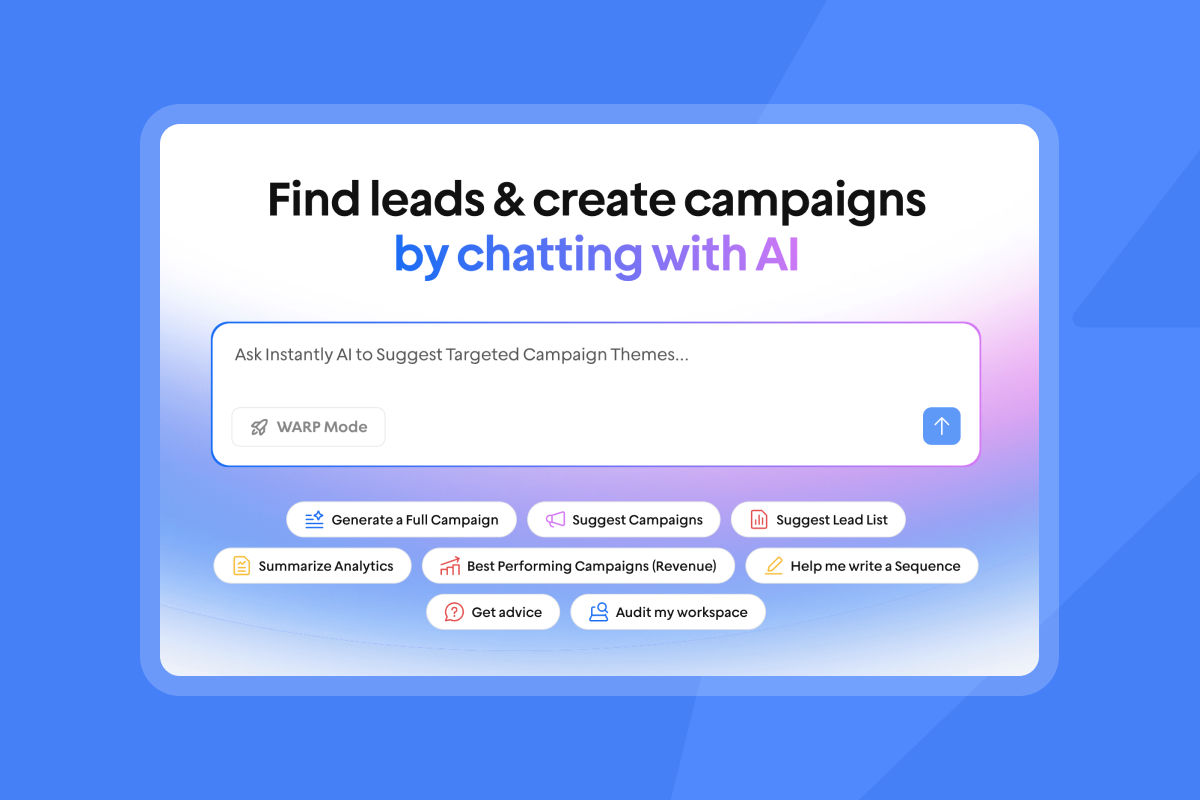
Combine Spintax with personalization variables such as first name, company name, and a role-specific pain point. Each lead then gets a unique message that still reads naturally. Before launch, preview a sample of 10 emails to confirm every variable renders correctly. Instantly's AI Sales Agent finds leads that match your ICP and writes personalized cold emails for each prospect. It runs on a separate Instantly Credits subscription, which is not included in Outreach plans, and it charges 5 credits per generated lead.
Hyper-personalized research-based outreach
Top-decile senders (10.7%+ reply rates) combine hyper-personalization with strict list validation and domain health discipline. Research-based personalization (recent funding, hiring spikes, product launches, leadership changes) is one part of that system. This approach requires intent signals and company activity data to craft messages that feel timely and relevant.
Lead Finder's Signals filter surfaces buying intent, growth signals, and company activity for this exact use case. Learn how to use intent signals for outreach to improve targeting precision. Hyper-personalization works best for accounts with a large deal size, where one booked meeting is worth enough to justify the extra research time per lead.
Operational habits driving elite reply rates
Reply rate depends on factors you control, such as list quality, deliverability, and sequence structure, not just the AI tool you use. These four operational habits separate elite senders from average ones: optimized send timing, domain health discipline, email length control, and standardized list validation.
Optimizing sequence send timing
Best launch day is Monday. Highest reply day is Wednesday, according to Instantly's 2026 benchmark report. Consistent, stable sending patterns produce 15–20% higher replies compared to erratic schedules.
Send windows matter less than consistency. Pick a window and stick to it. Erratic send times confuse spam filters and reduce deliverability. Read the guide on best time to send for deeper timing analysis.
Preventing domain blacklist penalties
Keep bounces below 2%. Instantly's high bounce auto-pause triggers at 5% after a minimum of 200 sends, but waiting until 5% means you've already damaged sender reputation. Set a stricter internal threshold at 2% to give yourself a buffer.
BounceShield automatically skips known high-risk recipients based on real-time and historical bounce data. It's enabled by default and protects domain health without manual list scrubbing. Warmup starts at 5–10 emails per day and builds gradually over 4–6 weeks to full sending volume, according to Instantly's 2026 benchmark report. This slow ramp signals to email providers that you're a legitimate sender, not a spam operation firing up overnight.
For sales leaders, the ramp plan is a team standard, not a per-rep choice. AI SDR projects fail when domain reputation collapses. This happens when teams scale volume too fast, skip warmup, or ignore bounce rate spikes. Protect your domain by ramping slowly (5 to 10 emails per day at the start, building to 30 per day per inbox) and pausing sends when bounces exceed 2%. For a broader setup checklist, read the guide to AI SDR best practices.
Optimizing email length for replies
Best email length is under 80 words according to Instantly's 2026 benchmark report. Short emails respect the reader's time and avoid spam filters that flag long, HTML-heavy messages. Focus on one clear ask per email.
Instantly's AI Spam Words Checker flags risky language before send, using an AI model that evaluates context rather than just keyword-matching. This helps you stay under spam filter thresholds while keeping copy concise.
Standardizing lead list validation
Verified contacts are the foundation of reply rate. Unverified lists drive bounces and spam placement, which tanks sender reputation. Lead Finder ships pre-verified leads and only charges credits when it finds an email. A verified email found by Instantly costs 1 credit, and a verified email sourced from data partners costs 2 credits. As a sales leader, use these per-lead costs to forecast credit spend for your team before campaigns launch.
Instantly's Global Blocklist is a workspace-level list you build yourself. You manually add the domains or email addresses you never want to contact (a competitor's domain, for example), and Instantly keeps them out of your campaigns. It doesn't detect bad domains automatically, so pair it with list verification. Standardize list validation across your team to keep bounce rates below 2%.
Auditing AI SDR performance for lead quality
You can't improve what you can't measure. This four-step audit tells you if your AI SDR is underperforming and why. Run it monthly to catch performance dips before they tank your pipeline.
How to audit your AI reply metrics
- Pull reply rate by campaign and compare to the 3.43% platform average.
- Check bounce rate. Above 2% means list hygiene is the issue, not the AI. Re-verify your list and pause sends.
- Review sequence length. Under 4 steps means you're leaving 42% of replies on the table. Extend to 4-7 steps.
- Check domain health and warmup status. If your domain health score is below 90% or warmup is incomplete, fix that before blaming the AI.
Filter reply rates by niche and flow
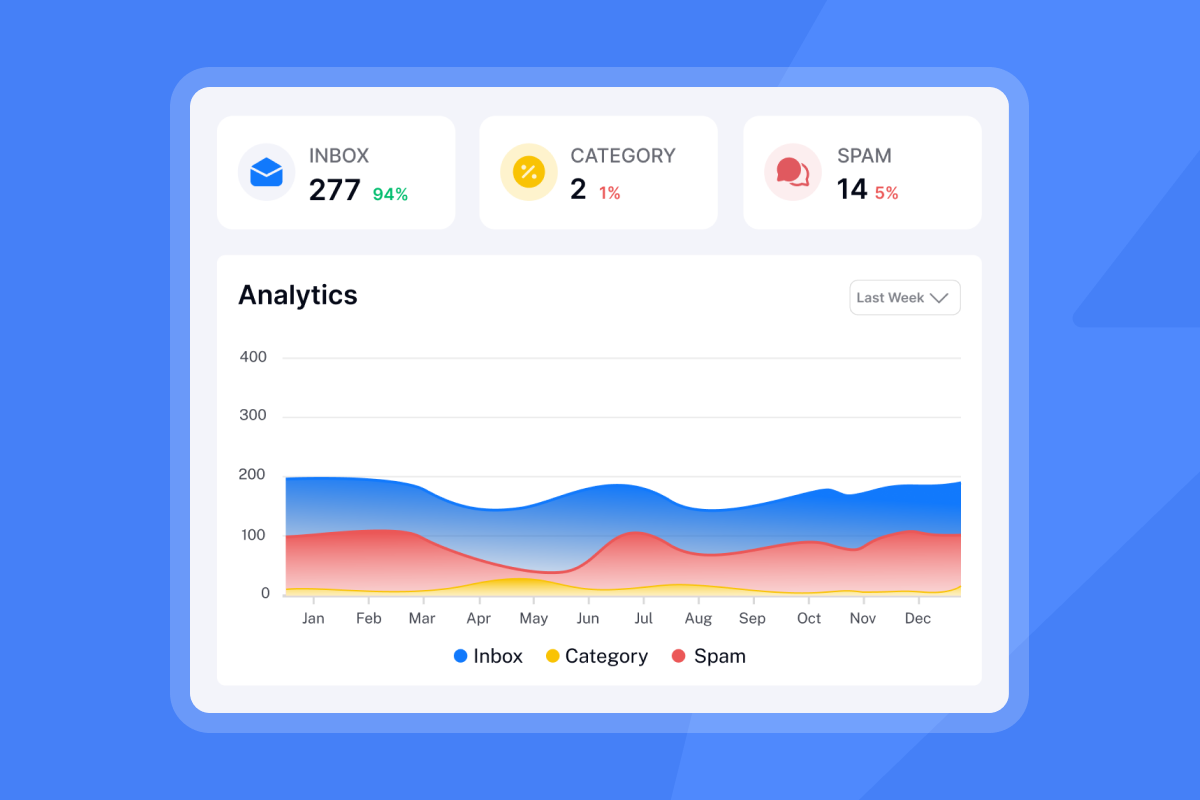
Use the Accounts tab in Instantly's Account Analytics to see how each sending account performed in a date range you choose. It shows Contacted, Opened, Replied, and Combined score for every account. Compare accounts side by side to spot weak senders, and pick a date range long enough to include a meaningful number of sends before you judge any account.
Segmentation reveals whether your AI SDR struggles in specific verticals or with certain sequence types. If SaaS campaigns underperform while services campaigns excel, adjust your ICP or messaging for the weaker segment.
Diagnosing AI agent performance dips
Common causes of reply rate drops include domain reputation collapse, list fatigue, sequence exhaustion, and copy degradation. Here's the troubleshooting runbook:
- Pause sends if reply rates drop sharply week-over-week.
- Re-verify your list to remove stale or invalid contacts.
- Check domain health for blocklist hits or spam placement spikes.
- Restart at a lower send cap (reduce daily volume by 50%) for 3–5 days while monitoring health metrics.
- Refresh copy if the same sequence has run for several months without updates.
Instantly's Deliverability AI Agent re-runs this audit automatically on a rolling basis on Hypergrowth and above plans. It monitors DNS health, blocklists, warmup scores, bounce rates, provider balance, campaign copy, abuse complaints, and reply-rate benchmarks. The agent surfaces what's affected, why it matters, and automated fixes (pause campaigns, replace risky accounts, rebalance providers, improve copy).
To calculate cost per meeting, divide your total monthly AI SDR spend (for example, your Outreach and Instantly Credits subscriptions) by the number of meetings booked. Track this monthly to measure AI SDR ROI. For more on how AI agents turn replies into booked meetings, see the guide to AI SDRs for meeting booking.
Start a free Instantly trial and see your AI SDR's reply rate against the same benchmark data used in this article. No credit card required. Includes 250 uploaded contacts and 1,000 emails during your 14-day trial.
FAQs: AI sales agent reply rate benchmarks
What reply rate should you expect from a new AI sales agent?
A new AI SDR typically lands at or below the 3.43% platform average. Top-quartile performance (5.5%+) requires 4-6 weeks of warmup plus consistent send timing and verified contacts.
How long does it take to reach top quartile performance?
Plan for 4–6 weeks of warmup before full sending volume. Reaching top-quartile reply rates requires consistent sending patterns and ongoing list refinement.
Are vendor-claimed reply rates realistic?
Vendor claims may reflect best-case customers rather than the average, so ask how any figure was calculated. Use the 3.43% average and 5.5%+ top-quartile benchmarks from Instantly's 2026 report as your baseline. To compare tools against those benchmarks, see the guide to the best AI SDRs for lead generation.
What's the difference between average and top decile AI agents?
Reply rates tend to fall below average when AI SDRs send generic sequences to unverified lists. Top-decile agents use 4–7 step sequences, under-80-word emails, verified contacts, and consistent send timing.
Key terms glossary
Reply rate: The percentage of delivered emails that generate a reply. Calculated as replies divided by delivered emails, expressed as a percentage.
Top quartile: The top 25% of senders by reply rate. In Instantly's 2026 benchmark data, top-quartile senders reach 5.5%+ reply rates.
AI sales agent (AI SDR): Software that autonomously sources leads, writes and sends sequences, and optimizes based on replies. Also called an AI SDR (sales development representative).
Sequence length: The number of touchpoints in an outreach campaign. Optimal sequence length is 4–7 steps per Instantly's 2026 benchmark report.
Domain health: The reputation and deliverability status of a sending domain. Measured by bounce rate, spam placement, and blocklist status. Keep bounces below 2%.
Read next
- AI sales agent vs AI SDR: what's the difference? (2026 category guide for sales leaders): Learn how an AI sales agent differs from an AI SDR so you can choose the right setup for your team.
- Best AI SDR tools for agencies: the 2026 complete guide: Compare the AI SDR tools that fit agency workflows, client volume, and budgets.
- AI prompts for SaaS founders: outbound campaigns that don't sound robotic: Copy prompts that help you write outbound emails that read naturally and get replies.


