.svg)
%20(1).svg)


Updated July 15, 2026
TL;DR: Before you sign an AI BDR contract, negotiate three protections: a 30 to 60 day cancellation window (not the 90-day trap most vendors default to), full ownership of every lead and reply your agent touches, and strict deliverability SLAs with service credits for breaches. These protections matter at every deal size, but become critical as your seat count, credit volume, and deployment complexity grow. Instantly.ai offers flat-fee, month-to-month flexibility with unlimited accounts across all Outreach plans, and a built-in Deliverability AI Agent on Hypergrowth and above, so you scale outbound without contract lock-ins.
AI BDR contract terms to negotiate before you sign: 30-to-60-day cancellation windows, full data ownership, and strict deliverability SLAs. The contracts behind them often contain warning signs, like clauses that lock up your data, expose your domain reputation to risk, and drain your budget through hidden fees. This guide breaks down every clause you need to negotiate before signing, along with tables, a negotiation playbook, and a copy-pasteable checklist to take into your next vendor conversation. If you are still building a shortlist, start with our roundup of AI BDR tools.
Spotting predatory clauses in AI BDR agreements
An AI BDR is not a basic email tool. It is an autonomous agent, one of many types of ai agents, that finds accounts matching your ideal customer profile, enriches contact data, decides who to reach and when, and runs multi-step outreach until a prospect replies or books. The Instantly AI Sales Agent handles autonomous lead sourcing and outbound execution, finding accounts that match your ideal customer profile and running multi-step outreach. Reply qualification is handled by the separate AI Reply Agent. Both agents run on Instantly Credits, a separate subscription from the Outreach plan, billed at 5 credits per generated lead and 5 credits per reply handled. Both are Instantly's AI agents. That distinction matters for contracts.
Enterprise AI BDR platforms, often marketed as an AI sales agent, combine seat fees, credit allowances, implementation charges, and add-on modules into a total cost that scales quickly as your team grows. At that level of spend, a single predatory clause, whether a locked renewal, an uncapped overage, or a restrictive data export policy, can cost serious money. If you want a baseline to compare against, see how Instantly's AI BDR works.
The table below maps common contract risks across cancellation, data, and pricing terms that buyers frequently encounter in mid-market and enterprise SaaS agreements.
Common contractual risk patterns
Clause type | Flexible pattern | Moderate pattern | Restrictive pattern |
|---|---|---|---|
Opt-out notice period | 30-day opt-out with no pre-renewal gate, giving you the most exit flexibility | 60-day pre-renewal notice required, which is a common mid-market term but still restricts your exit opportunity to a single window each year | Lengthy notice requirement tied to annual-only terms, with limited exit flexibility |
Contact data portability | Open-format export in CSV or JSON included at no additional cost, giving you full portability to any CRM or outbound platform | Export is available but may carry additional fees, which adds friction and cost at the point when you are most likely trying to leave | Proprietary format only, with no contractual commitment to provide export access after termination, leaving your data effectively inaccessible once you leave |
Cost structure | Flat-fee, unlimited accounts | Seat-based with caps defined in contract, though overage terms vary by vendor | Seat-based with no defined overage cap, leaving costs open-ended as usage grows |
Renewal structure | Manual renewal required at each term, meaning the contract cannot roll over without your active approval | Automatic renewal with advance email notification. Vendor-issued renewal notices are easy to miss in a busy inbox and do not extend your opt-out window. Without an internal calendar reminder set at signing, the notification may arrive too late to act on. | Automatic renewal with no proactive notice and a narrow opt-out window, leaving limited time to act before the next term commits |
Annual price increase terms | Rate locked at the signed price for the contract term, which is the most buyer-favorable structure and eliminates renewal cost uncertainty | CPI-linked increase written into the agreement, though CPI escalation is common across enterprise contracts and does not guarantee a fixed rate | Renewal rate set at vendor discretion with no defined cap, meaning your cost at renewal is not predictable at signing |
Vendor liability limit | 12 months of contracted fees, which is the recommended floor to negotiate for and gives you meaningful recovery coverage if the vendor's failure costs you pipeline | 6 months of contracted fees, below the 12-month floor recommended in this guide and tilted toward the vendor's interests in any dispute | Below 6 months of contracted fees, leaving large recovery gaps if vendor negligence causes data loss or domain damage |
Preventing predatory auto-renewal terms
Vendors use auto-renewal clauses to lock you into another full annual cycle. The risk is the notice window. A clause requiring 90-day written notice before the renewal date means you have a three-month gate, once a year, to exit. Miss it by a day and you owe another year of fees.
Watch for language like: "This Agreement will automatically renew for successive one-year terms unless either party provides written notice of non-renewal at least 60 days prior to the end of the then-current term." That 60-day window sounds reasonable, but if you evaluate tool performance quarterly, the evaluation window and the opt-out window rarely align.
Negotiate for a 30-day notice window. Some vendors accept this on monthly plans or pilot agreements, and it gives you meaningful time to assess performance without committing blind.
Avoiding punitive data migration fees
Some vendors charge to export your own lead data or campaign history on termination. Some contracts allow the vendor to delete your data immediately on cancellation, before you have time to extract anything. This is not a support issue. It is a structural lock-in mechanism built into the agreement.
You need a contractual guarantee of at least a 30-day export window after termination, in a standard open format, at no additional cost.
Strict volume and usage minimums
Say your contract requires 10,000 AI-processed leads per month as a minimum commitment. If your team is running a single pilot workflow during evaluation, you are paying for volume you will never actually use. Define clear minimum thresholds in the agreement and negotiate a written provision that scales your volume commitment upward only after a defined pilot period, tied to actual usage data.
Negotiating flexible AI BDR agreement windows
Most procurement mistakes happen during agreement structure negotiation. Sales leaders default to annual terms because the discount looks attractive, but locking into a 12-month commitment before you have real performance data is one of the most common regrets in this category.
Negotiation playbook for Sales Leaders
Clause | Vendor objection | Your counter |
|---|---|---|
Monthly billing for first 90 days | "We require annual for this tier" | "We'll commit to annual after a 90-day performance pilot, tied to defined meetings booked" |
30-day auto-renewal notice | "Our standard is 90 days" | "60 days is reasonable. We will document renewal dates and evaluate with 30 days to spare" |
Performance-based exit clause | "We can't guarantee outcomes" | "We're not asking for guaranteed meetings. We're asking you to define the SLA you own: bounce rate, uptime, response time" |
Price increase cap | "Pricing is subject to change" | "Cap annual increases at CPI or 5%, whichever is lower, locked at the signed rate for 12 months" |
Data export on termination | "Data is deleted per our retention policy" | "We require a 30-day export window in CSV format at no cost, written into the agreement" |
Liability cap | "Our standard cap is below 12 months" | "Our baseline requirement is 12 months of contracted fees. We also require carve-outs for data breaches caused by vendor negligence" |
Choosing your AI BDR billing term
Start with monthly billing for an initial pilot period of any deployment that handles your domain reputation and CRM data. You need time to validate inbox placement rates, confirm lead qualification accuracy, and verify CRM sync before committing to a full year. Instantly.ai starts with a 14-day free trial requiring no credit card, which gives you a baseline evaluation window before any billing begins. After that, the Growth Outreach plan runs $47 per month.
Auto-renewal notice periods
Auto-renewal notice windows in mid-market SaaS agreements commonly range from 30 to 90 days before the renewal date, though the exact window varies by vendor and deal tier. The right window depends on deal size and how long you need to evaluate alternatives. Larger deployments may benefit from a longer window to allow proper assessment. Whatever you negotiate, document the exact renewal date in a shared calendar the moment you sign.
Negotiating early exit clauses
A performance-based exit clause lets you terminate if the vendor fails to meet specific pipeline or deliverability metrics. Most standard vendor agreements limit exits to termination-for-cause, which requires proving material breach. Push for a termination-for-convenience right with 30 to 60 days' notice, regardless of cause, as a baseline requirement.
Standardizing vendor exit criteria
Define objective, measurable exit criteria in the contract itself. Examples to negotiate into your agreement:
- Bounce rate exceeds 1% for two consecutive months.
- System downtime exceeds the contracted uptime guarantee without service credits applied.
- CRM sync failures are persistent, meaning lead status updates or reply classifications consistently fail to appear in your CRM within the latency window defined in the SLA. Rather than accepting a vendor-defined threshold, push to write your own acceptable failure rate into the agreement before signing, tied to the sync latency standard already defined elsewhere in the contract. These are specific enough to be enforceable and tied directly to the vendor's operational responsibility.

How to avoid predatory AI BDR fees
Pricing model structure determines your long-term cost trajectory more than the headline plan rate.
Seat-based vs. flat-fee pricing
Per-seat pricing penalizes growth. If your sales team doubles from five to ten reps, your software cost doubles automatically, regardless of whether you get twice the pipeline. For growing sales teams, the math compounds further: add reps, domains, and inboxes, and per-seat costs scale in lockstep with headcount whether or not pipeline grows proportionally.
Instantly's flat-fee outreach pricing includes unlimited email accounts and warmup across all tiers. The Growth plan starts at $47 per month. That flat rate does not increase as you add inboxes or domains, which is the core structural advantage for agencies and growing sales teams. A seat-based platform at typical mid-market rates can cost multiples of that figure for a 10-rep team before add-ons are factored in.
Avoiding hidden usage billing traps
Overage charges sit in the fine print of consumption-based pricing models. Vendors may charge extra for email sends above a monthly cap, lead enrichment lookups above a credit threshold, or AI processing above a defined compute allocation. These hidden AI BDR fees can appear mid-billing cycle and may not be flagged until the invoice arrives. Where possible, push for written overage caps and usage threshold notifications built into the agreement before you sign.
Avoiding predatory deployment fees
Onboarding and setup fees can create friction when evaluating vendor performance. A vendor who charges large sums upfront for "enterprise implementation" may reduce your flexibility to switch providers if the tool underperforms. When possible, negotiate to tie setup fees to defined deliverables: a fully configured warmup schedule and a confirmed CRM integration.
Standardizing renewal price increases
Without a price cap, renewal pricing is at vendor discretion. Negotiate an annual price increase cap of CPI or 5%, whichever is lower. Get this in writing at signing, not as a verbal commitment from a sales rep.
Preventing vendor lock-in for your sales data
Data ownership is where AI BDR contracts get quietly predatory. If your agreement is silent on who owns AI-generated outreach data, lead replies, and contact histories, any ambiguity about ownership can work against you in a dispute. Review your agreement closely for explicit language assigning output data ownership to you as the customer. If that language is absent, treat it as a gap to close before signing.
Securing your CRM contact rights
Aim to get leads, replies, enrichment results, and contact histories generated through the AI BDR covered by explicit ownership language in the contract. Customer-uploaded data is typically retained as customer property in standard SaaS agreements, but AI-generated enrichments and lead research can fall into a gray area. Push to have these covered explicitly rather than assuming they are included. A sample clause reads: "All Customer Data, output data, and derivative data generated through Customer's use of the Service remain the exclusive property of Customer."
Mandating accessible export formats
Require data exports in CSV or JSON format, which any CRM or outbound platform can ingest. Proprietary export formats that require the vendor's own migration tool are a structural lock-in mechanism. Many mid-market SaaS agreements lack guarantees for open-format data exports at no cost. Push for open-format export and no-cost data retrieval to be written into the agreement before you sign.
Negotiating post-contract data deletion
After export, push to have the vendor's data deletion timeline written explicitly into the agreement. Deletion timelines differ by vendor and region, so a defined contractual commitment with a specific window is more reliable than assuming a default applies. This is a basic security and compliance requirement, particularly if your contacts include personal data from EU or UK markets. Instantly's Data Processing Agreement documents its data category restrictions and sub-processor obligations, which gives buyers a clear baseline to reference when evaluating other vendors.
How to limit AI BDR exit fees
When possible, negotiate to reduce or eliminate exit fees. If the vendor requires them, work to tie them to a defined service: data export assistance, session migration support, or documentation handoff. An uncapped account closure fee with no defined scope creates cost uncertainty at the point when you have the least room to negotiate, so get the amount and conditions in writing before you sign.
Protecting deliverability via ironclad uptime clauses
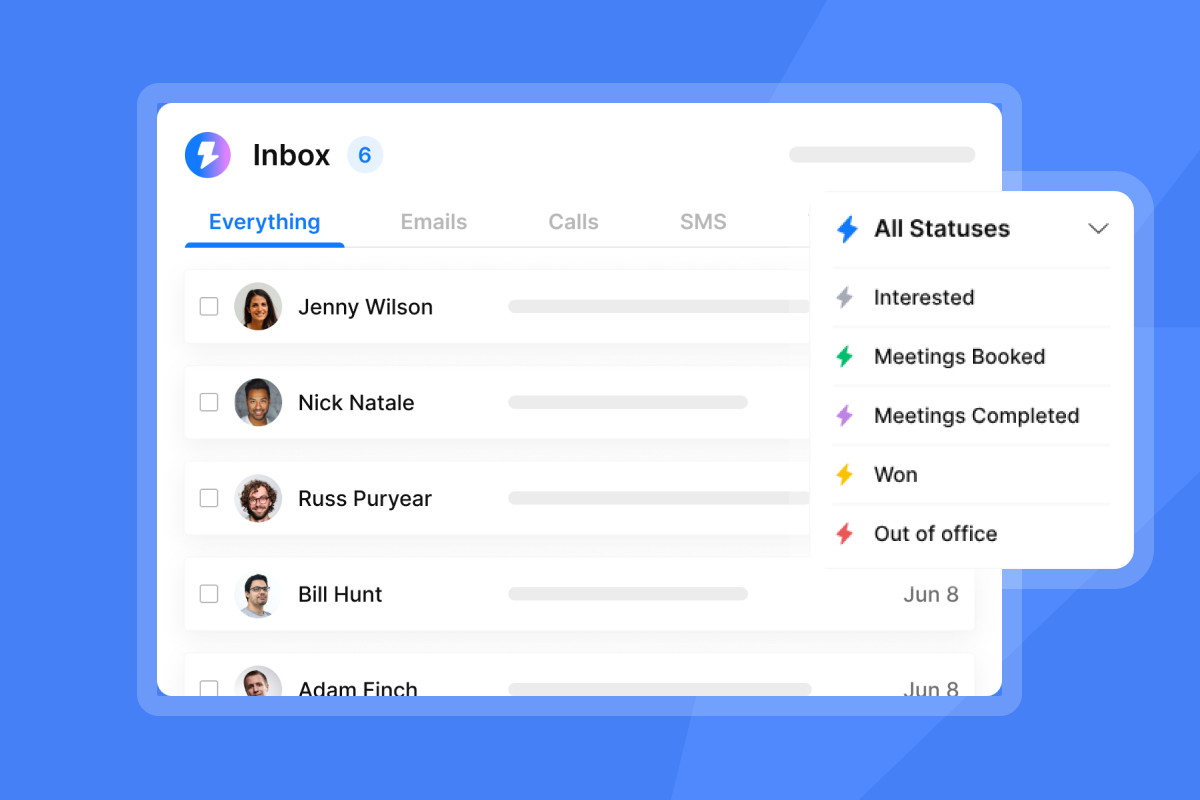
Most sales leaders under-negotiate deliverability protections, which causes the most damage when vendors fail. Your domain reputation is a long-term asset. A vendor whose AI BDR sends at unsafe volumes, to unverified contacts, or through shared IP pools already on blocklists can damage that asset in days.
Instantly's 2026 benchmark report, analyzing data from January 1 through December 18, 2025, puts the platform average reply rate at 3.43%. Top-quartile senders reach 5.5% or higher, and the top 10% reach 10.7% or higher. Consistent, stable sending patterns produce 15 to 20% higher reply rates than erratic high-volume blasting. These numbers give you a calibrated baseline for writing performance expectations into a contract.
Defining sender reputation standards
Contractually require the vendor to maintain hard bounce rates below 1% on delivered contacts, spam complaint rates below Google's 0.3% threshold, and inbox placement rates above 90% on verified contacts. A data provider delivering "verified" contacts with bounce rates above 1% is not delivering on the verification claim. Instantly's inbox placement testing gives teams automated placement tests before campaigns go live, creating an operational baseline that feeds directly into these contractual standards.
Standardizing AI BDR uptime guarantees
Require a 99.9% uptime guarantee for the sending infrastructure, measured monthly and documented on a public status page. For context, 99.9% uptime still allows 8 hours and 45 minutes of downtime per year. Reject any SLA below 99.9% for a tool your pipeline depends on. Instantly maintains a public status page with component-level uptime visibility, which is the operational transparency standard to hold other vendors to.
Documenting required issue resolution times
Define strict vendor response timelines in the SLA:
- Critical deliverability failure (domain blocklisting or mass bounce): written acknowledgment within 15 to 30 minutes and a documented resolution plan with a defined completion window. Treat domain-level failures as P1 incidents when negotiating SLA tiers and write acknowledgment timelines into the contract explicitly rather than accepting vague language like "commercially reasonable efforts."
- Campaign sending interruption: prompt acknowledgment and resolution.
- CRM sync failure: timely acknowledgment and resolution within a business day.
Vague SLA language like "commercially reasonable efforts" gives you nothing to enforce. Hours are enforceable.
Protecting revenue during downtime
Negotiate service credits as the remedy for SLA breaches. A reasonable structure ties credits to a percentage of monthly fees for each block of unplanned downtime beyond the contracted threshold. Defined credits give the vendor financial incentive to prioritize your issue. Without them, you have no enforcement power. For teams evaluating Instantly's infrastructure approach, the SISR system on the Light Speed plan runs your sending volume through dedicated private IP pools with rotation, keeping your sender reputation separate from shared infrastructure.
Defending your company against vendor indemnity traps
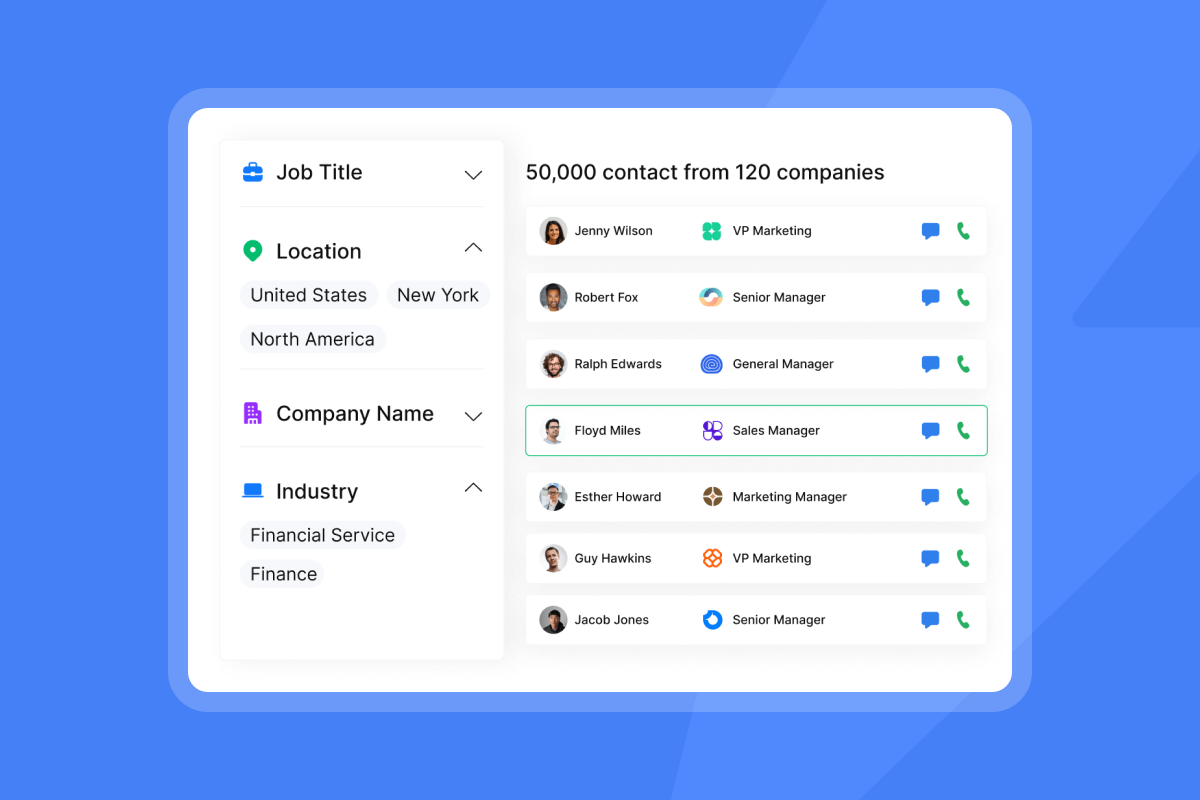
Liability caps define what you can recover when the vendor's failure costs you pipeline. Push for a liability cap floor of 12 months of contracted fees. Negotiate carve-outs that place specific loss categories outside the cap entirely, including data breaches caused by vendor negligence and domain blacklisting caused by vendor technical failures.
Managing AI BDR data privacy risks
AI vendors sometimes train their models on customer data unless the contract explicitly prohibits it. Add a clear clause: "Vendor will not use Customer Data to train, improve, or develop its AI models or related features without explicit written consent from Customer." GDPR requires a lawful basis before vendors process personal data for model training, and relying on assumed consent rather than explicit authorization creates compliance risk. Instantly publishes its sub-processor list and operates under a clear DPA that restricts which data categories customers may upload, including prohibitions on PHI, payment card data, and biometric data.
Protecting against sender blacklists
Write a clause that requires the vendor to remediate at their cost if their technical failures cause your domains to appear on major blocklists. Include service credits proportional to the sending capacity you lost. This applies to situations where shared IP pools managed by the vendor are blocklisted through no action of your own. Instantly's AI Blocklist Triggers automatically blocklist leads based on unsubscribe status, account status, or reply content, which reduces exposure to spam complaint spikes at the platform level.
Verifying vendor coverage and security audits
As part of your AI BDR security and compliance review, request a current data flow diagram showing exactly where your contact data is processed, stored, and deleted.
Integration and migration support
Integrations stall implementations and burn quarters when vendors fail to define their obligations contractually.
Verifying CRM handoff performance
Define real-time, bidirectional sync requirements between the AI BDR platform and your CRM, with latency standards in writing. Lead status updates and reply classifications must appear in your CRM within 5 minutes for live replies. Instantly has native integrations with HubSpot and Clay, plus Zapier and webhooks for broader stack connectivity.
Data migration and onboarding SLA
Define the vendor's responsibility to assist with initial data migration as part of a documented AI BDR implementation timeline. Plan for four to eight weeks on straightforward migrations with clean data and small volumes, and six to twelve weeks or longer when multiple legacy systems or data quality remediation are involved. Build these timelines into the SLA so the vendor's obligation is documented rather than assumed. Include documentation of what migration support covers: data formatting assistance, contact list validation, and domain setup verification.
Defining API rate limits and access
Write the rate limit into the contract in API calls per minute per endpoint. Require the vendor to maintain those limits even if you downgrade your plan, unless they provide 30 days' written notice. Ensure the contract grants sufficient API rate limits to prevent data sync bottlenecks during high-volume sending periods.
Essential AI BDR contract terms and checklist
The checklist below consolidates every protection from this guide into a single audit tool. Use it before signing a new agreement or when reviewing an existing contract at renewal.
Contract audit checklist
Auto-renewal and exit terms
- Auto-renewal clause requires minimum 30-day written notice to cancel
- Renewal date is documented in a shared internal calendar at signing
- Termination-for-convenience clause is included with 30 to 60 day notice
- Performance-based exit clause is requested where possible, with measurable criteria such as bounce rate thresholds or uptime floors defined in the agreement. If the vendor includes a cure period, push to negotiate a shorter window than the default 60 to 90 days. The timeline you can achieve will vary by vendor and deal size, but a shorter cure period is worth requesting for any mission-critical system where extended failures directly damage pipeline or domain health.
- Pro-rata refund provision is included for prepaid unused months
Data ownership and exit
- All Customer Data and AI-generated output is defined as Customer property
- Minimum data export window is guaranteed post-termination
- Export format is specified as CSV or JSON at no additional cost
- Vendor data deletion timeline is documented in the agreement
- AI training prohibition clause: "Vendor will not use Customer Data to train its AI models without explicit written consent"
Pricing and cost controls
- Flat-fee model confirmed, or per-seat cap defined with no unlimited overage
- Overage charges are capped in the agreement, with written notification thresholds at 75% and 90% of your allowance requested before signing. These trigger points give you time to adjust usage before overage rates apply and are worth pushing for before you sign.
- Annual price increase is capped at CPI or 5%, whichever is lower
- Onboarding fees are raised as a negotiation point where possible. Vendors typically bill these upfront to cover customer success and training resources, but pushing to tie payment to specific deliverables, such as a fully configured warmup schedule and a confirmed CRM integration, is a customer-favorable ask worth making before signing.
- Minimum commitment thresholds are defined with scaling provisions for pilots
Deliverability and SLA
- Hard bounce rate guarantee below 1% on delivered verified contacts
- Spam complaint rate threshold defined at 0.3% or below
- 99.9% uptime guarantee with monthly measurement methodology defined
- Critical issue response times documented with specific acknowledgment and resolution windows
- Service credits defined for SLA breaches, tied to specific downtime blocks
- Inbox placement testing included in service delivery
Liability and indemnity
- Liability cap set at minimum 12 months of contracted fees
- Carve-outs above the cap for data breaches and gross negligence
- Mutual indemnification language confirmed (not one-sided)
- Vendor blacklisting liability clause: remediation at vendor cost if shared IPs cause domain damage
Integration and support
- CRM sync latency defined with specific timing requirements for live reply classification
- Data migration assistance timeline defined based on migration complexity
- API rate limits documented per endpoint with no silent reduction on plan change
- Escalation path for live-campaign deliverability issues documented in writing
Avoiding long-term AI contract lock-ins
Start every AI BDR engagement with a 60 to 90 day pilot on monthly billing, structured as a trial or proof of concept. Commit to annual terms only after you have enough reply rate, bounce rate, and CRM sync data to make an informed decision. The right evaluation window depends on your send volume and team size, but avoid committing to a full year before you have consistent data across at least one complete campaign cycle. If a vendor refuses monthly billing for a pilot period, question their confidence in their own product.
Securing fair AI BDR renewal terms
Cap price increases in writing at signing. Require a minimum 30-day opt-out window for auto-renewals. Document renewal dates at contract execution, not when the renewal notice arrives.
Defining uptime and support metrics
Write specific hours into SLAs: acknowledgment times, resolution timelines, and credit structures for breaches. Vague language like "best efforts" gives you nothing to enforce. Hours are enforceable.
If you manage a sales team and your pipeline depends on consistent inbox placement, start with a platform that gives you operational and contractual flexibility to scale without risk. Try Instantly free for 14 days and build your outbound engine on flat-fee pricing, unlimited accounts, and built-in deliverability protection. No credit card required, no annual lock-in to start.
FAQs
What is the standard cancellation window for an AI BDR contract?
Cancellation windows in AI BDR agreements typically range from 30 to 90 days before the renewal date, depending on the vendor and contract tier. If you miss this window, most enterprise contracts automatically renew for another full year.
What drives the cost of enterprise AI BDR contracts?
Enterprise AI BDR contracts vary widely depending on platform, seat count, usage volume, and add-on modules. Seat-based pricing models compound costs as your team grows, with per-seat fees, credit allowances, and implementation charges all contributing to the total. Instantly's Growth Outreach plan starts at $47 per month flat-fee with unlimited accounts, which removes the seat-based cost variable entirely.
Can I negotiate a performance-based exit clause in my agreement?
Yes. Negotiate a 30 to 60 day performance-based opt-out clause that lets you terminate if the vendor fails to meet specific pipeline or deliverability metrics such as bounce rates exceeding 1% or uptime falling below the contracted threshold.
Does Instantly have a DPA and clear data ownership terms?
Yes. Instantly operates under a published Data Processing Agreement through Foo Monk LLC, with a public sub-processor list and explicit restrictions on which data categories customers may upload. That level of transparency is the baseline to hold any AI BDR vendor to.
Key terms glossary
AI BDR: An agentic sales agent that handles lead prospecting, qualification, and CRM synchronization without manual intervention. It goes beyond automated sending by analyzing buying signals, personalizing outreach, qualifying responses, and routing warm leads to account executives.
SISR: Server and IP Sharding and Rotation. Instantly's SISR system on the Light Speed plan isolates your sending reputation on dedicated IP pools, automatically rotating out flagged IPs before they damage your domain health.
Deliverability AI Agent: An automated system built into Instantly's Hypergrowth and above plans that monitors DNS health, blocklists, warmup scores, and bounce rates every 24 hours to maintain high inbox placement. Learn how it works in the Deliverability AI Agent help doc.
Termination-for-convenience: A contract clause that lets you exit an agreement with defined notice, regardless of whether the vendor has breached any terms. Push for this clause in every AI BDR agreement.
Unibox: Instantly's centralized inbox that aggregates replies from all connected sending accounts into a single dashboard for team triage and reply classification.
Read next:
- Why AI-powered email warmup is a critical first step: How inbox warmup works, why skipping it damages sender reputation, and the ramp schedule that gets new domains to safe sending volume.
- How to master SPF, DKIM, and DMARC for cold email deliverability: A step-by-step walkthrough of the three DNS authentication records that protect your domain from spoofing and keep cold email out of spam.
- Best cold email sequence templates to win replies in 2026: Proven multi-step sequence structures, subject line patterns, and follow-up timing based on what top-performing senders are running right now.



