.svg)
%20(1).svg)


Updated July 13, 2026
TL;DR: Enterprise AI BDR security and compliance adoption requires verification of data privacy, consent lineage, and infrastructure security. Non-compliant outreach destroys sender reputation and pipeline health. Instantly.ai provides operational controls, including the Deliverability AI Agent, AI Blocklist Triggers, and dedicated IP sharding via SISR, to keep enterprise outreach compliant and high-performing. Legacy platforms add per-seat penalties and shared IP risks. Instantly lets you scale safely across unlimited inboxes, starting at $47/month, with both monthly and annual billing options available.
Most sales leaders evaluating AI BDR outreach software focus on AI personalization while ignoring the compliance risks that can blacklist their corporate domain within 24 hours. Compliance is not a bottleneck to sales speed for ai agents. Done right, it is the foundation of primary inbox placement and consistent pipeline performance.
This guide is for heads of sales, VP RevOps, and IT or compliance stakeholders at B2B companies who are reviewing how the leading AI BDR tools compare and need to verify that a vendor meets regulatory requirements before a contract is signed. Every section maps directly to a verifiable risk. For a primer on the mechanics, see how AI BDR works.
Why AI BDR security protects your pipeline
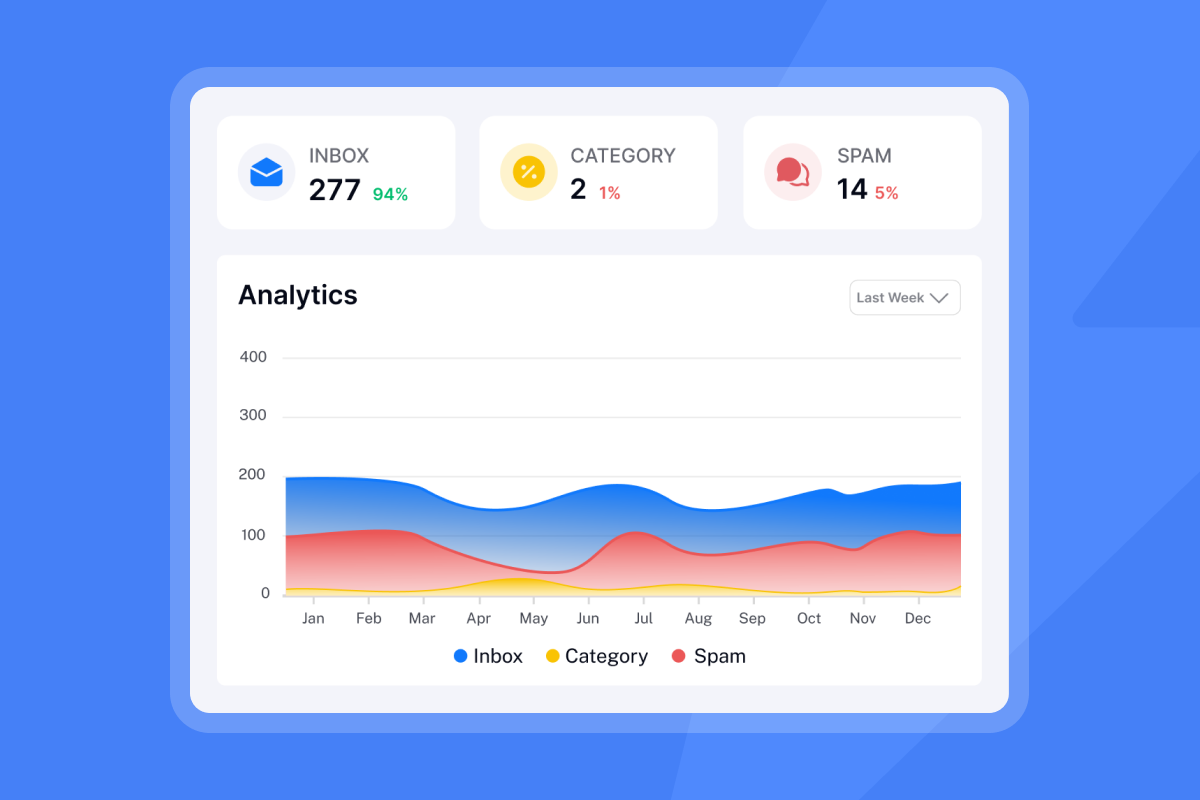
Compliance directly protects deliverability. Mailbox providers now prioritize user consent and sender safety above everything else. Bounces, spam trap hits, unsubscribe signals, and missing authentication records are all tracked over time and collectively shape your sender reputation. When those signals deteriorate, your messages get routed to spam and your pipeline stalls, the same downstream risk covered in Instantly's guide to AI BDR data sources.
Manual compliance checks and opt-out management consume hours every week across your team, especially once you're running email outreach for enterprise accounts at scale. Automating those controls through Instantly's ai agents removes friction for reps while protecting domain health.
Instantly's 2026 Cold Email Benchmark Report (covering Jan 1 to Dec 18, 2025) makes the performance case clearly: the platform average reply rate is 3.43%, top-quartile senders reach 5.5%+, and the top 10% hit 10.7%+. Consistent, stable sending patterns produce 15 to 20 percent higher replies. Consistency requires compliant infrastructure. Compliance-first outreach does not limit performance, it sustains it.
Ensuring GDPR compliance in outreach
The lawful basis for B2B cold outreach under GDPR is typically legitimate interest under Article 6(1)(f). You do not need prior consent to contact a business professional, but three conditions must be met: your message must be relevant to their professional role, you must be transparent about where you sourced their data, and you must provide a clear, immediate way to opt out.
Every outbound campaign targeting EU prospects requires a documented Legitimate Interest Assessment (LIA). That assessment runs through three steps: confirm you have a genuine business interest, verify the contact is relevant to that interest, and confirm the contact's rights do not override yours. Skipping this step is one of the common AI BDR mistakes sales teams make when scaling AI outreach.
AI BDR platforms must also handle the right to object. When a prospect objects to processing, the vendor's system must blocklist that contact workspace-wide, not just remove them from one campaign.
Enterprise GDPR and audit readiness
Article 30 of the GDPR requires organizations to maintain a Record of Processing Activities (ROPA). For enterprise buyers, this means your AI BDR vendor's data practices must be documentable and defensible during a regulatory audit.
At minimum, maintain a signed DPA with your vendor and a current sub-processor list, as these are the core Article 28 documentation requirements. Beyond that, keeping LIA records per campaign segment and logs of unsubscribe and deletion requests strengthens your position if a data protection authority requests evidence of compliant processing. Verify that your vendor can export these records in a format your legal team can file and maintain before you sign anything.
Protecting sender identity and trust
Domain blacklisting is one of the most severe outcomes of non-compliant outreach, and it can happen within a single sending day if volume is mismanaged on shared IP infrastructure. When your sending IP is flagged, every domain attached to it is affected regardless of which campaign caused the issue.
Instantly addresses this at the infrastructure level with SISR, available on the Light Speed plan at $358/month ($286.30/month annually). SISR provides dedicated, isolated IP pools for your outreach, separating your sender identity entirely from other users on the platform. This is a material difference from shared IP environments, where one bad actor's spam complaints affect every sender on the same pool. Instantly's rotating IPs and sending algorithms protect deliverability at scale by isolating sender reputation.
Feature | Shared IP Platforms | Instantly SISR (Light Speed) |
|---|---|---|
IP isolation | Shared pool with all users | Dedicated, isolated IP pools |
Reputation risk | One bad actor affects everyone | Your reputation is protected |
Blacklist impact | Platform-wide exposure | Isolated to your sending only |
Pricing | Often per-seat or tiered | $358/month flat ($286.30 annual) |
Essential GDPR safeguards for sales teams
Build GDPR safeguards into your AI BDR workflow around four core principles grounded in GDPR obligations: data minimization, fairness, transparency, and security.
Data minimization means collecting only the data fields needed for outreach. GDPR Article 9 imposes stricter processing conditions on special category data, including health, biometric, and political data. These categories require explicit consent or another Article 9 condition to process lawfully, making them unsuitable for standard B2B cold outreach workflows. For each contact list, verify the data source and confirm that the collection method and legal basis are documented, so you can demonstrate compliance if a data subject or regulator asks where the data came from. As a best practice, being upfront about your outreach purpose in the message body reduces friction and signals good faith to both prospects and mailbox providers. Security ensures data is encrypted in transit and at rest, hosted in a declared region, and covered by a signed DPA.
Standardizing AI outreach compliance
The fastest way to create a compliance incident is to let individual reps control their own sending volume and data handling. Standardize everything through your AI BDR platform's admin controls.
Sending volume is the clearest risk. Warm for 30 days. Ramp daily sends from 5 to 15 to 30 per inbox. Keep bounces at or below 1%. If health dips, pause and run the hygiene checklist before resuming. Apply sequence governance through templates and admin-locked settings so reps select from pre-approved sequences rather than building their own from scratch.
Automating user privacy requests
Manual opt-out handling at scale is unreliable. A rep who delays an opt-out creates a compliance liability the moment that contact files a complaint with a data protection authority. Automation removes the human variable entirely.
Instantly's AI Blocklist Triggers automatically blocklist leads workspace-wide based on unsubscribe status, account status, or keyword matches in replies. Once a contact is added to the blocklist, they are excluded from all campaigns across the entire workspace immediately. This feature is available on Hypergrowth and above.
Mandatory DPA clauses for AI vendors
Use the vendor's Data Processing Agreement as your primary legal instrument for GDPR compliance. Before signing any AI BDR contract, verify these clauses are present and specific.
Clause | What to verify |
|---|---|
Instruction-only processing | Vendor processes data only on your documented instructions |
Confidentiality | Staff bound by confidentiality obligations |
Security measures | Specific measures named, not just referenced |
Sub-processor disclosure | Full list with processing locations provided |
Audit rights | You can request compliance evidence once per year, under NDA, and without technical testing unless separately approved |
Breach notification | Vendor notifies you without undue delay (no specific 72-hour deadline named in Instantly's DPA) |
Deletion obligations | Data deleted or returned at contract end with timeline |
Data subject rights | Vendor assists with access, deletion, and portability requests |
Instantly's public DPA, operated by Foo Monk LLC, covers six of these eight areas directly: instruction-only processing, confidentiality, named security measures, sub-processor disclosure, deletion obligations (30 days), and data subject request assistance. Two areas carry restrictions worth noting: audit rights are limited to once per year under NDA with no technical testing unless separately approved, and breach notification commits to "without undue delay" rather than a named 72-hour deadline. The sub-processor list includes AWS (USA) and is updated with a change notification process.
Securing global AI data flows
The EU-US Data Privacy Framework, adopted by the European Commission in July 2023, provides a legal mechanism for EU-US data transfers to certified US companies. Verify that any US-based AI BDR vendor either participates in the DPF or uses Standard Contractual Clauses (SCCs) in their DPA.
For Instantly, data is hosted on AWS in the USA, as declared in the sub-processor list. EU enterprise buyers should confirm SCC coverage in the DPA countersignature process.

Essential US privacy rules for sales automation
The California Consumer Privacy Act and its 2023 amendments under CPRA apply to businesses that collect personal information from California residents above certain thresholds. For enterprise sales teams, any B2B contact who is a California resident falls under these rules.
CCPA gives contacts the right to know what data you hold, the right to delete it, the right to correct it, and the right to opt out of the sale or sharing of their data. When a prospect submits a right to know request, you must confirm receipt within 10 business days and provide a substantive response within 45 calendar days. That 45-day clock starts from the date the request arrives, not the date it is assigned internally.
For AI BDR workflows, this means your platform must be able to export every data field held on a specific contact: name, email, company, enrichment data, engagement history, and reply classification tags for lead qualification. Build a documented runbook for these requests before you go live. Assign a named owner, define the retrieval steps in your platform, and set an internal SLA shorter than 45 days.
A deletion request under CCPA or GDPR requires more than removing a row from one database. It requires a full purge across every system holding that contact's data, including the lead database, CRM, campaign sequences, warmup pool, and enrichment logs. Your vendor's DPA should specify exactly how they process deletion requests and within what timeframe. Test this during your proof of concept, not after you go live.
Use this vendor privacy disclosure checklist to evaluate any AI Sales Agent Software vendor:
- Public privacy policy names specific data categories collected
- DPA and sub-processor list with hosting regions are public
- Deletion request SLA is stated in writing
- Opt-out mechanism works workspace-wide, not per-campaign
- Vendor does not use customer CRM data to train AI models
CAN-SPAM Act compliance for AI-generated outreach
The CAN-SPAM Act applies to all commercial email sent to US recipients, including B2B cold outreach. It does not require prior consent, but it sets firm requirements for message headers, sender identification, opt-out processing, and physical address disclosure. CAN-SPAM applies to all commercial email based on content and purpose, not how the message was generated. That means AI-written copy sent under your domain carries the same compliance obligations as any other commercial email.
Mandatory email header data points
The CAN-SPAM Act requires that the "From," "To," "Reply-To," and routing information in every email accurately identifies the sender. Header information is materially misleading if it prevents a recipient, ISP, or enforcement agency from identifying who sent the message.
SPF and DKIM verify that your domain is the legitimate source of each email. DMARC goes further: it is the only protocol that tells mailbox providers what to do with messages that fail authentication, and it generates reports so you can monitor failures. None of these are CAN-SPAM requirements. They are mailbox provider requirements. As of 2026, Google, Yahoo, and Microsoft require authentication for all bulk senders. Instantly's help documentation covers SPF, DMARC, and DKIM setup step by step.
Verifying one-click unsubscribe logic
CAN-SPAM requires every commercial email to include a clear, functional opt-out mechanism that remains active for at least 30 days. Opt-out requests must be honored within 10 business days.
Instantly processes unsubscribe signals automatically. AI Blocklist Triggers detect opt-out indicators in replies and blocklist the contact workspace-wide without manual intervention, removing the 10-business-day risk entirely. For sequences using dedicated unsubscribe links, verify that the link routes to a confirmed opt-out page and that the blocklist update happens in the same session.
Business address disclosure rules
Every commercial email must include a valid physical postal address for the sender: a current street address, a registered post office box, or a registered private mailbox. Missing this field is a standalone CAN-SPAM violation. Build this requirement into your sequence templates as a locked footer variable so reps cannot send a campaign without the address field populating.
Verifying AI content for legal safety
Watch for two legal risks in AI-generated copy: deceptive subject lines and false claims in the message body. CAN-SPAM prohibits subject lines that deceive recipients about the email's content or offer. AI copy that implies a prior relationship that does not exist, or makes claims that cannot be substantiated, creates both regulatory and brand risk.
Instantly's AI Spam Words Checker scans outgoing copy for language patterns that trigger spam filters and flags them before a campaign launches. This is available on the Growth plan ($47/month) and above. Build a review step into your campaign approval workflow where a compliance owner signs off on AI-generated copy before activation.
Essential AI BDR data privacy checkpoints
Before giving any AI BDR platform access to your CRM data, your IT team should verify these controls. Use the table below as a starting framework for your vendor review, alongside a scoring framework for AI BDR platforms.
Checkpoint | What to verify | Where to find it |
|---|---|---|
No AI training on CRM data | Explicit no-training clause in DPA | Section covering data use restrictions |
Dedicated IP isolation | SISR or equivalent named in infrastructure spec | Pricing page or technical documentation |
Verified lead consent | Data provenance docs from vendor | Security or compliance brief |
Workspace-wide opt-out | Automated blocklist with cross-campaign scope | Product demo or help docs |
Breach notification | 72-hour notification timeline named in DPA | DPA breach notification clause |
Secure database hosting requirements
Your AI BDR vendor must store and process your data in a declared, auditable hosting environment. The hosting region must be named in the sub-processor list, and data must not move to an undisclosed region without prior notice.
Most vendor terms, including Instantly's, include a license to use aggregated and anonymized data to improve the service. This is standard in SaaS contracts. What matters is scope. Review whether the clause is limited to de-identified and aggregated data, whether it grants a perpetual and irrevocable license, and whether raw CRM data, individual contact records, or reply content are explicitly excluded from model training use. Ask the vendor directly what data types feed into any AI improvement activities and request a written answer. A vendor who cannot answer this question specifically is a material risk for enterprise deployment and a clear AI BDR vendor warning sign.
For encryption, request these specifications in writing from any vendor: AES-256 for data at rest across all stored data including contact databases, reply logs, and enrichment records, and TLS 1.2 minimum (TLS 1.3 preferred) for all API calls and web traffic. Enterprise buyers should also ask whether customer-managed key options are available. If a vendor cannot provide these specs in writing, treat that as a disqualifying gap.
Data lineage verification
Article 17 of the GDPR gives data subjects the right to erasure. Your AI BDR vendor must be able to delete a specific contact's data from all systems, confirm the deletion in writing, and notify any sub-processors who also hold that data. Test this before signing. Submit a test deletion request for a dummy contact during your proof of concept and document the vendor's response time, confirmation format, and sub-processor notification.
For built-in lead databases, verify how that data was collected. Instantly's SuperSearch database holds 450M+ B2B leads with waterfall enrichment from five or more providers. Request the vendor's data provenance documentation: which primary sources are used, how those sources collect contact information, and whether their terms of use permit B2B prospecting at enterprise scale.
Must-have audit reports for sales stack vetting
Formal audit reports tell you whether a vendor's security controls are designed correctly and work consistently over time. Request these during procurement, not after signing.
Instantly does not publicly claim SOC 2 or ISO 27001 certification as of May 2026. Enterprise buyers can review Instantly's public DPA, sub-processor list, and data category restrictions at instantly.ai/dpa. If a vendor cannot produce any third-party audit evidence, that is a material gap for enterprise deployment.
SOC 2 Type II operational audits
SOC 2 Type II is an attestation report produced by an independent auditor. It covers five Trust Services Criteria: Security, Availability, Processing Integrity, Confidentiality, and Privacy.
The critical distinction from Type I: Type I evaluates whether controls are designed correctly at a single point in time, while Type II evaluates whether those controls operated effectively over a minimum six-month period. For a platform handling your sales data continuously, Type II is the relevant standard. Always ask for the report period, the auditor's name, and any noted exceptions.
Validating vendor ISO 27001 status
ISO 27001 is an international standard for Information Security Management Systems. Unlike SOC 2, which is an audit report, ISO 27001 is a certification granted by an accredited body. It requires the vendor to implement a risk management process and continuously improve their ISMS. Verify certification status through the accredited body's public registry, not through the vendor's marketing page. Certificates have expiry dates and require ongoing surveillance audits for renewal.
Verifying vendor GDPR compliance
Vendor GDPR compliance is not a certification. It is a posture you verify through documentation and process review.
- Signed DPA with all required GDPR clauses (see table above)
- ROPA available upon request
- Named Data Protection Officer or equivalent contact for data subject requests
- Sub-processor list current and updated with change notification process
- Documented process for handling access, deletion, and portability requests
- Breach response runbook with named 72-hour notification process
Managing opt-in records and contact database health
List hygiene and compliance are the same thing viewed from different angles. A clean, verified, opted-in list produces better deliverability and protects your domain from bounces and spam complaints. A non-compliant list produces both legal risk and deliverability damage.
Instantly's 2026 benchmark data shows what disciplined list management produces: a platform average reply rate of 3.43%, with top-quartile senders reaching 5.5%+ and the top 10% reaching 10.7%+. Those results come from consistent, compliant sending, not volume spikes, the same pattern our AI sales agent benchmarks report confirms across enterprise deployments.
Validating consent for imported leads: Before importing any list, identify the data source and review the source's terms to confirm B2B prospecting is a permitted use. Cross-reference the import list against your existing blocklist, complete a Legitimate Interest Assessment for EU contacts, and run the list through an email verification service before loading into sequences. Target a verified-valid rate above 90% to keep bounces below 1%.
Managing opt-outs for AI compliance: As reply volume scales, manual opt-out management breaks down. Instantly's Unibox centralizes all incoming replies, and AI Custom Reply Labels automatically classify replies using natural language processing across 50+ languages. This catches opt-out language in non-English replies that a manual review process would likely miss. Combined with AI Blocklist Triggers, the workflow from "opt-out reply received" to "contact blocklisted across all campaigns" is fully automated.
Managing bounce and spam feedback: Hard bounces mean the address does not exist. Spam complaints mean recipients are actively flagging your messages as unwanted. Both signal to mailbox providers that your sending practices are unreliable. The Deliverability AI Agent, available on Hypergrowth ($97/month) and above, runs every 24 hours and monitors DNS health, blocklist status, warmup scores, bounce rates, and provider balance automatically. When it detects a risk, it surfaces what is affected, why it matters, and what to fix first, with direct in-platform actions including pausing campaigns, replacing risky accounts, and rebalancing providers. For a broader view of how Instantly approaches inbox placement end to end, the inbox placement product page walks through the full toolset.
Tracking consent for AI BDR audits: Store campaign-level LIA records with the date completed, the target segment, and the business interest rationale. Log opt-out requests with timestamps from the moment the request was received, along with confirmation that the workspace blocklist was updated. Include data import logs recording the source, date, and consent validation step for each list uploaded, plus DPA countersignature details and deletion confirmations from the vendor. Retain these records for a minimum of three years.
Vetting AI BDR vendors: common compliance questions
Enterprise buyers consistently ask the same questions when choosing an AI BDR tool. Here are the answers that matter, the same questions our best AI sales agents for enterprise guide walks enterprise buyers through, along with what to do when a vendor's answer is incomplete.
What certifications should I request? SOC 2 Type II and ISO 27001 carry the most weight. SOC 2 Type II proves controls worked over an extended period. ISO 27001 proves a formal, continuously improving ISMS is in place. When a vendor does not publicly display these, request the reports under a mutual NDA. A vendor who offers a summary report and the name of the auditing firm is showing a reasonable level of transparency.
How do I audit data consent trails? Ask the vendor for their data sourcing documentation, specifically which primary data providers they use. Review each provider's terms to confirm B2B outreach is a permitted use. Ask whether the vendor conducts compliance audits of their sub-processors, and request evidence if they claim to. Ask whether the vendor's data providers document their collection methods and legal basis for EU contacts. Finally, test a sample of contacts by verifying that data fields match reality. High inaccuracy rates signal poor sourcing.
What breach notification protocol should I require? Under GDPR Article 33(1), you as the controller must notify the supervisory authority within 72 hours of becoming aware of a breach. Under Article 33(2), your vendor as the processor must notify you "without undue delay." There is no specific statutory deadline for that processor-to-controller step, which is why the contractual language in your DPA matters. Verify the 72-hour timeline is named in the DPA, not just referenced generally. Confirm the vendor has a named security contact or incident response team, that you will be notified even if the breach affects your data through a sub-processor, and that the notification format covers the nature of the breach, categories of data affected, and steps taken.
What internal controls should I verify before deployment?
Technical controls (IT lead):
- SPF, DKIM, and DMARC are configured on all sending domains
- Sending volume is capped at 30 emails per inbox per day, with a documented ramp plan from 5 to 15 to 30 during the 30-day warmup period
- IP isolation is evaluated (shared pool versus dedicated pool)
- CRM integration is scoped to minimum necessary data fields only
Process controls (RevOps lead):
- Sequence templates are locked and admin-approved before rep access
- Opt-out mechanism is tested end-to-end and propagates workspace-wide
- LIA documentation is complete for all active campaign segments
- Runbook for data subject access and deletion requests is written and assigned
Vendor controls (compliance lead):
- DPA is countersigned and filed
- Sub-processor list is current and archived
- Breach notification contact is identified and recorded
- Audit trail export capability is confirmed by vendor in writing
Start building compliant outreach infrastructure
Compliance and deliverability risk come from the same sources. Verified consent, workspace-wide opt-out automation, and continuous DNS monitoring address the compliance and infrastructure risk signals that mailbox providers factor into routing decisions. Every control in this guide is an operational feature you can deploy in your first week, not a theoretical framework to work toward later.
Start your 14-day free trial with no credit card required. The trial includes 250 uploaded contacts and 1,000 emails so you can test warmup, sending limits, and the Deliverability AI Agent with real data.
FAQs
Is cold email GDPR compliant?
Yes, cold email is GDPR compliant if you have a documented legitimate interest, target business email addresses with offers relevant to the recipient's professional role, and provide an immediate, clear way to opt out. You must also tell recipients how you sourced their data.
Does Instantly have SOC 2 Type II certification?
Instantly does not publicly claim SOC 2 or ISO certification as of May 2026. Enterprise buyers can review the public DPA, sub-processor list, and data category restrictions at instantly.ai/dpa.
What is a safe sending volume per inbox?
Cap sending at 30 emails per inbox per day. Ramp new domains gradually: start at 5, move to 15, then to 30 over your 30-day warmup period. Keep bounces at or below 1%. Jumping to high volumes before warmup is complete is one of the most common causes of deliverability damage.
What is a Legitimate Interest Assessment?
A Legitimate Interest Assessment is a documented three-part test under GDPR Article 6(1)(f) showing you have a genuine business interest in contacting a prospect, the contact is relevant to that interest, and their rights do not override yours. It must be completed and filed per campaign segment before outreach to EU contacts begins.
What is SISR and why does it matter for compliance?
SISR is a technical infrastructure feature on Instantly's Light Speed plan that provides dedicated, isolated IP pools. It protects your sender identity from other users on the platform, reducing the risk that another sender's compliance failures affect your domain reputation.
Key terms glossary
SISR (Server and IP Sharding and Rotation): A technical infrastructure feature on Instantly's Light Speed plan that uses dedicated, isolated IP pools to protect sender identity and deliverability. Available at $358/month ($286.30/month annually).
Deliverability AI Agent: An automated monitoring tool in Instantly that checks DNS health, blocklists, warmup scores, bounce rates, and provider balance every 24 hours, surfacing what to fix and triggering direct in-platform remediation actions.
AI Blocklist Triggers: An automation feature that automatically blocklists leads workspace-wide based on unsubscribe status, account status, or specific keyword matches in replies.
Legitimate Interest Assessment (LIA): A documented three-part test under GDPR Article 6(1)(f) showing you have a genuine business interest in contacting a prospect, the contact is relevant to that interest, and their rights do not override yours. Required per campaign segment before outreach to EU contacts begins.
Record of Processing Activities (ROPA): Documentation required under GDPR Article 30 that records how an organization processes personal data. Enterprise buyers must ensure their AI BDR vendor's data practices can be documented in ROPA format for regulatory audits.
Data Processing Agreement (DPA): A legal contract between a data controller and data processor that defines how personal data will be handled. Required under GDPR and typically covers instruction-only processing, confidentiality, security measures, sub-processor disclosure, audit rights, breach notification, deletion obligations, and data subject rights assistance.
Standard Contractual Clauses (SCCs): Legal mechanisms approved by the European Commission for transferring personal data from the EU to countries without adequate data protection laws. Used as an alternative or supplement to the EU-US Data Privacy Framework for compliant international data transfers.
Read next
- Reminder email compliance: GDPR, CAN-SPAM and CASL guide: Covers the specific opt-out, sender identification, and consent documentation rules each regulation requires for commercial email.
- How to use secondary domains for cold email safety: Explains how to protect your primary sending domain by routing cold outreach through separate, purpose-built domains.
- Best AI sales agent tools and platforms in 2026: Reviews the leading AI sales agent platforms, comparing features, pricing, and use cases for B2B sales teams.



