.svg)
%20(1).svg)


Updated August 3, 2026
TL;DR: Instantly.ai and Artisan automate outbound sales from opposite directions. Instantly provides the deliverability infrastructure (unlimited accounts, automated warmup, SISR) your team needs to land in the primary inbox and scale safely, with flat-fee pricing from $47/month and full send-level auditability. Artisan offers an autonomous AI agent (Ava) that removes manual effort but does not publish list pricing for most tiers and requires a demo call for exact figures, and lacks the granular, publicly documented infrastructure controls that sales leaders depend on for independent audit. For teams who need predictable costs, inbox placement, and governance, Instantly is the stronger operational choice.
The hardest part of outbound sales in 2026 is not writing the email. It is making sure the email lands in the primary inbox. This Instantly vs Artisan comparison, part of our broader look at the best AI SDR tools for B2B outbound, evaluates both platforms on what actually moves pipeline for a sales leader: deliverability systems, data verification, admin controls, and true cost of ownership.
An AI agent sending from an unhealthy domain still lands in spam. That is where infrastructure separates the two platforms. Keep that in mind when you assess Instantly's AI BDR platform or any alternative.
Core platform differences: Instantly vs Artisan
Instantly and Artisan approach outbound from opposite directions. Instantly's model is infrastructure-first: it gives teams unlimited sending accounts, automated warmup, and layered deliverability protection, then layers Instantly's AI SDR agent on top of that foundation. Artisan's model is agent-first, with its AI agent (Ava) handling sourcing, writing, and sending with minimal human input.
For a sales leader accountable for pipeline health, the infrastructure gap matters more than the AI framing. Focus on pricing transparency, deliverability controls, and contract flexibility when you compare the two models or any of the best AI BDR solutions.
Decision framework
Pillar | Instantly | Artisan |
|---|---|---|
Primary focus | Deliverability infrastructure + AI agents | Autonomous AI agent (Ava) |
Pricing model | Flat-fee, public, from $47/mo | Variable, opaque, requires demo call |
Email accounts | Unlimited on all plans | Varies by plan |
Deliverability controls | Basic warmup documented | |
Warmup network | 4.2M+ real email accounts | Not publicly documented |
CRM integration | Native HubSpot, bidirectional | HubSpot and Salesforce |
Contract terms | Monthly, self-serve cancellation | Annual commitment. Exact terms require demo |
AI oversight modes | HITL available on AI Reply Agent and AI Sales Agent | Autonomous by default |
Platform reliability and auditability
Instantly publishes a real-time status page showing component-level uptime for Landing Page, App, Email Sender, Unibox, Warmup Sender, Campaign Analytics, and Warmup Analytics. Instantly logs every automated action, from AI reply drafts to blocklist updates, and makes them auditable inside the platform. That matters when a CFO asks why pipeline numbers shifted.
Artisan's autonomous model prioritizes minimal intervention by default, though approval gates can be enabled at individual stages for teams that want more oversight. For teams running compliance reviews or reconciling outreach metrics with CRM data, whether those approval gates extend to full audit-trail logging at the platform level is not documented in publicly accessible sources reviewed for this comparison.
Evaluating Artisan for sales teams
Artisan's core strength is reducing manual SDR work. Ava sources prospects, writes personalized emails, and handles follow-ups without requiring a rep to manage each step. For teams with large budgets and a preference for hands-off execution, that appeal is real, though reviewing other Artisan alternatives for AI SDR teams is worth doing before signing an annual contract.
The practical challenges surface during implementation. While Artisan's website documents basic warmup and dynamic send limits, granular deliverability infrastructure details, including warmup pool size, health score thresholds, and IP-level rotation mechanics, were not available through publicly accessible documentation reviewed for this comparison, which limits a sales leader's ability to independently audit deliverability performance. The absence of granular infrastructure documentation makes it difficult to diagnose deliverability problems when they occur.
Core AI SDR features compared
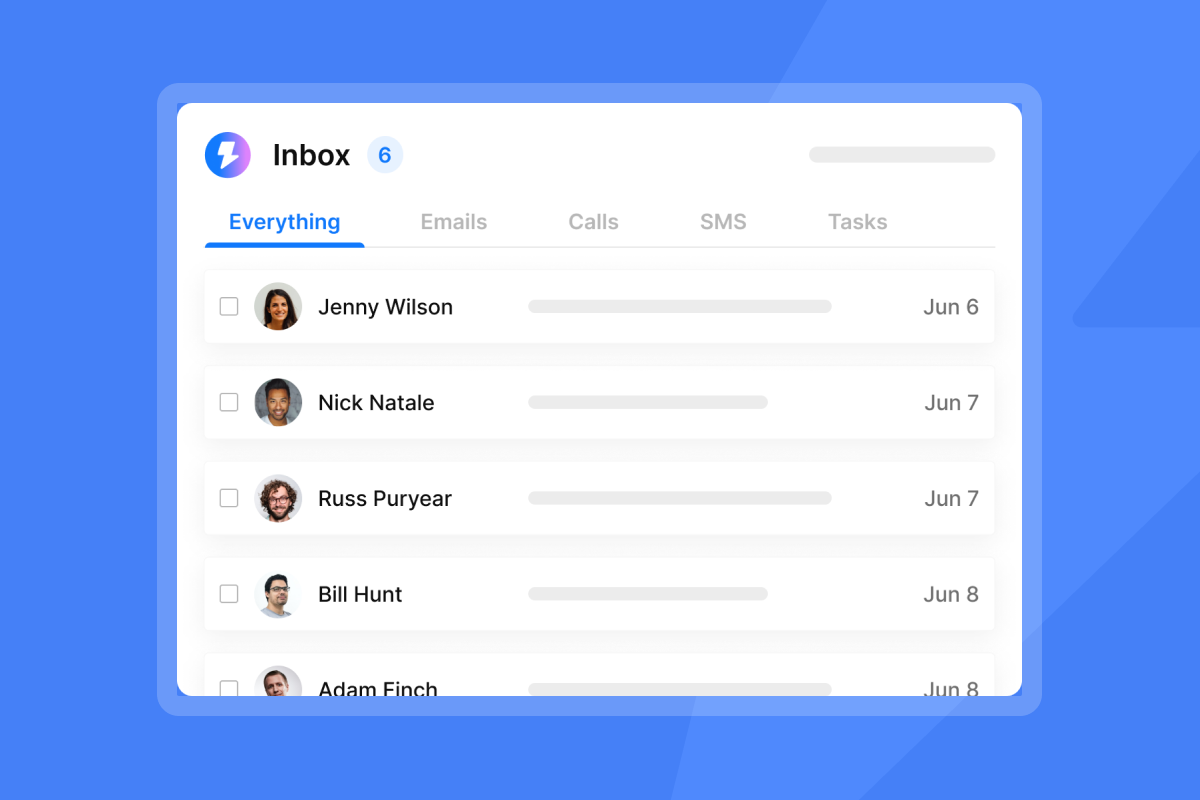
Both platforms use AI to reduce manual outreach work, but the control model differs in important ways, as a broader Artisan vs AI SDR tools comparison shows.
How Instantly personalizes outreach
Instantly has three personalization tools built into the Sequence Editor:
- Spintax: Generates per-lead email variation using
{{RANDOM | option1 | option2}}syntax and Liquid-style conditionals. - AI Spintax Writer: Auto-generates variants from existing copy inside the editor.
- AI Sequence Writer: Builds a full multi-step sequence from a simple offer and audience input, capped at 100 generations per workspace per month.
Every variation is visible and editable before it goes out. Sales leaders can review, approve, or adjust messaging at the template level before any rep or automation sends it.
Artisan's Ava sources prospects from a database of 250 million verified B2B contacts and 130 million local businesses, with waterfall email and phone enrichment across 22+ data sources including enrichment layers for tech stack, funding data, and podcast appearances. Where Artisan's enrichment is bundled into Ava's autonomous workflow, Instantly's SuperSearch exposes the same enrichment steps directly to the operator: each provider in the waterfall is visible, the credit cost per result is documented, and the output is editable before any email goes out. That transparency is what makes it possible to diagnose a bounce rate spike and trace it back to a specific data source, targeting filter, or send volume decision.
Instantly's SuperSearch database covers 450M+ B2B contacts with waterfall enrichment across 5+ providers including BetterContact, ContactOut, Findymail, IcyPeas, LeadMagic, Prospeo, and Wiza. The Signals filter adds buyer-intent data across competitive signals and growth events, with approximately 5.8 million new signals added per week.
Managing reply intent and routing
Instantly handles incoming replies with three connected systems:
- Unibox NLP auto-classifies replies across 50+ languages into interest labels (Interested, Not interested, Out of Office) without manual tagging. Custom label selection is available on Hypergrowth and Light Speed.
- Out-of-Office Resume (AI Smart Pause) detects OOO auto-replies, extracts the stated return date, pauses the lead's sequence, and auto-resumes sending on that date at no extra cost on all plans.
- AI Reply Agent drafts replies in under five minutes using Human-in-the-Loop or Autopilot mode. In Human-in-the-Loop mode, the agent drafts the response and waits for your approval before sending. Each generated reply costs five Instantly Credits.
Instantly's visual Automations connect outreach events directly to CRM workflows. A reply classified as "Interested" can automatically create a HubSpot contact, add a task, and notify the AE in Slack, all within a single workflow that RevOps configures once and the team runs consistently. Artisan's agent-defined workflow is less configurable by design, limiting the custom branching that RevOps leads typically need to match existing CRM and handoff logic.

Ensuring primary inbox placement
Deliverability is a system, not a one-time configuration step. Every element, from warmup to IP rotation to bounce protection, compounds over time.
Instantly's automated warmup mechanics
Instantly includes warmup on all Outreach plans at no extra cost, covering every connected account in the workspace. Warmup runs on a shared pool of 4.2M+ real email accounts that exchange messages to build sender trust with mailbox providers. Before an account can join an active campaign, it must complete a minimum two-week warmup period and reach a health score above 90%, measured as the percentage of warmup emails landing in the inbox over the trailing seven days.
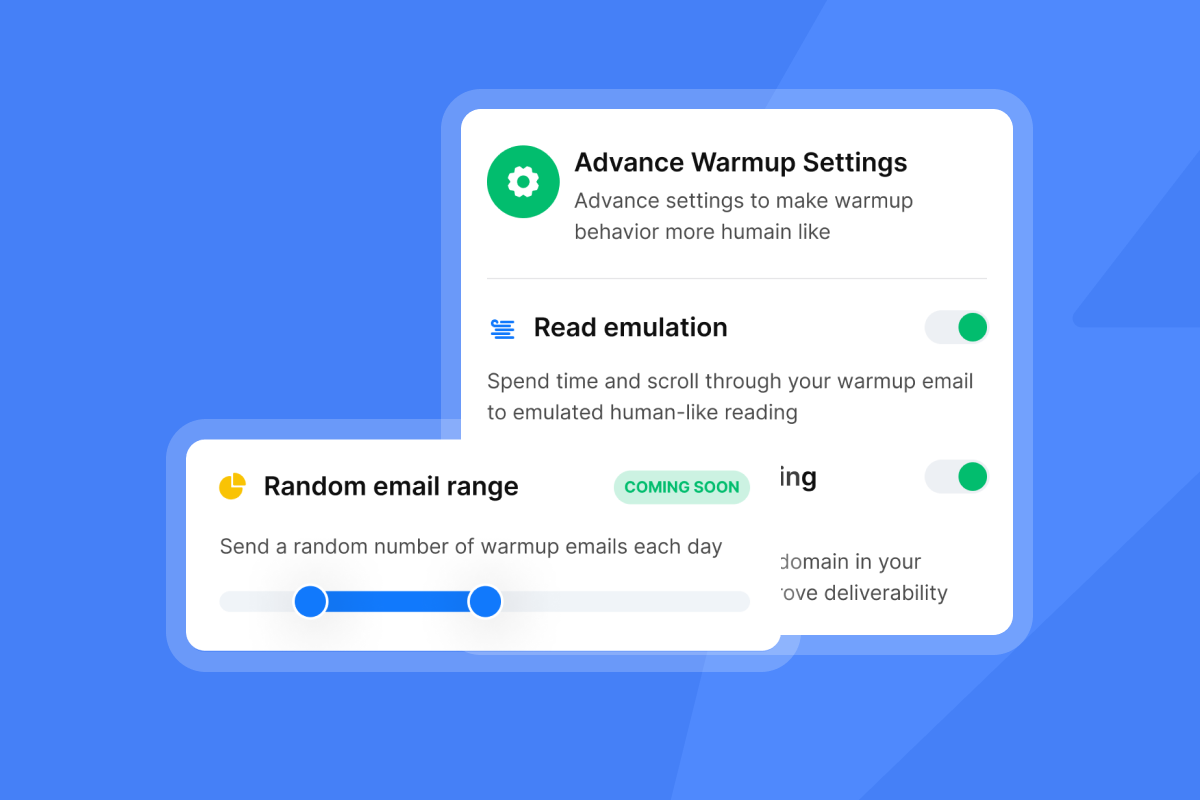
Advanced warmup settings on all Outreach plans include weekday-only sending, read emulation, and open/reply rate emulation, all of which mimic human behavior and reduce the chance an ESP identifies the account as synthetic.
Preventing domain blacklists at scale
The Deliverability AI Agent (available on Hypergrowth and above) runs every 24 hours and monitors DNS health, blocklists, warmup scores, bounce rates, provider balance, and campaign copy. When it finds a problem, it surfaces the affected component, explains why it matters, and offers one-click fixes including pausing campaigns, replacing risky accounts, and rebalancing sending providers.
Instantly built BounceShield to automatically skip known high-risk recipients before any email is sent. The high-bounce auto-pause feature pauses campaigns once the bounce rate exceeds 5% (default, after a minimum 200 sends), then applies a seven-day exemption from re-triggering after a resume.
How platforms impact inbox placement
Instantly's Light Speed plan adds SISR (Server and IP Sharding and Rotation), which assigns private server clusters and dedicated IP pools to eligible workspaces. If one IP shard gets flagged, the remaining shards stay clean and rotation happens automatically. This is the primary deliverability mechanism for teams sending at high volume across multiple clients or product lines.
Custom Tracking Domains replace shared Instantly tracking URLs with the sender's own domain, isolating sender reputation at the domain level and preventing reputation cross-contamination between campaigns.
Scaling outreach with centralized control
Reps sending from unhealthy domains, using unapproved copy, or ignoring bounce alerts can damage shared sending infrastructure for the entire team. Instantly's admin layer is designed to address each of these failure modes directly.
Configuring Instantly team environments
Instantly designed workspaces to let sales leaders assign reps to specific domains, campaigns, and lead segments without risking cross-contamination of sender reputation. Shared templates and sequence governance rules keep copy and volume within approved guardrails across every rep in the workspace.
The Global Blocklist operates workspace-wide and blocks entire domains or individual addresses from being imported or contacted. It supports manual entry, CSV upload up to 5MB, or live Google Sheets sync, making it practical to maintain without requiring manual audits for every campaign.
Artisan's role-based access controls are not publicly documented at this granularity. Because Ava operates autonomously, the platform prioritizes execution over oversight, which limits a sales leader's ability to enforce standards at the individual rep or campaign level.
Automated warmup and send throttling
AI Blocklist Triggers automatically add leads to the global blocklist based on unsubscribe status, account status, or reply-content keyword matches. Once configured, the rules apply workspace-wide and require no rep action (status-based and keyword rules available on Hypergrowth and above).
Instantly caps campaign volume at 30 emails per account per day, combined with 10 warmup emails, to protect sender reputation. Inbox Rotation distributes volume automatically across all accounts assigned to a campaign, so scaling throughput means adding more accounts rather than pushing individual accounts beyond safe limits.
Governance rules for email consistency
Advanced warmup options give admins control over weekday-only scheduling, read and reply rate emulation, and open rate targets. These settings mirror human behavior patterns that email service providers recognize as legitimate, which reduces the chance of a new account triggering algorithmic filters before it reaches full campaign capacity.
How Instantly and Artisan verify prospect data
Hard bounce rates above 2% put sender reputation at risk, and Instantly's high-bounce auto-pause kicks in at 5% (after a minimum 200 sends) to stop further damage automatically. Verification before the first send is non-negotiable.
Managing Instantly's email deliverability
Lead verification in Instantly costs 0.25 credits per contact for imported CSV lists and classifies each address as valid, invalid, or risky before any campaign runs. Contacts sourced through SuperSearch arrive pre-verified, so no additional verification credits are required for database-sourced leads.
Keeping bounce rates consistently below 2% is one of the factors that separates top-quartile senders from the platform average. According to Instantly's 2026 benchmark report, the platform average reply rate is 3.43%, while top-quartile senders reach 5.5%+ and the top 10% reach 10.7%+.
Data verification and consent protocols
Artisan automates prospect qualification through Ava. Teams migrating from Artisan to Instantly typically re-verify inherited lists before importing them, because bounce rate history does not transfer between platforms.
Instantly's DPA (operated by Foo Monk LLC) defines prohibited data categories including PHI and payment card data. Its sub-processor list is transparently maintained, with AWS USA as the primary infrastructure provider, and the self-service privacy opt-out page covers opt-out rights under CCPA, GDPR, UK GDPR, and Swiss data protection law.
For CAN-SPAM compliance, List-Unsubscribe header support and per-campaign unsubscribe link insertion are built in at no extra cost.
Mapping SDR output to CRM dashboards
Metrics that cannot be reconciled with CRM data are liabilities. Instantly built its reporting to tie outbound activity to pipeline outcomes without requiring manual data reconciliation.
Instantly's reporting for sales leaders
Instantly's account analytics include the "Combined Score" metric, which weights open and reply rates to give a single health indicator per sending account. The scoring becomes meaningful after 100+ contacts. Managers can track opens, replies, and lead status changes at the campaign, account, and workspace level.
"The ROI feels clear and predictable, and the pricing is transparent." - Lia-Maria V. on G2
Autonomous platforms that operate as black boxes create a specific risk: the metrics they report may not reconcile cleanly with CRM pipeline data. When an AI agent classifies a reply as "meeting booked" and your CRM shows no corresponding deal, you have a reporting integrity problem that is difficult to trace without full audit logs. Instantly's logged-action model means every classification, every reply, and every automated workflow step is auditable against the CRM record.
Mapping leads and CRM sync logic
The HubSpot integration in Automations enables bidirectional sync: HubSpot contact and deal changes can trigger Instantly actions, and Instantly campaign completions and reply events can trigger HubSpot contact creation, task assignment, and note logging.
Instantly's CRM module (Growth CRM at $47/month, Hyper CRM at $97/month) manages opportunities, pipelines, tasks, and follow-ups inside the platform. Calendly's integration supports No-Show Recovery, automatically re-engaging leads who miss a booked meeting and logging the follow-up action against the lead record, keeping the chain from first outbound touch to CRM opportunity clean without manual data entry.
Unpacking the true cost of AI SDR ownership
Per-seat pricing, opaque contracts, and annual lock-ins are the most common sources of buyer regret in this category.
Instantly's tiered billing breakdown
All Outreach plans include unlimited email accounts and automated warmup. Instantly Credits (for SuperSearch and AI agents) are a separate subscription, starting at $9/month for 150 credits.
Total cost of ownership comparison
Stack | Instantly | Artisan |
|---|---|---|
Entry-level monthly | $47 (Outreach Growth) | Not publicly listed. Requires demo call |
Starter stack | ~$141/mo (Outreach + Credits + CRM) | Not publicly listed |
Power sender stack | ~$555/mo (Light Speed + Hyper Credits) | Not publicly listed. Requires demo call |
Contract terms | Monthly, self-serve cancel | Annual commitment |
Per-seat fees | None (unlimited accounts) | Not publicly documented |
Instantly's pricing page shows three Outreach tiers: Growth at $47/month (5,000 emails/month, 1,000 contacts), Hypergrowth at $97/month (125,000 emails/month, 25,000 contacts), and Light Speed at $358/month (500,000 emails/month, 100,000 contacts).
Artisan subscription and billing tiers
Artisan does not publish list pricing for most tiers and requires a demo call for exact figures. That makes total cost comparison difficult without going through the full sales process.
Lock-ins and cancellation policies
Instantly handles cancellations in Settings > Billing, one subscription type at a time, with no requirement to contact support or complete a retention flow. Canceling one plan while keeping others active ends the canceled plan immediately. Artisan's annual structure means a team dissatisfied after month two is still inside contract for the remaining term, which is why negotiating AI BDR contract terms matters.
Calculating ROI on meetings set
Instantly's 2026 benchmark report (data from Jan 1 through Dec 18, 2025) puts the platform average reply rate at 3.43%, with top-quartile senders reaching 5.5%+ and the top 10% at 10.7%+. Consistent sending patterns produce 15 to 20% higher reply rates compared to irregular volume.
Using the platform average: a team sending 10,000 verified emails per month can expect roughly 343 replies. At a 10% meeting conversion on replies, that is approximately 34 meetings booked per month. With Instantly's publicly listed pricing, you can run this math before signing anything. With Artisan's opaque pricing, the calculation is impossible until after the contract is signed.
Evaluating Artisan: performance vs practical costs
Artisan's theoretical advantage is removing manual SDR work entirely by letting Ava source, write, and send, a tradeoff we break down further in AI SDR vs human SDR: which model wins. For teams with large budgets and a tolerance for a three-month ramp, that model has appeal.
The practical ceiling arrives when volume scales. Distributing high-volume outreach safely across dozens of inboxes is straightforward on Instantly's unlimited-account model and increasingly expensive on any per-seat or per-agent pricing. Adding five new inboxes to distribute volume costs nothing extra on Instantly. On agent-based pricing, each new execution unit is a line item.
Choose Artisan if:
- Your ICP is fully established and your targeting rarely changes.
- You have budget for annual commitments.
- You prefer a managed, hands-off experience where the vendor takes operational ownership.
Choose Instantly if:
- Deliverability control, predictable pricing, and auditable reporting are non-negotiable.
- You are scaling from 3 reps to 10, moving to a new product line, or managing multiple client accounts in parallel.
- You need infrastructure that protects domain reputation and budget simultaneously.
For current workflow patterns Instantly users are applying in 2026, the Outbound with Alex Berman webinar covers automation-assisted sequencing in detail.
Scaling outreach with AI execution
Instantly's Automations gives RevOps leads a visual, node-based tool to build predictable workflows connecting outreach events to CRM and Slack actions. The logic is transparent, testable, and version-controllable. Artisan's internal agent logic is not exposed at this level of configurability, which limits a RevOps lead's ability to modify the workflow to match a new ICP, product line, or handoff process without working through Artisan's support.
Critical implementation questions for buyers
Before committing to either platform, three operational questions determine whether your infrastructure will hold up at scale.
Which platform protects domain reputation
Before running campaigns on either platform, complete these five steps:
- DNS configuration: Set MX, SPF, DKIM, and DMARC records and allow 24 to 48 hours for propagation before enabling warmup.
- Custom Tracking Domain: Configure a CNAME-based CTD to isolate sender reputation from shared tracking infrastructure.
- Health score baseline: Reach 90%+ health score before adding an account to an active campaign.
- Bounce rate target: Keep hard bounces below 2% and verify all imported lists before the first send.
- Volume cap: Do not exceed 30 campaign emails plus 10 warmup emails per account per day.
Instantly's Inbox Placement tests and the Inbox Placement standalone plan (starting at $47/month) let you verify placement across Gmail, Microsoft, and 94 monitored blacklists before a campaign goes live.
Can I switch from Artisan to Instantly?
Migrating from Artisan to Instantly follows four steps:
- Export your lead list from Artisan and run it through Instantly's lead verification (0.25 credits per contact) before importing.
- Connect email accounts via Google Workspace OAuth, Microsoft 365 SMTP plus OAuth, or IMAP/SMTP for other providers.
- Enable warmup on each account and allow a minimum two-week ramp before activating campaigns.
- Set up workspaces to mirror your team structure, configure the Global Blocklist, and establish template governance before reps begin sending.
Comparing team permission structures
Instantly's workspace model lets sales leaders assign reps to specific domains and campaigns, enforce shared template libraries, and prevent direct account-level configuration changes by individual reps. Artisan's autonomous agent model reduces the rep configuration surface area, but also reduces the sales leader's ability to enforce standards, audit sending behavior, or trace a deliverability problem back to its source.
Evaluating agent intelligence for SDRs
Evaluate AI agents by the specific, measurable bottlenecks they solve, the same principle behind our AI BDR platform scoring framework. Instantly's five agents address concrete operational problems:
- Deliverability AI Agent: Monitors DNS, blocklists, and bounce rates every 24 hours on Hypergrowth and above.
- AI Reply Agent: Drafts and sends replies in under five minutes with optional human approval, running on Instantly Credits.
- Out-of-Office Resume: Pauses and resumes leads automatically based on NLP-detected return dates on all plans.
- Lead Finder Agent: Monitors active lead counts against a threshold and tops up fresh leads automatically when the count drops.
- Copilot: Summarizes analytics, runs prospect searches, and builds Automations workflows from natural-language requests.
Ready to test the infrastructure that keeps you in the primary inbox? Start Instantly's 14-day free trial with no credit card required (250 contacts, 1,000 emails included). Run the ramp plan from Instantly's 2026 Cold Email Benchmark Report to establish your baseline, then scale with full confidence.
FAQs
How much does Instantly cost compared to Artisan?
Instantly's Outreach plans start at $47/month with flat-fee, publicly listed pricing and no credit card required for the 14-day trial. Artisan does not publish list pricing for most tiers and requires a demo call for exact figures, making total cost comparison difficult without a full sales conversation.
Does Instantly include unlimited email accounts?
Yes, all Instantly Outreach plans include unlimited email accounts and automated warmup at no extra cost, across Growth ($47/mo), Hypergrowth ($97/mo), and Light Speed ($358/mo) tiers.
What is the recommended daily sending limit per email account?
Do not exceed 30 campaign emails plus 10 warmup emails per account per day, as exceeding this threshold increases the risk of triggering spam filters and degrading sender reputation over time.
How long does warmup take before an account is campaign-ready?
A minimum two-week warmup period is required, and the account must reach a health score above 90% before it is eligible for active campaigns. Pre-warmed accounts purchased through Instantly skip this waiting period.
Key terms glossary
SISR: Server and IP Sharding and Rotation. Available on Instantly's Light Speed plan, SISR assigns dedicated private server clusters and IP pools to eligible workspaces, with automatic rotation if one shard is flagged.
SuperSearch: Instantly's B2B lead database containing 450M+ contacts with waterfall enrichment across 5+ providers and a Signals filter adding approximately 5.8 million new buyer-intent signals per week.
Unibox: Instantly's centralized reply inbox that aggregates replies across all connected sending accounts, with NLP auto-classification across 50+ languages into interest labels.
Deliverability AI Agent: An always-on monitoring system available on Hypergrowth and above that checks DNS health, blocklists, warmup scores, bounce rates, and campaign copy every 24 hours, with one-click remediation actions and Slack alerts.
BounceShield: Instantly's real-time bounce prevention system (also documented as BounceProtect) that automatically skips known high-risk recipients before sending and triggers campaign auto-pause when the bounce rate exceeds 5% after a minimum 200 sends.
Unibox NLP: Instantly's AI reply-classification system that auto-categorizes incoming replies across 50+ languages into interest labels, with custom label selection available on Hypergrowth and Light Speed plans.
Read next
- Outbound sales software pricing: understanding what you're actually paying for: A breakdown of per-seat fees, credit systems, and contract traps so sales leaders can compare total cost before signing anything.
- Automating lead qualification: AI SDR tools that qualify leads: How AI agents filter, score, and route prospects so reps spend time on leads most likely to convert.
- Cold email deliverability with AI SDRs: protecting domain health at scale: A practical guide to warmup, bounce management, and IP rotation for teams scaling AI-assisted outreach without damaging their sending reputation.


