.svg)
%20(1).svg)


Updated July 13, 2026
TL;DR: AI BDR tools are strong administrative engines. They handle lead enrichment, initial sequencing, and basic reply classification efficiently. But they cannot manage multi-thread negotiations, detect nuanced intent shifts in context, or handle compliance in regulated industries. Fully autonomous AI sequences produce less predictable conversion outcomes than hybrid models because the technology lacks the contextual judgment that high-value enterprise deals require. The right approach is a human-in-the-loop system where AI drafts and classifies, humans review and approve, and your deliverability infrastructure keeps domain health intact throughout. Instantly.ai's AI Reply Agent, Unibox, and warmup network give sales teams exactly that operating model.
The core AI BDR limitations, shared across the top AI BDR tools and platforms, have nothing to do with writing quality or data access. They show up in context, judgment, and the specific moments in a B2B deal cycle where automation becomes a liability. Fully automated AI outreach sequences run without human review produce less predictable conversion outcomes than hybrid human-AI workflows because the technology cannot manage multi-thread negotiations, interpret subtle buying signals precisely, or satisfy compliance requirements in regulated industries. This guide maps the specific failure points in AI BDR, one of the most widely deployed types of ai agents, and provides a practical blueprint for building a human-in-the-loop escalation system that protects your domain health and pipeline quality.
Critical failure points in AI BDR tools
An AI sales agent handles the bulk of the administrative grind in prospecting: enrichment, initial routing, draft generation, and sequence scheduling. But that administrative work is not where deals close, a distinction covered in full in Instantly's complete guide to what an AI BDR is. High-value enterprise deals close in the moments that require strategic reading of a situation, political awareness, and adaptive communication. Autonomous AI running without oversight consistently fails in those moments, and the damage is disproportionate to the volume of interactions involved.
Distinguishing automated patterns from intent
AI classifies replies based on surface-level language patterns. That works reliably for clear signals: "Yes, let's book a call" or "Remove me from your list." It breaks down when replies contain mixed signals, conditional interest, or ambiguous phrasing.
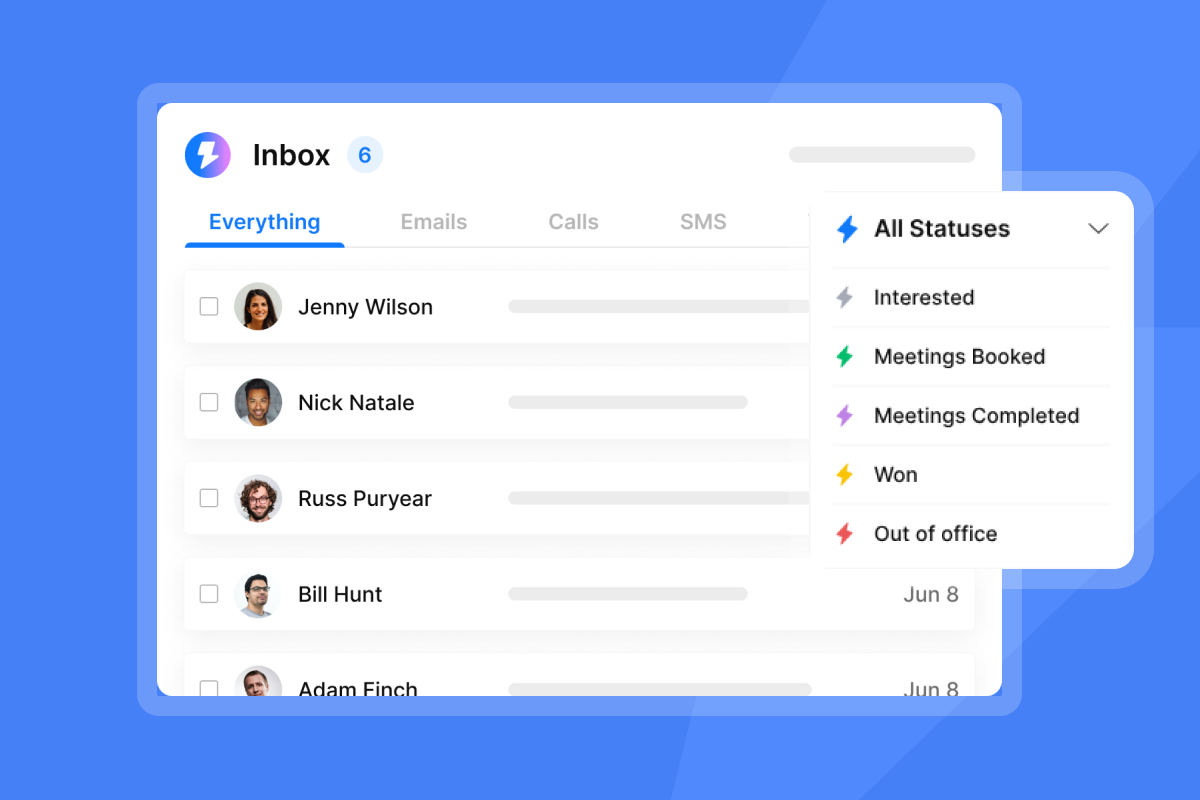
An out-of-office message that says "Back on the 15th, this looks interesting" contains both an absence signal and a positive intent signal. Without AI Smart Pause configuration, an autonomous system continues sending follow-ups into a void, burning send credits and annoying the prospect on their return. Even with smart pause rules in place, nuanced mixed replies require a human read.
The consequence of misclassification is not just a missed opportunity. It is an automated follow-up sent to someone who already expressed conditional interest, which signals inattention and erodes trust with a high-value prospect.
Managing long-term conversation history
LLMs operate within a fixed context window. In multi-week email threads, when the conversation history exceeds that window, older messages are dropped. The model continues generating responses without access to commitments, objections, or specific requirements raised earlier in the exchange.
This produces real failures: repetitive qualification questions already answered, contradictory statements about pricing or timelines, and responses that ignore objections raised two weeks prior. For a $100,000 enterprise deal, those errors signal a lack of attention that no amount of well-crafted subject lines recovers.
Manual oversight for high value leads
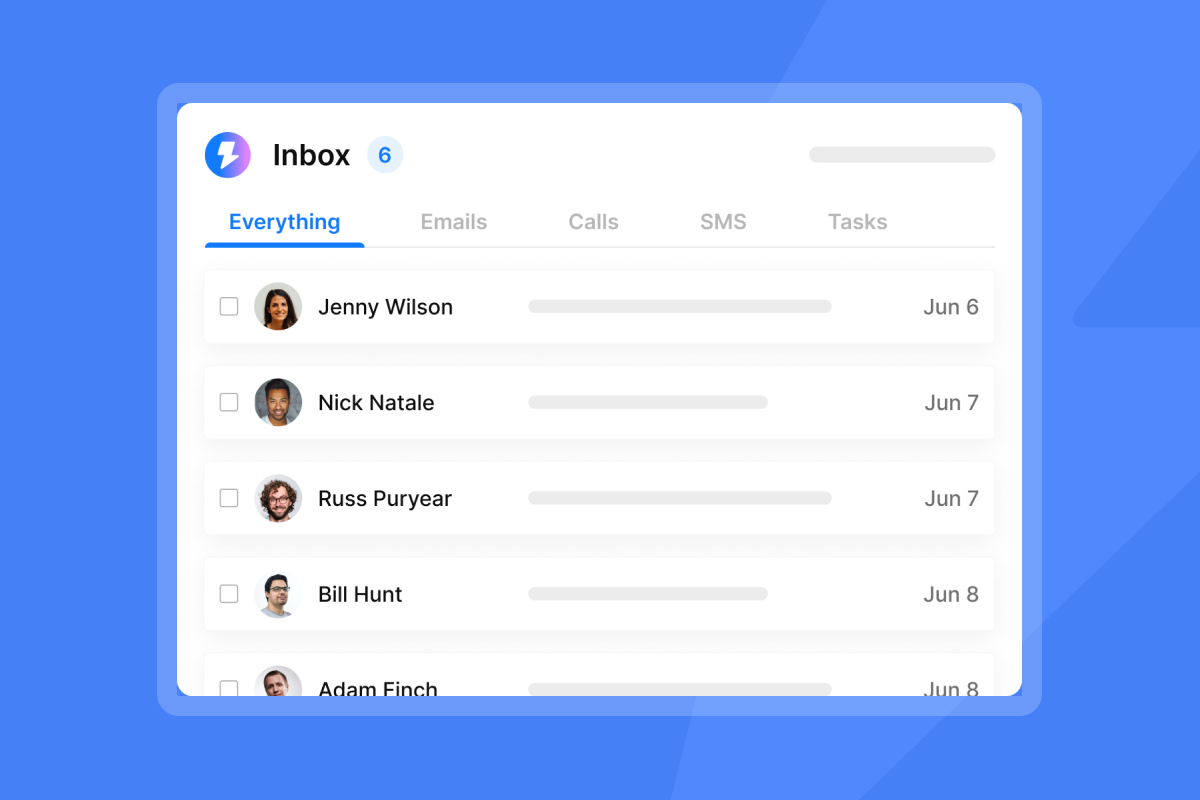
The Instantly Unibox centralizes replies from all sending accounts into one dashboard where reps see every active conversation, the AI's draft response, and the classification label. Before any reply goes out to a high-ACV (Annual Contract Value) prospect, a human reviews it in context. That review step pairs well with an AI BDR agent for outreach.
Protecting domain health and sender reputation requires more than just reply management. The full AI SDR email deliverability guide covers warmup strategies, inbox placement testing, and SISR configuration that work together with human-in-the-loop reply handling.
Instantly's 2026 benchmark report shows that consistent sending patterns produce 15-20% higher replies, but those replies convert into meetings only when the follow-up is contextually accurate and strategically appropriate. Volume without quality at the reply-handling stage produces more conversations and fewer closed deals.
Where AI BDRs fail at multi-turn conversations
Enterprise deals rarely run on a single thread between two people. They involve champions, blockers, procurement contacts, IT security reviewers, and finance stakeholders, often in parallel. AI processes one message at a time and lacks the organizational awareness to adapt messaging for each stakeholder's specific concern.
Resolving internal buyer friction
When a champion is pushing for a purchase and a blocker is raising procurement objections, the AI sees two separate inboxes sending different signals. It cannot recognize that these two contacts are in the same organization and on opposite sides of the same decision. It will continue sending standardized follow-up sequences to both, potentially escalating tension rather than resolving it.
A human rep reads the situation, adjusts tone and content for each stakeholder, and often reaches out to the champion directly to coach them through the internal conversation. That adaptive, politically aware response is not something any current AI model handles reliably across multi-thread exchanges, which is why an AI BDR cannot replace a full-time BDR in these deals.
Budget vs. authority misalignment
AI BDR lead qualification typically maps replies to BANT criteria (Budget, Authority, Need, Timeline) based on explicit statements. A prospect who has authority but no current budget allocated will rarely say that directly. They will ask about pricing, go quiet for a week, and re-engage with "We're interested but timing is the challenge." AI often classifies this as low-intent and reduces follow-up frequency or stops the sequence entirely.
A human rep recognizes this as a budget-timing objection, pivots to next-quarter planning, offers a pilot structure, or keeps the relationship warm with value-focused content. That pivot requires judgment AI cannot apply from email text alone.
Why AI fails at complex policy issues
Custom procurement requirements, vendor security questionnaires, and legal objections about data handling, liability terms, or contract clauses fall completely outside what AI can address. These conversations require access to internal legal and security documentation, real-time negotiation, and the ability to commit to specific terms, one of several common AI BDR mistakes teams need to avoid. Allowing AI to continue a sequence after a procurement question surfaces risks sending an automated follow-up to a legal contact who is mid-review on your vendor approval process.

AI BDR limitations in enterprise deal cycles
Enterprise sales cycles run 6 to 18 months and involve layered decision-making that evolves as internal priorities shift. AI operates on static data and sequence logic, which is why rollout planning benefits from realistic AI BDR implementation ROI timelines. It cannot adapt to a prospect whose company just changed its budget cycle, announced a merger, or promoted its internal champion to a different role.
Why AI misses internal buying signals
The most valuable buying signals in enterprise deals are not found in email replies alone. They appear in behaviors: a prospect forwarding your email to their VP, a highly specific technical question about your API that suggests internal evaluation has started, or a reply that references a competitor by name.
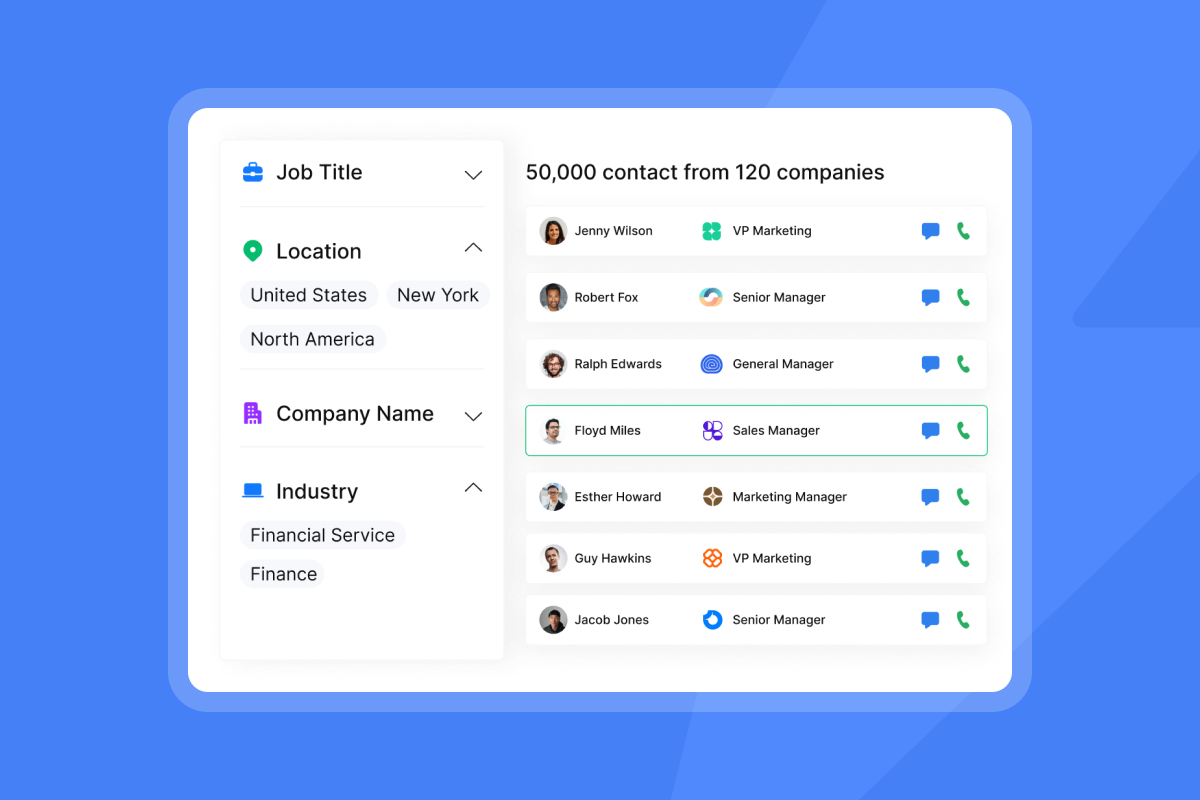
Signal-based outreach that blends hiring signals, funding announcements, product-launch triggers, and website-visit data identifies "right-time" outreach windows that AI enrichment surfaces but cannot interpret alone. AI enrichment tools like SuperSearch, Instantly's lead database of 450M+ verified leads, surface the data. A human rep decides what that data means for a specific account at a specific moment.
Addressing AI BDR security concerns
Autonomous AI tools create specific data security risks. They access contact data, generate content based on that data, and in fully automated configurations, send communications without human review. When contact data includes information that should not be processed through an AI system, the exposure is real.
Instantly's DPA explicitly restricts the upload of sensitive data categories including PHI, payment card data, and biometric data. That restriction protects organizations from processing restricted data through the AI layer. The sub-processor documentation provides full transparency on where data flows, which is the starting point for any enterprise security review.
Why AI misses subtle prospect intent
AI models analyze text patterns and sentiment signals with meaningful accuracy for clear-cut cases, but they struggle with ambiguity, overlapping intents, and language variability. Subtle phrasing differences that a human rep catches immediately can lead to misclassification in AI systems, and those misclassifications have a direct cost in pipeline quality.
Detecting complex buying intent
Conditional interest statements are among the most common forms of genuine pipeline that AI misclassifies. "We might revisit this if our current vendor contract expires in Q4" contains real intent. But it also contains words that sentiment models score negatively: "might," "if," "expires." An AI classifier often routes this to low-priority or marks it as a non-response, halting the sequence on a lead a human rep would immediately flag as warm.
The Instantly 2026 benchmark report notes that 58% of all replies come from step one of a cold email sequence. The quality of the follow-up to that first reply determines whether the conversation progresses. Getting that follow-up wrong because of a misclassification is a high-cost error.
Identifying false buying signals
Polite rejections that contain positive sentiment are a consistent source of false positives in AI classification. "Great product, but we don't have budget right now" reads as partly positive to a sentiment model. An autonomous AI continues pushing for a meeting based on the "Great product" signal, sending follow-ups to someone who explicitly declined.
That persistence signals to the prospect that the sending organization is not reading their replies, which is accurate. The damage to brand perception at that account is often permanent.
Identifying negative sentiment shifts
AI systems handle high-volume, clear-cut sentiment reliably but struggle with sarcasm, irony, and understated frustration. A prospect who writes "Thanks for following up again" after four touchpoints may be signaling irritation, but an AI system reads it as a neutral acknowledgment and continues the sequence. The next automated follow-up risks triggering a spam complaint.
Instantly's AI Blocklist Triggers provide one layer of protection, but blocklist triggers react after the damage is done. Human review catches tone shifts before they escalate.
Overcoming AI hurdles for regulated sales
Regulated industries add a compliance layer to every outreach decision. Healthcare, financial services, and the public sector operate under legal frameworks that restrict what can be communicated, how data can be processed, and who can make binding commitments.
Meeting compliance standards in regulated industries
In healthcare, if a prospect replies with information about patient volumes or clinical workflows, an autonomous AI processing that reply and drafting a response creates a potential data handling issue. Instantly's DPA (Data Processing Agreement) addresses this by prohibiting the upload of PHI (Protected Health Information) and health data categories, which means AI-generated responses are not drafted from restricted clinical data. That restriction is a protection, not a limitation.
In financial services, an autonomous AI that continues a conversation past the initial reply risks generating statements that could be interpreted as unauthorized commitments about returns, terms, or regulatory status. Many compliance teams in financial services require that external communications making substantive claims are reviewed by a licensed professional before sending. AI cannot satisfy that requirement without human review built into the workflow.
In the public sector, government procurement involves strict data sovereignty rules and formal request-for-proposal processes. Autonomous AI outreach cannot track where a contact sits within a formal procurement cycle, which makes human oversight essential when working with government prospects.
Mandatory human oversight for AI BDRs
Across all regulated verticals, GDPR (General Data Protection Regulation) and sector-specific frameworks explicitly require meaningful human oversight for automated decision-making that produces significant effects. When an AI-generated email to a healthcare or financial services prospect carries reputational or legal weight, a human must review it before it sends. Configuring Instantly's AI Reply Agent in Human-in-the-Loop mode helps support this requirement operationally.
Building reliable escalation rules for SDR teams
A reliable human handoff system requires three components: clear triggers that tell AI when to stop and alert a human, a CRM workflow that preserves conversation context across the handoff, and KPIs that measure whether handoffs are happening at the right speed and accuracy.
AI vs. human: where each wins
The table below maps the key tasks in B2B prospecting to the capability that handles each best. Use it to design your handoff rules and set rep expectations about where AI stops and human judgment starts.
Task | AI capability | Human capability | Optimal owner |
|---|---|---|---|
Lead sourcing and enrichment | High: processes 450M+ B2B leads at scale | Low: manual research is slow | AI (SuperSearch) |
Initial cold outreach | High: A/Z testing, sequencing, scheduling | Low: high manual effort, low scale | AI with human-approved templates |
Reply classification | Medium: accurate for clear signals, poor for nuance | High: reads tone, context, history | Human review via Unibox |
Multi-thread negotiation | Low: loses context across threads and stakeholders | High: maps internal dynamics and adapts | Human rep |
Procurement and security compliance | Cannot make authorized commitments or access internal legal and security documentation | Can engage legal, InfoSec, and procurement teams and commit to specific terms | Human rep with specialist |
Identifying AI BDR failure points
Build a short list of reply types that trigger an immediate AI stop and human takeover. The clearest triggers are:
- Pricing or budget: Any explicit mention of pricing, contract terms, or budget discussions
- Compliance requests: Security questionnaires or compliance documentation requests
- Stakeholder expansion: Any referral to a director, VP, or C-level contact
- Competitive references: Any reply that names a competitor directly
- Frustration signals: Expressions of irritation, repetition, or explicit disinterest
When any of these triggers appear, the AI Reply Agent should draft but not send, and the rep should receive an immediate Slack or CRM alert. Instantly's AI Blocklist Triggers support this pattern at the sequence level.
Preserving CRM data during handoffs
The quality of a handoff depends on the context the AE receives. Instantly's HubSpot integration allows lead import and field mapping from HubSpot into Instantly campaigns. For teams that need activity sync back to HubSpot (opens, replies, classifications), connecting via Zapier, Make, or Instantly's API and webhooks handles that bidirectional flow. The AE sees the full conversation history and enrichment data from SuperSearch before making first contact.
Automating lead handoff to reps
Speed matters at the moment of handoff. A high-intent reply that sits in a queue for hours converts at a lower rate than one that receives a human response quickly. Set up Slack notifications triggered by AI classifications of "Interested" or "Meeting requested" so the assigned rep gets an alert immediately. Instantly's AI sales agent handles the draft, the rep approves it in under five minutes in the Unibox, and the conversation continues with human context intact.
KPIs for AI to human transitions
Track these four metrics to assess whether your escalation system is working:
- Transition speed: Time from AI classification of "Interested" to human reply sent. Aim for the shortest possible window during business hours.
- Classification accuracy: Percentage of AI-classified "Interested" replies that a human rep confirms as genuinely interested after review. Target above 80%.
- Meeting booking rate from escalated leads: Percentage of human-reviewed "Interested" leads that convert to a booked call. Track this separately from your total reply-to-meeting rate.
- Misclassification correction rate: Percentage of AI drafts that a human rep edits or rejects before sending. High rates indicate the AI needs classification rule adjustments.
When to trigger manual intervention in sequences
Not every trigger requires stopping the sequence entirely. Some require a human to step in for a single reply, then return the lead to the automation track. Others require full manual takeover.
Defining AI BDR escalation points
Full manual takeover triggers:
- Budget or procurement: Any mention of budget, procurement, or contract terms
- Compliance: Security or compliance documentation requests
- Stakeholder expansion: Referral to a director, VP, or C-level stakeholder
- Conversation history: A reply referencing a previous conversation not captured in the current thread
Single-reply human review triggers:
- Conditional interest: Statements like "possibly," "maybe in Q4," or "depends on timing"
- Technical questions: Product specifications or integration requirements
- Proof requests: Case studies or references in a specific vertical
Reviewing the out-of-office smart pause settings regularly also prevents sequence timing errors from mishandled OOO replies.
Optimizing AI for prospect insights
Before a human rep drafts a personalized response to an escalated lead, use Copilot and SuperSearch to pull updated enrichment data on the contact and account. Recent hiring signals, funding announcements, or product launches at the prospect's company give the rep a stronger opening point than reviewing the prior email exchange alone.
Auditing AI BDR reply classification
Run a regular audit of reply classifications from the Unibox. Look specifically for:
- "Not interested" labels on replies that contain conditional language
- "Out of office" labels on replies that also contain substantive questions
- "Interested" labels on polite rejections that include positive sentiment framing
Use the audit findings to update your AI Custom Reply Labels and sequence-stop rules. The Instantly benchmark data puts the platform average reply rate at 3.43%, top quartile at 5.5%, and top 10% at 10.7%. Classification accuracy is one of the levers that moves teams up those percentiles.
Where AI BDR limitations impact pipeline quality
AI BDR limitations do not stay in the inbox. They flow directly into pipeline health, conversion rates, and domain reputation.
AI BDR constraints in enterprise sales
Consistent sending patterns produce 15-20% higher reply rates according to Instantly's 2026 benchmark report. Those replies convert into pipeline only when the follow-up is contextually accurate and relationship-aware. A fully autonomous system generates consistent volume but inconsistent quality at the reply-handling stage, which means more replies and fewer meetings. That conversion gap is where autonomous AI costs sales teams the most.
What reply types require human takeover?
The following reply types require immediate human review before any response is sent:
- "Who else are you working with?" (competitive evaluation signal)
- "Can you send over your security documentation?" (compliance evaluation)
- "I'm forwarding this to our head of IT" (stakeholder expansion)
- "What would this cost for 500 seats?" (budget qualification)
- "We had a bad experience with a similar tool last year" (trust repair required)
Each of these opens a conversation that requires judgment, negotiation capability, and relationship awareness, the skills that define the AI BDR vs human BDR divide. An AI-drafted follow-up to any of them risks misaligning the response and stalling the deal.
Preventing brand damage from AI errors
Deliverability as a system: AI-assisted prospecting requires more than sequence logic to protect domain health. Instantly operates a private warmup network of 4.2M+ accounts that builds sender reputation before campaigns launch. The Light Speed SISR system continuously rotates dedicated IP pools, replacing flagged IPs automatically so campaigns continue without disruption. Automated inbox placement tests run on schedule and alert teams when placement drops, giving reps time to correct before a campaign damages domain health at scale.
Run these checks weekly:
- Review bounce rates per campaign. Keep at or below 1%.
- Check inbox placement test results for primary inbox vs. spam split.
- Audit reply classification accuracy as described above.
- Confirm no sequences are running to contacts who have previously expressed frustration or unsubscribed.
- Verify that sensitive-category data has not been uploaded in violation of your data processing agreement.
Selective review beats full review
Requiring reps to review every AI conversation defeats the purpose of AI. The correct design is selective review. Instantly's AI agents handle all initial outreach and basic classifications autonomously. Once a prospect crosses an escalation trigger (interest signal, objection, stakeholder mention, compliance question), the AI drafts the response and pauses for approval. The rep reviews one targeted reply, not an entire thread.
Instantly's AI Reply Agent in Human-in-the-Loop mode executes exactly this model. Replies are drafted and staged in the Unibox. The rep reviews the draft, edits if needed, and approves in under five minutes. No high-intent lead receives an automated response, and no rep spends time managing routine exchanges that AI handles correctly.
This is the architecture that protects pipeline quality without rebuilding your entire outbound motion. Try Instantly free for 14 days and configure your first HITL sequence with warmup, inbox placement monitoring, and AI-assisted reply management built in from day one. No credit card required.
FAQs
What are the primary limitations of an AI BDR?
AI BDRs cannot handle multi-thread negotiations, resolve internal buyer friction, or manage complex compliance requirements in regulated industries. They also struggle with nuanced intent signals and tone shifts, which leads to misclassified replies and automated follow-ups that risk spam complaints or brand damage.
When should a human rep take over an AI conversation?
A human must take over immediately when a prospect asks about pricing or contract terms, requests security documentation, refers the conversation to a new stakeholder, or expresses conditional interest using language like "possibly" or "depends on timing." Any reply involving a competitive reference also requires human review before a response is sent.
Is Instantly's AI Reply Agent fully autonomous?
No. The AI Reply Agent can be configured in Human-in-the-Loop mode, which drafts replies inside the Unibox for human review and approval before sending. Responses are drafted in under five minutes and staged for rep approval rather than sent automatically.
What does it cost to run Instantly's HITL workflow?
As of May 2026, the core Outreach plan starts at $47/month (or $37.60/month on annual), and the AI Reply Agent runs on Instantly Credits starting at $9/month, with each reply costing 5 credits. A typical starter stack covering Outreach, SuperSearch, and CRM runs approximately $141/month with no per-seat fees.
How do I protect domain health when running AI-assisted outreach?
Use Instantly's built-in warmup network across all connected accounts before launching campaigns, keep bounce rates at or below 1%, run automated inbox placement tests on a scheduled basis, and configure SISR on the Light Speed plan if you are sending at high volume. Review deliverability metrics weekly and pause campaigns immediately if primary inbox placement drops.
Key terms glossary
AI-assisted prospecting: A hybrid sales workflow where AI handles administrative tasks and draft generation while human reps manage relationship building and high-stakes reply handling.
Human-in-the-loop (HITL): A system design that requires human review and approval before an automated action, such as sending an AI-generated email, is executed.
Unibox: Instantly's centralized inbox that aggregates replies from all sending accounts, allowing reps to triage, edit, and approve communications in one place.
SISR: Server and IP Sharding and Rotation, a deliverability technology on Instantly's Light Speed plan that uses dedicated IP pools to protect sender reputation.
Reply classification: The AI process of labeling an incoming email reply (for example, "Interested," "Not interested," "Out of Office," or "Objection") to trigger the appropriate next action in a sequence.
Sender reputation: A score assigned by mailbox providers (Google, Microsoft) based on bounce rates, spam complaints, and engagement patterns that determines whether your emails reach the primary inbox.
Read next:
- How to improve cold email reply rates: A practical guide to the copy, timing, and list hygiene changes that move reply rates from average to top-quartile.
- Cold email sequence guide: How to structure a 4-7 step sequence with the right send cadence, step spacing, and copy variation to generate consistent replies.
- Email warmup guide: What warmup does, how long it takes, and the daily send ramp that protects your domain reputation before a campaign launches.



