.svg)
%20(1).svg)


Updated July 13, 2026
TL;DR: AI BDRs in 2026 are autonomous agents that source leads, qualify intent, handle multi-turn conversations, and hand off warm prospects to AEs while respecting strict deliverability constraints. Top-performing teams keep individual inbox volume under 30 emails per day, warm domains for 4-6 weeks, and use human-in-the-loop protocols for high-ACV deals. The top 10% of senders achieve reply rates more than 3x the platform average. The infrastructure that makes this safe includes unlimited sending accounts, built-in warmup across a deliverability network of 4.2M+ accounts, and inbox sharding across dedicated IP pools.
This guide is written for heads of sales and RevOps leads at B2B companies managing outbound teams, SDRs, and agentic email infrastructure.
The biggest mistake sales leaders make with AI BDRs right now is trying to send more emails. According to Instantly's 2026 Cold Email Benchmark Report, the platform average reply rate sits at 3.43%, while top-quartile senders reach 5.5% and the top 10% exceed 10.7%. That gap does not come from higher volume. It comes from how those teams structure their deliverability systems and agentic workflows.
AI BDR future trends are pointing in one clear direction: an AI sales agent built for precision over volume, distributed inbox architectures over single-domain blasting, and human oversight at every high-trust handoff point.
Core features of today's AI BDR tools
AI BDRs, including Instantly's AI BDR agent, have moved well beyond mail-merge templates. Today's tools operate as agentic workflows: connected sequences of autonomous decisions triggered by a single event, where the AI chooses which tools to use, in what order, based on what the task requires.
Consider what happens when a new inbound lead arrives in a modern agentic pipeline. Your AI researches the company, enriches the contact record from multiple data providers, scores fit against your ICP, writes a personalized first touch, enrolls the prospect in the right sequence, and routes the draft to your rep to review, all before anyone opens an inbox. No human manages each step. The agent decides.
Two concrete examples of agentic tasks your AI BDR should handle today:
- Autonomous lead qualification: Your AI scores inbound leads against your ICP criteria, filters out low-fit contacts before they enter the sequence, and routes high-fit leads directly to a priority queue in your unified inbox.
- Multi-step follow-up adjustment: Your AI reads reply sentiment, identifies whether a response is an objection, an out-of-office, or a buying signal, then adjusts the next step in the sequence accordingly rather than following a fixed cadence regardless of context.
You can see how Instantly structures this in the AI agents overview and the agentic pipeline machine webinar.
Evaluating current AI BDR performance
The 2026 benchmark data is clear: elite performance is achievable, but it requires more than a good AI tool. The platform average reply rate of 3.43% reflects teams at all maturity levels. The top quartile at 5.5% and the top 10% at 10.7% share two common characteristics: tight list hygiene and structured deliverability systems.
This aligns with a broader market shift. Prospects are receiving more automated outreach than ever before, which raises the bar for personalization and targeting quality. A generic sequence, even an AI-generated one, gets filtered out faster because buyers recognize the pattern.
The takeaway: high reply rates belong to teams that treat deliverability and data quality as primary inputs, not secondary ones.
Current AI BDR deployment trends
Mid-market sales teams are moving toward multi-agent systems where different AI agents handle different parts of the funnel. One agent handles lead sourcing. Another handles sequence enrollment. A third handles reply triage. This specialization improves performance at each stage because each agent is optimized for a specific task rather than trying to do everything.
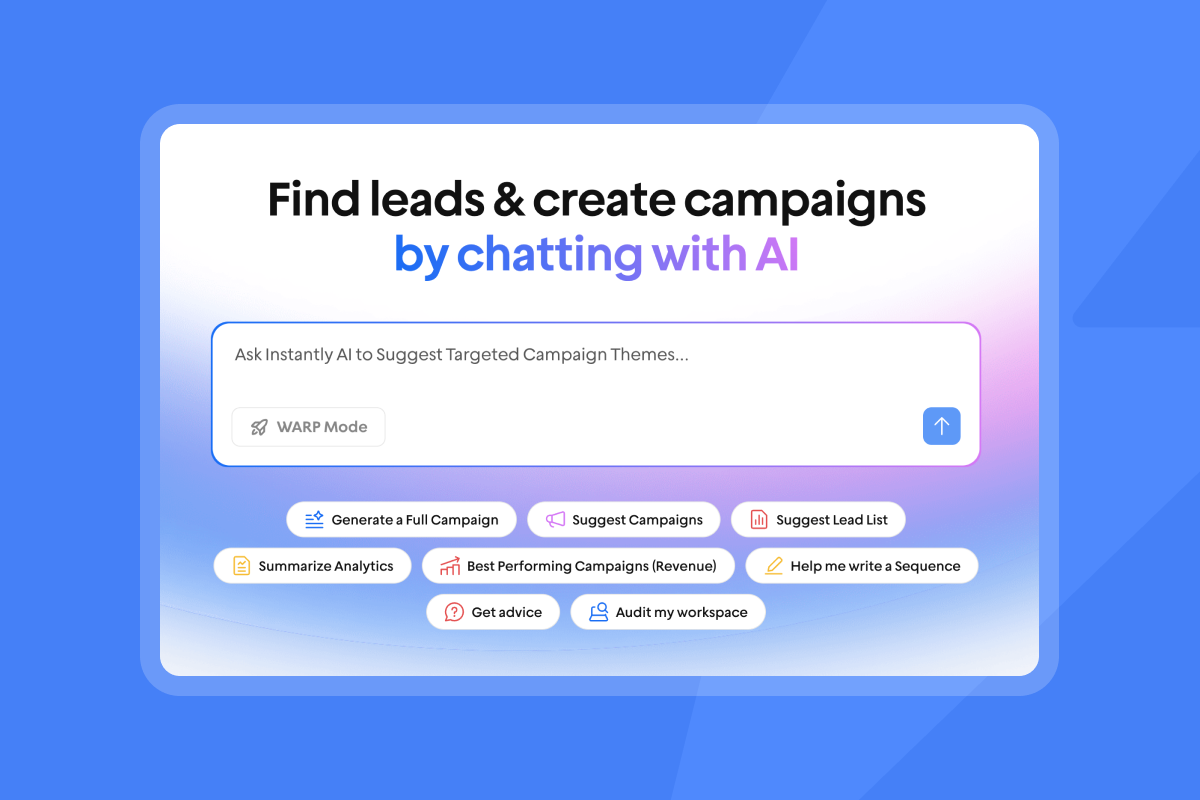
Instantly built its architecture to reflect this. The AI Sales Agent handles autonomous lead sourcing and outbound execution, the AI Reply Agent handles incoming replies in under 5 minutes, and Copilot assists with research, campaign creation, and analytics summaries. Each runs on Instantly Credits, which are a separate subscription from the Outreach plan (starting at $9/month for 150 credits).
Automating multi-step prospect engagement
The optimal cold email sequence runs 4-7 steps, and the best individual emails stay under 80 words, according to Instantly's 2026 benchmark data. That finding runs counter to what most sales leaders expect. Shorter sequences and shorter emails outperform longer ones because they are easier to read, easier to reply to, and less likely to trigger spam filters.
Your AI BDR managing a multi-step sequence should adjust each step based on engagement signals from the previous one. Modern AI systems can detect engagement patterns and adjust messaging accordingly, pausing sequences when prospects show disinterest and flagging leads for human review when needed.
Consistent sending patterns also matter more than most teams realize. The benchmark report found that consistent senders see 15-20% higher replies than irregular senders, which means an AI BDR that respects defined daily send windows outperforms one that blasts unpredictably.
Transitioning to intent-aware replies
When a reply comes in, your AI BDR needs to do more than log it. It needs to classify it. The key categories are: out of office, positive interest, meeting request, objection, not interested, and referral. Each category triggers a different next action.
Instantly's AI Reply Agent handles this classification and auto-responds in under 5 minutes. Each reply handled costs 5 Instantly Credits. For teams receiving hundreds of replies per week, that automation eliminates hours of manual triage and ensures no warm lead goes cold waiting for a rep to check their inbox.
"Instantly makes it much easier to manage and run multiple campaigns simultaneously, allowing me to handle outreach at scale with ease... the ability to track email activity such as opens and replies helps me quickly see what's effective and adjust my follow-ups accordingly." - Sachin M. on G2
Managing AI to human handoffs
Your AI BDR should hand off to a human AE at specific, pre-defined trigger points. For high-ACV deals, handing off too late costs pipeline. Handing off too early wastes AE time on unqualified leads. The table below defines the triggers, actions, and response time targets your team should standardize before deploying any autonomous agent.
Human-in-the-Loop protocol (recommended SLAs)
Trigger event | AI action | Human action | Target SLA |
|---|---|---|---|
Unclear or negative reply | Pause sequence, flag in Unibox | AE reviews and responds | Under 2 hours |
High-ACV intent | Tag lead as "High Priority" | Sales leader qualifies lead and assigns to AE | Under 1 hour |
Meeting request | Generate calendar link | AE reviews and confirms the meeting in calendar | Under 15 mins |
Pricing question | Flag in Unibox, pause sequence | AE picks up the conversation and addresses pricing directly | Under 2 hours |
Legal or compliance query | Pause sequence immediately | Sales leader reads the reply and decides next step manually | Under 4 hours |
Standardizing these handoff triggers is the operational step that separates teams hitting top-quartile reply rates from those stuck at the platform average.
Governance for autonomous AI agents
Autonomous agents need guardrails. Without them, a mis-classified reply becomes an unapproved message to your best prospect, and that damages the relationship before your rep has a chance to step in.
The AI Reply Agent offers two operating modes: Autopilot, where the agent sends replies without human review, and Human-in-the-Loop (HITL), where every AI-drafted reply routes to a Slack channel for approval before sending. For high-ACV segments or new deployments, start in HITL mode. The AI Reply Agent documentation recommends starting in HITL mode to fine-tune tone and responses, then switching to Autopilot once you're comfortable that the agent's replies match your communication style and standards.
The AI Reply Agent configuration and Slack integration provide a complete audit trail: every AI decision, every draft, every approval, timestamped and logged.

Improving AI BDR targeting with intent analytics
Generic lead lists produce generic results. Feeding low-quality data into an AI BDR does not produce personalized outreach. It produces highly personalized spam, and that is worse than a generic email because it creates the impression that your company researched the prospect and still sent irrelevant content.
Intent data changes the economics entirely. When your AI BDR targets contacts showing active buying signals, the outreach lands at the right moment with the right context. That is why top-performing teams treat data sourcing as a core part of the AI BDR workflow, not a pre-step.
AI BDR timing and intent signals
The most valuable intent signals for B2B outreach fall into three categories. Job changes indicate that a new decision-maker has arrived and is evaluating the existing tech stack. Funding rounds signal that a company is preparing to invest in growth tools. Website visits show active product interest from someone already familiar with your category.
Instantly's Website Visitors feature identifies US-based visitors and pushes them directly to your CRM (see Data Services Customer Restrictions for eligibility details), so your AI BDR can enroll them in a highly targeted sequence while their interest is still active. Targeting prospects who recently visited your pricing page allows you to reach them when they are actively researching solutions.
Syncing CRM data for AI BDR success
Your AI BDR needs a clean, current data feed from your CRM to avoid contacting prospects who are already in an AE conversation, recently churned, or on a global block list. Instantly integrates natively with HubSpot, so you can import contact lists directly into campaigns and keep outreach aligned with your existing pipeline.
For two-way activity sync (opens, replies, and sequence status flowing back into HubSpot), connect via the Instantly API v2 or an iPaaS tool like Zapier or Make. One-way sync creates data blind spots that lead to AEs calling prospects who already unsubscribed. Build the two-way activity sync before you scale.
Maintaining clean data for AI BDRs
The data hygiene checklist your team needs before enrolling any list into an AI BDR workflow:
- Verify email addresses before upload. Unverified lists push bounce rates past the threshold that damages sender reputation.
- Check for duplicates and existing CRM contacts to prevent double-enrollment.
- Apply your global block list to filter out opted-out contacts, competitors, and existing customers.
- Segment by intent tier (high, medium, low) so your AI uses the right sequence depth for each group.
- Enrich with firmographic context so the AI can personalize beyond first name and company.
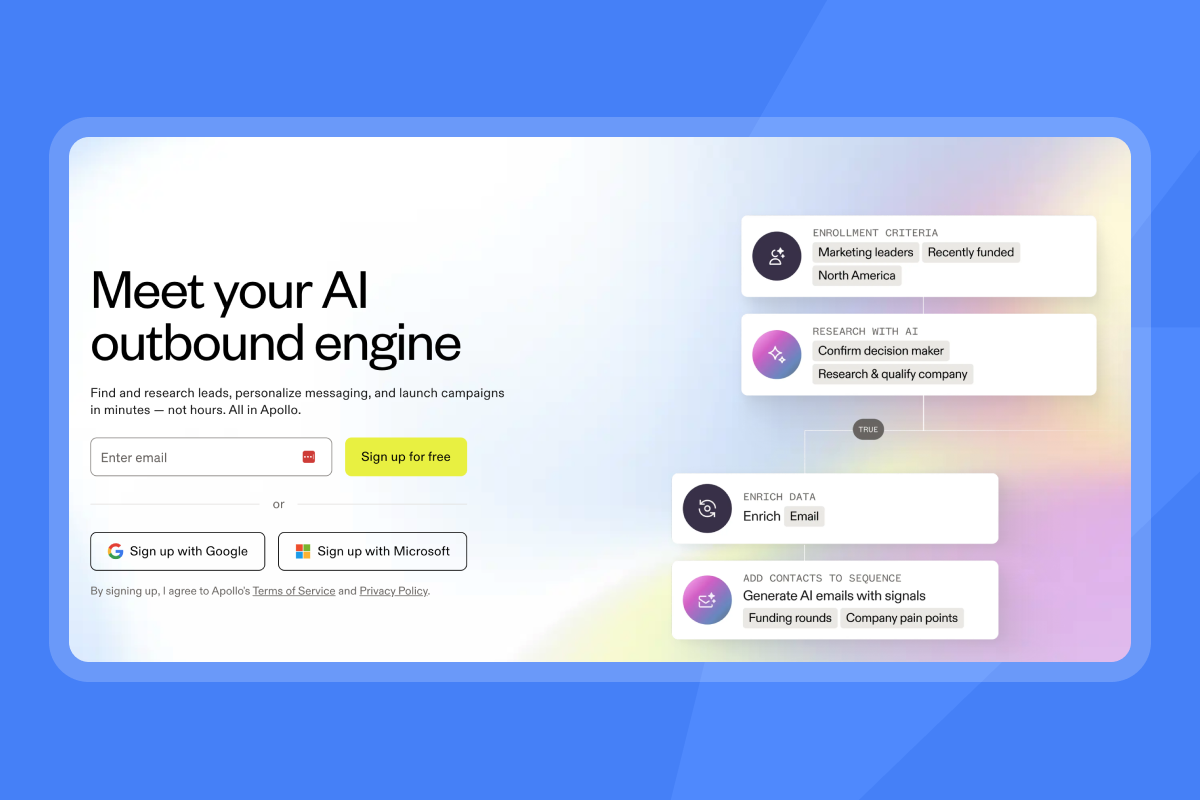
Instantly's SuperSearch gives you access to 450M+ B2B leads with waterfall enrichment from 5+ providers and LLM-assisted enrichment. Contacts sourced through SuperSearch go through waterfall enrichment across 5+ providers, which reduces the manual verification burden before you enroll a list into any campaign.
Scaling sales capacity with AI BDR workflows
The organizational shift required to run AI BDR workflows at scale is as much about people and process as it is about software. Three changes matter most: how you budget for the stack, how you train reps, and how you measure performance.
Budgeting for AI-driven SDR roles
Legacy sales engagement platforms charge per seat and per mailbox, so adding inboxes to protect deliverability increases cost linearly. That model works directly against the core deliverability strategy of distributing volume across many warmed inboxes.
Instantly's flat-fee model changes the calculation. The Outreach Growth plan starts at $47/month and includes unlimited email accounts and warmup across all sending domains. A team running 50 inboxes across 10 domains pays $47/month for sending infrastructure, not $47 per inbox. An illustrative starter stack (Outreach Growth + Instantly Credits Growth + Growth CRM) runs approximately $141/month total, compared to per-seat tools where inbox add-ons can push costs well beyond the base subscription price.
AI BDR vs. traditional BDR comparison
Factor | Traditional BDR | Basic automation | AI BDR with agentic workflows |
|---|---|---|---|
Reply handling | Manual, hours of lag | Human review still required at each step | Automated triage under 5 minutes |
Deliverability control | Rep-dependent | Basic warmup | Built-in warmup, SISR, inbox placement tests |
Scalability | Limited by headcount | Limited by inbox caps | Unlimited accounts, sharded sending |
Handoff to AE | Manual CRM logging | Partial automation | Automated tagging, Unibox routing |
Training BDRs for AI workflow shifts
The AI BDR era shifts the traditional rep role from writing emails manually to AI prompting and editing. Reps who succeed in this environment understand how to write effective AI prompts, review AI-drafted output for brand alignment, and manage sequences as a system rather than as individual emails.
Your reps need to understand: how to set up a sequence, how the AI Reply Agent classifies responses, when to intervene in an agentic workflow, and how to read deliverability metrics in the analytics dashboard. The Instantly masterclass on AI and cold email and the AI Sales Agent setup webinar are practical starting points for new rep onboarding.
"It's very user-friendly and highly efficient, with great integrations. The ROI feels clear and predictable, and the pricing is transparent." - Lia-Maria V. on G2
Updating oversight for AI-driven sales
Sales leaders managing AI-driven teams stop monitoring call dials and start monitoring AI decision logs, prompt performance, and deliverability health. The weekly metrics review shifts to three core dashboards:
- Deliverability dashboard: Bounce rates, inbox placement test results, and domain health scores across all sending accounts.
- AI performance dashboard: Reply classification accuracy, AI reply approval rates, and sequence step performance by variant.
- Pipeline dashboard: Meetings set per inbox per week, CRM handoff conversion rate, and cost-per-meeting by campaign.
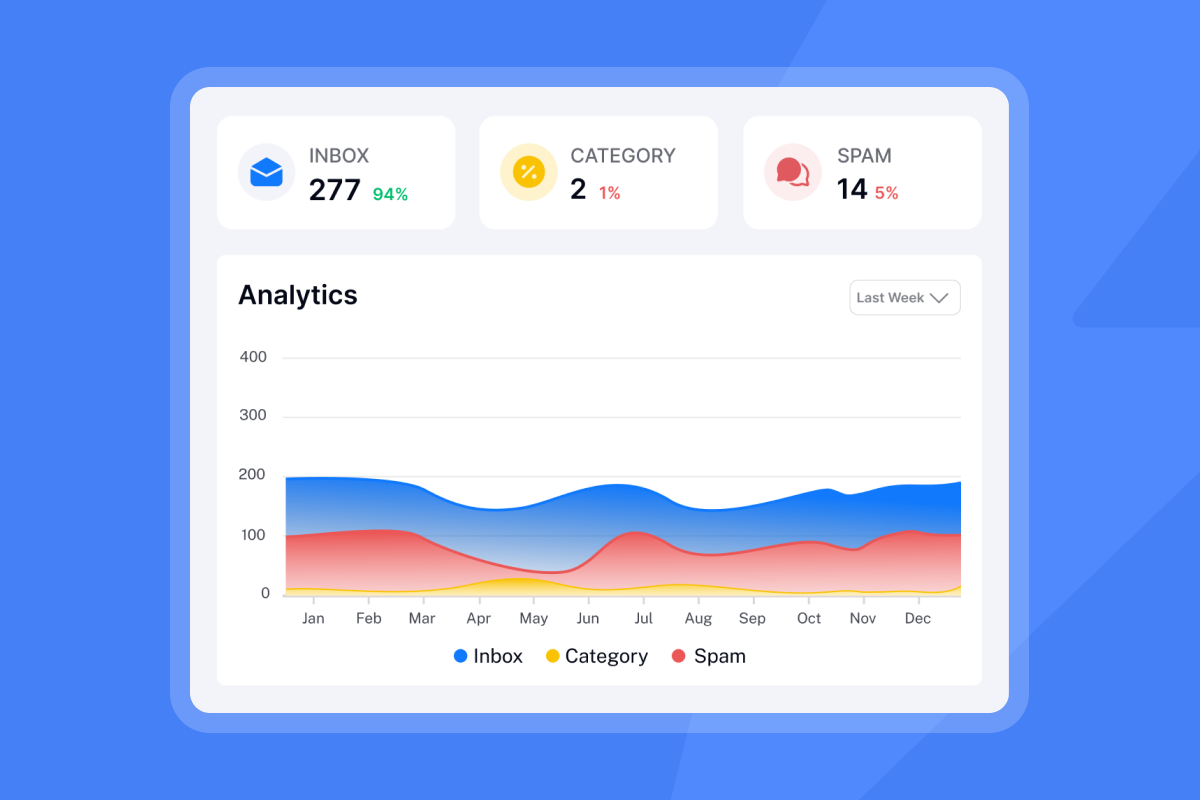
Instantly's automated inbox placement tests alert you before a deliverability issue becomes a campaign-killing problem. Set alerts at 1% bounce rate and review inbox placement scores weekly across your active sending domains.
Balancing automation and human touch
AI handles high-volume, low-trust tasks: initial prospecting, first-touch personalization, follow-up sequencing, and reply triage. Humans handle high-trust, high-ACV relationships: complex objection handling, pricing negotiations, multi-stakeholder conversations, and strategic account development.
The teams that get this balance wrong fall into one of two traps, both common AI BDR mistakes to avoid. The first is over-automating, where the AI sends unapproved replies to enterprise prospects who then disengage. The second is under-automating, where reps spend most of their day on tasks the AI could handle, leaving too little time for the conversations that actually close deals.
Strategic steps for AI-driven sales success
Work through these steps in order. Skipping ahead, particularly to full automation before validating deliverability, is the most common reason AI BDR rollouts fail in the first quarter.
Review tools for AI BDR alignment
Audit your current sales stack against three criteria before adding any new tool, benchmarked against the best AI BDR tools and platforms on the market. First, does the tool support unlimited email accounts without per-inbox pricing? Second, does it include built-in warmup and deliverability monitoring? Third, does it integrate natively with your CRM without requiring a custom API build?
Tools that fail the first two criteria force you to choose between scale and deliverability. Instantly combines all three: flat-fee unlimited accounts, built-in warmup across all tiers, and native HubSpot integration.
Limit risk with segmented AI trials
Start your AI BDR rollout with a small, low-risk segment: a single industry vertical, a defined geographic market, or a specific company size band. Run 200-400 contacts through the AI-managed sequence before expanding. This limits blast radius if the AI classification or personalization needs adjustment, and it gives you real performance data to present to your CFO before committing to a full rollout budget.
Standardize AI workflows for brand safety
Before any campaign goes live, configure these safety controls in your account:
- Global block list: Add all existing customers, opted-out contacts, and competitors.
- AI Spam Words Checker: Built into the Growth plan and above, this flags language that increases spam filter risk before you send.
- A/Z testing: Run multiple subject line and copy variants simultaneously to identify what resonates before scaling a single message.
- Bounce detection and reputation protection: Instantly automatically pauses sequences when bounce rates spike, protecting your domain health before damage compounds.
Instantly's guide on secondary sending domains and rotating IP algorithms provides the technical foundation for distributing volume safely across multiple domains and inboxes.
Operationalize AI for sales success
The "deliverability as a system" principle underlies everything else in this playbook. Google and Yahoo enforce a 0.3% spam complaint threshold stringently. A single domain is structurally too fragile to be your only sending infrastructure at meaningful volume.
The correct architecture distributes volume across multiple domains and inboxes, keeping each individual inbox below 30 emails per day. For a campaign targeting 3,000 contacts per week, that means at least 20 warmed inboxes running simultaneously. Instantly's flat-fee model makes this economically viable, since running 20 inboxes on a per-seat tool adds inbox fees that compound quickly at scale.
For teams at higher volumes, Instantly's Light Speed plan at $358/month adds SISR (Server & IP Sharding & Rotation), which distributes sending across dedicated, private IP pools and automatically replaces flagged IPs with clean ones. For teams sending 10,000 or more emails per day, SISR eliminates the shared-infrastructure risk that degrades deliverability on standard plans.
Key shifts defining the AI BDR future
These structural changes will define how sales teams are built and measured over the next 2-3 years. Planning for them now puts you ahead of teams still budgeting and hiring on a pre-AI model.
Impact of AI on SDR headcount
AI does not replace SDRs. It changes the ratio of SDRs to output. When your AI handles the volume tasks (list building, first-touch personalization, follow-up sequencing, reply triage) that consumed the majority of a traditional SDR's day, a leaner team produces far more pipeline coverage than the same headcount could manage manually.
What this means for headcount planning: hire fewer, more senior SDRs who can manage AI agents, write strong prompts, and handle complex conversations with the high-intent leads your AI surfaces. One of Instantly's AI agents, handling autonomous lead sourcing, is already running in production.
KPIs for tracking AI BDR success
Move beyond open rates and click rates. The metrics that matter for AI BDR accountability are:
- Cost-per-meeting: Total tool cost divided by meetings booked, making email the cost-efficient foundation of your outbound strategy.
- Domain health score: Monitored weekly via automated inbox placement tests. A declining score signals a deliverability problem before it hits reply rates.
- Bounce rate: Keep this under 1% per campaign to protect domain reputation. Above that threshold, pause and re-verify your list before resuming.
- CRM handoff conversion rate: Of the leads your AI flags as high-intent and routes to an AE, what percentage convert to a booked meeting? This measures AI classification accuracy, not just volume.
- Reply rate by sequence step: The benchmark data confirms that most replies arrive early in a sequence. If your step-one reply rate is below 2%, fix the message before adding steps.
"Emails land in inboxes, not spam. Easy to scale across multiple campaigns and markets. Clean analytics, open rates, replies, bounces, all in one view." - Salam Karam on Trustpilot
How to ensure AI compliance and safety
Compliance for AI BDR workflows requires operational controls, not just policy documents. The practical steps your RevOps team needs to implement:
- SPF, DKIM, and DMARC authentication on every sending domain. Google and Yahoo require these for bulk senders and verify compliance at the infrastructure level.
- CAN-SPAM compliance: Every email sequence needs a functional unsubscribe mechanism, accurate sender identity, and a physical address on file. Instantly's global block list handles unsubscribe management automatically.
- AI decision logging: In Human-in-the-Loop mode, every AI-drafted reply and every approval decision is logged. This creates an audit trail your compliance team can review.
- Data category restrictions: Instantly's Data Processing Agreement explicitly restricts uploading certain data categories (health information, payment card data, biometric data). Review these restrictions before importing any list that might include regulated data.
For EU outreach, B2B email under GDPR requires a legitimate business interest basis, clear unsubscribe mechanisms, and verified contact data. These are operational requirements your team manages, not certifications the platform provides.
Timing your AI BDR rollout
Roll out in phases, following a realistic AI BDR implementation timeline. Here is how to structure your first weeks:
- Set up 2-3 sending domains and begin the warmup process. Allow 4-6 weeks for full warmup before launching active campaigns. The trial starts the clock.
- Test the AI Reply Agent in Human-in-the-Loop mode on a small segment of 50-100 contacts.
- Run an inbox placement test using the automated inbox placement tool to confirm your sending setup lands in the primary inbox before scaling.
- Define your Human-in-the-Loop triggers using the table in the "Managing AI to human handoffs" section above.
After the trial, a starter stack of Outreach Growth ($47) + Instantly Credits Growth ($47) + Growth CRM ($47) runs approximately $141/month, giving you unlimited sending accounts, SuperSearch access powered by 1,500-2,000 Instantly Credits per month, and Unibox for centralized reply management. Scale to Hypergrowth Outreach ($97/month) when you consistently approach your contact upload limits.
For the full cold email performance benchmarks your team should measure against, the 2026 report is the reference your RevOps leader needs before your next planning cycle.
The 14-day free trial (no credit card required) lets you test warmup, inbox sharding, and the AI Reply Agent on a real segment before spending a dollar.
FAQs
What is the maximum recommended sending volume per inbox?
Keep sending volume under 30 emails per day per single inbox. Exceeding this threshold increases the risk of spam blocks and domain reputation damage that compounds over time.
How long does it take to warm up a new sending domain?
Allow 4-6 weeks for the warmup process before launching active campaigns. This timeline allows new inboxes to earn trust with major mailbox providers like Google and Yahoo.
What does the AI Reply Agent cost?
The AI Reply Agent consumes 5 Instantly Credits per reply. Credits are purchased through a separate subscription starting at $9/month for 150 credits.
What is the difference between Autopilot and Human-in-the-Loop mode?
Autopilot sends AI-drafted replies without human review, while Human-in-the-Loop routes every draft to a Slack channel for approval before sending. Start with Human-in-the-Loop mode for new deployments and high-ACV segments, and switch to Autopilot once you're comfortable the agent's replies match your communication style and standards.
How many inboxes do you need to safely send 3,000 outbound emails per week?
At 30 emails per inbox per day across a 5-day send week, you need at least 20 warmed inboxes. Instantly includes unlimited accounts on all Outreach plans, so there is no per-inbox cost for building this infrastructure.
Key terms glossary
Agentic workflows: Sales processes where AI agents make autonomous decisions, handle multi-turn conversations, and qualify leads without manual human intervention at each step.
SISR (Server & IP Sharding & Rotation): A deliverability technology on Instantly's Light Speed plan that distributes email sending across dedicated, private servers and rotated IP pools to protect domain health at high sending volumes.
Unibox: A centralized inbox inside Instantly's CRM that aggregates replies from all sending accounts, allowing reps to manage conversations in one place without switching between accounts.
Human-in-the-Loop (HITL): An operating mode where AI-drafted actions (such as email replies) route to a human reviewer for approval before sending, maintaining oversight while reducing manual workload.
Warmup: The process of gradually increasing sending volume from a new inbox over 4-6 weeks to build a positive sender reputation with major mailbox providers before launching full campaigns.
Read next
- How to write cold email subject lines that get replies: A practical guide to crafting subject lines that improve open rates and drive more replies from cold outbound campaigns.
- Your inbound and outbound lead generation guide: A comprehensive walkthrough of building a lead generation engine that combines inbound demand capture with structured outbound prospecting.
- AI-powered cold email personalization: safe patterns, prompt examples & workflow for founders: Step-by-step prompt examples and workflow templates for personalizing cold email at scale without sacrificing deliverability or brand safety.



